Catholicism

Ties that bind? Concerning journalism, Grindr, secrecy, homophobia and the Latin Mass

Ties that bind? Concerning journalism, Grindr, secrecy, homophobia and the Latin Mass

Early in my religion-beat career, a veteran Catholic leader gave me wise advice about the challenges reporters would face covering the emerging national scandals about sexual abuse by bishops and priests.

Never forget, he said, that these scandals are not about “left vs. right.” Plenty of people, across the whole spectrum of Catholic life, have secrets in the past and some in the present.

Soon after that, I heard almost exactly the same take from the late A.W. Richard Sipe, the former Benedictine monk, priest and psychotherapist who spent more than a half-century studying the sexual secrets of Catholic clergy. A strong voice for progressive Catholic causes, he served as a witness or consultant in at least 250 civil legal actions. As I wrote in an “On Religion” column, soon after Sipe’s death:

"Sooner or later it will become broadly obvious that there is a systemic connection between the sexual activity by, among and between clerics in positions of authority and control, and the abuse of children," he wrote, in a 2016 letter to his local shepherd, San Diego Bishop Robert McElroy.

"When men in authority — cardinals, bishops, rectors, abbots, confessors, professors — are having or have had an unacknowledged secret-active-sex-life under the guise of celibacy an atmosphere of tolerance of behaviors within the system is made operative."

Once again, the key is secrecy, because a fog of secrecy, sin and shame can be use to hide all kinds of painful issues.

I bring this up, of course, because of the firestorm that has greeted an investigative report from The Pillar that ran with this headline: “USCCB gen sec Burrill resigns after sexual misconduct allegations.” Here is the overture:

Monsignor Jeffrey Burrill, former general secretary of the U.S. bishops’ conference, announced his resignation Tuesday, after The Pillar found evidence the priest engaged in serial sexual misconduct, while he held a critical oversight role in the Catholic Church’s response to the recent spate of sexual abuse and misconduct scandals.

“It is with sadness that I inform you that Msgr. Jeffrey Burrill has resigned as General Secretary of the Conference,” Archbishop Jose Gomez wrote July 20 in a memo to U.S. bishops.

The key evidence was information drawn from signals on the hookup app Grindr, which a Vanity Fair feature once called “The World’s Biggest, Scariest Gay Bar.


Please respect our Commenting Policy

'Where there is incense there is fire.' True, but reporters can seek voices in middle of that war

'Where there is incense there is fire.' True, but reporters can seek voices in middle of that war

Raise your hand if you are old enough to remember the Vietnam era.

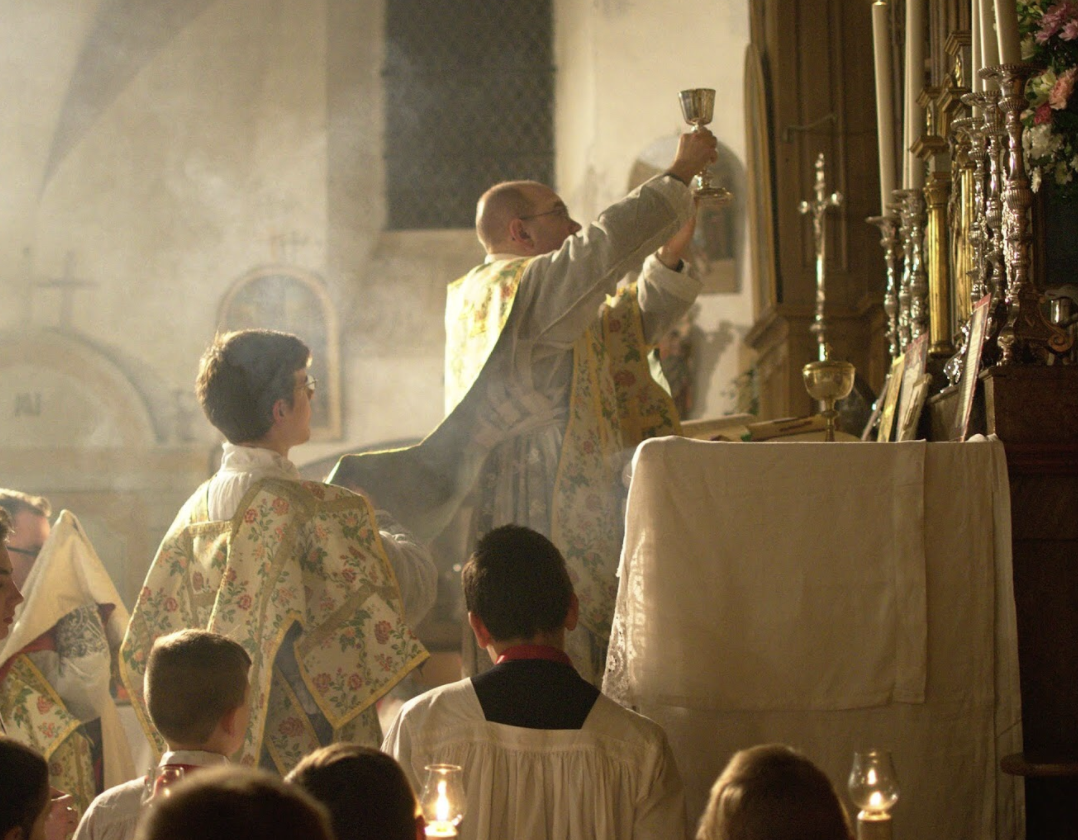
That may sound like a strange question to ask after a weekend of reading the tsunami of online reactions to the decision by Pope Francis to all but crush the 2007 Summorum Pontificum apostolic letter by the now retired Pope Benedict XVI, the document defending the use of the old Latin Mass, now called the Extraordinary Form of the Roman Rite.

Now the fighting — another sign of real divisions between Catholic bishops almost everywhere — will almost certainly be turned up to 11. As Father Raymond J. de Souza of the National Catholic Register put it: “Where there is incense there is fire.”

This brings me back to Vietnam. Here’s the phrase that jumped into my mind, about an hour or two into watching the firestorm on Catholic Twitter: “We had to burn the village in order to save it,” the popular paraphrase of a line in an Associated Press report from that era stating, “It became necessary to destroy the town to save it.”

There appear to be people on both side of the Latin Mass war who are ready to do something like that. Pope Francis has clearly stated that he believes the “ordinary” modern form of the Vatican II Mass cannot live peacefully with rules allowing many Catholics to embrace the faith’s earlier liturgical traditions.

This is an unbelievably complex story and I feel only compassion for the wire-service reporters who had to write short hard-news stories about this action by Pope Francis.

Why? At one point, I started listing some basic facts built into the foundations of this story.

Truth be told, there are:

* Latin Mass activists who reject Vatican II and, from time to time, refer to this pope simply as “Bergoglio,” meaning they still consider him to be Cardinal Jorge Mario Bergoglio of Argentina — not the real pope. They reject Vatican II, period. Pope Benedict XVI has never been in this camp.

* Progressive Catholics whose hatred of the traditional Mass and its proponents is so fierce that they are willing to roll the dice on schism. They believe the “spirit,” not the actual teachings, of Vatican II must be defended at all costs. Some of these liberal Catholics are openly sympathetic to the doctrinal “reforms” sought by German bishops, which could lead to schism in some form.


Please respect our Commenting Policy

New podcast: Spot any 'ghosts' in New York Times story about aid for (large) U.S. families?

New podcast: Spot any 'ghosts' in New York Times story about aid for (large) U.S. families?

At first glance, it looks like another New York Times story about all those public policy debates between the entrenched Republicans and White House, along with the narrow Democratic majorities on Capitol Hill.

But if you look carefully, there is a reason that this Gray Lady update about the arrival of the expanded Child Tax Credit was, to use a turn of phrase from “Crossroads” host Todd Wilken, a “haunted house” of religion-news ghosts. He was riffing on a term your GetReligionistas have used since Day 1 at this blog. (Click here to tune in this week’s GetReligion podcast.)

OK, let’s play “spot the religion ghost.” First, here is the double-decker headline on this report:

Monthly Payments to Families With Children to Begin

The Biden administration will send up to $300 per child a month to most American families thanks to a temporary increase in the child tax credit that advocates hope to extend.

Nine out of 10 children in the United States will be eligible for these payments, which are linked to the COVID-19 crisis, but call back memories of policies from the old War on Poverty. The program will expire in a year, at which point the debates over its effectiveness will crank into a higher gear. Here’s the Times overture:

WASHINGTON — If all goes as planned, the Treasury Department will begin making a series of monthly payments in coming days to families with children, setting a milestone in social policy and intensifying a debate over whether to make the subsidies a permanent part of the American safety net.

With all but the most affluent families eligible to receive up to $300 a month per child, the United States will join many other rich countries that provide a guaranteed income for children, a goal that has long animated progressives. Experts estimate the payments will cut child poverty by nearly half, an achievement with no precedent. …

While the government has increased many aid programs during the coronavirus pandemic, supporters say the payments from an expanded Child Tax Credit, at a one-year cost of about $105 billion, are unique in their potential to stabilize both poor and middle-class families.

As you would expect, many Republicans oppose what they consider a return to old-style “welfare” payments of this kind.

That’s many Republicans, but not all.


Please respect our Commenting Policy

Journalists covering Canadian church arsons need to ask: Who's behind these attacks?

Journalists covering Canadian church arsons need to ask: Who's behind these attacks?

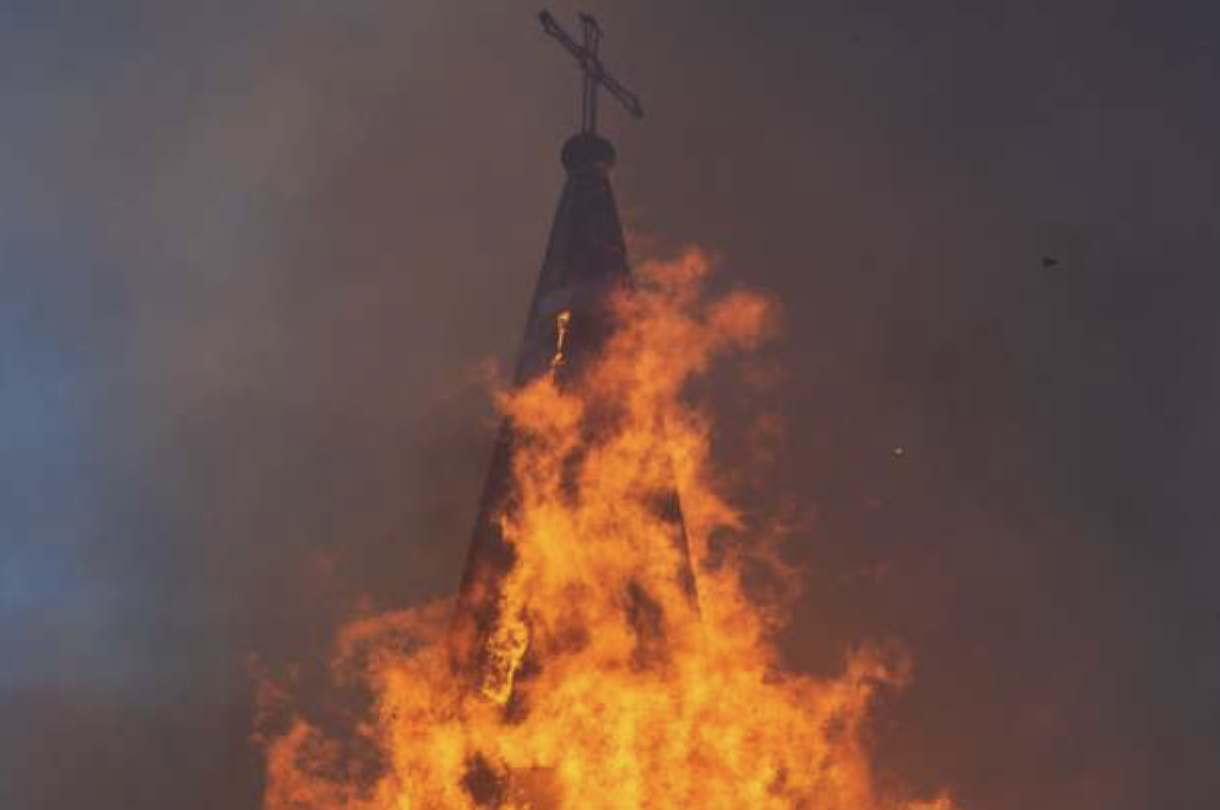
We’ve been here before, unfortunately. The “here” to which I am referring is a rash of suspicious church fires. We saw it pre-pandemic across France, during the COVID-19 outbreak in this country last summer and now in Canada just as the virus seemingly dissipates amid increased vaccinations.

In all, there have been fires at 10 Canadian churches — mostly Catholic ones — and multiple acts of vandalism this summer.

Why? That’s the question more mainstream journalists should be asking. So who not ask it?

This is how the Catholic news website Aleteia reported on the incidents in a July 9 report:

The incidents followed news that Native Canadians have used ground-penetrating radar in cemeteries on the grounds of former residential schools, which were part of a Canadian program to assimilate indigenous peoples. The existence of the cemeteries had been known, but the news this spring and summer has put the controversy over the residential schools back in the limelight.

Many of the schools, which stretched across Canada and were in operation from the mid-19th to the late-20th centuries, were run by Catholic religious orders. A truth and reconciliation commission several years ago detailed the ways children were forcibly removed from their families to be educated in European traditions at the schools, forbidden to use their native languages and forced to drop elements of their Native culture.

Prime Minister Justin Trudeau, who has called for Pope Francis to come to Canada to apologize for the Church’s role in the schools, said last week that he understands the anger behind the church burnings but said it was “not something we should be doing as Canadians.”

The way the indigenous people were treated is certainly a stain on Canada’s history and has been a widely reported news story, as it should be, in Canada as well as the United States. The vandalism churches have suffered stemming from that has been covered as well — but notably absent is any journalistic focus or investigation on who may be responsible for these acts and what motivates them.

Are these church burnings hate crimes, even acts of terrorism?


Please respect our Commenting Policy

Think about it: Southern Baptist tweetstorm spotlights an important issue for religion-beat pros

Think about it: Southern Baptist tweetstorm spotlights an important issue for religion-beat pros

How many times have you read a story that said something like, “Southern Baptists are expected to do so-and-so or such-and such”?

I’m not talking about coverage of the actual annual meeting when “messengers” from autonomous SBC churches actually get together and vote on this-and-that and make statements and changes in the mechanisms that affect their common work. I am referring to news stories that seem to assume that Southern Baptists can be summed up with one set of cultural or political images or a set of data points.

You know: I’m talking about news coverage of Southern Baptists that assumes that Sunbelt suburban megachurches are the only reality. It’s so easy, when trying to write news reports of 666 words or so, to settle into language that attempts to make the blurry real world snap into super-sharp focus.

The same is true of all big religious movements, of course. We all know that the singular “Catholic vote” doesn’t exist, now or ever. We know that rural United Methodists are not the same folks as blue zip-code urbanites (and there are complexities inside those two groups). We know that many Episcopalians in north Texas are not the same as those in northern California. But there’s only so much space (even in today’s online world) and editors always want snappy phrases and punchy conclusions, usually with a political hook or two.

Anyway, Nathan A. Finn — provost at North Greenville University, a campus in South Carolina with strong Southern Baptist ties — recently rolled out a tweetstorm in the wake of all the news coverage of the SBC annual meeting in Nashville.

This is not a news story. It isn’t even a conventional “think piece,” although Finn could have turned it into one quite easily. It’s “just” a long chain of tweets. Nevertheless, there is much to learn here. Let us attend.

The chain opened with the tweet at the top of this post. Here’s the rest of the “storm” (sorry about the repeats, but it’s the best way to keep the URLs clear).


Please respect our Commenting Policy

Concerning prayers and penalty kicks: Inside the official Vatican soccer tournament

Concerning prayers and penalty kicks: Inside the official Vatican soccer tournament

Beyond the Vatican’s walls and its soaring columns lies a not-so-secret passion. It is this passion, one that envelopes much of the planet, that takes over the lives of a select group of Catholic priests and seminarians.

This passion is especially relevant with the Italian national team playing in the finals of EURO 2020.

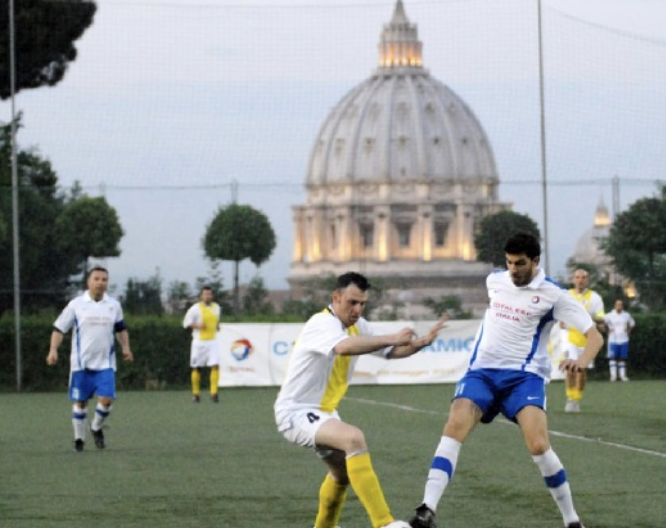
What is this passion? It’s soccer, of course. In particular, it’s the annual Clericus Cup, a soccer tournament contested by teams from various seminaries located throughout Rome. Founded in 2007, the competition features 66 different nationalities and is the brainchild of Cardinal Tarcisio Bertone, the former Vatican secretary of state and rabid soccer fan.

The tournament pits against one another different religious orders and schools where seminarians are studying and training to become ordained priests. Think of it as March Madness for priests-in-training who play the world’s most popular sport. In fact, the tournament has received regular press from the Italian media and even the subject last year of a feature story on FIFA.com, soccer’s world governing body.

This unique sporting event is the focus of a new 69-minute documentary called “The Holy Game” by filmmakers Brent Hodge and Chris Kelly. The film, distributed by Gravitas Ventures, details what’s often called the “World Cup of the Church” — but also takes a behind-the-scenes look at these seminarians who love both playing the game and the challenges that come with dedicated their lives to God.

Soccer aside, the film follows several seminarians all with a seemingly similar backstory: self-doubt and anxiety over what awaits them once they are ordained.


Please respect our Commenting Policy

Catholic bishops, politicos and Holy Communion: Little has changed in this old debate

Catholic bishops, politicos and Holy Communion: Little has changed in this old debate

The questions that haunted the Pontifical Academy for Life conference were familiar, controversial and exhausting, since Catholics and their bishops had been arguing about them for years.

The year was 2006, but little has changed in 2021.

What should bishops do when prominent Catholics -- even presidential candidates -- defended and promoted abortion rights? What if they said they accepted churched teachings on the sanctity of human life, while their actions suggested otherwise?

Would it violate the "separation of church and state" if bishops denied them access to Holy Communion? What if bishops asked these politicos to go to Confession?

"This is silly," said scholar Robert P. George, addressing that Vatican gathering. A Catholic shepherd "acting on his authority as a bishop to discipline members of his flock, who commit what the Church teaches are grave injustices against innocent human beings" would be "exercising his own constitutional right to the free exercise of religion. …

"Freedom is a two-way street. No one is compelled by law to accept ecclesiastical authority," stressed George, an outspoken Catholic layman and professor of jurisprudence at Princeton University. Thus, a bishop has "every right to exercise spiritual authority over anyone who chooses to accept it. There is a name for people who do accept the authority of Catholic bishops. They are called 'Catholics.' "

At that time, most debates centered on Sen. John Kerry, the Democratic Party's presidential nominee in 2004.

Cracks inside the U.S. Conference of Catholic Bishops widened with the election of President Joe Biden, a rosary-carrying Catholic who -- in word and deed -- has evolved into a fierce defender of abortion and LGBTQ rights. Biden quickly dropped his longstanding opposition to the federal funding of abortion, after criticism from the left in the 2019 primaries.


Please respect our Commenting Policy

New podcast: When preachers copy preachers -- is this an old story or something new?

New podcast: When preachers copy preachers -- is this an old story or something new?

As longtime GetReligion readers may know, my father was a Southern Baptist minister, spending his whole career in Texas pulpits and hospitals.

I heard him, from time to time, gently correct people who called him “preacher.” He would note that he wasn’t a “preacher,” he was a pastor. Brother Bert’s life and ministry were not defined by his pulpit work, although I always admired his ability to teach the Bible to laypeople.

Like it or not, preaching is the crucial skill — almost a Darwinian performance art — in the world of megachurches and evangelical power. Superstar clergy, about 99% of the time, are known for their preaching skills, even in liturgical-church traditions. The styles may differ, from one church brand to another, but growing churches usually have orators who can pull people into the pews.

That was the subject looming over this week’s “Crossroads” podcast (click here to tune that in), which focused on a strong Religion News Service report about the #Sermongate controversy surrounding the new leader of the Southern Baptist Convention. The headline: “New SBC President Ed Litton apologizes for using JD Greear sermon quotes without credit.” Here is some crucial material right up top:

A video posted on YouTube Thursday (June 24) showed clips of a ­­­January 2020 sermon on the New Testament book of Romans from Litton and clips from a January 2019 sermon on the same Bible passage from J.D. Greear, whose term as SBC president ended in June.

At several points, the comments from the two preachers are nearly identical. … The two pastors also say very similar things about homosexuality, which both believe is sinful.

But they each say Christians have erred by treating sexual sin as if it is worse than other sins — and singling out LGBT people as the worst of sinners.

What does “nearly identical” look like?


Please respect our Commenting Policy

Examining Joe Biden the Catholic is the story, not just what the bishops are doing

Examining Joe Biden the Catholic is the story, not just what the bishops are doing

British singer Winston Marshall, the banjo player for Mumford & Sons, announced that he decided to leave the band. The move came months after he’d faced criticism over a tweet in which he praised journalist Andy Ngo on his recent book — “Unmasked” — about the roots and strategies of the political protest movement known as antifa.

Marshall wrote an op-ed last Thursday for Medium under the headline “Why I’m Leaving Mumford & Sons” is a commentary on the world we live in today.

This is the section of his essay that stood out most for me, in the context of how mainstream journalists are covering America’s Catholic president:

Though there’s nothing wrong with being conservative, when forced to politically label myself I flutter between “centrist,” “liberal” or the more honest “bit this, bit that.” Being labeled erroneously just goes to show how binary political discourse has become. I had criticized the “Left,” so I must be the “Right,” or so their logic goes.

Indeed, it is this “binary political discourse” that dominates our lives these days. It may be a result of social media — Marshall details how he was attacked for his initial tweet and later his apology — in a world where nameless and faceless trolls dictate the discourse.

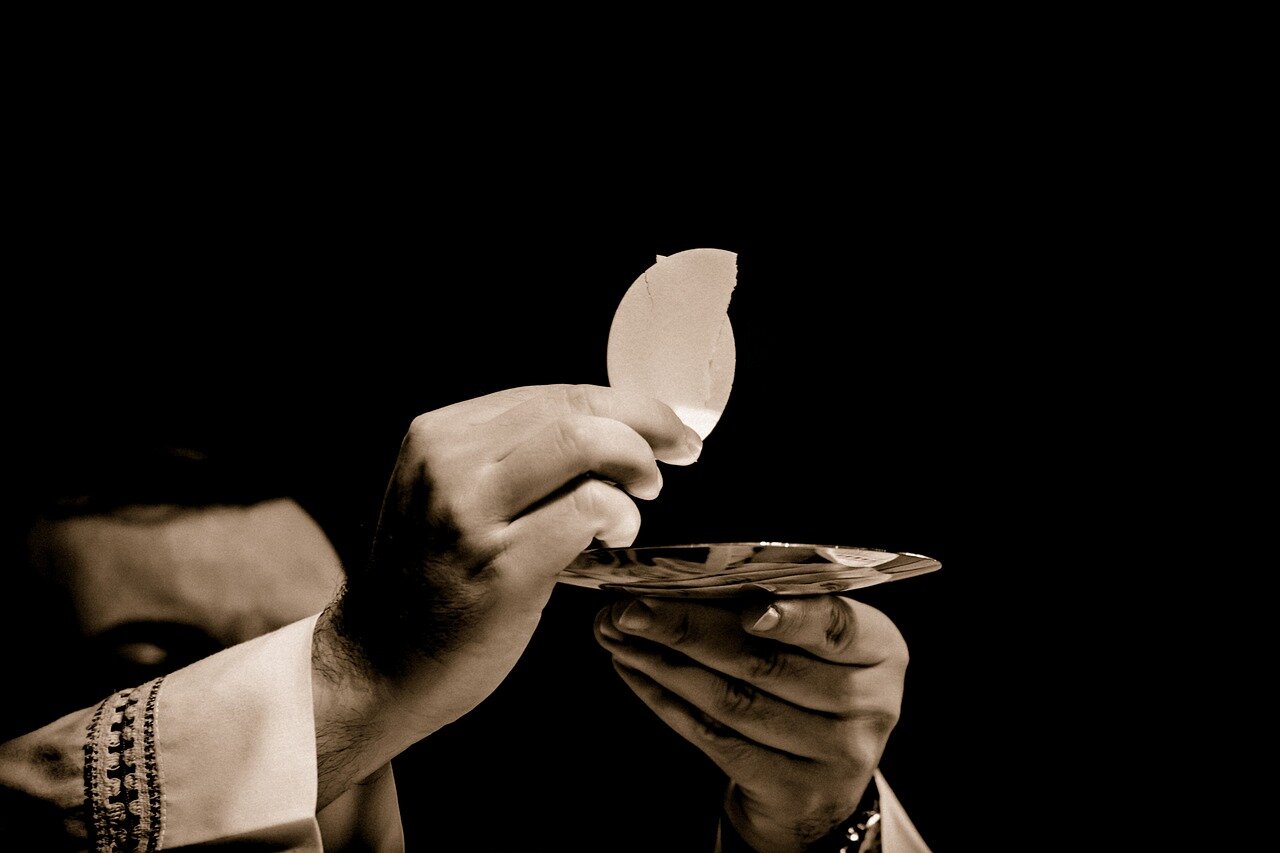
This takes me to the ongoing fallout from the U.S. bishop’s vote to draft a document that addresses “Eucharistic coherence” continues to be debated. The proposal’s aim is to ultimately decide whether Catholic politicians, like President Joe Biden, should be denied Holy Communion.

The news coverage in secular media on this very complicated theological matter has been disappointing, sub-par even in some cases. It’s no surprise at a time when skilled religion reporters are as hard to spot as a unicorn on stories of this kind. Far too often, political desk reporters at major news organizations cover such religious/theological issues. Politics, after all, is what matters.


Please respect our Commenting Policy