Catholicism

Catholic press braces for Biden presidency: How it will further polarization on doctrine

Catholic press braces for Biden presidency: How it will further polarization on doctrine

Inauguration Day this year comes two weeks after pro-Trump rioters descended on the U.S. Capitol before President-elect Joe Biden’s victory was certified by lawmakers. It was the latest — and most stark — demonstration of how our nation’s media ecosystem is in a state of decay and under attack.

Two weeks removed from that awful day, it’s worth taking stock in where we are, how we got here and, more importantly, what can we expected over the next four years under Biden.

This road, more than a decade in the making, was exasperated by Donald Trump’s presidential run and election in 2016. At the same time, citizens on the left and right have grown increasingly weary of institutions (the press being one of them) and that’s made violence an acceptable means for retribution.

As a result, the political, cultural and religious polarization that has taken place over the past four years, ignited further last year amid a pandemic and the presidential election, can’t be undone. The violence on Jan. 6 in Washington, D.C. is the latest tangible example of where we are as a country. The National Catholic Register made this observation in the wake of the riot:

The United States is troubled today by something deeper: At its core this is a spiritual and cultural crisis, even more than a political one.

The Founding Fathers worried about the same factionalism we saw on full and ugly display at the Capitol. But in the past, as Alexis de Tocqueville observed in Democracy in America, shared religious values have provided a glue that allowed for peaceful coexistence in our strikingly individualistic nation, while reminding us that politics was not ultimate.

Today, that is no longer the case. The system of Judeo-Christian values that grounded our political and civic life for more than two centuries has eroded and not been replaced. The ensuing vacuum means our national tendency toward factionalism has no “ballast” to steady the ship of state at turbulent moments, such as this disputed presidential transition.

The events of the last six months and how they have been covered by news organizations — spanning the COVID-19 lockdowns and #BlackLivesMatter protests to the presidential race and the attack on the Capitol — mark an end to an era in press history. It would appear that the American Model of the Press is dead and that reality has become mangled as Americans get their news through a prism of advocacy, partisan media sources.

This journalism earthquake has shaken Catholic media, as well. Hold on, because that’s where we are headed.
Please respect our Commenting Policy

State and federal elections spotlight America's diversity and (yet again) religious nones

State and federal elections spotlight America's diversity and (yet again) religious nones

The mayhem at the U.S. Capitol last week did not prevent Congress's ceremonial tally of the Electoral College victories of the nation's second Catholic president, Joseph Biden, and of Kamala Harris, the first African-American, first Asian-American and first female vice president.

Simultaneously, diversity was also demonstrated in the two Georgia runoff wins that give Democrats control of the U.S. Senate. Jon Ossoff is this heavily Protestant state's first Jewish senator. Baptist pastor Raphael Warnock makes history as only the South's second African-American senator elected since the Reconstruction era. The first is Republican Tim Scott in neighboring South Carolina.

OK. The press has reported all that.

Less noticed are some diverse Democrats newly elected to state legislatures, as featured in the "mainline" Protestant magazine Christian Century. Colorado, Delaware, Florida, Wisconsin and Oklahoma all elected their first-ever Muslim lawmakers, and the Oklahoman, Mauree Turner, is also America's first legislator to identify as non-binary. Episcopal priest Kim Jackson becomes the first openly lesbian member of Georgia's Senate. Kirk White, founder of the Wiccan Church of Vermont, joins that state's Assembly.

Journalists should also be reflecting on the societal change reflected in the religious makeup of the new U.S. Congress, documented in Pew Research Center's latest biennial report, drawn from CQ Roll Call data. Pew's report page is here and for future reference note you can click on "Detailed Table" for a listing of each member's religious identity.

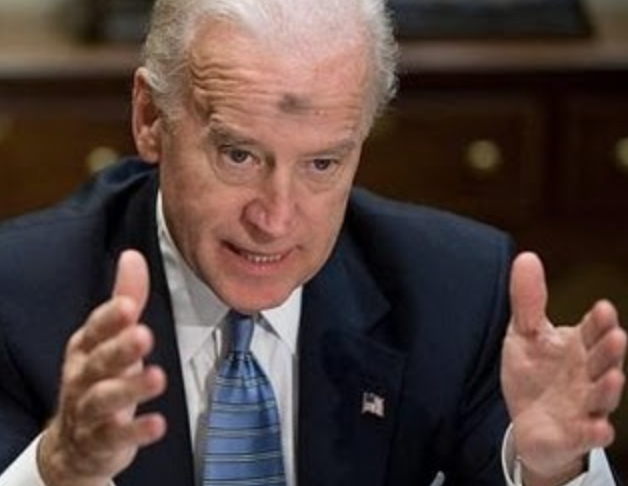
Religious affiliations do not necessarily define members' policies and voting records. Consider all those Democrats who call themselves Catholic but are pro-choice on abortion -- churchgoer Biden among them. But the numbers tell the media something about society's broad religious trends.

Diversity rundown: Way back when, Congress was exclusively Christian and heavily Protestant. The new House and Senate have 33 Jews, three Muslims, three Hindus and two Buddhists. Like Jews, Unitarian Universalists are over-represented relative to the U.S. population with three members, while Pentecostalists are under-represented, with only two members.

Several organizations have compiled religious censuses of Congress over the years. Pew Research issued its first after the 2008 election.


Please respect our Commenting Policy

Big symbols, big story: Pope Francis changes church law to put women 'on the altar' in robes

Big symbols, big story: Pope Francis changes church law to put women 'on the altar' in robes

It’s not every day that the pope changes canon law. Pope Francis did just that in allowing women a larger role during Mass.

The pope said, using a powerful phrase in Catholic thought, that this headline-grabbing change was based on “a doctrinal development” seen in the recent life of the church.

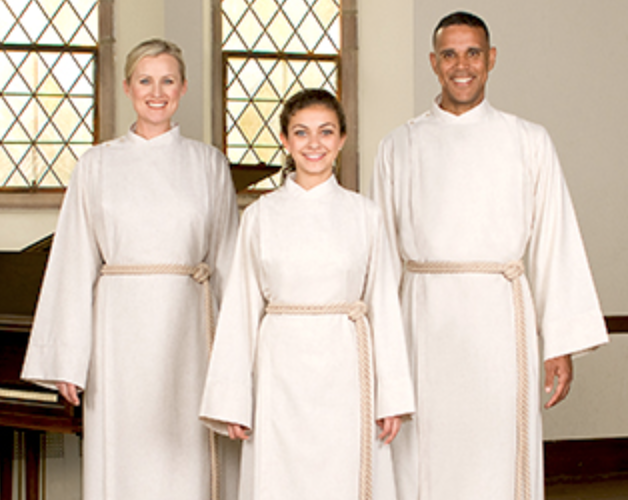
The move — in the wake of a decades-old priest shortage — will grant “non-ordained ministers” the chance to serve as lectors, read scripture, act as eucharistic ministers and, in a crucial symbolic change, wear robes while serving in the sacred space around the altar. The changes, however, will continue to forbid women from being made deacons or ordained priests.

The pope changed canon law to read: “Lay people who have the age and skills determined by decree of the Episcopal Conference, they can be permanently assumed, through the established liturgical rite, to the ministries of lectors and of acolytes; however this contribution does not give them the right to support or to remuneration by the church.”

For the sake of comparison, the law had previously read: “Lay men who possess the age and qualifications established by decree of the conference of bishops can be admitted on a stable basis through the prescribed liturgical rite to the ministries of lector and acolyte.”

In other words, this codifies into the canon the role of women as part of Roman liturgical rite. The announcement, however, caused lots of confusion, especially among many Catholics who have already witnessed women in some of these roles for decades.

The Associated Press headline on the story read, “Pope says women can read at Mass, but still can’t be priests.” That vague language didn’t clarify matters.

In a letter that accompanied the changes, the pontiff said he wanted to bring “stability” and “public recognition” to women already serving during the Mass. Beyond the headline, the AP, in its reporting of the announcement, said that the pope had “amended” church law “to formalize and institutionalize what is common practice in many parts of the world: Women can be installed as lectors, to read Scripture, and serve on the altar as eucharistic ministers. Previously, such roles were officially reserved to men even though exceptions were made.”

The original AP story caused even more confusion when it initially reported that women could read the Gospel during Mass.


Please respect our Commenting Policy

New podcast: Who stands in the middle of American politics? Often, that's a religion question

New podcast: Who stands in the middle of American politics? Often, that's a religion question

There were two major stories in American life this week, when it seemed like the world turned in a matter of minutes.

The riot at the U.S. Capitol grew out of yet another legal Donald Trump rally, with its familiar mix of hero worship, populist rage and, yes, rhetoric and symbols used by conservative, often Pentecostal, Christians. Fired up by a truly radical message from the president, many (not all) of these protestors marched to Capitol and turned into an illegal mob, crashing through security fences and then through doors and windows. Yes, some of the Christian banners and signs went with them.

We will be learning more about the makeup of that mob as participants are identified, arrest and tried — perhaps under (irony alert) Trump’s June 26th executive order authorizing a “penalty of up to 10 years’ imprisonment for the willful injury of Federal property.”

There have been waves of statements by religious leaders condemning the violence, including many by evangelicals who (a) opposed Trump, (b) reluctantly voted for him or (c) enthusiastically backed him. I expect more coverage on all of that (I’m collecting material for an “On Religion” column). Readers can start with this piece from the left, care of HuffPost.com: “Trump’s Evangelical Allies Condemn Violence At The Capitol.” It focuses on evangelicals who are still finding it hard to attack Trump, while — almost hidden at the end — noting views from some of condemned both the violence and the president’s role in it.

Let me know, via comments or email, if you see more religion-driven riot coverage.

Meanwhile, this week’s “Crossroads” podcast (click here to tune that in) centered on a GetReligion post that was written about two hours before the riots began: “Life after Georgia — Questions about a pro-life Democrat in U.S. Senate and other issues ...

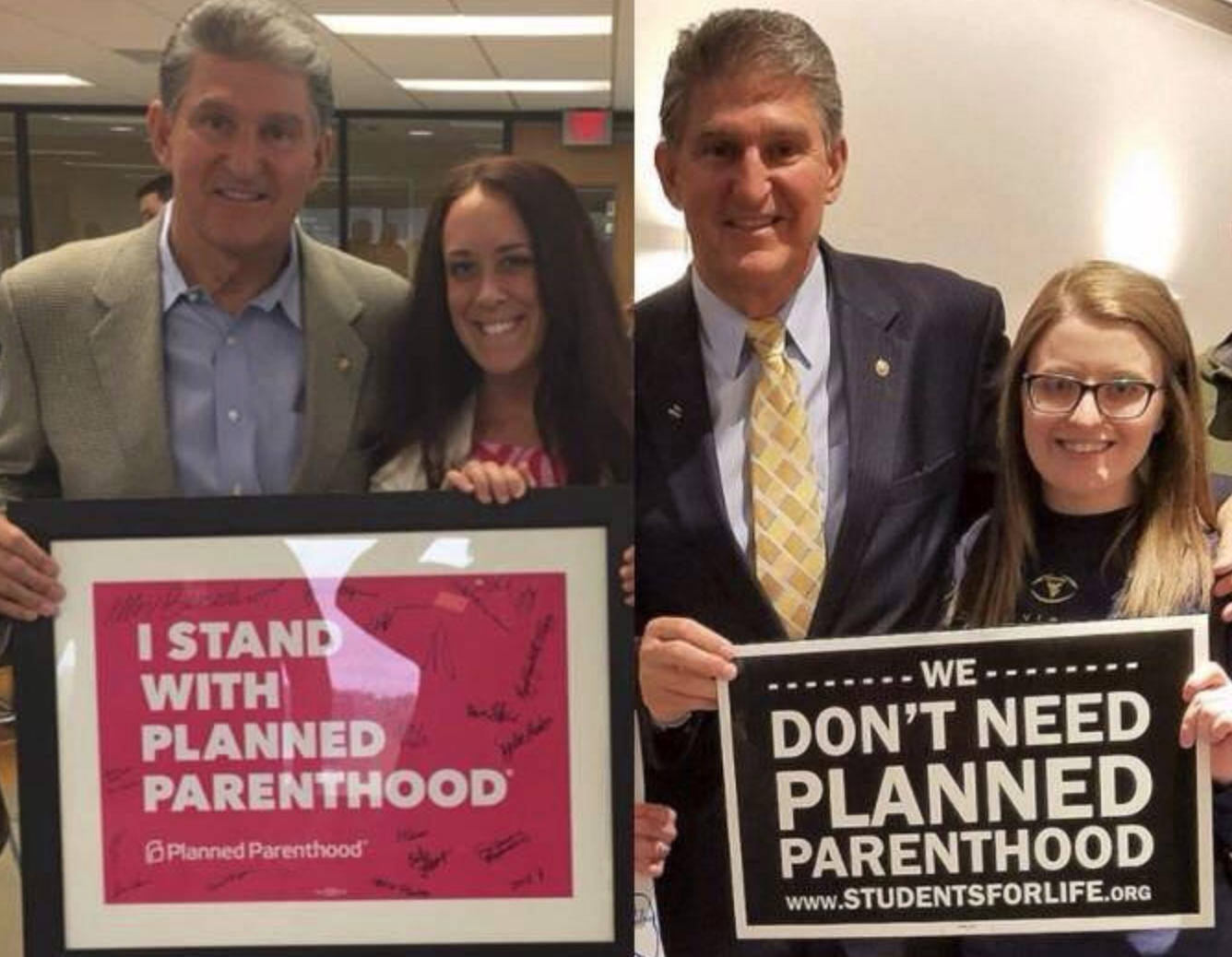
The key is that victories by two Democrats (one a liberal Baptist pastor) put a very interesting conservative (and Catholic) senator at the middle of America’s increasingly divided and even bloody political map.

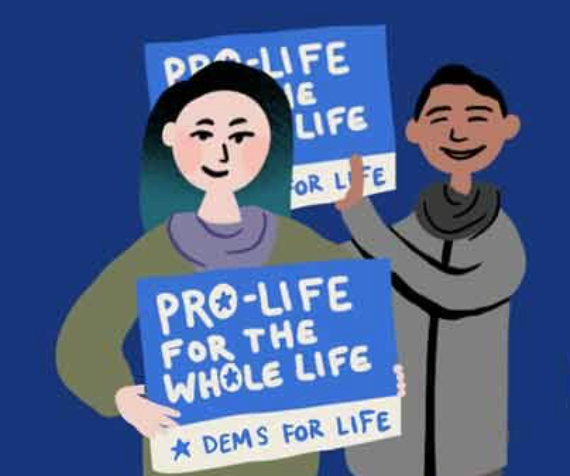
That man, Sen. Joe Manchin of West Virginia, is a living symbol of what used to be a major force in American politics — the white Southern Democrat. Although he has been endorsed by Democrats For Life, his pragmatic political views on that topic will not be found in the Democratic or Republican platforms, but do resemble the views of millions of centrist Americans.

Many Democrats, in the past, have insisted that Manchin is not really a Democrat. Well, how many want to toss him out of the party right now (with that 50-50 Senate split)?


Please respect our Commenting Policy

Life after Georgia: Questions about a pro-life Democrat in U.S. Senate and other issues ...

Life after Georgia: Questions about a pro-life Democrat in U.S. Senate and other issues ...

Once upon a time, there were these strange political unicorns called “pro-life Democrats.” They were often, but not always, part of another endangered species called “blue-dog Democrats.”

Most of these unique politicos were in the U.S. House of Representatives, but there were occasional — but increasingly rare — sightings in the U.S. Senate. After all, Tennessean Al Gore had an 84% rating with National Right to Life when he was a congressman, but that changed — for the most part — when he became a senator. And as vice president? Forget about it.

This brings us to the thought for the day, a quote drawn from a mini-firestorm in the Democratic Party back in 2017. Here is a quote from an “On Religion” column at that time:

… Democratic National Committee Chairman Tom Perez drew another bright line defining who participates in the work of his party.

"Every Democrat, like every American," he said, "should support a woman's right to make her own choices about her body and her health. This is not negotiable and should not change city by city or state by state." In fact, he added, "every candidate who runs as a Democrat" should affirm abortion rights.

What if that state is West Virginia?

Some key Democrats quickly stepped forward in 2017 — including Rep. Nancy Pelosi — to suggest that Perez wasn’t speaking for all top Democrats. Still, the party’s stance on abortion rights and funding continued to veer further and further to the cultural and religious left, eventually causing one Joe Biden to shed the last scraps of his once “centrist” stance.

This, of course, brings us to religion-beat angles in the aftermath of the Georgia earthquake, in which Democrats — Black and White — and other anti-Donald Trump voters appear to have handed the Democrats the slimmest possible control of the U.S. Senate.

This brings us to Sen. Joe Manchin of West Virginia, a conservative Democrat and active Roman Catholic who has been endorsed by Democrats for Life, even though his record on that issue has become rather complex. He remains a throwback to the days when it was perfectly normal to be a Democrat and a cultural conservative. One can imagine the pressure he faces from establishment Democrats.

Well, how many Democrats want to toss Manchin out of the party right now?


Please respect our Commenting Policy

Yes, this is a religion question: Year in, year out, why is January 1st New Year’s Day?

Yes, this is a religion question: Year in, year out, why is January 1st New Year’s Day?

THE QUESTION:

Why is January 1st New Year’s Day?

THE RELIGION GUY’S ANSWER:

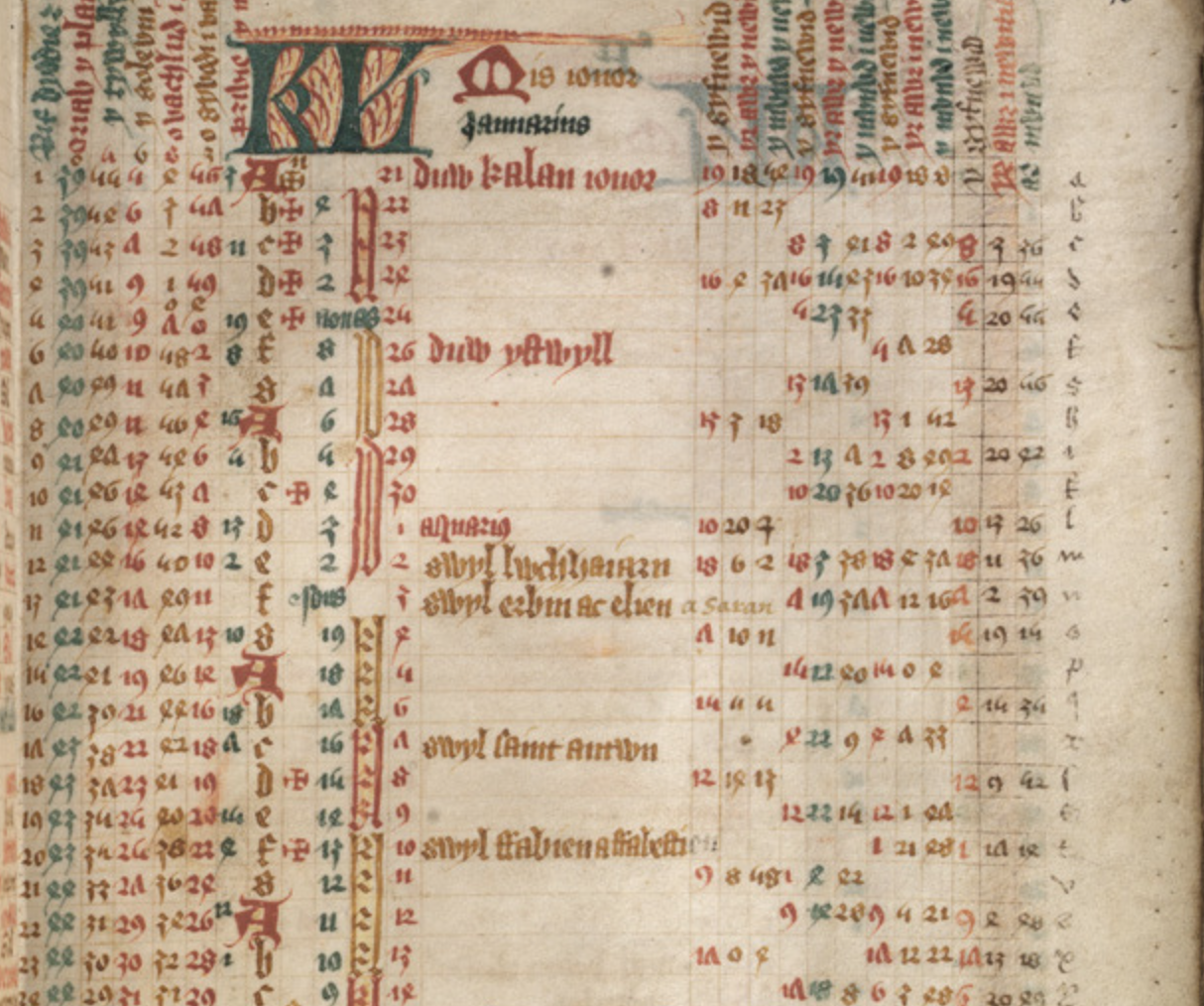
There’s a religious angle here, as with almost any major aspect of human culture past and present. Our January 1 observance stems from ancient paganism. The numbering of “2021,” as with every year, reflects the global reach of Christianity. And the specific day everyone reckons to be January 1 was fixed by the Catholic Church during the Reformation and Counter-Reformation hostilities.

Alongside this conventional calendar, many faiths observe their own religious new years by calculations apart from the January 1 tradition.

The perpetually valuable Encyclopaedia Britannica tells us that worship of the Roman god Janus, with his festival (on January 9th, not the 1st) in the month eventually named for him was practiced even before the legendary founding of the city of Rome in 753 B.C. Janus was the animistic divinity of doorways (januae) and archways (jani). The idea of auspicious entrances and exits, endings and beginnings, eventually applied to turn of the year. January 1 officially replaced March 1 as the start of Rome’s year in 153 B.C..

Due to this pagan background, much of Christian Europe came to reject January 1 observances and celebrated the new year on Christmas Day or March 25, the feast of the Annunciation (the angel Gabriel’s message to Mary that she would bear the divine Son).

The year is the length of time the earth makes one circuit around the sun, but the day upon which a year begins is an arbitrary choice. In 46 B.C., Julius Caesar kept Rome’s January 1 starting point but reworked the “Julian calendar” to better fit with astronomy. The Julian system gained widespread use all the way until A.D. 1582, when Pope Gregory XIII ordered the “Gregorian calendar” cleanup that is universal today.

The Julian system figured that a year lasts roughly 365 days plus 1/4 of a day, so it added one day in the “leap year” every four years.


Please respect our Commenting Policy

Yearenders-palooza: What do a swarm of religion websites want you to read about 2020 news?

Yearenders-palooza: What do a swarm of religion websites want you to read about 2020 news?

Once upon a time, it was normal for news organizations to produce lists of the Top 10 stories of the year, usually with the emphasis on their city, region or nation. Others focused on the concerns of their readers or the unique editorial viewpoint of the publication. Some focused on the whole world or a specific kind of news in the world.

That was then. This year, I can’t even find a hard-news Top 10 list at The Associated Press mega-promotional page for “The Year in Review.” If I missed that list somewhere, please let me know.

Here at GetReligion, we have published several items looking back and also looking forward:

* Of course the pandemic was top 2020 religion-news story: But which COVID-19 story?

* So what went wrong in #2020, other than that whole coronavirus pandemic thing?

* Final #2020 podcast: The year when religion news went viral, and that was a bad thing

* New year and many old issues: Catholic storylines journalists need to keep an eye on in 2021

* Pondering 'Things to Come,' with help from savvy thumbsuckers and backgrounders

We will have a collection of Bobby Ross, Jr., items on 2020 — from several different angles — this coming Monday.

What happened to the old Top 10 list format?

It got lost, of course, in the need to point niche readers toward specific links of topical news, features and commentaries, hoping that they will click, click, click there way through a specific website’s offerings.

There’s nothing wrong with that, of course. After all, I just hit readers with a blitz of #2020 GetReligion URLs.

Now, let me point readers toward lots of other features of this kind elsewhere, all with specialty religion-news hooks. If I missed some good ones, please let me know in our comments pages.

First, there is “Our best religion stories from a terrible year” at Religion News Service. Summary:

It’s no news that 2020 will go down as one of the worst years in recent memory. But the triple-whammy of pandemic, economic crisis and demonstrations for racial justice that left many Americans beleaguered and angry also yielded some inspiring and profound stories of faith and spiritual connection. Here are 11 stories by our staff and frequent contributors that captured moments of resilience and perseverance, and even a few moments of celebration.

Looking ahead, there is this: “RNS reporters on the big stories they expect to cover in 2021.” As a sample, here is the item from veteran religion-news scribe Bob Smietana:


Please respect our Commenting Policy

New year and many old issues: Catholic storylines journalists need to keep an eye on in 2021

I am not a very good prognosticator. Yet this is the time of year that forces many journalists to do just that.

What will 2021 bring? That’s the big question following a 2020 that will forever remain a year where the world was held hostage by a pandemic. It was also a year where we had a combative presidential election and a reawakened social justice movement that brought our divided politics out into our streets. Could any of us have accurately predicted what 2020 would have been like? I don’t think so.

That hasn’t stopped many from trying to predict what next year will be like. The vaccine could bring with it prosperity and freedom again, but a new strain of the virus has forced much of Europe into lockdown once again. A lot of what 2021 will look like — in terms of religion and faith — will depend on the virus and how politicians choose to handle it.

It’s true that the pandemic exposed all kinds of issues in our society. The journalism that is tasked with objectively reporting these issues so that citizens can make informed decisions failed us miserably, a trend that was years in the making, but peaked in 2020 with the presidential election. My post from this past June highlighted this extremely difficult realization for me after more than 20 years in the business. Here’s the main thrust of that post:

News coverage — be it about politics, culture or religion — is largely made up of crimes (in the legal sense) or lapses in judgement (in a moral one). But the news media has changed in the Internet age, primarily because of social media. Facebook, Twitter and TikTok, to name just three, allows users — everyday people — to pump out content. That content can take many forms — from benign observations to what’s called hot takes — for all to read and see.

Truth, fact checking and context are not important. What matters are likes and followers. What we have now is something some have called “The Great Awokening” and it appears to have forever transformed our political discourse and the journalism that tries to report on it.

Mainstream news organizations, in their quest for clicks amid hope of figuring out a new business model, now mirror the content we all see on social media platforms. Newsrooms loaded with a younger generation who grew up in this environment have imposed their own woke politics as their morality thermometer.

The news media both underplayed COVID-19 and then hyped it, only to pause their concern in the wake of the George Floyd protests. For a list of 2020 media misses, check out this roundup.

That’s in the past now, but we will indeed be talking about 2020 for years and decades to come. Instead of trying to predict the future, the aim of this post is to advise mainstream journalists on what the major Catholic news storylines will be over the next 12 months — in the United States and the world.


Please respect our Commenting Policy

Weekend Plug-In year in review: Religion-beat scribes select their top journalism of 2020

What a year for religion news!

From the pandemic to the election, the major headlines of 2020 had huge faith angles.

For this special year-end edition of Weekend Plug-in, I asked some of the nation’s top reporters and columnists to share the favorite religion story they wrote during 2020.

However, some of them couldn’t stop at just one. I guess I’m OK with that because it means more terrific links in the list below.

It’s a holiday week, so I didn’t catch up with everybody. But I sure appreciate my colleagues who responded. And I beg forgiveness for the excellent Godbeat work I missed in this roundup, this week and every week.

Power Up: The Year’s Best Reads

Journalists who write about religion pick their top story — or in some cases, top stories — of 2020.

Sarah Pulliam Bailey, Washington Post: Seeking power in Jesus’ name: Trump sparks a rise of Patriot Churches, published Oct. 26.

Adelle M. Banks, Religion News Service: Stacey Abrams’ passion for voting began with her preacher parents, published Oct. 16.

Deepa Bharath, Orange County Register: Hospital chaplains fill role of surrogate family members during times of isolation, depression, death, published July 12.

Michelle Boorstein, Washington Post: These Mormon twins worked together on an IRS whistleblower complaint over the church’s billions — and it tore them apart, published Jan. 16.

Katherine Burgess, Memphis Commercial Appeal: Family of Tennessee death row inmate awaits 'miracle' as 11th hour DNA test underway, published Oct. 20.


Please respect our Commenting Policy