Catholicism

Life after Georgia: Questions about a pro-life Democrat in U.S. Senate and other issues ...

Life after Georgia: Questions about a pro-life Democrat in U.S. Senate and other issues ...

Once upon a time, there were these strange political unicorns called “pro-life Democrats.” They were often, but not always, part of another endangered species called “blue-dog Democrats.”

Most of these unique politicos were in the U.S. House of Representatives, but there were occasional — but increasingly rare — sightings in the U.S. Senate. After all, Tennessean Al Gore had an 84% rating with National Right to Life when he was a congressman, but that changed — for the most part — when he became a senator. And as vice president? Forget about it.

This brings us to the thought for the day, a quote drawn from a mini-firestorm in the Democratic Party back in 2017. Here is a quote from an “On Religion” column at that time:

… Democratic National Committee Chairman Tom Perez drew another bright line defining who participates in the work of his party.

"Every Democrat, like every American," he said, "should support a woman's right to make her own choices about her body and her health. This is not negotiable and should not change city by city or state by state." In fact, he added, "every candidate who runs as a Democrat" should affirm abortion rights.

What if that state is West Virginia?

Some key Democrats quickly stepped forward in 2017 — including Rep. Nancy Pelosi — to suggest that Perez wasn’t speaking for all top Democrats. Still, the party’s stance on abortion rights and funding continued to veer further and further to the cultural and religious left, eventually causing one Joe Biden to shed the last scraps of his once “centrist” stance.

This, of course, brings us to religion-beat angles in the aftermath of the Georgia earthquake, in which Democrats — Black and White — and other anti-Donald Trump voters appear to have handed the Democrats the slimmest possible control of the U.S. Senate.

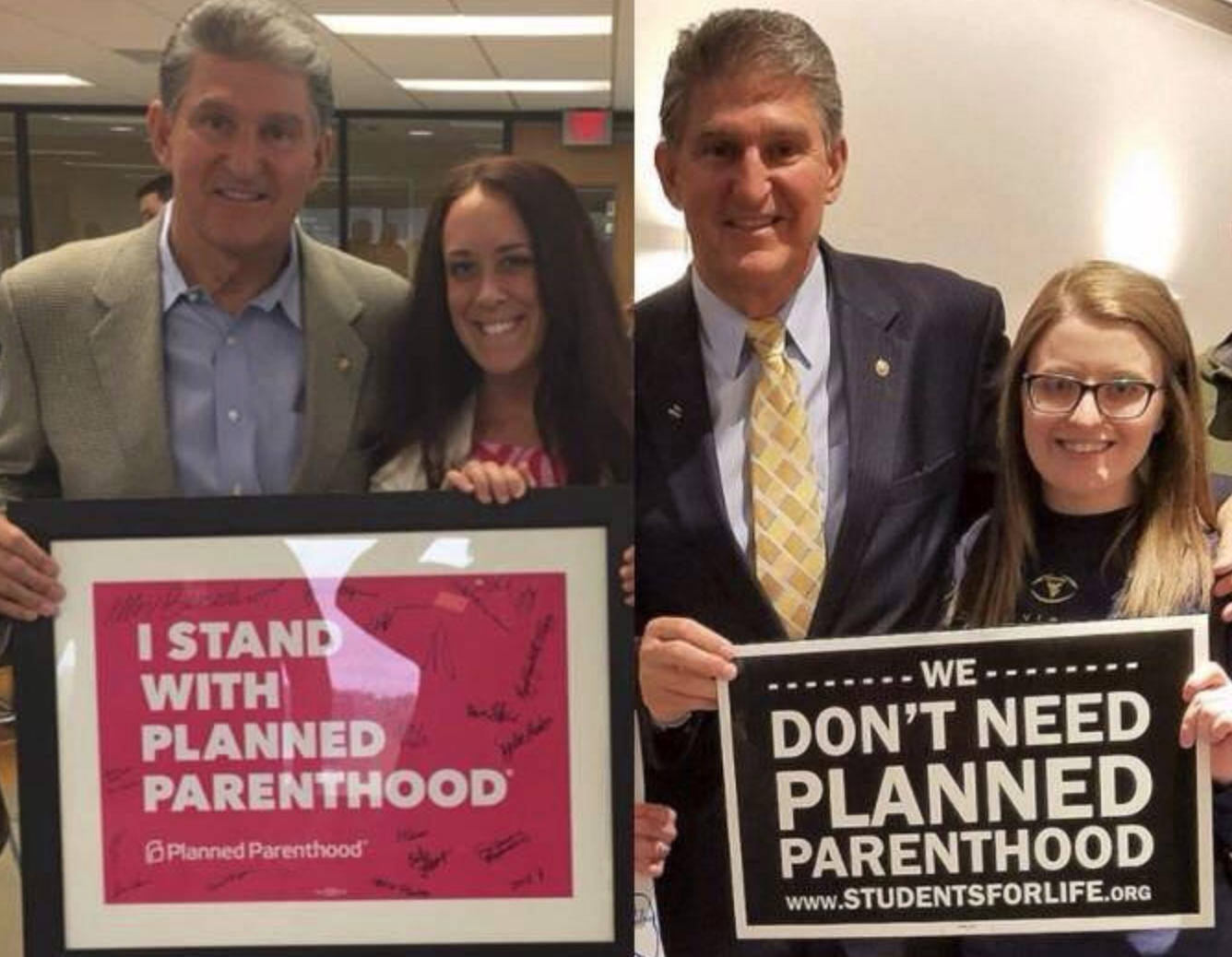
This brings us to Sen. Joe Manchin of West Virginia, a conservative Democrat and active Roman Catholic who has been endorsed by Democrats for Life, even though his record on that issue has become rather complex. He remains a throwback to the days when it was perfectly normal to be a Democrat and a cultural conservative. One can imagine the pressure he faces from establishment Democrats.

Well, how many Democrats want to toss Manchin out of the party right now?

Please respect our Commenting Policy

Yes, this is a religion question: Year in, year out, why is January 1st New Year’s Day?

Yes, this is a religion question: Year in, year out, why is January 1st New Year’s Day?

THE QUESTION:

Why is January 1st New Year’s Day?

THE RELIGION GUY’S ANSWER:

There’s a religious angle here, as with almost any major aspect of human culture past and present. Our January 1 observance stems from ancient paganism. The numbering of “2021,” as with every year, reflects the global reach of Christianity. And the specific day everyone reckons to be January 1 was fixed by the Catholic Church during the Reformation and Counter-Reformation hostilities.

Alongside this conventional calendar, many faiths observe their own religious new years by calculations apart from the January 1 tradition.

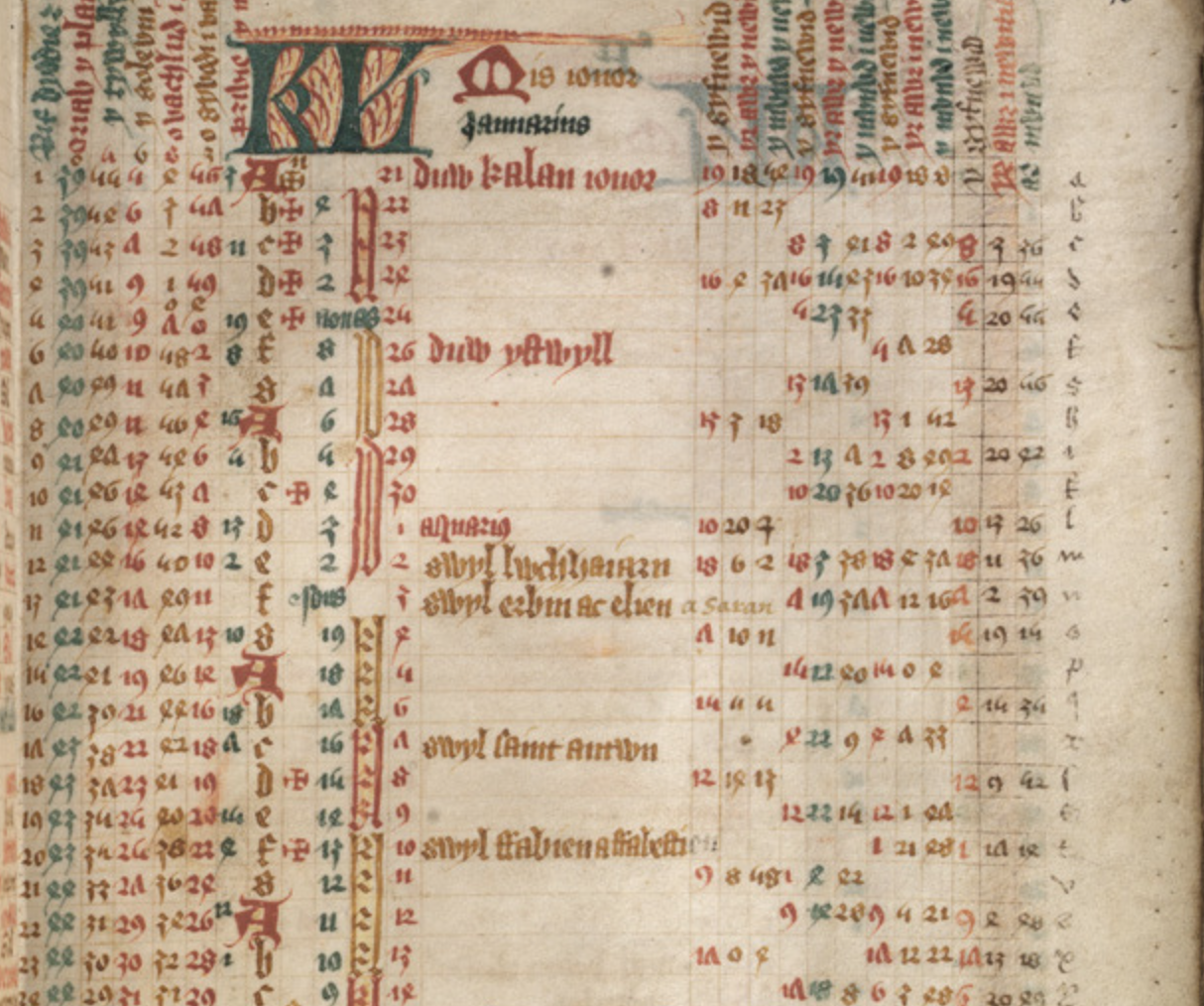
The perpetually valuable Encyclopaedia Britannica tells us that worship of the Roman god Janus, with his festival (on January 9th, not the 1st) in the month eventually named for him was practiced even before the legendary founding of the city of Rome in 753 B.C. Janus was the animistic divinity of doorways (januae) and archways (jani). The idea of auspicious entrances and exits, endings and beginnings, eventually applied to turn of the year. January 1 officially replaced March 1 as the start of Rome’s year in 153 B.C..

Due to this pagan background, much of Christian Europe came to reject January 1 observances and celebrated the new year on Christmas Day or March 25, the feast of the Annunciation (the angel Gabriel’s message to Mary that she would bear the divine Son).

The year is the length of time the earth makes one circuit around the sun, but the day upon which a year begins is an arbitrary choice. In 46 B.C., Julius Caesar kept Rome’s January 1 starting point but reworked the “Julian calendar” to better fit with astronomy. The Julian system gained widespread use all the way until A.D. 1582, when Pope Gregory XIII ordered the “Gregorian calendar” cleanup that is universal today.

The Julian system figured that a year lasts roughly 365 days plus 1/4 of a day, so it added one day in the “leap year” every four years.


Please respect our Commenting Policy

Yearenders-palooza: What do a swarm of religion websites want you to read about 2020 news?

Yearenders-palooza: What do a swarm of religion websites want you to read about 2020 news?

Once upon a time, it was normal for news organizations to produce lists of the Top 10 stories of the year, usually with the emphasis on their city, region or nation. Others focused on the concerns of their readers or the unique editorial viewpoint of the publication. Some focused on the whole world or a specific kind of news in the world.

That was then. This year, I can’t even find a hard-news Top 10 list at The Associated Press mega-promotional page for “The Year in Review.” If I missed that list somewhere, please let me know.

Here at GetReligion, we have published several items looking back and also looking forward:

* Of course the pandemic was top 2020 religion-news story: But which COVID-19 story?

* So what went wrong in #2020, other than that whole coronavirus pandemic thing?

* Final #2020 podcast: The year when religion news went viral, and that was a bad thing

* New year and many old issues: Catholic storylines journalists need to keep an eye on in 2021

* Pondering 'Things to Come,' with help from savvy thumbsuckers and backgrounders

We will have a collection of Bobby Ross, Jr., items on 2020 — from several different angles — this coming Monday.

What happened to the old Top 10 list format?

It got lost, of course, in the need to point niche readers toward specific links of topical news, features and commentaries, hoping that they will click, click, click there way through a specific website’s offerings.

There’s nothing wrong with that, of course. After all, I just hit readers with a blitz of #2020 GetReligion URLs.

Now, let me point readers toward lots of other features of this kind elsewhere, all with specialty religion-news hooks. If I missed some good ones, please let me know in our comments pages.

First, there is “Our best religion stories from a terrible year” at Religion News Service. Summary:

It’s no news that 2020 will go down as one of the worst years in recent memory. But the triple-whammy of pandemic, economic crisis and demonstrations for racial justice that left many Americans beleaguered and angry also yielded some inspiring and profound stories of faith and spiritual connection. Here are 11 stories by our staff and frequent contributors that captured moments of resilience and perseverance, and even a few moments of celebration.

Looking ahead, there is this: “RNS reporters on the big stories they expect to cover in 2021.” As a sample, here is the item from veteran religion-news scribe Bob Smietana:


Please respect our Commenting Policy

New year and many old issues: Catholic storylines journalists need to keep an eye on in 2021

I am not a very good prognosticator. Yet this is the time of year that forces many journalists to do just that.

What will 2021 bring? That’s the big question following a 2020 that will forever remain a year where the world was held hostage by a pandemic. It was also a year where we had a combative presidential election and a reawakened social justice movement that brought our divided politics out into our streets. Could any of us have accurately predicted what 2020 would have been like? I don’t think so.

That hasn’t stopped many from trying to predict what next year will be like. The vaccine could bring with it prosperity and freedom again, but a new strain of the virus has forced much of Europe into lockdown once again. A lot of what 2021 will look like — in terms of religion and faith — will depend on the virus and how politicians choose to handle it.

It’s true that the pandemic exposed all kinds of issues in our society. The journalism that is tasked with objectively reporting these issues so that citizens can make informed decisions failed us miserably, a trend that was years in the making, but peaked in 2020 with the presidential election. My post from this past June highlighted this extremely difficult realization for me after more than 20 years in the business. Here’s the main thrust of that post:

News coverage — be it about politics, culture or religion — is largely made up of crimes (in the legal sense) or lapses in judgement (in a moral one). But the news media has changed in the Internet age, primarily because of social media. Facebook, Twitter and TikTok, to name just three, allows users — everyday people — to pump out content. That content can take many forms — from benign observations to what’s called hot takes — for all to read and see.

Truth, fact checking and context are not important. What matters are likes and followers. What we have now is something some have called “The Great Awokening” and it appears to have forever transformed our political discourse and the journalism that tries to report on it.

Mainstream news organizations, in their quest for clicks amid hope of figuring out a new business model, now mirror the content we all see on social media platforms. Newsrooms loaded with a younger generation who grew up in this environment have imposed their own woke politics as their morality thermometer.

The news media both underplayed COVID-19 and then hyped it, only to pause their concern in the wake of the George Floyd protests. For a list of 2020 media misses, check out this roundup.

That’s in the past now, but we will indeed be talking about 2020 for years and decades to come. Instead of trying to predict the future, the aim of this post is to advise mainstream journalists on what the major Catholic news storylines will be over the next 12 months — in the United States and the world.


Please respect our Commenting Policy

Weekend Plug-In year in review: Religion-beat scribes select their top journalism of 2020

What a year for religion news!

From the pandemic to the election, the major headlines of 2020 had huge faith angles.

For this special year-end edition of Weekend Plug-in, I asked some of the nation’s top reporters and columnists to share the favorite religion story they wrote during 2020.

However, some of them couldn’t stop at just one. I guess I’m OK with that because it means more terrific links in the list below.

It’s a holiday week, so I didn’t catch up with everybody. But I sure appreciate my colleagues who responded. And I beg forgiveness for the excellent Godbeat work I missed in this roundup, this week and every week.

Power Up: The Year’s Best Reads

Journalists who write about religion pick their top story — or in some cases, top stories — of 2020.

Sarah Pulliam Bailey, Washington Post: Seeking power in Jesus’ name: Trump sparks a rise of Patriot Churches, published Oct. 26.

Adelle M. Banks, Religion News Service: Stacey Abrams’ passion for voting began with her preacher parents, published Oct. 16.

Deepa Bharath, Orange County Register: Hospital chaplains fill role of surrogate family members during times of isolation, depression, death, published July 12.

Michelle Boorstein, Washington Post: These Mormon twins worked together on an IRS whistleblower complaint over the church’s billions — and it tore them apart, published Jan. 16.

Katherine Burgess, Memphis Commercial Appeal: Family of Tennessee death row inmate awaits 'miracle' as 11th hour DNA test underway, published Oct. 20.


Please respect our Commenting Policy

Of course the pandemic was top 2020 religion-news story: But which COVID-19 story?

Of course the pandemic was top 2020 religion-news story: But which COVID-19 story?

There was never any question whether the global coronavirus pandemic would be named the most important religion-news story in 2020.

The question was which faith-driven COVID-19 story -- out of a dozen or so -- would top the Religion News Association's Top 10 list.

According to journalists who cover religion, this was the year's biggest story: "COVID-19 pandemic claims lives of many religious leaders and laity, upends death rituals, ravages congregational finances, spurs charitable responses, forces religious observances to cancel or go online and stirs legal fights over worship shutdowns."

But there was a problem on my ballot. The RNA list included another coronavirus item focusing on religious liberty. In some cities and states, officials created pandemic regulations that claimed many institutions -- from grocery stores to casinos -- provided "essential services." Meanwhile, other institutions -- like churches and synagogues -- were deemed "non-essential."

The U.S. Supreme Court eventually ruled that religious institutions shouldn't face tougher rules than secular groups and activities. It was wrong, for example, to ban masked priests from hearing confessions -- outdoors, 10 feet away from masked penitents -- while consumers were lined up at liquor stores.

These conflicts continued. In a symbolic pre-Christmas press conference, Virginia Governor Ralph Northam explained why he thought religious groups should be willing to move their activities online and stay there -- for now.

"This year we need to think about what is truly the most important thing," Northam explained, in a Richmond press conference. "Is it the worship or the building? For me, God is wherever you are. You don't have to sit in the church pew for God to hear your prayers."

Bishop Robert Barron of the Catholic Archdiocese of Los Angeles was not amused. The problem with this"secularized, Protestant-ized" view of worship, he said, is that it doesn't work for believers with ancient traditions that don't work online, such as offering communicants consecrated bread and wine.


Please respect our Commenting Policy

If ever there was a year for news about the quiet Advent season, this was the one

Here at the Mattingly abode in East Tennessee, the Christmas Tree is finally up and soon we will start playing our favorite playlists of Christmas music.

In other words, this past Sunday was the final day of the ancient season that, for Orthodox Christians, is called Nativity Lent. It is the second longest season of repentance and fasting on the Christian calendar, after the Great Lent that leads to Easter, or Pascha in Eastern churches.

In the churches of the West, the season before the 12 days of Christmas is called Advent.

In shopping malls and mass media, of course, the long, glitzy, commercialized season that precedes Christmas is (wait for it) known as “Christmas.” The debate is whether “Christmas” begins for Halloween, after Halloween or after Thanksgiving.

Thus, news consumers don’t see a lot of Advent stories. In 2008, M.Z. Hemingway explained why in a classic (read it all) December 23rd GetReligion post — “The war on Advent.” Here is how that opened:

Of all the seasons of the church year, the first — Advent — is definitely the one that leaves me feeling most out of touch with my fellow Americans. While everyone else is frantically shopping, decorating, partying, those Christians who mark Advent are in a period of preparation and prayerful contemplation. The disciplines of Advent include confession and repentance, prayer, immersion in Scripture, fasting and the singing of the Great O Antiphons and other seasonal hymns. I'm fond of "Lo, He Comes With Clouds Descending," "The Angel Gabriel from Heaven Came," "Savior of the Nations, Come" and many, many more. Advent may, in fact, be the best season of the church year when it comes to hymnody.

The season is marked by millions of Catholics, Lutherans, Episcopalians and many other Christians, but not only do you rarely see any media coverage of it, the media actively promotes the secular version.

Advent ends on Christmas Eve with the beginning of the Christmas season. In America, the end of Advent coincides with the end of the secular Christmas season/shoppingpalooza.

I bring this up for two reasons.

First, I wanted to let readers know that GetReligion will stay open for business during the next 10 days or so, but with fewer posts (unless there is major news to discuss).

Second, another former GetReligion scribe — Sarah Pulliam Bailey — just wrote a fine piece for the Washington Post that ran with this headline: “Instead of raucous holiday parties, some opt for a candlelit Advent season of longing and hope.


Please respect our Commenting Policy

Top 10 religion-news stories of 2020: Coronavirus pandemic touched almost everything

Some years, picking the No. 1 religion story is a real challenge.

This year? Not so much.

Give the global pandemic credit for making at least one thing easy during 2020.

Let’s count down the Top 10 stories, as determined by Religion News Association members (including yours truly). I’ll sprinkle a few links to related stories into the RNA summaries:

10. “Liberty University president Jerry Falwell Jr. resigns amid controversies including a risqué photo and an alleged sex scandal. Claims of sexual misconduct also made against late evangelical apologist Ravi Zacharias and Hillsong pastor Carl Lentz.”

9. “Pandemic-related limits on worship gatherings spur protests and defiance by Hasidic Jewish groups and evangelicals led by pastor John MacArthur and musician Sean Feucht. Supreme Court backs Catholic and Jewish groups' challenge to New York's limits.”

8. “A Vatican investigation into defrocked ex-cardinal Theodore McCarrick found that bishops, cardinals and popes failed to heed reports of his sexual misconduct. Debate ensues over the legacy of sainted Pope John Paul II, who promoted him to cardinal.”

7. “Dozens of nations decry what they term widespread human-rights abuses by China against predominately Muslim Uighurs and others in Xinjiang region, many in detention camps. New U.S. law authorizes sanctions against Chinese officials deemed complicit.”

6. “White evangelicals and other religious conservatives again vote overwhelmingly for President Trump, despite some vocal dissent. Protestants fuel his gains among Hispanic voters. Some religious supporters echo his denials of the election results.”

5. “Police, using tear gas, drive anti-racism protesters from Lafayette Square in Washington, clearing way for President Trump to pose for a controversial photo with a Bible at historic St. John’s Church. Episcopal, other faith leaders express outrage.”


Please respect our Commenting Policy

How would Democrats, journalists and bishops view a centrist abortion stance by Biden?

Journalists who have studied the history of Catholic disputes about politicians and Holy Communion are probably familiar with this name — Archbishop Joseph Francis Rummel of New Orleans.

There’s a good reason that that.

In 1962, Rummel infuriated segregationists by ordering the integration of all local parish schools. This was especially important in the intensely Catholic culture of Louisiana and it led to debates about how bishops relate to Catholic politicians that continue to this day. That was the topic that loomed in the background during this week’s “Crossroads” podcast (click here to tune that in) focusing on this recent GetReligion post: “Washington Post explores Joe Biden's faith, while embracing language of Catholic left.

Back to Rummel. The 1964 New York Times obituary for this archbishop noted that he had, as early as 1949, taken actions expressing his opposition — clearly rooted in Catholic teachings — to segregation and other expressions of racism. In 1953 he issued an order stating that Black Catholics no longer had to wait at the end of the line to receive Holy Communion.

But it was the battle over integrating Catholic schools that put this archbishop’s name in the history books. The Times obit noted:

Archbishop Rummel's stand was publicly opposed by three prominent church members: Leander H. Perez Sr., president of the Plaquemines Parish Council, Jackson G. Ricau, executive director of the South Louisiana Citizens Councils, and Mrs. B. J. Gaillot Jr., head of Save Our Nation. Inc.

The three were excommunicated by the Archbishop after they failed to accept letters of “paternal admonition.”

Yes, they were excommunicated. That’s a big step beyond informing them that they should not receive Holy Communion. But note: These Louisiana politicians rejected a direct order from their bishop.

In recent decades, Catholic leaders have argued about whether Rummel’s action is relevant during discussions of how to handle Catholic politicians — especially those seeking national office — who openly support abortion on demand and take other actions to oppose church teachings on marriage and sex.

The question, of course, is where to draw the line when discipling Catholics in public life. American bishops have ended up in a tense standoff linked to controversial actions taken by a rather controversial Catholic — Theodore McCarrick. Yes, that is “Uncle Ted.” As I noted in a recent “On Religion” column:


Please respect our Commenting Policy