
Catholicism

Marco Rubio reaches out to believers, pushing something called the 'free exercise' of religion

If you are following the madness that is the GOP pre-primary season, then you know that one of the most interesting showdowns is over in the Cuban-American bracket, where Sen. Ted Cruz and Sen. Marco Rubio are facing off.

At the heart of that crucial battle is the bond between Cruz and large parts of the Sunbelt evangelical world, which is a huge advantage in crucial states such as Iowa, South Carolina and, of course, Texas. The Rubio people know that and have been making strategic moves to reach out to the world of cultural conservatives.

That effort is complicated, a bit, by two issues -- both of which are addressed in a recent New York Times news feature that ran under the headline, "As Marco Rubio Speaks of Faith, Evangelicals Keep Options Open."

The first issue is quite simple, and the Times team handles it quite well. Rubio's religious background is complex, to say the least. The world is not full of Cuban-Americans who were raised Catholic, converted to the Church of Jesus Christ of Latter-day Saints and then went back to Catholicism, while also attending his wife's Southern Baptist congregation.

Also, The Times dedicates quite a bit of space to Rubio's ties to New York financier Paul Singer, a strong supporter of same-sex marriage causes.

This leads to the crucial passage in this report:

Mr. Rubio’s more open discussion about his religion is cracking a window into a part of his life he does not often discuss. Sometimes he goes on at length, as at the dinner in Des Moines, demonstrating a fluency with Scripture that surprises his audience. ...
Please respect our Commenting Policy

Mercy, media! Stop the snark about the pope's Holy Year!

I like puns and wordplay as much as anyone else (actually, more than anyone else, to hear some of my friends complain). But when a joke is a little too obvious -- as when headlines quote Pope Francis saying that mercy "trumps" judgment -- then it gets, well, a little too obvious.

Two of them did it yesterday, in announcing the Jubilee Year of Mercy declared by Francis. It's supposed to be a year when the faithful gain forgiveness for sins and rededicate themselves to modeling Christian values. But at least two stories start with a nudge-nudge, wink-wink toward American politics:

"Opening the Holy Year, Francis says mercy always trumps judgment," says Crux, briefly forsaking its usual high road.

"Pope Francis: Mercy trumps moralizing as he launches Holy Year," echoes the Salt Lake Tribune, as the cap for a dismaying blend of fact and sarcasm.

Francis, of course, said nothing about presidential politics or the judgmental Donald Trump in launching the Year of Mercy. He merely reminded us to care about what he believes God cares about, and to act in accordance with our beliefs. And in grand papal imagery, he symbolized the opening of the year by pushing open a large bronze Holy Door at St. Peter's Basilica, allowing clergy and pilgrims alike to enter and find mercy.

After Crux pushed past its little dig at Trump, it did provide a nice article. It also focuses on a quote used in many other media reports:


Please respect our Commenting Policy

Crucial religion info still missing in updates on holiday wars at University of Tennessee

We have some interesting news here in East Tennessee about the University of Tennessee holiday wars. I call them "holiday wars," as opposed to "Christmas wars," because it appears to be very hard to fight Christmas here in the valley framed by the Cumberland and Great Smoky Mountains.

As I mentioned the other day, UT's Office for Diversity and Inclusion posted very specific guidelines on how to make sure that official "holiday" party held on campus did not turn into, as the memo put it, a "Christmas party in disguise." The memo also instructed UT folks to use "non-denominational" holiday cards and said those attending holiday parties "should not play games with religious and cultural themes -- for example, 'Dreidel' or 'Secret Santa.' "

The news is that the memo that ticked off Tennessee Republicans -- the dominant party here in the hills -- is gone. Also, the diversity office's leader, Vice Chancellor Rickey Hall, now has a UT communications officer screening his website. The new memo -- text here -- contains zero instructions about how to edit Christmas out of campus parties. Here is a large chunk of the "new" memo, which apparently is a memo that was used in the past:

Recognizing a wide variety of cultures and beliefs, we should note that people choose to celebrate in different ways and on varying days of the year.
While there are many joyous occasions and special opportunities to gather, employee participation in any celebration should always be voluntary. While it is inevitable that differences will appear in how people celebrate, everyone is encouraged to have an open mind and to approach every situation with sensitivity.

Alas, there are all kinds of facts we still don't know about this drama, almost all of them linked to religion.


Please respect our Commenting Policy

Post-Synod, what's the shape of Catholicism in the Pope Francis era?

Post-Synod, what's the shape of Catholicism in the Pope Francis era?

If readers can tear themselves away from Donald Trump and the ever-evolving Republican Party political drama, how about some old-fashioned Vatican politics?

Media chatter will continue long into the future about Rome’s October Synod of Bishops on the family. Many who closely follow such matters were probably awaiting the Synod response by George Weigel, official biographer of Pope John Paul II and probably the most influential U.S. lay voice from the staunch conservative party.

Weigel weighs in at 6,000 words in the January issue of the journal First Things. Newshounds should read this if only for his ridicule of the “mainstream media” and the blogosphere. He’s especially peeved with the Italians and reporters elsewhere who are influenced by them: “There is no fixed border between fact and fiction in Italian journalism, but only a membrane across which all sorts of material, some of it in the form of waste, flows.” Hmm. Sounds about right.

Turning to his church complaints, some involve over-centralization of power andinordinate secrecy at the Vatican. It’s fascinating to hear this sort of protest from a Catholic traditionalist. As for the substance of the Synod, like those benighted mainstreamers, Weigel portrays the event as a contest between revisionists on the divorce and gay issues, over against upholders of orthodoxy. In his interpretation, the latter side (that means his side) triumphed.

One topic to pursue for further comment is Weigel’s contention that Catholicism in northern Europe is largely in “a de facto state of schism” from the rest of the world church. True?


Please respect our Commenting Policy

Your weekend think piece: Scribe lets God respond to The New York Daily News

So what kinds of thoughts pop into your mind when you are watching a newscast, after some kind of tragedy, and the anchor-person ends a report by saying, "All of our thoughts are with the families involved in this event," or words to that effect.

The key buzz word, of course, is "thoughts." In some parts of America, anchor-people still dare to say "thoughts and prayers."

Either way, here is what I usually think when I hear that: "Really?"

Cynical? You betcha. This brings me, of course, to this week's media storm about The New York Daily News cover -- in the wake of the San Bernardino massacre -- with the infamous "God Isn't Fixing This" banner headline. Click here for Julia Duin's post on the "prayer shaming" debate that followed that piece.

The key, of course, was whether one took the headline as a shot a God, a shot at Republicans who issued statements about praying for the victims (as opposed to calls for gun-control legislation) or as both.

Lots of folks, this week, asked why I thought the Daily News ran that headline. I immediately thought about the numbers in the Pew Forum report that put the "nones" -- the growing number of religiously unaffiliated Americans -- in the news. You may recall that one implication of that survey was that a coalition of secularists, "nones" and our nation's small cohort of religious liberals was now the largest constituency group in today's Democratic Party.

Clearly, Democrats -- with the media that service them -- need to please that base, from time to time (just as Republicans have to worry about the concerns of the very religious). Might the Daily News leaders (who desperately need someone to fund their newspaper) have been courting that audience?


Please respect our Commenting Policy

Pope Francis offers press a few in-flight words on journalism ethics (think 'Kellerism')

As seems to be the norm in this papacy, some of the most quotable remarks by Pope Francis came in his now obligatory chat with the press on the flight back to Rome after his visit to Africa. Click here for a full text, care of the Catholic News Agency.

This time, there were several hot topics to choose from, starting with the pope's statement that "Fundamentalism is a sickness that is in all religions," including in Catholicism. (Clearly popes are not required to follow the Associated Press Stylebook.)

Then there were his latest words on global climate change, in which the pope noted: "We are at the limit of a suicide, to say a strong word."

However, Pope Francis also talked about another topic that is sure to be of interest to GetReligion readers and, so far, these words have not been given much attention in the mainstream media. This is interesting, since the work -- and value -- of the mainstream press was the topic the pope was asked to address.

The context was clear: The legal tensions between the Vatican and the media, in the wake of the so-called "Vatileaks" scandal. For background, please note the interesting John L. Allen, Jr., Crux analysis of this case: "Why a criminal trial for leaks could boomerang on the Vatican." Allen notes, concerning a Vatileaks trial:

It could have a chilling effect on its relationship with the media. To state the obvious, acquiring information that institutions don’t want you to have and then making it public is a fairly good working definition of what reporters do for a living, and trying to criminalize that activity isn’t exactly a prescription for détente. ...
The Vatican’s Promoter of Justice insisted the charges aren’t about publishing confidential material, but the way the journalists obtained those materials, including whether untoward pressure was applied. But most observers will likely still see the process as payback for spilling the Vatican’s secrets.

In that context, Pope Francis was asked during his latest in-flight presser:


Please respect our Commenting Policy

Anglican ordinariates: Crux explains it well; the Houston Chronicle, not so much

For those of us who follow the ins and outs of Episcopalians, Anglicans and Catholics, there was an interesting development recently when the Vatican appointed a bishop to oversee 42 Anglican-rite North American churches. They had converted as congregations to Catholicism but retained some of their Anglican liturgies and customs, such as married clergy.

This group of Anglican churches is called an ordinariate and a system of bringing them into the Catholic fold was created in 2009 by Pope Benedict XVI. The priest he originally tapped to head it up was the Rev. Jeffrey Steenson, the former Episcopal bishop of the Albuquerque-based Rio Grande diocese (which is New Mexico and a corner of far west Texas).

Steenson was elected bishop in October 2004 and consecrated in January 2005. Then less then two years later in September 2007, he shocked his diocese by announcing he was turning Catholic and resigning his position. More on Steenson in a bit, but first see how the Houston Chronicle covered the new bishop:

Days before the Catholic Church announced Steven Lopes’ impending appointment as bishop, the 40-year-old cleric had a brief conversation with Pope Francis.
Lopes reminded the pontiff of the instructions he had given to new bishops, urging them to “tend to the flock of God that is in your charge” and not become “airport bishops.”
“I asked for a little exception,” Lopes said Tuesday, as about 50 people gathered in the sunlit Great Hall of Our Lady of Walsingham burst into laughter. “I imagine I’ll be on the road a lot.”


Please respect our Commenting Policy

Hey New York Times editors: Why ignore hellish details in story of Ugandan marytrs?

The questions for this morning are rather simple: (a) Who were the Ugandan martyrs, (b) why were they killed and (c) why are they so symbolic for millions of Christians in the growing churches of Africa?

These questions are especially important, since Pope Francis has just visited Uganda to mark the 50th anniversary of the canonization of the Catholics among the 45 believers who -- with Anglican martyrs, as well -- were tortured, beheaded, hacked to death and burned on the orders of King Mwanga II in the late 1800s.

Why did this happen? What does it have to do with the rapid growth, and the beliefs, of the church in modern Africa?

Quite a few mainstream news organizations -- The New York Times in particular -- were vague, silent or inaccurate when dealing with the answers to some of these questions. But let's start with a report from CBS and the Associated Press that included the essential details.

NAMUGONGO, Uganda -- Pope Francis on Saturday honored the Ugandan Christians who were burned alive rather than renounce their faith a century ago, urging today's Catholics to follow in their missionary zeal and spread the faith at home and abroad.
A somber Francis prayed at shrines dedicated to the 23 Anglican and 22 Catholic martyrs who were killed between 1885 and 1887 on the orders of a local king trying to thwart the influence of Christianity in his central Ugandan kingdom. According to historians, the Christians were also killed because they refused the king's sexual advances, citing the church's opposition to homosexuality.

This report also touched on the fact that the sexual politics of Africa remain strikingly complex and even tragic, as believers here wrestle with a web of colonial-era and tribal beliefs and customs, with the constant pressure of Islam on many borders.


Please respect our Commenting Policy

Colorado Springs motives? So far, one is clear: Pro-life pastor/officer died defending life

Colorado Springs motives? So far, one is clear: Pro-life pastor/officer died defending life

Faced with headlines about violence at an abortion facility, the late Cardinal John O'Connor of New York City took to the pulpit and, digging into the writings of the Catholic Catechism, Pope John Paul II and Gandhi, stated the obvious. Do you remember that very candid quote?

"If anyone has an urge to kill someone at an abortion clinic, they should shoot me," said the late Cardinal John O'Connor, preaching to his New York City flock in 1994. "It's madness. It discredits the right-to-life movement. Murder is murder. It's madness. You cannot prevent killing by killing."

The cardinal added, in an online forum:

"Where does this spiral end? How is it limited? Surely, we are all as tired of abortion as we are tired of murder. But we must fight murder without conforming to it or condoning it," wrote the cardinal. ... Let us attend to God's revelation: 'Do not be conquered by evil, but conquer evil with good' (Romans 12: 21).

Now, I bring this up as law officials in Colorado Springs begin the process of digging into the history of the man arrested as the gunman in the horrifying standoff at a Planned Parenthood. Apparently, Robert Lewis Dear has a previous criminal record.

And what about motive? Here is a recent update, as posted at The Colorado Springs Gazette:

The Associated Press reports Colorado Springs Mayor John Suthers says authorities aren't ready to discuss a possible motive of the gunman who attacked a Planned Parenthood clinic there, but says people can make "inferences from where it took place."
Suthers says investigators have interviewed Dear, but that authorities still want to learn more about him, suggesting that his mental health was part of the investigation.

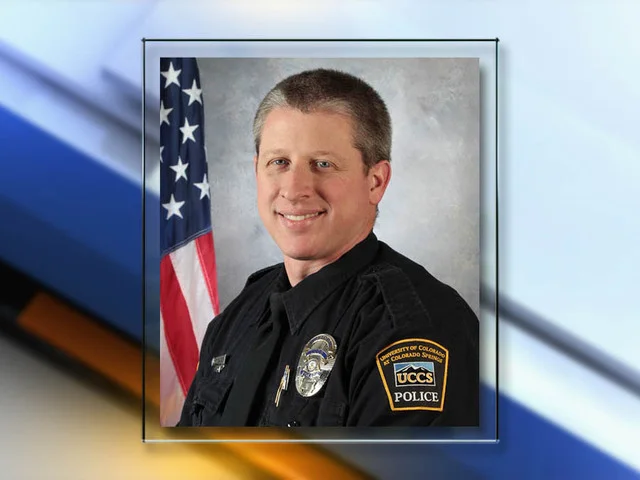
Now in this case, the tragic reality is that it is much easier to articulate the motives of the local police officer who was one of the first responders and lost his life in the fighting.

The officer's name: The Rev. Garrett Swasey.

Are you seeing that title -- "The Rev." -- in front of his name?


Please respect our Commenting Policy