Books

Book bans: Are these fights about a Christian nationalist plot or something else entirely?

Book bans: Are these fights about a Christian nationalist plot or something else entirely?

Ever since the Jan. 6, 2021, attempted takeover of the U.S. Capitol, journalists have been trying to find some kind of national nexus for “White Christian nationalism.”

The term, which I’m putting in quotes because its meaning is all over the map, needed a locale.

About two months ago, national media thought they had one: tiny Bonners Ferry, Idaho, where there was a dust-up between a local library and a cadre of locals who wanted certain books banned. That the locale was — in the popular imagination — is Ground Zero for conservative crazies, was no surprise.

A CNN story made the case for the book burners being newcomers with an agenda:

And who are these newcomers she speaks of? Well, we reached out to a number of the people pushing the recall and demanding that books be banned. None of them would talk to us.

But they have made their feelings known at library board meetings. “Things need to change,” one man told the board at a meeting in late August. “Otherwise, you bring curses upon yourselves. Period. From the Most High.”

Definitely a religion angle there.

And at a meeting in July, Donna Capurso, a local realtor, said this: “My job is to protect our kids from sexual deviants, who will be drawn to our library if inappropriate sexual material is on our library shelves.” Capurso is an occasional contributor to a website called Redoubt News, which caters to a growing group here in northern Idaho of self-described, “God-Fearing, Liberty-Loving Patriots.”

“The American Redoubt” is a term coined in 2011 by a Christian survivalist. The idea is that Christian patriots should retreat here from modern America to live their truth and defend themselves. The Redoubt is a large chunk of land encompassing all of Idaho, Montana and Wyoming as well as eastern slivers of Washington and Oregon.

What’s curious now is that the right-wing banned books movement (as opposed to Big Tech leaders who fight the sales of conservative books) has spread around the country — with some extra PR poured on the flames during the recent Banned Books Week.
Please respect our Commenting Policy

Yes, Southern Baptists are talking about '60 Minutes' (while Ryan Burge keeps doing the math)

Yes, Southern Baptists are talking about '60 Minutes' (while Ryan Burge keeps doing the math)

One thing is certain, if you follow political scientist Ryan Burge on Twitter. You are going to read quite a few things that you agree with and quite a few things with which you will disagree.

Here’s the key to that statement: It really doesn’t matter who “you” are. You can be a liberal mainline Protestant and you will read things that please you and things that infuriate you. Ditto, if you are Southern Baptist Convention leader.

If you are a religious “none,” in Pew Research Center terms, then Burge is mapping your life and beliefs, one chart after another. If you are a nondenominational, independent evangelical/charismatic leader, Burge was one of the first researchers who grasped that your world is now the fastest growing corner of the marketplace of American religion.

Burge makes many Southern Baptists mad. He also makes many Episcopalians and liberal mainliners mad, even though Burge is, himself, a progressive Baptist pastor/thinker as well as a political science professor at a state university. I would imagine, however, that leaders on the right and the left are learning that they are going to have to study the trends shown in all of those Burge charts on Twitter (and in his books).

To be honest with you, I can’t remember when I spotted Burge’s byline and I’m not sharp enough, in terms of computer skills, to spot the oldest item in the nearly 4,000 items that show up in a Google search for “Ryan Burge” and “Terry Mattingly.” I’m guessing 2018 or so. However, Burge has been cooperating with GetReligion for several years now, with me retweeting, oh, hundreds of his tweets with a “Yo. @GetReligion” slug. He also has allowed me to re-publish some of the essays he has written for the Religion in Public weblog (and for Religion Unplugged).

I bring all of this up for two reasons.

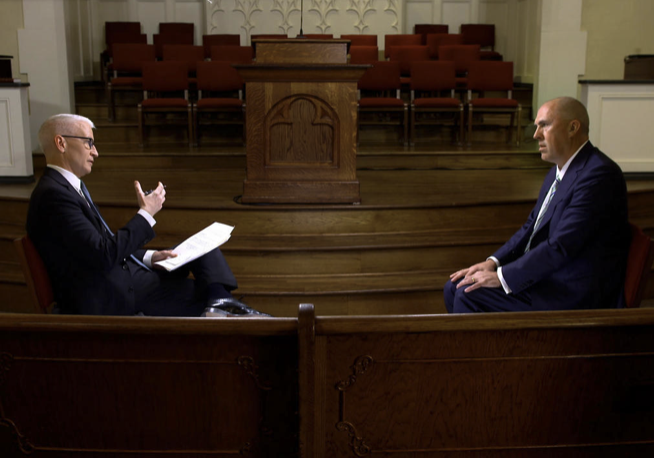
(1) Many news consumers who continue to follow legacy media may have seen him featured last night in a “60 Minutes” feature about the Rev. Bart Barber, the new president of the Southern Baptist Convention.

(2) Burge and I recently agreed on the format for a new GetReligion feature that we will call “Do the Math,” in which he will take four or five of his data-backed tweets and then connect them to spotlight trends that journalists need to follow.


Please respect our Commenting Policy

Faith, family, dating and the looming marriage crisis in America (Part I)

Faith, family, dating and the looming marriage crisis in America (Part I)

For decades, viewers have enjoyed the Japanese reality-TV series "Old Enough!" in which preschool children venture into the streets alone to run errands for their parents.

What if American women asked their live-in boyfriends to stop playing videogames, leave their couches and run errands? In the Saturday Night Life sketch "Old Enough! Longterm Boyfriends!" guest host Selena Gomez asked her helpless boyfriend of three years, played by cast member Mikey Day, to buy her eyeliner and two shallots.

This man-baby ends up in tears with a big bag of onions and "a blush palette for African-American women." The frustrated girlfriend says she may need a mid-morning glass of wine.

There was wisdom in that comedy, for pastors willing to see it, said sociologist W. Bradford Wilcox, director of the National Marriage Project at the University of Virginia.

"There's a whole class of young men who are not flourishing personally and professionally. … The systems have broken down that help raise up attractive, successful men. Churches used to be one of those support systems," he said, reached by telephone.

"The future of the church runs through solid marriages and happy families. The churches that find ways to help men and women prepare for marriage and then encourage them to start families are the churches that will have a future."

The crisis is larger than lonely, under-employed and Internet-addicted men. Rising numbers of young women are anxious, depressed and even choosing self-harm and suicide.

The coronavirus pandemic made things worse, but researchers were already seeing danger signs, noted San Diego State psychology professor Jean Twenge, in a recent Institute for Family Studies essay.


Please respect our Commenting Policy

In Islamic tradition, what is a fatwa? Why the demands to kill novelist Salman Rushdie?

In Islamic tradition, what is a fatwa? Why the demands to kill novelist Salman Rushdie?

THE QUESTION:

In Islam, what is a fatwa? Why the demand to kill novelist Salman Rushdie?

THE RELIGION GUY’S ANSWER:

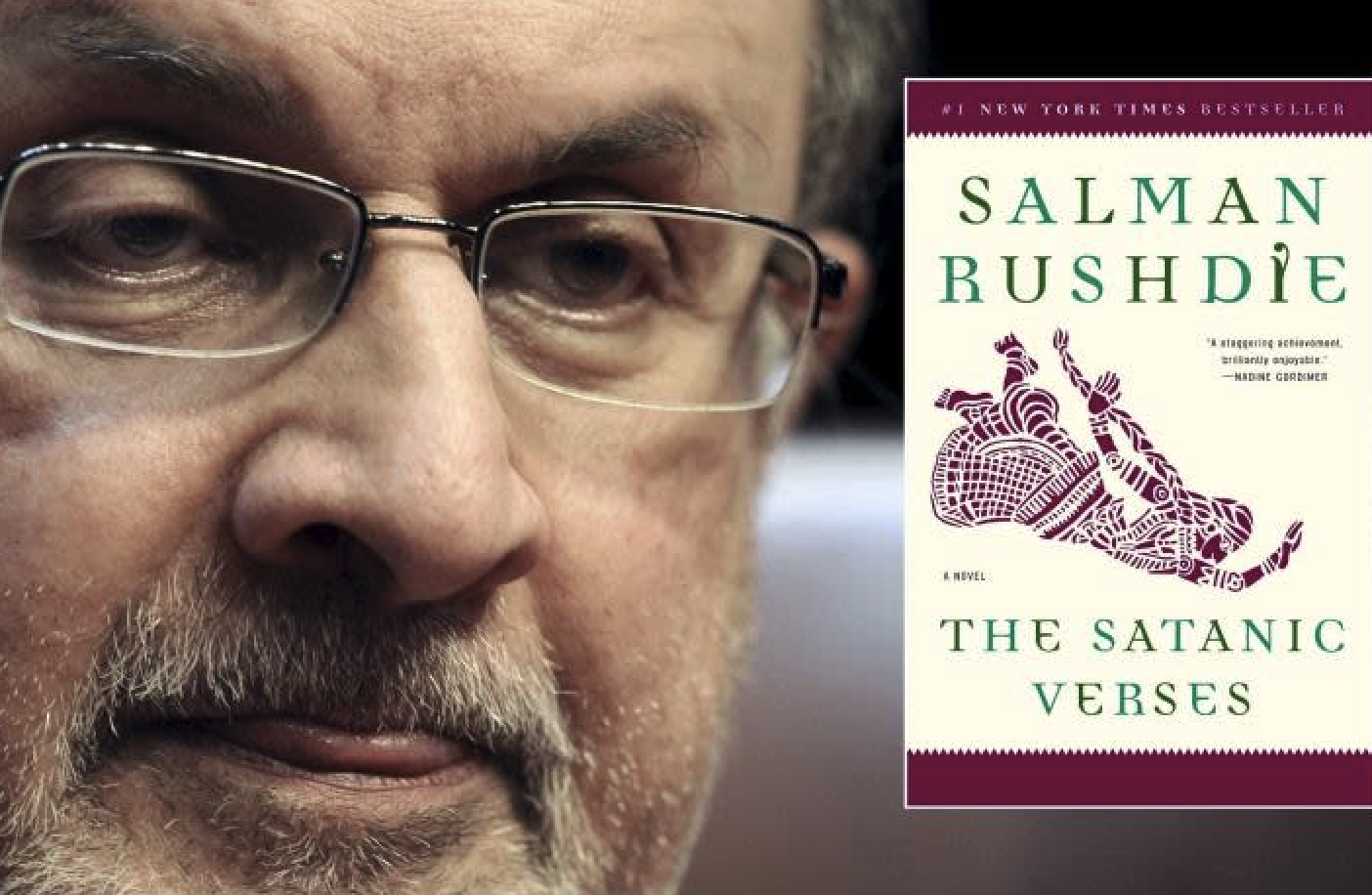
In 1989, the Ayatollah Ruhollah Khomeini, Iran’s theocratic ruler, ordered the assassination “without delay” of novelist Salman Rushdie because of his novel “The Satanic Verses.” Remarkably, this official fatwa imposed the duty of freelance killing in the name of God upon masses of Muslim believers in all nations, and also demanded death for the editors and publishers involved with the book.

Three decades later, a Lebanese-American stands accused of attempting to murder Rushdie by repeated stabbings onstage at New York’s Chautauqua Institution. The author suffered severe injuries but survived. Though the Muslim Council of Britain condemned the attack, the Iranian regime’s Kayhan newspaper dispatched “a thousand bravos” to “the brave and dutiful” assailant while militants in other Muslim lands celebrated. We’ll see what prosecutors and defense attorneys finally say about links between Iran’s fatwa of death and the sensational bloodshed.

Rushdie’s complex fantasy had dream sequences in which depraved enemies of Islam — not the author himself — complain about moral absolutism and treatment of women and demean the Prophet Muhammad’s wives and closest Companions. They also challenge the divine inspiration of the Quran. A Wall Street Journal op-ed correctly noted that the far greater threat to the Quran is the revisionist theorizing on its origins by the late John Wansbrough at the University of London.

The Rushdie novel resulted in book-banning and riots in the Muslim world, and the famous fatwa sent Rushdie into hiding for years. In 1998, Iran’s president declared the case “finished” during diplomatic efforts, but the regime did not actually abolish the fatwa. It was reaffirmed by Khomeini’s successor as Supreme Leader in 2017, and re-published on a government Web site five days before the Chautauqua stabbing. During the past decade, Iranian groups have pledged to pay a $3.9 million bounty to anyone who slays Rushdie.


Please respect our Commenting Policy

Here's a solid religion information source for office, home libraries and (of course) newsrooms

Here's a solid religion information source for office, home libraries and (of course) newsrooms

Here are some interesting facts about war-ravaged Ukraine you might not have heard:

* The nation was 97% Christian in 1900, slumped to 60% when atheistic Soviet Communists held power, and has rebounded to 86%. But in one survey only 20% of Ukrainians said religion is “very important” for them.

* The Orthodox Church historically under the Moscow Patriarchate has 13.5 million members. But even before the current Russian invasion, the young rival Orthodox Church of the independent Kyiv Patriarchate had gained a bigger following of 16 million.

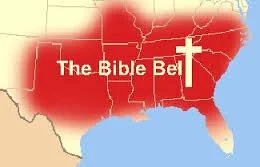
* Evangelical, Pentecostal and Charismatic Protestants, though a small minority, have so thrived since national independence in 1991 that Ukraine is known as Eastern Europe’s “Bible Belt.” Pentecostal believers who once survived in the underground church are now a force in civic affairs.

* Despite electing the first Jewish president, anti-Semitic incidents still occur.

* Regarding morals, “domestic violence is a massive problem,” especially in COVID-19 times, with complaints up 40% in the first half of 2020 compared with 2019.

Why mention these newsworthy pieces of information?

That’s a sampling of the sort of data about each of 233 countries you’ll find in the brand-new “Global Christianity: A Guide to the World’s Largest Religion from Afghanistan to Zimbabwe” (Zondervan Academic, $29.99 paperback). This valuable and inexpensive resource updates key information from the 2019 edition of the invaluable “World Christian Encyclopedia” (Edinburgh University Press, list price $270 with discounts online).

The new book’s editor is Gina Zurlo — https://ginazurlo.com; gzurlo@gordonconwell.edu) — co-editor of the “Encyclopedia” and co-director of the independent agency that produces it, the Center for the Study of Global Christianity at evangelical Gordon-Conwell Theological Seminary.


Please respect our Commenting Policy

Columns from 1991 & 2022: Mysteries surrounding the mind and soul of Mikhail Gorbachev

Columns from 1991 & 2022: Mysteries surrounding the mind and soul of Mikhail Gorbachev

It isn't every day that one of the creators of a political thriller gets to ask its real-life protagonist to evaluate the novel's plot.

But that happened when the late Billy Wireman, president of Queens University in Charlotte, N.C., handed the last Soviet Union leader a copy of "The Secret Diary of Mikhail Gorbachev." The 1990 novel was written by journalist Frye Gaillard, based on a Wireman idea.

The plot: There were spiritual motivations behind "glasnost" and "perestroika," Gorbachev's risky ideas to restructure Soviet life. But furious KGB insiders -- including a would-be assassin -- managed to steal Gorbachev's diary, in which he confessed his Christian faith.

Wireman wrote down Gorbachev's response after hearing the book's premise: "You must have been reading my real diary."

This faith question never vanished, no matter how often Gorbachev reaffirmed his atheism, while also stressing his respect for the beliefs of his Communist father and devout Russian Orthodox mother. His maternal grandparents hid holy icons behind their home's token Vladimir Lenin portraits.

Gorbachev died on August 30 at age 91 and his funeral was held in the Pillar Hall of Russia's House of the Unions, after President Vladimir Putin denied him a state funeral. He was buried next to his wife Raisa, who died in 1999 of cancer, in the cemetery of Moscow's Novodevichy Convent.

"Regardless of the geo-political realities of that era, there was something going on inside Gorbachev," said Gaillard, writer in residence at the University of South Alabama in Mobile and former Southern editor of The Charlotte Observer. He is the author of 30-plus books, including "A Hard Rain: America in the 1960s," which won the 2019 F. Scott Fitzgerald Literary Prize.

"Why did he do it? That's the question that won't go away," Gaillard added. "That's what has fascinated people for decades and it still does. We may never know now that he's gone. … But all that speculation about his beliefs is at the heart of the book."


Please respect our Commenting Policy

Is celebrity culture eroding American evangelicalism? This publishing insider says 'yes'

Is celebrity culture eroding American evangelicalism? This publishing insider says 'yes'

Evangelical Protestantism, by most accounts the largest camp in American religion, has run into various troubles lately, as The Guy and many others have chronicled.

Now there’s ample Internet buzz about Katelyn Beaty’s diagnosis of one factor in a new book from a major evangelical publisher that’s well worth coverage: “Celebrities for Jesus: How Personas, Platforms, and Profits are Hurting the Church.”

Make that hurting the “White Evangelical” church.

The type of personality cults she describes are pretty much absent in “mainline” Protestantism, Black Protestantism (there are some glaring exceptions in the health-and-wealth world), Catholicism and other U.S. religious bodies. By coincidence, Rodney Palmer, an American Baptist who teaches preaching at Palmer Theological Seminary, echoed her concerns just last week in an article for the progressive Baptist News Global website.

Inevitably, Beaty has much to say about the media that we practitioners and consumers should ponder.

She’s a well-marinated evangelical as author, former print managing editor of flagship Christianity Today magazine and currently a New York-based acquisitions editor with Baker Publishing Group, one of the majors whose Brazos Press division published “Celebrities.” (Note the company’s other book imprints: Baker Books, Baker Academic, Bethany House, Chosen, Revell.)

For this reason, The Guy finds especially newsworthy — and gutsy — Beaty’s chapter treating the evangelical book industry, which is said to pour “jet fuel” on the type of fandom, branding and marketing she decries.

The bottom line, here: This bite-hand-that-feeds angle alone offers a strong story theme that journalists could draw from this book.


Please respect our Commenting Policy

Sam Harris take jab at those who believe in heaven: Maybe listen to some ancient voices?

Sam Harris take jab at those who believe in heaven: Maybe listen to some ancient voices?

When cosmonaut Yuri Gagarin returned to earth in 1961, after the first manned spaceflight, Soviet leaders claimed he said: "I went up to space, but I didn't encounter God."

Venturing into similar territory, superstar atheist Sam Harris rocked cyberspace during a recent Triggernometry YouTube appearance in which he discussed Donald Trump, faith elements in "wokeness" and the flocks of Americans who insist on believing in heaven.

Political Twitter screamed when he said there was "a left-wing conspiracy to deny the presidency to Donald Trump. … Absolutely, but I think it was warranted."

But comedians Konstantin Kisin and Francis Foster pushed back, asking if Harris was justifying moral relativism. Perhaps today's truth wars, the Triggernometry team suggested, were linked to a famous G.K. Chesterton quip: "When men choose not to believe in God, they do not thereafter believe in nothing, they then become capable of believing in anything."

During the ensuing discussion, Harris offered another viral soundbite: "Where is heaven, exactly, given that we have multiple telescopes up there beaming back tens of billions of years' worth of information?" Yet millions of Americans still embrace the supernatural claims of an ancient faith, including that Jesus will return to "raise the living and the dead."

"You'd be surprised by the number of percent of sober, non-Bible-thumping people who would say 'yes' to that question," he said. "They might be Christian, they might be, listen, 'I love the Bible. It gives me a great moral framework. It gives my kids a great moral framework. This is the tradition I'm identified with. This is all super important to me' -- but that's kind of as far as it goes. Right? Like, I'm not going to make magical claims about flying saviors who are literally going to come down from … heaven."

While the Twitter masses raged, the French-Canadian iconographer and writer Jonathan Pageau recorded a video essay on his "The Symbolic World" channel about why materialists and religious believers keep debating the meaning of terms such as "heaven" and "earth."


Please respect our Commenting Policy