Perfect storm before and after COVID-19: Do churches have $$$ for missions and charity?

Perfect storm before and after COVID-19: Do churches have $$$ for missions and charity?

Back in the heady church-growth days of the 1980s and 1990s, researchers John and Sylvia Ronsvalle began hearing caution creep into their interviews with church leaders.

Denominational leaders were especially uncomfortable when asked about declines in giving to overseas missions and projects to help the poor.

Sylvia Ronsvalle said the leader of one large congregation gave this blunt response: "Ah! No! We can't promote missions because there won't be enough for our seminaries." She responded: "Well, I think people would be more interested in your seminaries if you were actually impacting global needs in Jesus' name."

That encounter, and many others, ended up in "Behind the Stained Glass Windows: Money Dynamics in the Church," one of many publications the Ronsvalles have produced while leading empty tomb, inc. Their center also serves as a hub for missions in Champaign, Illinois, their home for 50 years.

Danger signs began decades ago. Giving to religious groups -- defined in terms of potential donations based on after-tax incomes -- peaked in 1960 and then began to decline, even as church membership numbers and budgets kept rising.

This trend "pre-dated many of the controversial issues that were to emerge by the end of the 1960s," noted the 31st annual empty tomb report, based on 2019 numbers. In mainline and evangelical denominations "per member giving in current dollars, as well as in inflation-adjusted dollars and as a portion of income" was lower in 2019 than the year before.

Then COVID-19 hit. But the pandemic's impact in pews only made an ongoing charity funding crisis more obvious, said Sylvia Ronsvalle, in a telephone interview.

Please respect our Commenting Policy

Thinking with Ryan Burge: That 'nondenominational' term? Well, it isn't going away

Thinking with Ryan Burge: That 'nondenominational' term? Well, it isn't going away

Rare is the week in which I don’t read two or three important stories in the mainstream press that leave me thinking: “Journalists are really going to need to understand the wild, complex and rapidly world of nondenominational evangelical-fundamentalist-charismatic-Pentecostal-Protestant-whatever churches.”

For starters, the vast majority of these church have absolutely zero connections to any group providing even minimal legal, financial, ethical or theological oversight. In many cases, the pulpit-star who started the congregation remains in complete control, with a hand-picked board as the only balance on his power. He may not have even attended an accredited seminary.

Think about that the next time you ponder the role of structures of “evangelical power” in stories about clergy sexual abuse or, oh, the odd riot at the U.S. Capitol.

This brings me (#NoSurprise) back to the world of researcher Ryan Burge (must-follow on Twitter) and a recent think piece he wrote for Christianity Today with this headline: “How ‘Christian’ Overtook the ‘Protestant’ Label.” Before we get to a Burge chart or two, here’s the overture:

Over the past several decades, American evangelicalism has moved away from the religious labels, symbols, and buildings that used to define church.

Many newer churches don’t contain stained glass, crosses, or traditional sanctuary setups. They tend to adopt contemporary names, leaving out denominational labels or other religious language. Along with those shifts, churchgoers have changed the way they speak about their faith; think of phrases like “It’s is not a religion; it’s a relationship.”

These trends have had a real impact on how younger people understand their religious identity. Evangelical Protestants have been debating for years over the definition and usefulness of the “evangelical” label. Now, it appears “Protestant” may be losing its place too.

Put the word “Baptist” on the sign in the lawn? No way. And, of course, there are zillions of different meanings to the word “Baptist” — in the world of independent churches. But that’s another (related) subject.


Please respect our Commenting Policy

Podcast: ProPublica probes for-profit hospice horrors, but ignores faith-based networks

Podcast: ProPublica probes for-profit hospice horrors, but ignores faith-based networks

Every now and then, your GetReligionistas run into a story that puts us in a real bind, in terms of the basic media-criticism work that we do here.

The nonprofit journalism group ProPublica, in this case working with The New Yorker, recently published a great example of this kind of report. We are talking about a deeply researched piece that is a must-read story — period. Reporter Ava Kofman’s work is painful, even agonizing, to read, for all the right reasons.

At the same time, the story is seriously lacking when it comes to exploring religious facts and beliefs that are essential to its subject, which is hospice care.

The feature does include a nod to the Christian history of hospice care, but avoids any meaningful discussion of the differences between the work done in faith-based hospice networks — which are massive — and what happens with some (maybe many) for-profit hospices, such as those at the hellish heart of this report. The headline: “Endgame: How the Visionary Hospice Movement Became a For-Profit Hustle.”

This must-read report was the hook for this week’s “Crossroads” podcast (CLICK HERE to tune that in) and I will stress that this subject was deeply personal for host Todd Wilken and for me. Wilken is a Missouri-Synod Lutheran pastor and has years of experience assisting with end-of-life issues and questions. My father was a Southern Baptist pastor who spent the last decade of his ministry working in Houston’s hospital complex, include the Texas Children’s Hospital.

This story does a great job of the “follow the money” components of scandals linked to for-profit hospice care. Here is the anecdotal lede:

Over the years, Marsha Farmer had learned what to look for. As she drove the back roads of rural Alabama, she kept an eye out for dilapidated homes and trailers with wheelchair ramps. Some days, she’d ride the one-car ferry across the river to Lower Peach Tree and other secluded hamlets where a few houses lacked running water and bare soil was visible beneath the floorboards. Other times, she’d scan church prayer lists for the names of families with ailing members.


Please respect our Commenting Policy

NPR offers a faithful Mike Pence interview: But readers will need the transcript to know that

NPR offers a faithful Mike Pence interview: But readers will need the transcript to know that

National Public Radio posted a story the other day with a totally predictable headline: “Mike Pence, pondering a presidential run, condemns Trump's rhetoric on Jan. 6.

What we have here is a perfect chance to meditate on that concept that readers see all the time here at GetReligion, when dealing with the political lens through which most (#IMHO) elite-market journalists view the world. That would be: “Politics is real. Religion? Not so much.”

Things are a bit more nuanced with this particular NPR feature. To be blunt: The Steve Inskeep interview is way, way better than the feature that someone — an intern, perhaps — wrote about the contents of the interview.

The text version is — I am sure this will shock many — all about Donald Trump, Donald Trump and Donald Trump, with a near-laser focus on the events of January 6th at the U.S. Capitol.

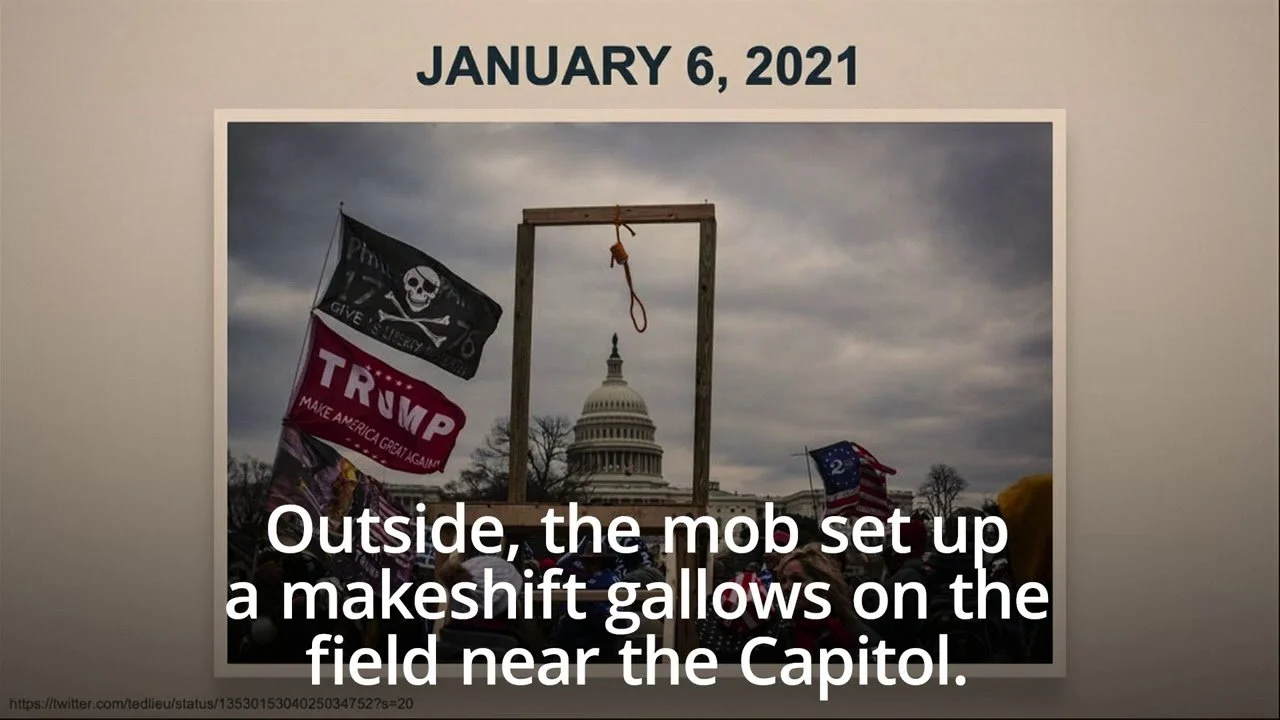
Now, that’s a crucial subject, since Vice President Mike Pence was the man that many Trump-inspired rioters wanted to hang (or they chanted words to that effect). That’s a topic that cannot be avoided, and I get that. This is an interview that will infuriate Trump disciples and, at the same time, will leave the progressive left just as mad.

The bottom line: The interview is about Pence’s memoir “So Help Me God,” and that’s a book that has a much broader focus than recent partisan politics. I would argue — based on the interview itself — that the book’s most important contents are not linked to Trump, Trump, Trump. The most provocative parts of the interview are about federalism and (#triggerwarning) the First Amendment. But, first, here is the highlighted Trump material:

Pence faces an extraordinary challenge as a political leader whose national reputation is closely tied to the record of the Trump administration but who says the Constitution and his conscience would not allow him to follow Trump's ultimate demand. …

When a mob disrupted the proceedings, Pence retreated with family members to an office within the U.S. Capitol and then to an underground parking garage, but refused to flee the building.


Please respect our Commenting Policy

New religion census: That means more numbers, more maps and more hooks for news stories

New religion census: That means more numbers, more maps and more hooks for news stories

It’s always a fun day when one of my trusted sources publishes some new raw data that I can use to better understand the religious and political world of the United States. That’s doubly true when it’s something other than survey data because it allows me to make data visualizations that are a bit different than the run of the mill bar and line graphs.

Earlier this month the Association of Statisticians of American Religion Bodies released the results of their 2020 Religion Census, which is a one of a kind dataset. Every 10 years, this very capable research team tracks religious organizations all the way down to the county level — which is a granularity that is astonishing.

For example, most surveys would be lucky to give you a sample that is large enough to understand religion at the state level. So, to have access to county level data unlocks thousands of possibilities.

This is the kind of detail that helps researchers — and journalists — look for news trends at the local and regional levels. There are news stories hidden in these numbers. The key is spotting them.

So, with that in mind, I took to map-making the last few weeks. I think that there’s a lot of surprising results in this new data.

Where is religion the most concentrated in the United States? Probably not where most people would guess.

According to data from the 2020 Religion Census, there’s obviously a strong pocket of believers in the Bible Belt — that isn’t surprising.


Please respect our Commenting Policy

Archbishop Broglio elected to lead USCCB: Press focuses on (#surprise) political issues

Archbishop Broglio elected to lead USCCB: Press focuses on (#surprise) political issues

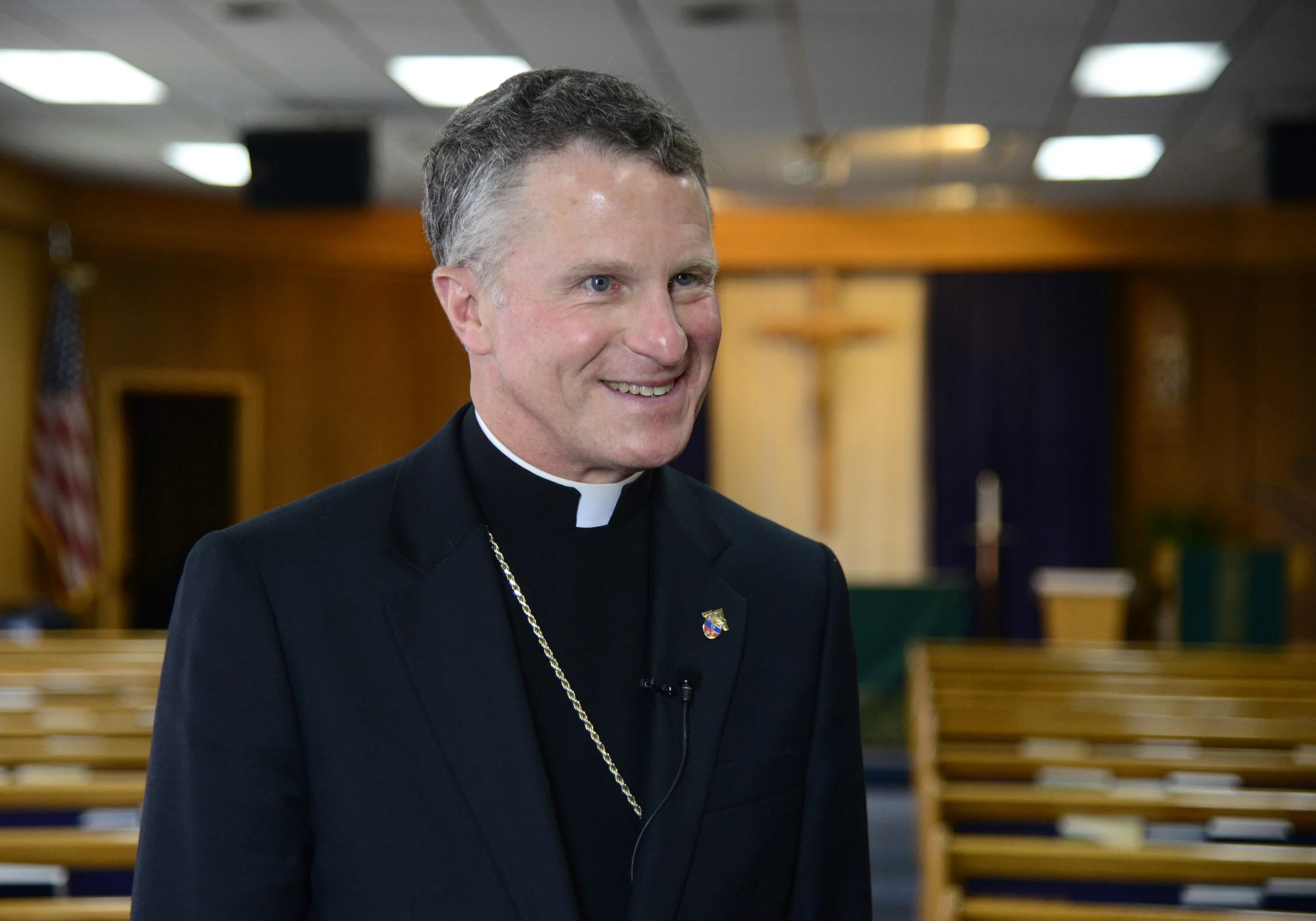
The United States Conference of Catholic Bishops assembled in Baltimore two weeks ago to elect a new president. Archbishop Timothy Broglio of the Military Services, tasked with overseeing Catholic ministries to members of the U.S. armed forces, was elected to lead the USCCB.

The 70-year-old archbishop won election to a three-year term on Nov. 15 after emerging victorious from a field of 10 candidates. What Broglio’s election means for the church, our national politics and for everyday Catholics depends on whom you ask.

Certainly, news coverage of Broglio’s election seemed to focus on the priorities of the media organization’s own political priorities rather than impartial, fact-based reporting that included the church’s own positions on an array of subjects Broglio will have to deal with in his term.

As we say here at GetReligion: Politics is real. Religion? Not so much.

The New York Times framed their coverage under the headline, “U.S. Catholic Bishops Elect Leaders for Anti-Abortion Fight.” This is how their story opened:

BALTIMORE — A week after bruising losses for anti-abortion forces in the midterm elections, America’s Roman Catholic bishops rededicated themselves to ending abortion and elected a slate of new leaders to support that goal during their annual meeting. …

The job ahead is “perhaps even more massive than we thought,” said Archbishop William E. Lori of Baltimore, who has chaired the bishops’ Committee on Pro-Life Activities. “We have to engage in this with mind and heart and soul.”

The bishops chose Archbishop Timothy P. Broglio, who leads the Archdiocese for the Military Services, as their new president. Archbishop Lori, the runner-up for the presidency, will serve as vice president. Both men have taken strong positions against abortion and are expected to continue the conservative leanings of the hierarchy on an array of social issues.

Archbishop Broglio supported religious exemptions for military service members who did not want to receive the Covid-19 vaccine “if it would violate the sanctity of his or her conscience.” The Vatican had approved of the vaccines, but some Catholics and others opposed to abortion asked for religious exemptions because of the use of stem cells derived from aborted fetuses to develop some vaccines.

He has previously suggested that homosexuality was to blame for the church’s sexual abuse crisis, though studies have found no connection between homosexuality and child abuse.

There’s a lot to unpack there, but the news story managed to get the words abortion, vaccines and homosexuality in the first five paragraphs. Broglio is made out to be some deranged right-wing politician.


Please respect our Commenting Policy

Good froth and substance in RNS feature about fading church's jump into coffee shop life

Good froth and substance in RNS feature about fading church's jump into coffee shop life

There is a style of news-feature writing that I have heard described, over the years, in words that sound something like this: “Don’t tell me a story about 100,000 people who are wrestling with a big, complex problem. Tell me a story about one person who stands for those 100,000 people.”

For years, this was the style of feature writing that we saw over and over in the “column one” features at the Wall Street Journal and the Los Angeles Times. When used by a skilled reporter, this strategy can help readers understand complex trends and events through the eyes of a well-chosen symbolic person or organization.

One of the biggest religion-news stories out there right now is the slow death of thousands of shrinking churches that face painful questions about what to do with their buildings and the legacies of the believers who once filled the pews. Statistically speaking, most of these churches are old-school mainline Protestant or Catholic congregations in urban or small-town settings. But, truth be told, this is a trend that will torture everybody, sooner or later.

This brings me to a fine Religion News Service story that ran the other day with this double-decker headline:

A once-dying church hopes to reinvent itself with coffee and kindness

Embrace Church had two years left to live. Rather than wait for the end, the church sold its building, reinvented itself and invested in a local coffee house.

Literally, my only question about this story is whether the “summary” paragraph explaining the big picture could have been moved up a bit — somehow. That, gentle readers, is a tiny, tiny nit to pick. Here is the overture:

Community Covenant Church in Kirkwood, Missouri, had a problem common to thousands of churches around the country: an aging congregation, a shrinking budget, a too-big building that spent most of the week empty.

And the clock was ticking.


Please respect our Commenting Policy

Return of the evangelical arguments about morality, character and two-party politics

Return of the evangelical arguments about morality, character and two-party politics

It was totally logical for the Southern Baptist Convention to pass its "Resolution on Moral Character of Public Officials" in 1998.

Consider this "whereas" clause: "Some journalists report that many Americans are willing to excuse or overlook immoral or illegal conduct by unrepentant public officials so long as economic prosperity prevails." This was followed by: "Tolerance of serious wrong by leaders sears the conscience of the culture, spawns unrestrained immorality and lawlessness in the society, and surely results in God's judgment."

Thus, the SBC urged American leaders to "live by the highest standards of morality both in their private actions and in their public duties."

Yes, this resolution passed soon after the infamous claim by President Bill Clinton, a Southern Baptist, that "I did not have sexual relations with that woman."

It was easy to predict who thought Clinton should exit the White House, noted conservative writer Marvin Olasky, who was writing "The American Leadership Tradition: Moral Vision from Washington to Clinton" at that time.

"In poker, you really don't know what cards someone has," said Olasky, reached by telephone. "You can't tell, with certainty, the character of a politician. … In that book, I argued that the state of a man's marriage was a strong tell. If he's faithful in his marriage, he's likely to be faithful to the nation."

Olasky's fellow religious conservatives praised the book. But things changed when he wrote a World magazine essay in 2016 entitled, "Unfit for power," arguing that Donald Trump should step aside as the Republican nominee.

"Clinton had denied having a sexual relationship with Monica Lewinsky, but her stained blue dress bearing Clinton's DNA was proof that he had used his power for adulterous purposes, and then lied about it," wrote Olasky. Then there was the videotape showing "Trump making lewd remarks about groping women's genitals. While many opponents … have criticized Trump's character, the video gave us new information about how Trump views power as a means to gratify himself."

Olasky recirculated this 2016 editorial after Trump's recent announcement that he would seek the presidency once again, igniting renewed social-media warfare among evangelicals about morality, character and the winner-take-all nature of American politics -- especially when Supreme Court seats are vacant.


Please respect our Commenting Policy

Why do ancient churches pray for the dead, while many modern churches do not?

Why do ancient churches pray for the dead, while many modern churches do not?

THE QUESTION:

“Why Do Catholics Pray for the Dead?”

THE RELIGION GUY’S ANSWER:

A Catholic News Agency feature for All Saints’ Day with the above headline was written by senior Rome Correspondent Hannah Brockhaus. One of The Guy’s colleagues immediately critiqued that wording because Eastern Orthodox Christians likewise pray for the dead — although in a different mode from Catholics, as we’ll see.

Perhaps the appropriate question should instead be: Why don’t Protestants pray for the dead when these other Christians have done so for many centuries?

There’s long-established history behind the practice of Christians during their earthly life praying to benefit fellow believers who are dead. This was commended by revered theologians of the early church.

By the early 5th Century, St. Augustine said “the whole Church observes this practice which was handed down by the Fathers.” He stated that through parishioners’ prayers, Masses, and donations, “there is no doubt that the dead are aided, that the Lord might deal more mercifully with them than their sins would deserve.”

The modern Orthodox catechism “The Living God” (St. Vladimir’s Seminary Press) teaches that just as Jesus and St. Stephen prayed for forgiveness even for the people who were executing them, so “the prayer of the righteous can also help to obtain forgiveness for a sinner even if he is already dead.”

At this point, Protestants will object that the Bible does not teach such a concept. Their founding principle of sola scriptura means Christian beliefs are defined solely by explicit teachings in Scripture and not by church traditions, even ones that are longstanding and deep-seated.


Please respect our Commenting Policy