U.S. bishops preach pro-life Catholic doctrine to Biden: Isn't that a story during midterms?

U.S. bishops preach pro-life Catholic doctrine to Biden: Isn't that a story during midterms?

The looming midterm elections have the Republicans giddy over the potential that they may take control of the House and Senate. Democrats, on the other hand, are hoping to stem the loses knowing that they still have President Joe Biden in the White House.

Amid all this midterm mania are the talking points politicians are pushing in order to appeal to their core voters. Republicans are campaigning on inflation and crime and Democrats on diversity and, of course, abortion following the repeal of Roe v. Wade.

Polls show that voters care more about inflation, but Democrats are hoping that talking up abortion will get out their base. Abortion, however, isn’t just a political issue. As Biden, a practicing Catholic, promises to make abortion a federal right by codifying Roe v. Wade into law should Democrats keep a majority, tension among him and several prominent U.S. bishops has heated up once again.

Some of these bishops have been in the news in the past regarding Biden’s support of abortion, threatening to deny him the sacrament of Holy Communion. It was last week that the issue came to the forefront again.

At least, it come to the forefront in Catholic news publications. In the elite press that GetReligion studies? Not so much or not at all.

This is how Catholic News Agency reported it on Oct. 25:

President Joe Biden, a professed Catholic, must end his “single-minded” abortion extremism and see the humanity in unborn children, the U.S. bishops have said. They said abortion’s impact is “tragic” and urged the president to support mothers.

“The president is gravely wrong to continue to seek every possible avenue to facilitate abortion, instead of using his power to increase support and care to mothers in challenging situations,” Archbishop William Lori of Baltimore, chair of the U.S. Conference of Catholic Bishops’ Committee on Pro-Life Activities, said Oct. 25.

“This single-minded extremism must end, and we implore President Biden to recognize the humanity in preborn children and the genuine life-giving care needed by women in this country,” he said.

The U.S. bishops’ statement noted that last week Biden declared that his top legislative priority after the November elections is to codify a national right to abortion.

This is a major story that was covered by the Catholic press, but big secular newsrooms ignored it.

Please respect our Commenting Policy

Is Hollywood afraid to be 'woke'? That's a question with moral and religious implications

Is Hollywood afraid to be 'woke'? That's a question with moral and religious implications

It’s one of the most famous quotes ever about the realities of working in Hollywood. That quote: “If you want to send a message, try Western Union.”

Of course, the Tinseltown giant who said that was Frank “It’s a Wonderful Life” Capra, a hero of ordinary people in the heartland. So what would he know about working with the woke powers that be on the left coast, these days?

I bring this up because of a fascinating New York Times lament that ran the other day with this headline: “After #MeToo Reckoning, a Fear Hollywood Is Regressing.” Apparently, progressives in Hollywood are very, very upset with the American people — think heartland folks, again — about some nasty recent returns in ratings and at the box office. Some “message” flicks are bombing.

Here’s the thesis statement: “The takeaway, at least to some agents and studio executives: We tried — these ‘woke’ projects don’t work.”

What does religion have to do with this? Very little, according to the Times (but we will get to that).

It’s clear that, to the team that produced this Times sermon, Middle America simply does not share the concerns of woke artists about systematic racism, sexual abuse and the whole diversity project in general.

Now, you can forget that “Black Panther” juggernaut in multiplexes nationwide, including red zip codes. Stunning, well-crafted Black superhero tales don’t count. Americans just aren’t lining up to watch the morality tales that Hollywood wants them to embrace. But what’s interesting — at least to me — is the degree to which the movies and big-ticket streamed TV series at the heart of this debate often contain content about religious and moral issues that, yes, are LINKED to diversity issues.

In other words, is this a new news story or the latest chapter in an old story about Hollywood’s struggles to understand the more religious and culturally conservative half of the American marketplace?

Let’s start where the Times has chosen to start — with Hollywood’s efforts to clean up its act in the wake of the Harvey Weinstein scandal, etc. Here’s the thesis about the #MeToo aftermath:

The movement led to increased diversity and representation in the entertainment industry, but now there is worry that executives have turned their attention elsewhere.

What happened?


Please respect our Commenting Policy

Life in a disenchanted world: Once upon a time, Christians used to write fairy stories

Life in a disenchanted world: Once upon a time, Christians used to write fairy stories

Demons appear on movie screens all the time, but poet Richard Rohlin is convinced he has actually seen them at work when counseling young people whose search for meaning has driven them deep into experiments with sex, drugs and the occult.

"The stories that I can't tell would curl your toenails," he said, speaking at the Eighth Day Institute in Wichita, Kansas. "If you think that these spiritual realities are not still with us, you are deluding yourself. ... The magic is coming back into the world. Something is happening and it is not an unqualified good."

The young people he works with in Dallas are not interested in sermons and detailed descriptions of why their lives are broken. But they are open to fantasies, myths and tales -- ancient and modern -- about unseen, spiritual realities that interact with their lives.

Millions of Americans know where to find stories about angels, demons, warriors, seers, giants, demigods and heroic kings and queens. They head straight to movie theaters and cable television, where they find entire universes of content offering visions of fantastic worlds. The last place they would seek inspiration of this kind is in churches.

The irony is that some of these works draw inspiration from the fantasy classics celebrated in the ecumenical Eighth Day Institute's annual fall celebration of The Inklings, a mid-20th Century circle of Christian writers in Oxford, England, that included C.S. Lewis, J.R.R. Tolkien and others.

This year's lectures focused on Scottish writer George MacDonald, often called the "grandfather of the Inklings," who is best known for "Phantastes," "The Golden Key," "Lilith" and many other works. The festival included Celtic and folk musicians, along with workshops on topics such as "The Art of Making Mead" and "Publishing for the Moral Imagination."

The goal of MacDonald and The Inklings, noted Rohlin, was to reclaim an older vision of life in which physical realities corresponded to spiritual realities and nothing was considered purely material. The real divide was between "the seen and the unseen," not between the "spiritual and the material."

This worldview has been lost, even among many religious believers.

"Demons didn't stop existing, angels didn't stop existing, the saints didn't stop existing because the Industrial Revolution came," he said.


Please respect our Commenting Policy

Podcast: Much to learn in ongoing cases with cannabis church and yet another Christian baker

Podcast: Much to learn in ongoing cases with cannabis church and yet another Christian baker

A cannabis church (It’s California) keeps fighting for freedom of worship.

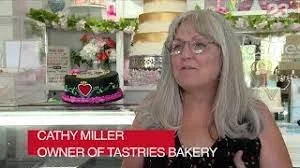
Another Christian baker wins what may be a temporary (It’s California) First Amendment victory in her fight to stay in business, even though she declined to create a one-of-a-kind, artistic wedding cake for a same-sex couple.

What connects these two stories? That was the topic at the heart of this weeks “Crossover” podcast (CLICK HERE to tune that in), which was recorded this week while I was on grandfather duty. This post is a day late because I’ve been driving back to East Tennessee and it’s really hard to write in a car in cross winds on the High Plains.

The connecting link in the podcast is the Religious Freedom Restoration Act of 1993 — or RFRA for short. This was a crucial piece of liberal (in the old sense of the word) church-state law backed by a stunningly broad coalition of religious and legal groups during the Bill Clinton administration. Try to imagine: There were only three “nay” votes in the U.S. Senate. Would that happen now? Clearly, the answer is “nay.’

These days, many reporters act as if “RFRA” was some kind of dirty, four-letter term that cannot be spoken in elite newsrooms. If you want some additional info on this syndrome, click here (“Covering a so-called 'religious liberty' story? Dig into religious liberty history”) or here (“Religious Left returns to RFRA: Washington Post explores a crucial Florida abortion showdown”).

The key is that RFRA doesn’t guarantee a victory for citizens who claim that their First Amendment rights have been violated. RFRA states that people have a right to argue that case and that — following some guidelines that have developed over the years — courts have to take these arguments seriously.

So let’s start with this Religion News Service headline: “Shuttered cannabis church takes fight to reopen to California Supreme Court.” Here’s the overture:

A cannabis church in Southern California — which was shut down by the county of San Bernardino over accusations it was illegally functioning as a dispensary — is taking its fight to reopen to the state Supreme Court, arguing that it uses cannabis for religious healing.


Please respect our Commenting Policy

Great Britain's first Hindu prime minister inherits a prominent role in Anglicanism

Great Britain's first Hindu prime minister inherits a prominent role in Anglicanism

ry to imagine, say, U.S. President William Howard Taft, who was a Unitarian, involved with choosing bishops who rule the Episcopal Church, or President Joseph Biden, a Catholic, participating in the selection of bishops in the United Methodist Church.

After the historically brief leadership of Britain's Liz Truss, Conservative Party members of Parliament this week agreed on Rishi Sunak to succeed her as prime minister at a moment of severe economic and political turmoil.

Despite sporadic calls for a change in the system, this Hindu believer will have the unique task of proposing each new Church of England bishop for formal action by King Charles III, the church’s Supreme Governour and “Defender of the Faith.” Then again will that be “Defender of Faith” this time around?

The Sunak religious anomaly provides the media a sidebar to the astonishing ascent of this Anglo-Indian as the first “person of color” and first person from ethnic minorities to lead the British government. He’s also the first prime minister who is not at least nominally a Christian.

The Times of India reports Sunak has called himself a “proud Hindu” and regularly attends the temple in his hometown of Southampton. He has sworn his oath of office on the Bhagavad Gita rather than the Bible.

By coincidence, Sunak’s triumph occurred on Diwali, the annual festival of lights celebration when Hindus invoke the goddess Lakshmi for prosperity. The Times article depicts this 42-year-old’s remarkably prosperous corporate career and rapid political rise.


Please respect our Commenting Policy

The rise of nondenominational churches, a big news trend that's really hard to cover

The rise of nondenominational churches, a big news trend that's really hard to cover

Maybe the biggest story in American Christianity over the last 40 years is the incredible rise in
the share of Americans who identify as nondenominational Protestant Christians.

In the 1970s, they were just a rounding error in the religious landscape. That was then.

Today it’s impossible to ignore the number of nondenominational churches — the vast majority of which are evangelical or Pentecostal — that have sprouted up in every city, suburb and rural area in the United States.

There are likely more nondenominational Protestants in the United States today than Southern Baptists and mainline Protestants combined. Yet, they are somewhat of an enigma to those reporters who cover religion.

Why? Because it’s impossible to make a lot of generalizations about this movement. It’s hard to pin them down, even when doing basic research.

The religious groups that are part of this non-movement movement don’t have annual meetings that are easy to track and for journalists to cover. They don’t have national spokespersons.

What makes it even more difficult is that many of these churches are, to some degree, still aligned with a denomination, but don’t publicize that on their websites or make mention of that in worship services.


Please respect our Commenting Policy

Earth to RNS: Why not show a bit less deference to 'devout' Catholic abortionists?

Earth to RNS: Why not show a bit less deference to 'devout' Catholic abortionists?

Last week, I was in New York receiving three awards for my work that appeared last year in Newsweek, Politico and National Geographic. Writers for Moment magazine, Sojourners, The Forward, The Washington Post, the San Francisco radio station KALW and many other organizations won as well, including Religion News Service.

In the case of RNS, much good work has been done. Which is why I’m scratching my head at two recent pieces: one a hagiography of the Rev. James Martin, a Catholic priest known for his ministry to gays, and a Catholic gynecologist who insists she keeps the faith –- yet performs abortions.

It was difficult to know exactly what the Martin piece, written by two rabbis was: A news story? An opinion piece? An analysis? A sermon? A nomination for sainthood?

The last is in jest yet only partially; Martin’s teachings are radical enough that then Philadelphia Archbishop Charles Chaput had to release a statement in 2019 about how Martin does not speak for the Catholic Church and “to caution the faithful about some of his claims.”

The authors put Catholic teaching in the worst possible light in this paragraph:

This time of great change affords Catholic clergy the chance to adapt to new needs and serve people in new ways. Even as some may feel constrained by vows of obedience that obligate leadership to line up with papal directives, others are finding support for new areas of ministry and outreach to underserved and marginalized groups…

With this multifaceted approach, Father Martin brings his ministry outside the traditional institutional framework to directly reach the people he seeks to serve. His work provides a new model for clergy leadership within the Catholic Church, modeled on the example of Jesus.

Well actually, whenever Jesus encountered someone operating outside the bounds of traditional sexual mores, he certainly reached out to them, but he also said, “Go and sin no more.” Not sure Martin is doing that.


Please respect our Commenting Policy

Tips for reporters covering feds arresting abortion-facility protestors, from Christianity Today

Tips for reporters covering feds arresting abortion-facility protestors, from Christianity Today

Long ago, back in 1980s Denver days, I was out of town covering a national religion-news event when something interesting happened during an Operation Rescue protest at abortion facility.

The protest was going as planned, with peaceful protestors willing to be arrested for blocking the entrance (think civil disobedience) when someone rushed forward and started verbally and physically harassing a client and her escort. This became the big story of the day.

When I heard about what had happened I asked the city desk if anyone had checked to see if the attacker was actually part of the planned protest. There was a possibility, of course, that this was a rogue protestor or even a plant from pro-abortion-rights groups whose goal was to get Operation Rescue shut down.

The key question: Had this person signed the Operation Rescue card to take part in the protest, in which participants promise to do nothing more than pray and sing hymns during the blockade, then allow themselves to be arrested? I had included that tactical detail in my earlier coverage of the protests.

Well, no one asked. To cut to the chase: No one really wanted to ask.

The template for the story had already been created. Factual details about Operation Rescue techniques were irrelevant. Once I was home, I checked. No one knew the identity of this rogue protestor and he had not signed the pledge card. He wasn’t part of the organized protest.

I thought this was a story. My editors just shook their heads.

I bring this up because of an interesting story I read at Christianity Today: “DOJ Steps Up Prosecution of Pro-Life Protestors at Clinics.” GetReligion rarely looks at coverage in religious-market publications, but I thought that this piece included some information that might help MAINSTREAM reporters cover this important trend story. Here is the overture:

In the past month, the Department of Justice (DOJ) has indicted more than a dozenpro-life protestors across the country for obstructing access to abortion clinics.

Such prosecutions have been rare historically, with just a case or two annually for the past decade. But after the US Supreme Court reversed Roe v. Wade this summer, the DOJ announced a task force to pursue more enforcement against anyone obstructing access to abortion clinics. Many of those protestors facing charges are Christian.


Please respect our Commenting Policy