Just before I hit the road, I did this bonus podcast with veteran evangelical thinker John Fischer

Just before I hit the road, I did this bonus podcast with veteran evangelical thinker John Fischer

Truth be told, I was on the road most of this week and away from my alleged “office” in the Tennessee Hills.

Thus, I took a very rare break from writing the “On Religion” column for the Universal syndicate. I say “rare” because I literally went 20 years before I took a vacation at all. Well, I did miss one week because I was unconscious during a kidney-stone attack. Things happen.

Just before charging up the car and heading out, I did spend some time with veteran evangelical writer and folk musician on his weekly podcast called “The Catch.” Thus, I will offer this bonus podcast as a substitute for the column that normally fills this weekend slot here at GetReligion.org and, a day or so later, at Tmatt.net, even though this is not a media-criticism feature (for the most part).

Listeners can find this episode at Apple podcasts (click here) or at BlogTalkRadio (click here).

The topic? I have known Fischer since the 1980s and I tried to pull him into a flashback chat about music, the late (and great) Mark Heard, acoustic guitars, guitar strings, etc. I did work in a famous Heard lyric about his dilemma in the “Christian marketplace.” That would be: “I’m too sacred for the sinners and the saints wish I would leave.” Preach it.

Fischer had other ideas for the conversation — as in another discussion of how the word “evangelical” turned into a political label, with “evangelical voters” playing a crucial role at the ballot box, especially for GOP folks in heated primaries.

Naturally, old guy that I am, I flashed back to my history as a Jimmy Carter campaign volunteer at Baylor University in the 1970s, back in the era when — to be blunt about it — many evangelicals were culturally conservative Southern Democrats.


Please respect our Commenting Policy

Thinking, with Aaron Renn, about the 'three worlds' shaping American evangelical debates

Thinking, with Aaron Renn, about the 'three worlds' shaping American evangelical debates

f you have been paying much attention to evangelical Twitter in the past year or so, you may have noticed quite a few heated arguments involving the word “elite.”

If you doubt this, run a basic Google search for “Tim Keller,” “evangelical” and “elite.” Then try “David French,” “evangelical” and “elite.”

What you’ll find is more evidence of the relevance of this recent GetReligion “Memo” by religion-beat patriarch Richard Ostling: “Is evangelical Protestantism breaking into five factions in the United States of America?

You may want to click a few of these links if you are planning to read, write or report about the upcoming Southern Baptist Convention, which is June 12-15 in Anaheim, Calif.

There is a very good chance that, at some point, one or more Baptists taking part in speeches or in floor debates will use one or more of these terms — “Positive “World,” “Neutral World” and “Negative World.” Most people will “get” the references being made.

However, I think that it would be good — as a weekend “think piece” — to point to the source of those terms as they were used earlier this year in a First Things essay by social-media scribe Aaron M. Renn. The logical title: “The Three Worlds of Evangelicalism.” Here is the overture:

American evangelicalism is deeply divided.

Some evangelicals have embraced the secular turn toward social justice activism, particularly around race and immigration, accusing others of failing to reckon with the church’s racist past. Others charge evangelical elites with going “woke” and having failed their flocks. Some elites are denounced for abandoning historic Christian teachings on sexuality. Others face claims of hypocrisy for supporting the serial adulterer Donald Trump. Old alliances are dissolving.


Please respect our Commenting Policy

Podcast: So many questions after that symbolic Tampa Bay Rays conflict over 'Pride' logos

Podcast: So many questions after that symbolic Tampa Bay Rays conflict over 'Pride' logos

Symbolism often plays a major role in tense clashes between people with competing religious beliefs (or secular beliefs, for that matter).

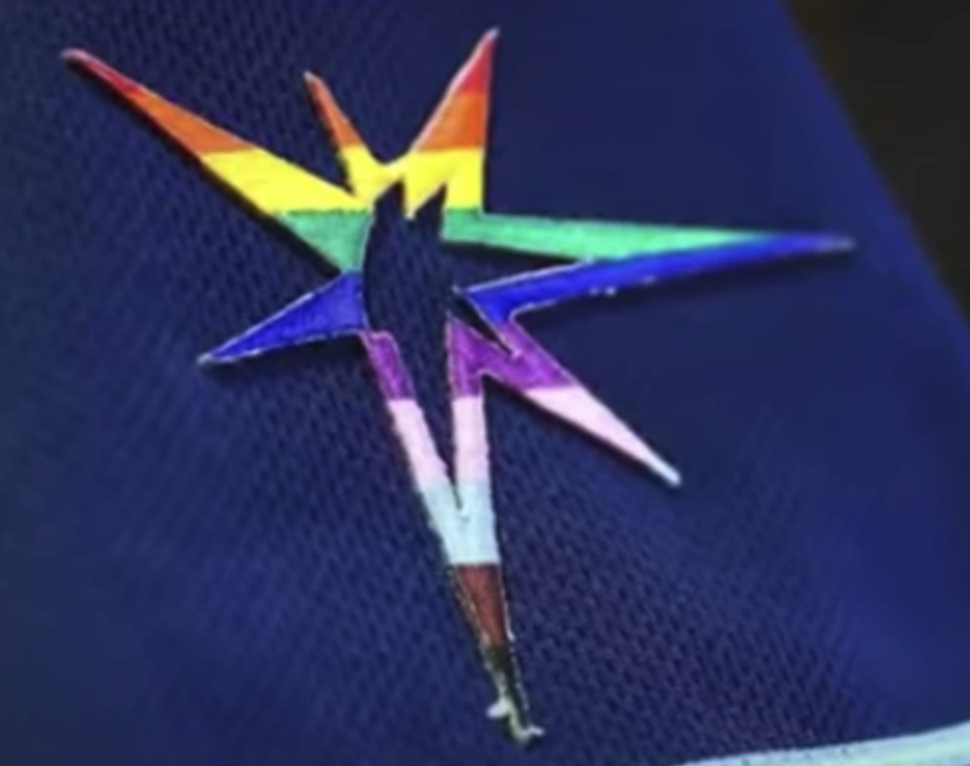
You could see evidence of this fact during and after the recent kerfuffle about a small group of Tampa Bay Rays players who declined to wear special rainbow-logo uniforms during the team’s recent celebration of Pride Month. The media coverage of this clash was the subject of this week’s “Crossroads” podcast (CLICK HERE to tune that in), in part because the stories raised more questions than they answered.

I’ll get to some of those questions, but first let’s look at the Washington Post coverage. Note that this means the Rays conflict was a national story, since the Post doesn’t cover mere regional stories and disputes (see this classic M.Z. Hemingway post about the newspaper’s MIA stance on covering the trial of Philadelphia abortionist Kermit Gosnell).

The headline on this sports-desk story: “Rays players make ‘faith-based decision’ to shun Pride Night logos.” Yes, it’s important to note that there are doubts about the nature of this “faith-based” angle. Let’s look at some important passages in this:

A member of the Tampa Bay Rays said he and several teammates made a “faith-based decision” to not wear rainbow-colored logos on their uniforms during a “Pride Night” home game Saturday that recognized the LGBTQ community.

Most Rays players, per accounts from the game, wore the special uniform designs that had a rainbow pattern over the “TB” on their caps and over a sunburst logo on their right sleeves. The team, which has staged Pride Night for several seasons but had not previously included uniform changes, reportedly gave players the option to display the logos or go with the usual look.

The crucial fact there is that team management decided to allow players some degree of free-will in this case. Hold that thought.

Apparently, team management asked pitcher Jason Adam to make a statement on why he, and four others, elected to wear their usual jerseys for this symbolic event. Thus, he said:

“A lot of it comes down to faith, to like a faith-based decision,” said Adam, a 30-year-old in his fifth major league season.


Please respect our Commenting Policy

Vatican game that never ends: Knowns and unknowns with covering next papal election

Vatican game that never ends: Knowns and unknowns with covering next papal election

It might seem ghoulish to outsiders, but the media have a duty to closely monitor news personalities’ retirement plans, health woes, aging processes and impending deaths, whether that of a British queen, U.S. president, Supreme Court justices, tycoons or even Hollywood superstars.

Or a pontiff.

Currently, there’s a season of speculation about Pope Francis’s future and whether his newly chosen cardinals to be installed August 27 are his final bid to shape the conclave that will elect the next pope.

Careful. If you figure he’s making sure it will be a fellow liberal, don’t forget that the conservative Popes John Paul II and Benedict XVI named the cardinals who elected Francis.

Speaking of successors, AP Correspondent Nicole Winfield follows the Rome bureau’s legendary Victor Simpson, who covered four popes across 41 years. On Sunday, she knowledgeably sifted some Francis scenarios.

Francis has just announced that when the cardinals gather in August he’ll visit the Italian hometown of Celestine V, the pope who famously resigned in A.D. 1294.

Surprisingly, Benedict did the same in 2013. So, is this trip a signal, or only a trip? Francis has remarked that Benedict was “opening the door” for resignation by future popes, hinting he might consider the idea. But Vaticanologists figure Francis will not resign so long as another ex-pope is alive.

At age 95, Benedict is alert but frail. Francis, age 85, appears reasonably healthy but underwent colon surgery last year and recently appeared in public in a wheelchair for the first time due to chronic knee pain.

Then there’s this. The cardinals elected Francis partly in hopes he’d reform the perpetually troubled Roman Curia (as in the sprawling Vatican bureaucracy). Restructure is now set in a Francis edict that took effect on Sunday. But fully implementing the scheme may be thorny and Francis may feel a responsibility to pursue his project.

Surveying the batch of incoming cardinal electors, Bishop Robert McElroy of San Diego stands out as the only American and as a mere bishop, not an archbishop (see this tmatt “On Religion” column about this drama). Francis again snubbed nearby Los Angeles Archbishop Jose Gomez, the Mexico-born head of the nation’s largest archdiocese and the elected president of the U.S. bishops. Did membership in the Opus Dei organization count against him?


Please respect our Commenting Policy

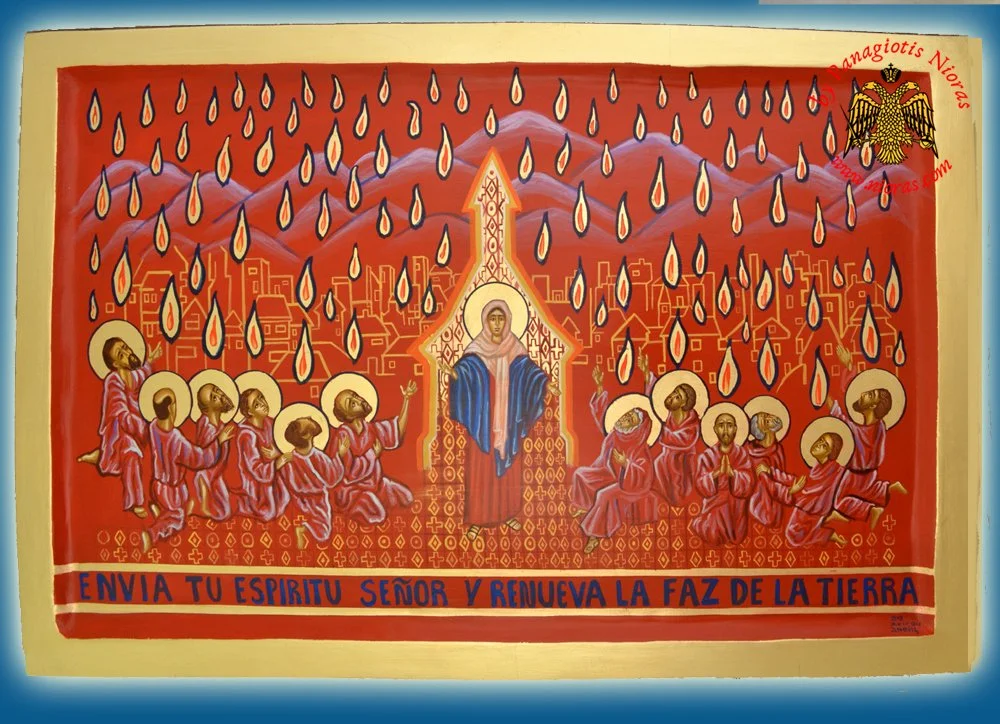
Latest massacre of Nigerian Christians? It would help to know this was the Feast of Pentecost

Latest massacre of Nigerian Christians? It would help to know this was the Feast of Pentecost

In my experience, if you ask most newsroom managers and copy-desk pros to name the most important Christian holy day, the majority will say “Christmas.”

Actually, that’s the biggest holiday, from the perspective of the surrounding culture. The correct answer is Easter, the feast of the Resurrection of Jesus Christ.

Now, here is a tricky question — one linked to yet another hellish massacre of Christians in the tense land of Nigeria. What holy day would be ranked No. 2 in the calendar of ancient Christianity?

There may some debates about this, but many historians will say it is the joyous Feast of Pentecost (click here for background material), which closes the great season of Easter. Hold that thought, because we will come back to it. Meanwhile, something very important is missing from the top of this Reuters report: “At least 50 killed in massacre at Catholic church in southwest Nigeria.”

LAGOS, June 5 (Reuters) — Gunmen attacked a Catholic church in southwest Nigeria during mass on Sunday, killing at least 50 people including women and children, according to a hospital doctor and media reports.

The gunmen shot at people outside and inside the church building, killing and injuries worshippers, said Funmilayo Ibukun Odunlami, police spokesperson for Ondo state. She did not say how many people were killed or injured at St Francis Catholic Church in the town of Owo but added police were investigating the cause of the attack.

Ondo state Governor Arakunrin Oluwarotimi Akeredolu, who visited the scene of the attack and injured persons in hospital, described Sunday's incident as "a great massacre" that should not be allowed to happen again. The identity and motive of the attackers was not immediately clear.

The motive was unclear?


Please respect our Commenting Policy

The New Yorker profiles a pro-life ob-gyn student and the Twitter mobs descend

The New Yorker profiles a pro-life ob-gyn student and the Twitter mobs descend

When Emma Green announced she was leaving the religion beat at The Atlantic to cover cultural conflicts in academia for the New Yorker, many of us hoped that she could squeeze a bit of religion reporting into the mix.

I’ve got to say this about her first piece for the latter: One cannot accuse her of dodging controversy. This is the story of a pro-life obstetrics student in an occupation that is formidably bent in the other direction and what it’s like to get consistently slammed by one’s professional peers.

Green had no sooner posted the story on Twitter than a cascade of hateful responses sprung up.

In the past there have been many stories in the mainstream media about what aspiring pro-abortion-rights ob-gyns go through in terms of training — but this is the first one I’ve seen in a major publication about what the abortion opponents go through.

After introducing Cara Buskmiller as a millennial Catholic woman desiring to become an ob-gyn, the story continues:

But in 2010, as Buskmiller prepared to apply to medical school, she worried that admissions committees would be skeptical of her beliefs, and how her personal objections to abortion and birth control would affect her practice as an ob-gyn. What would program directors think of the volunteer stints she’d done at a crisis pregnancy center? And, when it came time for residency, would she be able to duck out of certain clinical rotations to avoid assisting with abortions?

Buskmiller got into medical school at Texas A. & M., and she went on to do her residency at St. Louis University, a Catholic school. But she felt that students like her needed more backup. So, during her second year as a resident, she launched a Web site called Conscience in Residency, a support network for doctors-in-training who have moral objections to abortion. The site’s tagline is “You’re not crazy, and you’re not alone.”

It feels that way to people like Buskmiller whose faith forbids them from taking part in abortions, sterilizations and dispensing with contraceptives.

The hatred shown toward such young professionals is almost pathological. There’s no middle ground here.


Please respect our Commenting Policy

Thinking about that 'Define evangelical' thing, with Andrew Walker, Ryan Burge (and Mark Noll)

Thinking about that 'Define evangelical' thing, with Andrew Walker, Ryan Burge (and Mark Noll)

If you search for “define evangelical” in the 18 years worth of material stored here at GetReligion you will find about four screens worth of information. Here’s what that looks like in a Google search.

Believe it or not, this was a hot topic before the advent of Orange Man Bad and the dreaded “81% of White evangelicals” mantra.

Debates about the meaning of the church-history term “evangelical” are so old that I once asked the Rev. Billy Graham for his take. Here’s some information about his answer, drawn from this “On Religion” column: “Define 'evangelical' – please.”

… You might assume that the world's most famous evangelist has an easy answer for this tricky political question: "What does the word 'evangelical' mean?" If you assumed this, you would be wrong. In fact, Graham once bounced that question right back at me.

"Actually, that's a question I'd like to ask somebody, too," he said, during a 1987 interview in his mountainside home office in Montreat, N.C. This oft-abused term has "become blurred. ... You go all the way from the extreme fundamentalists to the extreme liberals and, somewhere in between, there are the evangelicals."

Wait a minute, I said. If Billy Graham doesn't know what "evangelical" means, then who does? Graham agreed that this is a problem for journalists and historians. One man's "evangelical" is another's "fundamentalist."

That leads us to the topic of this quick, and rather rare, Monday “think piece” (I’m traveling right now and rather unplugged, so I wrote this several days ago).

Thus, at the top of this post you will see a video feature from The Gospel Coalition in which two academics — political scientist Ryan Burge ( a GetReligion contributor) and ethicist-apologist Andrew Walker — debate this topic: “Is ‘Evangelical’ a Political or Theological identity?” (Careful readers may have noticed that, a few lines earlier, I called it a “church-history term” and I’m sticking to that.)

I will let Burge and Walker speak for themselves.


Please respect our Commenting Policy

Plug-In: Faith in Uvalde, even as national media attention focuses on police and guns

Plug-In: Faith in Uvalde, even as national media attention focuses on police and guns

In the 10 days since a gunman killed 19 children and two teachers at an elementary school in Uvalde, Texas, questions about the incompetent police response have dominated the headlines.

So, too, has the political debate over gun violence, specifically the assault-style weapons used in Uvalde as well as recent mass shootings in Buffalo, New York, and — just this week — Tulsa, Oklahoma.

Rightly so.

But faith, too, has emerged as a vital part of the story, as we first highlighted last Friday. Once again this week, that is where we start.

Check out this must-read coverage:

A church, a gathering place for generations, becomes a hub for Uvalde’s grief (by Rick Rojas, New York Times).

Funeral after funeral, Uvalde’s only Catholic priest leans on faith (by Teo Armus, Washington Post).

Meet the first minister of gun violence prevention (by Emily McFarlan Miller, Religion News Service).

In Uvalde, a ministry of listening and silence (by Addie Michaelian, World).

‘This is wailing, weeping, heartfelt grief. This is what this town is feeling’ (by Audrey Jackson, Christian Chronicle).

The arrow in America’s heart (by Elizabeth Dias, New York Times).

A former pastor grieves the loss of his great-granddaughter in Uvalde (by John Burnett and Marisa Peñaloza, NPR).

On Texas shooting, Vatican Academy for Life says just laws ‘protect all citizens’ (by Elise Ann Allen, Crux).


Please respect our Commenting Policy

Red hat for San Diego Bishop Robert McElroy: Vatican message to U.S. Catholic bishops?

Red hat for San Diego Bishop Robert McElroy: Vatican message to U.S. Catholic bishops?

Two years before long-standing rumors about Cardinal Theodore McCarrick leapt into headlines worldwide, America's most outspoken activist on clergy sexual abuse met with his local bishop -- San Diego Bishop Robert McElroy.

"It was clear to me during our last meeting in your office, although cordial, that you had no interest in any further personal contact," wrote the late Richard Sipe, a former Benedictine priest who then worked for the Seton Psychiatric Institute in Baltimore. While church officials asked him to report to McElroy, "your office made it clear that you have no time in your schedule either now or 'in the foreseeable future' to have the meeting that they suggested."

Sipe's 2016 letter to the San Diego bishop was later posted online and is frequently cited as an example of a bishop ignoring warnings about the now defrocked McCarrick, who often boasted about his clout as a Vatican kingmaker. Now it will receive more attention because Pope Francis has named McElroy to the Sacred College of Cardinals. This promotes the San Diego bishop over several prominent archbishops -- including Los Angeles Archbishop Jose Gomez, who leads America's largest Catholic archdiocese and is president of the U.S. Conference of Catholic Bishops.

In his hand-delivered report, Sipe told McElroy that his ongoing research indicated that 6% of American priests were guilty of sex with minors. Meanwhile, a "systemic" trend was clear: "At any one time no more than 50% of priests are practicing celibacy."

As for the powerful McCarrick, Sipe noted: "I have interviewed twelve seminarians and priests who attest to propositions, harassment, or sex with McCarrick, who has stated, 'I do not like to sleep alone.' "

Debates about McElroy's elevation have focused on other divisive issues in Catholic life, although decades of sexual-abuse crimes loom in the background. He has, for example, supported the ordination of women to the diaconate, allowing them to preach, perform weddings and serve -- one step from the priesthood -- at Catholic altars.

McElroy has openly clashed with American bishops anxious to address "Eucharistic coherence" as prominent Catholics, especially President Joe Biden and House Speaker Nancy Pelosi, support -- with words and deeds -- abortion and LGBTQ rights.


Please respect our Commenting Policy