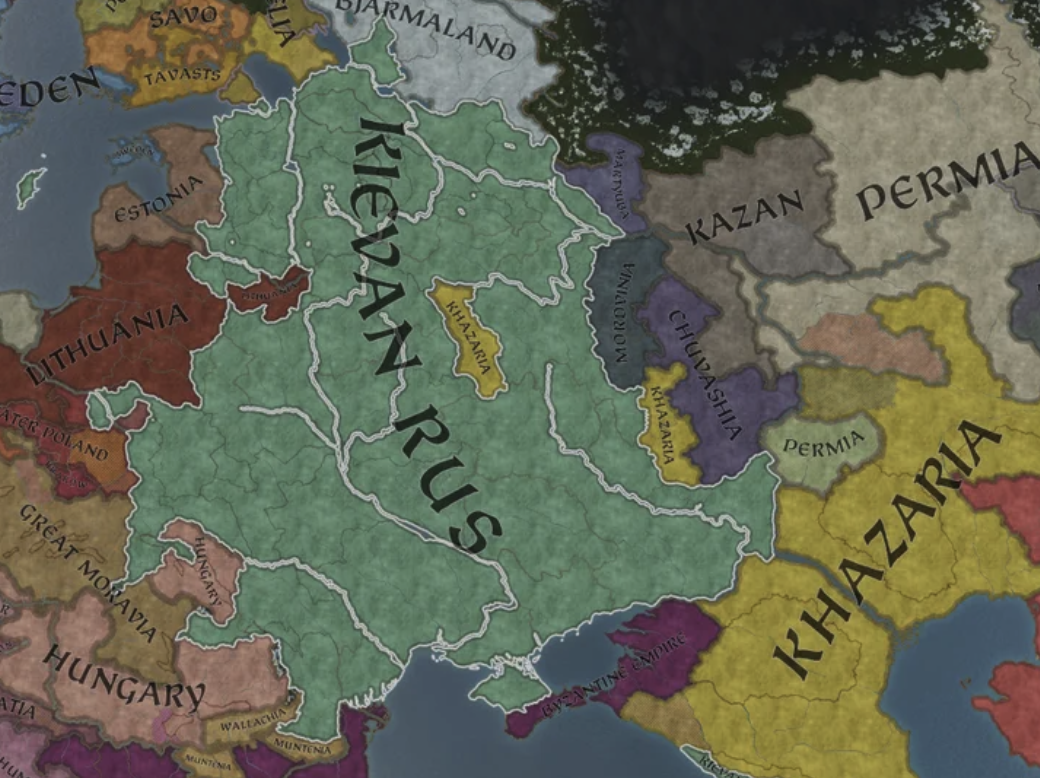
Question for New York Times scribes and others: Did Vladimir Putin dream up the Kievan Rus?

Question for New York Times scribes and others: Did Vladimir Putin dream up the Kievan Rus?

If you know anything about the New Testament, then you know that St. Paul spend a lot of time and energy in the great cities of Greece.

It would seem logical for one of the ancient patriarchates of Eastern Orthodoxy to be located in Greece, perhaps in Athens, Corinth or Thessaloniki. So who is the patriarch of the Greek Orthodox Church? Why are the great churches of Greece led by archbishops, instead of their own patriarch?

That’s a complicated question (click here for Orthodox Wiki timeline) and, as always, the Orthodox will argue about many historical twists and turns. But the big idea is that over the centuries Constantinople grew to become the great city of the wider Greek world and, thus, the leader of Greek Orthodoxy remains in Istanbul. That’s where the Ecumenical Patriarch’s few remaining churches have faced crushing persecution by the Turks. Consider the plight of Turkey’s only seminary, in Halki, which has been shuttered for half a century. Halki is a tragic and sad place. I’ve been there.

Thus, the archbishops in Greece are powerless and without influence? Tell that to the Greeks.

What does this have to do with a simplistic, laugh-to-keep-from-crying paragraph of unattributed information — written in classic “omniscient anonymous" voice — in another New York Times story about the religious tensions in Ukraine? Here is that paragraph:

The Russian church … has made no secret of its desire to unite the branches under a single patriarch in Moscow, which would allow it to control the holiest sites of Orthodoxy in the Slavic world and millions of believers in Ukraine. The Ukrainian Orthodox Church, for its part, has been slowly asserting itself under its own patriarch, reviving a separate and independent branch of Eastern Orthodoxy, after the independence of Ukraine in 1991.

Where to begin?

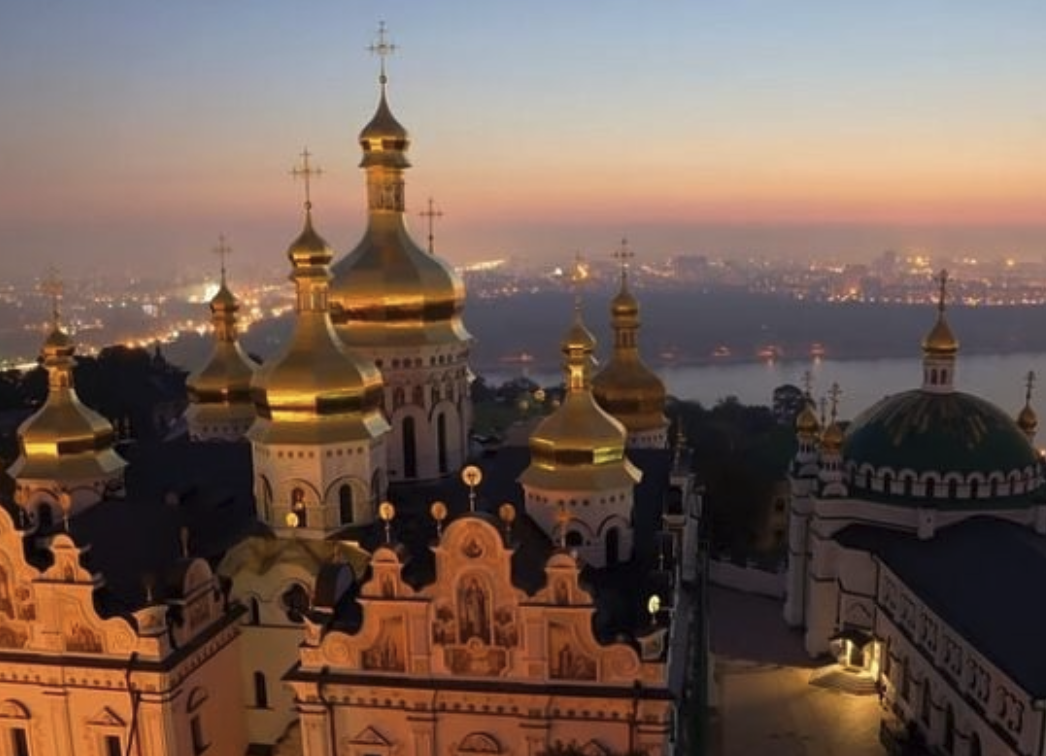
If you know anything about Orthodox Christianity in the Slavic world, you know that the story begins in Kiev in 988 with the “Baptism of Rus“ in the waters of the Dnieper River, after Prince Vladimir embraced Orthodox Christianity as the faith of his lands. The famous Lavra of the Kievan Caves was founded in 1051, marking the birth of monasticism in what would become the Russian world.

Kiev was the key city in Slavic Orthodoxy. However, Moscow grew in importance and, eventually, became the base for the Russian Orthodox Church, much as Constantinople became the great city of the wider Greek world.



Please respect our Commenting Policy

Plug-In: Seeking Russia-Ukraine war input? Here are some religious perspectives

Plug-In: Seeking Russia-Ukraine war input? Here are some religious perspectives

I don’t typically devote this space to touting the work of my ReligionUnplugged.com colleagues.

I’m going to make an exception this week. As the Russia-Ukraine war rages, I feel compelled to call attention to the outstanding journalism produced by ReligionUnplugged.com staff members and contributors around the world.

Don’t miss these stories:

Russian invasion reveals fissures among Orthodox Christians: Meagan Clark, ReligionUnplugged.com’s managing editor, reports from Boston on how “the Orthodox schism between Moscow and Constantinople that broke open in 2019 is cracking further.” As Clark’s in-depth report points out, “What is good and what is evil in the war in Ukraine is far from agreed upon.”

Support for Ukraine rises worldwide as a shadow of war falls over Eastern Europe: “From Oklahoma to New Jersey to Nairobi, faith communities are taking up collections, helping refugees and voicing opposition to the military invasion of Ukraine,” notes this global overview from Paul Glader, ReligionUnplugged.com’s executive editor, and a team of writers including Michael Ray Smith, Tom Osanjo, Michael Finch and Meagan Clark.

Q&A with Serbian Ambassador Darko Tanaskovic on Catholic-Orthodox relations: ReligionUnplugged.com contributor Jovan Tripkovic interviewed Darko Tanaskovic “to understand the role of diplomacy at the Vatican and the potential for further Catholic-Orthodox cooperation.”

As Russia invades Ukraine, students abroad fear for their families: In a dispatch from Lithuania, professor and journalist Michael Ray Smith “shares how his students are coping with what many consider to be the biggest attack on Europe since WWII.”

In rural Oklahoma, Ukrainian priest prays for his mother — and his homeland: Please forgive this shameless plug for my own story from Jones, Oklahoma, featuring the Rev. Stepan Bilogan, who preaches in his native language as a choir member translates his Ukrainian words into English. Bilogan came to the U.S. a year ago to serve spiritual needs in a rural community, but his mother, brother and countless other relatives remain in Ukraine.


Please respect our Commenting Policy

Will Russia listen to Orthodox voices praying for ceasefire? How about journalists?

Will Russia listen to Orthodox voices praying for ceasefire? How about journalists?

During Sunday rites, worshippers in the Orthodox Church in America are led through a tour of the faith's music, with hymns from Russia, Romania, Georgia, Bulgaria and beyond.

The faithful know many by heart, including the ancient Trisagion hymn -- "Holy God, Holy Mighty, Holy Immortal, have mercy on us" -- in a haunting setting that for centuries has simply been called "Kievan Chant."

With Great Lent approaching, Archbishop Alexander Golitzin of the Diocese of Dallas and the South instructed parishes (including my own in East Tennessee) to add prayers for Ukraine in every Divine Liturgy: "Again, we ask Thy great mercy on our brothers and sisters who are presently involved in conflict. Remove from their midst all hostility, confusion and hatred. Lead everyone along the path of reconciliation and peace."

The OCA's Metropolitan Tikhon, leader of a church that began with Russian missionary work in 1794, has urged that "hostilities be ceased immediately and that President Putin put an end to the military operations. As Orthodox Christians, we condemn violence and aggression."

In Slavic Orthodox history, all roads lead to Kiev, now called Kyiv in the West.

Orthodox leaders with ties to the European Union and highly European Western Ukraine have issued fierce statements after the Russian invasion. Metropolitan Epiphanius I of the independent Ukrainian Orthodox Church, launched in 2018 by Ecumenical Patriarch Bartholomew of Istanbul, has said the "spirit of the Antichrist operates in the leader of Russia."

However, it's significant that leaders of many Orthodox churches with roots in Russian Orthodoxy have also condemned the invasion and urged a ceasefire. The leader of Ukraine's oldest Orthodox body -- one with centuries of ecclesiastical ties to Moscow -- condemned the invasion in a statement addressed directly to Vladimir Putin.

"Defending the sovereignty and integrity of Ukraine, we appeal to the President of Russia and ask him to immediately stop the fratricidal war," said Metropolitan Onuphry, primate of Kiev and all Ukraine. "The Ukrainian and Russian peoples came out of the Dnieper Baptismal font, and the war between these peoples is a repetition of the sin of Cain, who killed his own brother out of envy. Such a war has no justification either from God or from people."


Please respect our Commenting Policy

Thinking about Ukraine: Mearsheimer talks secular power, but religion ghosts loom nearby

Thinking about Ukraine: Mearsheimer talks secular power, but religion ghosts loom nearby

Reporters collect quotes. Often we hear people say things that are so haunting that the quotations stick in our minds and refuse to leave.

Let me share one of the quotes that has haunted me for more than a decade. It’s from an interview that I did with Victor Yelensky, a sociologist of religion from the Ukrainian National Academy of Sciences, during a June 2009 forum in Kiev about religion and politics in Ukraine. I was one of the speakers, along with another colleague — the late Arne Fjeldstad — of the Oxford Centre for Religion & Public Life.

Here is that quotation, which I used to close this “On Religion” column: “Religion ghosts in Ukraine.” Yelensky said:

"For many Orthodox people in western Ukraine, it is simply unacceptable to live in any way under the leadership of the Moscow Patriarchate. At the same time, for many Orthodox in eastern Ukraine, it is simply unacceptable to not to be associated and in communion with the Moscow Patriarchate. In the middle are places like Kiev. ...

"This is a division that is inside Ukrainian society. Is it based on religion? No. Is religion right there in the heart of it? Yes."

Again, that was 2009. There has been all kinds of speculation about the degree to which Orthodox tensions in Ukraine did or did not influence Vladimir Putin’s arrogant, egotistical, truly sinful decision to unleash hell on the citizens of Western and Eastern Ukraine.

If you want more background on that subject, may I recommend my earlier post (“Eastern Orthodox thinking on Ukraine? Reporters can't settle for the predictable voices”) and the massive Plug-In feature by Bobby Ross, Jr. (“Why some experts insist Vladimir Putin is motivated by history and religion”). No one needs to agree with all of the voices featured in Bobby’s round-up, because they are all part of cacophony we are hearing, right now. I offered my own take in this week’s “On Religion” column for the Universal syndicate: “Will Russia listen to Orthodox prayers for cease-fire?” Here is how that column ends:

… Inside Russia, numerous Orthodox priests and abbots -- 200-plus early this week, speaking "each on our own behalf" -- began signing an online petition calling for the "cessation of the fratricidal war in Ukraine" and negotiations. "We respect God-given human freedom, and we believe that the people of Ukraine should make their choice independently, not at gunpoint, without pressure from the West or the East," said the text.


Please respect our Commenting Policy

Podcast: Return of the SBC civil war? That'd be a huge development in American religion

Podcast: Return of the SBC civil war? That'd be a huge development in American religion

In the early 1980s, the Religion Newswriters Association (now the Religion News Association) held many of its annual meetings in the days just before the Southern Baptist Convention’s big national gatherings .

With good cause: The SBC was in the midst of a spectacular, painful civil war — “moderates” fighting the armies of “biblical inerrancy” — for control of America’s largest non-Catholic flock Big headlines were a certainty, year after year. Religion reporters knew their editors — back in the days when more newsrooms had travel budgets for this sort of thing — would pay to get them to the SBC front lines.

Thus, the trip was a twofer. Religion-beat pros arrived early and started work during the meetings that preceded the actual convention, such as the Pastors’ Conference (a preaching festival featuring rising SBC stars) and the Women’s Missionary Union. The RNA would work its own seminars into the gaps.

One of my favorite memories was in New Orleans in 1982. Religion-beat patriarch Russell Chandler of the Los Angeles Times and some other scribes got into a convention-hotel elevator, carrying a box of wine and liquor for an RNA social hour. The elevator was packed with WMU women, who didn’t like the looks of that box.

When the RNA folks got off the elevator, one of the women said, under her breath: “Well, they’re not here for the Southern Baptist Convention.” Over his shoulder, Chandler replied: “Oh, yes we are.”

I bring this up because there’s plenty of evidence that the Southern Baptists are about to have a second civil war. As I argued during this week’s “Crossroads” podcast (CLICK HERE to tune that in), that would be a big news story for at least three reasons.

Before we get to those, here’s a few key passages from a Religion News Service story by Bob Smietana describing a big SBC domino that tipped over this week: “SBC President Ed Litton won’t run again — to focus on racial reconciliation instead.” Here’s the overture:

Saying he wants to spend his time focusing on racial reconciliation, Southern Baptist Convention President Ed Litton announced via video Tuesday (March 1) that he would not seek a second term in office.

Litton will become the first SBC president in four decades to not seek reelection after his first one-year term.


Please respect our Commenting Policy

Two insiders' writings should be weighed carefully by evangelical-watchers in the press

Two insiders' writings should be weighed carefully by evangelical-watchers in the press

As U.S. Protestant evangelicalism copes with internal divisions and problematic status in the broader society, along with the usual brickbats from the Left, non-partisan journalists and evangelical strategists alike should carefully monitor the thinking of knowledgeable insiders who are not wedded to customary loyalties and assumptions. Two in particular: David French and the lesser-known Michael F. Bird.

Preliminaries: (1) The media should indicate when they're talking about WHITE evangelicals, who are so distinct from the Hispanic and Black subgroups in socio-political terms. (2) Contrary to the customary media story line, it's important to acknowledge that grassroots, evangelicalism remains the LEAST politically involved of U.S. religion's major segments, as seen in the National Congregations Study.

Attorney-turned-pundit David French is, yes, a critic of Donald Trump who even flirted with a quixotic third-party run against him in 2016. Therefore his journalism is ignored if not despised by legions yearning for a second Trump term (which would end when he's age 82.5). Yet consider that though a Harvard Law product, French is a conservative's conservative and an evangelical's evangelical.

The Tennessee-based writer, who worships in the conservative Presbyterian Church in America, is a senior editor of The Dispatch and formerly a National Review writer. During his prior legal career he was a senior counsel with two top evangelical shops, the American Center for Law and Justice and the Alliance Defending Freedom, and president of the Foundation for Individual Rights in Education. Perhaps no attorney has labored more effectively to defend Christian voices and organizations on U.S. campuses, harassed local churches and conservatives and pro-lifers exercising Bill of Rights freedoms.

Additionally, he served with the U.S. Army in Iraq, winning the Bronze Star for combat service. His importance as a conservative thinker was depicted in this 2019 New Yorker article. Wife Nancy was a Sarah Palin ghostwriter and founded Evangelicals for Romney in 2012.

With that background, you'll understand why The Guy keeps thinking about the contention in French's weekly column on religion February 13 that "the seeds of renewed political violence are being sown in churches across the land."


Please respect our Commenting Policy

The New York Times fails to ask a key 'parental rights' question linked to Texas trans wars

The New York Times fails to ask  a key 'parental rights' question linked to Texas trans wars

No one in his or her right (or left) mind would expect the college of journalism cardinals at The New York Times to write a balanced story about one of the latest battles in Texas over core doctrines of the Sexual Revolution.

In this case, I am not referring to Gray Lady coverage of the state’s efforts to ban most abortions after unborn children have detectable heartbeats, which is about six weeks into pregnancies.

No, I am referring to a massive new story about Gov. Greg Abbott call for child-abuse investigations of parents who back appeals by their children and teens to begin medical efforts to transition to another gender. The double-decker headline is rather restrained, when one considers the level of outrage among the vast majority of Times-persons.

Texas Investigates Parents Over Care for Transgender Youth, Suit Says

The investigations by the state’s Department of Family and Protective Services started last week with an employee of the agency, according to the suit, after Gov. Greg Abbott called for such inquiries.

As I said, no one would expect the Times to do a balanced story on this kind of subject, one that is so close to the newspaper’s doctrinal heart.

I was, however, surprised that this story didn’t include (a) some kind of reference to the newspaper’s involvement in an important discussion of a related topic by two of America’s leading trans activists and medical professionals and (b) some input from religious conservatives — major players in Texas life — discussing whether Abbott’s actions limit parental rights in decisions affecting their children. Religious conservatives have been very concerned, in the past, about government efforts (see this ongoing Canada case) to punish parents who oppose transition efforts by their children (usually backed by a former spouse).

Back to the Times report. Here is some crucial material:

The investigations by the state’s Department of Family and Protective Services, which have not been previously reported, were started in response to an order from Mr. Abbott to the agency, the lawsuit says. The order followed a nonbinding opinion by the Texas attorney general, Ken Paxton, that parents who provide their transgender teenagers with puberty-suppressing drugs or other medically accepted treatments — which doctors describe as gender-affirming care — could be investigated for child abuse.


Please respect our Commenting Policy

Can someone please report on the real Ginni Thomas? The truth is out there

Can someone please report on the real Ginni Thomas? The truth is out there

If it’s late winter, it must be time to report on the U.S. Supreme Court, its upcoming decisions and particularly about its most senior justice, Clarence Thomas.

Thomas is also the lone Black justice, although that may change in that President Joe Biden is poised elect the first black woman to the high court.

Two investigative stories have come out recently about Ginni Thomas, the second wife of the Supreme Court justice, and how her political activities are allegedly compromising her famous husband. One was this New Yorker piece and the other is this lengthy New York Times Magazine piece. I’ll be critiquing the latter in a moment, but I do want to excerpt one paragraph from the New Yorker piece:

Ginni Thomas has complained that she and her husband have received more criticism than have two well-known liberal jurists with politically active spouses: Marjorie O. Rendell continued to serve on the appeals court in Pennsylvania while her husband at the time, Ed Rendell, served as the state’s governor; Stephen Reinhardt, an appeals-court judge in California, declined to recuse himself from cases in which the American Civil Liberties Union was involved, even though his wife, Ramona Ripston, led a branch of the group in Southern California.

She may have a point. When I read the adulation that that the Times accords to people like Justice Ruth Bader Ginsburg (who made no secret of her political leanings) or Hillary Clinton (who wrote the book on activist wives), Ginni Thomas may be justified in complaining.

This is not to say she doesn’t have her issues, even with her Republican friends, and I’m not objecting to the reporting on Ginni Thomas’ activities about town. Fair is fair, but I simply don’t see the same disdain and suspicion meted out to activist spouses on the Left. Whenever the latter is politically active, that’s laudable. But if it’s someone on the cultural Right –- well, they’re compromisers.

I am no expert on anything pertaining to the U.S. Supreme Court; I’ve covered two or three hearings in person over the years and that’s that. So I’ll stick to the religious content of the piece. Here are two paragraphs that appear in the middle of the piece:


Please respect our Commenting Policy

Eastern Orthodox thinking on Ukraine? Reporters can't settle for the predictable voices

Eastern Orthodox thinking on Ukraine? Reporters can't settle for the predictable voices

For the past week or so, I have been getting quite a few emails and messages from people wanting to understand what “the Orthodox” think about the invasion of Ukraine.

That’s a massive question. In my experience, the Orthodox are praying for a ceasefire and negotiations, seeking a Ukraine that is militarily independent of the United States-European Union and, certainly, Vladimir Putin’s Moscow regime.

At this point, no one should be surprised that Orthodox leaders aligned with USA-EU and Turkey are releasing fierce statements against Putin’s arrogant and evil invasion of Ukraine. At the same time, no one should be surprised that Patriarch Kirill of Moscow has tried to call for peace, while avoiding any language that openly clashes with the autocrat next door. You end up with language such as:

As the Patriarch of All Russia and the primate of a Church whose flock is located in Russia, Ukraine, and other countries, I deeply empathize with everyone affected by this tragedy.

I call on all parties to the conflict to do everything possible to avoid civilian casualties. I appeal to the bishops, pastors, monastics, and laity to provide all possible assistance to all victims, including refugees and people left homeless and without means of livelihood.

The Russian and Ukrainian peoples have a common centuries-old history dating back to the Baptism of Rus’ by Prince St. Vladimir the Equal-to-the-Apostles. I believe that this God-given affinity will help overcome the divisions and disagreements that have arisen that have led to the current conflict.

Note this meek language — “I call on all parties to the conflict to do everything possible to avoid civilian casualties” — that still manages to condemn the current actions of Russia’s leaders.

Anyone seeking the “Orthodox mind” on this matter needs to remember that Eastern Orthodoxy, no matter what Western media think, has no pope and that its (I should candidly say “our”) conciliar approach to settling disputes moves very slowly, with good cause.


Please respect our Commenting Policy