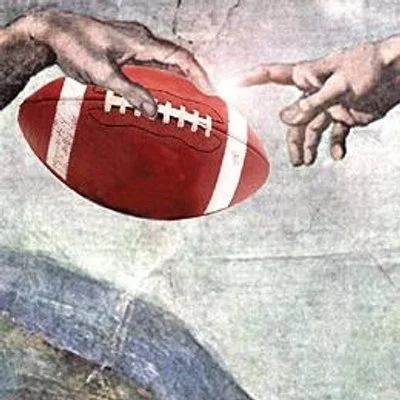
Podcast: Reporters who ask the right questions will find lots of NFL religion stories

Podcast: Reporters who ask the right questions will find lots of NFL religion stories

Several days before former Miami Dolphin head coach stunned the National Football League with his class-action lawsuit alleging racial discrimination and other sins, I read a very interesting profile at The Athletic about one of my sports heroes.

The headline summed things up: “Bears Hall of Famer Mike Singletary is hungry for a second chance to be an NFL head coach, but will it ever come?”

Singletary was a legend in Chicago and, before that, at Baylor University — where I met him because of a mutual friend. Singletary was a highly articulate preacher’s kid from Houston with a voice that sounded like he was auditioning to be the next James Earl Jones. He was a leader from Day 1 at Baylor and demonstrated all the characteristics that made him the face, brain and soul of the greatest defensive unit in NFL history.

This is where the Singletary feature became relevant during this week’s “Crossroads” podcast (CLICK HERE to tune that in), which focused on why journalists struggle to spot “religion ghosts” in so many sports stories, such as the life of Los Angeles Rams superstar Cooper Kupp (“Emerging NFL superstar — Cooper Kupp — puts his faith on his hat, not that reporters notice”) and the beliefs that appear to be putting the steel in the spine of Flores.

Why hasn’t Singletary had a second shot at being an NFL head coach, after his tumultuous tenure in San Francisco (not the best city for his views on faith and culture)? It may have something to do with Singletary trying to “stand for what he had been preaching” with the 49ers. Read this long passage carefully:

… 49ers owner John York, CEO Jed York, director of player personnel Trent Baalke and other executives called Singletary to a meeting. They had a trade in place with the Steelers for Ben Roethlisberger, who had recently been accused of sexual assault. Singletary vetoed the deal. …

“I had been telling the team I wanted a team of character,” he says.


Please respect our Commenting Policy

In reportage on Russia and Ukraine, don't neglect the importance of two rival churches 

In reportage on Russia and Ukraine, don't neglect the importance of two rival churches 

On top of the 2014 seizure of Crimea and years of infiltration in eastern borderlands, Russia now poses a more severe threat to neighboring Ukraine.

Whether the nation faces a military invasion, or even a World War 2.5, or less bloody subversion and hoped-for domination, journalists these next few years will need to understand and depict the religious aspect of Ukraine's rising nationalism and resistance against Russian expansionism.

Here are some basics. Russia and Ukraine contain by far the two largest national populations in Eastern Orthodox Christianity. The new World Christian Encyclopedia edition (which belongs in every media and academic library) counts 114 million Orthodox in Russia for 79% of the population, and 32 million in Ukraine for 73%.

Terminology note for writers: "Eastern Orthodox" is the precise designation for such churches, related historically to the Ecumenical Patriarchate based in Turkey, that affirm the definition of Jesus Christ's divinity by the Council of Chalcedon (A.D. 451). The separate branch of so-called "Oriental Orthodox" is non-Chalcedonian; its largest national church is in Ethiopia.

Ukraine's ecclesiastical history, like its political history, is highly complex. The saga began with the A.D. 988 "baptism of Rus" in Kyiv (Russians prefer "Kiev") when Prince Vladimir proclaimed Orthodoxy the religion of his realm and urged the masses to join him in conversion and baptism.

Russians see Christendom's entry into Eastern Europe as the origin of their homeland and the Russian Orthodox Church. Russian President Vladimir Putin cites this history to support his claim for Ukraine as a client area within greater Russia instead of a validly independent nation. His post-Soviet Kremlin maintains close bonds with the Russian Church's Moscow Patriarchate, which in turn has centuries of ecclesiastical authority within Ukraine.


Please respect our Commenting Policy

Saving urban churches: Associated Press feature dances around several important issues

Saving urban churches: Associated Press feature dances around several important issues

When I arrived at The Rocky Mountain News (RIP) in the fall of 1984, one of the first things I did was take a long walk in downtown Denver — taking notes about the religious sanctuaries that were nearby.

Most of the urban churches were, as you would expect in a Western city, linked to Mainline Protestant denominations and there were several Roman Catholic parishes, as well.

All of the mainline churches were in decline, with shrinking and aging congregations housed inside large buildings dating back to the glory days of previous decades. The one exception was a United Methodist congregation led by an evangelical pastor who was reaching out to families, single adults and all kinds of people in nearby neighborhoods — Blacks, Latinos, Asians, etc.

Meanwhile, conservative churches were growing in the suburbs, with a mixture of nondenominational, Baptist, Pentecostal and alternative Presbyterian flocks leading the way.

My point is that there were several stories going on in downtown Denver at the same time. But it was already clear — four decades ago — that lots of those old, big churches would eventually be empty or up for sale. It was also obvious that some of them would seek income from other sources to help keep their doors open, renting space to other flocks or social ministries.

Major news organizations keep bumping into stories linked to these trends, in part because big newsrooms tend to be in central urban zones and, in my experience, quite a few journalists (religion-beat pro included) have liberal Protestant or Catholic backgrounds or remain active in those traditions. Thus, here at GetReligion, it’s common to see posts with headlines such as these: “More news about old churches being sold and flipped: Does it matter why this is happening?”, “Churches for sale: New York Times visits a sexy former Catholic sanctuary in Quebec” and “Wait just a minute: Fading Lutherans (ELCA) in Waco sold their lovely building to Anglicans?” Or how about this one? “Why is a church shrinking or closing? Reporters: Brace for complex and heated debates.”

This brings me to a new Associated Press report about this old topic: “Historic city churches find new life as neighborhood centers.” Once again, there are glimpses of the trends behind this news hook, but very little information examining the larger issues looming in the background.


Please respect our Commenting Policy

Reporting on white Christian nationalists? Try talking with some of these Americans in person

Reporting on white Christian nationalists? Try talking with some of these Americans in person

“White Christian nationalism” (WCN) has become quite the bogeyman in contemporary religion coverage, even though few reporters seem to have spent much time actually engaging with people in the flocks led by said nationalists.

Instead, journalists read their social media, watch their YouTube videos and talk with sources drawn from a rather predictable list of activists and experts who oppose the bogeyman.

But that does not a complete story make. Readers end up with, at best, half of a debate.

One outlet that’s building or staking its reputation on WCN continuing to be a thing is Religion News Service, which has been rolling out stories on the topic since last September, thanks to a grant from the Pulitzer Center. The latest story in its “White Christian Nationalism since the Jan. 6 Attack” series ran Jan. 26 here. It began:

When supporters of former President Donald Trump rallied near the White House on Jan. 6 of last year, a boisterous pocket of young men waving “America First” flags broke into a chant: “Christ is King!” It was one of the first indications that Christian nationalism would be a theme of the Capitol attack later that day, where insurrectionists prayed and waved banners that read “Proud American Christian.”

It also announced the presence of followers of Nick Fuentes, a 23-year-old white nationalist and former YouTube personality who was subpoenaed this month by the U.S. House of Representatives committee investigating the Capitol attack. …

“Christ is King” is not controversial in itself: The phrase is rooted in Christian Scripture and tradition. But Fuentes’ supporters have given it a different connotation. They have chanted it at anti-vaccine protests and the anti-abortion March for Life, some of them holding crucifixes aloft. It was heard in March, at an America First conference, where Fuentes delivered a speech saying America will cease to be America “if it loses its white demographic core and if it loses its faith in Jesus Christ.” Fuentes also declared the country “a Christian nation.”

There are a bunch of academics and other sources quoted here but what appears to be the central thesis –- that WCN is bleeding into the mainstream institutions and life of conservative Christianity –- was not proven by a long shot.


Please respect our Commenting Policy

Emerging NFL superstar -- Cooper Kupp -- puts his faith on his hat, not that reporters notice

Emerging NFL superstar -- Cooper Kupp -- puts his faith on his hat, not that reporters notice

If you have been following the remarkable 2022 National Football League playoffs, then you have probably heard quite a bit about Cooper Kupp, the all-world wide receiver for the Los Angeles Rams.

I know. I know. Not many GetReligion readers are into sports, as Bobby Ross Jr., and I have bemoaned for quite a few years. But this Super Bowl thing is a pretty big deal in American culture and, once again, there’s a religion ghost linked to the life of one of the key players in The Big Game. Not that readers and viewers would know anything about that, based on the elite sports-media coverage.

You see, “crown” is the big word attached to Kupp right now. This year, he became only the fourth player in NFL history to win the “triple crown” as a wide receiver, leading the league in receptions, receiving yards and receiving touchdowns (click here for a Los Angeles Times profile that stresses this fact, “When it mattered most, Cooper Kupp again carried the Rams”).

Wait, there’s more. As this CBS Sports feature noted, Kupp also became the first NFL player EVER to have more than 2,000 receiving yards in the regular season and postseason combined.

The “crown” thing keeps showing up in those stories and many others like them, along with countless references to how selfless Kupp is and how much he and his wife Anna contribute to their community.

At some point, reporters need to read the message — mixing sports and faith — that is written on that signature hat that Kupp keeps wearing in press appearances. See this reference, care of Sports Spectrum — a Christian news website.

As he spoke, he sported a hat from his own apparel line. On one side of the hat it says, “Do it to get a crown that will last forever.” The phrase comes from the Bible verse 1 Corinthians 9:25, which says, “Everyone who competes in the games goes into strict training. They do it to get a crown that will not last, but we do it to get a crown that will last forever.”

As always, it isn’t news, in and of itself, that Kupp is an outspoken Christian.


Please respect our Commenting Policy

Plug-In: 'We have to stop hate' -- Why it's important to keep remembering the Holocaust

Plug-In: 'We have to stop hate' -- Why it's important to keep remembering the Holocaust

To Anna Salton Eisen and her son, Aaron Eisen, International Holocaust Remembrance Day was personal.

George and Ruth Salton — Anna’s parents and Aaron’s grandparents — survived the Holocaust.

But many of the Eisens’ family members did not.

The United Nations Holocaust Memorial Museum notes that in 2005:

The United Nations General Assembly designated January 27 — the anniversary of the liberation of Auschwitz-Birkenau — as International Holocaust Remembrance Day.

On this annual day of commemoration, the UN urges every member state to honor the six million Jewish victims of the Holocaust and millions of other victims of Nazism and to develop educational programs to help prevent future genocides.

Last week, the U.N. General Assembly passed a resolution condemning Holocaust denial and “urging all nations and social media companies ‘to take active measures to combat antisemitism and Holocaust denial or distortion,’” The Associated Press’ Edith M. Lederer reports.

The new resolution sends a strong message, Aaron Eisen said Thursday in an online panel discussion hosted by ReligionUnplugged.com.

“This resolution had a lot of the same language as the resolution in 2005 about Holocaust Remembrance Day — that we need to combat Holocaust denial, teach the Holocaust to future generations to prevent genocide and also commend those places where the Nazi concentration camps have been preserved,” Aaron said.

“It's very important for the future generations to get this education — in the museums, at the camps, through the Arolsen Archives,” he added. “It's a very important day for our family and for all civilization to really take these lessons to heart.”

Anna Eisen, a founding member of Congregation Beth Israel in Colleyville, Texas, where the rabbi and three others were taken hostage recently, echoed her son.


Please respect our Commenting Policy

Catholics for Choice boldly projects its own credo before the 2022 March for Life

Catholics for Choice boldly projects its own credo before the 2022 March for Life

When progressive Catholics list their heroes in the church hierarchy most would include Cardinal Wilton Gregory of Washington, D.C.

When preparing their own lists, most conservative Catholics would include Archbishop Salvatore J. Cordileone of San Francisco.

Thus, it's important to note how these two shepherds reacted to the spectacular protest staged by Catholics for Choice during the 2022 Vigil for Life inside the Basilica of the National Shrine of the Immaculate Conception.

While worshippers gathered for overnight rites and prayers before the Jan. 21st March for Life, pro-abortion-rights Catholics -- using a nearby projector -- displayed their own beliefs on the 329-foot tower and facade of America's largest Catholic sanctuary. "Catholics for Choice" appeared inside a glowing cross, accompanied by a litany of slogans, such as "Stop stigmatizing; Start listening," "Mi cuerpo, mi decision (my body, my decision in Spanish)" and "Pro-choice Catholics you are not alone."

Archbishop Cordileone released this response, via Twitter, using language implying the actions of Satan: "The attempted desecration is enormous. Diabolical. Mother Mary, pray for them, now and at the hour of death. Amen."

Cardinal Gregory's press statement pointed readers to a specific scripture to find the context for his words: "The true voice of the Church was only to be found within The Basilica. … There, people prayed and offered the Eucharist asking God to restore a true reverence for all human life. Those whose antics projected words on the outside of the church building demonstrated by those pranks that they really are external to the Church and they did so at night -- John 13:30."

That verse describes the moment when Judas exits the Last Supper to betray Jesus: "So … he immediately went out; and it was night."

Catholics for Choice offered no apologies on Twitter: "Our faith teaches us that EVERY person, including the 1 in 4 abortion patients who are Catholic, should be able to make their own decisions about their lives and bodies without interference from the church or the state. #AbortionIsEssential!!" The group's communications director, Ashley Wilson, added: "I am tired of feeling shame and stigma for being a pro-choice Catholic. And I'm not here for people to judge my own personal relationship with God."


Please respect our Commenting Policy

And now, in other Pope Francis news: Is having kids a moral duty for married couples?

And now, in other Pope Francis news: Is having kids a moral duty for married couples?

THE QUESTION:

Is having children a moral duty for married couples?

THE RELIGION GUY'S ANSWER:

Pope Francis provoked a fuss at his first general audience of 2022 by remarking that "many, many couples do not have children because they do not want to, or they have just one -- but they have two dogs, two cats. … Dogs and cats take the place of children." He continued, "This denial of fatherhood or motherhood diminishes us; it takes away our humanity" and "civilization becomes aged."

So, do married couples have a moral duty to bear children, and preferably more than one?

Birth rates have emerged as a pressing secular issue of this era. The Religion Guy is old enough to remember progressives' alarm over an impending "population bomb" and enthusiasm for "zero population growth."

While those ideas persist, all the buzz these days is about the globe's great Birth Dearth.

The lead article on page one of the January 18 New York Times was headlined "Worries in China that Population May Soon Shrink." The trend in that nation's official demographic report, issued the day before, suggested that 2021 may be the last year when births outnumber deaths as the population begins decreasing. The birth shortage is even bigger than in 1961 during Mao Zedong's infamous "Great Leap Forward" economic scheme, which produced unaccountably vast famine and death.

The Times stated as objective fact that this is a "crisis" for the vast nation that "could undermine its economy and even its political stability."


Please respect our Commenting Policy

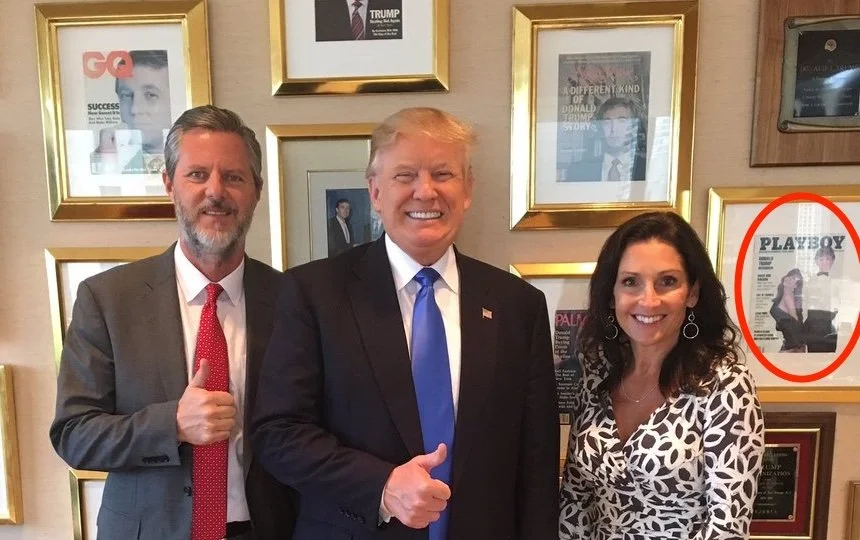
Podcast: As it turns out, it was totally logical for Jerry Falwell, Jr., to embrace Donald Trump

Podcast: As it turns out, it was totally logical for Jerry Falwell, Jr., to embrace Donald Trump

When reading That. Vanity. Fair. Article, it will help to focus on the obvious answer to the big question that will immediately pop into your head (especially if you happen to be a journalist).

The question: Why did Jerry Falwell, Jr., choose to talk to a magazine with a solid footprint on the American cultural and journalistic left?

The answer: Falwell is a lawyer who, at the moment, has a number of pressing legal issues in his life. To put this in D.C. Beltway lingo, he appears to be “hanging a lantern” on his problems. Here is one online definition of that term:

"Hang a lantern on your problem” was entered into the political lexicon in the 1980s by Chris Matthews, a former chief of staff to Speaker of the House of Representatives Tip O’Neill. Matthews explained “hang a lantern on your problem” to the New York (NY) Times in 1987: “The first step is, admit you have a problem; that gives you credibility. The second step is to use that credibility to redefine your problem, or use the problem for your own purposes.”

As I explained during this week’s “Crossroads” podcast (CLICK HERE to tune that in), it is interesting to read the Vanity Fair piece and, with a mental highlighter pen (a real one if you get the analog magazine), mark the questions that Falwell chooses to answer and the ones that he declines to answer. Then, repeat the process with the questions that are answered and rejected by other key voices — think Giancarlo “pool boy” Granda and legal representatives for Liberty University.

This process will yield insights into two of the most obvious plot lines in this soap-opera mess, as in its steamy Miami-angle sex scandal and the ugly legal wars between Jerry Falwell, Jr., and the shamed leaders of Liberty University.

Once you’ve done that, you’re read to dig into the deeper elements of this story, which are clearly visible in the long, long, long second deck of it’s double-headline:


Please respect our Commenting Policy