Once again, U.S. Supreme Court chooses to punt on a major religious liberty case

Once again, U.S. Supreme Court chooses to punt on a major religious liberty case

Florist Barronelle Stutzman and Robert Ingersoll have shared many details from the 2013 conversation that changed their lives and, perhaps, trends in First Amendment law.

For nine years, Ingersoll was a loyal customer at Arlene's Flowers in Richland, Wash., and that included special work Stutzman did for Valentine's Day and anniversaries with his partner Curt Freed. Then, a year after the state legalized same-sex marriages, Ingersoll asked her to design the flower arrangements for his wedding.

Stutzman took his hand, Ingersoll recalled, and said: "You know I love you dearly. I think you are a wonderful person, but my religion doesn't allow me to do this."

In a written statement to the Christian Science Monitor, Ingersoll wrote: "While trying to remain composed, I was … flooded with emotions and disbelief of what just happened." He knew many Christians rejected gay marriage but was stunned to learn this was true for Stutzman.

As stated in recent U.S. Supreme Court documents: "Barronelle Stutzman is a Christian artist who imagines, designs and creates floral art. … She cannot take part in or create custom art that celebrates sacred ceremonies that violate her faith."

This legal drama appears to have ended with Stutzman's second trip to the high court and its July 2 refusal to review a Washington Supreme Court decision the drew a red line between a citizen's right to hold religious beliefs and the right to freely exercise these beliefs in public life. Supreme Court justices Clarence Thomas, Samuel Alito and Neil Gorsuch backed a review, but lacked a fourth vote.

"This was shocking" to religious conservatives "because Barronelle seemed to have so many favorable facts on her side," said Andrew T. Walker, who teaches ethics at Southern Baptist Theological Seminary.

Stutzman is a 76-year-old grandmother and great-grandmother who faces the loss of her small business and her retirement savings. She has employed gay staffers. She helped Ingersoll find another designer for his wedding flowers. In the progressive Northwest, her Southern Baptist faith clearly makes her part of a religious minority.

"Barronelle is a heretic because she has clashed with today's version of progressivism," said Walker.
Please respect our Commenting Policy

Concerning prayers and penalty kicks: Inside the official Vatican soccer tournament

Concerning prayers and penalty kicks: Inside the official Vatican soccer tournament

Beyond the Vatican’s walls and its soaring columns lies a not-so-secret passion. It is this passion, one that envelopes much of the planet, that takes over the lives of a select group of Catholic priests and seminarians.

This passion is especially relevant with the Italian national team playing in the finals of EURO 2020.

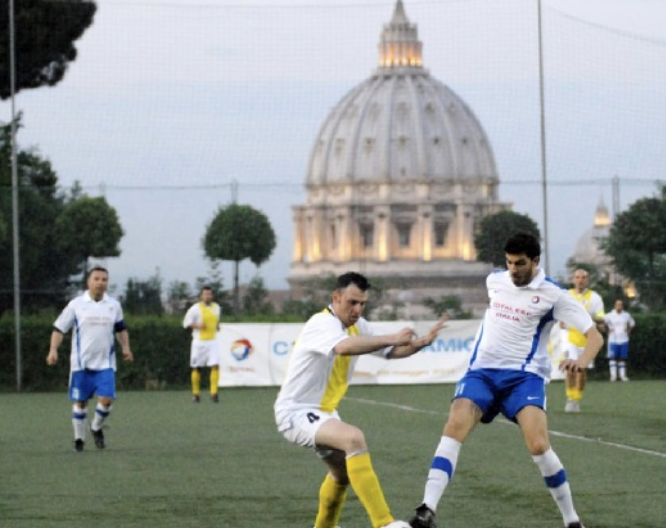
What is this passion? It’s soccer, of course. In particular, it’s the annual Clericus Cup, a soccer tournament contested by teams from various seminaries located throughout Rome. Founded in 2007, the competition features 66 different nationalities and is the brainchild of Cardinal Tarcisio Bertone, the former Vatican secretary of state and rabid soccer fan.

The tournament pits against one another different religious orders and schools where seminarians are studying and training to become ordained priests. Think of it as March Madness for priests-in-training who play the world’s most popular sport. In fact, the tournament has received regular press from the Italian media and even the subject last year of a feature story on FIFA.com, soccer’s world governing body.

This unique sporting event is the focus of a new 69-minute documentary called “The Holy Game” by filmmakers Brent Hodge and Chris Kelly. The film, distributed by Gravitas Ventures, details what’s often called the “World Cup of the Church” — but also takes a behind-the-scenes look at these seminarians who love both playing the game and the challenges that come with dedicated their lives to God.

Soccer aside, the film follows several seminarians all with a seemingly similar backstory: self-doubt and anxiety over what awaits them once they are ordained.


Please respect our Commenting Policy

Jimmy and Rosalynn Carter: Why did some journalists bury the faith tie that binds them?

Jimmy and Rosalynn Carter: Why did some journalists bury the faith tie that binds them?

If it’s been said once it’s been said a thousand times: Jimmy Carter may have been a very unsuccessful U.S. president, but his life after the White House has been top-notch.

In fact, according to a 2015 poll, the American public thinks he’s No. 1 among the nation’s post-presidents.

Obviously, there was that Nobel Peace Prize in 2002, which was awarded for “his decades of untiring effort to find peaceful solutions to international conflicts, to advance democracy and human rights, and to promote economic and social development." But if you ask average Americans what they admire about Carter’s life post-White House, I think most of them would mention two, or maybe three, parts of his life.

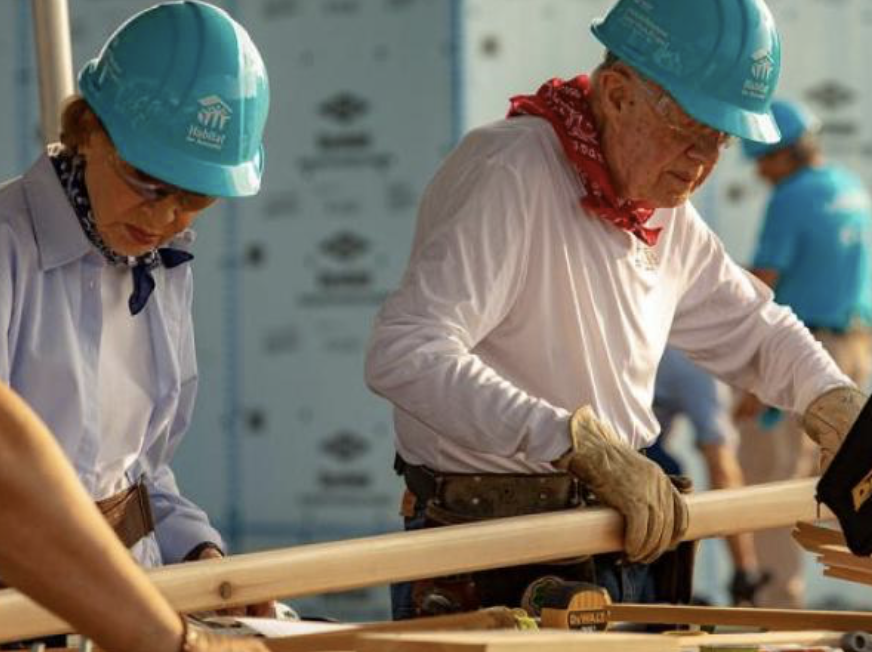
First, there is his record in volunteer work and public service, symbolized by decades of work with Habitat For Humanity building homes for the working poor. If you have followed that story at all, you know that Carter doesn’t just show up with a hammer for the photo-ops. Second, there is the remarkable marriage-partnership between Jimmy and Rosalynn Carter. I have heard Southerners refer to them as the “anti-Clintons,” as in Bill and Hillary Rodham.

Finally, there is — as Jerry Falwell, Jr., of all people, once put it — Carter’s many decades of work as the “world’s most famous Sunday school teacher.” Ths smiling Baptist did that work week after week whether there were TV cameras present or not.

That faith element was the subject of this week’s “Crossroads” podcast (click here to tune that in) in which host Todd Wilken and I looked at three mainstream-press features about Jimmy and Rosalynn Carter celebrating their 75th wedding anniversary. If readers are interested in the faith tie that binds in this marriage, they should start with this fine Washington Post feature, with it’s one-word headline: “Inseparable.” Here’s the overture:

PLAINS, Ga. — When they arrived, they strolled hand-in-hand toward their pond with a graceful willow at its edge.

“We’re going to be buried right there, on that little hill,” Jimmy Carter said, motioning toward the lawn sloping up from the pond.


Please respect our Commenting Policy

These stark numbers are headline worthy: Death of the Episcopal Church is approaching

These stark numbers are headline worthy: Death of the Episcopal Church is approaching

Last November, I wrote a post for Religion in Public with the title, “The Data is Clear — Episcopalians are in Trouble.” In it, I used survey data to paint a portrait of a denomination that was on the brink of collapse.

One of the most troubling things about the future of the Episcopal Church is that the average member is incredibly old. The median age of an Episcopalian in 2019 was sixty-nine years old. With life expectancy around 80, we can easily expect at least a third of the current membership of the denomination to be gone in the next fifteen or twenty years. That’s problematic when membership has already been plummeting for decades.

But, I came across some data in the last few weeks that I just had to look at in more depth.

Before I get into the graphs I have to give some serious kudos to the data team that works for the denomination. I have looked at the websites of all kinds of Baptist, Methodist, Presbyterian and Catholic traditions over the last few years. The Episcopalians blow them all out of the water in terms of accessibility and ease of use.

Don’t believe me? Well, they have an interactive dashboard of all their churches in the United States. You can sort based on a map, church size, or amount of offering. It’s incredible and can be accessed at this link.

Let’s get down to it, though. How many people actually attend an Episcopal church on an average Sunday? I grabbed a PDF of their membership reports from here and did some quick analysis of the national trends.

In 2009, 725,000 people attended an Episcopal church on an average weekend. According to their own data, the Episcopal Church has about 1.8 million baptized members. (The denomination’s membership peaked at 3.4 million in the 1960s.) Thus, about 40% of current members attend on a regular basis. That’s been declining steadily over the last decade. A typical year sees attendance dip by 25,000-35,000 people. That represents a 2-3% year-over-year decline.

By 2019, the weekly attendance was 547,000. In percentage terms, the Episcopalians have seen their attendance drop by a quarter in just the last decade.

But, that doesn’t tell the whole story about the future of the Episcopalians.


Please respect our Commenting Policy

That New Yorker #FreeBritany feature: It's all about a Baptist daddy and his wild daughter?

That New Yorker #FreeBritany feature: It's all about a Baptist daddy and his wild daughter?

One thing is clear, when you read the long, sad (but buzz-worthy) feature in The New Yorker entitled “Britney Spears’s Conservatorship Nightmare.”

Britney is a celebrity.

When she goes to court, she is a celebrity. When she escapes to a pub, she is a celebrity. When she fights to see her children, she is a celebrity. When she has a nervous breakdown (especially in public), she is a celebrity.

If and when she ever returns to church (there are rumors), she will do so as a celebrity. Ditto for any return to celebrity friendly Kabbalah classes.

But you get what you expect in this feature, written by Ronan Farrow and Jia Tolentino. There’s a huge cast of characters, some who speak on the record and some who do not. There are waves of details from court documents and testimony. There’s an endless survey of public scenes and paparazzi chases.

But the second line of the double-decker headline points to the heart of the story: “How the pop star’s father and a team of lawyers seized control of her life — and have held on to it for thirteen years.”

This is a story about a fight between a Baptist father (simply “Jamie” in most of the story) and his wild daughter — who has lived her entire teen and adult life in the glare of a media spotlight that burned her, even as it poured wealth on everyone around her, including members of her immediate family.

What about faith issues? There are fleeting glimpses of religion “ghosts” throughout this story. However, there is evidence that The New Yorker team realizes that, behind all of the talk about Britney’s mental health, the father and daughter are fighting about the moral choices she has made in her private life. Meanwhile, the daughter keeps trying to break free from this noose, in part through sex, love, marriage and children.

Consider the implications of this passage, referring to the legal drama that pulled the #FreeBritney social-media world back into the headlines:


Please respect our Commenting Policy

Lawsuits and scarce donors: Religious colleges could be facing tough years ahead

Lawsuits and scarce donors: Religious colleges could be facing tough years ahead

A narrowly-framed Supreme Court victory — the Fulton v. Philadelphia case — will allow Catholic Charities (at least for now) to preserve religious conscience and avoid placing foster children and children available for adoption with same-sex couples, despite the city's non-discrimination statute.

However, this does not settle the many similar legal disputes the media will be covering the next few years.

In particular, reporters will want to carefully monitor Hunter v. U.S. Department of Education, a potentially huge lawsuit filed in Oregon federal court March 29. This is a class action with 33 plaintiffs represented by Portland attorney Paul Southwick, director of the Religious Exemption Accountability Project or REAP (paul@paulsouthwick.com and 503-806-9517). Alliance Defending Freedom, a familiar participant in such matters, has filed a bid to defend the religious schools (media@adflegal.org or 480-444-0020). There are questions about the degree to which the current Justice Department will help in this defense.

The suit charges that LGBTQ students suffer "abuses and unsafe conditions" at "hundreds" of U.S. religious colleges with traditional doctrinal covenants so government should cut off their financial aid. Except for Brigham Young University and the Church of Jesus Christ of Latter-day Saints, REAP's targets are Protestant, led off by Oregon's George Fox University, a venerable Quaker campus attended by Herbert Hoover when it was a mere secondary school. George Fox's mission statement declares that "we desire the presence of Christ to be at the core of all we do."

Others include the likes of Azusa Pacific University, Baylor University, Bob Jones University, Dordt University, Eastern University, Fuller Theological Seminary, Liberty University, Messiah University, Moody Bible Institute, Seattle Pacific University, Union University and Westmont College. (Notably missing: Calvin, Gordon, Wheaton.)

Loss of aid for students would be a severe competitive blow in coming years when all colleges and especially private and religious ones expect to suffer declines in the student-age population and thus in applications, this on top of the institutional damage wrought by COVID-19. There are also prospective attacks on such schools' tax exemption and academic accreditation over sexuality. The status of athletic programs is also a hot-button issue.


Please respect our Commenting Policy

Surfside condo collapse heavily affected Orthodox Jews; the Washington Post explains why

Surfside condo collapse heavily affected Orthodox Jews; the Washington Post explains why

My second journalism job took me to South Florida, a part of the country I didn’t know at all, to work as a general assignment reporter for a small daily based in the beach city of Hollywood. We covered news in South Broward County.

I was the only reporter there interested in developing a religion beat, so it didn’t take me long to figure out the two major religious groups in town were Catholics and Jews. There were some large Protestant congregations in the area as well, but they didn’t have the same influence as the Catholic and Jewish communities.

When it came to covering Jewish life, I learned my readership was an astute one that wanted pieces on complex issues and not just some fluff pieces on Rosh Hashanah. Folks wanted to know about the new eruv being constructed in one of Hollywood’s tonier neighborhoods; they were curious as to which synagogue had the best hamantaschen for sale during Purim; what that Messianic congregation in Fort Lauderdale was all about and how much of the funds raised for the local Jewish Community Center were really going towards it.

Halfway through my sojourn in Florida, I moved from Davie, a town in central Broward, to North Miami Beach in Dade County, which is how I became aware of the tremendous concentration of Jews living in condos lining the beach. One of those condo communities was in Surfside, the site of the ill-fated building collapse last week.

As this piece in the Washington Post points out, there are a ton of Jews living in similar spots all up and down the beach reaching up to the Broward County line. There are several articles out there on the number of Jews affected by the collapse, but this one stands out for its details on the religious angle of the disaster.

SURFSIDE — Jewish congregations in the Miami area have a growing mi sheberach, a list of Hebrew names included in a public prayer for those in need of divine good, especially those requiring healing. The number of Jewish missing or dead in last week’s building collapse at 8777 Collins Ave. has crept to nearly 50, almost a third of the total number.


Please respect our Commenting Policy

Scouting membership numbers collapse: AP totally ignores role of religion in this drama

Scouting membership numbers collapse: AP totally ignores role of religion in this drama

It’s the question that I have been trying to answer for 40 years or so: Why do news organizations ignore basic religion facts and trends when it is clear they are relevant in a major news story?

Ever since the first GetReligion post, back in 2004, we’ve been talking about religion “ghosts” in mainstream news coverage. Some “ghosts” are rather subtle and, frankly, it’s easy to understand why journalists with zero religion-beat experience would miss some facts and trends linked to religious law, history or doctrine.

But then you have “ghosts” — super ghosts, maybe — that are much, much more obvious and harder to explain. Consider, for example, the Associated Press story that came out the other day with this headline: “Boy Scouts, Girl Scouts suffer huge declines in membership.” Here’s the overture:

America’s most iconic youth organizations — the Boy Scouts of America and the Girl Scouts of the USA — have been jolted by unprecedented one-year drops in membership, due partly to the pandemic, and partly to social trends that have been shrinking their ranks for decades.

While both organizations insist they’ll survive, the dramatic declines raise questions about how effectively they’ll be able to carry out their time-honored missions. … Membership for the BSA’s flagship Cub Scouts and Scouts BSA programs dropped from 1.97 million in 2019 to 1.12 million in 2020, a 43% plunge, according to figures provided to The Associated Press. Court records show membership has fallen further since then, to about 762,000.

Other than the COVID-19 crisis, what else caused this massive drop?

Reasons for the drop include competition from sports leagues, a perception by some families that they are old-fashioned, and busy family schedules. The pandemic brought a particular challenge.

Wait a minute. Parents were worried that the Scouts are “old-fashioned,” which implies that Scouting would be growing if its leaders made more efforts to modernize their methods and beliefs?

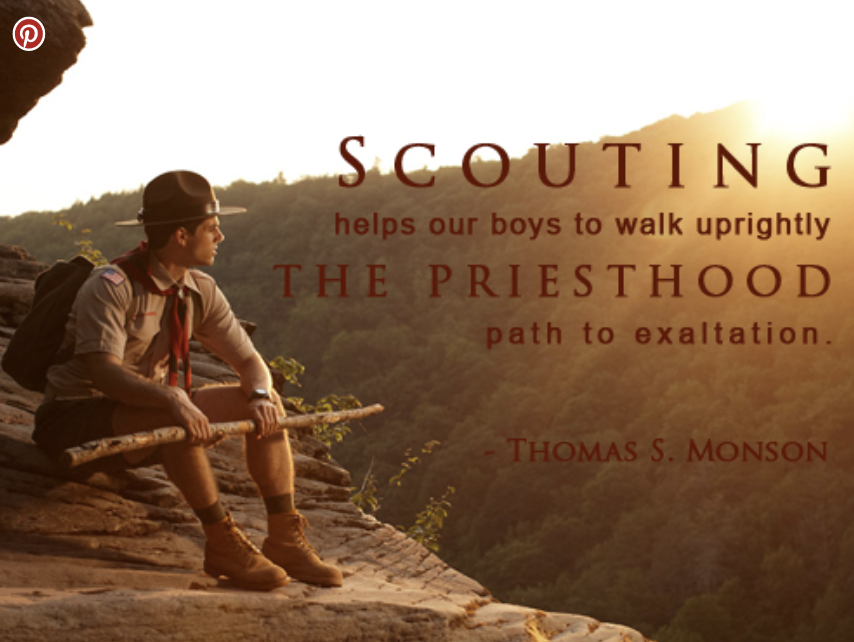
Then again, maybe it would help if the story mentioned decisions by leaders of the Church of Jesus Christ of Latter-Day Saints to cut ties to the Boy Scouts (click here for AP story on that bombshell) because of changes linked to gender and sexuality in the name of becoming more modern and, well, woke? Not that long ago, LDS congregations hosted 37% of all Scout troops. At the same time, many — perhaps most — Southern Baptist Convention churches have dropped out of Scouting for the same reasons.


Please respect our Commenting Policy

Plug-In: 'As a rabbi, you deal with grief. But not like this': condo horror rocks Jewish community

Plug-In: 'As a rabbi, you deal with grief. But not like this': condo horror rocks Jewish community

Back in 1995, I covered the bombing of the Oklahoma City federal building for The Oklahoman.

To many of us in Oklahoma, images of the partially collapsed Champlain Towers South in Surfside, Florida, seem “gut-wrenchingly similar” to the Murrah Building rubble 26 years ago.

Even the slow, excruciating search for victims — as loved ones pray for a miracle — stirs tearful reminders.

More than a week after the Miami-area condo building’s collapse, the fear is no longer that the missing won’t be found alive. It’s that “they may not be found at all, making it harder to know when and how to grieve those lost,” report the Wall Street Journal’s Alicia A. Caldwell, Valerie Bauerlein and Daniela Hernandez.

“The grief here is really deep,” Rabbi Ariel Yeshurun of the Skylake Synagogue in North Miami tells the Journal. “As a rabbi, you deal with grief. But not like this.”

The disaster “has rocked Surfside’s Jewish community, a cohesive and interconnected group mirrored in just a few places in the United States,” explain the Washington Post’s Laura Reiley and Brittany Shammas.

Religion News Service’s Yonat Shimron interviews Rabbi Sholom Lipskar, who leads the Shul of Bal Harbour, a synagogue that takes up nearly an entire city block less than a mile from the Champlain Towers.

More to read:

• ‘Now is not the time to ask why’: Surfside’s Jewish community ushers in somber Shabbat (by Marie-Rose Sheinerman, Carli Teproff and Samantha J. Gross, Miami Herald)

Jewish community prays for miracles after condo collapse (by Luis Andres Henao, Terry Spencer and Kelli Kennedy, Associated Press)

Miami-area churches pray for miracles, minister to rescue teams after condo collapse (by Kate Shellnutt, Christianity Today)


Please respect our Commenting Policy