Surfside condo collapse heavily affected Orthodox Jews; the Washington Post explains why

Surfside condo collapse heavily affected Orthodox Jews; the Washington Post explains why

My second journalism job took me to South Florida, a part of the country I didn’t know at all, to work as a general assignment reporter for a small daily based in the beach city of Hollywood. We covered news in South Broward County.

I was the only reporter there interested in developing a religion beat, so it didn’t take me long to figure out the two major religious groups in town were Catholics and Jews. There were some large Protestant congregations in the area as well, but they didn’t have the same influence as the Catholic and Jewish communities.

When it came to covering Jewish life, I learned my readership was an astute one that wanted pieces on complex issues and not just some fluff pieces on Rosh Hashanah. Folks wanted to know about the new eruv being constructed in one of Hollywood’s tonier neighborhoods; they were curious as to which synagogue had the best hamantaschen for sale during Purim; what that Messianic congregation in Fort Lauderdale was all about and how much of the funds raised for the local Jewish Community Center were really going towards it.

Halfway through my sojourn in Florida, I moved from Davie, a town in central Broward, to North Miami Beach in Dade County, which is how I became aware of the tremendous concentration of Jews living in condos lining the beach. One of those condo communities was in Surfside, the site of the ill-fated building collapse last week.

As this piece in the Washington Post points out, there are a ton of Jews living in similar spots all up and down the beach reaching up to the Broward County line. There are several articles out there on the number of Jews affected by the collapse, but this one stands out for its details on the religious angle of the disaster.

SURFSIDE — Jewish congregations in the Miami area have a growing mi sheberach, a list of Hebrew names included in a public prayer for those in need of divine good, especially those requiring healing. The number of Jewish missing or dead in last week’s building collapse at 8777 Collins Ave. has crept to nearly 50, almost a third of the total number.

Please respect our Commenting Policy

Scouting membership numbers collapse: AP totally ignores role of religion in this drama

Scouting membership numbers collapse: AP totally ignores role of religion in this drama

It’s the question that I have been trying to answer for 40 years or so: Why do news organizations ignore basic religion facts and trends when it is clear they are relevant in a major news story?

Ever since the first GetReligion post, back in 2004, we’ve been talking about religion “ghosts” in mainstream news coverage. Some “ghosts” are rather subtle and, frankly, it’s easy to understand why journalists with zero religion-beat experience would miss some facts and trends linked to religious law, history or doctrine.

But then you have “ghosts” — super ghosts, maybe — that are much, much more obvious and harder to explain. Consider, for example, the Associated Press story that came out the other day with this headline: “Boy Scouts, Girl Scouts suffer huge declines in membership.” Here’s the overture:

America’s most iconic youth organizations — the Boy Scouts of America and the Girl Scouts of the USA — have been jolted by unprecedented one-year drops in membership, due partly to the pandemic, and partly to social trends that have been shrinking their ranks for decades.

While both organizations insist they’ll survive, the dramatic declines raise questions about how effectively they’ll be able to carry out their time-honored missions. … Membership for the BSA’s flagship Cub Scouts and Scouts BSA programs dropped from 1.97 million in 2019 to 1.12 million in 2020, a 43% plunge, according to figures provided to The Associated Press. Court records show membership has fallen further since then, to about 762,000.

Other than the COVID-19 crisis, what else caused this massive drop?

Reasons for the drop include competition from sports leagues, a perception by some families that they are old-fashioned, and busy family schedules. The pandemic brought a particular challenge.

Wait a minute. Parents were worried that the Scouts are “old-fashioned,” which implies that Scouting would be growing if its leaders made more efforts to modernize their methods and beliefs?

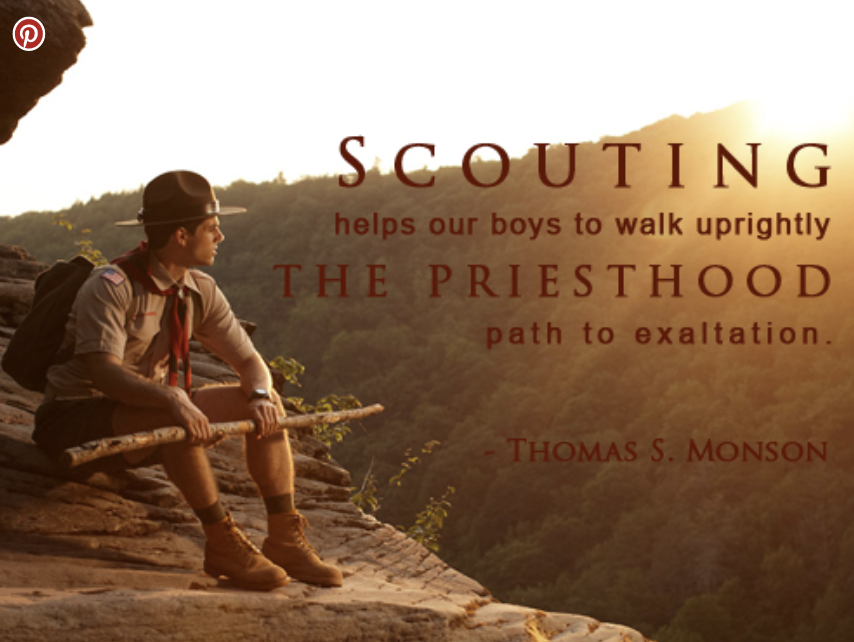
Then again, maybe it would help if the story mentioned decisions by leaders of the Church of Jesus Christ of Latter-Day Saints to cut ties to the Boy Scouts (click here for AP story on that bombshell) because of changes linked to gender and sexuality in the name of becoming more modern and, well, woke? Not that long ago, LDS congregations hosted 37% of all Scout troops. At the same time, many — perhaps most — Southern Baptist Convention churches have dropped out of Scouting for the same reasons.


Please respect our Commenting Policy

Plug-In: 'As a rabbi, you deal with grief. But not like this': condo horror rocks Jewish community

Plug-In: 'As a rabbi, you deal with grief. But not like this': condo horror rocks Jewish community

Back in 1995, I covered the bombing of the Oklahoma City federal building for The Oklahoman.

To many of us in Oklahoma, images of the partially collapsed Champlain Towers South in Surfside, Florida, seem “gut-wrenchingly similar” to the Murrah Building rubble 26 years ago.

Even the slow, excruciating search for victims — as loved ones pray for a miracle — stirs tearful reminders.

More than a week after the Miami-area condo building’s collapse, the fear is no longer that the missing won’t be found alive. It’s that “they may not be found at all, making it harder to know when and how to grieve those lost,” report the Wall Street Journal’s Alicia A. Caldwell, Valerie Bauerlein and Daniela Hernandez.

“The grief here is really deep,” Rabbi Ariel Yeshurun of the Skylake Synagogue in North Miami tells the Journal. “As a rabbi, you deal with grief. But not like this.”

The disaster “has rocked Surfside’s Jewish community, a cohesive and interconnected group mirrored in just a few places in the United States,” explain the Washington Post’s Laura Reiley and Brittany Shammas.

Religion News Service’s Yonat Shimron interviews Rabbi Sholom Lipskar, who leads the Shul of Bal Harbour, a synagogue that takes up nearly an entire city block less than a mile from the Champlain Towers.

More to read:

• ‘Now is not the time to ask why’: Surfside’s Jewish community ushers in somber Shabbat (by Marie-Rose Sheinerman, Carli Teproff and Samantha J. Gross, Miami Herald)

Jewish community prays for miracles after condo collapse (by Luis Andres Henao, Terry Spencer and Kelli Kennedy, Associated Press)

Miami-area churches pray for miracles, minister to rescue teams after condo collapse (by Kate Shellnutt, Christianity Today)


Please respect our Commenting Policy

Catholic bishops, politicos and Holy Communion: Little has changed in this old debate

Catholic bishops, politicos and Holy Communion: Little has changed in this old debate

The questions that haunted the Pontifical Academy for Life conference were familiar, controversial and exhausting, since Catholics and their bishops had been arguing about them for years.

The year was 2006, but little has changed in 2021.

What should bishops do when prominent Catholics -- even presidential candidates -- defended and promoted abortion rights? What if they said they accepted churched teachings on the sanctity of human life, while their actions suggested otherwise?

Would it violate the "separation of church and state" if bishops denied them access to Holy Communion? What if bishops asked these politicos to go to Confession?

"This is silly," said scholar Robert P. George, addressing that Vatican gathering. A Catholic shepherd "acting on his authority as a bishop to discipline members of his flock, who commit what the Church teaches are grave injustices against innocent human beings" would be "exercising his own constitutional right to the free exercise of religion. …

"Freedom is a two-way street. No one is compelled by law to accept ecclesiastical authority," stressed George, an outspoken Catholic layman and professor of jurisprudence at Princeton University. Thus, a bishop has "every right to exercise spiritual authority over anyone who chooses to accept it. There is a name for people who do accept the authority of Catholic bishops. They are called 'Catholics.' "

At that time, most debates centered on Sen. John Kerry, the Democratic Party's presidential nominee in 2004.

Cracks inside the U.S. Conference of Catholic Bishops widened with the election of President Joe Biden, a rosary-carrying Catholic who -- in word and deed -- has evolved into a fierce defender of abortion and LGBTQ rights. Biden quickly dropped his longstanding opposition to the federal funding of abortion, after criticism from the left in the 2019 primaries.


Please respect our Commenting Policy

To tithe or not to tithe: Should 21st Century Christians give church 10% of their income?

To tithe or not to tithe: Should 21st Century Christians give church 10% of their income?

THE QUESTION:

Should 21st Century Christians still give 10% of their income to the church?

THE RELIGION GUY'S ANSWER:

A bad pun says that the week of a church's annual budget pledge drive the pastor preaches the Sermon on the Amount. Many churches are fretting about amounts these days, hoping attendance and offering-plate receipts will recover from the COVID crisis.

How much should modern-day Christians donate to support their churches? The oft-cited standard is the "tithe," a biblical term for 10% of income. But Keith Giles, a "progressive Christian" blogger at Patheos.com, argued that there are "very good reasons to stop tithing your 10% every week."

Definitions: Should that be 10% of wealth and accumulated assets or only income? Should all 10% go to the church only with any other giving counted beyond the 10%, or does the tithe cover all religious and charitable donations? Also, of course, the very different biblical situation involved gifts of agricultural produce, not money.

Speaking of the ancient context, Giles's main theme is that tithing was part of a bypassed Old Testament system that provided upkeep for the Jerusalem Temple and the priests working there who had no other livelihood. The Romans destroyed the Temple in A.D. 70 so there's no Temple or priesthood that need support.

However, that argument ignores that today's clergy similarly live off believers' financial support in order to carry out religious work. In fact, clergy typically get lower pay than other professionals with comparable years of training.


Please respect our Commenting Policy

New podcast: When preachers copy preachers -- is this an old story or something new?

New podcast: When preachers copy preachers -- is this an old story or something new?

As longtime GetReligion readers may know, my father was a Southern Baptist minister, spending his whole career in Texas pulpits and hospitals.

I heard him, from time to time, gently correct people who called him “preacher.” He would note that he wasn’t a “preacher,” he was a pastor. Brother Bert’s life and ministry were not defined by his pulpit work, although I always admired his ability to teach the Bible to laypeople.

Like it or not, preaching is the crucial skill — almost a Darwinian performance art — in the world of megachurches and evangelical power. Superstar clergy, about 99% of the time, are known for their preaching skills, even in liturgical-church traditions. The styles may differ, from one church brand to another, but growing churches usually have orators who can pull people into the pews.

That was the subject looming over this week’s “Crossroads” podcast (click here to tune that in), which focused on a strong Religion News Service report about the #Sermongate controversy surrounding the new leader of the Southern Baptist Convention. The headline: “New SBC President Ed Litton apologizes for using JD Greear sermon quotes without credit.” Here is some crucial material right up top:

A video posted on YouTube Thursday (June 24) showed clips of a ­­­January 2020 sermon on the New Testament book of Romans from Litton and clips from a January 2019 sermon on the same Bible passage from J.D. Greear, whose term as SBC president ended in June.

At several points, the comments from the two preachers are nearly identical. … The two pastors also say very similar things about homosexuality, which both believe is sinful.

But they each say Christians have erred by treating sexual sin as if it is worse than other sins — and singling out LGBT people as the worst of sinners.

What does “nearly identical” look like?


Please respect our Commenting Policy

Examining Joe Biden the Catholic is the story, not just what the bishops are doing

Examining Joe Biden the Catholic is the story, not just what the bishops are doing

British singer Winston Marshall, the banjo player for Mumford & Sons, announced that he decided to leave the band. The move came months after he’d faced criticism over a tweet in which he praised journalist Andy Ngo on his recent book — “Unmasked” — about the roots and strategies of the political protest movement known as antifa.

Marshall wrote an op-ed last Thursday for Medium under the headline “Why I’m Leaving Mumford & Sons” is a commentary on the world we live in today.

This is the section of his essay that stood out most for me, in the context of how mainstream journalists are covering America’s Catholic president:

Though there’s nothing wrong with being conservative, when forced to politically label myself I flutter between “centrist,” “liberal” or the more honest “bit this, bit that.” Being labeled erroneously just goes to show how binary political discourse has become. I had criticized the “Left,” so I must be the “Right,” or so their logic goes.

Indeed, it is this “binary political discourse” that dominates our lives these days. It may be a result of social media — Marshall details how he was attacked for his initial tweet and later his apology — in a world where nameless and faceless trolls dictate the discourse.

This takes me to the ongoing fallout from the U.S. bishop’s vote to draft a document that addresses “Eucharistic coherence” continues to be debated. The proposal’s aim is to ultimately decide whether Catholic politicians, like President Joe Biden, should be denied Holy Communion.

The news coverage in secular media on this very complicated theological matter has been disappointing, sub-par even in some cases. It’s no surprise at a time when skilled religion reporters are as hard to spot as a unicorn on stories of this kind. Far too often, political desk reporters at major news organizations cover such religious/theological issues. Politics, after all, is what matters.


Please respect our Commenting Policy

Any religion ghosts here? Martin Methodist College joins University of Tennessee system

Any religion ghosts here? Martin Methodist College joins University of Tennessee system

For years, parents have been asking me a logical question, in light of my quarter of a century teaching in Christian liberal arts colleges and programs. The question: How do we know which college is right for our kid? They often link this to questions about how small colleges can compete in the modern marketplace.

Hang in there with me, since — for me — these questions are linked to the news coverage of an interesting higher-education story that is unfolding here in Tennessee.

In my experience, Christian liberal-arts colleges are not for everyone. The key is whether a private school’s academic strengths (most schools are stronger in some areas than others) match a student’s needs. It’s also important to know if an academic subject is a good fit with that school’s history and sense of mission.

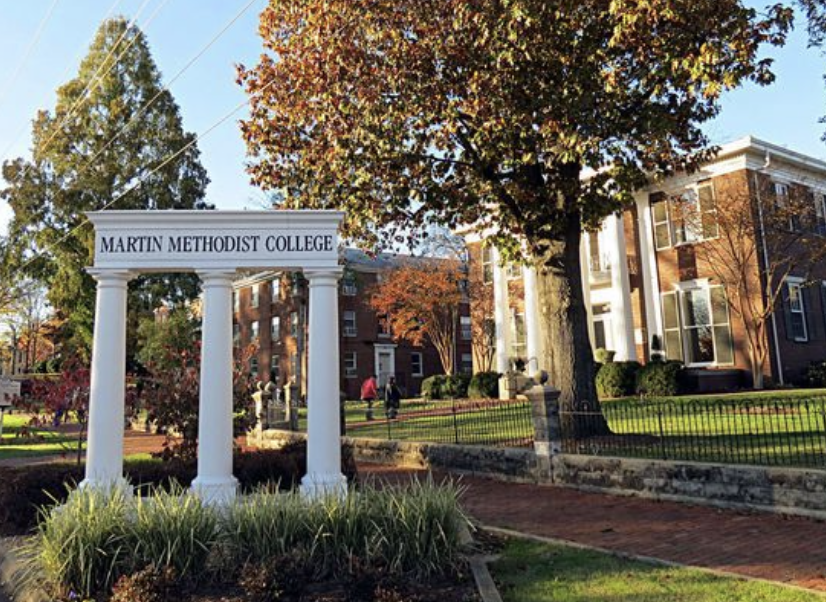
This brings me to this recent headline in the Gannett newspapers here in Tennessee: “University of Tennessee adds fifth campus with Martin Methodist College merger.” Here’s the overture:

The University of Tennessee System has added a fifth campus, the first addition to the statewide higher education network in more than 50 years.

Martin Methodist College, located in Pulaski, will join the system as the University of Tennessee Southern, a nod to the regional identity the system hopes to create. The merger with Martin Methodist College is intended to bring affordable higher education to southern Middle Tennessee. The school is located about 75 miles southwest of Nashville, near the Alabama border.

The UT board of trustees unanimously approved the merger … after nearly a year of collaboration with Martin Methodist.

I’ve been following this story throughout the year and the coverage has, to use one of the defining images of this blog, been haunted by religious questions linked to this merger between a Christian college and a massive, secular university system. In this case, “haunted” means the coverage hasn’t mentioned these issues at all.

I am really curious to know what will happen to programs at Martin Methodist — academic and service oriented — that were linked to its Christian identity and ties to Tennessee United Methodists. I would imagine that there were also changes in some campus policies linked to moral and social issues.


Please respect our Commenting Policy

How will this Supreme Court decide, or sidestep, pivotal religious liberty questions?

How will this Supreme Court decide, or sidestep, pivotal religious liberty questions?

The major U.S. Supreme Court ruling in Fulton v. Philadelphia (.pdf here) allows a Catholic agency to avoid placing foster-care children with same-sex couples. Importantly, the Catholics will place gay children and will place children with gay singles since there's no conscience crisis over defying the church's doctrines on marriage.

For decades there's been confusion and acrimony over the court's applications of the Constitution's ban on government "establishment of religion," but now disputes over the religious "free exercise" clause grab the spotlight. The Fulton ruling sidestepped the heart of this generation's conflagration between religious rights and LGBTQ+ rights and, thus, may even have added logs to the fire.

The justices backed the Catholic claim with what The Economist's headline correctly labeled "The 3-3-3 Court." The narrow technical grounds for the decision enabled the three liberals (Stephen Breyer, Elena Kagan, Sonia Maria Sotomayor) to make the ruling unanimous. The conservatives were split between three demanding a thorough overhaul of "free exercise" law (Justice Samuel Alito, in a vigorous 77 pages, joined by Neil Gorsuch and Clarence Thomas) and three unwilling to take the plunge at this time (Chief Justice John Roberts and the two newest members, Brett Kavanaugh and Amy Coney Barrett).

Similar caution apparently underlies the court's majority decision this week not to review transgender student Gavin Grimm's victory against his Virginia school over bathroom access.

Journalists should prepare for more years of extensive -- and expensive -- politicking and litigation before the Supreme Court defines -- or decides not to define -- how First Amendment guarantees apply in 21st Century culture.

For those on the religion beat, it is easy to see that this case has hardened the related conflict among major denominations.


Please respect our Commenting Policy