New podcast: Yes, election of first trans/queer/gender fluid ELCA bishop was a big story

New podcast: Yes, election of first trans/queer/gender fluid ELCA bishop was a big story

Imagine that you are a pastor or a layperson in the Lutheran Church-Missouri Synod, the Wisconsin Evangelical Lutheran Synod or one of the other conservative Lutheran bodies in the United States.

So you sit down with your morning coffee and pop open your email and you see that friends and family have sent you emails enquiring about a headline that they saw on Twitter or somewhere else in today’s complicated news marketplace.

In this case, the headline is from the New York Times and it states: “U.S. Lutheran Church Elects Its First Openly Transgender Bishop.

The problem, of course, is that the “U.S. Lutheran Church” doesn’t exist There is no one denomination that fits that description. Or perhaps the person sending you the email saw, somewhere, the Religion News Service headline that ran with this headline: “Lutherans elect Megan Rohrer first transgender bishop.” Second verse, same as the first.

When it comes to Lutheranism, many journalists continue to struggle when describing who is who and what is what. This brand-name problem was the first layer of the complex issues — in terms of church doctrine and journalism style — that we explored in this week’s “Crossroads” podcast. Click here to tune that in.

The denomination that elected Bishop-elect Rohrer was, of course, the Evangelical Lutheran Church in America, one of the “Seven Sisters” — we may need to make that “Seven Siblings” — of liberal Protestantism.

But what happens if you put that denominational brand name in a headline (besides the fact that it’s way too long for most newspaper layouts)? If you do that, you have to explain the presence of “evangelical,” which has become a near curse word in a news context. And, hey, “Lutheran” by itself sounds more important. Damn the accuracy, full speed ahead.

This brings us to the key hook for this podcast: There was little or nothing surprising about the progressive ELCA electing a trans (if that is the best term, in this case) bishop.

Please respect our Commenting Policy

Press coverage of Mount Meron tragedy offers window into Israel's ultra-Orthodox Jews

Press coverage of Mount Meron tragedy offers window into Israel's ultra-Orthodox Jews

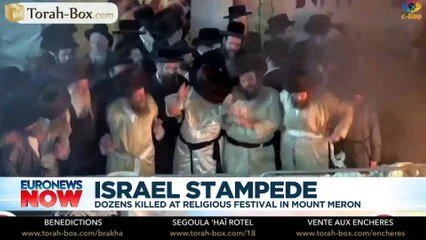
By now most GetReligion readers are likely aware of the fatal crushing of 45 Jewish pilgrims during a religious festival at Mount Meron in Israel’s north at the end of April. It’s been called one of the worst, if not the worst, civilian tragedy in Israel’s history.

(Sadly, the Meron tragedy has been superseded in the news by the serious explosion of Israeli-Palestinian violence this week. But as sad as this is — and as a Jew and a Zionist I find it almost debilitatingly sad —that’s not the subject of this post, so let’s return to Meron.)

For those in need of a refresher, here’s an early Times of Israel news story on the Meron catastrophe.

The sudden and dramatic loss of more than four dozen lives is, of course, a national trauma for a relatively small country such as Israel, which is not much larger than New Jersey. As has been noted elsewhere, “numbers numb.”

Among the dead were six Americans. Other victims came from Canada and Argentina. The youngest of the dead was a boy of nine. Some 150 others were injured.

Beyond the deaths themselves, the Meron incident surfaced major — and intricately interwoven — political and religious implications for Israel. That’s not an unusual mashup in Israel, where the divide between religion and state is near impossible to discern.

For journalists, the tragedy also underscores a Journalism 101 reality of the craft. Which is that the most interesting public commentators are often those closest to the story, such as varied eyewitnesses and longstanding, articulate members or observers of whatever groups are germane to the story.

I’ll say more about this below. First, some pertinent background.

The Meron tragedy took place on the Jewish holiday of Lag B’Omer. Because this is generally considered a minor holiday by most Jews, it’s largely ignored by the theologically liberal in Israel and elsewhere.


Please respect our Commenting Policy

Same-sex Catholic blessing rites in Germany: Why talk to experts on both sides of this story?

Same-sex Catholic blessing rites in Germany: Why talk to experts on both sides of this story?

And this just in: Germany’s Catholic left proceeded with its planned same-sex blessing rites and, as you would expect (see previous GetReligion podcast and post on this topic), mainstream journalists were there to capture the details.

Sort of.

Actually, not so much.

The most important content — the precise wording of the blessing prayers, in doctrinal terms — appear to be Missing In Action. It’s possible that, as usual, journalists were not interested in the liturgical and doctrinal details. However, I could imagine a scenario in which journalists were asked by organizers to avoid that doctrinal content, with good cause. That material that will matter to canon lawyers.

Also, there was no need to look for content drawn from interviews with pro-Catechism Catholics who opposed the winds of change blowing in Germany. Clearly, this was a story with only one side that needed to be covered. Here is a key part of the Associated Press report written just before the main wave of events on May 10 (“German Catholics to bless gay unions despite Vatican ban”):

Germany is no stranger to schism: 500 years ago, Martin Luther launched the Reformation here. …

In Berlin, the Rev. Jan Korditschke, a Jesuit who works for the diocese preparing adults for baptism and helps out at the St. Canisius congregation, will lead blessings for queer couples at a worship service May 16.

“I am convinced that homosexual orientation is not bad, nor is homosexual love a sin,” Korditschke told The Associated Press in an interview Friday. “I want to celebrate the love of homosexuals with these blessings because the love of homosexuals is something good.”

The 44-year-old said it is important that homosexuals can show themselves within the Catholic Church and gain more visibility long-term. He said he was not afraid of possible repercussions by high-ranking church officials or the Vatican.


Please respect our Commenting Policy

The U.S. Census story and its hooks for religion news (plus a personal note about Rachel Zoll)

The U.S. Census story and its hooks for religion news (plus a personal note about Rachel Zoll)

The first round of 2020 U.S. Census data (with much more to come) is big news as states gain and lose seats in the U.S. House and politicos enter the wild decennial joust to gerrymander federal and state district lines to their advantage.

But here's another journalistic thought: What does the Census mean for religion?

Tony Carnes of the "A Journey Through NYC Religions" website provides an early example, analyzing possible implications for New York City that other writers could emulate for their own cities, towns or regions.

Editor Carnes (disclosure: a personal friend) is a professional sociologist leading a team that has spent years tracking religion developments in Gotham, notably at the neighborhood level. Despite the town's secular image, Carnes and company have documented that, starting in the late 1970s, thousands of new churches, synagogues, mosques and temples have been built. Such activity was continuing until the COVID-19 pandemic struck.

Carnes counts the populations moving in and moving out from the American Community Survey between 2010 and 2014 as updated by Census numbers for 2018. This shows a city gradually becoming less African-American (population down 96,000) and Hispanic (down 50,000). The gainers are non-Hispanic Whites (up 200,000) and Asians (up 97,000). We'll soon know if these trends continued in 2020.

Carnes calls that "a startling change in the racial/ethnic profile of the city, and it is also found in other cities in the United States."


Please respect our Commenting Policy

Passing of the guard at the Associated Press; the rise of Ministry Watch and the Roys Report

Passing of the guard at the Associated Press; the rise of Ministry Watch and the Roys Report

The death of a well-known religion reporter; a new job announcement from a beat veteran and a spotlight on two feisty independent religion news organizations is what concerns me this week.

Tmatt had previously offered an update on the health of Rachel Zoll, a former Associated Press religion specialist who came down with glioblastoma, a brain cancer that has no cure, in early 2018. That was only a few months after another religion-beat pro, Jeffrey Weiss of the Dallas Morning News, died of the exact same malady.

Last week, Zoll died at the age of 55 at her home in Massachusetts. She reported on religion for AP for 17 years.

There have been lots of tributes, so I’ll spotlight this Associated Press obit atop the list.

Zoll covered religion in all its aspects, from the spiritual to the political, and her stories reached a global audience. But her influence was far greater than that. Other publications often followed her lead, and AP staffers around the world depended on her generosity and guidance.

Zoll was at the forefront of coverage of two papal transitions, the clergy sex abuse scandal in the Catholic Church, and tensions within many denominations over race, same-sex marriage and the role of women.

She often broke news, as in 2014, when she was the first to report Pope Francis’ appointment of Blase Cupich to become the new archbishop of Chicago.

Fellow GetReligionista Dick Ostling, who was at AP from 1998-2006, wrote this:

My partner Rachel was simply a delight to work with and a personality enjoyed by everyone who knew her -- and who competed with her. But in broader and more historical terms she exemplified all that's needed in reporting and especially with a complex and emotion-laden field like religion. She was of course quick and accurate but those are the basics for any Associated Press writer. And then, remarkably intelligent. She knew her stuff and knew she needed to learn ever more stuff to handle this beat.


Please respect our Commenting Policy

Religion ghosts in Bill and Melinda Gates split? There are some old questions to ask ...

Religion ghosts in Bill and Melinda Gates split? There are some old questions to ask ...

I have written quite a few headlines over the past four decades or so and read a kazillion more. Still, I have to admit that a news headline the other day in The Washington Post stopped me in my tracks: “If Bill and Melinda Gates can’t make a marriage work, what hope is there for the rest of us?

I immediately assumed this was some kind of first-person commentary.

However, it appears that this was a news feature — using the break-up of one of the world’s richest couples as a chance to examine the marital stress caused by COVID-19 lockdowns, life changes for aging Baby Boomers and the resulting need for professional counseling. Here’s the overture:

Just imagine how many hours of couples therapy you can afford when you’re among the world’s richest people. Or the shared sense of purpose you could forge while raising three children and running a $50 billion charitable foundation with your spouse.

Then imagine that it’s not enough to keep you together.

In announcing their decision to divorce, Bill and Melinda Gates cited the work they’d done on their marriage, and a mutual sense of pride in their children and philanthropy. But, they said in identical joint statements shared on Twitter, “we no longer believe we can grow together as a couple in this next phase of our lives.”

Now, for millions of Americans it would be logical to ask another question whenever a couple faces a crisis of this kind. It’s a kind of two-edged sword question that can be carefully worded as follows: Did religions and-or moral issues have anything to do with the break-up of this marriage?

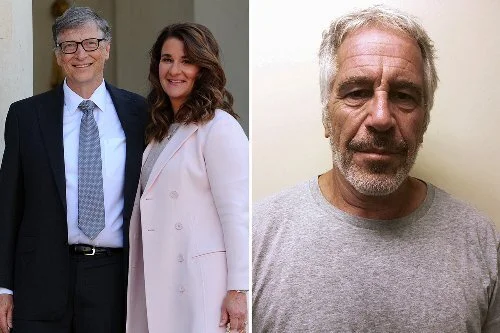
All of the initial coverage that I saw didn’t include any religion/moral information at all. There is a chance that these questions will be asked in the days ahead, now that the Wall Street Journal and other publications have added a rather problematic name to the cast list in this drama — Jeffrey Epstein.

However, I had already opened a digital file folder on this topic because my pre-Internet (think dead tree pulp) files on this couple included a lengthy 1997 Time magazine feature with this headline: “In Search of the Real Bill Gates.” This long-ago article included several details of interest, including at least two of the religious-moral nature. We will take the less famous of these two details first:


Please respect our Commenting Policy

With all due respect, reports about Biden, the 'McCarrick doctrine' and Mass are not stupid

With all due respect, reports about Biden, the 'McCarrick doctrine' and Mass are not stupid

“The Biden Communion stories are stupid,” proclaims the headline atop a Religion News Service column by Father Thomas J. Reese.

The opinion by Reese, a Jesuit priest and RNS senior analyst, follows a flurry of news reports — which we first mentioned last week — about whether the nation’s second Catholic president might be denied Communion because of his support for abortion rights.

“This is a stupid story for canonical, theological and political reasons,” Reese writes. “First, and foremost, the U.S. Conference of Catholic Bishops does not have the canonical authority to tell (President Joe) Biden that he cannot go to Communion.”

For insight on the canonical, theological and political issues, I’d highly recommend Reese’s column. As for his claim that the news stories are stupid, I’d respectfully disagree. From a journalistic perspective, they are, in fact, highly newsworthy.

Even if much of the coverage could be better, as Clemente Lisi explained here at GetReligion, with the essay then appearing at Religion Unplugged. A key topic being avoided? The role of fallen cardinal Theodore “Uncle Ted” McCarrick in developing the awkward compromise currently in effect here in America.

Another helpful read at Religion Unplugged: Stephen P. Millies, an associate professor of public theology at Catholic Theological Union in Chicago, dissects the power struggle behind the U.S. bishops’ move.

Among this week’s related headlines:

Pelosi’s archbishop says prominent Catholics who support abortion rights should be denied Communion (by Reis Thebault, Washington Post)

How faith groups feel after Biden’s first 100 days (by Kelsey Dallas, Deseret News)

New bishop of Biden’s hometown mum on Communion question (by Nicole Winfield and Luis Andres Henao, Associated Press)

Catholic bishops who want to deny Biden Communion may have to reckon with the pope (by Jack Jenkins and Claire Giangravé, RNS)


Please respect our Commenting Policy

Movie mogul Tyler Perry preaches tolerance to the woke flock at Oscars 2021

Movie mogul Tyler Perry preaches tolerance to the woke flock at Oscars 2021

It was just like one of those inspiring Tyler Perry movie scenes when a believer does the right thing and helps a struggler have a come-to-Jesus epiphany.

Perry was walking to his car after some Los Angeles production work when he was approached by homeless woman.

"I wish I had time to talk about judgment," said Tyler, after receiving the Jean Hersholt Humanitarian Award during the 93rd Academy Awards. "Anyway, I reach in my pocket and I'm about to give her the money and she says: 'Excuse me sir, do you have any shoes?'

"It stopped me cold because I remember being homeless and having one pair of shoes," he added. "So, I took her into the studio. … We're standing there [in] wardrobe and we find her these shoes and I help her put them on. I'm waiting for her to look up and all this time she's looking down. She finally looks up and she's got tears in her eyes. She says: 'Thank you Jesus. My feet are off the ground.' "

Perry, of course, is a movie mogul who has built a 330-acre studio facility in Atlanta used for all kinds of work, including parts of the Marvel epic "The Black Panther." He has created many profitable films of this own, such as "Diary of a Mad Black Woman," "The Family that Preys" and "Madea's Family Reunion," part of a series in which Perry, in drag, plays a pistol-packing, Bible-quoting matriarch at the heart of Black-family melodramas.

It was logical for Perry to receive the Jean Hersholt award, in part because of his rags-to-riches life and his efforts to help churches and nonprofits help the needy. At the same time, it's unlikely that he could ever win a regular Oscar statue since critics and Hollywood elites have long mocked his movies as soapy parables crafted to appeal to ordinary church folks -- Black and White. It isn't unusual, in the final act of Perry movies, for weeping sinners to pull their lives together during Gospel-music altar calls.

Thus, Perry's sermonette was an unusual twist in an Oscar rite packed with political messages and wins by films that few American moviegoers saw or even knew existed.


Please respect our Commenting Policy

Thinking about evangelicals and COVID-19 vaccines: Wait! The numbers show WHAT?!?!

Thinking about evangelicals and COVID-19 vaccines: Wait! The numbers show WHAT?!?!

The last 14 months have given the world a series of public health challenges that it has never had to grapple with before.

Will people willingly disrupt their lives in order to contain the spread of a potentially lethal virus? Can drug manufacturers develop and test a vaccine in a very short period of time that is effective against COVID-19? Will those same pharmaceutical companies be able to ramp up manufacturing capabilities quickly enough to satisfy the demand for those vaccines?

In terms of vaccine creation and distribution, there’s no doubt that it’s been an unqualified success. Every estimate indicates that the United States will be awash in vaccines by May. However, the question that is looming on the very near horizon is the most important and difficult to answer: will the United States be able to vaccinate enough of the population to get to a state of herd immunity and finally put an end to this year long nightmare?

It’s not the hard sciences that are under the microscope, it’s the social sciences. To reach herd immunity, most experts believe that a country needs to get at least 75% of the population fully vaccinated as a minimum threshold. Will that even be possible? Are societal factors like religion actually making the goal of herd immunity even more difficult?

The organization Data for Progress has been putting a poll into the field since the very beginning of the pandemic in March of 2020 as a way to get a sense of what percentage of the public is engaging in risky behaviors and how they feel the government is handling the crisis. Since January they have begun to ask respondents questions about their receptiveness to the vaccine. What these results indicate is that there are some reasons for hope, but there is also ample evidence that getting shots into arms may prove to be a lot more difficult in the very near future.

The survey asked respondents if they had received at least one dose of the COVID-19 vaccine. As can be quickly inferred, those shots were in short supply in January. Just about 6% of the entire sample indicated that they had gotten the vaccine at that point. However, things improved rapidly from there and the share of Americans who had been inoculated essentially doubled every month from January through early April, when 44% of the population had gotten a dose of the vaccine.

However, when the sample is broken down into the three of the largest religious groups: White evangelicals, White Catholics and the religiously unaffiliated, some disparities begin to emerge.


Please respect our Commenting Policy