Now for something completely different: RNS scribe doxxed after investigating Ramsey Solutions

Now for something completely different: RNS scribe doxxed after investigating Ramsey Solutions

Religion reporters don’t usually have to fear for their lives, nor wonder if someone’s going to show up at their homes to exact some kind of revenge for an unfavorable story.

But there’s always a first time.

Several weeks ago, Bob Smietana, the veteran national reporter for Religion News Service, got to experience some very weird doxxing — not at the hands of some anti-religious conspiracy, but from devout Christians.

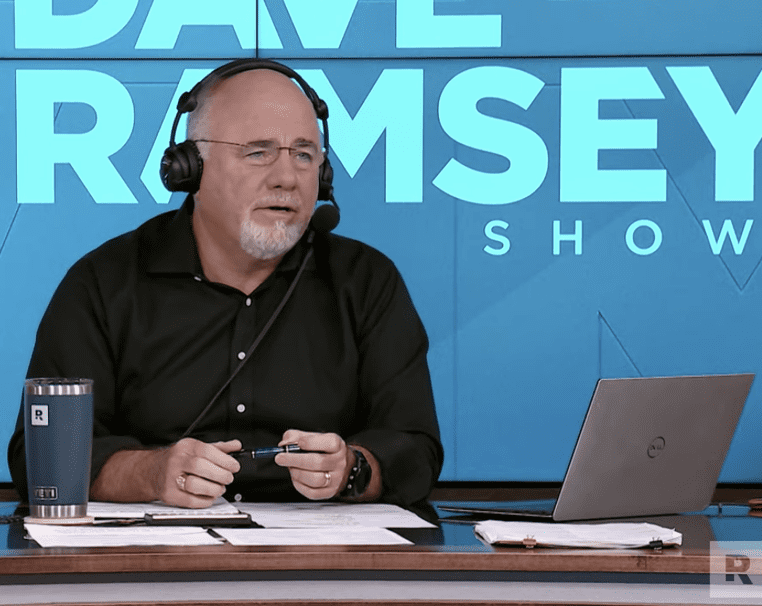
On Jan. 15, RNS published Smietana’s 4,150-word investigative piece on the workplace at evangelical financial guru Dave Ramsey’s $42 million headquarters in Franklin, Tenn., just south of Nashville. (The Tennessean, Nashville’s hometown newspaper, finally got around to running the piece on Jan. 28.)

That piece followed a Dec. 11 story by Smietana on Ramsey’s for-profit enterprise defying COVID-19 precautions such as wearing masks.

Put all that together and you had a non-flattering description of a workplace shaped by strict controls and perhaps even a personality cult. Here is what ran Jan. 15

NASHVILLE, Tenn. (RNS) — Dave Ramsey has spent the past three decades trying to build what he calls the best place to work in America.

From his headquarters south of Nashville, the evangelical Christian personal finance guru runs a media and live events empire that includes a popular national talk radio show. Tickets to workshops on topics such as “EntreLeadership” run from $3,000 to $10,000.

Thousands of churches around the country, meanwhile, host Ramsey’s “Financial Peace University,” a 9-week program built around his principles for handling money “God’s way.”

Several churches I’ve attended have indeed offered this program. Finances is something most pastors know nothing about, so they kick the task over to Ramsey, who’s making millions off these referrals.

But inside Ramsey Solution’s $42 million headquarters, there appear to be some problems, according to the kind of source one normally encounters in pieces of these kinds — former employees..

Ramsey’s intolerance for dissent has created what former employees call a cult-like environment, where leaders proclaim their love for staff and then fire people at a moment’s notice.

Please respect our Commenting Policy

It was hard to edit God out of Cicely Tyson's epic story, but some journalists gave it a try

It was hard to edit God out of Cicely Tyson's epic story, but some journalists gave it a try

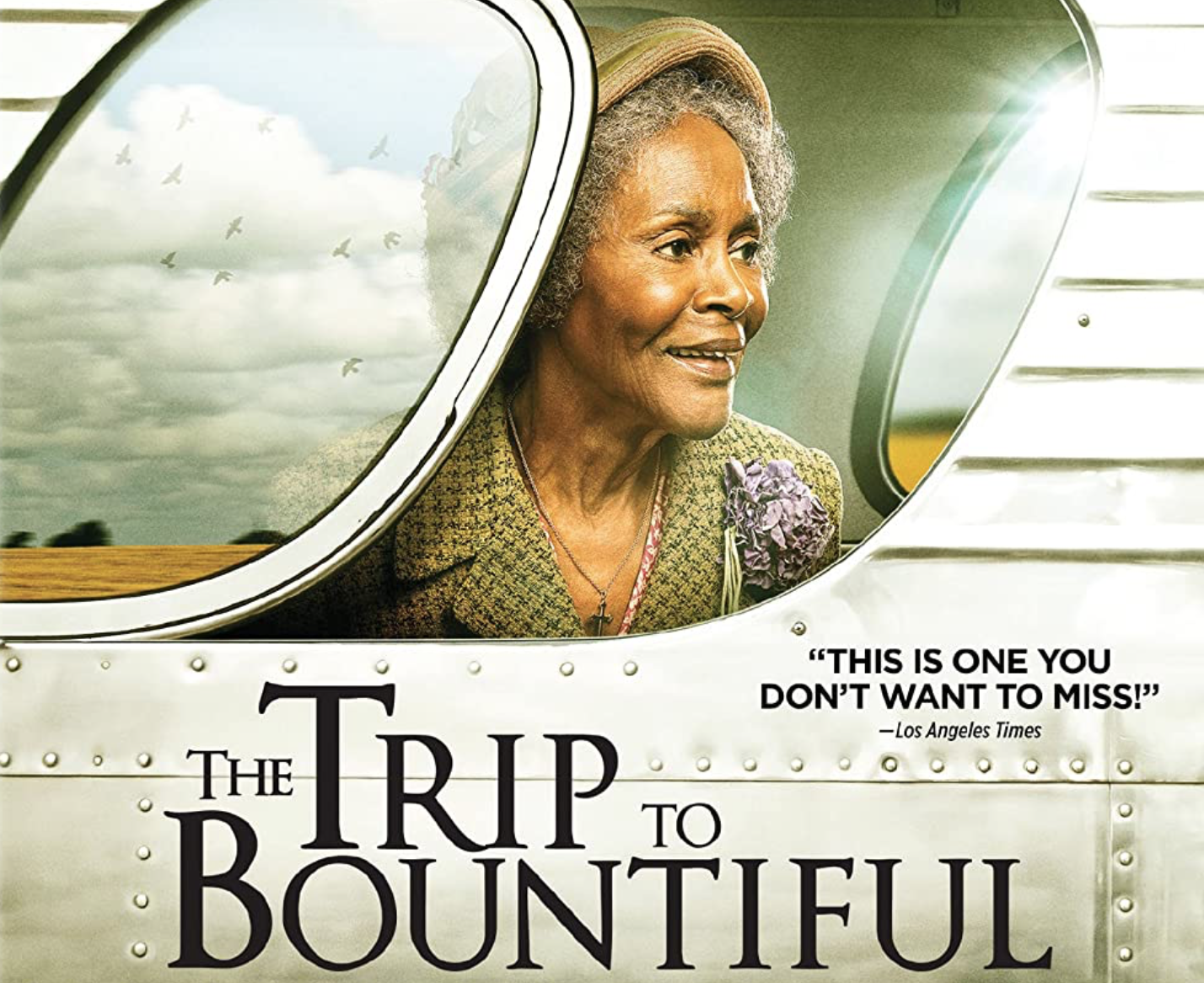
It was hard to listen to Cicely Tyson talk about her life without recognizing the strong undercurrent of Christian faith in her words, deeds and also in her art. While remaining a proud, private, dignified woman, her faith was not something that she tried to hide.

The question here at GetReligion, of course, was whether any of that imagery and information would make it into the news coverage surrounding her death at the age of 96.

The answer was, of course, “yes” and “no.” Many of the obituaries mentioned her Tony-winning return to Broadway in 2013, at the age of 88, to play the unstoppable matriarch in Horton Foote’s classic, faith-driven play, “The Trip to Bountiful.” The show-stopping moment, night after night, was when Tyson would sing — joined by many in the audience — the classic hymn “Blessed Assurance.” It’s hard to avoid the content of lyrics such as these:

Blessed assurance, Jesus is mine; Oh, what a foretaste of glory divine!
Heir of salvation, purchase of God; Born of His Spirit, washed in His blood.

This is my story, this is my song, Praising my Savior all the day long.

If you were looking for the faith-free version of Tyson’s life, the natural place to turn was The New York Times.

This story did a great job of capturing her impact on American culture, especially in terms of the sacrifices she made to portray African-American life with style, power and dignity. Here are two crucial summary paragraphs on that essential theme:

In a remarkable career of seven decades, Ms. Tyson broke ground for serious Black actors by refusing to take parts that demeaned Black people. She urged Black colleagues to do the same, and often went without work. She was critical of films and television programs that cast Black characters as criminal, servile or immoral, and insisted that African-Americans, even if poor or downtrodden, should be portrayed with dignity.

Her chiseled face and willowy frame, striking even in her 90s, became familiar to millions in more than 100 film, television and stage roles, including some that had traditionally been given only to white actors. She won three Emmys and many awards from civil rights and women’s groups, and at 88 became the oldest person to win a Tony, for her 2013 Broadway role in a revival of Horton Foote’s “The Trip to Bountiful.”

But the only reference to her Christian faith — negative, of course — came in this bite of biography:


Please respect our Commenting Policy

Black church leaders working to promote COVID-19 vaccines to their skeptical flocks

Black church leaders working to promote COVID-19 vaccines to their skeptical flocks

Some religious people see the COVID-19 vaccines as an answer to prayer.

Others are skeptical.

To encourage wary African Americans to roll up their sleeves, many Black churches are working extra hard.

The Tampa Bay Times’ Margo Snipe notes:

As COVID-19 continues to push health disparities to the forefront, Black churches have become advocates for mask-wearing, hand sanitizing and vaccine distribution.

In a Religion News Service interview with Rabbi Julie Schonfeld, the Rev. Jacques Andre DeGraff of Canaan Baptist Church of Christ in Harlem, New York, “talks about how Black communities are overcoming distrust of the medical community.”

This week, Dr. Anthony Fauci joined Bishop T.D. Jakes of The Potter’s House church in Dallas in a discussion aimed at quelling distrust about the vaccines, report the Dallas Morning News’ Jesus Jimenez and Religion Unplugged’s own Jillian Cheney.

“You have to respect the skepticism in the African American community,” said Fauci, the nation’s top infectious diseases official. “You can’t just ignore that.”

Here in my home state of Oklahoma, the Ebenezer Baptist Church in Oklahoma City partnered with state and county health departments to organize a “vaccine pod.”

The Rev. Derrick Scobey discusses the outreach effort with The Oklahoman’s faith editor, Carla Hinton:

He said some Blacks recall the infamous "Tuskegee Experiment," a medical study in which hundreds of Black men in Alabama from the 1930s to the 1970s were misled into thinking they were being treated for disease.

"Because of that you still have African Americans that are very hesitant about taking this vaccine," Scobey said.


Please respect our Commenting Policy

Inauguration Day showdown: U.S. Catholic bishops remain divided on 'McCarrick doctrine'

Inauguration Day showdown: U.S. Catholic bishops remain divided on 'McCarrick doctrine'

Speaking to an Italian family association in 2018, Pope Francis compared the abortion of children with genetic problems to "what the Nazis did to purify the race. Today, we do the same thing but with white gloves."

A year later, Francis bluntly asked a journalist from Mexico if it's "fair to eliminate a human life in order to solve a problem? The answer to which is, 'No.' Second question: Is it fair to pay a sniper to solve a problem? No. Abortion is not a religious problem. … It is a problem of eliminating a human life. Period."

But the pope was careful in his Inauguration Day message to America's second Catholic president, assuring Joe Biden that he would "pray that your decisions will be guided by a concern for building a society marked by authentic justice and freedom, together with unfailing respect for the rights and dignity of every person, especially the poor, the vulnerable and those who have no voice."

The pope's text was examined closely after reports that the Vatican -- on behalf of progressive American bishops -- tried to stop the circulation of a sobering statement from the president of the U.S. Conference of Catholic Bishops. The letter from Archbishop Jose Gomez of Los Angeles addressed the challenge, and blessing, of working with "our first president in 60 years to profess the Catholic faith."

Clearly, Biden's piety had offered "solace in times of darkness and tragedy," said Gomez, leader of America's largest diocese and a crucial voice among Hispanic Catholics. He also praised Biden's "longstanding commitment to the Gospel's priority for the poor."

Nevertheless, Gomez noted that "our new President has pledged to pursue certain policies that would advance moral evils and threaten human life and dignity, most seriously in the areas of abortion, contraception, marriage, and gender. Of deep concern is the … the freedom of believers to live according to their consciences."

Cardinal Blasé Cupich of Chicago fired back on Twitter, attacking this "ill-considered statement on the day of President Biden's inauguration" while claiming "there is seemingly no precedent" for this action by Gomez.

The Pillar, a Catholic news website, reported that the Vatican Secretariat of State intervened to "spike" the statement from the U.S. bishops after objections from Cupich, Cardinal Joseph Tobin of Newark and some other bishops.


Please respect our Commenting Policy

Skeptical thinking (from left) about role of religion in President Joe Biden's big day

Skeptical thinking (from left) about role of religion in President Joe Biden's big day

Back in the early days of GetReligion (we launched on Feb. 2, 2004) I urged reporters not to forget the old Religious Left and, when covering believers in those flocks, not to forget that there is more to their stories than politics. The left is the left because of doctrinal and worship traditions, as well as convictions that align with the New York Times editorial page.

Then something happened that modified my thinking on this subject. Hang in there with me, because I am working my way to an interesting think piece, care of Religion Dispatches. The headline: “The Inauguration’s Beautiful Call for Unity Was Undermined by the Invocation of Religion.”

Faithful readers of GetReligion will remember that, in the summer of 2007, political scientist and polling maven John C. Green spoke at a Washington Journalism Center seminar to a international circle of journalists who came to Capitol Hill to discuss press freedoms in their homelands. But the hot topic of the day was the rise of Sen. Barack Obama of Illinois and whether he could reach the White House. As I wrote in a previous post about that:

The bottom line: Obama was speaking directly to Democrats in the black church, but he was also reaching out to an emerging power bloc in his party — a group Green called the “religiously unaffiliated.” These so-called “nones” were poised to form a powerful coalition with atheists, agnostics and liberal believers.

Green made a prediction that was years ahead of schedule, in terms of the conventional thinking of Beltway politicos. At some point in the future, that growing coalition of secularists and religious liberals was going to cause tensions inside the Democratic Party.

Five years later, when the Pew Forum released its groundbreaking report on religiously unaffiliated Americans, Green raised that issue once again in a public event. Here’s a bite of the “On Religion” column that I wrote at that time.

[The] unaffiliated overwhelmingly reject ancient doctrines on sexuality with 73 percent backing same-sex marriage and 72 percent saying abortion should be legal in all, or most, cases. Thus, the "Nones" skew heavily Democratic as voters — with 75 percent supporting Barack Obama in 2008. The unaffiliated are now a stronger presence in the Democratic Party than African-American Protestants, white mainline Protestants or white Catholics.

"It may very well be that in the future the unaffiliated vote will be as important to the Democrats as the traditionally religious are to the Republican Party,” said Green, addressing the religion reporters. "If these trends continue, we are likely to see even sharper divisions between the political parties."

This brings us to Biden, today’s Democratic Party and some of the challenges he faces, when dealing with moral, cultural and religious issues in American life.


Please respect our Commenting Policy

New podcast: Conspiracy theory news isn't going away, so how will religious leaders respond?

New podcast: Conspiracy theory news isn't going away, so how will religious leaders respond?

Here we go again. This week’s “Crossroads” podcast (click here to tune that in) offers yet another journey into the world of QAnon and its impact in American pews.

All the evidence is that this subject is not going away, even as it gets more complex. See this week’s post entitled, “The New York Times looks at QAnon leader who is, wait, a Manhattan mystic from Harvard?” Some interesting court trials loom ahead, no doubt, after the January 6th riot at the U.S. Capitol.

Still, if you were looking for a thesis statement that captures how elite American newsrooms view QAnon, and the red-hot topic of conspiracy theories in general, it would be a bite of revealed truth drawn from the must-read “Shadowlands” package published last June by The Atlantic. In “The Prophecies of Q,” author Adrienne LaFrance claimed that QAnon is an emerging sect that is defined by its evangelical hopes and dreams, since the “language of evangelical Christianity has come to define the Q movement.”

In a GetReligion post at the time (“The Atlantic probes QAnon sect and finds (#shocking) another evangelical-ish conspiracy“) I offered my own opinion on that:

There are times, when reading the sprawling “Shadowland” package … when one is tempted to think that the goal was to weave a massive liberal conspiracy theory about the role that conservative conspiracy theories play in Donald Trump’s America.

At the center of this drama — of course — is evangelical Christianity. After all, evangelical Christians are to blame for Trump’s victory, even if they didn’t swing all those crucial states in the Catholic-labor Rust Belt.

It’s almost as if evangelicals are playing, for some strategic minds on the left, the same sick, oversized role in American life that some evangelicals assign to Hillary Clinton, George Soros, Bill Gates and all those liberal Southern Baptist intellectuals who love Johnny Cash and Jane Austen.

That’s still half of what I think on this topic.

It is certainly true that (a) leaders of the “political cult” called QAnon — to use a term from a must-read Joe Carter FAQ on this topic — speak fluent evangelical and that (b) the gospel according to Q and similar conspiracy heresies have influenced many people in pews (including some who traveled to the National Mall for Trump’s March to Save America rally).

That’s an important, ongoing story that must be covered.


Please respect our Commenting Policy

Lost in the digital morgue: David Caleb Cook (1850-1927), founder of a global publishing powerhouse

Lost in the digital morgue: David Caleb Cook (1850-1927), founder of a global publishing powerhouse

Alicia Fabbre, a freelance writer for the Elgin Courier-News, wrote a lovely story recently about Ramona and Sam Jones, who have rescued a former mansion in that city from a long abandonment.

Fabbre had a more dramatic story to tell but for one considerable detail that did not appear: Who was David Caleb Cook, and how did he afford to build this mansion in 1885?

Yes, there is a religion angle here.

Fabbre referred to Cook only as “a publishing magnate.” Imagine if someone bought the former mansion of the legendary and volcanic Robert R. “Colonel” McCormick and the Elgin Courier-News, which is owned Tribune Publishing, referred to him only as “a former Chicago newspaper editor.”

McCormick’s onetime home, Cantigny, was spared that fate and is under the protective shield of the McCormick Foundation. Still, the comparison is valid for Christians who have worked in Sunday schools that have relied on the extensive curriculum developed by David C. Cook, the global publisher that still bears its founder’s name.

A Courier-News story by Mike Danahey in May 2018 had this minimal detail about Cook:

Born in 1850, David C. Cook founded what would become the nation’s largest interdenominational publishing house. The Cook home is a 12-room mansion that cost $10,000 to build in 1885, the city said. It became a nursing home in 1945, and additions were added over the decades.

It appears the background on Cook’s former mansion may be the victim of morgue decay, in which good details fall to the side based on various reporters’ limits on column inches, or their greater interest in other matters.

Certainly the primary focus of this story belongs on the visionary couple from the suburbs of Atlanta who knew they had found a neglected jewel with an asking price of only $1.


Please respect our Commenting Policy

These ratings and tips on media bias can help news consumers and journalists (updated)

These ratings and tips on media bias can help news consumers and journalists (updated)

On Inauguration Day last week, CNN was newly proclaimed to be politically on the "Left," joining rival MSNBC. Previously, the cable news net was in the softer "Lean Left" category that includes news coverage by The New York Times, The Washington Post, Time magazine, The Economist, The Atlantic, Bloomberg, Politico, ABC, CBS and NBC.

Meanwhile, Fox News, New York Post, Washington Examiner, Washington Times, Christianity Today, ChristianPost.com and Salt Lake City's Latter-day Saint Church-owned Deseret News are considered to "Lean Right." Breitbart, Daily Caller, Daily Wire, Federalist and Fox News opinion shows are straight-up "Right," as is the Rev. Pat Robertson's Christian Broadcasting Network.

Not many major news organizations are positioned in the less partisan "Center." They include The Associated Press (though its Fact Check feature "Leans Left"), Axios, BBC, Christian Science Monitor, Forbes, NPR news (though its opinion fare "Leans Left"), Reuters, The Hill, USA Today and The Wall Street Journal's news copy.

Who sez?

The team at Allsides.com, whose continually updated "Media Bias Ratings" compiled from readers and viewers judge 800 outlets on the five-point scale, ranging from BiblicalSexology.com (!) to ZeroHedge.com. The site also posts current media examples that demonstrate ideological slant, as well as articles of interest to reporters such as a history of "wokeness" picked up from Vox.com (rated "Left").

The judgments are debatable, of course, but worth considering.

The bias-o-meter assesses only online media postings, not what's issued in print or broadcast. We're told that ratings "do not reflect accuracy or credibility; they reflect perspective only."

Though "bias" sounds negative, this site doesn't oppose point-of-view journalism but seeks to fairly characterize news organizations and inform consumers accordingly.

Allsides boasts that its three co-founders are "a proud, active Republican" and former party operative, "a proud, active Democrat" who co-founded MoveOn.org, and the tech guy who's "more centrist and less active politically." The operation lives off donations, which have included groups linked with the likes of Tom Steyer on the left and Charles Koch on the right.

The Guy especially calls attention to this site's memo on "How to Spot 11 Types of Media Bias."


Please respect our Commenting Policy

The New York Times looks at QAnon leader who is, wait, a Manhattan mystic from Harvard?

The New York Times looks at QAnon leader who is, wait, a Manhattan mystic from Harvard?

It would have been hard to have consumed mainstream press coverage during the 2020 race for the White House without hearing quite a bit about the impact of QAnon and other conspiracy theories on the most dedicated followers of Donald Trump. Conspiracy theories on the other side of American life? Not so much.

At the same time, for totally valid reasons, it was impossible to read about QAnon and other conspiracy theories without hearing about their impact in church pews, as well as blue-collar bars. In some media reports, QAnon was presented as an “evangelical” Christian movement, pure and simple.

Here at GetReligion, we have argued that the impact of QAnon in grassroots evangelical culture has been obvious and that this is an important story. (See this post, in particular: “Thinking about QAnon — Joe Carter sends strong warning to evangelicals about new heresy.”)

At the same time, it has been hard — so far — to argue that there is evidence that major institutions, denominations and leaders at the heart of evangelical culture have been sucked into this tragedy. (See this podcast and post, in particular: “New York Times says 'Christian nationalism' tied to white 'evangelical power'.”)

At this point, I am convinced that QAnon is, to use Joe Carter’s term, a “political cult” led by social-media activists who clearly know how to rattle the chains of evangelicals who are obsessed with speculating about the End Of All Things.

With all of that in mind, I was interested to dig into the recent New York Times multi-media feature that ran with this dramatic double-decker headline:

A QAnon ‘Digital Soldier’ Marches On, Undeterred by Theory’s Unraveling

Valerie Gilbert posts dozens of times a day in support of an unhinged conspiracy theory. The story of this “meme queen” hints at how hard it will be to bring people like her back to reality.

I assumed that this story would contain some religious content, if not clouds of speculation about evangelical involvement in QAnon.

So who is Gilbert?


Please respect our Commenting Policy