
A homeless man, Tony Romo and 'a flashing neon sign from God'

Hungry for some leftover turkey?

Actually, this story from the Houston Chronicle is a Thanksgiving feast — an absolute delight from the newspaper's holiday front page last Thursday.

It's an amazing profile of a formerly homeless man who is now "paying and praying it forward," as the Chronicle describes it.

Let's start at the top with a longer-than-normal chunk of the story. I apologize for the length, but this superb intro sets the scene for the entire piece:

Bobby Depper slips his arm through the straps of a backpack. Then another. And another, until five are piled on his back like a stack of pancakes. It’s a 30-minute walk to the train station, then a 35-minute ride to north Houston. Depper doesn’t fidget with the bags or sit down on the empty train. He just grabs a handrail and waits for his work to begin.
Off the train, Depper bounds toward a strip of grass between a Wal-Mart and a parking lot, where a group of men sit on the ground beneath a cluster of trees. This is how he spends his days: searching for homeless people, giving them backpacks and, if they’re willing, treating them to meals. He has given away hundreds of backpacks in the last several months. Demand never dwindles.
Depper remembers when he needed a backpack.
Five years ago, he slept beneath a pile of newspapers in a Dumpster behind a Dallas restaurant, his clothes and medicine water-logged.
“I was just so angry, and I said, if (God) is real, I guess I’ll shout out at him. If he’s real, I guess he’ll hear me now,” Depper recalls. When he woke the next morning, he couldn’t see out of his right eye. He crawled out of the garbage and asked the restaurant’s valet for spare change so he could catch a bus to the hospital. Depper was an addict at the time, so parts of the morning are hazy. But he says he’ll never forget what happened next. A man stepped out of a car in the valet line.
“He said not to give me any change, and I thought, ‘How could anyone say that?’” Depper recalls. “But then I turned around and he was handing me a $100 bill.”
The man was Dallas Cowboys quarterback Tony Romo, who asked Depper to “pay it forward.”
Romo remembers giving the $100 bill to Depper. It’s the kind of thing the quarterback does sometimes, though Cowboys spokesman Rich Dalrymple said Romo “isn’t really comfortable talking about it publicly.”
It was a quiet act for Romo. But for Depper, it was a flashing neon sign from God.

Please respect our Commenting Policy

Pope Francis offers press a few in-flight words on journalism ethics (think 'Kellerism')

As seems to be the norm in this papacy, some of the most quotable remarks by Pope Francis came in his now obligatory chat with the press on the flight back to Rome after his visit to Africa. Click here for a full text, care of the Catholic News Agency.

This time, there were several hot topics to choose from, starting with the pope's statement that "Fundamentalism is a sickness that is in all religions," including in Catholicism. (Clearly popes are not required to follow the Associated Press Stylebook.)

Then there were his latest words on global climate change, in which the pope noted: "We are at the limit of a suicide, to say a strong word."

However, Pope Francis also talked about another topic that is sure to be of interest to GetReligion readers and, so far, these words have not been given much attention in the mainstream media. This is interesting, since the work -- and value -- of the mainstream press was the topic the pope was asked to address.

The context was clear: The legal tensions between the Vatican and the media, in the wake of the so-called "Vatileaks" scandal. For background, please note the interesting John L. Allen, Jr., Crux analysis of this case: "Why a criminal trial for leaks could boomerang on the Vatican." Allen notes, concerning a Vatileaks trial:

It could have a chilling effect on its relationship with the media. To state the obvious, acquiring information that institutions don’t want you to have and then making it public is a fairly good working definition of what reporters do for a living, and trying to criminalize that activity isn’t exactly a prescription for détente. ...
The Vatican’s Promoter of Justice insisted the charges aren’t about publishing confidential material, but the way the journalists obtained those materials, including whether untoward pressure was applied. But most observers will likely still see the process as payback for spilling the Vatican’s secrets.

In that context, Pope Francis was asked during his latest in-flight presser:


Please respect our Commenting Policy

Back to mocking Tim Tebow: Clickbait update you didn't know that you needed

Fans of stories about sports and religion (and sex, I guess) this is your lucky day.

The tabloid stars at The New York Daily News have managed to cram what may be a record number of bad puns and petty shots into a new report on the alleged end of the rumored dating relationship between Tim Tebow and former Miss USA.

There are, however, two pieces of serious information that you will not find in this designed for clickbait report. Hold that thought.

Let's start with the obligatory snark attack headline:

Tim Tebow still can’t find the end zone as girlfriend Olivia Culpo breaks it off over lack of sex

And into the story itself. Can you predict the potential family-newspaper-level puns for this sports and religion report?

For once, it's not Tim Tebow who's having trouble scoring -- it's his girlfriend.
Confidenti@l is told the QB's model squeeze Olivia Culpo has dumped him after a two-month relationship -- because he won't have sex with her. The former Miss USA, who was first reported to be seeing Tebow in early October, has told friends that she can't deal with the famously abstinent star's nookie-less lifestyle.


Please respect our Commenting Policy

Anglican ordinariates: Crux explains it well; the Houston Chronicle, not so much

For those of us who follow the ins and outs of Episcopalians, Anglicans and Catholics, there was an interesting development recently when the Vatican appointed a bishop to oversee 42 Anglican-rite North American churches. They had converted as congregations to Catholicism but retained some of their Anglican liturgies and customs, such as married clergy.

This group of Anglican churches is called an ordinariate and a system of bringing them into the Catholic fold was created in 2009 by Pope Benedict XVI. The priest he originally tapped to head it up was the Rev. Jeffrey Steenson, the former Episcopal bishop of the Albuquerque-based Rio Grande diocese (which is New Mexico and a corner of far west Texas).

Steenson was elected bishop in October 2004 and consecrated in January 2005. Then less then two years later in September 2007, he shocked his diocese by announcing he was turning Catholic and resigning his position. More on Steenson in a bit, but first see how the Houston Chronicle covered the new bishop:

Days before the Catholic Church announced Steven Lopes’ impending appointment as bishop, the 40-year-old cleric had a brief conversation with Pope Francis.
Lopes reminded the pontiff of the instructions he had given to new bishops, urging them to “tend to the flock of God that is in your charge” and not become “airport bishops.”
“I asked for a little exception,” Lopes said Tuesday, as about 50 people gathered in the sunlit Great Hall of Our Lady of Walsingham burst into laughter. “I imagine I’ll be on the road a lot.”


Please respect our Commenting Policy

A tale of two Colorado Springs media streams: crazed gunman vs. anti-abortion soldier

In the wake of Friday's shooting rampage at a Planned Parenthood facility in Colorado Springs, Colo., there seem to be two major media streams going when it comes to the gunman and any link that he has to the "why?" factor in this story. 

The last two front pages of The New York Times are a perfect place to see what I'm talking about.

First is the stream that focuses on actual facts known about Robert L. Deal Jr., the man accused of killing three people and wounding nine in Colorado's second-largest city.

Yes, there is some religion in there if you dig deep. For example, Sunday's Times delved into Deal's bizarre personal history but found no institutional links between him and either organized religion or the pro-life movement.

Readers did learn a few details about Deal's religious background, as the Times quoted Deal's former wife, Pamela Ross (no relation to this writer):

Mr. Dear was raised as a Baptist, Ms. Ross said in an interview in Goose Creek, S.C., where she now lives. He was religious but not a regular churchgoer, a believer but not one to harp on religion. “He believed wholeheartedly in the Bible,” she said. “That’s what he always said; he read it cover to cover to cover.” But he was not fixated on it, she added.

Later in the story, religion figured tangentially as the newspaper recounted Deal's interesting, to say the least, Internet postings:

He seemed to have a separate life online. An online personals ad seeking women in North Carolina interested in bondage and sadomasochistic sex showed a picture that appeared to be Mr. Dear and used an online pseudonym associated with him. The same user also appeared to have turned to online message boards to seek companions in the Asheville area with whom he could smoke marijuana.


Please respect our Commenting Policy

Hey New York Times editors: Why ignore hellish details in story of Ugandan marytrs?

The questions for this morning are rather simple: (a) Who were the Ugandan martyrs, (b) why were they killed and (c) why are they so symbolic for millions of Christians in the growing churches of Africa?

These questions are especially important, since Pope Francis has just visited Uganda to mark the 50th anniversary of the canonization of the Catholics among the 45 believers who -- with Anglican martyrs, as well -- were tortured, beheaded, hacked to death and burned on the orders of King Mwanga II in the late 1800s.

Why did this happen? What does it have to do with the rapid growth, and the beliefs, of the church in modern Africa?

Quite a few mainstream news organizations -- The New York Times in particular -- were vague, silent or inaccurate when dealing with the answers to some of these questions. But let's start with a report from CBS and the Associated Press that included the essential details.

NAMUGONGO, Uganda -- Pope Francis on Saturday honored the Ugandan Christians who were burned alive rather than renounce their faith a century ago, urging today's Catholics to follow in their missionary zeal and spread the faith at home and abroad.
A somber Francis prayed at shrines dedicated to the 23 Anglican and 22 Catholic martyrs who were killed between 1885 and 1887 on the orders of a local king trying to thwart the influence of Christianity in his central Ugandan kingdom. According to historians, the Christians were also killed because they refused the king's sexual advances, citing the church's opposition to homosexuality.

This report also touched on the fact that the sexual politics of Africa remain strikingly complex and even tragic, as believers here wrestle with a web of colonial-era and tribal beliefs and customs, with the constant pressure of Islam on many borders.


Please respect our Commenting Policy

What's the faith background of the Episcopal Church's new leader?

What's the faith background of the Episcopal Church's new leader?

AN EPISCOPALIAN ASKS:

Can you tell us something more about the presiding bishop of our [Episcopal] Church? I’ve heard only upbeat things about him from people who have met and heard him. Will he be a Marco Rubio -- a very effective speaker who can connect with people?

THE RELIGION GUY’S ANSWER:

Perhaps so. Here’s some information about the personable Michael Bruce Curry, 62, who was installed this month as the new presiding bishop of America’s troubled Episcopal Church. Some U.S. denominations lack such a solo head while the Episcopalians grant their chief unusually centralized power and, moreover, his term runs till 2024.

The questioner’s pitch for Republican Rubio brings to mind Hillary Clinton’s 2016 hope to become the nation’s first woman president following its first African-American president. The Episcopalians have done the opposite. Curry, the first African-American to head this rather elite and overwhelmingly white church, succeeds its first female presiding bishop, Katharine Jefferts Schori.

Jefferts Schori was a surprise choice in 2006 because she never led a prominent parish or diocese. She spent only five years as bishop of Nevada (currently with 5,444 souls). By contrast, Curry has 15 years of seasoning as bishop of the Raleigh-based North Carolina diocese, the nation’s sixth largest with 50,218 active members.

Rather like Barack Obama’s notable keynote speech to the Democrats’ 2004 convention that helped win the 2008 nomination, Curry delivered a rousing sermon at the church’s 2012 convention and was elected presiding bishop at the next one.


Please respect our Commenting Policy

'Saint Fred': The Atlantic pitches the idea of sainthood for Mister Rogers

Was Mister Rogers a saint? The Atlantic proposes the idea in a frankly admiring bouquet of an article. But the piece has more than its share of religious ghosts: hints of spirituality that are not fully explored.

Now, I'm going to get picky in this review ("Why stop now?", some of you might say).  There is much good in this article on the minister who reassured young viewers through his sweet song It's You I Like. But just as uncut flowers can look ragged and overgrown, florid writing can also get a little unkempt.

The writer does some more-than-decent reporting, not only reciting facts but putting them into a meaningful context. He says Rogers purposely kept a low-tech TV style that instilled patience and kindness. The magazine's own research found that children often talked back to his televised image -- and that Rogers, anticipating their replies, continued the "conversation" in the telecast.

The Atlantic even suggests that Mister Rogers' Neighborhood had saintlike healing powers. In one anecdote, an autistic child learned to speak via the show. In another, Lauren Tewes of Love Boat fame said God helped her kick cocaine "through the instrument of Mister Rogers."

In many places, though, the 1,500-word article is a case of flawed excellence. Here's an example:


Please respect our Commenting Policy

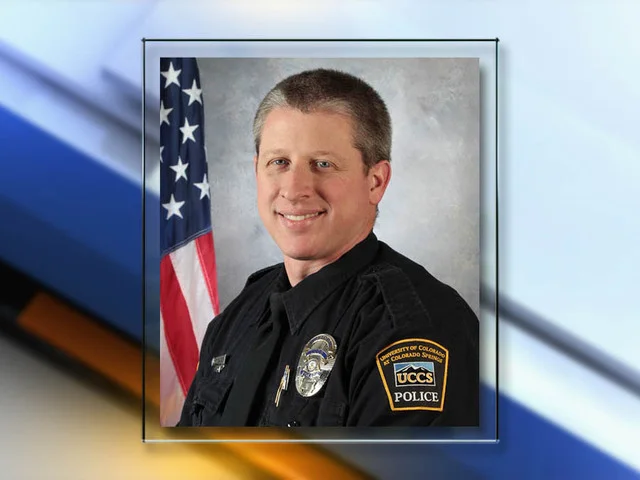
Colorado Springs motives? So far, one is clear: Pro-life pastor/officer died defending life

Colorado Springs motives? So far, one is clear: Pro-life pastor/officer died defending life

Faced with headlines about violence at an abortion facility, the late Cardinal John O'Connor of New York City took to the pulpit and, digging into the writings of the Catholic Catechism, Pope John Paul II and Gandhi, stated the obvious. Do you remember that very candid quote?

"If anyone has an urge to kill someone at an abortion clinic, they should shoot me," said the late Cardinal John O'Connor, preaching to his New York City flock in 1994. "It's madness. It discredits the right-to-life movement. Murder is murder. It's madness. You cannot prevent killing by killing."

The cardinal added, in an online forum:

"Where does this spiral end? How is it limited? Surely, we are all as tired of abortion as we are tired of murder. But we must fight murder without conforming to it or condoning it," wrote the cardinal. ... Let us attend to God's revelation: 'Do not be conquered by evil, but conquer evil with good' (Romans 12: 21).

Now, I bring this up as law officials in Colorado Springs begin the process of digging into the history of the man arrested as the gunman in the horrifying standoff at a Planned Parenthood. Apparently, Robert Lewis Dear has a previous criminal record.

And what about motive? Here is a recent update, as posted at The Colorado Springs Gazette:

The Associated Press reports Colorado Springs Mayor John Suthers says authorities aren't ready to discuss a possible motive of the gunman who attacked a Planned Parenthood clinic there, but says people can make "inferences from where it took place."
Suthers says investigators have interviewed Dear, but that authorities still want to learn more about him, suggesting that his mental health was part of the investigation.

Now in this case, the tragic reality is that it is much easier to articulate the motives of the local police officer who was one of the first responders and lost his life in the fighting.

The officer's name: The Rev. Garrett Swasey.

Are you seeing that title -- "The Rev." -- in front of his name?


Please respect our Commenting Policy