
Anglican ordinariates: Crux explains it well; the Houston Chronicle, not so much

For those of us who follow the ins and outs of Episcopalians, Anglicans and Catholics, there was an interesting development recently when the Vatican appointed a bishop to oversee 42 Anglican-rite North American churches. They had converted as congregations to Catholicism but retained some of their Anglican liturgies and customs, such as married clergy.

This group of Anglican churches is called an ordinariate and a system of bringing them into the Catholic fold was created in 2009 by Pope Benedict XVI. The priest he originally tapped to head it up was the Rev. Jeffrey Steenson, the former Episcopal bishop of the Albuquerque-based Rio Grande diocese (which is New Mexico and a corner of far west Texas).

Steenson was elected bishop in October 2004 and consecrated in January 2005. Then less then two years later in September 2007, he shocked his diocese by announcing he was turning Catholic and resigning his position. More on Steenson in a bit, but first see how the Houston Chronicle covered the new bishop:

Days before the Catholic Church announced Steven Lopes’ impending appointment as bishop, the 40-year-old cleric had a brief conversation with Pope Francis.
Lopes reminded the pontiff of the instructions he had given to new bishops, urging them to “tend to the flock of God that is in your charge” and not become “airport bishops.”
“I asked for a little exception,” Lopes said Tuesday, as about 50 people gathered in the sunlit Great Hall of Our Lady of Walsingham burst into laughter. “I imagine I’ll be on the road a lot.”

Please respect our Commenting Policy

A tale of two Colorado Springs media streams: crazed gunman vs. anti-abortion soldier

In the wake of Friday's shooting rampage at a Planned Parenthood facility in Colorado Springs, Colo., there seem to be two major media streams going when it comes to the gunman and any link that he has to the "why?" factor in this story. 

The last two front pages of The New York Times are a perfect place to see what I'm talking about.

First is the stream that focuses on actual facts known about Robert L. Deal Jr., the man accused of killing three people and wounding nine in Colorado's second-largest city.

Yes, there is some religion in there if you dig deep. For example, Sunday's Times delved into Deal's bizarre personal history but found no institutional links between him and either organized religion or the pro-life movement.

Readers did learn a few details about Deal's religious background, as the Times quoted Deal's former wife, Pamela Ross (no relation to this writer):

Mr. Dear was raised as a Baptist, Ms. Ross said in an interview in Goose Creek, S.C., where she now lives. He was religious but not a regular churchgoer, a believer but not one to harp on religion. “He believed wholeheartedly in the Bible,” she said. “That’s what he always said; he read it cover to cover to cover.” But he was not fixated on it, she added.

Later in the story, religion figured tangentially as the newspaper recounted Deal's interesting, to say the least, Internet postings:

He seemed to have a separate life online. An online personals ad seeking women in North Carolina interested in bondage and sadomasochistic sex showed a picture that appeared to be Mr. Dear and used an online pseudonym associated with him. The same user also appeared to have turned to online message boards to seek companions in the Asheville area with whom he could smoke marijuana.


Please respect our Commenting Policy

Hey New York Times editors: Why ignore hellish details in story of Ugandan marytrs?

The questions for this morning are rather simple: (a) Who were the Ugandan martyrs, (b) why were they killed and (c) why are they so symbolic for millions of Christians in the growing churches of Africa?

These questions are especially important, since Pope Francis has just visited Uganda to mark the 50th anniversary of the canonization of the Catholics among the 45 believers who -- with Anglican martyrs, as well -- were tortured, beheaded, hacked to death and burned on the orders of King Mwanga II in the late 1800s.

Why did this happen? What does it have to do with the rapid growth, and the beliefs, of the church in modern Africa?

Quite a few mainstream news organizations -- The New York Times in particular -- were vague, silent or inaccurate when dealing with the answers to some of these questions. But let's start with a report from CBS and the Associated Press that included the essential details.

NAMUGONGO, Uganda -- Pope Francis on Saturday honored the Ugandan Christians who were burned alive rather than renounce their faith a century ago, urging today's Catholics to follow in their missionary zeal and spread the faith at home and abroad.
A somber Francis prayed at shrines dedicated to the 23 Anglican and 22 Catholic martyrs who were killed between 1885 and 1887 on the orders of a local king trying to thwart the influence of Christianity in his central Ugandan kingdom. According to historians, the Christians were also killed because they refused the king's sexual advances, citing the church's opposition to homosexuality.

This report also touched on the fact that the sexual politics of Africa remain strikingly complex and even tragic, as believers here wrestle with a web of colonial-era and tribal beliefs and customs, with the constant pressure of Islam on many borders.


Please respect our Commenting Policy

What's the faith background of the Episcopal Church's new leader?

What's the faith background of the Episcopal Church's new leader?

AN EPISCOPALIAN ASKS:

Can you tell us something more about the presiding bishop of our [Episcopal] Church? I’ve heard only upbeat things about him from people who have met and heard him. Will he be a Marco Rubio -- a very effective speaker who can connect with people?

THE RELIGION GUY’S ANSWER:

Perhaps so. Here’s some information about the personable Michael Bruce Curry, 62, who was installed this month as the new presiding bishop of America’s troubled Episcopal Church. Some U.S. denominations lack such a solo head while the Episcopalians grant their chief unusually centralized power and, moreover, his term runs till 2024.

The questioner’s pitch for Republican Rubio brings to mind Hillary Clinton’s 2016 hope to become the nation’s first woman president following its first African-American president. The Episcopalians have done the opposite. Curry, the first African-American to head this rather elite and overwhelmingly white church, succeeds its first female presiding bishop, Katharine Jefferts Schori.

Jefferts Schori was a surprise choice in 2006 because she never led a prominent parish or diocese. She spent only five years as bishop of Nevada (currently with 5,444 souls). By contrast, Curry has 15 years of seasoning as bishop of the Raleigh-based North Carolina diocese, the nation’s sixth largest with 50,218 active members.

Rather like Barack Obama’s notable keynote speech to the Democrats’ 2004 convention that helped win the 2008 nomination, Curry delivered a rousing sermon at the church’s 2012 convention and was elected presiding bishop at the next one.


Please respect our Commenting Policy

'Saint Fred': The Atlantic pitches the idea of sainthood for Mister Rogers

Was Mister Rogers a saint? The Atlantic proposes the idea in a frankly admiring bouquet of an article. But the piece has more than its share of religious ghosts: hints of spirituality that are not fully explored.

Now, I'm going to get picky in this review ("Why stop now?", some of you might say).  There is much good in this article on the minister who reassured young viewers through his sweet song It's You I Like. But just as uncut flowers can look ragged and overgrown, florid writing can also get a little unkempt.

The writer does some more-than-decent reporting, not only reciting facts but putting them into a meaningful context. He says Rogers purposely kept a low-tech TV style that instilled patience and kindness. The magazine's own research found that children often talked back to his televised image -- and that Rogers, anticipating their replies, continued the "conversation" in the telecast.

The Atlantic even suggests that Mister Rogers' Neighborhood had saintlike healing powers. In one anecdote, an autistic child learned to speak via the show. In another, Lauren Tewes of Love Boat fame said God helped her kick cocaine "through the instrument of Mister Rogers."

In many places, though, the 1,500-word article is a case of flawed excellence. Here's an example:


Please respect our Commenting Policy

Colorado Springs motives? So far, one is clear: Pro-life pastor/officer died defending life

Colorado Springs motives? So far, one is clear: Pro-life pastor/officer died defending life

Faced with headlines about violence at an abortion facility, the late Cardinal John O'Connor of New York City took to the pulpit and, digging into the writings of the Catholic Catechism, Pope John Paul II and Gandhi, stated the obvious. Do you remember that very candid quote?

"If anyone has an urge to kill someone at an abortion clinic, they should shoot me," said the late Cardinal John O'Connor, preaching to his New York City flock in 1994. "It's madness. It discredits the right-to-life movement. Murder is murder. It's madness. You cannot prevent killing by killing."

The cardinal added, in an online forum:

"Where does this spiral end? How is it limited? Surely, we are all as tired of abortion as we are tired of murder. But we must fight murder without conforming to it or condoning it," wrote the cardinal. ... Let us attend to God's revelation: 'Do not be conquered by evil, but conquer evil with good' (Romans 12: 21).

Now, I bring this up as law officials in Colorado Springs begin the process of digging into the history of the man arrested as the gunman in the horrifying standoff at a Planned Parenthood. Apparently, Robert Lewis Dear has a previous criminal record.

And what about motive? Here is a recent update, as posted at The Colorado Springs Gazette:

The Associated Press reports Colorado Springs Mayor John Suthers says authorities aren't ready to discuss a possible motive of the gunman who attacked a Planned Parenthood clinic there, but says people can make "inferences from where it took place."
Suthers says investigators have interviewed Dear, but that authorities still want to learn more about him, suggesting that his mental health was part of the investigation.

Now in this case, the tragic reality is that it is much easier to articulate the motives of the local police officer who was one of the first responders and lost his life in the fighting.

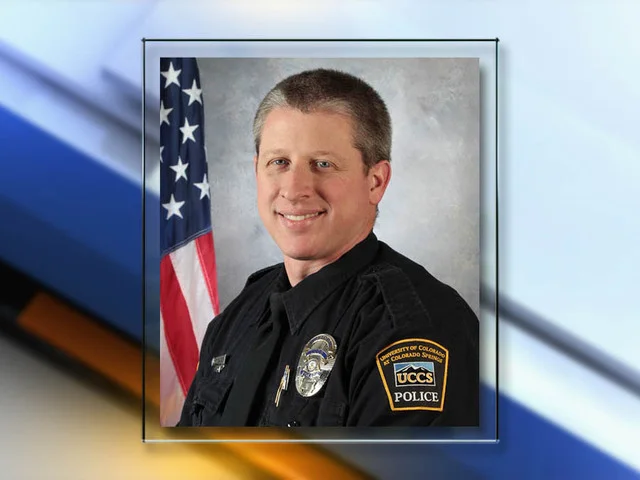
The officer's name: The Rev. Garrett Swasey.

Are you seeing that title -- "The Rev." -- in front of his name?


Please respect our Commenting Policy

Pope Francis in Kenya: AP gets some details, but misses the 'big idea,' in his message

Pope Francis has been on the road, again, which means that it's time for more stories about the political implications of his sermons and off-the-cuff remarks to the flocks of people who gather to pray and worship with him.

This is business as usual, of course. Want to play along and see how this works in a typical Associated Press report?

OK, first we'll look at the many excellent details from one of the Kenya talks that made it into the AP report, which ran in The Washington Post with this headline: "Pope calls slum conditions in Nairobi an injustice."

As you read several chunks of the story, ask yourself this big-idea question: What does this pope believe is the ultimate cause of this injustice?

NAIROBI, Kenya -- Visiting one of Nairobi’s many shantytowns on Friday, Pope Francis denounced conditions slum-dwellers are forced to live in, saying access to safe water is a basic human right and that everyone should have dignified, adequate housing. ...
In remarks to the crowd, Francis insisted that everyone should have access to water, a basic sewage system, garbage collection, electricity as well as schools, hospitals and sport facilities.
“To deny a family water, under any bureaucratic pretext whatsoever, is a great injustice, especially when one profits from this need,” he said.

Now, I think it is fair to ask: Is safe water the "big idea" in this talk, or is the pope saying that safe water is a symptom of larger problems? Hold that thought, as we head back to the AP text:


Please respect our Commenting Policy

Washington Post misses multiple hints about faith in Eagles of Death Metal story

Washington Post misses multiple hints about faith in Eagles of Death Metal story

I’m not really a heavy metal fan but when I saw this piece posted in the Washington Post about the band that was playing during the terror attacks at the Bataclan concert hall in Paris, I had to take a second look.

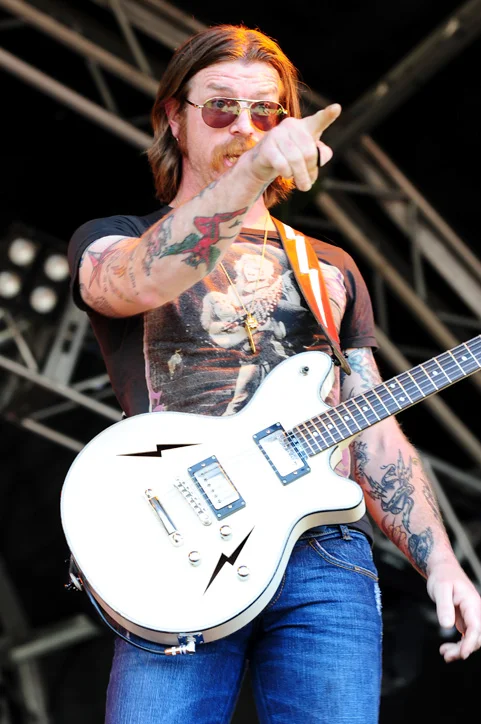
I was swimming through this longish piece when I began noticing all sorts of hints about faith being dropped by Jesse Hughes, the lead singer of Eagles of Death Metal. Anyone who’s been in a Christian subculture could pick them up instantly. I am not sure the reporter was attuned to this at all, unfortunately, and Hughes wasn't really big on the God talk but he kept dropping hint after hing. It's obvious this man is one mixed-up guy, albeit quite entertaining.

Anyway, this piece has more ghosts (places where the reporter should have picked up on the spiritual element) than a Hogwarts Halloween party. Here’s how it started:

From head to toe, the Eagles of Death Metal lead singer is like a neon sign advertising the trappings of American rock. Tight jeans. Bright tattoos. Bold views. Wild hair. Several stints in drug rehab. And above all: sexually charged lyrics.
On Nov. 13, Hughes was belting those sexually suggestive lyrics on stage when three members of the Islamic State forced their way into the Bataclan concert hall in Paris. Hughes managed to escape but scores of his fans did not. Strapped with suicide vests and armed with Kalashnikovs, the gunmen slaughtered 89 people at the Bataclan. Across the city, coordinated attacks claimed 41 more lives.
In a statement, the Islamic State tried to paint the concert hall as a hedonistic pleasure palace “where hundreds of pagans gathered for a concert of prostitution and vice.”


Please respect our Commenting Policy

An Advent miracle? Check the fine details in the baby in a Queens manger story

Why a purple towel?

If you have followed the news online in the past day or so, you have probably seen reports about the newborn baby that was left -- umbilical chord still attached -- in a manger scene inside a church in Queens.

It has been interesting to follow the coverage as it developed, with a strong burst of holiday sentiment from news producers everywhere who have been quick to proclaim, "It's a Christmas miracle!"

Ah, but there are some intriguing fine details in this story that are worth pondering. Let's start with an early Reuters report, as circulated by Religion News Service. This is pretty much the whole story:

NEW YORK (Reuters) -- A newborn with his umbilical cord still attached was found lying in a manger at a New York church, police said on Tuesday.
At Holy Child Jesus Church in the borough of Queens on Monday, the custodian found the crying infant wrapped in towels in the indoor nativity scene he had set up just before his lunch break, a New York police spokesman said.
Father Christopher Ryan Heanue, one of the priests at the church, said he and others placed a clean towel around the baby while waiting for paramedics to show up.
“The beautiful thing is that this woman found in this church -- which is supposed to be a home for those in need -- this home for her child,” Heanue said, referring to the person he assumes left the baby there.


Please respect our Commenting Policy