
'Saint Fred': The Atlantic pitches the idea of sainthood for Mister Rogers

Was Mister Rogers a saint? The Atlantic proposes the idea in a frankly admiring bouquet of an article. But the piece has more than its share of religious ghosts: hints of spirituality that are not fully explored.

Now, I'm going to get picky in this review ("Why stop now?", some of you might say).  There is much good in this article on the minister who reassured young viewers through his sweet song It's You I Like. But just as uncut flowers can look ragged and overgrown, florid writing can also get a little unkempt.

The writer does some more-than-decent reporting, not only reciting facts but putting them into a meaningful context. He says Rogers purposely kept a low-tech TV style that instilled patience and kindness. The magazine's own research found that children often talked back to his televised image -- and that Rogers, anticipating their replies, continued the "conversation" in the telecast.

The Atlantic even suggests that Mister Rogers' Neighborhood had saintlike healing powers. In one anecdote, an autistic child learned to speak via the show. In another, Lauren Tewes of Love Boat fame said God helped her kick cocaine "through the instrument of Mister Rogers."

In many places, though, the 1,500-word article is a case of flawed excellence. Here's an example:


Please respect our Commenting Policy

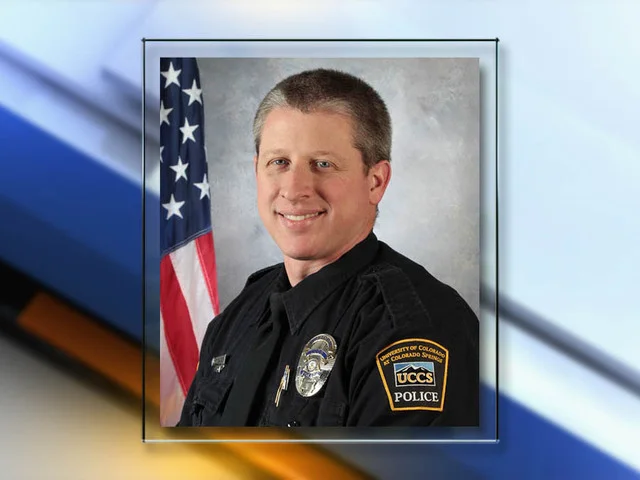
Colorado Springs motives? So far, one is clear: Pro-life pastor/officer died defending life

Colorado Springs motives? So far, one is clear: Pro-life pastor/officer died defending life

Faced with headlines about violence at an abortion facility, the late Cardinal John O'Connor of New York City took to the pulpit and, digging into the writings of the Catholic Catechism, Pope John Paul II and Gandhi, stated the obvious. Do you remember that very candid quote?

"If anyone has an urge to kill someone at an abortion clinic, they should shoot me," said the late Cardinal John O'Connor, preaching to his New York City flock in 1994. "It's madness. It discredits the right-to-life movement. Murder is murder. It's madness. You cannot prevent killing by killing."

The cardinal added, in an online forum:

"Where does this spiral end? How is it limited? Surely, we are all as tired of abortion as we are tired of murder. But we must fight murder without conforming to it or condoning it," wrote the cardinal. ... Let us attend to God's revelation: 'Do not be conquered by evil, but conquer evil with good' (Romans 12: 21).

Now, I bring this up as law officials in Colorado Springs begin the process of digging into the history of the man arrested as the gunman in the horrifying standoff at a Planned Parenthood. Apparently, Robert Lewis Dear has a previous criminal record.

And what about motive? Here is a recent update, as posted at The Colorado Springs Gazette:

The Associated Press reports Colorado Springs Mayor John Suthers says authorities aren't ready to discuss a possible motive of the gunman who attacked a Planned Parenthood clinic there, but says people can make "inferences from where it took place."
Suthers says investigators have interviewed Dear, but that authorities still want to learn more about him, suggesting that his mental health was part of the investigation.

Now in this case, the tragic reality is that it is much easier to articulate the motives of the local police officer who was one of the first responders and lost his life in the fighting.

The officer's name: The Rev. Garrett Swasey.

Are you seeing that title -- "The Rev." -- in front of his name?


Please respect our Commenting Policy

Pope Francis in Kenya: AP gets some details, but misses the 'big idea,' in his message

Pope Francis has been on the road, again, which means that it's time for more stories about the political implications of his sermons and off-the-cuff remarks to the flocks of people who gather to pray and worship with him.

This is business as usual, of course. Want to play along and see how this works in a typical Associated Press report?

OK, first we'll look at the many excellent details from one of the Kenya talks that made it into the AP report, which ran in The Washington Post with this headline: "Pope calls slum conditions in Nairobi an injustice."

As you read several chunks of the story, ask yourself this big-idea question: What does this pope believe is the ultimate cause of this injustice?

NAIROBI, Kenya -- Visiting one of Nairobi’s many shantytowns on Friday, Pope Francis denounced conditions slum-dwellers are forced to live in, saying access to safe water is a basic human right and that everyone should have dignified, adequate housing. ...
In remarks to the crowd, Francis insisted that everyone should have access to water, a basic sewage system, garbage collection, electricity as well as schools, hospitals and sport facilities.
“To deny a family water, under any bureaucratic pretext whatsoever, is a great injustice, especially when one profits from this need,” he said.

Now, I think it is fair to ask: Is safe water the "big idea" in this talk, or is the pope saying that safe water is a symptom of larger problems? Hold that thought, as we head back to the AP text:


Please respect our Commenting Policy

Washington Post misses multiple hints about faith in Eagles of Death Metal story

Washington Post misses multiple hints about faith in Eagles of Death Metal story

I’m not really a heavy metal fan but when I saw this piece posted in the Washington Post about the band that was playing during the terror attacks at the Bataclan concert hall in Paris, I had to take a second look.

I was swimming through this longish piece when I began noticing all sorts of hints about faith being dropped by Jesse Hughes, the lead singer of Eagles of Death Metal. Anyone who’s been in a Christian subculture could pick them up instantly. I am not sure the reporter was attuned to this at all, unfortunately, and Hughes wasn't really big on the God talk but he kept dropping hint after hing. It's obvious this man is one mixed-up guy, albeit quite entertaining.

Anyway, this piece has more ghosts (places where the reporter should have picked up on the spiritual element) than a Hogwarts Halloween party. Here’s how it started:

From head to toe, the Eagles of Death Metal lead singer is like a neon sign advertising the trappings of American rock. Tight jeans. Bright tattoos. Bold views. Wild hair. Several stints in drug rehab. And above all: sexually charged lyrics.
On Nov. 13, Hughes was belting those sexually suggestive lyrics on stage when three members of the Islamic State forced their way into the Bataclan concert hall in Paris. Hughes managed to escape but scores of his fans did not. Strapped with suicide vests and armed with Kalashnikovs, the gunmen slaughtered 89 people at the Bataclan. Across the city, coordinated attacks claimed 41 more lives.
In a statement, the Islamic State tried to paint the concert hall as a hedonistic pleasure palace “where hundreds of pagans gathered for a concert of prostitution and vice.”


Please respect our Commenting Policy

An Advent miracle? Check the fine details in the baby in a Queens manger story

Why a purple towel?

If you have followed the news online in the past day or so, you have probably seen reports about the newborn baby that was left -- umbilical chord still attached -- in a manger scene inside a church in Queens.

It has been interesting to follow the coverage as it developed, with a strong burst of holiday sentiment from news producers everywhere who have been quick to proclaim, "It's a Christmas miracle!"

Ah, but there are some intriguing fine details in this story that are worth pondering. Let's start with an early Reuters report, as circulated by Religion News Service. This is pretty much the whole story:

NEW YORK (Reuters) -- A newborn with his umbilical cord still attached was found lying in a manger at a New York church, police said on Tuesday.
At Holy Child Jesus Church in the borough of Queens on Monday, the custodian found the crying infant wrapped in towels in the indoor nativity scene he had set up just before his lunch break, a New York police spokesman said.
Father Christopher Ryan Heanue, one of the priests at the church, said he and others placed a clean towel around the baby while waiting for paramedics to show up.
“The beautiful thing is that this woman found in this church -- which is supposed to be a home for those in need -- this home for her child,” Heanue said, referring to the person he assumes left the baby there.


Please respect our Commenting Policy

Disturbing think piece for Thanksgiving week: It's time to open a file on Wilayat Sinai

Veteran GetReligion readers -- or religion-beat pros with a global perspective -- are probably familiar with the work of Dr. Jenny Taylor, a foreign-affairs reporter turned media critic, and Lapido Media, which is also known as the Centre for Religious Literacy in World Affairs.

I have featured "think pieces" from Lapido (which means "to speak up" in the Acholi dialect of Northern Uganda) here many times and will continue to do so. The simple fact of the matter is that news media on the other side of the pond are being forced -- ambushed by reality, really -- to take religion more seriously. Lapido's work is playing a role in helping journalists, and diplomats, dig deeper.

This brings me to the site's new briefing paper on the rise of Wilayat Sinai, the Islamic State affiliate that is on the rise in Egypt. This group was almost unknown in North American media -- until the alleged downing of that Russian airliner the other day.

So, reporters, are you like me? Is the name Abu Osama al-Masry almost totally foreign to you? Then this Lapido Media think piece -- continuing work the centre began publishing a year ago -- needs to go in your files. A sample or two? Sure.

A former Azhar student and clothing importer Abu Osama al-Masry claimed responsibility on behalf of Wilayat Sinai. ‘They were shocked by a people who sought the hereafter, loved death, and had a thirst for blood’, he said.
‘We will inherit your soil, homes, wealth, and capture your women! This is Allah’s promise’.


Please respect our Commenting Policy

Whose yoga is it? Journalists, proceed with care because the details matter

Whose yoga is it? Journalists, proceed with care because the details matter

One of my most uncomfortable experiences as a journalist was a story I did in 1995 to mark the 25th anniversary of Earth Day. I worked in Washington for Religion News Service at the time, and my task was to come up with a story with national appeal.

I decided to check in with Native Americans to learn what the day meant to them as members of a culture that non-Indians such as myself naively believed still held closely to traditional spiritual beliefs about humanity's place in a holistic world order. (In truth, there were dozens of distinct indigenous cultures spread across the Americas prior to European colonization.)

I'd connect environmentalism with indigenous beliefs for mainstream newspaper readers (RNS's main client base at that time). It was, I thought, a story sure to get widespread national play.

So I started making calls, beginning with the editor of Indian Country News, then the leading national publication covering Native American interests.

Did I get a tongue lashing.

What a silly premise, he told me. Poverty-stricken contemporary Native Americans cared more about day-to-day survival than Earth Day. Nor did he wish to indulge some white reporter's attempt to link contemporary environmental concerns with some generalized, romanticized and fantasized indigenous spiritual trope.

You took our land and now you're after our beliefs! I was, he bitterly insisted, committing cultural appropriation.


Please respect our Commenting Policy

How to fix children's Sunday school? Get rid of the Bible, Wall Street Journal reports

At my home congregation in Oklahoma, a dedicated volunteer named Mrs. Camey has taught the kindergarten Sunday school class for two-plus decades.

After 12 months in Mrs. Camey's class, these kindergartners — typically 25 to 30 of them — can recite all 66 books of the Old and New Testaments, name the 12 apostles and tell you the fruits of the Spirit (giggling when their teacher teasingly asks if these fruits include oranges and pineapples).

Most Sundays, Mrs. Camey will read a story to these 5- and 6-year-olds straight from the Bible — and then they'll use colorful markers, scissors and glue to make a craft that helps them remember that week's lesson. About midway through the year, the children will start thumbing through their own Bibles to locate various books with the help of Mrs. Camey and her two teaching assistants.

In late July, after 12 spiritually rewarding months in Mrs. Camey's class, these students will don caps and gowns and graduate to the first grade — and a new group of kindergartners will arrive the next Sunday morning to start the process all over again.

My church's experience — with the kindergarten class and other grade levels — is a far cry from what I read about in a recent Wall Street Journal story.

As best I can tell, this Journal feature makes the case for improving Sunday school by, um, eliminating the Bible.

Go ahead and read the lede, and tell me if my synopsis is an exaggeration:


Please respect our Commenting Policy

Associated Press finds debates about Syrian refugee crisis -- among former refugees

The following is a public service announcement to mainstream journalists who are frantically trying to cover all of the different political angles of the current Syrian refugee debates: Please remember that the word "Syrian" does not equal "Muslim."

This is, of course, a variation on another equation that causes trouble for some journalists who are not used to covering religion: "Arab" does not equal "Muslim."

Thus, if and when you seek the viewpoints of Arab refugees who are already settled in America, including those who came here during previous waves of bloodshed in Syria and elsewhere in the Middle East, please strive to interview a few Syrian Christians and members of other religious minorities.

This is especially important when covering tensions in the declining industrial cities of the Midwest and Northeast, where Arabs of all kinds have been settling for generations. You will often find that many of these tensions are, literally, ancient.

This is a rather personal issue for me, since my family was part of an Orthodox parish for four years in South Florida (including 9/11) in which most of the families had Syrian and Lebanese roots. It also helps to remember that many people who come to America from Lebanon were driven into Lebanon by persecution in Syria, much earlier in the 20th Century.

To see these factors at work, check out this recent Associated Press "Big Story" feature that took the time to talk to a variety of voices on both sides of some of these divides.

ALLENTOWN, Pa. (AP) -- A few days ago, a pastor asked Syrian-born restaurant owner Marie Jarrah to donate food to a welcoming event for recently arrived Syrian refugees. Jarrah, who said she regularly helps people in need, declined.


Please respect our Commenting Policy