Worship

WSJ reporter dares to interview ordinary Eastern Orthodox converts in the Bible Belt

WSJ reporter dares to interview ordinary Eastern Orthodox converts in the Bible Belt

As you would expect, the recent Wall Street Journal feature on the rising number of converts to Eastern Orthodox Christianity was a big deal here in Orthodox circles in East Tennessee.

Why? The WSJ piece was built, in large part, on contacts with sources here in the Appalachian mountains and nearby. The headline: “Eastern Orthodoxy Gains New Followers in America Ancient faith is drawing converts with no ties to its historic lands.”

This is not a new story, of course, since the “convert-friendly era” of Orthodoxy began in the 1980s and ‘90s. But, for reasons explained in the WSJ piece, there is enough novelty linked to this trend — especially when contrasted with stark mainline Protestant decline — that the topic has made a few headlines every five years or so.

What this new piece does better than others, I think, is note the paradox found in American Orthodoxy — that some churches are growing rapidly, while others are plateaued or in decline. Consider this statement of the “trend,” which is described as a “small but fast-growing group of Americans from diverse backgrounds who have embraced Orthodoxy in the past few years.” Here is an important background passage:

Eastern Orthodoxy is one of the two parts of the Christian world that emerged from the Great Schism of the 11th century, a split with the Roman Catholic Church caused principally by disagreement over the authority of the pope. Its members belong to a family of churches with historic roots in Eastern Europe, Russia and the region of the eastern Mediterranean. … 

The Eastern Orthodox population of the U.S. is dominated by immigrants from the church’s historic lands and by their descendants. But in recent years, aided by more widely available information on the internet, the church has been attracting more attention from people with no ancestral ties to Orthodoxy, a trend that appears to have accelerated following the outbreak of the Covid-19 pandemic

Some pastors across the country report growth of their flocks by 15% or more in a single year owing to conversions, defying an overall trend of decline similar to that in other denominations.

I must be candid and note that here was another reason that this WSJ article created quite a buzz — it contrasted sharply with last year’s NPR piece: “Orthodox Christian churches are drawing in far-right American converts.”

Please respect our Commenting Policy

Tim Keller sought 'winsome' Manhattan apologetics, a goal that became more difficult

Tim Keller sought 'winsome' Manhattan apologetics, a goal that became more difficult

If one looks up the word “winsome” in a dictionary, here is a typical example of what shows up, via Merriam-Webster: “generally pleasing and engaging often because of a childlike charm and innocence.”

However, a Google search for the term “winsome,” when combined with “Tim Keller,” opens up a window into a completely different world — one closely linked to debates about the meaning of the word “evangelical” in a Donald Trump-era culture.

Frankly, I am not going to go there. What I will do is urge GetReligion readers who visit Twitter to follow the #TimKeller hashtag and check out the waves of tributes in the wake of the passing of one of the most important American evangelicals — defined in terms of doctrine — in recent decades.

Instead of looking at the tsunami of news coverage, I will simply note the obvious — Keller is receiving much, or even most, of this attention because he lived, worked, preached and wrote in New York City. If his career had unfolded in the Bible Belt, mainstream journalists would never have heard of him. Thus, here is the New York Times double-decker headline on its obituary (which ran quickly, but inside the print edition):

The Rev. Timothy Keller, Pioneering Manhattan Evangelist, Dies at 72

Shunning fire and brimstone, he became a best-selling author and founded Redeemer Presbyterian Church, which drew young New Yorkers.

The Gray Lady’s lede offered this:

The Rev. Timothy J. Keller, a best-selling author and theorist of Christianity who performed a modern miracle of his own — establishing a theologically orthodox church in Manhattan that attracted thousands of young professional followers — died on Friday at his home in Manhattan. He was 72.

Yes, we can talk about the accuracy of the word “evangelist” in the headline. Once again, there are mainstream journalists who believe that is simply another way to say “evangelical.” Unless I missed something, Keller was not active in holding the kinds of public events — think Billy Graham “crusades” — normally associated with public evangelism. Were there some Central Park rallies with Keller sermons and altar calls that I missed? Please let me know.

What he was, of course, was a church builder and an “apologist” for small-o orthodox Christianity, of the Reformed form,” both in preaching and in writing — in books and a host of other forms.


Please respect our Commenting Policy

Plug-In: What's happening with tense Southern Baptists and disunited Methodists?

Plug-In: What's happening with tense Southern Baptists and disunited Methodists?

It’s time for another roundup of religion news from the mainstream press and beyond. Please click lots of links and pass this along to others.

Among last week’s late-developing headlines: Influential pastor Tim Keller, who was diagnosed with pancreatic cancer in 2020, was placed on hospice care, as Religion News Service’s Bob Smietana reported. Keller then passed away a short time later. Click here for the obituary that ran deep inside The New York Times: The Rev. Timothy Keller, Pioneering Manhattan Evangelist, Dies at 72.” Click here to follow the #TimKeller threads on Twitter.

On a happier note, “The Chosen” — the popular TV show about Jesus and his disciples — seems to be influencing baby names, as the Deseret News’ Mya Jaradat explains.

The major story this week — the material for this post was collected before Keller’s death — concerns doctrinal battles by the Southern Baptists, not all of them in the South, and the United Methodists, who are not so united these days.

What To Know: The Big Story

Back in the saddle?: Last year, the Southern Baptist Convention kicked out Saddleback Church, founded by Rick Warren, for appointing women as pastors.

Now Saddleback is appealing that decision, asking messengers to the SBC’s annual meeting in New Orleans next month to reverse it.

“The appeal extends the standoff between the nation’s largest Protestant denomination and one of its largest, most successful churches,” the Associated Press’ Peter Smith writes.

Read related coverage by Christianity Today’s Kate Shellnutt, Religion News Service’s Adelle M. Banks, The Tennessean’s Liam Adams and the Washington Times’ Mark A. Kellner.

Affiliation and disaffiliation: Don’t be surprised if those terms end up as the Methodists’ words of the year.


Please respect our Commenting Policy

LGBTQ Catholics dream of a changed church, while seeing reasons to hope

LGBTQ Catholics dream of a changed church, while seeing reasons to hope

As a child in inner-city Milwaukee, Father Bryan Massingale's grandmother gave him a leather-bound copy of The New Webster Encyclopedic Dictionary of the English Language, along with a dream that he might need it someday.

"My grandmother was not delusional. She did not live in denial of reality," said Massingale, a Jesuit priest who holds an endowed chair in ethics at Fordham University, in New York City. "Her gift was a vision, an act of hope. It was a dream, a hope, a reminder that the neighborhood, with its drugs, violence and rodent-infested corner store with overpriced goods, did not define or limit who I could be."

That's important to know, he declared, since he was speaking as "a Black, gay priest and theologian" at Fordham's recent Ignatian Q Conference for LGBTQ students from Jesuit campuses. This event was a "space for our dreaming, for queer dreams" of hope for "despised and disdained and stigmatized peoples," he added.

"I dream of a church where gay priests and lesbian sisters are acknowledged as the holy and faithful leaders they already are," he said, in a published version of his address. "I dream of a church where LGBTQ employees and schoolteachers can teach our children, serve God's people and have their vocations, sexuality and committed loves affirmed. …

"I dream of a church that enthusiastically celebrates same-sex loves as incarnations of God's love among us."

Theological visions of this kind inspire hope for some Catholics and concern for others.

Thus, the North American phase of the Vatican's global Synod on Synodality found "strong tensions within the Church," while participants in the virtual assemblies also "felt hope and encouragement and a desire for the synodal process to continue," according to the 36-page report (.pdf here) released on April 12 by U.S. and Canadian Catholic leaders.


Please respect our Commenting Policy

Another Catholic order fades away: AP offers a familiar story, from only one point of view

Another Catholic order fades away: AP offers a familiar story, from only one point of view

The sad Catholic story format has become rather standardized by now.

First, you need a declining college, seminary, parish, local school or a religious order. Then (2) you add the details of the crisis and some brave quotes from the people who have decided to make hard decisions about the future — including their beliefs about the reasons for the decline.

Here’s the optional part: There may be (3) quotes from critics of the fading institution, as well as it’s supporters. This implies that there are Catholic issues being debated that are connected to this case study.

Now, I will argue that there needs to be (4) an additional factor, one other question, added to this increasingly familiar equation: Are there a few Catholic institutions of this kind that are surviving or even growing? The answer may be relevant to the big picture.

The Associated Press recently published a better-than-average story of this type, with this headline: “The end of an era for the Sisters of Charity of New York.” It offers the first two factors and at least admits that the third exists, with supporters mentioning the views of critics (perhaps even some in the order) — with AP declining to actually interview any of them. Here is the familiar overture:

NEW YORK (AP) — Through more than 200 years, the Sisters of Charity of New York nursed Civil War casualties, joined civil rights and anti-war demonstrations, cared for orphans, and taught countless children.

They’re proud of their history of selfless service. But they can’t ignore their current reality: The congregation continues to shrink and age — and not a single new sister has joined their U.S. group in more than 20 years.

After much prayer and contemplation, they made a tough decision that marked the beginning of the Catholic congregation’s end. They will no longer accept new members, and announced in an April 27 statement that they are now on a “path to completion.”

This leads to the required background material, with a Big Idea statement (which I have placed in bold type):


Please respect our Commenting Policy

Podcast: What's going on with Southern Baptist decline? Count the news hooks ...

Podcast: What's going on with Southern Baptist decline? Count the news hooks ...

Back in the early 1980s, the Southern Baptist Convention was enduring the crucial years of its civil war over — here’s the term headline writers hated — “biblical inerrancy.”

I was at the Charlotte News and then the Charlotte Observer back then, in a city in which one of the major roads was named after Billy Graham. The SBC spectrum in Charlotte ranged from hard-core conservatives to “moderates” who were basically liberal mainline Protestants with better preaching.

During that time, a moderate church welcomed the the late Rev. Gardner C. Taylor of Brooklyn to its pulpit for a series of sermons (“moderates” don’t have “revivals”). Taylor would make just about anyone’s list — Top 100 or even Top 10 — of that era’s most celebrated preachers. In 1980, Time magazine hailed him as the “the dean of the nation’s black preachers.” That’s saying something.

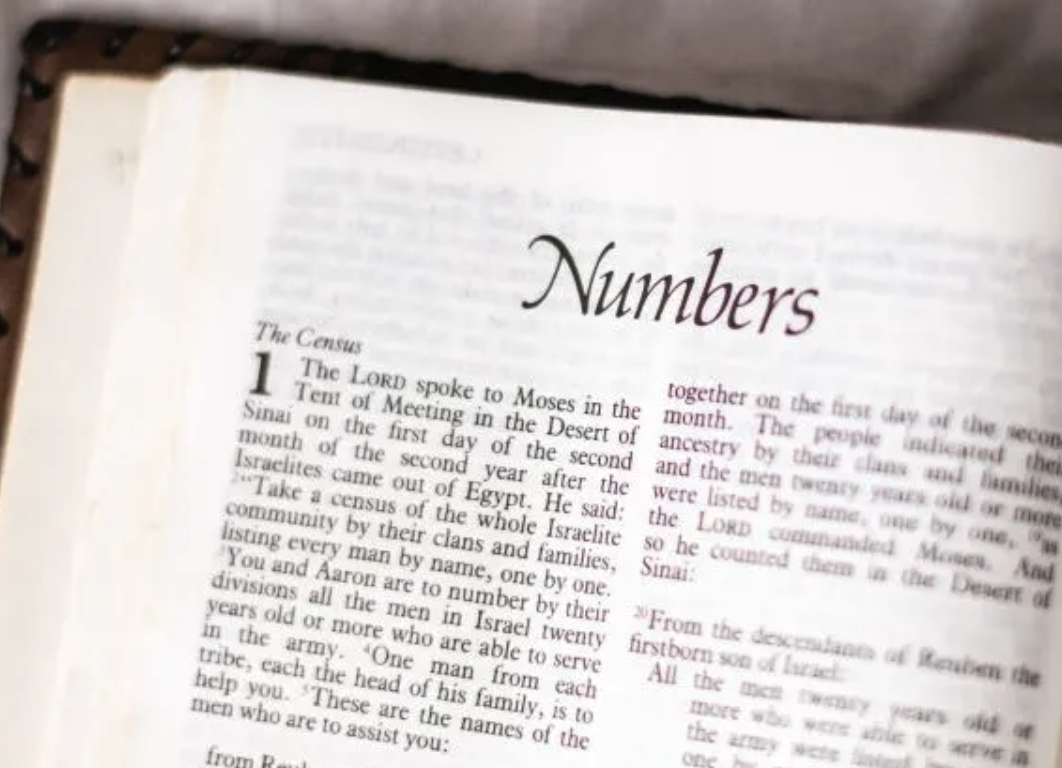
During one sermon, Taylor briefly addressed the SBC wars and added, with a slight smile, that he always thought that the primary book in the Bible that Southern Baptists “considered inerrant was the Book of Numbers.”

Southern Baptists have always loved their statistics (I grew up in Texas, the son of a Southern Baptist pastor) and, for decades, those statistics made their leaders smile.

Things are a bit more complex, right now, as seen in this RNS headline: “Southern Baptists lost nearly half a million members in 2022.” That story, and some other related online materials, provided the hook for this week’s “Crossroads” podcast (click here to tune that in).

Before we get to that solid news piece, by religion-beat veteran Bob Smietana (a scribe in Nashville for years), let’s grab some context from a new Substack post by chart-master Ryan Burge, a GetReligion contributor (and former Southern Baptist), with this headline: “The 2022 Data on the Southern Baptist Convention is Out.”

Check out these numbers from the past 80 years, a period in which the SBC’s rise “is just unmatched.”


Please respect our Commenting Policy

'Cultural Christianity' is fading and that reality is linked to some other newsy trends

'Cultural Christianity' is fading and that reality is linked to some other newsy trends

One of the trends I have been tracking a bit recently is the concept of “cultural Christianity.”

There’s really no settled definition of what it means, but I’ve always conceived of it as people who like the idea of being Christian without all the obligations or attachments of being part of a local church community. In other words — religion without all the hard stuff.

Once upon a time — especially in the American heartland — it really helped to be a member of a religious flock, to one degree or another. It was good for business. It offered positive social ties, especially if your pew was in a respectable mainline church. Those days are gone in many, many zip codes.

But here is the Big Idea for this post: There seems to be two competing forces in American politics and religion. The first is that we are becoming more religiously polarized — the rise of the nones on the left, but also the consistent strength of those conservative religious traditions on the right. However, a countervailing narrative is that despite that bifurcation of faith in the United States, Americans still have an overriding deference to religious expression — especially if it's the Christian religion. 

The starting point for this post is a graph with a strong political-news hook.

Democrats who leave religion behind, just walk from all of it. Among those who never or seldom attend religious services, just 10% say that religion is very important. That hasn’t changed in the last 14 years.

 However, among Republicans who never or seldom attend religious services, the share who say that religion is very important has risen from 17% to 27%.

Attention journalists: It’s this fusion of conservative political ideology and religious identity — without the behavior part — that is really worth watching, especially in GOP primaries where voters have more options (think, other than Donald Trump in recent years).


Please respect our Commenting Policy

Celebrities, monarchs, politicos, clergy and sacramental ghosts in coronation of Charles III

Celebrities, monarchs, politicos, clergy and sacramental ghosts in coronation of Charles III

If you read the main Associated Press report about the coronation of King Charles III then you know, in summary material near the top, that the rites were attended by “celebrities including Judi Dench, Emma Thompson and Lionel Richie.”

You would not, however, know that — for the first time in history — the monarch processed into Westminster Abbey behind a new Cross of Wales which, because of a recent gift from Pope Francis — contained two fragments from the “true cross” of Jesus discovered in 312 A.D. by the Empress Helen, mother of Constantine. We are talking about a relic reverenced by the early church and, ever since, by the ancient churches of East and West.

I know. It’s all about priorities. Was the coronation of Charles III a religious rite, a political ceremony or a mega-watt event in mass pop culture?

The obvious answer to this question is "Yes.” The issue, as usual, is which angle received the most accurate and informed attention in the AP report. Want to guess?

Before we go on, let me make a confession. I am, at the moment, high in the mountains of North Carolina and access to solid WiFi is, to be blunt, near zero. I drive into a small town about once day. Thus, I am going to focus on the religion details (and lack thereof) in the AP report alone — since that is what will be read by most news consumers in Middle America and elsewhere.

I will end with some questions about the rite that I have not been able to answer, questions linked to the ecumenical and interfaith content of the ceremony — details that appear to be close to the heart of the new king (background here from TheConversation website). But first, here is the overture:

LONDON (AP) — King Charles III was crowned … at Westminster Abbey, in a coronation ceremony steeped in ancient ritual and brimming with bling at a time when the monarchy is striving to remain relevant in a fractured modern Britain.

In displays of royal power straight out of the Middle Ages, Charles was presented with an orb, a sword and scepter and had the solid gold, bejeweled St. Edward’s Crown placed atop his head as he sat upon the 700-year-old oak Coronation Chair.

In front of world leaders, foreign royals, British aristocrats and stars, Charles declared: “I come not to be served but to serve.”


Please respect our Commenting Policy

Here is a strange question: Why doesn't the U.S. Census ask questions about religion?

Here is a strange question: Why doesn't the U.S. Census ask questions about religion?

QUESTION:

“Why doesn’t the U.S. Census ask about religion?”

THE RELIGION GUY’S ANSWER:

Most Americans may never have thought about this, an odd omission considering that religion is such an important aspect of society. Canada’s government, for example, has asked about religious affiliations since 1871.

But from the first once-a-decade U.S. Census conducted in 1790, the federal government has never directly asked all Americans about their religion (or lack thereof). Responses are anonymous, which should remove any sensitivities about answering such a question. The usual explanation is that “separation of church and state” forbids such questionining by a government agency, which is debatable.

Much of the history below draws upon an April 12  article about the Census by the Pew Research Center that has further detail for those interested, available by clicking here.

Instead of church-and-state entanglement, The Guy offers a different sort of objection to Census involvement. Religious affiliation or identity may be too complicated a matter for government nose-counters to deal with accurately.

Several non-government agencies with more expertise in this area collect standard data on Americans’ religion, with numbers that regularly conflict due to differing methods, assumptions and definitions.

One of the most important is Pew Research’s own Religious Landscape Study, last issued in 2014. www.pewresearch.org/religion/religious-landscape-study/Groundwork for the next round has already begun. Pew’s precision on religious factions and identities is vital because Protestant categories like “Lutheran” or “Presbyterian” mask big differences among groups with that label.

That sort of specificity is also provided in the “U.S. Religion Census” conducted each decade since 1990 by experts in religion statistics.


Please respect our Commenting Policy