Worship

Plug-In: Losing their religion -- shape of Latino Catholic population keeps changing in America

Plug-In: Losing their religion -- shape of Latino Catholic population keeps changing in America

LANCASTER, Pa. — Greetings from Amish country.

I wrote this while in Pennsylvania for the Evangelical Press Association’s 2023 Christian Media Convention.

Let’s check out the best reads and top headlines in the world of faith.

What to know: The big story

A declining demographic: Once upon a time in America, the phrase “Latino Catholic” seemed almost superfluous.

However, new research released this week details just how much that has changed.

The Wall Street Journal’s Francis X. Rocca reports:

The study by the Pew Research Center found that the percentage of Catholic Latinos fell to 43% in 2022 from 67% in 2010. The share of evangelical Protestants among U.S. Latinos remained relatively stable at 15%, compared with 12%. But the proportion of Latinos with no religious affiliation is now up to 30% from 10%, bringing it to about the same level as that of the U.S. population as a whole.

The tendency to identify as atheist, agnostic or “nothing in particular” is especially strong among young Latinos, as with young Americans in general. About half of U.S. Latinos ages 18 to 29 identify themselves that way.

Crux’s John Lavenburg notes:

Even with the decreases, Latinos are about twice as likely as U.S. adults overall to identify as Catholic. However, the data within that 43 percent shows the potential impacts of a secularized U.S. culture on Latino Catholics, and paints a bleak picture for the future if the trends continue.

Political angle: The Washington Times’ Mark A. Kellner suggests that evangelical Hispanics — despite “relatively stable” numbers — have a rising profile:

This is due in part, the research group said, to the political activism of some evangelical churches, but also because “a rising share of Latino voters” have cast their ballots for Republican candidates in recent elections.

Religion News Service’s Alejandra Molina cites “the clergy sexual abuse scandal, a lack of LGBTQ inclusivity and the rule that women can’t be priests” as reasons Latinos are leaving the Catholic Church.



Please respect our Commenting Policy

Post-COVID realities have sped up some sobering trends in congregational life

Post-COVID realities have sped up some sobering trends in congregational life

For the experts who examine trends in pews, the post-pandemic tea leaves have been hard to read -- with a few people going to church more often, others staying away and some still watching services online.

But it's important for pastors to note another sobering fact, according to one of America's most experienced observers of Protestant life. Here it is: The typical church has to keep adding members simply to keep membership steady. And it's becoming increasingly important to maintain a growing core of believers who are truly committed to faith and ministry.

"We used to have people we called 'social' Christians, even though that's an oxymoron," said Thom Rainer, founder of the Church Answers website and former dean of the Billy Graham School of Missions and Evangelism at Southern Baptist Seminary in Louisville, Kentucky.

"Today, these people feel that they no longer need that 'Christian' label to be accepted in business and community life," he said, reached by telephone. "COVID sped things up -- made trends more obvious. But the pandemic was the accelerator, not the cause of what's happening."

Surveys since 2020 show that a "steady share of Americans -- about 40% -- say they have participated in religious services in the prior month one way or the other," according to a Pew Research Center report. But other details are blurry, since the "share of U.S. adults who … attend religious services once a month or more has dropped slightly, from 33% in 2019 to 30% in 2022."

Meanwhile, Pew reported that 7% claim they are attending services in person more often, post-COVID, while "15% say they are participating in services VIRTUALLY more often."

It's important to factor new realities into patterns seen for decades, noted Rainer. For example, in a recent online essay he argued that, if a typical Protestant church has an average worship attendance of 100, it needs to add about 32 attendees a year just to stay even.

Here's the math.


Please respect our Commenting Policy

Podcast: That Baltimore Catholic clergy sexual-abuse report is a big, but complex, story

Podcast: That Baltimore Catholic clergy sexual-abuse report is a big, but complex, story

The inevitable clergy sexual-abuse report from the Archdiocese of Baltimore is a major news story, for legions of valid reasons.

Baltimore is this nation’s “premier see,” the oldest diocese in the United States. This city at the heart of a once-thriving Catholic region that now in a demographic death-dive that is extreme, even by the standards of 21st century America.

To move closer to issues discussed in this week’s “Crossroads” podcast (click here to tune that in), we are also talking about the city and Catholic culture in which the Sister Catherine Cesnik vanished in November of 1969. This is the murdered nun who left behind friends, colleagues and former female students who were convinced that she was about to blow the whistle on serial abuser Father Joseph Maskell, one of the villains at the heart of the famous Netflix who-done-it “The Keepers.”

Yes, the former chaplain at the famous (now closed) Keough High School was mentioned 200 times in the 450-page Maryland Attorney General report on child sexual abuse by clergy (and others) in the Archdiocese of Baltimore.

But here is the key point that I want to make — as part of a broader discussion of the hellish, I would argue demonic, sexual-abuse sins and crimes being committed against children, teens and adults in many different secular and religious institutions. Most journalists see this abuse crisis through a specific lens, and it’s a narrow Catholic lens with events beginning with the The Boston Globe and it’s pivotal Spotlight investigations that went public in 2002.

But, as “The Keepers” series on Netflix makes clear, Father Maskell had already abused children in Baltimore, abuse that was reported to superiors, before he was transferred over to Keough.

Note that this was long before Father Gilbert Gauthe was assigned to St. John the Evangelist Catholic Church in Henry, La., where he began abusing young boys — creating a landmark 1984 case that opened the modern era of media coverage of clergy sexual abuse in America. That media coverage took place early in my own journalism career and I’ve been covering this story ever since.

The whole point of this week’s podcast is that journalists need to think all this over. Do we want to keep painting the sexual abuse of children, teens and adults as a “Catholic” story that began a decade or two ago, or do we want to broaden the lens and look at the bigger picture — which would be an even bigger, more important and, yes, more difficult story?


Please respect our Commenting Policy

Welcome to $$$$$$$ Easter: Lots of candy, booze and Jesus-free fun for half of America

Welcome to $$$$$$$ Easter: Lots of candy, booze and Jesus-free fun for half of America

Easter is, without a doubt, the most important holy day in Christianity.

Christianity remains the largest faith group in the world.

There’s no way around the fact that Easter is the celebration of the doctrinal conviction that unites traditional Christians around the world: “Christ is risen!”

What a downer. This is a problem for people who decorate shopping malls and make the obligatory A1 holiday photo assignments for newspapers. There is more to this dilemma (ask Google) than struggling to photograph religious rites that take place at midnight or sunrise.

But people love fun, food, candy, parties, greeting cards, etc. Businesses love selling lots of stuff. And, in case you have not heard, a growing number of people in the mushy, old-mainstream middle of religious life — in America and elsewhere in the Western World — are cutting their ties to organized faith (“Nones” and others) and moving into a business, political and cultural coalition with atheists and agnostics.

This is a big $$$$$$$ deal.

This leads to this totally valid — even if rather depressing, for believers — headline at Religion New Service: “Adult egg hunts and kiddie pools full of gifts: Is Easter the new Christmas?

So I want to ask a journalism question on this Easter Monday morning (for Western Christians, since this Holy Week for Orthodox Christians and other Eastern rites): What was the Easter art featured in your local media this year? Here in East Tennessee, the major daily featured GOP racism and Earth Day.

But back to that RNS story. Why call it “totally valid”?

For a simple reason: It’s describing Easter in a growing segment of the American cultural marketplace. The question is how journalists can feature this reality — while also noting the rites and traditions of, well, the largest faith group in the world.


Please respect our Commenting Policy

Weeks before the attack, Covenant's pastor preached on death, grief and the tears of Jesus

Weeks before the attack, Covenant's pastor preached on death, grief and the tears of Jesus

The Bible's shortest verse -- "Jesus wept" -- is also one of its most important.

That was the message delivered by the Rev. Chad Scruggs in a March 5 sermon -- "Death's Conqueror" -- as the faithful at Nashville's Covenant Presbyterian Church continued their Lenten journey toward Holy Week and Easter's promise of new life after death.

"How do we face death in our world," he asked, "especially untimely deaths, without the pain and confusion of death leading us to despair?"

That was three weeks before a gunman crashed through the glass doors of his church's Covenant School and killed three staff members and three 9-year-old students -- including the pastor's daughter, Hallie Scruggs. Police fatally shot the attacker, 28-year-old Audrey Hale, a former Covenant student who had taken the name "Aiden" and male pronouns online

Police confirmed that Covenant had been targeted. But Nashville officials and the FBI have declined to release a "manifesto" referenced in Hale's final social-media warning: "One day this will make more sense. I've left more than enough evidence behind."

The families of those killed have mourned in private, even as solemn Holy Week rites flowed toward Easter (April 9) -- surrounded by a whirlwind of familiar arguments about gun control and a mental-health crisis that has shattered so many lives.

In his sermon before the attack, Scruggs had already plunged into deeper, ancient, mysteries -- stressing that believers can trust that God understands the grief, anger and confusion caused by violence and death.

When meeting the grieving family of his friend Lazarus, Jesus responded with anger, as well as compassion. Thus, the importance of the Gospel of John's blunt words: "Jesus wept."


Please respect our Commenting Policy

God's Word? Concerning modern scholarship and those bloodthirsty Bible passages

God's Word? Concerning modern scholarship and those bloodthirsty Bible passages

QUESTION:

How do scholars explain bloodthirsty Bible passages?

THE RELIGION GUY’S ANSWER:

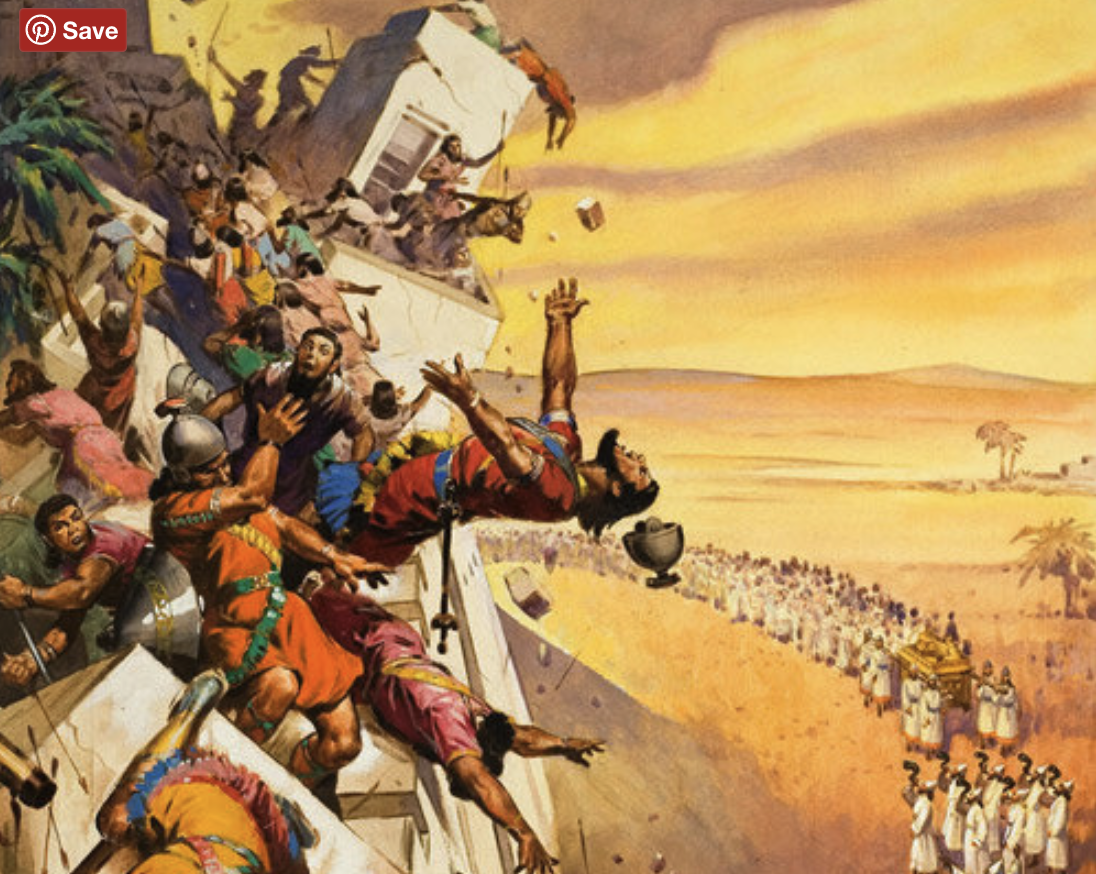
Skeptics seeking to disparage the Bible and, with it, Judaism and Christianity, cite certain passages in the Bible that depict all-out warfare as mandated by God. Consider Israel’s “conquest” of Canaan under Joshua, and a notably bloodthirsty passage like Deuteronomy 20:16-17, which says “you shall save alive nothing that breathes, but you shall utterly destroy them … as the LORD your God has commanded.”

Readers can see how that issue might, to say the least, be relevant to debates about some events in recent decades.

There’s been intriguing recent discussions of this complex issue. Even conservative evangelicals, who defend the Bible’s historical accuracy, are reinterpreting such passages, as we’ll see.

“Etz Hayim: Torah and Commentary,” issued by Judaism’s Conservative branch, freely admits a modern reader “recoils” from a demand to wipe out a population group. It says the context is the Canaanites’ “abhorrent” deeds. Verse 18 goes on to explain combat is necessary so “they may not teach you to do according to all their abominable practices which they have done in the service of their gods.”

Scholarly commentaries think ritual sacrifice of children was a major part of this. The context of such verses is said to be “the Torah’s abiding fear that these pagan nations will lead Israel astray.”

Here’s another part of the context. Risking any military advantage from surprise, Joshua informed Canaanites in advance about the invasion plan so they could flee from bloodshed, and he first offered a peace settlement before resorting to combat. (That was relatively humane for the cruel culture 3,000 years ago.) The same point is underscored by a classic source in Orthodox Judaism, the “Pentateuch & Haftorahs” compiled by Britain’s longtime chief rabbi, J.H. Hertz.

This Orthodox Jewish commentary also observes that the Israelites’ need for a homeland is part of all human history, including for most western nations.


Please respect our Commenting Policy

Attention mass-media leaders: What should Americans know about each others' faiths?

Attention mass-media leaders: What should Americans know about each others' faiths?

America’s three biggest hamburger chains have 27,000 local outlets.

The three biggest of America’s 2,800 or so religious denominations alone have 97,000 local congregations.

Which is to simply remind readers that faiths retain powerful impact in society despite the increase of people with no religious affiliation and other secular inroads.

Relations among major faiths feel especially pertinent in 2023, since Islam’s holy month of Ramadan with concluding Eid festival overlaps Jewish Passover and the two Easter dates observed by Christians.

Zeenat Rahman, executive director of the University of Chicago’s Institute of Politics, thinks American religion is “increasingly polarizing” and yet at the same time is “essential to rebuilding a strong civil society,” which means Americans “need a basic understanding of the faith of others.”

So, in practice what do people know about other major world religions? What should they know?

Those are important questions for regional or national journalists to explore via interviewing, plus polling if your medium has the money. Or consider commissioning brief articles where religious leaders sum up the basics they think others should know about their faiths and — especially helpful — what’s often misunderstood.

How about books? Stephen Wylen accepted this sort of challenge with his self-published “You Should Know This: A Rabbi Explains Christianity to Jews.” For years now, Terry Mattingly has also been recommending this classic by religion-beat veteran Mark Pinsky: “A Jew among the Evangelicals: A Guide for the Perplexed.”

Some standard book publisher should put together a non-sectarian and up-to-date anthology in which experts would depict their own religions for outsiders, including the main internal branches and variants.

Political scientist (and GetReligion contributor) Ryan Burge recently took up these matters, in a Religion News Service analysis, by re-examining 2019 interfaith data from the ubiquitous Pew Research Center.


Please respect our Commenting Policy

Plug-In: The Covenant School shootings -- media coverage focused on guns and victims

Plug-In: The Covenant School shootings -- media coverage focused on guns and victims

Good morning, Weekend Plug-in readers. I wrote Plug-in a day early because headed to Arlington, Texas, for Opening Day, and I’ll be tied up with that important national holiday.

My beloved Texas Rangers open the 2023 season against the Philadelphia Phillies this afternoon. Surely this will be my team’s best season ever!

But first, we focus on the week’s big, tragic and violent news from Covenant Presbyterian Church and its school in Nashville, Tennessee, a city close to my heart.

What To Know: The Big Story

Three children, three adults slain: Once again, a mass shooting at a school shocked all of us and surprised none of us.

At a Wednesday night vigil in Nashville, “Each speaker echoed the names of those who did not return home earlier this week.”

The children who died were Evelyn Dieckhaus, William Kinney and Hallie Scruggs, all 9 years old. The adults who died were Mike Hill, 61; Katherine Koonce, 60; and Cynthia Peak, 61.

The victims were people of strong faith with the children characterized as “feisty” and a “shining light,” according to an Associated Press team, including Nashville-based religion news editor Holly Meyer.

Peaceful day shattered: Monday started with a normal chapel assembly at The Covenant School, a Presbyterian elementary, Christianity Today’s Daniel Silliman and Kate Shellnutt report.

Within a few hours, though, the school, which is all about “celebrating” children, became a killing scene, as Reuters’ Sharon Bernstein describes it.

Traumatized survivors were taken to a nearby Baptist church that served as a reunification site for children and parents, as The Tennessean’s Molly Davis explains.

For ongoing coverage, follow religion reporter, Liam Adams.

Making sense of it: In the face of tragedy, petitioning God is an act of faith, New York Times columnist David French writes.


Please respect our Commenting Policy

New question in the worship wars: Why have many worshippers stopped singing in church?

New question in the worship wars: Why have many worshippers stopped singing in church?

Anyone who has visited a shopping mall understands the Big Idea behind a food court.

"If you want Mexican food, you go here. … If you want pizza, you go over there," said Kenny Lamm, the worship ministry strategist for the Southern Baptist state convention in North Carolina. "Then we sit together and eat whatever we want. …

“The question is whether a food-court approach works if you are seeking unity while leading worship in a church."

In the latest wrinkle in what researchers have long called the "worship wars," some church leaders are asking a blunt question about the decision to trade traditional hymnals for contemporary Christian music. That question: Has the typical Sunday service become a semi-professional concert instead of a communal worship experience for all believers?

As part of his work, Lamm hears from many pastors, musicians and church members. One recent letter -- which he posted while keeping the writer anonymous -- combined many hot-button issues in this debate.

After four weeks of visiting a church, the writer noted that he was constantly distracted during worship by "haze machines," "programmable lights that blind the audience," concert-level darkness in the auditorium, as well as musicians wearing "ball caps," skinny jeans, "Chuck Taylor" tennis shoes and other "stage" apparel.

Many of the new songs seemed to confuse the congregation.

"The melody is unmemorable. Very few in the audience seem to know the songs either; indeed as we looked around during one of the songs, we did not see one person singing -- not one," noted this visitor. "Some of the songs are so high I cannot sing them. I wish the leaders would consider the average singer! … Why does just about every praise and worship song go up an octave and double in volume halfway through, then die back down at the end?"


Please respect our Commenting Policy