Worship

Podcast: Is the Asbury revival a 'news' story? Let's seek journalism advice from Screwtape

Podcast: Is the Asbury revival a 'news' story? Let's seek journalism advice from Screwtape

Throughout this week, I have been following the online reports about the remarkable day-after-day revival gatherings that are taking place at Asbury University in Kentucky.

If you know about Methodist and Holiness movements, it isn’t surprising that this kind of spiritual earthquake would take place — again — at this location (here are some Asbury library resources on the history of earlier revivals).

Years ago, I went to Asbury for a speaking engagement. I noticed that there were tissue boxes placed a regular intervals along the sanctuary prayer rail-kneeling area. In other words, this is a campus in which it is normal for worshippers to kneel in sorrow/joy (often part of the same experience) while offering prayers of petition or repentance. This is part of the spiritual DNA of this community.

While reading social-media offerings about the revival, I also ran regular Google News searches (sample here) to see if journalists — including those at elite publications — have been covering this event.

The pickings have been rather lean, for reasons we discussed during this week’s “Crossroads” podcast (CLICK HERE to tune that in). I found myself, in a kind of time-travel experience, imaging myself attempting to convince a newspaper editor that this mysterious, spiritual outbreak was a BIG. NEWS. STORY.

This led me, believe it or not, straight to “The Screwtape Letters,” by C.S. Lewis, the famous Oxford scholar and Christian apologist. In this classic, global bestseller a master demon writes letters to his nephew Wormwood, an apprentice in need of advice on how to lead a human soul into hell. The relevant text, in my musings on the “news value” of this Asbury revival, is Letter 25. The key passage states:

“The real trouble about the set your patient is living is that it is merely Christianity. … What we want, if men become Christians at all, is to keep them in the state of mind I call ‘Christianity AND.’ You know –– Christianity and the Crisis, Christianity and the New Psychology, Christianity and the New Order, Christianity and Faith Healing, Christianity and Psychical Research, Christianity and Vegetarianism, Christianity and Spelling Reform. If they must be Christians let them at least be Christians with a difference. Substitute for faith itself some Fashion with a Christian colouring.”

In other words, national journalists may be trying to figure out what the “AND” is in this story.
Please respect our Commenting Policy

A modern, urban pastor comes to terms with his backwoods mountain family roots

A modern, urban pastor comes to terms with his backwoods mountain family roots

Growing up in West Virginia, the Rev. Michael Clary always wondered about some of the archaic language his elders used, words like "yonder" and "reckon."

Then he learned that his grandfather -- a steel-mill worker and country preacher -- had memorized the classic King James Bible by listening to tapes during his long drives to the factory. He had a sixth-grade education and, if he couldn't spell something, he could still quote a verse that contained the word and then find it in his Bible.

All that scripture soaked in -- deep. Thus, "I reckon" wasn't just another way to say "probably." It was New Testament language, such as: "For I reckon that the sufferings of this present time are not worthy to be compared with the glory which shall be revealed in us."

These Appalachian roots caused pangs of shame during graduate school, said Clary, who leads Christ the King Church, a Southern Baptist congregation in Cincinnati.

Soon after that, "I was pastoring a fast growing church in an urban environment, and a spirit of elitism had infected us," he wrote, in a Twitter stream that went viral. "The people we felt free to mock were conservative, uneducated, backwoods fundies. … They lacked the theological sophistication and cultural insight I had acquired while doing campus ministry and studying at seminary."

The bottom line: "I had moved on. I was better than them. I was more learned and cultured. I had 'seen the world' and they hadn't."

Clary said he wrote those "words with tears in my eyes." Reached by telephone, he explained that he was facing the kinds of church tensions that arise while defending traditional doctrines in a flock located a few blocks from the University of Cincinnati. It's hard to be "winsome" -- a buzz word today -- while trying to remain faithful in a bitterly divided culture.


Please respect our Commenting Policy

This keeps making news: Why do images of Prophet Muhammad so deeply offend Muslims?

This keeps making news: Why do images of Prophet Muhammad so deeply offend Muslims?

THE QUESTION:

Why do images of the Prophet Muhammad so deeply offend Muslims?

THE RELIGION GUY’S ANSWER:

This issue has erupted unexpectedly at Methodist-related Hamline University in Minnesota. Last October, adjunct art teacher Erika Lopez Prater showed an online class two medieval paintings in which pious Muslims had portrayed the Prophet Muhammad receiving Quran revelations from the angel Gabriel.

Lopez Prater warned Muslim students in advance so they could avert thir eyes. Nonetheless, the president of the Muslim Students Association (MSA) complained that Lopez Prater’s “trigger warning” itself showed she had committed an offense against Islam. Hamline’s President Fayneese Miller called Lopez Prater’s deed “Islamophobic” (she later apologized for that word) and the school decided not to renew the teacher’s contract.

The faculty, alarmed over academic freedom, called January 24 for Miller’s resignation in a lopsided 71 – 12 vote of no confidence. Then in response to that response, 13 leaders from campus groups like the MSA, Student Congress, and diversity committee endorsed Miller’s leadership and accused the faculty of betraying students.

Meanwhile, Lopez Prater is suing the university for defamation and religious discrimination.

Christiane Gruber, a well-known professor of Islamic art at the University of Michigan, entered the fray to defend and explain her Hamline colleague’s classroom behavior in this article at TheConversation.com.

Whatever current scruples, Gruber said, Muslim artists centuries ago did in fact depict Muhammad and both Muslim and non-Muslim art historians regularly teach about this. Paintings of Muhammad are collected at Istanbul’s renowned Topkapi Palace Library, among other places.


Please respect our Commenting Policy

Prayer in the NFL? The powers that be worry about this complex, controversial subject

Prayer in the NFL? The powers that be worry about this complex, controversial subject

Super Bowls create media storms, but many journalists and sports executives thought what happened in 1988 was totally out of bounds.

The establishment was shocked when players and coaches from Denver and Washington, D.C., held a prayer meeting on the eve of this NFL rite. The powers that be worried that "fraternization" of this kind could damage this clash between gridiron warriors.

To make matters worse, players from competing teams soon began kneeling in post-game, on-field prayer huddles as a symbol of unity and, often, shared concerns about injured players. Players waved off league efforts to stop the prayer circles.

"For the NFL, this was a corporate thing," said historian Paul Putz, of Baylor University's Faith & Sports Institute. Executives are "fine with prayer, as long as it isn't tied to anything controversial or a specific brand of religion. …

"The NFL didn't mind prayers that were out of sight, maybe in locker rooms with chaplains. But then things started happening on television. That was too much."

That was then. The electric wave of prayer that swept America after Buffalo Bills safety Damar Hamlin's heart-stopping injury was, he said, a "critical mass" moment and a sign of changing times -- maybe.

The key was that this drama happened on "Monday Night Football," with anguished players from both teams huddled around Hamlin near midfield, many visibly praying, as first responders fought to save his life.

It was natural for broadcasters to acknowledge the explosion of social-media commentary from athletes, coaches and others -- including fervent calls for prayer. All 32 NFL teams soon posted #PrayForDamar appeals.

"We have never seen anything like this before," said Putz. It became clear that it "was OK to tweet messages that went way beyond the usual thoughts and prayers."

The question, added Putz, is what happens next.


Please respect our Commenting Policy

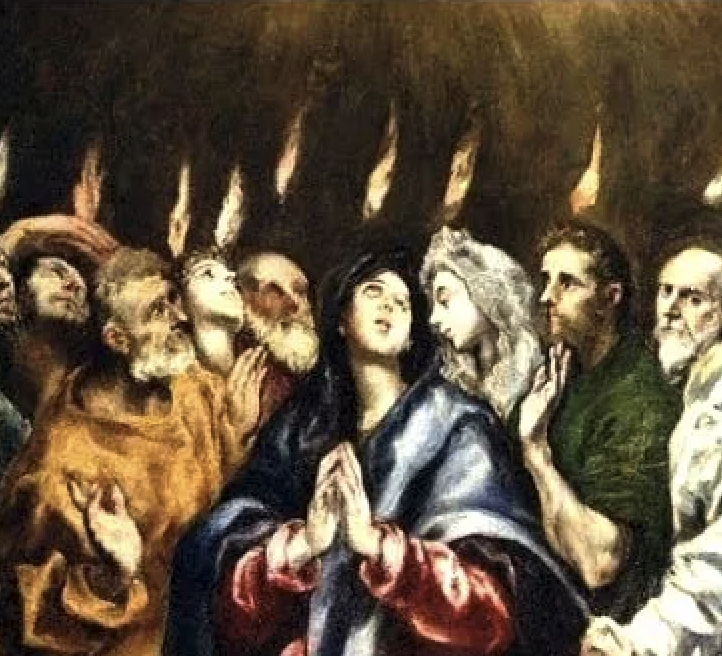
Pentecostalism from soup to nuts: A (near) complete history of this movement in America

Pentecostalism from soup to nuts: A (near) complete history of this movement in America

In early January, The Conversation, an academically oriented website affiliated with Religion News Service, ran an explainer with this headline: “What is Pentecostal Christianity?”

That’s a big, complicated question. While I appreciated the article’s emphasis on how Pentecostals are a little-noticed component in American Christianity, it was very much a Cliffs Notes version of a complex, 123-year-old movement. And it didn’t even mention the Charismatic Renewal movement, a massive spiritual shift in the 1960s that brought millions of mainline Protestants and Roman Catholics into the wider Pentecostal fold.

Pentecostalism has hit the news in recent years with revelations of the “Trump prophets,” but their rise has a long back story that few journalists understand. For many years, pentecostals have been seen as evangelicalism’s crazy sister and media coverage has hardly been incisive.

Thus, tmatt suggested that we post the following comprehensive look at the history of the movement here in the United States. I wrote this as a backgrounder for a meeting of religion reporters at the University of Maryland in 2000. I have updated it twice because the movement keeps on shifting. Some of this will sound very basic, but it’s important to know who the main players have been.

———

Without a doubt, the portion of Christianity known as Pentecostalism was — by far — the fastest-growing movement of the 20th century, going from zero members on Jan. 1, 1901 to 644 million adherents worldwide now. It is the primary expression of Christianity in the Global South. It is the one form of Christianity to mount a serious challenge to the growth of Islam, mainly because of its appeal to the very poor and its reliance on the miraculous.

During my travels in places like India and Egypt years ago, I was told by religious leaders that the heavy hitters in evangelism in Hindu and Muslim contexts were the Pentecostals. When I was in Israel researching a piece on the country’s messianic Jews, my sources told me half of them, at least, were charismatic. The world’s largest churches in Korea and Nigeria are Pentecostal.


Please respect our Commenting Policy

News hooks abound: How will religious faith shape the 'birth dearth,' and vice versa?

News hooks abound: How will religious faith shape the 'birth dearth,' and vice versa?

Two January headlines a week apart signal that the past generation’s “population explosion” worries have reversed.

Observers fretted as China announced its population began to shrink last year as its birth rate reached a record low. Japan’s Prime Minister Fumio Kishida warned parliament that a declining birth rate means the rapidly aging nation is “on the verge of whether we can continue to function as a society.”

Then last Saturday a New York Times op-ed asserted that unfair burdens on wives and mothers created a “birth strike” and “marriage strike” that are “killing South Korea.” The nation has posted the world’s lowest fertility rate the past three years and deaths now outnumber births.

Such realities provoked the ever-interesting Times columnist Ross Douthat to ask whether “the defining challenge of the 21st Century” will be climate change decried by so many analysts or, instead, the globe’s accumulating “birth dearth” a.k.a. “baby bust” or “population implosion.”

The second trend could well undercut societies’ “dynamism and innovation” and pit “a swollen retired population” against the “overburdened young,” he warned, while listing geopolitical factors in the coming “age of demographic decadence.”

Attention newsroom managers: This is an apt time for media to consider U.S.-focused big-think pieces on how religious communities are shaping population trends and, vice versa, how those trends affect religion.

Pro-procreation government programs appear to have limited impact in boosting birth rates, which instead reflect cultural values regarding marriage and children, and complex individual decision-making. . Articles might examine related abortion policy.

Traditionally, all religions cherish children and favor reproduction, notably in the case of the Catholic Church, as The Guy discussed here a year ago (though today there’s little difference in fertility between U.S. Catholics and Protestants). On the other side of that equation, there’s universal acknowledgment that married couples raising children have been a pivotal constituency drawn to religious involvement.


Please respect our Commenting Policy

Tradition, custom, religious law: How should worn-out Bibles or Qurans be disposed of?

Tradition, custom, religious law: How should worn-out Bibles or Qurans be disposed of?

THE QUESTION:

How should worn-out Bibles or Qurans be disposed of?

THE RELIGION GUY’S ANSWER:

Due to occasional news about Muslim riots when a copy of the Quran is believed to be mistreated, you’re probably aware that Islam takes very seriously the way its sacred book is handled, about which more below.

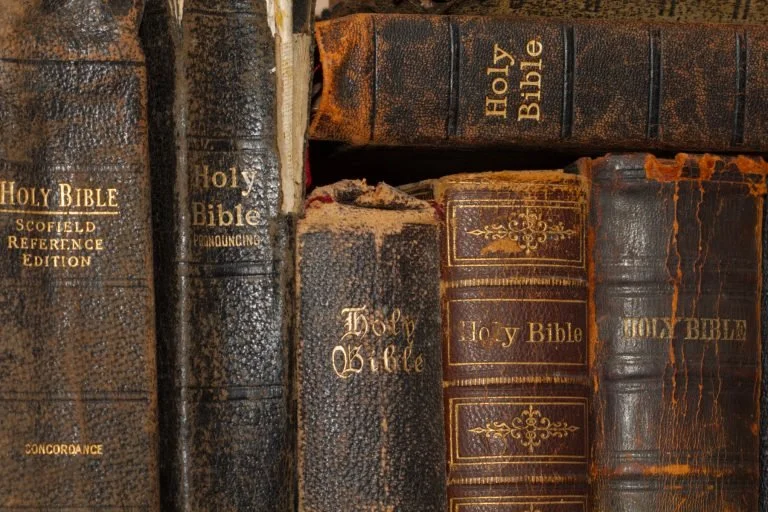
But The Guy has rarely if ever heard of such discussion about a printed Bible and therefore was intrigued this past week when Joe Carter (a GetReligion alumnus) responded online on behalf of the Gospel Coalition to a reader who asked, “How do you dispose of a worn-out Bible? Is there a protocol like with a flag?”

As the question indicated, federal law states that an American flag “in such condition that it is no longer a fitting emblem for display should be destroyed in a dignified way, preferably by burning.” Patriotic groups often provide public boxes to collect discarded flags that are then burned in formal ceremonies.

As for the Bible, the book itself contains no rules on proper disposal, so the Coalition regards this as “a matter of personal preference.” But many people naturally feel that respect for Scripture rules out simply tossing the holy book into the trash alongside cookie wrappers and egg shells.

As a conservative Protestant resource, the Coalition warns against any “unconscious sense that the printed pages of a Bible gain something of the spiritual essence of God’s Word,” which “could easily slip into a superstitious, or even idolatrous, view of print Bibles.”


Please respect our Commenting Policy

Podcast: 60 Minutes visits Lourdes and asks (some) very good questions about 'miracles'

Podcast: 60 Minutes visits Lourdes and asks (some) very good questions about 'miracles'

Back in the 1980s, I wrote a profile of a remarkable Episcopal priest in Colorado who was approaching his 100th birthday. He had been raised in pre-World War II Japan — the son of a samurai.

As a young man he became terribly ill and slipped into a coma. At one point, doctors said he flatlined — but they were able to restart his heart. When he awakened, he reported having a near-death experience in which a man in white robes told him that he would live and that there was much work for him to do.

The young man knew almost nothing about Christianity, other than a brief exposure to the New Testament in an English-language class. Nevertheless, he truly believed that this man was Jesus. This led to his conversion, the priesthood and a journey to America. During the war, the U.S. government put him in an internment camp — a painful episode in a long and amazing life.

Now, here is a question linked to this week’s “Crossroads” podcast (CLICK HERE to tune that in). Was this man’s transformation during his NDE a “miracle”? That was the term he used when he described it.

Actually, his vision took place during a life-and-death medical drama that was unusual — but these things happen. Was there a way to test his claims in a laboratory? No. Near-death experiences happen.

What is a “miracle,” anyway? This brings us to a recent 60 Minutes report that, on the CBS website, was given this headline: “France's Sanctuary of Our Lady of Lourdes — Where 70 medical miracles have been recognized by church officials.”

This must-see-TV report ventures into complicated territory where faith, science and centuries of church tradition overlap. The best thing about it is that it allows people to share their beliefs as well as information that, well, can be studied in a laboratory. The visuals are stunning, as thousands of pilgrims visit the site seeking healing for infirmities of body, mind and soul.

The Roman Catholic Church has, in the 160-year history of Lourdes pilgrimages, studied thousands of reports about miracles linked to the shrine. This brings us to the heart of this report:

Stories of inner peace and acceptance don't meet the bar for the Office of Medical Observations, and with just 70 medical miracles recognized in 160 years, you'd have better odds playing the lotto. Yet, thousands of faithful line up at the baths and at this grotto — where the first miracle is said to have occured.


Please respect our Commenting Policy

Cardinal Pell's death puts spotlight on his words and arguments about Catholicism's future

Cardinal Pell's death puts spotlight on his words and arguments about Catholicism's future

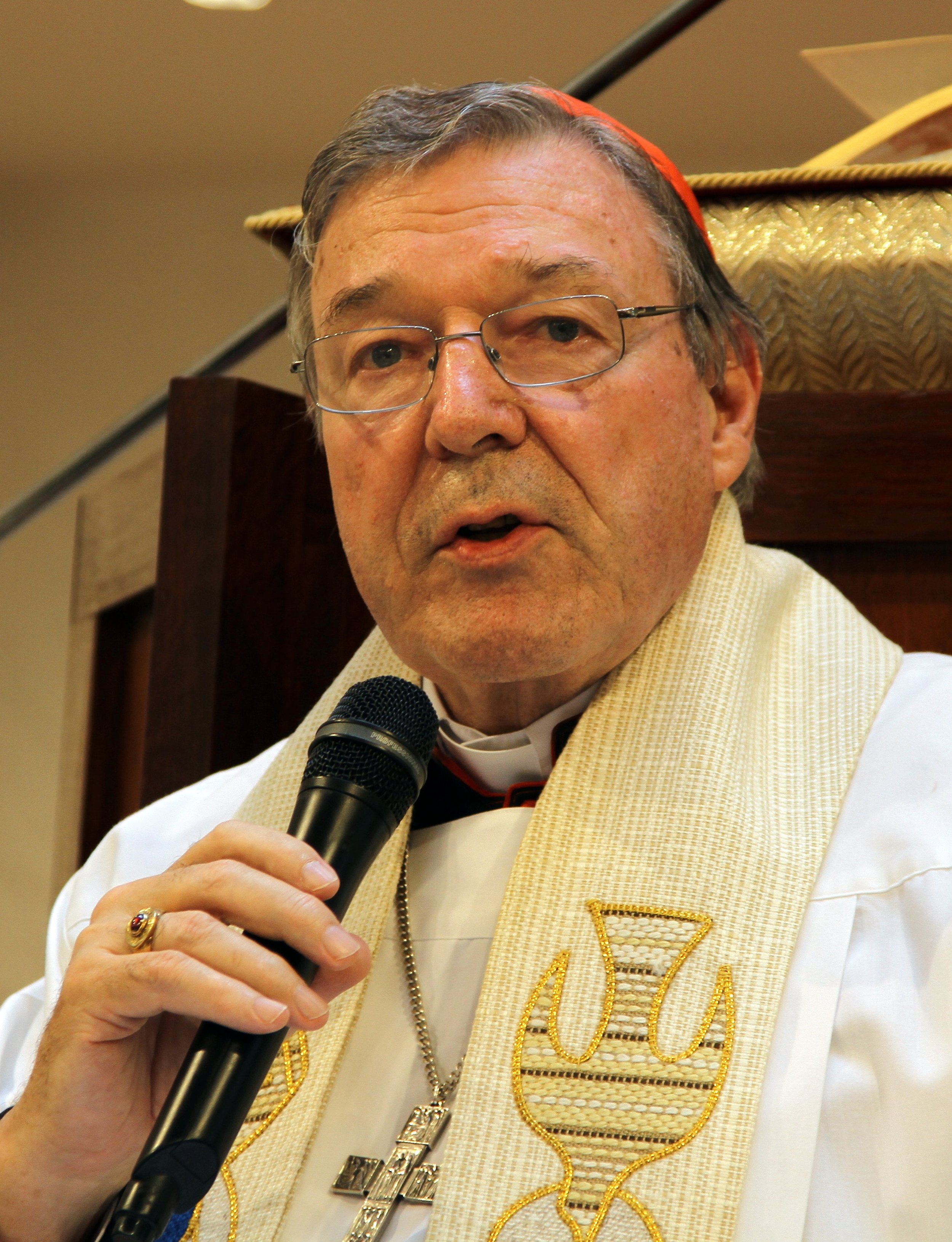
The Catholic church recently lost a giant. The death of Cardinal George Pell on Jan. 10 at the age of 81 was the literal loss of a giant — he stood at a towering 6-foot-6 and was once an Australian Rules Football player in his youth. But he was also a man who attracted both controversy and consternation.

Many remember Pell for what took place in the last chapter of his life — that of being found guilty of child sexual abuse in 2018. The cardinal won on appeal two years later, the convictions quashed by Australia’s High Court.

Pell also had some very real disagreements with Pope Francis regarding theology and the direction of the church in recent years — something that earned him headlines after his death calling him “divisive” and “controversial.”

Nearly two weeks after his death, Pell continues to be written about in both the secular and Catholic press. A lot of this coverage has been thin on reporting and loaded with commentary, conjecture and analysis. In fact, Pell’s death wasn’t only a reflection of the past, but where the church is headed in the future and what Francis’ papacy means.

It’s within this context — and some of the juicier revelations to come out once Pell died — that has kept journalists busy. Once again, the coverage is skewed heavily towards familiar arguments whether the church should stay true to beliefs regarding marriage and sex that go back 2,000 years or look to the future in order to mesh with the mores of the present.

It is through that prism that Pell has received coverage, especially after a secret memo Pell had penned was made public just days after his death.


Please respect our Commenting Policy