Worship

Podcast: Talking fetus scene in 'Blonde' has created another media storm about abortion

Podcast: Talking fetus scene in 'Blonde' has created another media storm about abortion

Ask any pastor about times when Americans tend to take stock of their religious commitments and it’s likely you will hear something like the following.

For most people, but especially for those who are married or/or have children, there are obvious gateways from one stage of life to another and, frequently, there are religious teachings and rites that go with them. Think birth, baptism, marriage, children, aging and, finally, death. In many lives, there are moments of conversion or doubt, as well as life-threatening illnesses and tragedies. Divorce? Broken relationships with children? Yes, more symbolic gates.

Clergy know they will have to help women and men deal with these gates. I have always argued, in discussions with editors, that these gateways are often linked to important trends and news events. Changing a prayerbook or hymnal, for example, may threaten doctrines and symbols that, for the devout, are linked to rites that frame these life events.

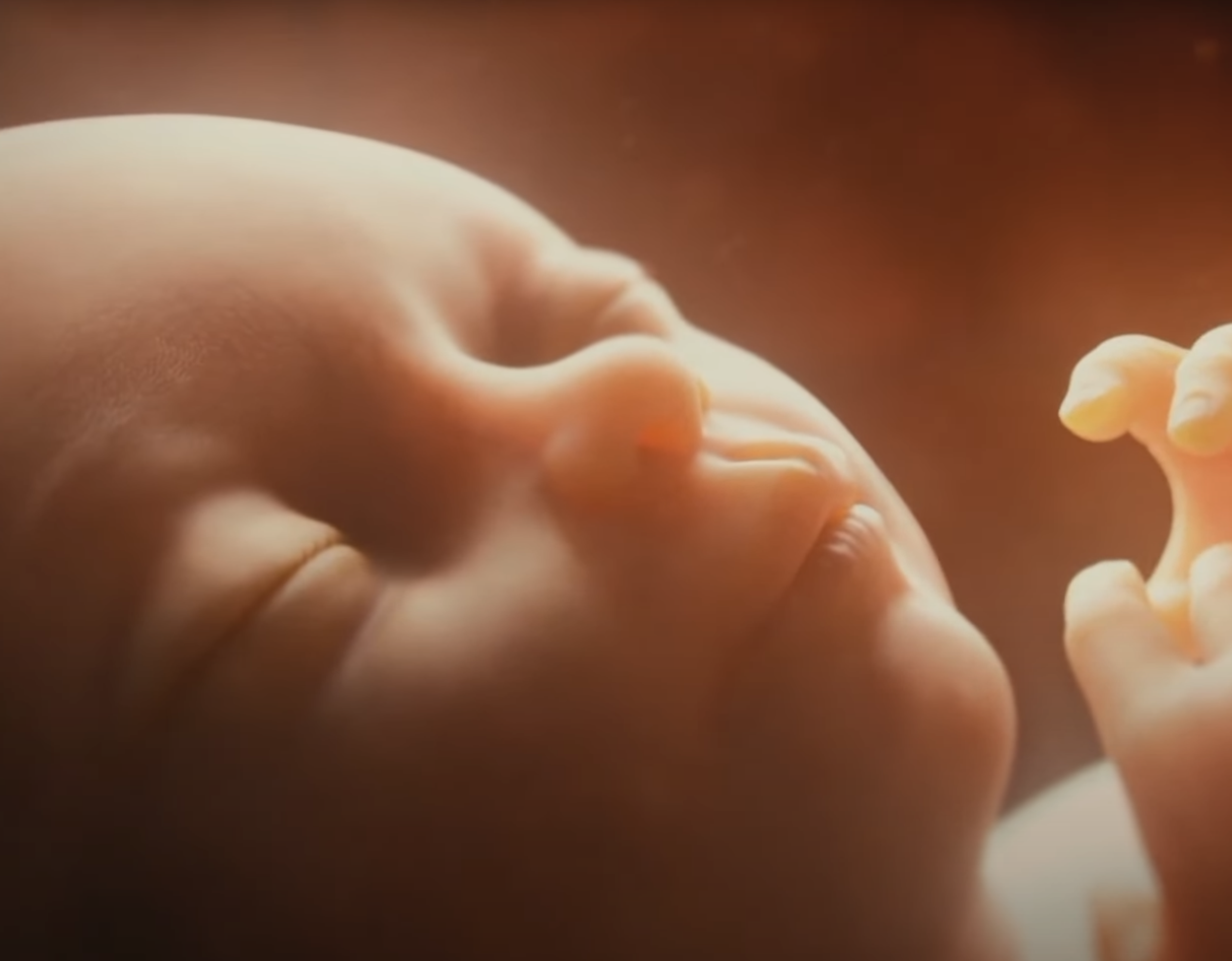
This brings us to this week’s “Crossroads” podcast (CLICK HERE to tune that in), which focuses on some news and commentary about the life of one of Hollywood’s greatest superstars — Marilyn Monroe. The problem is that the controversial, lurid new movie “Blonde” includes events and images that clearly link abortion to other life-defining events, especially horrors such as rape and other forms of sexual and emotional abuse.

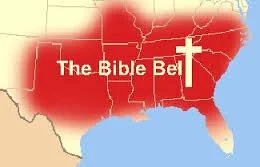
Abortion can lead to grief and may be viewed as a form of violence against women? That pushes several hot buttons at the same time, and not just for right-wing Christians in the Bible Belt. Consider the symbolism of mourners visiting the famous Garden of Unborn Children in Japan.

As always, let me stress that abortion is a topic that, for many, raises religious issues — as well as moral, legal and political questions. This raises challenges for journalists and artists alike.

First, let’s look at the obvious news hook — that Planned Parenthood officials needed to react to this brutal NC-17 movie, a flick that is creating Oscar buzz surrounding the work of actress Ana de Armas.

The headline at The Hollywood Reporter proclaims, “Planned Parenthood: ‘Blonde’ Is “Anti-Abortion Propaganda.”

Please respect our Commenting Policy

Loretta Lynn: A tough, trailblazing woman whose edgy art included doses of grit and faith

Loretta Lynn: A tough, trailblazing woman whose edgy art included doses of grit and faith

If you know Nashville, then you probably know that there is nothing new about major country music stars also being Christian believers. In fact, it’s probably worthy of a headline or two if and when superstars send signals that they’re NOT at home in the Bible Belt.

That being said, I am still amazed when journalists produce stories about country artists and edit out the details in their lives and music that point toward faith. It happens all the time.

I’m not just talking about musicians putting a gospel song or two in their set lists when touring, as a kind of music-history exercise. I’m talking about reporters missing revelations in autobiographies, social-media statements to fans or mini-sermons on stage. I’m talking about passing up chances to talk with pastors who have known performers for years.

This brings me to the death of honky-tonk angel herself, Loretta Lynn — the matriarch for a generation or more of female artists in guitar town. As you would expect, the obits following her death stressed — with good cause, let me stress — her daring hit songs about blue-collar American life, with strong doses of reality about hard times, troubled homes, cracked marriages and lots of other sobering subjects.

Which is why, to cut to the chase, it’s even more important that this legend turned to Christian faith as an adult, in the midst of all that gritty stuff. Hold that thought. Here is a chunk of the Associated Press report that will appear in most American newspapers:

The Country Music Hall of Famer wrote fearlessly about sex and love, cheating husbands, divorce and birth control and sometimes got in trouble with radio programmers for material from which even rock performers once shied away.

Her biggest hits came in the 1960s and ’70s, including “Coal Miner’s Daughter,” “You Ain’t Woman Enough,” “The Pill,” “Don’t Come Home a Drinkin’ (With Lovin’ on Your Mind),” “Rated X” and “You’re Looking at Country.” ...

Lynn knew that her songs were trailblazing, especially for country music, but she was just writing the truth that so many rural women like her experienced.

“I could see that other women was goin’ through the same thing, ‘cause I worked the clubs. I wasn’t the only one that was livin’ that life and I’m not the only one that’s gonna be livin’ today what I’m writin’,” she told The AP in 1995.

All true.


Please respect our Commenting Policy

This just in! Southern Baptists are still very conservative on issues of marriage and sex!

This just in! Southern Baptists are still very conservative on issues of marriage and sex!

Let’s face it, it’s rather hard for a congregation to be “removed from fellowship” — that’s Baptist-ese for “kicked out” — from the Southern Baptist Convention.

After all, are we talking about ties being cut to the local association, a state convention (some states, for doctrinal reasons, have more than one) or the various programs linked to the national SBC? Then there are, for extra-conservative or extra-progressive congregations, alternative “fellowship” networks that have their own vague relationships with the larger SBC ship.

Finally, if a church is “removed from fellowship” and any or all of these levels of voluntary association, it may simply become an independent autonomous Baptist church, as opposed to an autonomous SBC church. Most local folks will never know the difference and independent, often nondenominational, congregations are the fastest growing sector of American religious life.

But if you dig into the Google search in my first paragraph, you will see that churches have been pushed out the exit door of SBC life for several reasons and that this is nothing new. However, it is true that these churches are being kicked out for reasons that many (not all) journalists may consider more worthy of coverage than others. Think “politics.”

Consider this summary material from a New York Times piece last year that ran with this headline: “Southern Baptists Expel 2 Churches Over Sex Abuse and 2 for L.G.B.T.Q. Inclusion.”

The Southern Baptist Convention is the nation’s largest Protestant denomination and has been increasingly divided in recent years over a variety of cultural and political issues, including racism, sexuality and white evangelicals’ embrace of former President Donald J. Trump. …

[A]n increasingly influential conservative wing of the denomination accuses those leaders of prioritizing “social justice” over biblical truth. They denounce the encroachment of “critical race theory” — an academic framework intended to capture the deep influence of racism — and accuse the S.B.C.’s national leadership of being out of step with the rank and file.

It’s pretty easy to spot the subjects that would leap into headlines, right?

There is, for example, nothing new about “progressive” Baptist congregations veering to the doctrinal left on issues linked to gender and sexuality.


Please respect our Commenting Policy

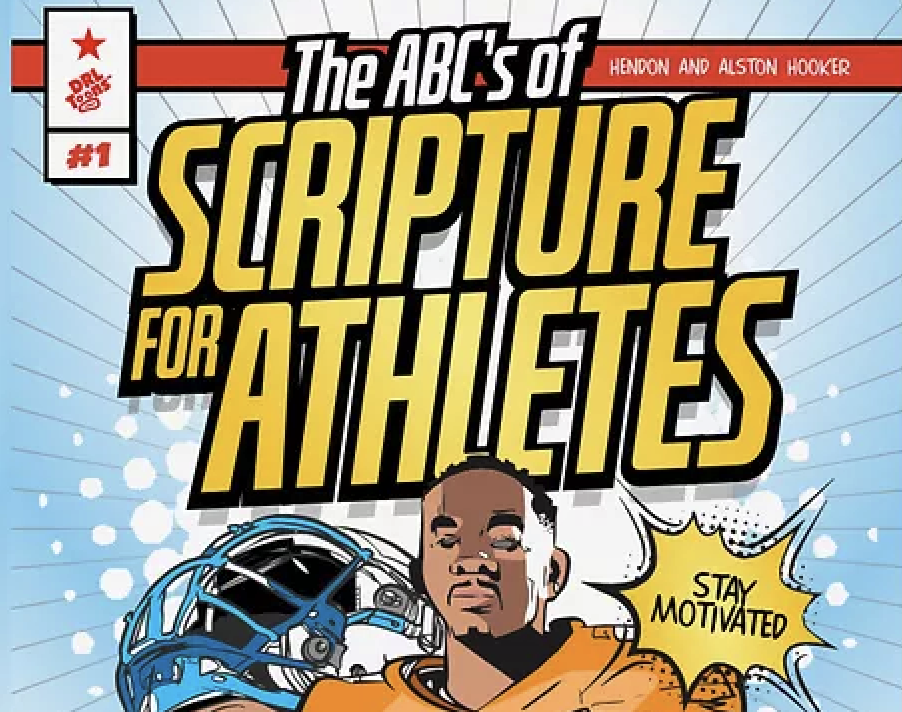
It's hard to miss the facts about faith, and scripture, in Tennessee QB Hendon Hooker's life

It's hard to miss the facts about faith, and scripture, in Tennessee QB Hendon Hooker's life

This post has nothing to do with the game in which the University of Tennessee Volunteers hung on to defeat the Gators of the University of Florida (click here for highlights).

Well, there is some connection. But the goal here is, once again, to urge sports journalists to listen to what many athletes have to say when asked questions about what makes them tick — as people and as leaders in their sports communities. I’ve written a hundred or so posts (it seems) on this subject during the past 18 years or so.

Consider this a refresher memo on that topic, since Vols senior quarterback Hendon Hooker — after the post-game shows this past weekend — has officially entered the Heisman Trophy chatter zone.

In this case, Hooker isn’t the stereotypical athlete who uses vague God-talk during sideline interviews or in his post-game press conferences. While that kind of language can be important, I have always thought that journalists need to look for deeper signs of faith — in friendships, family ties and concrete actions in daily life.

Thus, let me note a story of two in East Tennessee media that spotted crucial faith facts about this calm, steady quarterback and worked them into a sports-page basic — the pre-game rituals feature. The headline at the Knoxville News Sentinel read: “How Hendon Hooker will calm his nerves before Tennessee football plays Florida.” The faith issue even made it into the overture:

Neyland Stadium will be rocking before Tennessee football plays Florida … , but Hendon Hooker will go into slow-jam mode and lean on his faith.

ESPN’s College Gameday will rev up the crowd. Checker Neyland will create quite a scene. And the sellout crowd will shake the stadium moments before the Vols run through the Power T.

A few lines later there is this basic quote:

“I just go into meditation mode and put my gospel playlist on,” Hooker said Monday. “I really just listen to a lot of slow jams and really just relax. I kind of go through the locker room and dap up everyone, just to make sure that I’m ready to roll. And they give me the reassurance back by the look in their eyes that they’re ready to roll too.”


Please respect our Commenting Policy

Plug-In: Ties the bind -- Elizabeth II wove threads of faith and family into her funeral rites

Plug-In: Ties the bind -- Elizabeth II wove threads of faith and family into her funeral rites

In a previous Plug-in, we highlighted the importance of Queen Elizabeth II’s Christian faith in her life.

The 96-year-old monarch’s funeral rites certainly reflected that.

The Guardian’s Harriet Sherwood explains:

The powerful liturgy and rituals of the Church of England – the established church since the 16th century but increasingly marginalised in everyday life – were at the heart of a ceremony watched by billions around the world.

The Queen’s funeral took place under the magnificent gothic arches of Westminster Abbey, the setting for every coronation since 1066, home to the tombs of kings and queens, and the church where the then Princess Elizabeth was married in 1947.

The service was taken from the 1662 Book of Common Prayer, the C of E’s official prayerbook, noted for its beautiful and archaic language but largely displaced in recent decades by those seeking a more modern style of worship.

The Queen was said to be devoted to the Book of Common Prayer, along with the hymns and readings chosen personally by the monarch for her funeral.

The Washington Times’ Mark A. Kellner offers additional details:

“Few leaders have received the outpouring of love we have seen,” Archbishop of Canterbury Justin Welby said during the state funeral. “Her Late Majesty’s example was not set through her position or her ambition, but through whom she followed.”

Archbishop Welby said the queen, who reigned for 70 years and celebrated her Platinum Jubilee in June, modeled the servant leadership expressed in the life of Jesus, her savior.

“People of loving service are rare in any walk of life,” he said. “Leaders of loving service are still rarer. But in all cases, those who serve will be loved and remembered when those who cling to power and privileges are long forgotten.”

At the National Catholic Register, Father Raymond J. de Souza characterizes the queen’s state funeral this way:


Please respect our Commenting Policy

'Till we cast our crowns before Thee' -- ties that bind in last rites for Queen Elizabeth II

'Till we cast our crowns before Thee' -- ties that bind in last rites for Queen Elizabeth II

During the private funeral of her husband, Queen Elizabeth II sat alone near the St. George's Chapel altar, socially distanced from her family and wearing a black pandemic mask.

This searing portrait of grief moved viewers worldwide. And as Prince Philip's casket was lowered into the Windsor Castle vault, singers chanted the Kontakion of the Departed, a tie to his Orthodox roots in Greece.

“Give rest, O Christ, to thy servant with thy saints," they sang, "where sorrow and pain are no more; neither sighing but life everlasting. … All we go down to the dust; and weeping o'er the grave we make our song: Alleluia, alleluia, alleluia."

Only 18 months later, Queen Elizabeth requested the same chant, in the same chapel. This time it marked the start of the committal liturgy which closed a 10-day wave of statecraft, vigils, memorials and processions preceding the majestic state funeral.

The queen's final, intimate Windsor Castle service began where her husband's had ended, as if one rite was flowing into another.

"Queen Elizabeth was one of those people in this mortal life who always thought ahead," said David Lyle Jeffrey, distinguished senior fellow at the Institute for Studies in Religion at Baylor University. When preparing these rites, the queen was "clearly looking for prayers, scriptures and hymns that made connections she wanted to make for her family, her people and the world. … I think she succeeded brilliantly."

An Anglican from Canada, Jeffrey said the events closing the queen's historic 70-year reign were an appropriate time to explore the "essence of her admirable Christian character." Thus, the retired literature professor wrote a poem after her death -- "Regina Exemplaris (An exemplary queen)" -- saluting her steady, consistent faith. It ended with:


Please respect our Commenting Policy

Ryan Burge at RNS: Thinking about the impact of political sermons, on left and right

Ryan Burge at RNS: Thinking about the impact of political sermons, on left and right

Hey churchgoers: How long has it been since you heard a political sermon?

Wait. We need to pause and discuss what a political sermon might sound like. For example, I think everyone would agree that an open endorsement of a political candidate from the pulpit would be “political.”

But what if a congregation or a denomination invited a political leader to speak in a worship service or some other event? This is something that happens on the political left and right. For generations, to name one example, Democrats have accepted warm, strategic invitations to speak — or perhaps simply exchange greetings — in African-American churches. It makes headlines when GOP leaders address major evangelical bodies (think Vice President Mike Pence and the Southern Baptist Convention).

More questions: What if a bishop or a preacher addresses issues that are clearly both doctrinal AND political, such as right-to-life concerns or threats to the environment? What about a conference focusing on ways religious groups can defend First Amendment rights, such as freedom of speech, freedom of association and freedom of religious practice? Is a liberal rally on abortion more “theocratic” than one organized by believers on the doctrinal right?

I ask these questions because of a piece GetReligion contributor Ryan Burge, he of the omnipresent charts and info on Twitter, wrote for Religion News Service. Here’s the newsy headline “When preachers get political, do they change minds? Preachers tend to risk political speech only when they know it will receive a warm reception.” The overture:

One of the most important and difficult questions among those who study religion and politics is just how important a pastor, rabbi, imam or other religious leader is when it comes to shaping the worldviews of their congregation. These figures get a weekly chance to dominate the attention of the people who come to listen to their sermons. They have a nearly unique opportunity to mold their congregants’ view of the theological, social and political world around them.

How often do pastors actually use that opportunity to speak out about the pressing issues of the day? Some new data gives us a look.

A Pew Research Center poll fielded in March of 2021 asked people if they had heard sermons that contained references to the fallout from the 2020 presidential election in the previous month. The survey asked about four topics specifically: the possibility that the 2020 election was rigged, former President Donald Trump’s inaccurate statements about election fraud, as well as support for or opposition to those who stormed the U.S. Capitol on Jan. 6, 2021.

That is certainly a rather Donald Trump-era dominated list, but that reflects several years of headlines. Meanwhile, it’s safe to say that President Joe Biden is in the White House, in large part, because of support from voters in Black churches during several primaries. But I digress.


Please respect our Commenting Policy

Question for journalists to mull: What will America's religious life look like in 50 years?

Question for journalists to mull: What will America's religious life look like in 50 years?

Scribes in the U.S. press snapped to attention last year when the Gallup Poll announced that as of 2020 less than half of Americans held religious memberships for the first time in its eight decades of asking the question. Only 47% of Americans said they belonged to a church, synagogue, mosque or other house of worship, a dramatic loss from the 70% as recently as 1999.

Now comes the Pew Research Center with a related pulse-pounder issued last week.

Pew figures that currently 64% of Americans (including children) identify as Christians in some sense, compared with 6% for other religions and a hefty 30% for “nones” and “nothing in particulars” — those without religious affiliation. Then we’re told that 50 years from now the Christian percentage may well fall to a modest 54% or even to a remarkable 35% in the worst-case scenario, while the non-religious population rises to somewhere between 34% and a slim majority of 52%.

Understandably, the Pew numbers became spot news for, among others, CBS, National Public Radio, the Washington Examiner and Washington Post, both newspapers in faith-focused Salt Lake City, USA Today, Britain’s The Guardian and a host of religious outlets.

This remains a good spot story for media that haven’t yet reported Pew’s basics. But even media that have reported the topline numbers could return to the theme with illustrative anecdotes and reactions from area religious leaders. And for sure journalists and religious analysts will want to give the full report some careful thought.

Pew emphasizes that its numbers are only “possibilities,” not “predictions of what will happen,” and comments that such a future would have “far-reaching consequences for politics, family life and civil society.” For example, also consider the multiple social science surveys that associate religious involvement with psychological and medical well-being and positive life outcomes for youths. Also, there is the impact of religious charity, not only effective huge organizations but private person-to-person interactions. Also, religions strengthen community in our “Bowling Alone” culture.

Pew calculated four future scenarios based largely upon the rates at which Americans may switch in or out of Christian identification and in or out of religious “none” status.


Please respect our Commenting Policy