Worship

Shia LeBeouf converts to Catholicism: News coverage -- good and bad -- focuses on redemption

Shia LeBeouf converts to Catholicism: News coverage -- good and bad -- focuses on redemption

Celebrity news coverage and religion couldn’t be more polar opposites most of the time. Coverage of actors, models and others in the entertainment industry often resembles a list for the seven deadly sins.

Every so often, the world of celebrity and faith intersect. When they do, the mainstream press doesn’t know what to do with it, creating tone-deaf coverage similar to sports stories containing what GetReligion has long called religion “ghosts.”

Meanwhile, the religious press — I’m referring to Catholic media in this case — love to jump on this kind of story. This has certainly been the case with actor Shia LaBeouf this summer and public statements regarding his conversion to Catholicism.

It’s a textbook case of the mainstream press largely ignoring such an announcement, while the Catholic press can’t get enough of it. When the mainstream press did cover LaBeouf’s interview, it was in the context of his troubled personal life. For some journalists in the Catholic press, he became a poster child for upholding tradition and the Latin Mass against the more progressive forces in the church.

Depending on who and what you read, LeBeouf’s conversion story is either a farce, something to be celebrated or something to be feared.

LaBeouf, like many in his profession, does interviews primarily to promote specific movies and their careers overall. While promoting his new film “Padre Pio,” which premiered at the Venice International Film Festival, LaBeouf announced that he had converted to Catholicism. The movie is based on the life of Padre Pio, an Italian Franciscan Capuchin friar famous for exhibiting stigmata most of his life. He was canonized as a saint by Pope John Paul II in 2002.

The former “Transformers” star made it known that he was now a practicing Catholic during an Aug. 25 appearance on Bishop Robert Barron’s show “Conversations at the Crossroads.” The YouTube link alone has generated over 1.3 million views.

Here is where the celebrity news coverage got interesting.

Please respect our Commenting Policy

Bonus podcast: Return of hot debates about ancient Psalms vs. contemporary praise hits

Bonus podcast: Return of hot debates about ancient Psalms vs. contemporary praise hits

Here is a truth that many religion-beat professionals (a) haven’t really thought through or (b) they totally get it, but their editors do not.

Obviously, churches from coast to coast and around the world are engaged in heated debates, if not outright financial wars, about centuries of church teachings about marriage and sexuality. This makes headlines. These battles often reach the local level (ask United Methodists and, previously, Episcopalians).

Editors like that, since these battles can be framed as “politics.”

But there is another subject that frequently causes divisions in the pews (or megachurch folding chairs) — music. These battles rarely make headlines, even though they stir deep emotions between various generations of believers. In recent decades, this has led to discussions of “worship wars.”

I recently wrote a column — “Open Bible to Psalms: What messages are seen there, but not in modern praise music?” — that was, shall we say, “worship wars” adjacent. This led to me being invited as a guest on the national “Connections” podcast, with hosts Mike Thom and Colleen Houde. If you want to listen to that, CLICK HERE.

During that discussion I mentioned that I had another column coming up that was related to this subject. It later appeared with this headline: “Hillbilly Thomists — Dominicans tracing their roots into Appalachian music and faith.”

But the Psalms column was the hook for the podcast and it didn’t take long to veer into “worship wars” territory and the subject of commercialized music in the modern church. That made me flash back a decade-plus to a column with this headline: “FM radio reality in church.”

Maybe the best way to intro this bonus podcast is simply to reprint that column. So here goes.

The clock is ticking and soon Jeff Crandall while face the challenge of selecting the right music for the Christmas services at High Desert Church.

This will be tricky, because Christmas is what the 70-member staff at this megachurch calls a "federal" event.


Please respect our Commenting Policy

Sam Harris take jab at those who believe in heaven: Maybe listen to some ancient voices?

Sam Harris take jab at those who believe in heaven: Maybe listen to some ancient voices?

When cosmonaut Yuri Gagarin returned to earth in 1961, after the first manned spaceflight, Soviet leaders claimed he said: "I went up to space, but I didn't encounter God."

Venturing into similar territory, superstar atheist Sam Harris rocked cyberspace during a recent Triggernometry YouTube appearance in which he discussed Donald Trump, faith elements in "wokeness" and the flocks of Americans who insist on believing in heaven.

Political Twitter screamed when he said there was "a left-wing conspiracy to deny the presidency to Donald Trump. … Absolutely, but I think it was warranted."

But comedians Konstantin Kisin and Francis Foster pushed back, asking if Harris was justifying moral relativism. Perhaps today's truth wars, the Triggernometry team suggested, were linked to a famous G.K. Chesterton quip: "When men choose not to believe in God, they do not thereafter believe in nothing, they then become capable of believing in anything."

During the ensuing discussion, Harris offered another viral soundbite: "Where is heaven, exactly, given that we have multiple telescopes up there beaming back tens of billions of years' worth of information?" Yet millions of Americans still embrace the supernatural claims of an ancient faith, including that Jesus will return to "raise the living and the dead."

"You'd be surprised by the number of percent of sober, non-Bible-thumping people who would say 'yes' to that question," he said. "They might be Christian, they might be, listen, 'I love the Bible. It gives me a great moral framework. It gives my kids a great moral framework. This is the tradition I'm identified with. This is all super important to me' -- but that's kind of as far as it goes. Right? Like, I'm not going to make magical claims about flying saviors who are literally going to come down from … heaven."

While the Twitter masses raged, the French-Canadian iconographer and writer Jonathan Pageau recorded a video essay on his "The Symbolic World" channel about why materialists and religious believers keep debating the meaning of terms such as "heaven" and "earth."


Please respect our Commenting Policy

Podcast: Why are churches closing? There are many forces at work, but doctrine still matters

Podcast: Why are churches closing? There are many forces at work, but doctrine still matters

For years, there was a simple answer to the old question: Why do some churches grow, while others shrink?

You simply bought a copy of the 1972 book “Why Conservative Churches Are Growing: A Study in Sociology of Religion” by the late National Council of Churches leader Dean M. Kelley and that provided information answering lots (but not all) of the big questions. It was crucial that this groundbreaking book was written by a mainline Protestant insider, as opposed to a Southern Baptist or Assemblies of God leader.

Of course, everyone knew that some churches grew because of location, location, location. Also, there were always a few liberal churches that grew because of talented preachers or other strengths. Like I said: Kelley answered lots of church-decline questions, but not all of them.

What about 2022 in post-pandemic church life? For starters, many churches will never be post-pandemic — because many congregations (and maybe denominations or communions) were changed forever and we will see more evidence of that in the next few years.

All of this is an overture to this week’s “Crossroads” podcast (CLICK HERE to tune that in) which focuses on a must-read feature story by Godbeat veteran Bob Smietana. The headline at Religion News Service: “For a small Chicago church, closing down was an act of faith.” This was a personal, heartfelt story for Smietana, since this was a congregation that he once called home.

Like so many pastors around the United States, the Rev. Amanda Olson has kept one eye on the Bible and another on the evolving religious landscape.

She knew change was coming to the church in America.

Yet she hoped her congregation might be spared the worst of it.

“Everyone thinks that churches are going to close,” said Olson, the longtime pastor of Grace Evangelical Covenant Church on Chicago’s North Side. “But nobody thinks it is going to be their church.”


Please respect our Commenting Policy

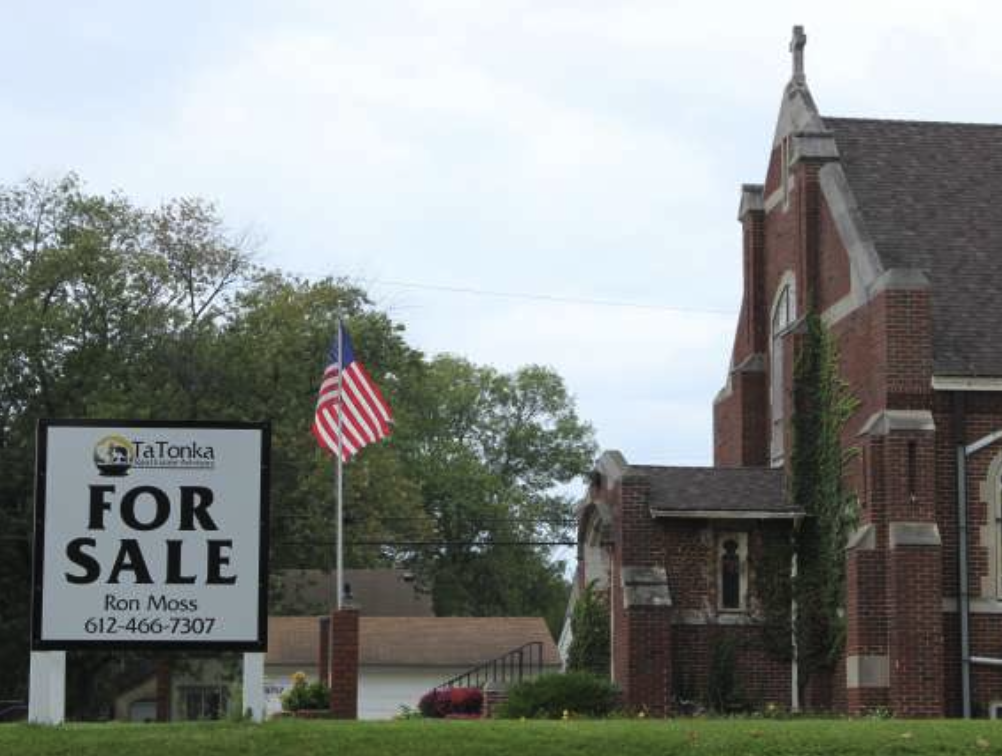
What will American Protestantism look like after the wars inside the 'Seven Sisters' are done?

What will American Protestantism look like after the wars inside the 'Seven Sisters' are done?

Over decades, the map of U.S. Protestantism has been redrawn by splits over the authority and interpretation of the Bible that eventually focused on the LGBT dispute. Now we have a major case study that journalists will need to cover at the local, regional, national and global levels.

A balanced coalition of leaders in the large United Methodist Church (UMC) developed a treaty for mutually respectful separation — the Reconciliation and Grace Through Separation protocol — for that’s currently degenerating into a wasteful fight like other groups have suffered.

Reporters and concerned readers will want to dive into these commentaries and news stories:

* Look at a United Methodist timeline: Why are conservatives going nuclear with lawsuits?

* What happened to United Methodists’ proposal to split the denomination?

* Time is Running Out for Traditionalist United Methodists!

* For United Methodists, the center is not holding

* Special sessions of United Methodist annual conferences 2022

* United Methodist Church bishops mount defense amid conservative attacks (paywall protected)

* Liberal Bishops Have Redefined United Methodist Polity

The current maneuvers by the North American UMC establishment may well limit the number of dropouts joining the Global Methodist Church. Its vision has been to unite a million or more U.S. Methodist evangelicals with the growing Methodist churches in Africa and Asia, creating an effective and innovative international denomination dedicated to defending current Methodist doctrines. This could help counteract some U.S. conservatives’ drift into Christian nationalism. Is that still feasible?


Please respect our Commenting Policy

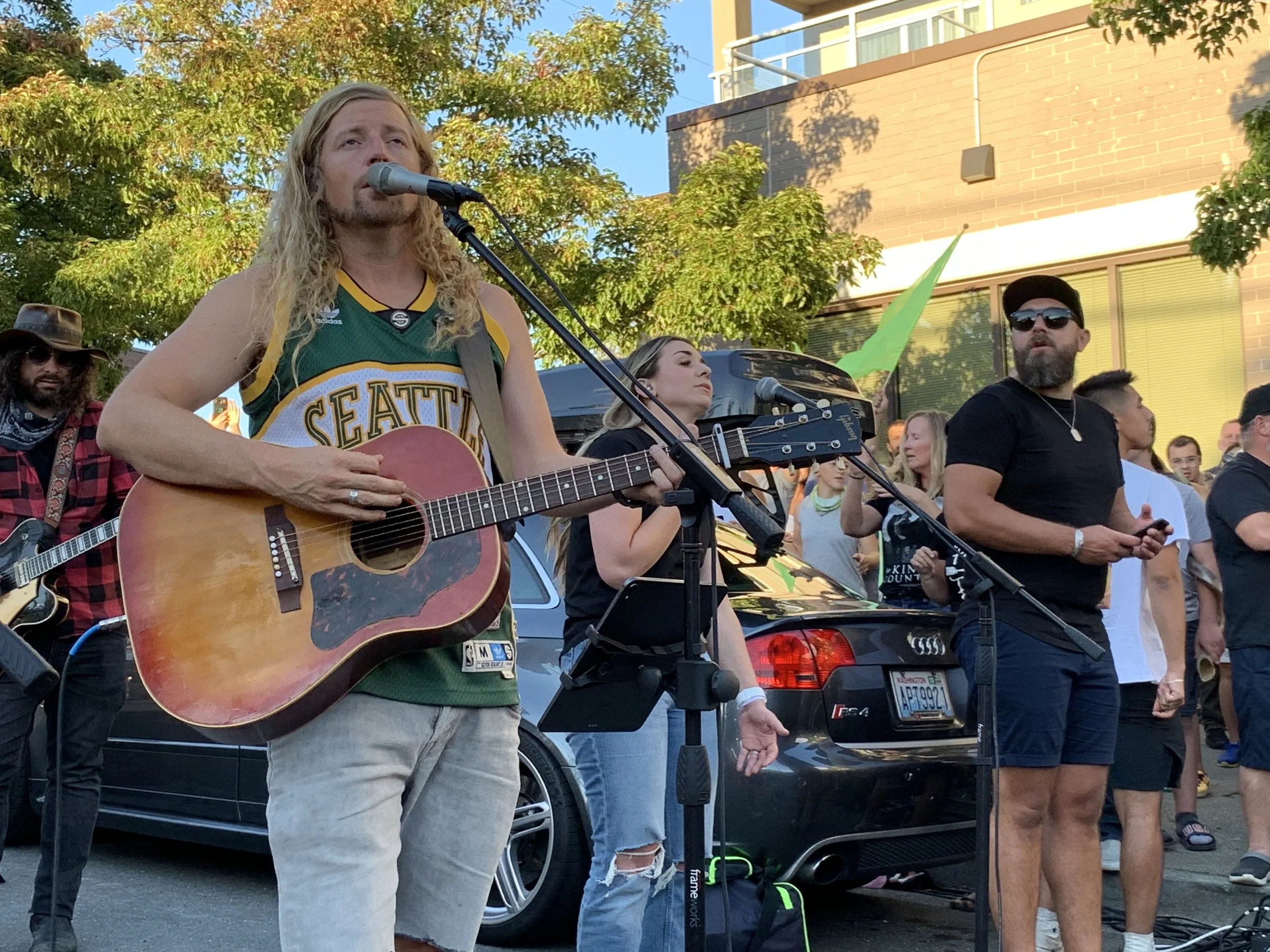
New stories on New Apostolic Reformation, Sean Feucht keep assuming a right-wing takeover

New stories on New Apostolic Reformation, Sean Feucht keep assuming a right-wing takeover

I’ve been complaining for years that journalists aren’t schooling themselves adequately on the prophetic movement (among charismatics) that some call the New Apostolic Reformation (NAR). Since the Jan. 6 uprising, they’ve started writing about it.

But be careful what you wish for. Not all that glitters is gold. I’ve read more than a few stories that sound like something out of a horror flick: An ominous theocratic movement involving millions of people, under uber-controlling leaders with a few White Christian nationalists thrown in.

The two pieces I’ll be addressing is Elle Hardy’s Aug. 23 story in The New Republic: “The Right-Wing Christian Sect Plotting a Political Takeover,” and Rolling Stone’s July 11 story on Sean Feucht. Both typify current Christian trends as scary movements with an end game of sending Donald Trump to the White House in 2024 and sending America back to the Middle Ages.

Hardy’s story had ambitious goals. It began with a summation of this movement starting from 1994 with a revival at a church once known as the Toronto Airport Vineyard. Also known as a “laughing revival” for the odd laughing fits folks had, it made major changes in North American Christianity and swept across the English-speaking world. (Three years later, I was interviewing folks in Iceland who said they were dramatically influenced by Canadian missionaries spreading its benefits.)

All this grew into the NAR, the author says, and (drum roll):

And they have one clear goal in mind — ruling over the United States and, eventually, the world.

NAR, as it’s often called, is a shadowy movement, rather than an organization; many who are considered a part of it deny that it even exists. Broadly, it seeks to return church structures to the fivefold ministry of the Bible (defined roles of apostle, prophet, evangelist, pastor, and teacher). The key roles in this pecking order are prophets, who have the visions, and apostles, the anointed ones who put ideas and networks into practice and, critically, to whom everyone else must submit.

OK. I did my first master’s thesis (in 1992) on authority and submission practices in the charismatic communities that were so popular among evangelicals in the 1960s and 1970s, plus I wrote a 2009 book that deals substantially with this issue. And I can tell you that the NAR folks did learn a thing or two about the mess caused by the 1970s “discipleship movement” which was deeply into one submitting oneself to an elder who was himself (usually this person was male) submitted to a higher elder in a hierarchical line reaching up to a small group of people.

They’re not going that same route today.


Please respect our Commenting Policy

Plug-In: Why faith still matters -- Bob Smietana on how religion is getting reorganized

Plug-In: Why faith still matters -- Bob Smietana on how religion is getting reorganized

Religion reporter Bob Smietana’s “aha!” moment came a few years ago while covering a hurricane.

When a tornado, flood or other disaster occurs, so-called faith-based FEMA organizations typically play a crucial role in the relief effort.

“Usually, a bunch of church folks and other religious folks show up,” explained Smietana, a Religion News Service national reporter. “They cook meals, they clear trees, and they help people rebuild their houses and put their lives back together.”

But given the decline of organized religion in America, might those helpers — at some point — disappear? And if so, what might that mean for the nation’s social fabric? Such questions came to Smietana during his “aha!” moment.

“Something in my head went, ‘Oh, wait. All those people doing this faith-based disaster relief are usually older church folks, and most of them are White,’” he told me, noting the shrinking proportion of White Christians in America.

Reflecting on the hurricane volunteers, he realized, “There’s no one in the pipeline to replace those folks when they’re gone.”

The veteran Godbeat pro shared that anecdote as we talked about the ideas behind his insightful new book, “Reorganized Religion: The Reshaping of the American Church and Why It Matters”, which releases tomorrow.

Here’s how Worthy Publishing describes Smietana’s book: “A look at the ways the Christian church has changed in recent years — from the decline of the mainline denominations to the megachurchification of American culture to the rise of the Nones and Exvangelicals — as well as a hopeful vision for reimagining what the church might look like going forward.”

My own take: The 200-plus pages of “Reorganized Religion” certainly are timely, delving into long-term demographic trends while exploring challenges such as the COVID-19 pandemic and post-2020 political division.


Please respect our Commenting Policy

Hillbilly Thomists: Dominican brothers singing about the Americana ties that bind

Hillbilly Thomists: Dominican brothers singing about the Americana ties that bind

With its sobering lyrics and a droning country-blues riff, "Holy Ghost Power" by the Hillbilly Thomists is a song with zero chance for Christian radio success.

The jilted protagonist has been "living off of grits, whiskey and Moon Pies." His man cave offers no refuge: "A hundred channels of nothing on the TV at 10. It's like Diet Coke and original sin. … Now it's a zombie town, there's a lot of undead. They wander around looking underfed."

But the chorus offers hope: "He makes a rich man poor; He makes a weak man strong. No more going wrong just to get along. I felt the force of the truth when they pierced His side. I saw the war eagle dive and I could not hide."

It wouldn't shock old-school country fans if this was a Johnny Cash song. But it was written by a banjo-playing Dominican from Georgia who has an Oxford theology doctorate and now leads the Pontifical University of Saint Thomas Aquinas. Writing to the National Reso-Phonic Company, Father Thomas Joseph White said he likes to play this classic blues guitar "in my office looking out at the Roman Forum that's 2,700 years-old."

That makes sense in the Hillbilly Thomists, a "musical collective" of Dominicans, most of whom have Bible-belt roots. The band recently staged a concert in the Grand Ole Opry and, over the past decade, has recorded three albums of music that would sound at home at Appalachian fairs, but not in most church halls.

There's a vital tie linking these songs to the life and work of this band of priests and brothers, said Father Simon Teller (who plays fiddle). Whether singing Appalachian hymns or their own original songs, the Hillbilly Thomists -- dressed in the white habits of their order -- keep returning to images of suffering, sorrow, eternity, hope, grace and redemption.

"We're priests in the Dominican order and that kind of states our vision of the world and the faith and everything we do," he said. "In our day job, we're working a lot with people who are dealing with very concrete situations and have a lot of very concrete questions."

"Holy Ghost Power," for example, is "not sung from the voice of a clergyman. It's sung with the voice of a man who's living a very ordinary life that is going off the rails in a very ordinary way," said Teller. "There's a malaise there and he's unsatisfied by the things of this world."


Please respect our Commenting Policy

Bonus podcast: Clemente Lisi on news about 'good' Catholics, as opposed to 'bad' ones

Bonus podcast: Clemente Lisi on news about 'good' Catholics, as opposed to 'bad' ones

Here is a question from the news, sort of, that cuts to the heart of this bonus GetReligion podcast by Clemente Lisi, taken from his on-air visit this week with Todd Wilken at Lutheran Public Radio (CLICK HERE to tune that in).

If Gov. Ron DeSantis started carrying a rosary, and talking about it quite a bit in the context of his Catholic faith (think President Joe Biden), would journalists in major newsrooms see this as a good thing or a bad thing? Possible answers: “Yes,” “No” and “You need to ask?”

Go ahead, if you want to, and think about it in the context of these recent posts: “Concerning the right-wing rosary attack — was that Atlantic feature really 'news'?” and “Tip for reporters — Don't assume what Catholics believe based on politics or Internet memes.”

In reality, the spark for this podcast came from Religion Dispatches piece the other day, by exevangelical trans scribe Chrissy Stroop, with this headline: “Media fail to acknowledge that 2024 hopeful Ron DeSantis is as Catholic as Biden.” Hold that thought.

The Religion Dispatches piece included commentary on a March 22 GetReligion post with this headline: “As Florida's DeSantis wages culture war, his Catholic faith isn't news — unless it's used to attack him.” By the way, editors there failed to note that Lisi is Catholic, as opposed to evangelical, which seems relevant.

Here is the key passage from the Lisi post:

The two things that lots of people don’t want to read about these days is the coronavirus pandemic and Donald Trump, part of a larger trend regarding news fatigue in this country. Unfortunately, this post will mention both and only because it is about Ron DeSantis.

The Florida governor has been in the news the past few years because of his connection to the former president and a virus that paralyzed the planet for two years. A hero to the right and bogeyman to the left, DeSantis has received plenty of mainstream news coverage — much of it one-sided — because of his use of so-called culture war issues to push legislation.

DeSantis, who is running for re-election and among the favorites to run for the White House in 2024, has been a lightning rod for Democrats and a focus of criticism from the mainstream press. … While the coverage has predictably focused on politics, the religion-news hooks in these stories have largely been ignored — unless they were highlighted to be used against him.


Please respect our Commenting Policy