Worship

Associated Press: Today's Supreme Court contains too many pro-Catechism Catholics

Associated Press: Today's Supreme Court contains too many pro-Catechism Catholics

A long time ago, in Internet years, I got tired of trying to define “liberal” and “conservative” during discussions of Catholic life.

Truth is, the teachings of ancient Christianity (I am Eastern Orthodox) don’t fit neatly into the templates of American politics. If you believe, for example, that human life begins at conception and continues through natural death the you are going to be frustrated reading the Republican and Democratic party platforms.

At one point, I started using this term — pro-Catechism Catholics. I soon heard from readers who were upset that I was linking Catholic identity with the idea that Catholics were supposed to believe and even attempt to practice the teachings of the Roman Catholic Church.

This brings me to a new Associated Press story with a very familiar, in recent years, theme. The headline: “Anti-Roe justices a part of Catholicism’s conservative wing.” Here is the overture, which includes — #SHOCKING — a reference to the Catechism of the Catholic Church.

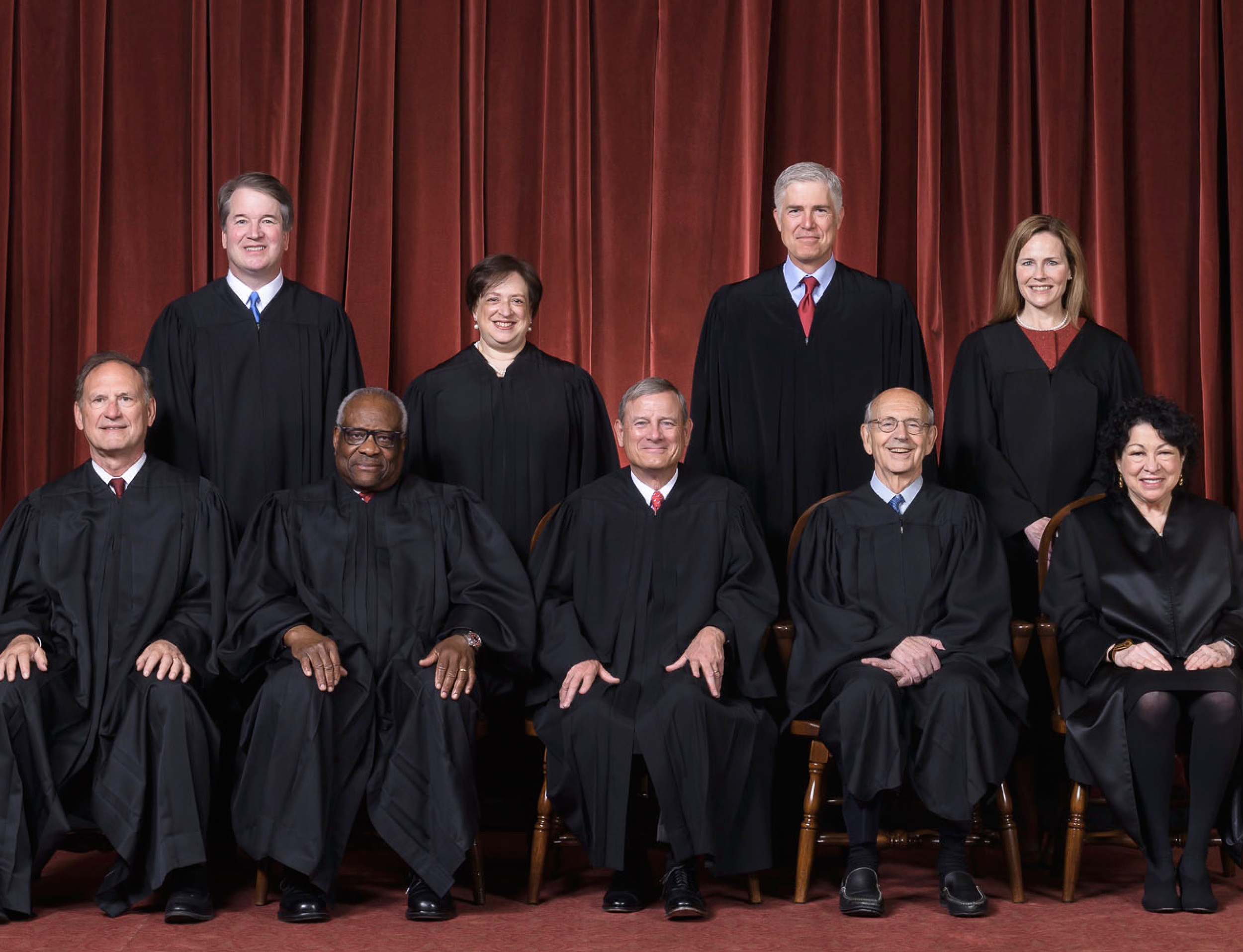
The Supreme Court overturned Roe v. Wade at a time when it has an unprecedented Catholic supermajority.

That’s not a coincidence. Nor is it the whole story.

The justices who voted to overturn Roe have been shaped by a church whose catechism affirms “the moral evil of every procured abortion” and whose U.S. bishops have declared opposition to abortion their “preeminent priority” in public policy.

But that alone doesn’t explain the justices’ votes.

U.S. Catholics as a whole are far more ambivalent on abortion than their church leaders, with more than half believing it should be legal in all or most circumstances, according to the Pew Research Center.

The problem, you see, is that there are justices who appear to embrace the Catechism, on issues linked to the Sexual Revolution, of course. They are clashing with generic “U.S. Catholics,” who are not defined, as usual, in terms of Mass attendance or other references to belief and practice (such as choosing to go to Confession).

What we have here is yet another clash between American Catholics and dangerous Catholics.

Please respect our Commenting Policy

Scripture puzzle about wisdom: Was the biblical Solomon a good or a bad king?

Scripture puzzle about wisdom: Was the biblical Solomon a good or a bad king?

THE QUESTION:

According to the Bible, was Solomon a good or a bad king?

THE RELIGION GUY’S ANSWER:

Both.

With the political challenges afflicting the leaders of Britain, France, Israel, Nigeria, Ukraine, the United States and other nations, it’s interesting to look back to the rulers in the Bible even though their ancient monarchies were radically different.

Among them King Solomon, whose 40-year reign began 2,993 years ago, ranks with his father David in significance.

This ever-fascinating figure, portrayed onscreen by the likes of Yul Brynner (1959) and Ben Cross (1997), led Israel to its zenith of peace, prosperity, cultural sophistication and international stature. And yet a 2011 biography by Wheaton College President Philip Ryken demeans him with the title “King Solomon: The Temptations of Money, Sex, and Power.” Various Jewish legends outside the Bible both exaggerate his magnificence and the opposite, claiming his subjects rejected him and he died penniless.

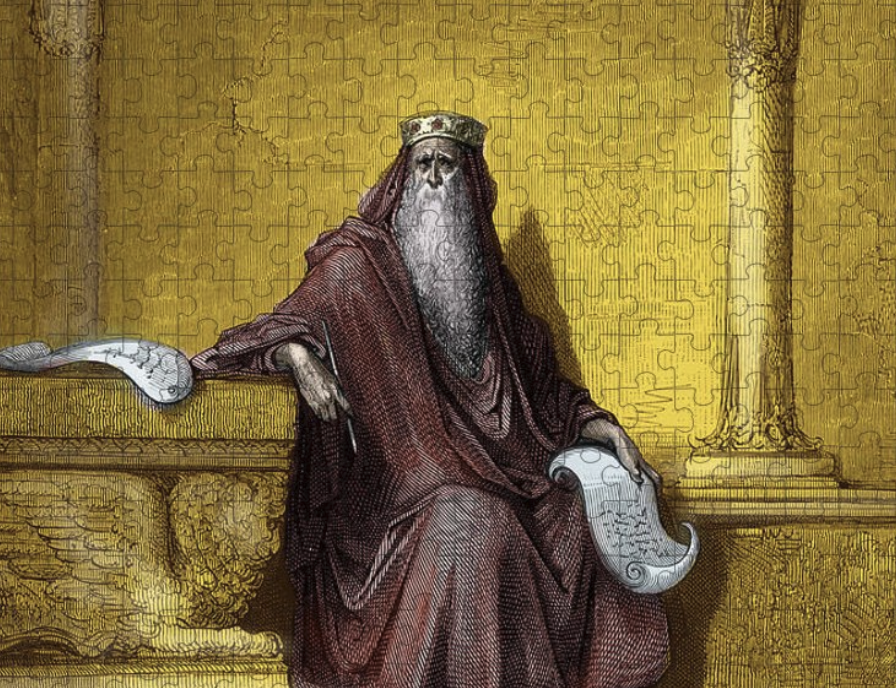
I Kings 1–11 and parallels in II Chronicles 1–9 are the primary sources on his career (here using the Jewish Publication Society translation). King David and Bathsheba lost their first child, a son, as divine retribution for the adultery, homicide and deceit that led to their marriage. Solomon (whose name meant “peace” or “wholeness,” also named Jedidiah, meaning “beloved of the Lord”) became their oldest son and favorite.

David had prior sons by other polygamous wives and the oldest, Adonijah, had a strong dynastic claim to the throne, but the aging David had instead designated Solomon, who was probably age 14 when he took charge. The young king mastered palace intrigue and eventually executed Adonijah and his key supporters. “Thus the kingdom was secured in Solomon’s hands.”

Despite that turbulent start, Solomon — like his father — was devoted to the one true God and his commandments as the foundation of the regime. A crucial moment occurred several years into Solomon’s reign. God appeared to the king in a dream and asked what gift he desired. Solomon replied that he was “a young lad with no experience in leadership” and therefore needed most “an understanding mind to judge your people, to distinguish between good and bad.”


Please respect our Commenting Policy

Reality on bloody ground: That Pentecost massacre in Nigeria wasn't all that unusual

Reality on bloody ground: That Pentecost massacre in Nigeria wasn't all that unusual

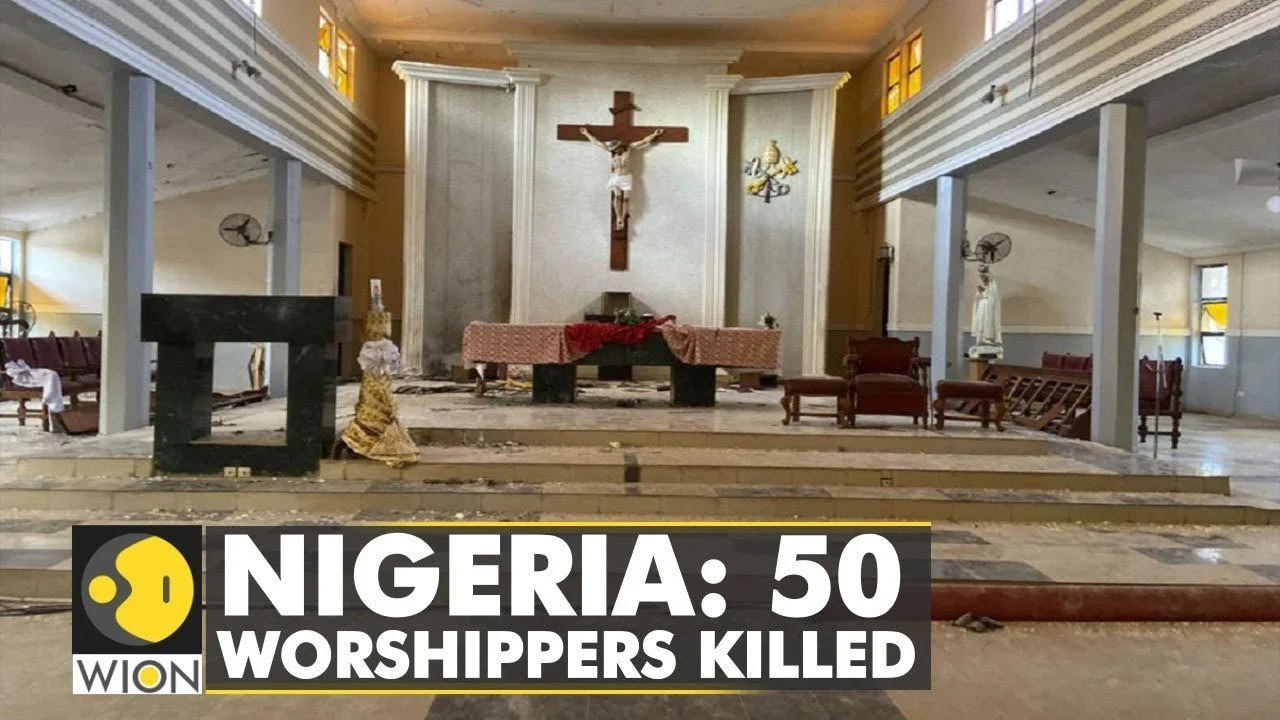
The massacre occurred during a Sunday Mass, but it wasn't an ordinary Sunday -- this was the great feast of Pentecost, which marks the end of the Easter season.

What's more, the gunmen didn't strike in tense northern Nigeria, where Christian communities are isolated in a majority-Muslim region. This 30-minute attack was inside St. Francis Catholic Church, located in the safer southwestern state of Ondo.

While 40 worshippers were confirmed dead, including five children, the number was almost certainly higher since many families buried their dead privately. Another 100 were wounded.

The scope of this attack was "unique," especially in southern Nigeria, but "this violence … was not unique in its occurrence," stressed Stephen Rasche, senior fellow at the independent Religious Freedom Institute in Washington, D.C. "These types of murders are taking place weekly, almost daily, in Nigeria -- murders of innocent Christians, being gunned down, slaughtered indiscriminately, throughout the north and, increasingly, into the central part of Nigeria and into the south."

Human-rights activists are trying to document the bloodshed. According to the nondenominational watchdog group Open Doors, the 4,650 Christians killed in Nigeria during 2021 accounted for 80% of such deaths worldwide -- nearly 13 per day. Nigeria's Christian death toll has topped 60,000 over the past two decades.

Nevertheless, this year's International Religious Freedom Report from the U.S. State Department said the "Secretary of State determined that Nigeria did not meet the criteria to be designated as a Country of Particular Concern for engaging in or tolerating particularly severe violations of religious freedom or as a Special Watch List country for engaging in or tolerating severe violations of religious freedom."

It's understandable that news reports about Nigeria have faded, in part because of Russia's invasion of Ukraine and pressing global economic issues, said Rasche, who visited Nigerian churches during this Holy Week and Easter.

Also, many Western leaders view atrocities in Nigeria as clashes between Christian farmers and Muslim cattle herders, with climate-change issues erasing safety zones between these groups.


Please respect our Commenting Policy

Gen Z and trends in religious faith and practice: Looking at 2021 and beyond

Gen Z and trends in religious faith and practice: Looking at 2021 and beyond

It’s been nearly two years since I’ve written a post about the precarious religious position of Generation Z (those born after 1995), and with data from late 2021 available it seems like a prime opportunity to update what we know about their religious inclinations.

Because almost all surveys only contact adult Americans (18+), we can’t get a full picture of the entirety of Gen Z, but just the oldest members of this generation. Thus, here I am analyzing those between the ages of 18 and 25 years old.

Let’s start broadly, comparing the religious composition of different generations beginning with the Silent Generation (who were born between 1925 and 1945).

In this generation, half of all respondents indicated that they were Protestant, while 22% said that they were Catholic. Just 8% of the Silent Generation say that they were atheists or agnostics and nearly the same share describe their religion as “nothing in particular” (10%). In sum, the oldest Americans are 72% Christian and 18% none.

Now, for Generation Z things are much different.

Just 22 % of the youngest adults describe themselves as Protestant — a more than 50% decline from the Silents. Catholics make up 14% of Gen Z, an eight percentage-point dip from the Silent Generation.

Of course, the share of nones is much larger. Seventeen percent of young people describe their religion as atheist or agnostic, and 31% say that they are attached to no religion in particular. Taken together, 36% of Gen Z are Christians, while 48% are nones.

For journalists, there is the news hook: This is the first generation in history in which the nones clearly outnumber the Christians.


Please respect our Commenting Policy

What's news? Attacks on Christians in Nigeria provide an important case study

What's news? Attacks on Christians in Nigeria provide an important case study

As an undergrad, The Religion Guy took a valuable course titled “Evaluation and Display of News,” an elemental skill for journalists who cope with difficult choices.

Take the Johnny Depp-Amber Heard trash-a-thon. Please. Just as car crashes produce rubbernecking, “human interest” justified vast voyeurism that fed the market and stole print space and air time from more substantive stories.

Editors’ tendentious coverage decisions continually erode public trust in the media. Liberal outlets give scant play to the assassination plot against Brett Kavanaugh, harassment of other Supreme Court justices and their families and related attacks on a couple dozen pro-life agencies. Meanwhile, conservatives downplay the near-miss danger to Vice President Mike Pence and other high officials amid the January 6 attempt to block the Constitution’s election process.

The Guy could list other examples from both sides, and so could you.

Let’s leap across the Atlantic to assess neglectful news judgment regarding the important plight facing Christians in Nigeria. Their continual conflict with Muslim jihadi factions has left an estimated 37,500 dead since 2011, says the latest annual report (.pdf here) from the U.S. Commission on International Religious Freedom (www.uscirf.gov; contact media@uscirf.gov or 202–523–3240).

The nondenominational watchdog group Open Doors USA says that in 2021“more Christians were murdered for their faith in Nigeria than in any other country,” making up nearly 80% of Christian deaths worldwide. Nigeria is the “most dangerous place to be a Christian” in the world, says the Intersociety for Civil Liberty and Rule of Law, a Nigerian human rights monitor. Christian observers speak openly of “genocide.”

In addition to the deaths, it’s all but impossible to count up the maimed victims who’ve survived, the kidnapped schoolchildren and clergy, forced child marriages and forced conversions or the widespread destruction of Christians' churches, homes, shops and even whole villages.

Sounds like compelling news from here.


Please respect our Commenting Policy

Another SCOTUS win for 'equal access,' whether most journalists realized this or not

Another SCOTUS win for 'equal access,' whether most journalists realized this or not

For a decade or more, U.S. Supreme Court justices have been arguing about the separation of church and state. What we keep seeing is a clash between two different forms of “liberalism,” with that term defined into terms of political science instead of partisan politics.

Some justices defend a concept of church-state separation that leans toward the secularism of French Revolution liberalism. The goal is for zero tax dollars to end up in the checkbooks of citizens who teach or practice traditional forms of religious doctrine (while it’s acceptable to support believers whose approach to controversial issues — think sin and salvation — mirror those of modernity).

Then there are justices who back “equal access” concepts articulated by a broad, left-right coalition that existed in the Bill Clinton era. The big idea: Religious beliefs are not a uniquely dangerous form of speech and action and, thus, should be treated in a manner similar to secular beliefs and actions. If states choose to use tax dollars to support secular beliefs and practices, they should do the same for religious beliefs and practices.

At some point, it would be constructive of journalists spotted these “equal access” concepts and traced them to back to their roots in the Clinton era (and earlier). But maybe I am being overly optimistic.

You can see these tensions, kind of, in the Associated Press coverage of the new SCOTUS decision that addressed a Maine law that provided tax funds for parents who chose secular private schools, but not those who chose religious schools. The headline of the main report stated, “Supreme Court: Religious schools must get Maine tuition aid.”

Chief Justice John Roberts wrote the opinion for the majority in this 6-3 ruling. In this story, “liberal” is used to describe the majority.

“Maine’s ‘nonsectarian’ requirement for its otherwise generally available tuition assistance payments violates the Free Exercise Clause of the First Amendment. Regardless of how the benefit and restriction are described, the program operates to identify and exclude otherwise eligible schools on the basis of their religious exercise,” Roberts wrote.

The court’s three liberal justices dissented. “This Court continues to dismantle the wall of separation between church and state that the Framers fought to build,” Justice Sonia Sotomayor wrote.


Please respect our Commenting Policy

Question for Catholic politicos and others: Who receives Holy (Christian) Communion?

Question for Catholic politicos and others: Who receives Holy (Christian) Communion?

THE QUESTION:

Who should receive Christian Communion?

THE RELIGION GUY’S ANSWER:

By coincidence, Christianity’s practice for sharing the Communion bread and wine (or juice) is popping up in two separate controversies.

Item: San Francisco’s Archbishop Salvatore Cordileone sparked an ongoing fuss with his May 19 declaration that Speaker of the House Nancy Pelosi is not to receive the sacrament at Masses in her hometown because she vehemently advocates liberal abortion laws while openly identifying as Catholic.

Item: On June 27, Episcopal Church delegates will confer online on whether the agenda at a national convention in Baltimore July 8–11 will take up a radical proposal to offer Communion to people who are not baptized and thus not affiliated with the Christian religion.

Let’s first walk through the Catholic situation. Last year the U.S. bishops debated whether a forthcoming policy statement on the sacrament of Communion would address the fitness of pro-choice Catholic politicians to receive the elements at the altar. The advent of an ardently pro-choice and actively Catholic President, Joseph Biden, energized the discussion.

Kansas Archbishop Joseph Naumann, who chairs the U.S. bishops’ committee on pro-life issues, said it’s “a grave moral evil” to identify as Catholic and advocate open abortion choice “contrary to the church’s teaching.” In the end, however, the bishops’ statement sidestepped the problem.

Cordileone’s related stance toward Pelosi has been joined by the bishops of neighboring Santa Rosa, California; Tyler, Texas; and Arlington, Virginia. But policy on this is set by each local bishop and in Cardinal Wilton Gregory’s Washington, D.C., Pelosi has no problem finding a church to receive the sacrament.

In a similar action, on June 6 Denver Archbishop Samuel Aquila and three other Colorado bishops asked Catholic state legislators who voted for an abortion rights bill to “voluntarily refrain” from taking Communion.

Cordileone explained that he is simply implementing canon law, which prescribes that parishioners “who obstinately persist in manifest grave sin are not to be admitted to Holy Communion” (#915).


Please respect our Commenting Policy

Podcast: Now what, after SBC 'messengers' have waved their yellow voting cards?

Podcast: Now what, after SBC 'messengers' have waved their yellow voting cards?

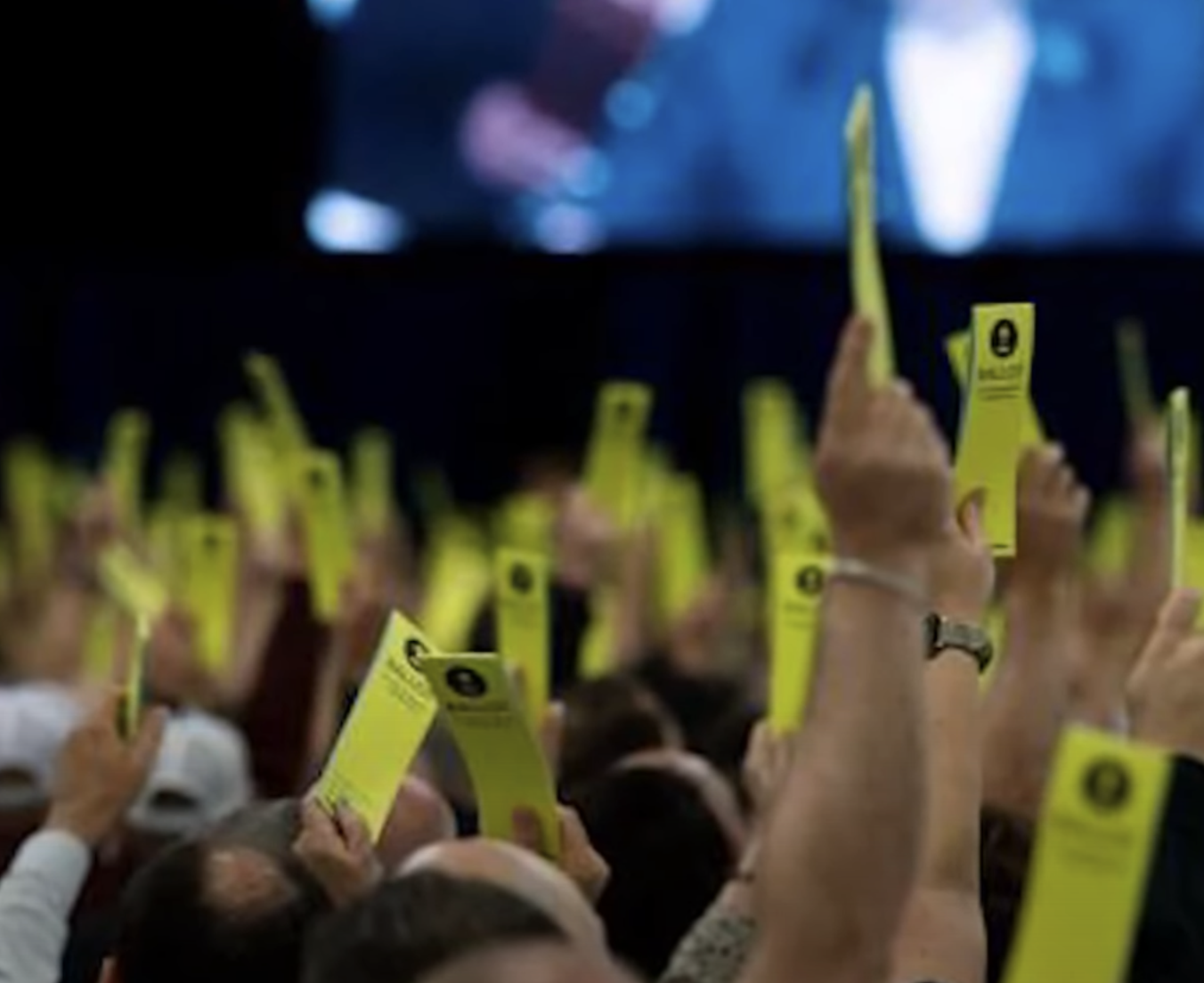
Here’s a warning to reporters who are preparing for future national meetings of the Southern Baptist Convention: Never call these folks “delegates.”

They are not delegates at some kind of political event. They are “messengers” from their local autonomous churches. You see, this isn’t some kind of cocktail-hour mainline Protestant denominational whatever, and many Baptists don’t like the word “denomination,” either. This is a “convention” and it only meets for three days each year.

Use the wrong language and Southern Baptists will give you a steely gaze and then say something nasty, like “Well, bless your heart.”

Quite a few journalists attended this year’s SBC meeting because there were headline-worthy — from their editors’ point of view — topics on the agenda, like clergy sexual abuse, Critical Race Theory and an election to determine if some new-breed conservative “pirates” (that was their term from 2021) were going to wrest the wheel of the ship away from the allegedly “woke” establishment conservatives.

As you would imagine, host Todd Wilken and I dug into all of this during the “Crossroads” podcast this week (CLICK HERE to tune that in). One of the big themes was that the hard-news coverage of this convention — especially by “Location, location, location” pros from major SBC centers, like Houston and Nashville — was top-notch.

Veteran GetReligion scribe Bobby “Positive” Ross, Jr., will offer pages of URLs in his Plug-In feature this week, so I will not try to do that (I’ll post a link when it goes public). But this is what happens when major newsrooms send religion-beat professionals to cover a major event. Readers don’t have to agree with every single thing that they saw in the #SBC2022 coverage, but what we had here was a tsunami of serious coverage from professionals, backed by the skilled Baptist Press team running the on-site newsroom.

With that in mind, let me note a Big Ideas from this podcast.

* If you study attendance numbers at previous “hot” SBC meetings, you will notice a logical trend linked to a map of the Bible Belt. In this online list, note the 1985 Dallas convention drew 45,519 messengers and the 1986 Atlanta convention drew 40,987.

Yes, these were the pivotal years in the historic “conservative resurgence” in SBC life. But, truth is, those numbers also reflect how far ordinary messengers can drive in one day jammed into the buses or vans owned by “ordinary” SBC congregations.


Please respect our Commenting Policy

As Roe clock ticks, press avoids news about another big story -- attacks on Catholic churches

As Roe clock ticks, press avoids news about another big story -- attacks on Catholic churches

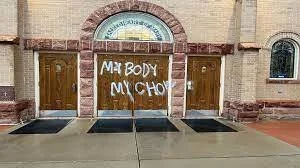
There have been at least 41 incidents of attacks against churches and crisis-pregnancy facilities since the May 2 leak of the Supreme Court draft decision that revealed the potential fall of Roe v. Wade.

The attacks have included property theft, vandalism, arson and property destruction.

How do we know this? A front page New York Times investigation this past Sunday?

No.

A round-up story in The Washington Post, USA Today, the Associated Press? Coverage on CBS, CNN or another major network?

No, no, no and, alas, no.

We know this because of The Washington Stand, which is described as the Family Research Council’s “outlet for news and commentary from a biblical worldview.” In other words, these events are “conservative” niche news (as opposed to, let’s say, attacks on “sanctuary movement” churches because of their activism on immigration).

This awful trend should come as no surprise. At least it wasn’t to me. I wrote a story recently at Religion Unplugged on the rash of vandalism — especially acts against Catholic churches — throughout this spring. I opened my news account with the theft of a tabernacle at a Brooklyn, N.Y., church (see this related GetReligion piece). Here’s an excerpt from my piece:

The desecration was the latest in a string of incidents across the United States, triggering fears of future vandalism given the supercharged political climate around abortion, LGBTQ rights and bishops denying politicians Communion.

The vandalism may not necessarily be tied to one or more of these factors — rising crime rates is also a possibility in the wake of the pandemic — but church officials remain vigilant as the summer approaches. While the motivations remain a mystery, the outcome has rattled Catholic churches across the country. Some have resorted to increased security measures, like locking doors when Masses aren’t taking place, installing security cameras and even erecting barbed wire and fences to avoid being targeted.

As we await a final Supreme Court ruling, we could be in for a long summer of violence and vandalism.

My criticism here is not in the news coverage this issue has received. Instead, it’s the lack of coverage.


Please respect our Commenting Policy