Worship

Growing Haredi numbers poised to alter global Judaism. Maybe press should cover this?

Growing Haredi numbers poised to alter global Judaism. Maybe press should cover this?

The Holocaust devastated European Jewry. The most strictly religious among them — the mystical-oriented Hasidic followers of historic rabbinic lineages and the mitnagdim, Hasidism’s more intellectually focused religious critics — suffered some of the worst losses.

Their insularity and suspicion of the larger world served them poorly at a time when maneuverability and adaptability might have helped them flee Nazi Europe for safety. Instead, they turned their noses up at non-Orthodox Jews and avoided dealing with non-Jews as much as possible.

This was true for both Hasidic and mitnagdim Jews, who are often lumped together by outsiders under the rubric “ultra-Orthodox.”

It’s a label many of them reject; they argue there’s nothing “ultra” about them and that they’re only adhering closely to what they think of as “normative” rabbinic Judaism.

In Hebrew, they’re called Haredi or Haredim, the plural. That’s how I’ll refer to them in this post.

Samuel Heilman, an American academic expert on Haredi life, wrote the following on the subject for a PBS show on Hasidic Jews.

The three things the rebbes told their Hasidim to do led to their being blown away. The rebbes said: "Don't go to America, the treyfe medina (the unclean country), and don't go to the Zionist state, Palestine. Don't change your clothes or learn the surrounding language." So they couldn't disguise themselves or pass as gentiles. And, the rebbes said, "Stay close to me." They did stay close to the rebbes, but many of the rebbes [the Belzer, the Satmar, the Gerer] ran off and left all their people to die.

David Ben-Gurion, the secular Jewish Zionist leader who was Israel’s first prime minister, was convinced that circumstances following World War II would further depress Haredi numbers. Back then, the Haredim comprised just 5 percent of Mandatory Palestine’s pre-state Jewish population.

However to gain United Nations backing for an independent Jewish state, Ben-Gurion believed he had to show full Jewish unity for such a move. That included Haredi support.

Please respect our Commenting Policy

Pro-abortion rights activists hit Catholic churches, but you probably didn't read about it

Pro-abortion rights activists hit Catholic churches, but you probably didn't read about it

If there was ever a doubt that Americans are living in two, separate news universes, then the past two weeks certainly crystallized that reality even more than the polarizing presidential elections of 2016 and 2020.

Americans who lean left politically, comfortable with reading just The New York Times or Washington Post, have been treated to apocalyptic news stories and opinion pieces — it is often hard to tell which is which — stemming from the leak of the draft decision that could overturn Roe v. Wade.

Did you know that gay marriage is now at risk? Did you know that this incarnation of the U.S. Supreme Court is illegitimate? For these elite news organizations and their readers, reversing the right to abortion is just the first attack by fascist Republicans — you wait and see.

On the right, conservatives who watch opinion shows on Fox News Channel or read Brietbart can’t get enough of how President Joe Biden has been an abject failure, particularly when it comes to inflation.

Have you seen how high gas prices are? Did you read about the baby formula shortage? To those news organizations, it’s all about fixing these problems by “owning the libs” by getting the GOP in control of the House and Senate in the November midterm elections.

I have friends on both sides of the political aisle and it’s shocking to me how much one side doesn’t know about what the other is reading and thinking. It often takes weeks for stories that one side repeatedly reported on to ever make it into the pages and onto screens of the other side.

It’s not a failure of our politics. Those have always been polarized. This is a failure of journalism.

Let me explain how these two news universes (while great for the bottom line of news organizations catering to their bases) led to a major news story being totally ignored by many mainstream news sites.

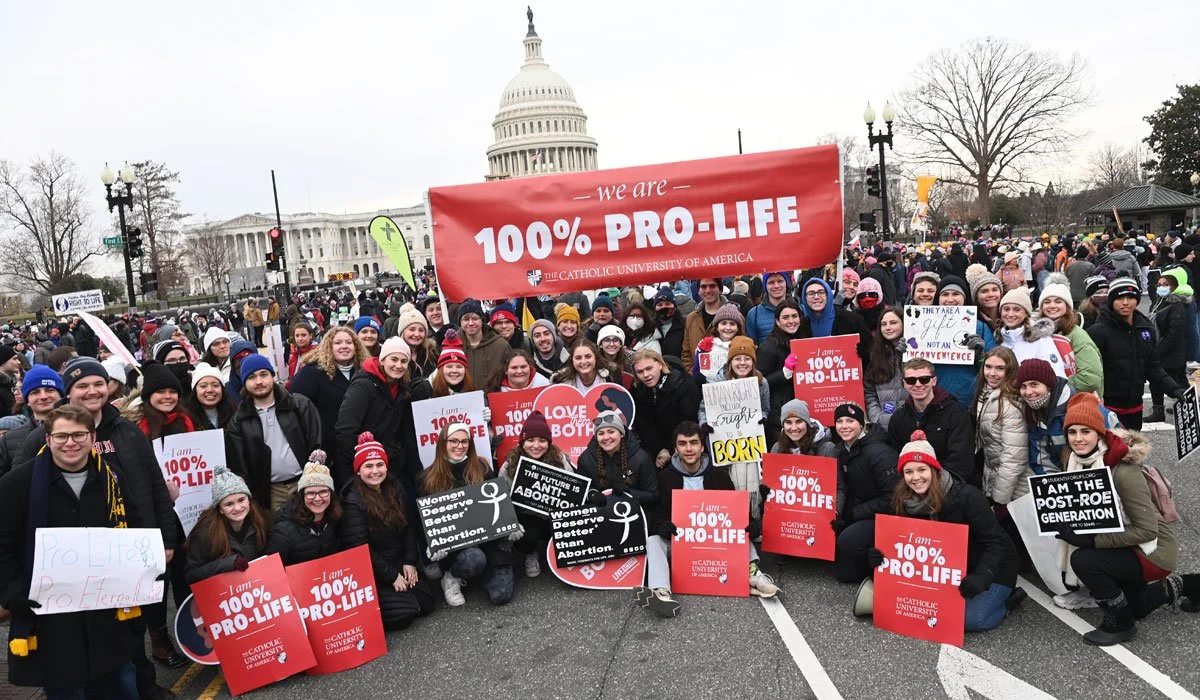
The protests — deemed an issue with “a lot of passion” by the White House — over abortion spilled over into houses of worship, especially Catholic churches. Is the First Amendment right to protest on private property more important than freedom of religion? Not according to the Constitution, and that’s what the news media should be concerned with reporting, not with managing narratives.

It’s therefore not a surprise that pro-abortion rights folks protesting outside churches — and in some cases disrupting Mass — received little to no coverage in most mainstream national news organizations.


Please respect our Commenting Policy

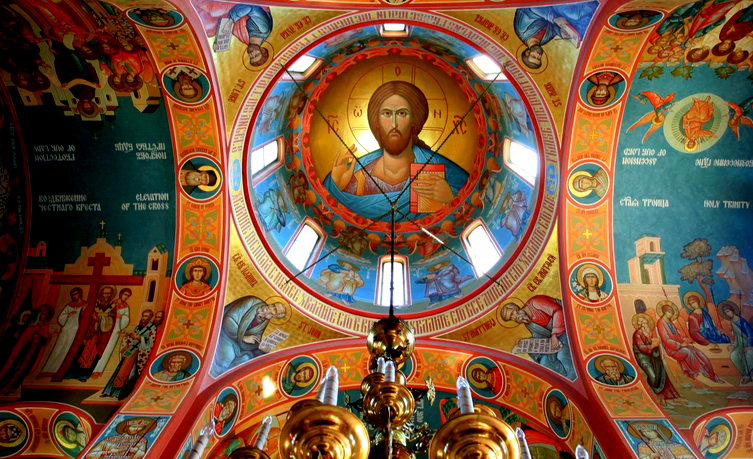
Concerning the new converts to Eastern Orthodoxy: Are they MAGA clones or worse?

Concerning the new converts to Eastern Orthodoxy: Are they MAGA clones or worse?

Yes, to all of those who have written — I have seen the National Public Radio feature that ran with this headline: “Orthodox Christian churches are drawing in far-right American converts.”

It would be hard to imagine a more vicious, one-sided propaganda piece than this one and, if you want to see a blow-by-blow breakdown, read this post by Orthodox convert Rod Dreher: “The Cathedral Vs. The Orthodox Church.”

Rod is using the term “cathedral” as a reference to a particular set of elite media and cultural institutions on what used to be called the “left.” Needless to say, NPR — like the editorial pages of The New York Times — plays a crucial doctrinal role in this cathedral. Dreher (a close friend for nearly 30 years) notes, right up top, concerning this NPR sermon:

… I concede that it is based on a kernel of truth: some outsiders are finding their way to Orthodoxy, thinking that it will be the far right at prayer. A friend who attends a large parish told me last year that they are seeing some young men showing up with that in mind, only to find out otherwise. Let me be clear at the start of this essay that I concede that this phenomenon is not invented out of whole cloth.

In my own small parish, we have seen a surge of young inquirers, but they are coming not with far-right politics in mind, but because they are looking for something more stable and deeper than the churches they had been attending. And yes, it is true that some come because they correctly sense that Orthodoxy is much less likely to surrender to the wokeness that is infesting many Protestant and Catholic congregations. Note well, though, that to NPR, all of this is “far-right.”

Veteran GetReligion readers will know that I am a convert to Eastern Orthodoxy, as well — coming from a Texas Baptist family with several members in the center of Southern Baptist life. If you want to know more about my own journey, see this lecture/essay from 2006: “What do the converts want?”

When people ask why I converted, my short response is that I was seeking a beautiful, conservative, ancient form of Christian tradition that didn’t include ties to American fundamentalism. Since my conversion 23 years ago, I have talked to — conservative estimate — several hundred converts in various settings, including my own parishes.

I would like to focus on the most obvious errors of omission and commission in the NPR piece — an important detail or two about the actual history of the “convert era” in “American” Orthodoxy, which began in the 1980s (click here for link to a crucial book). But first, here is the overture:


Please respect our Commenting Policy

Naomi Judd: 'It's scary to show that part of you that is the not so smart, not so together side'

Naomi Judd: 'It's scary to show that part of you that is the not so smart, not so together side'

Naomi Judd thought she understood the ties that bind country-music stars and their audience -- then one aggressive fan went and joined the Pentecostal church the Judd family called home.

"It really burdened me," said Judd, after signing hundreds of her "Love Can Build a Bridge" memoir back in 1993. "I just don't sign autographs at church. The best way I can explain it to children … is to say, 'Honey, Jesus is the star.' "

After a year of this tense standoff, Judd became concerned and wrote the fan. "I said, 'I want you to really get away by yourself and read this letter and answer this question honestly: Do you come to church to see The Judds or do you come to church to see God?' She never came back to church. But she was in the autograph line today."

Through it all, Judd and her brash daughter Wynonna have talked openly about their triumphs and their struggles. Many fans identified with their failures just as much as the messages about faith and family.

At the time of that 1993 interview, Naomi Judd had battled through waves of anxiety attacks to address some dark realities -- such as rape, crisis pregnancy and her deadly battle with hepatitis C that retired the The Judds.

What she hadn't discussed at that time was the sexual abuse in her childhood that led to treatment-resistant depression. Judd's April 30th death, at age 76, focused new attention on blunt passages in her 2016 book "River of Time," in which she said had been tempted by suicide. "I wanted to be completely honest that if someone took out a gun and killed me on stage, they would be doing me a favor," she wrote.

The Judds were inducted into the Country Music Hall of Fame the day after Naomi's death and her shaken daughter Ashley Judd told the crowd, "I'm sorry that she couldn't hang on until today." Writing in USA Today, the actress expressed gratitude for her mother's legacy, but added: "Perhaps it's indecorous to say, but my heart is filled with something else, too. Incandescent rage. Because my mother was stolen from me by the disease of mental illness, by the wounds she carried from a lifetime of injustices that started when she was a girl."


Please respect our Commenting Policy

Catholic doctrine has always rejected abortion: But what about Catholics in pews today?

Catholic doctrine has always rejected abortion: But what about Catholics in pews today?

It may be the most important U.S. Supreme Court decision of the last fifty years.

A leaked draft of a majority opinion, written by Justice Samuel Alito, would effectively dismantle the legal framework around abortion that was established in the 1973 decision Roe v. Wade. In its wake, states would have almost complete freedom to regulate abortion however they saw fit, including enacting a total prohibition.

Among those who study American religion and politics, it’s long been established that the earliest political voices seeking to restrict access to an abortion were members of the Catholic Church. For centuries, the catechism has taught that life should be protected at all stages — from conception to natural death. Thus, the tens of millions of American Catholics should be the standard bearers for the pro-life movement in the United States.

But here is an important question for journalists: Will most Catholics applaud the end of Roe? The data tells a nuanced story about how the average Catholic thinks about the issue of abortion access. As always, it’s important to note if polls pay any attention to how often Catholics attend Mass.

Looking back to the time period immediately after the Roe v Wade decision in 1973, it’s clear that the vast majority of Catholics were not comfortable with the concept of a woman obtaining an abortion for any reason, which not was out of step with how the average American felt.

For instance, in 1985 about 35% of Catholics were in favor of abortion demand. It was 39% of the general public. In the 1990s and 2000s, abortion opinion was relatively stable, but then things began to shift in 2010. From that point forward, the share of Catholics who supported abortion began to rise, which paralleled a shift in the overall opinion of the American public.

By 2021, fifty-three percent of Americans supported abortion on demand along with forty-five percent of Catholics. But, it’s worth noting that the contours of the two lines run in almost perfect unison. As the country moved left on abortion, so did the average Catholic.


Please respect our Commenting Policy

Ordinary protests at doxxed SCOTUS homes, Masses and a generic firebomb, as well

Ordinary protests at doxxed SCOTUS homes, Masses and a generic firebomb, as well

The Roe v. Wade related events of the past three or four days have created a very obvious case study that can be stashed into that ongoing “mirror image” case file here at GetReligion.

Start here. Let’s say that, during the days of the Donald Trump White House, something important happened related to LGBTQ rights — something like a U.S. Supreme Court decision that delivered a major victory to the trans community. At that point, some wild people on the far cultural right published the home addresses of the justices that backed the decision and, maybe, even any hospital that Justice Ruth Bader Ginsburg might be visiting for cancer treatments.

Another group, let’s call it “Bork Sent Us,” announces plans for protests at Episcopal Church parishes because of that denomination’s outspoken support for LGBTQ causes. Some protestors promise to invade sanctuaries and violate the bread and wine used in the Holy Eucharist. Along the way, what if someone firebombed a Planned Parenthood facility?

Obviously, Trump’s press secretary would be asked to condemn this madness, including violations of a federal law against intimidating protests at the homes of judges.

Let’s set that aside for a moment. I want to ask a “mirror image” journalism question: Would this be treated as a major news story in elite media on both sides of our divided nation and, thus, divided media? Would this, at the very least, deserve a story or two that made it into the basic Associated Press summary of the major news stories of the weekend?

Let me say that these events would have deserved waves of digital ink, with good cause.

This brings us, of course, to the leaked copy of a draft of a majority opinion by Justice Samuel Alito that points to a potential 5-3-1 decision to overturn Roe v. Wade. Twitter users may know many of the details of the anger this has unleashed in mass media and among Sexual Revolution clergy, both secular and sacred. There has been some coverage, including (#DUH) at Fox News. A sample on the church angle:

The White House on Sunday defended people's "fundamental right to protest" but warned against efforts to "intimidate" others during pro-abortion protests planned at Catholic churches across the country.

Multiple activist groups are planning protests defending abortion rights outside Catholic churches on Mother's Day and the following Sunday after a draft opinion from the Supreme Court threatened to overturn Roe v. Wade.


Please respect our Commenting Policy

Angels and demons: Orthodox pain woven into this year's Pascha epistles in Ukraine

Angels and demons: Orthodox pain woven into this year's Pascha epistles in Ukraine

With the barrage of horrors from Ukraine, it wasn't hard to distinguish between the messages released by the Eastern Orthodox leaders of Russia and Ukraine to mark Holy Pascha, the feast known as Easter in the West.

The epistle from Russian Orthodox Patriarch Kirill offered hope for this life and the next. But his text contained only one possible reference to the fighting in Ukraine, which the United Nations says has claimed the lives of 3,000 civilians, at the very least.

"In the light of Pascha everything is different," wrote the patriarch of Moscow and All Russia. "We are not afraid of any mundane sorrows, afflictions and worldly troubles, and even difficult circumstances of these troubled times do not seem so important in the perspective of eternity granted unto us."

But the first lines of the message released by Metropolitan Onuphry of Kiev and All Ukraine placed this Pascha in a radically different context -- a clash between good and evil, right now. It was released on April 25th, the day after Orthodox Christians celebrated Pascha according to the ancient Julian calendar.

This letter was especially symbolic since Metropolitan Onuphry leads Ukraine's oldest Orthodox body, one with strong ties to the giant Russian Orthodox Church.

"The Lord has visited us with a special trial and sorrow this year. The forces of evil have gathered over us," he wrote. "But we neither murmur nor despair" because Pascha is "a celebration of the triumph of good over evil, truth over falsehood, light over darkness. The Resurrection of Christ is the eternal Pascha, in which Christ our Savior and Lord translated us from death to life, from hell to Paradise."

The contrast between these messages underlined a complex reality in Orthodox life after Russia's invasion of Ukraine, a land cruelly oppressed by the Soviet Union, but with strong Russian roots through the "Baptism of Rus" in 988. That was when, following the conversion of Prince Vladimir, there was a mass baptism of the people of Kiev -- celebrated for a millennium as the birth of Slavic Christianity.

Metropolitan Onuphry and other Orthodox hierarchs with historic ties to Moscow have openly opposed the Russian invasion, while trying to avoid attacks on the Russian Orthodox Church. The bottom line: Leaders of ancient Orthodox churches will ultimately, at the global level, need to address these conflicts.


Please respect our Commenting Policy

When assisted suicide becomes 'a crossing over' church rite and a mere 'procedure'

When assisted suicide becomes 'a crossing over' church rite and a mere 'procedure'

Writer Emily Standfield drew a challenging assignment recently for Broadview magazine: write about Betty Sanguin, who chose to hasten her death as part of a religious rite performed inside the church she loved for many years, amid a diagnosis of amyotrophic lateral sclerosis.

Here’s the full headline: “Manitoba’s first medically assisted death in a church was an ‘intimate’ ceremony — Betty Sanguin spent her last day with family and friends at Churchill Park United.” And this is the overture:

At around noon on March 9, Betty Sanguin arrived at her church, Churchill Park United in Winnipeg, on a stretcher.

“The moment we rolled her in … and sat her up in her recliner, she lit up like a Christmas tree,” Lynda Sanguin-Colpitts, one of Sanguin’s daughters, recalls. “I hadn’t seen that much life in her eyes, so much joy [in a long time]. And honestly I think part of it was just being in the church.”

But this was no ordinary church service. Sanguin chose to die in the sanctuary that day.

Let’s stipulate some points up front:

First of all, Standfield is an editorial intern. Also, it’s crucial that Broadview, a publication affiliated with the United Church of Canada, has many ideological commitments and states them explicitly on its website. Here are some quotes:

— “Broadview’s values include LGBTQ2 inclusion, environmental sustainability and ethical investing, as well as increasing the presence of diverse contributors.”

— “In October 2020, we pledged to have one-third BIPOC (Black, Indigenous, People of Colour) staff and freelance contributors by 2025, and we’ll check in on our progress annually. Our governing board has also committed to achieving a similar target among its 11 members.”

— “In our writing, we refer to diverse communities with their preferred cases and spellings. For example, we capitalize ‘B’ in ‘Black’ and ‘I’ in ‘Indigenous,’ and use our Indigenous writers’ and subjects’ preferred spellings for Indigenous nations.”


Please respect our Commenting Policy

Alongside abortion, don't neglect the Supreme Court's big school prayer ruling

Alongside abortion, don't neglect the Supreme Court's big school prayer ruling

Vastly overshadowed by the uproar over Politico's bombshell report that the Supreme Court may be poised to overturn past abortion rulings, the court actually released religious-liberty ruling written by retiring Justice Stephen Breyer. His Shurtleff v. City of Boston opinion (.pdf here) reasoned that since Boston had permitted 284 city hall flag displays by varied groups, it violated freedom of speech to forbid a Christian flag for fear of violating church-state separation.

Harvard Divinity student Hannah Santos, writing for Americans United, said Christian flag displays would be "disturbing and demoralizing" and evoke the Puritan founders' "cruel" intolerance. But Breyer and the other two liberal justices joined six conservatives in this unanimous — repeat unanimous — decision.

There's likely to be less Court concord on another First Amendment ruling reporters need to prepare for in coming weeks. This dispute crisply demonstrates the culture-war split among American religious groups and between most Democrats and Republicans.

Kennedy v, Bremerton School District [Docket #21-418] involves the firing of Joseph Kennedy, an assistant high school football coach in Washington state. He violated the school's order against his kneeling to utter brief prayers on the 50-yard line after games, with students who wished joining him.

Here, too, Kennedy's freedoms of speech and religion ran up against school fears about violating the Constitution's clause barring government "establishment of religion." Click here for a recent Julia Duin post looking at some of the media coverage of this debate.

In preparing coverage to interpret the forthcoming ruling, keep in mind possible ramifications beyond the gridiron. As Christianity Today reported, hypothetical situations the justices discussed during the two-hour oral argument included teachers or coaches praying silently or aloud or reading the Bible before class, coaches praying on the sidelines perhaps with specific notice that students weren't required to pray or that they cannot pray or a player simply making the sign of the cross.

Also this. A court filing from the Jewish Coalition for Religious Liberty and the Islam team at the Religious Freedom Institute informed the justices that observant Jewish teachers and coaches need to speak brief public blessings before eating or drinking, and that Muslims must join daily prayer times during public school hours or while chaperoning a field trip.


Please respect our Commenting Policy