Worship

Naomi Judd: Press reports covered the dark nights of her life, but not the Sunday mornings

Naomi Judd: Press reports covered the dark nights of her life, but not the Sunday mornings

Journalists tend to remember symbolic details from many of interesting interviews — whether they are with superstars of various kinds or ordinary people who have seen remarkable things.

Exhausted after signing hundreds of copies of her “Love Can Build a Bridge” memoir back in 1993, Naomi Judd retreated to her tour bus parked behind the bookstore. She apologized for heading to the back room to get out of one of her famous stage dresses and into something from her farm outside of Nashville. The ground rules: no photos, but all questions were fair game.

At point in her life, she had already talked about some dark days and nights — from rape to a crisis pregnancy and beyond. But she hadn’t dug deeper into her childhood and the abuse that created the deep pools of depression that would eventually take her life.

But this was a woman who was driven to talk about her angels, as well as her demons. My favorite quote from that interview didn’t make it into the “On Religion” column that I wrote pre-Internet, but stashed deep in my file cabinets with pages of notes and transcripts.

Naomi Judd stressed that if people — journalists included — want to understand country music, and the relationship between the musicians and their fans, they need to remember that it’s normal, in a country music show, “to sing about Sunday morning, as well as Friday and Saturday nights.”

That’s what I went looking for in the coverage of her death and then the ceremony in which The Judds — Wynonna and Naomi — entered the Country Music Hall of Fame. Here’s the top of the Nashville Tennessean report on that event, as it ran in USA Today:

As Grammy-winning duo The Judds were inducted into the Country Music Hall of Fame Sunday evening, Wynonna Judd addressed the passing of her mother Naomi just one day earlier.

Following brief remarks from her younger sister Ashley, Wynonna spoke for roughly four minutes.

"It's a strange dynamic to be this broken and this blessed. … But though my heart is broken, I will continue to sing," she said.

Wynonna said Naomi Judd, 76, passed away at 2:20 PM, and that she kissed her mother "on the forehead and walked away." She also stated that the last act she, Ashley and unnamed other family members did together was praying the Bible's 23rd Psalm. The crowd in attendance all recited the Psalm in unison with Judd to complete her speech.

That’s solid and hints at the atmosphere during the ceremony.

Truth is, Hall of Fame member Ricky Skaggs — who knew the Judds from the days before their rise to fame — took the audience to church, as he struggled to control his emotions through the entire speech-sermon.



Please respect our Commenting Policy

Plug-In: Can a high school coach pray at 50-Yard line? Five SCOTUS hearing takeaways

Plug-In: Can a high school coach pray at 50-Yard line? Five SCOTUS hearing takeaways

The case of Joseph Kennedy, a Bremerton, Washington, high school football coach who wants to kneel and pray at the 50-yard line, made it to the U.S. Supreme Court this week.

Arguments took nearly two hours, double the time scheduled. Here are five key takeaways:

1. The issue: “The case pits the rights of government workers to free speech and the free exercise of their faith against the Constitution’s prohibition of government endorsement of religion and Supreme Court precedents that forbid pressuring students to participate in religious activities,” the New York Times’ Adam Liptak explains.

2. The significance: It’s “one of its most significant cases on prayer in decades … in a clear test for how the court's new conservative majority may rule on prayer in public schools,” Newsweek’s Julia Duin reports.

Duin adds:

The case focused on whether a high school coach could openly pray after the end of a football game. Arguments included examples from elsewhere in the sports world, with mentions of former Denver Broncos football player Tim Tebow, known for kneeling on the field in prayer, and Egyptian soccer player Mohamed Salah, who kneels in a thanksgiving prayer to Allah after he scores a goal.

Read Plug-in’s past coverage of Tebow’s controversial prayers. Also, see this Duin post — “Coach Joe Kennedy goes to the Supreme Court and the media coverage gets a B+” — here at GetReligion.

3. The hypotheticals: “The U.S. Supreme Court justices spun more than a dozen hypothetical prayer scenarios during oral arguments,” Christianity Today’s Daniel Silliman notes.

The Associated Press’ Jessica Gresko highlights some of those scenarios:

A coach who crosses himself before a game. A teacher who reads the Bible aloud before the bell rings. A coach who hosts an after-school Christian youth group in his home.

Supreme Court justices discussed all those hypothetical scenarios.


Please respect our Commenting Policy

Great and Holy Pascha in Ukraine: Details matter when war crashes into holiest day of the year

Great and Holy Pascha in Ukraine: Details matter when war crashes into holiest day of the year

Once a copy-desk fanatic, always a copy-desk fanatic. If you ever get caught up in obscure debates about items in the Associated Press Stylebook, then you’re trapped. You see picky style issues all over the place.

This is certainly true on the religion beat. Readers may recall that the AP team recently updated and expanding some of the style bible’s references to religious terms, history, etc. See this recent post and podcast: “Can the AP Stylebook team slow down the creation of new Godbeat 'F-bombs'?

This brings me to the most important holy day on the Eastern Orthodox Christian calendar — it’s called Pascha and you may have heard that the ancient churches of the East celebrate it according to the older Julian calendar. It’s complicated, but there are times when East is East and West is West.

Pascha is certainly one of those times. OrthodoxWiki notes:

Pascha is a transliteration of the Greek word, which is itself a transliteration of the Aramaic pascha, from the Hebrew pesach meaning Passover. A minority of English-speaking Orthodox prefer the English word "Pasch."

Here is the note that I’d like the AP style pros to think about. It is also accurate to say that this holy day is, in the West, called “Easter.” Thus, we frequently see the term “Orthodox Easter” in the mainstream press. In fact, that is pretty much the only language that we see in news reports about this holy day.

Here me say this: As a journalist who is an Orthodox Christian (and a former copy-desk guy). I get it. I know that “Orthodox Easter” is a quick way to save some ink that journalists would have to use to offer an explanation of, well, Pascha.

But the word “Pascha” is real and it’s ancient and it has great meaning to the second largest Christian communion on the Planet Earth. If you are writing about Orthodox believers at this time of the year, why not use both terms in the story? Why avoid THE WORD. (Oh, and the name of our eucharistic rite is the “Divine Liturgy,” not “Mass.”)

This is an important issue, at the moment, because you have a war going on (whatever Vladimir Putin wants to call it) in the season of Pascha between Russia and Ukraine — two lands with centuries of shared history rooted in Orthodox Christianity.


Please respect our Commenting Policy

In terms of church history, should the United Methodist break-up be called a 'schism'?

In terms of church history, should the United Methodist break-up be called a 'schism'?

When I moved to Denver in 1984, Rocky Mountain News (RIP) my work plunged me into the ongoing United Methodist Church battles over creed-level doctrines, the Bible and, of course, homosexuality.

The region’s defining institution was the Iliff School of Theology, a UMC authorized seminary that a former professor there once told me was “the single most liberal school in America that still bothers to call itself ‘Christian.’ “ In the late ‘80s, an Iliff student said he had encountered one professor who believed that the resurrection of Jesus actually happened, as an event in real time. I would doubt this seminary has become more small-o “orthodox” in the past third of a century.

If you were in Denver back then it was clear that the United Methodists were in the midst of a very slow train wreck and that a parting of the ways was inevitable. The question: Who would leave and who would control the assets of this large, but shrinking, denomination?

This brings us to a recent story in The Nashville Tennessean with this dramatic double-decker headline (behind a fierce paywall):

Methodists focus on Easter amid denominational schism and the tough decisions ahead

A new, more conservative Methodist denomination is set to launch May 1 after a years-long debate centered largely over LGBTQ rights.

People have been using the word “schism” for decades, when describing this conflict. I would like to argue that this technical term is problematic, in this case, and that recent events — especially the proposed “Reconciliation and Grace Through Separation” protocol — have made it even more so. I propose using the word “divorce,” in this case. Hold that thought.

There is much to praise in this Tennessean story, especially the many quotes from regional church leaders on both sides of this battle. However, the “schism” lens is easy to see. I think that with two or three extra sentences, readers would have a better idea what is going on in this conflict. It’s also important to know that the Southeast is a crucial region in this conflict (along with the core Midwest), in which there are many doctrinally conservative churches paired with bishops who are more progressive.

But let’s start with the term “schism.” Here is a helpful Britannica reference:

schism, in Christianity, a break in the unity of the church.


Please respect our Commenting Policy

Father Joseph Ratzinger's sobering 1969 vision of the future and the new German reality

Father Joseph Ratzinger's sobering 1969 vision of the future and the new German reality

The 1960s were turbulent times and, in Europe, Catholics faced storms of radical change that left many weary or even cynical.

In 1969, one of Germany's rising theologians -- a liberal priest at Vatican II who then became a conservative -- was asked what he saw in the future.

"What St. Augustine said is still true -- man is an abyss; what will rise out of these depths, no one can see in advance," said Father Joseph Ratzinger, on German radio. "Whoever believes that the church is not only determined by the abyss that is man, but reaches down into the greater, infinite abyss that is God, will be the first to hesitate with his predictions."

Ratzinger's words grew in importance in 1977 when he became Archbishop of Munich and quickly became a cardinal. Then Pope John Paul II made him prefect of the Vatican's powerful Congregation for the Doctrine of the Faith, where his orthodoxy led liberals to call him "God's Rottweiler." In 2005, he became Pope Benedict XVI.

Catholics continue to ponder his 1969 words: "From the crisis of today the church of tomorrow will emerge -- a church that has lost much. … As the number of her adherents diminishes, so it will lose many of her social privileges. In contrast to an earlier age, it will be seen much more as a voluntary society, entered only by free decision. As a small society, it will make much bigger demands on the initiative of her individual members."

The future pope predicted a "crystallization" process creating a "more spiritual church, not presuming upon a political mandate, flirting as little with the left as with the right. … It will make her poor and cause her to become the church of the meek."

The retired pope celebrated his 95th birthday on April 16th -- Holy Saturday. During an earlier meeting with Jesuits, Pope Francis called his predecessor "a prophet" and cited Benedict's predictions of a "poorer" and "more spiritual" church..


Please respect our Commenting Policy

Podcast: The New York Times misses some key voices as Ukraine prepares for Pascha

Podcast: The New York Times misses some key voices as Ukraine prepares for Pascha

I have said it before and I will say it again: If I could pick a major event from my life and live it over again — knowing what I know now — it would probably be the trip that I took to Moscow in 1991, arriving the week after the events that ended the Soviet Union.

There were still flowers on the sidewalks (near our hotel) where protesters were killed by Soviet tanks. There were Orthodox icons, as well. I was an evangelical Anglican, at that time, and really didn’t grasp the importance of many of the Orthodox people and places I encountered during that stay. I was there as part of the Moscow Project, an effort to help the emerging Russian Bible Society print 4 million Bibles.

One moment, in particular, was relevant to our discussion during this week’s belated “Crossroads” podcast (CLICK HERE to tune that in), which focused on a New York Times report about Ukraine and tensions in global Eastern Orthodoxy heading into this weekend and the holiest day on the Christian calendar — Pascha (Easter in the West).

I was visiting with a veteran Orthodox priest who was active in the Moscow Project. We were talking about the future of Russian Orthodox Church and the realities that would shape the next few decades. This is from an “On Religion” column on the topic. He said:

It’s impossible to understand the modern Russian church … without grasping that it has four different kinds of leaders. A few Soviet-era bishops are not even Christian believers. Some are flawed believers who were lured into compromise by the KGB, but have never publicly confessed this. Some are believers who cooperated with the KGB, but have repented to groups of priests or believers. Finally, some never had to compromise.

“We have all four kinds,” this priest said. “That is our reality. We must live with it until God heals our church.”

I bring this up, of course, because of the firestorm surrounding the words and actions of Patriarch Kirill, the current leader of the Russian Orthodox Church. In KGB documents, it appears that his codename was “Mikhailov” during the years before the 1991 coup.

How would Kirill be classified, using this priest’s typology?


Please respect our Commenting Policy

Plug-In: Reflections on a reporting trip to a Slavic congregation in Alaska

Plug-In: Reflections on a reporting trip to a Slavic congregation in Alaska

On my first reporting trip to Alaska several years ago, I saw a moose by the highway and stopped to take a picture.

On a quick visit to the Last Frontier this past week, the only moose I personally encountered was the one that greeted me at the airport. I didn’t spot any bears either, except for the two behind glass in my hotel lobby.

Still, I enjoyed the breathtaking scenery — who doesn’t love snow-capped mountains? — and the opportunity to delve into two compelling religion stories firsthand.

My piece for ReligionUnplugged.com on an Anchorage church with members from Ukraine, Russia and other Slavic nations was published this morning. It focuses on that Russian-speaking congregation’s work to help Ukrainians fleeing their homes.

For The Christian Chronicle, I covered the first Alaska State Lectureship in three years. COVID-19 had prompted the cancellation of the previous two annual lectureships. Members of the state’s scattered-but-interconnected Churches of Christ were elated to be back together.

My favorite interview was with a couple in their 80s who live 26 miles above the Arctic Circle. Ron and Zona Hogan use a phone translation app to communicate in Spanish with newcomers from the Dominican Republic who attend their home church.

It’s good stuff. I hope you’ll check it out.

Power up: the week’s best reads

1. As Ramadan, Passover and Easter converge, an interfaith trolley rolls out: “The rare alignment of major Christian, Muslim and Jewish holidays is fueling a flurry of interfaith celebrations across the nation this month,” Mya Jaradat reports for the Deseret News.


Please respect our Commenting Policy

Left and right cheer together, for a change, as U.S. Supreme Court defends religious liberty

Left and right cheer together, for a change, as U.S. Supreme Court defends religious liberty

Before putting his neck on the chopping block, King Charles I turned to his chaplain seeking personal peace after the chaos of the English Civil Wars.

The king was, on that infamous 1649 day, pondering heaven, hell and forgiveness.

“To show you that I am a good Christian," the king said, pointing to London Bishop William Juxon, "I hope there is a good man that will bear me witness that I have forgiven all the world, and even those in particular that have been the chief causers of my death. Who they are, God knows, I do not desire to know. God forgive them."

This isn't the kind of theology that ordinarily shapes U.S. Supreme Court decisions. Nevertheless, it was part of a litany of historical references during debates preceding a recent decision requiring Texas to grant a convicted murderer his Baptist pastor's audible prayers and comforting touch during his execution.

This was a rare moment in which activists on both sides of America's culture wars cheered for "religious liberty," a freedom that until recently didn't require cynical "scare quotes" that suggest uncertainty. This trend in First Amendment discourse has, for me, become the most important story I have covered during the third of a century -- as of this week -- in which I have written this national "On Religion" column.

The big question: Why did appeals to centuries of tradition work this time?

The condemned prisoner, John Ramirez, told the court he believed his pastor's "laying on of hands on him as he dies, and the vocalization of prayers and scripture, will assist his passing from life to death and will guide his path to the afterlife."

In his decision, Chief Justice John Roberts saluted the "rich history" of evidence supporting this prisoner's request "to have his pastor lay hands on him and pray over him during the execution. Both are traditional forms of religious exercise."


Please respect our Commenting Policy

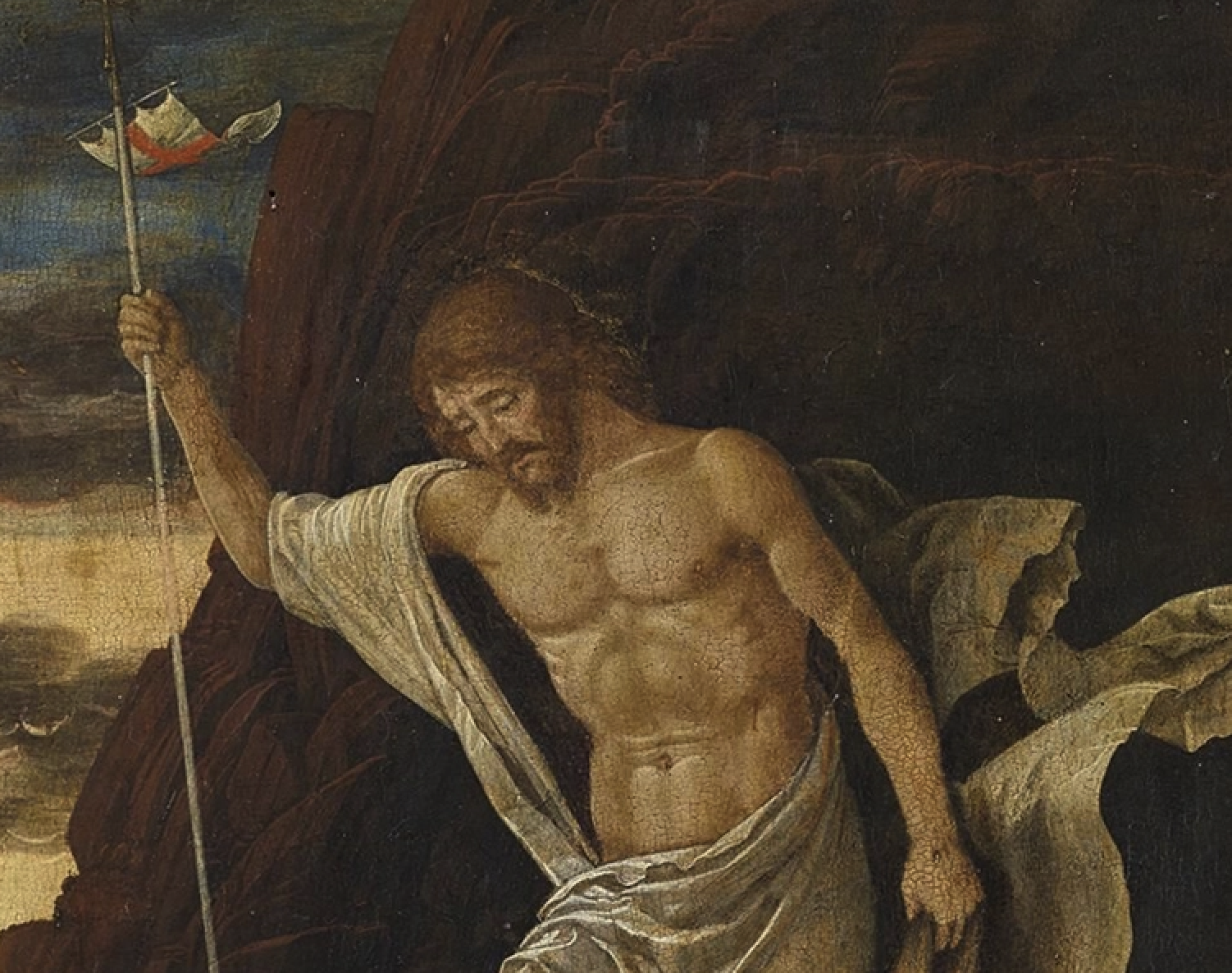
Just in time for Easter media and academic discussions: Did Jesus Exist?

Just in time for Easter media and academic discussions: Did Jesus Exist?

THE QUESTION:

Did Jesus Exist?

THE RELIGION GUY'S ANSWER:

Yes.

It would be the ultimate blow to the Christian religion if Jesus, and with him the entirety of the New Testament, is totally fictional.

However, the strong consensus among historians, including non-Christians and skeptics, is that, yes. Jesus was an actual person of the 1st Century (Anno Domini!!). Yet an Ipsos poll for the Episcopal Church, released last month, showed only 76% of Americans "believe in the historical existence" of Jesus, with 89% of self-identified Christians, 43% for adherents of other religions and 38% among the non-religious.

Among scholars, across the years certain "mythicists" have contended that he never existed.

University of North Carolina Professor Bart Ehrman, author of "Did Jesus Exist?" (2012) and rather skeptical himself, knows of only one such thinker among thousands of scholars with Ph.D. degrees who are working in the New Testament field. He's Robert Price, a onetime Baptist minister, member of the radical "Jesus Seminar," and author of "The Historical Bejeezus" who teaches at Johnnie Coleman Theological Seminary, a "New Thought" school.

Other mythicists have included Frank Zindler, a science educator, Jesus Seminar participant, and an editor with American Atheists. In 1970, Doubleday published an eccentric book by Britain's John M. Allegro, who thought there never was a Jesus and Christianity originated as a drug cult. John Remsburg, a 19th Century superintendent of public instruction for Kansas, backed mythicism by listing 42 ancient authors never wrote about Jesus. (A newsman like The Guy would figure that's what you'd expect with an itinerant teacher executed as a criminal in a backwater of the Roman Empire.)

But Remsburg raised an interesting question. Let's say for the sake of argument we totally exclude the New Testament as evidence (which historians would never do in judging the existence of other figures from ancient times). Do we have any other relevant documentation?


Please respect our Commenting Policy