Worship

Will Russia listen to Orthodox voices praying for ceasefire? How about journalists?

Will Russia listen to Orthodox voices praying for ceasefire? How about journalists?

During Sunday rites, worshippers in the Orthodox Church in America are led through a tour of the faith's music, with hymns from Russia, Romania, Georgia, Bulgaria and beyond.

The faithful know many by heart, including the ancient Trisagion hymn -- "Holy God, Holy Mighty, Holy Immortal, have mercy on us" -- in a haunting setting that for centuries has simply been called "Kievan Chant."

With Great Lent approaching, Archbishop Alexander Golitzin of the Diocese of Dallas and the South instructed parishes (including my own in East Tennessee) to add prayers for Ukraine in every Divine Liturgy: "Again, we ask Thy great mercy on our brothers and sisters who are presently involved in conflict. Remove from their midst all hostility, confusion and hatred. Lead everyone along the path of reconciliation and peace."

The OCA's Metropolitan Tikhon, leader of a church that began with Russian missionary work in 1794, has urged that "hostilities be ceased immediately and that President Putin put an end to the military operations. As Orthodox Christians, we condemn violence and aggression."

In Slavic Orthodox history, all roads lead to Kiev, now called Kyiv in the West.

Orthodox leaders with ties to the European Union and highly European Western Ukraine have issued fierce statements after the Russian invasion. Metropolitan Epiphanius I of the independent Ukrainian Orthodox Church, launched in 2018 by Ecumenical Patriarch Bartholomew of Istanbul, has said the "spirit of the Antichrist operates in the leader of Russia."

However, it's significant that leaders of many Orthodox churches with roots in Russian Orthodoxy have also condemned the invasion and urged a ceasefire. The leader of Ukraine's oldest Orthodox body -- one with centuries of ecclesiastical ties to Moscow -- condemned the invasion in a statement addressed directly to Vladimir Putin.

"Defending the sovereignty and integrity of Ukraine, we appeal to the President of Russia and ask him to immediately stop the fratricidal war," said Metropolitan Onuphry, primate of Kiev and all Ukraine. "The Ukrainian and Russian peoples came out of the Dnieper Baptismal font, and the war between these peoples is a repetition of the sin of Cain, who killed his own brother out of envy. Such a war has no justification either from God or from people."


Please respect our Commenting Policy

Eastern Orthodox thinking on Ukraine? Reporters can't settle for the predictable voices

Eastern Orthodox thinking on Ukraine? Reporters can't settle for the predictable voices

For the past week or so, I have been getting quite a few emails and messages from people wanting to understand what “the Orthodox” think about the invasion of Ukraine.

That’s a massive question. In my experience, the Orthodox are praying for a ceasefire and negotiations, seeking a Ukraine that is militarily independent of the United States-European Union and, certainly, Vladimir Putin’s Moscow regime.

At this point, no one should be surprised that Orthodox leaders aligned with USA-EU and Turkey are releasing fierce statements against Putin’s arrogant and evil invasion of Ukraine. At the same time, no one should be surprised that Patriarch Kirill of Moscow has tried to call for peace, while avoiding any language that openly clashes with the autocrat next door. You end up with language such as:

As the Patriarch of All Russia and the primate of a Church whose flock is located in Russia, Ukraine, and other countries, I deeply empathize with everyone affected by this tragedy.

I call on all parties to the conflict to do everything possible to avoid civilian casualties. I appeal to the bishops, pastors, monastics, and laity to provide all possible assistance to all victims, including refugees and people left homeless and without means of livelihood.

The Russian and Ukrainian peoples have a common centuries-old history dating back to the Baptism of Rus’ by Prince St. Vladimir the Equal-to-the-Apostles. I believe that this God-given affinity will help overcome the divisions and disagreements that have arisen that have led to the current conflict.

Note this meek language — “I call on all parties to the conflict to do everything possible to avoid civilian casualties” — that still manages to condemn the current actions of Russia’s leaders.

Anyone seeking the “Orthodox mind” on this matter needs to remember that Eastern Orthodoxy, no matter what Western media think, has no pope and that its (I should candidly say “our”) conciliar approach to settling disputes moves very slowly, with good cause.


Please respect our Commenting Policy

Plug-In: Why some experts insist Vladimir Putin is motivated by history and religion

Plug-In: Why some experts insist Vladimir Putin is motivated by history and religion

What’s religion got to do with Russia’s attack on Ukraine?

A whole lot, according to some experts.

Writing at GetReligion early this month (then republished by Religion Unplugged), Richard Ostling stressed that journalists shouldn’t neglect the importance of the Byzantine histories of the two rival Orthodox churches in Ukraine. Readers will also want to see tmatt’s Feb. 19 “think piece” building on that: “Thinking about Orthodox history and the complex West vs. East divisions in Ukraine.

Ostling, retired longtime religion writer for Time magazine and The Associated Press, noted:

Russia and Ukraine contain, by far, the two largest national populations in Eastern Orthodox Christianity. The new World Christian Encyclopedia edition — which belongs in every media and academic library — counts 114 million Orthodox in Russia, for 79% of the population, and 32 million in Ukraine, for 73%.

Terminology note for writers: “Eastern Orthodox” is the precise designation for such churches — related historically to the Ecumenical Patriarchate based in Turkey — that affirm the definition of Jesus Christ’s divinity by the Council of Chalcedon (A.D. 451). The separate branch of so-called “Oriental Orthodox” is non-Chalcedonian; its largest national church is in Ethiopia.

Ukraine’s ecclesiastical history, like its political history, is highly complex. The saga began with the A.D. 988 “baptism of Rus” in Kyiv — Russians prefer “Kiev” — when Prince Vladimir proclaimed Orthodoxy the religion of his realm and urged the masses to join him in conversion and baptism.

Russians see Christendom’s entry into Eastern Europe as the origin of their homeland and the Russian Orthodox Church. Russian President Vladimir Putin cites this history to support his claim for Ukraine as a client area within greater Russia instead of a validly independent nation. His post-Soviet Kremlin maintains close bonds with the Russian Church’s Moscow Patriarchate, which in turn has centuries of ecclesiastical authority within Ukraine.

At Religion News Service, religion author Diana Butler Bass makes the case that “Kyiv is essentially Jerusalem, and this is a conflict over who will have control of Orthodoxy — Moscow or Constantinople.”

Bass writes:

While the secular media tries to guess Vladimir Putin’s motives in Ukraine, one important aspect of the current situation has gone largely ignored: religion.


Please respect our Commenting Policy

When ancient texts meet high tech, behold, will we get near-instant Bibles? 

When ancient texts meet high tech, behold, will we get near-instant Bibles? 

The Religion Guy has touted the investigative chops of the Ministry Watch website and its usefulness as a story source for journalists. Let’s re-up that message.

Along with assorted financial and moral scandals, President Warren Cole Smith has been examining what he calls the "Bible translation industry" (which prefers to call itself a "ministry"). This is a very popular cause among U.S. Protestants, with revenues of around $500 million a year. The biggest group, Wycliffe Bible Translators, took in $227 million in 2020.

In articles here (“Outsourcing Bible Translation?”), here (“Translation Service Providers Could Be Paradigm-Changing For Bible Translation Industry”) and finally here (“Just How Broken Is the Bible Translation Industry?”) Smith has been criticizing translation groups for taking so long and spending so much money to produce a Bible translation in a new language when the need is so great.

To force a massive speedup, Smith promotes the fascinating idea of applying the technology used widely by businesses and governments for necessary rapid translations of contracts, diplomatic exchanges, scientific articles, movie scripts and the like. Such biblical projects are already under way, and that provides a solid feature idea for reporters to pursue.

A consortium of traditional Bible translation organizations, illumiNations, figures the planet has around 7,000 languages currently being spoken, of which 3,700 have little or no scripture. It seeks to fill that gap by 2033, and states that it typically takes seven years to render the New Testament and 16 years for a complete Bible. At the present rate, Smith comments, the task will take till at least A.D. 2150.

As a former business executive, Smith argues that Christian donors should reasonably expect 10 times the new Bibles than are actually being produced and, while chiding groups for lack of financial transparency, estimates it takes not only many years but many millions of dollars to produce a new translation. He says the current experimental phase of the new high-tech scheme indicates radically shortened time frames are possible at a cost of a mere $350,000 per new Bible.

Big, if true. That’s a news story.


Please respect our Commenting Policy

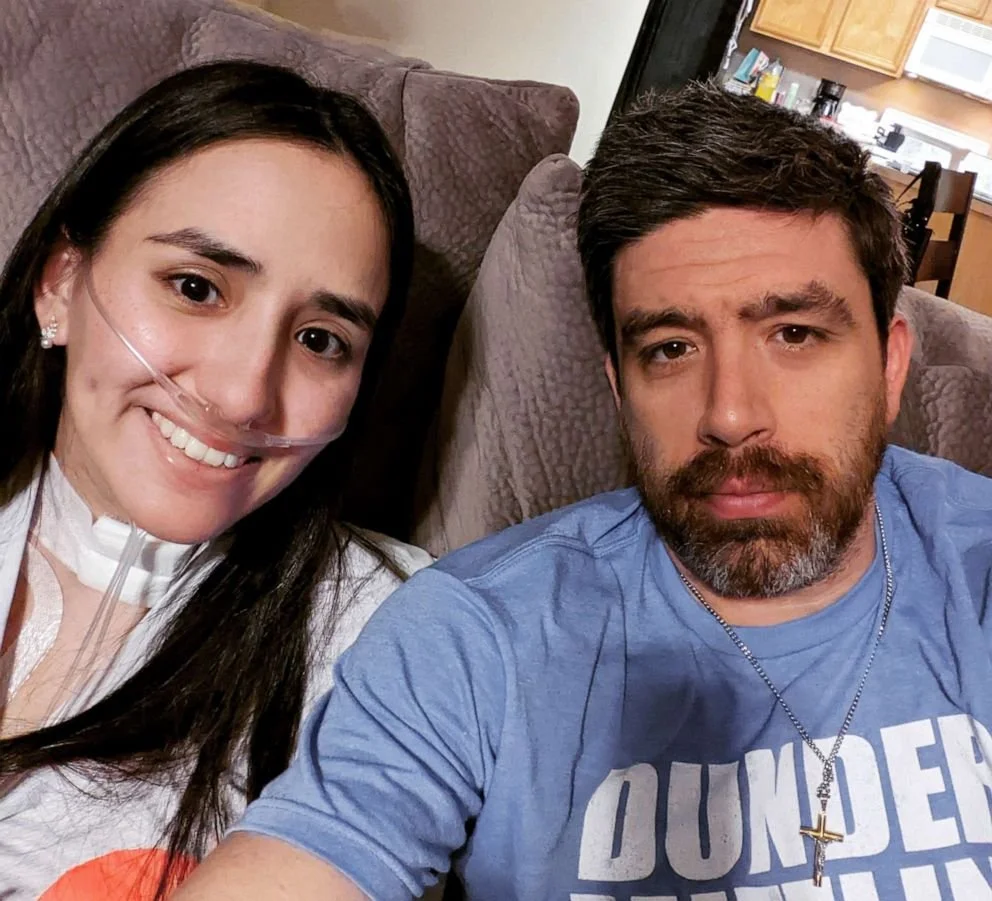
Texas couple survives journey through COVID hell, apparently without clergy help of any kind

Texas couple survives journey through COVID hell, apparently without clergy help of any kind

One of my closest friends is a veteran doctor in a town deep in the Bible Belt. I’ve had lots of conversations with him about this experiences during the coronavirus pandemic. He has had COVID and so have I.

One common theme in our conversations has been a sense of mystery that medical professionals, from the beginning, have had about this evolving disease. They understand why COVID hits some people hard, especially older patients and people who, for various reasons, have respiratory problems. The mystery is why this disease strikes with deadly force in some cases — but clearly not all — involving young, healthy adults. And why does COVID attack some hearts and not others?

Readers will collide with some of these mysteries while reading a stunning Washington Post story about a family’s 139-day hospital drama that has received quite a bit of attention in social media and the mainstream press. The headline: “Chris Crouch was anti-vaccine. Now his pregnant wife had covid, and he faced a terrible choice.” Here is the overture:

KINGWOOD, Tex. — Chris Crouch had had low expectations for online dating. He was a police officer in his 30s, almost a year out from a painful divorce, and, he said, the women he had met had been “playing games” in ways that left him dispirited.

Then he met her.

Diana Garcia Martinez was 24 and a busy single mom whose sister had set up her profile without her knowing. She was intelligent, empathetic and upfront, and by the third date, he was in love. “It was just a feeling. … I felt like I knew her my whole life,” he recalled explaining to his cousin Gilbert, knowing it was a cliche but also true.

What role does religious faith play in this story? That’s a complex question.

I mean, we are talking about people in Texas. No one should be surprised by frequent Godtalk and references to prayer.

However, as the son of a Texas Baptist pastor (who spend the last decade of his ministry as a hospital chaplain), I was very surprised that the word “church” is missing. Did this couple really go through this medical hell alone, without a pastor or friends who share a pew with them? Maybe this couple is in the “Nothing in particular” demographic, but I have my doubts.


Please respect our Commenting Policy

Pronoun wars? The 'usual suspects' quoted by the press skewed Baptism-gate coverage

Pronoun wars? The 'usual suspects' quoted by the press skewed Baptism-gate coverage

What is the role of journalism? Above all, it is to inform and educate. We know that reliable information is needed for any society to properly work. At the very least, readers deserve accurate information.

What happens when this isn’t the case? That’s the dilemma that befell many news organizations in recent days when a big Catholic news story came across their newsroom desks.

Yes, I’m referring to the botched baptism story out of Arizona last week that made so many headlines. And that’s hard to do considering the ongoing pandemic, the Beijing Olympics and Russia-Ukraine crisis.

Yes, baptism-gate has been all the rage. News coverage of it, however, not so good. More on that later.

To summarize: a priest named Andres Arango, following a church investigation, determined that he’d incorrectly performed thousands of baptisms over more than 20 years. It meant that those who had been baptized in Phoenix, and at his previous parishes in Brazil and San Diego, needed to be baptized again.

What did he do wrong? Arango, who has since resigned after making the mistake, used the wrong pronoun. Instead of saying, “I baptize you in the name of” he used “we.” After diocesan officials found out, they said people who Arango baptized aren’t officially Catholic. That means they weren’t eligible for other sacraments like Holy Communion.

This is where the news coverage got interesting. Once again, on an issue of great importance to Catholic readers and church leaders, secular news outlets assumed the views of one side were normative — even accurate — at the expense of church doctrine. Here at GetReligion, we have a name for that approach (click here for information).

Everyone from The New York Times and USA Today to NPR and local news outlets covered the story. What we learned from the coverage was telling. It was also largely one-sided and inaccurate.


Please respect our Commenting Policy

NPR report: Americans are 'sorting' themselves into red vs. blue zones (religion ghost alert)

NPR report: Americans are 'sorting' themselves into red vs. blue zones (religion ghost alert)

I absolutely love specific, symbolic details in Big Picture stories based on trends in statistics and culture.

During what we could call America’s “Divided We Fall” era (let’s hope that it passes), there are all kinds of ways to illustrate the tensions between blue citizens and red citizens. NPR recently did a feature — “Americans are fleeing to places where political views match their own“ — that had a great cultural detail way down in the script that suggested there’s more to this divide than politics.

The key fact: In the 2020 election, Joe Biden “won 85% of counties with a Whole Foods and only 32% of counties with a Cracker Barrel.”

What was missing in this fine, must-read story? It’s that issues of faith, morality and culture have just as much to do with America’s blue-red schism as politics. As the old saying goes, partisan politics is downstream from culture. If you have doubts about that, check out this GetReligion commentary on the classic 2003 “Blue Movie” essay in The Atlantic. Author Thomas B. Edsall observes:

Early in the 1996 election campaign Dick Morris and Mark Penn, two of Bill Clinton's advisers, discovered a polling technique that proved to be one of the best ways of determining whether a voter was more likely to choose Clinton or Bob Dole for President. Respondents were asked five questions, four of which tested attitudes toward sex: Do you believe homosexuality is morally wrong? Do you ever personally look at pornography? Would you look down on someone who had an affair while married? Do you believe sex before marriage is morally wrong? The fifth question was whether religion was very important in the voter's life.

Respondents who took the "liberal" stand on three of the five questions supported Clinton over Dole by a two-to-one ratio; those who took a liberal stand on four or five questions were, not surprisingly, even more likely to support Clinton. The same was true in reverse for those who took a "conservative" stand on three or more of the questions.

Note the religion question in that mix. Thus, the Big Idea in this Edsall essay?

According to Morris and Penn, these questions were better vote predictors—and better indicators of partisan inclination—than anything else except party affiliation or the race of the voter (black voters are overwhelmingly Democratic).

The new NPR piece, while stressing politics, does contain a few killer cultural details. The religious elements of the story? There are hints, but that is all.


Please respect our Commenting Policy

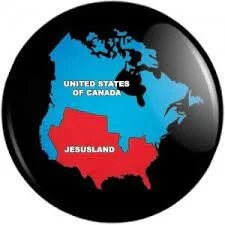
Plug-In: Canadian trucker protests echo U.S. Christian nationalism? Press says 'yes'

Plug-In: Canadian trucker protests echo U.S. Christian nationalism? Press says 'yes'

“Honk if you love Jesus.”

That headline on a recent story by the Ottawa Citizen’s Blair Crawford sets the scene as the Canadian newspaper explains “Why so many Evangelical Christians have joined the ‘Freedom Convoy.’”

Unfamiliar with the Freedom Convoy? The Wall Street Journal explains the protest in Canada’s capital city this way:

Since late January, downtown Ottawa has served as a parking lot for hundreds of heavy-duty trucks, pickup trucks and other vehicles, operated by individuals who say they are fed up with the social restrictions and vaccine mandates meant to contain the spread of Covid-19.

Back to the faith angle: The Ottawa newspaper notes:

At the ongoing demonstration … Jesus references and Bible quotes share space alongside “F*ck Trudeau” signs. The evangelical Christian message of love and peace clashes with reports of Ottawa residents being harassed for wearing masks, houses displaying the rainbow pride flag vandalized and the sight of Confederate flags and swastikas among the demonstrators. At one booth on Wellington Street you could get buttons with the yellow Star of David, likening the plight of Jewish people in Nazi Germany to the unvaccinated.

CBC News’ Jorge Barrera reports that “For many inside the freedom convoy, faith fuels the resistance.”

According to Barrera’s story:

Christian faith — with an overtly evangelical feel — flows likes an undercurrent through the Freedom Convoy in Ottawa.


Please respect our Commenting Policy

Thinking about Orthodox history and the complex West vs. East divisions in Ukraine

Thinking about Orthodox history and the complex West vs. East divisions in Ukraine

First things first, as I wade into “think piece” territory once again. I am, of course, a convert to Eastern Orthodox Christianity. I converted into parishes linked to the ancient church of Antioch (currently based in Damascus) and now attend a growing parish in the Orthodox Church in America, which grew out of the work of Russian Orthodox missionaries long ago.

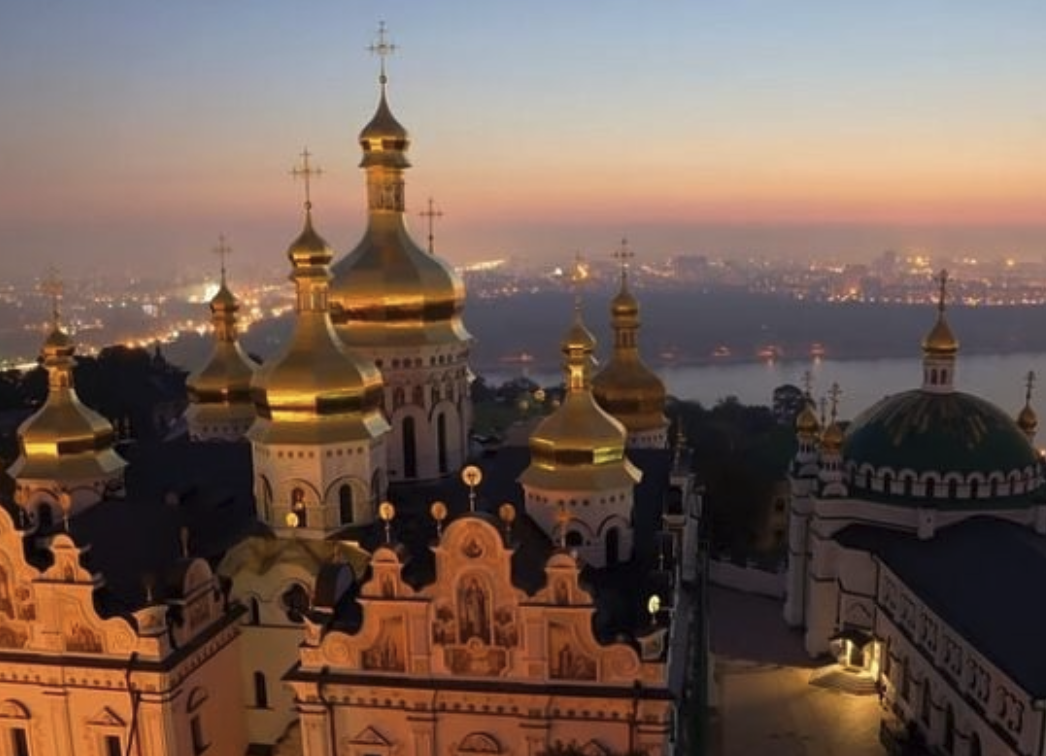
Why clear that up? It’s important, in light of some of the complex issues linked to the threat of war in Ukraine. I have been to Kiev twice and was blessed to worship with monks in the Kiev Pechersk Lavra. I know more than a few Russian and Eastern European Orthodox believers and I don’t think I’ve met anyone who is overly fond of Vladimir Putin (to say the least). Attempting to understand what many Russians think and believe about Ukraine has nothing to do with approving of Putin or wanting to see an invasion by Russian troops.

Moving on. The other day I spent an hour or so on the telephone with GetReligion patriarch Richard Ostling, working through some of the unbelievably complex and explosive issues surrounding Ukraine and the churches therein. The results are in an Ostling “Memo” with this headline: “In reportage on Russia and Ukraine, don't neglect the importance of two rival churches.

May I encourage GetReligion readers to check that out or even, if you read this piece before, glance through the two sections of it, in light of ongoing events?

Ukraine's ecclesiastical history, like its political history, is highly complex. The saga began with the A.D. 988 "baptism of Rus" in Kyiv (Russians prefer "Kiev") when Prince Vladimir proclaimed Orthodoxy the religion of his realm and urged the masses to join him in conversion and baptism.

Russians see Christendom's entry into Eastern Europe as the origin of their homeland and the Russian Orthodox Church. Russian President Vladimir Putin cites this history to support his claim for Ukraine as a client area within greater Russia instead of a validly independent nation. His post-Soviet Kremlin maintains close bonds with the Russian Church's Moscow Patriarchate, which in turn has centuries of ecclesiastical authority within Ukraine.

The key to all of this is understanding that highly European (with Catholic roots) Western Ukraine is a radically different place — in terms of language and faith — than Eastern Ukraine, with strong ties to Russian history and culture.

Is there one Ukraine?


Please respect our Commenting Policy