Worship

Complex doctrinal story or mere politics? Hmmm ... What shaped news about U.S. bishops?

Complex doctrinal story or mere politics? Hmmm ... What shaped news about U.S. bishops?

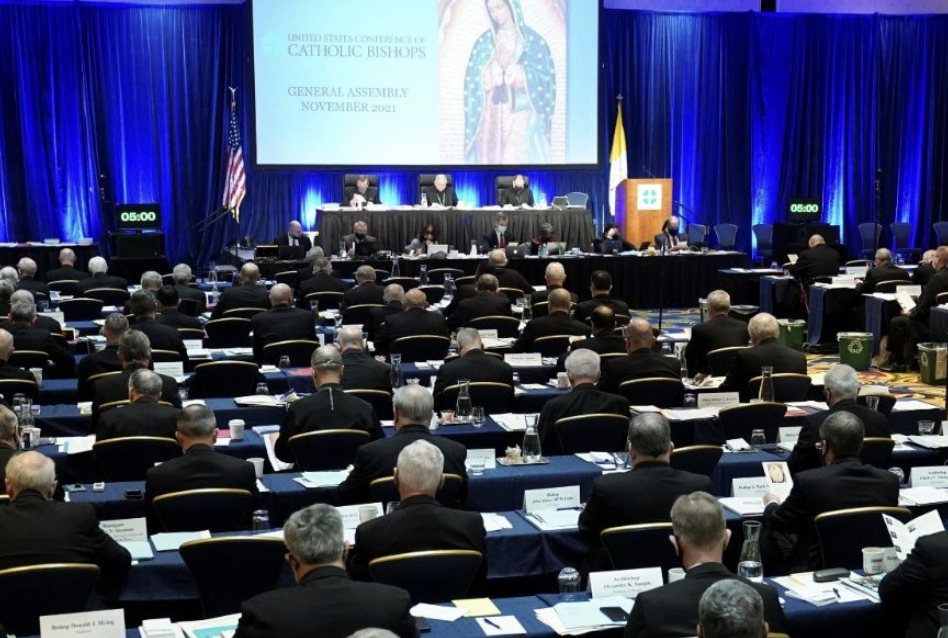
Let’s face it. This Baltimore meeting of the United States Conference of Catholic Bishops was a classic example of what kind of stories drive front-page news in the mainstream press.

For starters, you had a complicated story about a doctrinal, moral and institutional crisis in Roman Catholicism today — the collapse of Catholic beliefs and practice related to sin, confession, forgiveness and Holy Communion.

Then you had a political story that, for journalists, pitted the satanic hordes of conservative bishops linked, somehow, to Donald Trump against the wise, progressive, nuanced shepherds who sympathize with ordinary Catholics like President Joe Biden.

Guess which story framed most of the coverage? Consider this headline from the journalistic college of cardinals at The New York Times: Catholic Bishops Avoid Confrontation With Biden Over Communion.” And here’s the overture:

BALTIMORE — The Roman Catholic bishops of the United States backed away from a direct conflict with President Biden …, approving a new document on the sacrament of the eucharist that does not mention the president or any politicians by name.

At issue was the question of which Catholics, under which circumstances, are properly able to receive communion, one of the most sacred rites within Christianity. For some conservative Catholics, the real question was more pointed: Should Catholic politicians who publicly support and advance abortion rights be denied the sacrament?

For some of the most outspoken critics of Mr. Biden and other liberal Catholic leaders, the document represented a strategic retreat.

OK, here is a blunt question about that last statement: Is there any evidence that ANY DRAFT of this document — "The Mystery of the Eucharist in the Life of the Church" (.pdf here) — included a single reference to Biden, the White House or the presidency? If conservatives drove the process that led to this document, as assumed in the news coverage, isn’t it logical that references of this kind would have made it into digital ink at some point?


Please respect our Commenting Policy

Plug-in: Supreme Court questions inmate's demand for vocal prayers in Texas death chamber

Plug-in: Supreme Court questions inmate's demand for vocal prayers in Texas death chamber

Last week, we set the scene for the U.S. Supreme Court’s hearing of a religious freedom case involving a Texas death-row inmate.

This week, we summarize the mixed response justices gave in that inmate’s case.

Christianity Today’s Daniel Silliman lays out the plot aptly:

If you give a man in a Texas execution chamber the right to a prayer, is he entitled to two?

Can he ask for candles?

Or Communion?

If the United States Supreme Court says a condemned man has the religious right to have his pastor touch his foot while the state injects a lethal dose of chemicals into his veins, then will the court also have to allow a pastor to touch a man’s hand, his head, or even the place where the needle pierces the skin?

The justices quizzed attorney Seth Kretzer about the slippery slope of death penalty prayer on Tuesday morning, as they weighed whether the First Amendment and the Religious Land Use and Institutionalized Persons Act (RLUIPA), passed by Congress in 2000, give 37-year-old John Henry Ramirez the right to have his pastor lay hands on him and pray aloud when the state of Texas puts him to death.

The high court was skeptical of the inmate’s “demand that his pastor be allowed to pray out loud and touch him during his execution,” according to The Associated Press’ Jessica Gresko.

Justice Clarence Thomas raised concerns “about inmates ‘gaming the system’ by asserting dubious religious claims that served to delay their executions, notes the Wall Street Journal’s Jess Bravin.

The court “seemed divided,” explains the Washington Post’s Robert Barnes, who produced a “deeply reported and evocative” advance piece on the case, reporting from Corpus Christi, Texas.


Please respect our Commenting Policy

New podcast: Left, right, middle? Two giant U.S. seminaries are pro-vaccine, but anti-mandate

New podcast: Left, right, middle? Two giant U.S. seminaries are pro-vaccine, but anti-mandate

Let’s do a COVID-19 religion-news flashback, looking at a storyline or two near the start of the pandemic.

I’m doing this in order to analyze how the press is framing a major new development — the federal-court lawsuit filed by Southern Baptist Theological Seminary and Asbury Seminary challenging the Biden administration’s vaccine mandate. These are, by the way, two of the largest seminaries in the United States and, while other seminaries are collapsing, these two are growing.

Coverage of this lawsuit was the hook for this week’s “Crossroads” podcast. (CLICK HERE to tune that in.)

So now the flashback. Remember when I was writing — at GetReligion and in my national “On Religion” column for the Universal syndicate — about the vast majority of American religious groups who were caught in the middle of the “shelter in place” and lockdown wars linked to COVID-19?

Remember the Catholic priests in Texas who were trying to hear confessions out in the open air (in a big field and parking lot), while following guidelines for social distancing? Or how about the churches that were under attack for holding services in drive-in movie theaters, with the faithful in cars, while it was OK for folks to be in parking-lot scrums at liquor stores and big box super-marts? Then you had the whole casinos are “essential services” while religious congregations were not “essential.”

I argued, at that time, that this was way more complicated than religious people who cooperated with the government and those who didn’t. This was not a simple left vs. right, good vs. bad situation. In fact, there were at least FIVE different groups to cover in these newsy debates:

They are (1) the 99% of religious leaders who cooperated and took worship online, (2) some religious leaders who (think drive-in worship or drive-thru confessions) who tried to create activities that followed social-distancing standards, (3) a few preachers who rebelled, period, (4) lots of government leaders who established logical laws and tried to be consistent with sacred and secular activities and (5) some politicians who seemed to think drive-in religious events were more dangerous than their secular counterparts.

That’s complicated stuff.

The problem is that, in the world of American politics, things have to be crushed down into left and right templates or even, there for a few years, into pro-Donald Trump and the anti-Donald Trump. I’m sure we’re past that last part. Right?


Please respect our Commenting Policy

United Methodist pastor dives into HBO drag-queen culture, drawing joyful RNS applause

United Methodist pastor dives into HBO drag-queen culture, drawing joyful RNS applause

Religion news consumers who have been alive for a few decades are probably aware that — on issues related to the Bible and sexuality — United Methodists are, in fact, not united.

Anyone looking for deep background on that topic can turn to a classic document from the mid-1980s entitled “The Seven Churches of United Methodism.” Click here for the first of two “On Religion” columns I wrote about the continuing relevance of that report, which was written by Duke University sociologist Robert L. Wilson, who died in 1991, and William Willimon, now a retired bishop.

Of course, there are bipartisan plans for a United Methodist divorce that would create a more LGBTQ-friendly version of the current denomination and a global Methodist body that would retain traditional teachings on marriage and sexuality. Hold that thought.

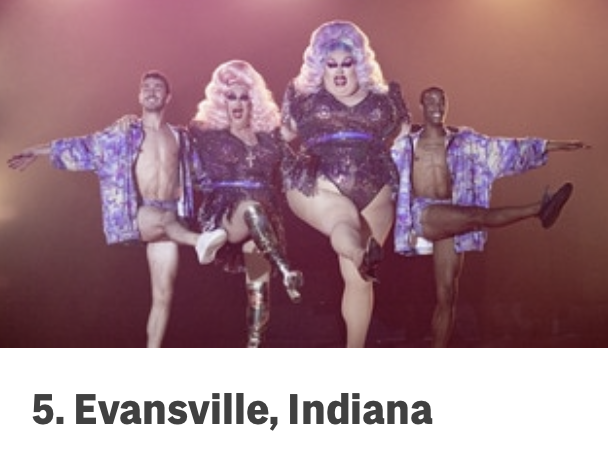
Every now and then, Religion News Service — one of the definitive sources for news on the Christian left — produces a news report that perfectly illustrates just how divided Methodists are on edgy issues related to sexuality. This brings us to the following dramatic double-decker RNS headline:

Meet the United Methodist pastor featured on HBO’s drag reality show ‘We’re Here’

Performing in drag was an ‘incredibly wonderful, refreshing, deepening, powerful spiritual experience,’ said Pastor Craig Duke of Newburgh United Methodist Church in Indiana.

Let me note, right up front, that this story opens all kinds of doors to discussions of the two doctrinal approaches that — on issues of biblical authority and a host of other issues — can be found in the current United Methodist Church. However, the story includes absolute zero voices from Methodists on the traditional side of these debates — even from members of the pastor’s own congregation who can be expected to ask questions about his TV leap into the world of drag culture.

Here is the overture to this advocacy-journalism report. This is long, but essential:


Please respect our Commenting Policy

Religious liberty at SCOTUS, again: Touch, comfort and the prayers of clergy at executions

Religious liberty at SCOTUS, again: Touch, comfort and the prayers of clergy at executions

The U.S. Supreme Court will hear religious freedom arguments Tuesday in the case of a Texas death-row inmate named John Henry Ramirez.

Ramirez, 37, wants his Southern Baptist pastor to lay hands on him and pray before and during his execution. The state of Texas won’t allow it.

Time magazine’s Madeleine Carlisle provides a nice overview of the case.

“The job of a minister is not to stand still and be quiet,” Dana Moore, the inmate’s pastor, tells Time. “Prayer is very important. And the power of touch is real. It’s encouraging. It brings peace. It’s significant… Why can’t I hold his hand?”

In an August interview with New York Times religion writer Ruth Graham, Ramirez took responsibility for killing Corpus Christi convenience store clerk Pablo Castro, calling Castro’s 2004 death a “heinous murder.” (As noted by the Corpus Christi Caller-Times, Ramirez “beat and kicked Castro and stabbed him 29 times with a 6-inch serrated knife.” He and two female accomplices left the scene with $1.25.)

“It would just be comforting,” Ramirez said of wanting Moore by his side at the time of his lethal injection.

At The Associated Press, religion writer David Crary explains that the “ACLU has a long history of opposing the death penalty and also says that condemned prisoners, even at the moment of execution, have religious rights.”

Conservative church-state activists have been involved in this case, and others like it, since Day 1.

“Intriguingly, the ACLU’s position in the Ramirez case is echoed by some conservative religious groups which support the death penalty and are often at odds with the ACLU on other issues,” Crary reports.


Please respect our Commenting Policy

When facing modern chaos, priests need old symbols and truths -- not more politics

When facing modern chaos, priests need old symbols and truths -- not more politics

Chaos is coming, so get ready.

That was the warning that -- four years ago -- iconographer and YouTube maven Jonathan Pageau offered to leaders of the Orthodox Church in America's Diocese of the South.

The French-Canadian artist was reacting to cracks in "cultural cohesion" after Donald Trump's rise to power, with wild reactions on left and right. And corporate leaders, especially in Big Tech, were throwing their "woke" weight around in fights over gender, racism, schools, religious liberty and other topics. Fear and angst were bubbling up in media messages about zombies, fundamentalist handmaidens and angry demands for "safe spaces."

Pageau didn't predict a global pandemic that would lock church doors.

But that's what happened. Thus, he doubled down on his "chaos" message several weeks ago, while addressing the same body of OCA priests and parish leaders.

"If some of you didn't believe me back then, I imagine you are more willing to believe me now," he said.

Pageau focused, in part, on waves of online conspiracy theories that have shaken many flocks and the shepherds who lead them. Wild rumors and questions, he said, often reveal what people are thinking and feeling and, especially, whether they trust authority figures.

"Even the craziest conspiracy nuts, what they are saying is not arbitrary," he said, in Diocese of the South meetings in Miami, which I attended as a delegate from my parish in Oak Ridge, Tenn.

"It's like an alarm bell. It's like an alarm bell that you can hear, and you can understand that the person that's ringing the alarm maybe doesn't understand what is going on. ... They may think that they have an inside track based on what they've heard and think that they know what is going on. But the alarm is not a false alarm, necessarily."

The chaos is real, stressed Pageau. There is chaos in politics, science, schools, technology, economic systems, family structures and many issues linked to sex and gender.


Please respect our Commenting Policy

Yes, there were overlooked religion angles in today's biggest U.S. political news story

Yes, there were overlooked religion angles in today's biggest U.S. political news story

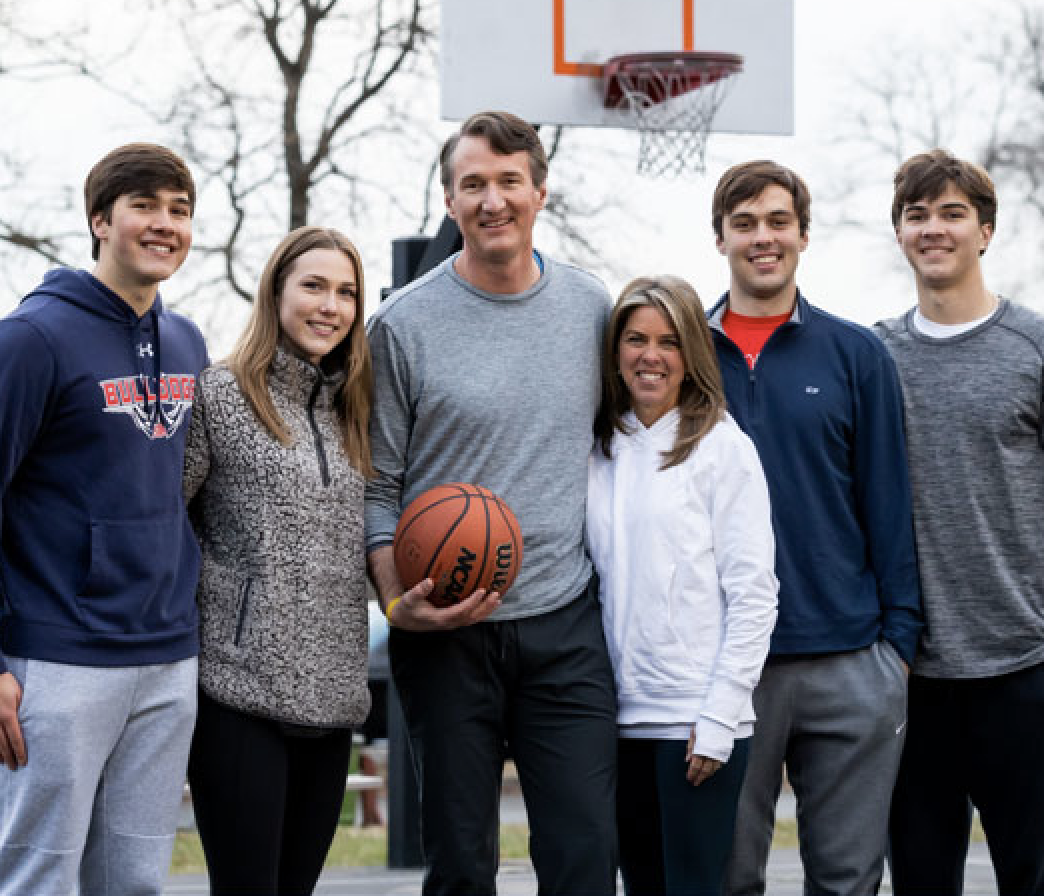
Well what do you know. Evangelical Anglicans and the Salvation Army had a big night in the Commonwealth of Virginia.

That’s probably not the first thing that leaps to mind today, for political junkies who spent most of the night (the World Series finale was a big deal) watching political pundits express shock and, sometimes, grief watching a Republican newcomer upset name-brand Democratic Party candidate.

Lots of people talked about Donald Trump, of course. Some people dug a bit deeper and focused on how governor-elect Glenn Youngin managed to affirm some themes from the Trump revolution, while striving to stay as far away as possible from personal contact with Orange Man Bad.

This brings me to a headline this morning at A Journey Through NYC Religions, which is one of those niche-news websites that many religion-beat pros have in their browser favorites — because of its heady mix of hard facts and hard-to-label commentary.

Here’s the headline: “Faith trumps Trump in Virginia.”

Say what?

I think many journalists would assume — if they thought about religion angles in the Virginia race — that the members of the victorious GOP team probably came from White megachurches. But that’s not what veteran editor Tony Carnes found when he looked for the ties that bind, in this case. Here is his overture:

Most of the media attention in the Virginia elections has been on Trump and his influence. The Democratic candidate Terry McAuliffe tried unsuccessfully to tag his opponent Glenn Youngkin as a Trumper.

However, under the surface of politics, there was a deeper spiritual culture and social network that connected the top three candidates in Virginia. This characteristic made the GOP effort in Virginia more winsome (indeed, that is the first name of Winsome Sears, the next Lieutenant Governor.)


Please respect our Commenting Policy

Jill Biden's reborn Christian faith: Washington Post dug for some key details (AP didn't)

Jill Biden's reborn Christian faith: Washington Post dug for some key details (AP didn't)

Since I grew up Southern Baptist, I have heard many, many people give “testimonies” about how they embraced faith and were “born again.” Now that I am Eastern Orthodox, I have heard many people tell similar stories about how they came to embrace ancient Christian doctrines and beauty of sacramental worship.

Most of the time these stories include some details about history of the person’s faith or lack thereof. One part of telling the point to which a believer has travelled is to share some background information about where the journey started.

I would certainly think that this would be true when the person who is “testifying” is America’s current First Lady. Thus, I had a few expectations when I started reading the Associated Press report that ran with this headline: “Jill Biden says SC ‘prayer partner’ helped change her life.”

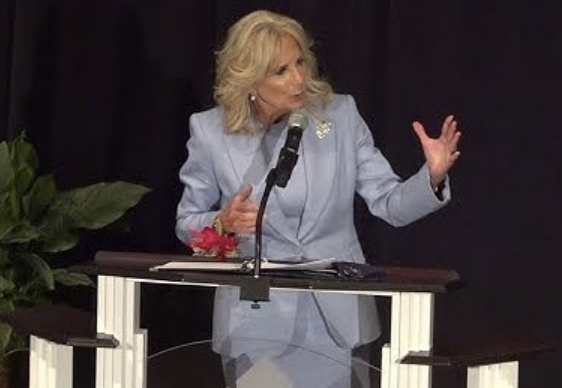
The hook for this story was the surprise visit that President Joe Biden and First Lady Jill Biden made to West Columbia, S.C., to honor the 50th anniversary of the Rev. Charles B. Jackson becoming the pastor of Brookland Baptist Church. The focus of the story, however, was on Jill Biden’s “prayer partner” relationship with the pastor’s wife, Robin. Here is the crucial passage in this AP report:

The first lady doesn’t usually speak publicly about her faith but said Sunday that “it’s always been an important part of who I am.” She recalled being a teenager who “fell in love with the peace of the quiet wooden pew,” the “joy of the choir” and the “deep wisdom of the Gospels.”

She said prayer helps her “connect to the people that I love and to the world around me.”

“But in 2015, my faith was shaken,” the first lady said, her voice breaking as she described watching “my brave, strong, funny, bright young son fight brain cancer.”

“Still, I never gave up hope,” she said. “Despite what the doctor said, I believed that my son would make it. In the final days, I made one last, desperate prayer and it went unanswered.”


Please respect our Commenting Policy

Police kept priest from saying Last Rites for stabbed politician. News story? (Yes, in UK)

Police kept priest from saying Last Rites for stabbed politician. News story? (Yes, in UK)

The basic facts are clear and powerful: A member of of the UK Parliament is stabbed to death by a terrorist during an open, low-security town-hall meeting with citizens in Essex.

It also appears that religion is part of this story.

The key question, apparently, was whether to mention that Conservative MP David Amess was Catholic. This created the following equation — the more “Catholic” details, the more “conservative” the story. This is especially true about a poignant, and some would say outrageous, fact about police actions that prevented a priest from being able to say Last Rites for the victim. Hold that thought.

Believe it or not, it was possible to find a faith-free version of this story, as in this report from ABC News. Then there was this watered-down fact paragraph way down in the Reuters report:

Amess, married with five children, was first elected to parliament to represent the town of Basildon in 1983, and then nearby Southend West in 1997. He was knighted by Queen Elizabeth for his public service in 2015.

His website listed his main interests as "animal welfare and pro-life issues".

Then there was this chunk of background material from the BBC:

A Conservative backbencher for nearly forty years, Sir David entered Parliament in 1983 as the MP for Basildon. He held the seat in 1992, but switched to nearby Southend West at the 1997 election.

Raised as a Roman Catholic, he was known politically as a social conservative and as a prominent campaigner against abortion and on animal welfare issues. He was also known for his championing of Southend, including a long-running campaign to win city status for the town.

Wait — he was “raised” as a Catholic?


Please respect our Commenting Policy