Worship

Plug-In: Generations of indigenous children snatched from families and churches took part

Plug-In: Generations of indigenous children snatched from families and churches took part

For 120 years, Canada took Indigenous children from their families and forced them into residential schools run by Christian denominations — a practice that didn’t end until 1996.

Now, the discoveries of hundreds of unmarked graves at two former residential schools have rocked America’s northern neighbor, and the aftershocks have spread to the U.S.

Last month, the Tk’emlúps te Secwépemc First Nation announced that it had found the remains of 215 children near the former Kamloops Indian Residential School in British Columbia. And this week, the Cowessess First Nation reported locating more than 600 unmarked graves at the former Marieval Indian Residential School in Saskatchewan.

The discoveries have brought a national reckoning over what Canadian Prime Minister Justin Trudeau characterizes as “a dark and shameful chapter” of the nation’s history.

“I’m ashamed as a White Christian. I’m ashamed of what we did,” Kevin Vance, a minister in Regina, Saskatchewan, told me earlier this month. “I’m ashamed of all the racism and genocide that we concocted and that we did it in the name of Jesus. That’s just unbelievable to me.”

But the dark history isn’t limited to Canada: The news there “has magnified interest in the troubling legacy both in Canada and the United States,” according to The Associated Press.

As Susan Montoya Bryan of the Associated Press reports, the U.S. government “will investigate its past oversight of Native American boarding schools and work to ‘uncover the truth about the loss of human life and the lasting consequences’ of policies that over the decades forced hundreds of thousands of children from their families and communities.”

In the U.S. — as in Canada — Christian denominations are an important part of the story, notes veteran religion writer G. Jeffrey MacDonald, who wrote about American church-run boarding schools in 2018.

“The churches were not just complicit. They were participatory,” Christine Diindiisi McCleave, chief executive officer of the National Native American Boarding School Healing Coalition, told MacDonald then. “They received federal funding and helped carry out the policy.”
Please respect our Commenting Policy

U.S. Catholic bishops OK drafting Communion guidelines: Press asks about politics -- period

U.S. Catholic bishops OK drafting Communion guidelines: Press asks about politics -- period

Any short list of classic Pope Francis remarks about abortion would have to include the 2018 speech in which he asked, using a Mafia image: “Is it just to resort to a contract killer to solve a problem?”

There was more: “Interrupting a pregnancy is like eliminating someone. Getting rid of a human being is like resorting to a contract killer to solve a problem.” While some people support abortion rights, Francis added: “How can an act that suppresses innocent and defenseless life as it blossoms be therapeutic, civil or simply human?”

Or how about this quote, drawn from a 2020 address to the United Nations?

“Unfortunately, some countries and international institutions are also promoting abortion as one of the so-called ‘essential services’ provided in the humanitarian response to the pandemic. … It is troubling to see how simple and convenient it has become for some to deny the existence of a human life as a solution to problems that can and must be solved for both the mother and her unborn child.”

While there is no question that Pope Francis is a progressive on many issues linked to economics, immigration and other political topics, he has continued — sometimes in blunt language involving evil and the demonic — to defend the basics of Catholic moral theology.

So what are readers supposed to make of the Sunday New York Times story that opens with this summary statement:

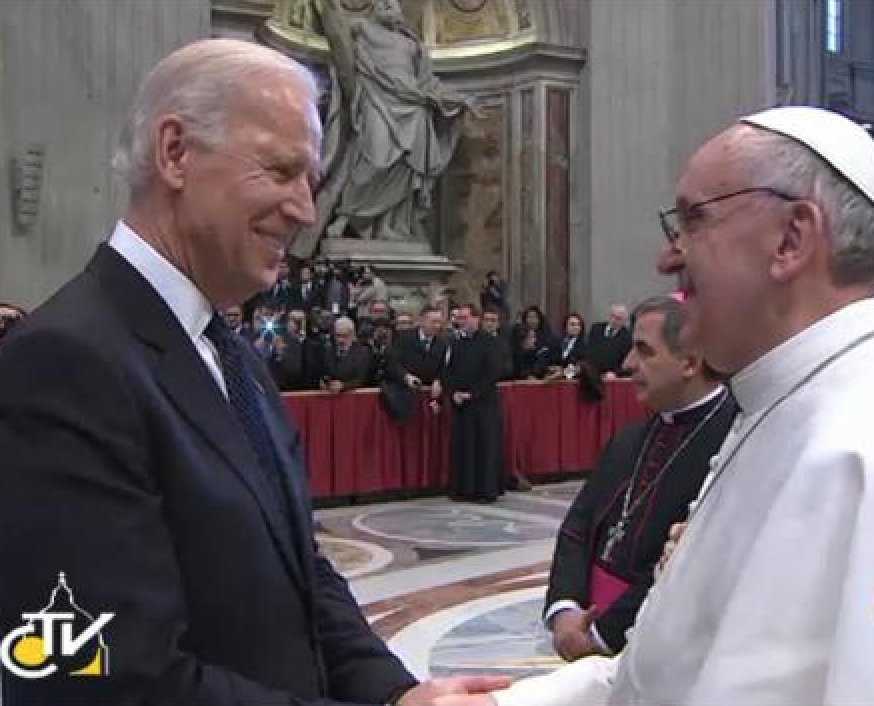
WASHINGTON — Pope Francis and President Biden, both liberals, are the two most high-profile Roman Catholics in the world.

But in the United States, neither of these men is determining the direction of the Catholic Church. It is now a conservative movement that decides how the Catholic Church asserts its power in America.

Perhaps that is a bit simplistic?

The context, of course, was the decision by U.S. Catholic bishops — after three days of contentious debate — to approve a measure on to draft a statement that could deny Holy Communion to pro-abortion-rights politicians like President Joe Biden.


Please respect our Commenting Policy

Thinking about 1962: Catholic politicos, an archbishop, excommunication, doctrine and race

Thinking about 1962: Catholic politicos, an archbishop, excommunication, doctrine and race

The equation was rather remarkable.

First you had some Catholic politicians who — in words and deeds — kept defying church teachings on an important and controversial topic in public life.

Then you had an archbishop who faced a tough decision about whether to do anything, beyond verbal warnings, to show them he was willing to defend these church teachings on moral theology and the sacraments.

When the archbishop stepped up and punished the politicos, denying them Holy Communion and more, the mainstream press — CBS and The New York Times, even — openly backed his actions with positive coverage.

Wait, what was that last thing?

Right now, the U.S. Catholic bishops are headed deeper into a showdown over the status of President Joe Biden and other Catholics who openly — through word and deed — defy church teachings on abortion, marriage, gender and other issues in which doctrines are defined in the Catholic Catechism and centuries of church tradition.

As part of the discussion this past week, America magazine — a strategic voice for Catholic progressives — can this fascinating essay: “What a 60-year-old excommunication controversy tells us about calls to deny Biden Communion.” It was written by Peter Feuerherd, a journalism professor at St. John's University in New York City. Here’s the overture:

In April 1962, Archbishop Joseph Rummel of New Orleans not only denied Communion to three Catholics in his archdiocese; he went a step beyond. At 86 years of age and in ill health — he would die two years later — he formally excommunicated the three, who vehemently opposed his efforts to desegregate Catholic schools.


Please respect our Commenting Policy

Weekend thinking: Concerning Southern Baptists and the fracturing of evangelicalism

Weekend thinking: Concerning Southern Baptists and the fracturing of evangelicalism

All together now: Can the word “evangelical” be defined in doctrinal terms or is it time to admit that “evangelical” is a political term and that’s that?

A related question: Is the war between the alleged “woke” conservatives and the “real” conservatives in the Southern Baptist Convention based on serious disagreements about essential Christian doctrines or leftover resentments and anger from the 2016 rise of Donald Trump?

The way I see things, religion-beat pros can do some groundbreaking research on these questions this coming week during the SBC’s tense national meetings in Nashville.

If you have been following SBC life for a half-century or so, you know that what goes around comes around. Only this time it is really, really hard to find concrete doctrinal differences between the generals in the two warring camps. That was the subject of this week’s GetReligion podcast: “Will SBC politicos answer questions about doctrinal clashes in this new war?

But here is one more question for this weekend: Is there anything really new about this conflict?

A fascinating piece at MereOrthodoxy.com — “The Six Way Fracturing of Evangelicalism” — believes that we are watching a religious and cultural earthquake that will change evangelicalism forever. The piece was written by the Rev. Skyler Flowers of Grace Bible Church in Oxford, Miss., a graduate of Reformed Theological Seminary.

Before I point out a few crucial pieces of that puzzle, I’d like — once again — to flash back to a 1987 interview I did with the Rev. Billy Graham, a man who knew a thing or two about evangelicalism. I asked him: “What does the word ‘evangelical’ mean?”

"Actually, that's a question I'd like to ask somebody, too," he said, during a 1987 interview in his mountainside home office in Montreat, N.C. This oft-abused term has "become blurred. ... You go all the way from the extreme fundamentalists to the extreme liberals and, somewhere in between, there are the evangelicals."

The key, he argued, is that “evangelical” needed to be understood:


Please respect our Commenting Policy

Friends of Friendless Churches: Trying to save sacred pieces of past in England and Wales

Friends of Friendless Churches: Trying to save sacred pieces of past in England and Wales

The structure of St. Baglan's Church in North Wales is simple, with plastered stone walls and whitewashed timbers between the slate slabs of its roof and floor.

The 13th Century sanctuary was rebuilt in the 1800s, but the carved doorway lintel dates from the 5th or 6th century. An adjacent field contains the 7th Century well of St. Baglan and for ages the faithful sought healing in its waters.

"This church was built on the site of an earlier church and there were sanctuaries here before that. People in Wales have been coming to sites like this for worship back into pre-Christian times," said Rachel Morley, director of the Friends of Friendless Churches since 2018.

During a visit to Llanfaglan parish in Wales, this tiny, abandoned sanctuary was surrounded by sea mists and low clouds from the mountains, she said. Then the sunset light over the Irish Sea "shot under the eaves and the church lit up inside with golden light. It was a complete sensory overload. That had to mean something."

Was this church designed so that this light would illumine the prayers of evensong? That's the kind of question members of the Friends of Friendless Churches have been asking since 1957, when Welsh journalist Ivor Bulmer-Thomas founded the charity with the help of poet T.S. Eliot, artist John Piper, British politician Roy Harris Jenkins and others.

The goal was to preserve historic, "significant" churches "threatened by demolition, decay, or inappropriate conversion." By the end of 2021, the charity will control 60 churches in England and Wales, almost all of them Anglican sanctuaries.

Year after year, the Friends of Friendless Churches watch as 30 or so truly historic churches go on sale and "there could be many more closed at any time," said Morley, reached by telephone.


Please respect our Commenting Policy

New podcast: Among waves of Tulsa Massacre ink, a fine AP religion story pointed forward

New podcast: Among waves of Tulsa Massacre ink, a fine AP religion story pointed forward

The 100th anniversary of the Tulsa Race Massacre is one of those stories that punches every button that can be pushed in news coverage today, especially after months of news about the complex Black Lives Matter movement and its impact on American life.

Obviously, this is a story about history and the voices of the few survivors who are alive to talk about the impact of this event on their lives and their community. In many parts of America, this is a story that can be linked to similar horrors from the past. For starters, there were the Red Summer riots of 1919 here in Knoxville, Tenn., and elsewhere.

Obviously, this is a legal and political story right now as efforts continue to pull the details of the Tulsa Massacre into the light of day. Consider the top of this remarkable multi-media report from The New York Times: “What the Tulsa Race Massacre Destroyed.”

Imagine a community of great possibilities and prosperity built by Black people for Black people. Places to work. Places to live. Places to learn and shop and play. Places to worship.

Now imagine it being ravaged by flames.

In May 1921, the Tulsa, Okla., neighborhood of Greenwood was a fully realized antidote to the racial oppression of the time. … Brick and wood-frame homes dotted the landscape, along with blocks lined with grocery stores, hotels, nightclubs, billiard halls, theaters, doctor’s offices and churches.

Yes, many of the 13 churches in Greenwood were destroyed or damaged, as 35 square blocks were burned down. No one truly knows how many people died, but the estimate of 300 is almost certainly low, with reports of mass graves and bodies tossed in the Arkansas River. As many news reports noted, no one has ever been prosecuted the crimes linked to the massacre in and around what was known as America’s Black Wall Street.

Did the major news coverage of the anniversary — some of it staggering in its complexity and depth — cover the many religion angles of this story? Yes and no. As always, political voices and news hooks received the most attention.

But there was one Associated Press story in particular — “Tulsa pastors honor ‘holy ground’ 100 years after massacre” — that we discussed, and praised, during this week’s “Crossroads” podcast (click here to tune that in).


Please respect our Commenting Policy

Boris Johnson's Catholic wedding: Why didn't the New York Times consult a Canon lawyer?

Boris Johnson's Catholic wedding: Why didn't the New York Times consult a Canon lawyer?

When preparing news reports about a chess match, it really helps if reporters quote one or more experts on the rules of chess.

The same thing is true when covering the FIFA World Cup. At some point, it would help to have an expert define “offsides” and some of soccer’s other more complicated rules.

When covering the U.S. Supreme Court, it helps to have a reporter on the team with a law degree and some serious experience covering debates in elite courtrooms.

This brings me that New York Times article the other day about that eyebrow-raising wedding at Westminster Cathedral between the current prime minister of England and his latest of many lady friends. The double-decker question covered many essential facts:

Why Could Boris Johnson Marry in a Catholic Church?

The British prime minister was married twice before, but the church didn’t recognize those unions because they were not Catholic.

Now, this article did some things very well, including offering a crisp, clear summary of Johnson’s complicated history as a husband and lover. Read that, if you wish.

However, I was struck by two words that were missing in this article — that would be, “Canonical” and “form” — even though discussions of this legal term was all over Catholic Twitter once the secret wedding was made public.

What, pray tell, is “Canonical form”? We will get to that in a moment.

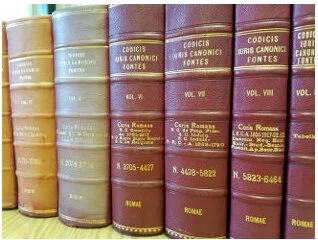
In terms of journalism basics, the crucial point is that it really would have helped if the Times team had interviewed one or two Catholic Canon lawyers who understand this term and the history behind the church’s teachings on this subject. As things turned out, readers ended up knowing more about how this rite offended the sensibilities of Catholic LGBTQ activists than the specifics of the church laws that allowed the wedding to take place.


Please respect our Commenting Policy

'On Religion' flashback to 1998: Ten years of reporting on a church-state fault line

'On Religion' flashback to 1998: Ten years of reporting on a church-state fault line

Back in the 1980s, I began to experience deja vu while covering event after event on the religion beat in Charlotte, Denver and then at the national level.

I kept seeing a fascinating cast of characters at events centering on faith, politics and morality. A pro-life rally, for example, would feature a Baptist, a Catholic priest, an Orthodox rabbi and a cluster of conservative Methodists, Presbyterians, Episcopalians and Lutherans. Then, the pro-choice counter-rally would feature a "moderate" Baptist, a Catholic activist or two, a Reform rabbi and mainline Methodists, Presbyterians, Episcopalians and Lutherans.

Similar line-ups would appear at many rallies linked to gay rights, sex-education programs and controversies in media, the arts and even science. Along with other journalists, I kept reporting that today's social issues were creating bizarre coalitions that defied historic and doctrinal boundaries. After several years of writing about "strange bedfellows," it became obvious that what was once unique was now commonplace.

Then, in 1986, a sociologist of religion had an epiphany while serving as a witness in a church-state case in Mobile, Ala. The question was whether "secular humanism" had evolved into a state-mandated religion, leading to discrimination against traditional "Judeo-Christian" believers. Once more, two seemingly bizarre coalitions faced off in the public square.

"I realized something there in that courtroom. We were witnessing a fundamental realignment in American religious pluralism," said James Davison Hunter of the University of Virginia. "Divisions that were deeply rooted in our civilization were disappearing, divisions that had for generations caused religious animosity, prejudice and even warfare. It was mind- blowing. The ground was moving."

The old dividing lines centered on issues such as the person of Jesus Christ, church tradition and the Protestant Reformation. But these new interfaith coalitions were fighting about something even more basic – the nature of truth and moral authority.


Please respect our Commenting Policy

What's going on with faith trends in American Judaism, nationally and in your locale?

What's going on with faith trends in American Judaism, nationally and in your locale?

Since 9-11, the media have — with good cause — lavished attention upon Islam in America.

There's been less interest in the cultural and demographic challenges facing Judaism, long the nation's second-largest religion behind Christianity. Jewish news coverage in the mainstream press tends to focus on Democratic Party politics, trends in anti-Semitism and attitudes toward Israel and the unending Mideast mess.

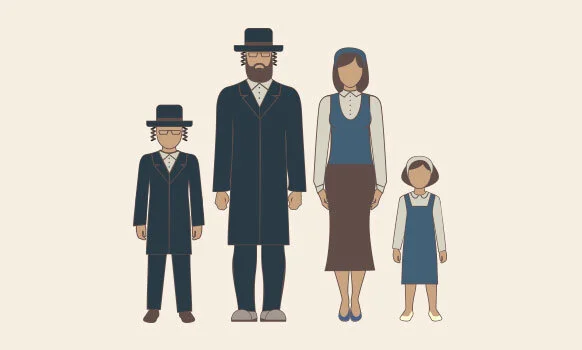
Those are important, of course, but what about Judaism as a living 21st Century religious faith? Here, as so often, the Pew Research Center steps up with its 248-page survey on "Jewish Americans in 2020" (click here for the .pdf report).

The Guy proposes that this is the ideal moment for journalists to focus on the religion of Judaism, asking rabbis and lay synagogue leaders how Pew's trends are playing out both nationally and with their particular audiences and locales.

At one time, Jewish federations conducted such community surveys. This one follows up Pew's major survey in 2013 but direct comparisons with the 2000 numbers are iffy due to changed methodology.

As so often, Pew worked from an unusually large random sample of 4,718 Jewish adults who were interviewed between November 2019 and June 2020. To learn more about Pew's revised methodology to cope with low "response rates" among those sampled -- among factors that produced the embarrassingly wrong 2020 political polls -- see this prior Guy Memo.

As writers dig into the numbers they'll understand fears that unless things change "we are going to lose the illusion of there being a Jewish people." So says "modern Orthodox" Rabbi Shmuly Yanklowitz, speaking with Forward.com (“Pew’s new study of American Jews reveals widening divides, worries over antisemitism”).

The bottom line: Across the board, the gap between Orthodox and non-Orthodox Jews is deepening. This looks very much like the gap between declining U.S. "mainline" and "liberal" Protestants over against conservative or "evangelical" believers, or the gap between traditional religious believers and the growing world of atheists, agnostics and the “religiously unaffiliated.”


Please respect our Commenting Policy