Worship

First Baptist in Dallas works to promote COVID-19 vaccines: Was this a big news story?

First Baptist in Dallas works to promote COVID-19 vaccines: Was this a big news story?

If you have followed news coverage of debates about COVID-19 vaccines, you know that the leaders of churches and major religious denominations — Black and White — have been walking a tightrope on this issue.

Once this subject became politicized — like everything else in American life — there was almost no way to tackle it without causing more tension in their flocks.

Nevertheless, the vast majority of major religious leaders have been doing everything they can to make it possible for more people to safely return to the pews. These efforts have received quite a bit coverage at the local level.

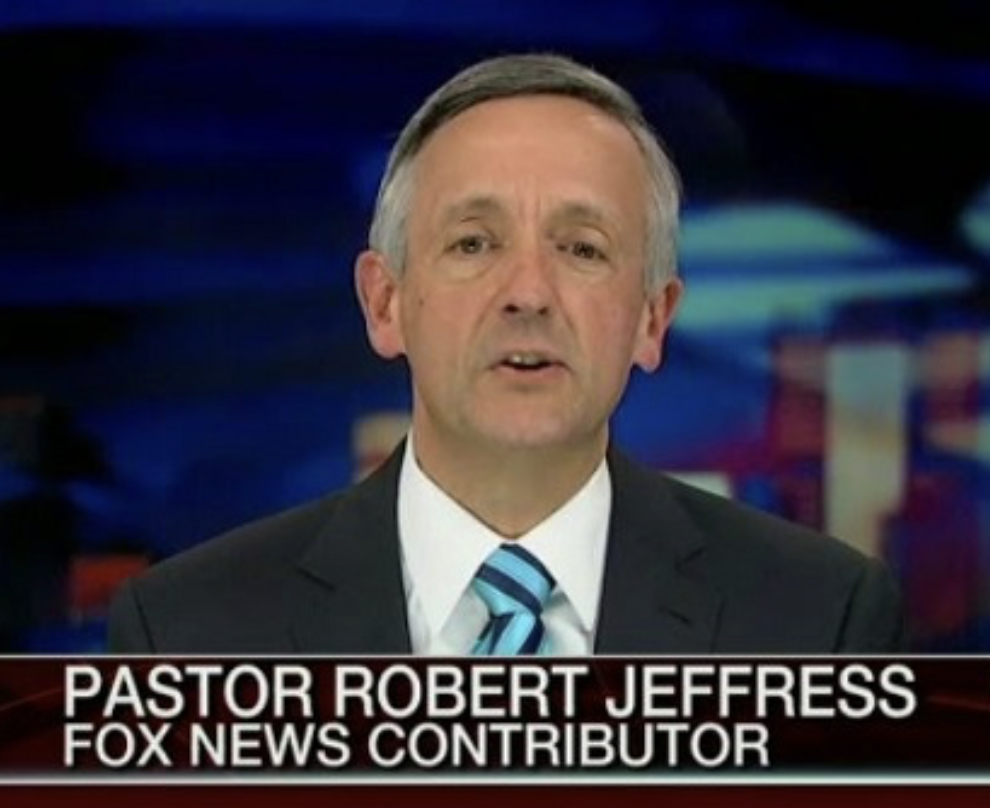
Take, for example, this recent headline in The Dallas Morning News: “Robert Jeffress hopes to combat vaccine fears with First Baptist Dallas’ COVID-19 vaccination effort.” Here is the overture:

To combat vaccine hesitancy among Christian evangelicals, First Baptist Church in Dallas will have a COVID-19 vaccination clinic. …

Senior pastor Robert Jeffress said he hopes the move will encourage people to get shots so more of his 14,000 congregants can come and worship in person.

“Our church will never be what it needs to be until you’re back. The greater risk is the spiritual danger of staying isolated,” Jeffress said in a recent sermon. “I’m not forcing anybody to get the vaccine. That’s your choice. But what I am saying is if you are not back yet, and would like to come back, one option is to take the vaccine, and therefore you don’t have to worry about what other people do or don’t do here in the church.”

Like I said, this was a totally normal local story on this issue.

However, stop and think about this question: Would this have been a bigger story — attracting coverage from TV networks and elite newsrooms such as The New York Times — if Jeffress had taken a stance against the vaccines?

You know it would have been a national story, in part because of this preacher’s past support for former President Donald Trump.

Please respect our Commenting Policy

Bishops debate 'Eucharistic coherence,' a matter of doctrine, politics and eternal judgement

Bishops debate 'Eucharistic coherence,' a matter of doctrine, politics and eternal judgement

Archbishop Joseph Cordileone leads the Archdiocese of San Francisco, a symbolic city in debates about modern American culture.

But what matters the most, as tensions rise among Catholic leaders, is that Cordileone is House Speaker Nancy Pelosi's hometown bishop. Thus, it's hard for politicos to avoid blunt passages in his new pastoral letter, "Before I Formed You in the Womb I Knew You."

Citing centuries of church doctrine, the archbishop argued that Catholics who "reject the teaching of the Church on the sanctity of human life and those who do not seek to live in accordance with that teaching should not receive the Eucharist. It is fundamentally a question of integrity: to receive the Blessed Sacrament in the Catholic liturgy is to espouse publicly the faith and moral teachings of the Catholic Church, and to desire to live accordingly."

There is, he added, "a great difference between struggling to live according to the teachings of the Church and rejecting those teachings. … In the case of public figures who profess to be Catholic and promote abortion, we are not dealing with a sin committed in human weakness or a moral lapse: this is a matter of persistent, obdurate and public rejection of Catholic teaching. This adds an even greater responsibility to the role of the Church's pastors in caring for the salvation of souls."

Citing a famous example, Cordileone recalled when former New York Mayor Rudolph Giuliani received Holy Communion during a 2008 Mass led by Pope Benedict XVI. This caused scandal and, according to the late Cardinal Edward Egan, violated an agreement that Giuliani would not receive the Sacrament because of his public support for abortion rights and other clashes with doctrine.

The big issue, as U.S. bishops prepare for June discussions of "Eucharistic coherence," is not how to handle a former New York City mayor. The question is whether bishops can address their own divisions about the status of pro-abortion-rights Catholics such as Pelosi and President Joe Biden. While vice president, Biden also performed two same-sex marriage rites.

San Diego Bishop Robert McElroy, firing back at Cordileone in America magazine, stressed that the "Eucharist must never be instrumentalized for a political end. … But that is precisely what is being done in the effort to exclude Catholic political leaders who oppose the church's teaching on abortion and civil law. The Eucharist is being weaponized and deployed as a tool in political warfare. This must not happen."


Please respect our Commenting Policy

Trends that influence news: Where in the world is Christianity still growing?

Trends that influence news: Where in the world is Christianity still growing?

THE QUESTION:

Where in the world is Christianity still growing, and why?

THE RELIGION GUY'S ANSWER:

This page often addresses topics that have been in the air for months, even years. But this one is raised by a brand-new article this week at Christianity Today and a more academic version posted by the journal Sociology of Religion. There's further timeliness in the Gallup Poll's March bombshell that less than half of Americans now claim religious affiliations, the lowest mark since it began asking about this 84 years ago.

The CT article, headlined "Proof That Political Privilege Is Harmful for Christianity," is found here. The academic article is headlined "Paradoxes of Pluralism, Privilege and Persecution: Explaining Christian Growth and Decline Worldwide," and available for purchase.

So: Bad times for Christians are good times for Christianity?

That contention is a modern update on Tertullian's 2nd Century maxim during an era of outright persecution, "semen est sanguis Christianorum" — "blood is the seed of Christians." If you persecute us, we grow even more. And so it was.

The scholars proposing a 21st Century version of this are Nilay Saiya (writing solo in C.T.) and study partner Stuti Manchanda, both at the public policy department of Nanyang Technological University in Singapore. This team analyzed data on churches' rise and decline in 166 countries from 2010 to 2020, found impressive expansion, and examined causal factors.

Looking back, Asia began the last century with only one Christianized nation, the Philippines, but more recently the faith "has grown at twice the rate of the population." Africa in 1900 had only pockets of Christians, mostly in coastal locations but today is "the world's most Christian continent in terms of population."

Now, all of that is familiar to missionary strategists and historians of the modern church. What's new here is the team's fresh look at explanations. They conclude "the most important determinant of Christian vitality is the extent to which governments give official support to Christianity." It's often said that the American founders' pioneering separation of church and state energized Christianity across two centuries.


Please respect our Commenting Policy

New podcast: Yes, election of first trans/queer/gender fluid ELCA bishop was a big story

New podcast: Yes, election of first trans/queer/gender fluid ELCA bishop was a big story

Imagine that you are a pastor or a layperson in the Lutheran Church-Missouri Synod, the Wisconsin Evangelical Lutheran Synod or one of the other conservative Lutheran bodies in the United States.

So you sit down with your morning coffee and pop open your email and you see that friends and family have sent you emails enquiring about a headline that they saw on Twitter or somewhere else in today’s complicated news marketplace.

In this case, the headline is from the New York Times and it states: “U.S. Lutheran Church Elects Its First Openly Transgender Bishop.

The problem, of course, is that the “U.S. Lutheran Church” doesn’t exist There is no one denomination that fits that description. Or perhaps the person sending you the email saw, somewhere, the Religion News Service headline that ran with this headline: “Lutherans elect Megan Rohrer first transgender bishop.” Second verse, same as the first.

When it comes to Lutheranism, many journalists continue to struggle when describing who is who and what is what. This brand-name problem was the first layer of the complex issues — in terms of church doctrine and journalism style — that we explored in this week’s “Crossroads” podcast. Click here to tune that in.

The denomination that elected Bishop-elect Rohrer was, of course, the Evangelical Lutheran Church in America, one of the “Seven Sisters” — we may need to make that “Seven Siblings” — of liberal Protestantism.

But what happens if you put that denominational brand name in a headline (besides the fact that it’s way too long for most newspaper layouts)? If you do that, you have to explain the presence of “evangelical,” which has become a near curse word in a news context. And, hey, “Lutheran” by itself sounds more important. Damn the accuracy, full speed ahead.

This brings us to the key hook for this podcast: There was little or nothing surprising about the progressive ELCA electing a trans (if that is the best term, in this case) bishop.


Please respect our Commenting Policy

Same-sex Catholic blessing rites in Germany: Why talk to experts on both sides of this story?

Same-sex Catholic blessing rites in Germany: Why talk to experts on both sides of this story?

And this just in: Germany’s Catholic left proceeded with its planned same-sex blessing rites and, as you would expect (see previous GetReligion podcast and post on this topic), mainstream journalists were there to capture the details.

Sort of.

Actually, not so much.

The most important content — the precise wording of the blessing prayers, in doctrinal terms — appear to be Missing In Action. It’s possible that, as usual, journalists were not interested in the liturgical and doctrinal details. However, I could imagine a scenario in which journalists were asked by organizers to avoid that doctrinal content, with good cause. That material that will matter to canon lawyers.

Also, there was no need to look for content drawn from interviews with pro-Catechism Catholics who opposed the winds of change blowing in Germany. Clearly, this was a story with only one side that needed to be covered. Here is a key part of the Associated Press report written just before the main wave of events on May 10 (“German Catholics to bless gay unions despite Vatican ban”):

Germany is no stranger to schism: 500 years ago, Martin Luther launched the Reformation here. …

In Berlin, the Rev. Jan Korditschke, a Jesuit who works for the diocese preparing adults for baptism and helps out at the St. Canisius congregation, will lead blessings for queer couples at a worship service May 16.

“I am convinced that homosexual orientation is not bad, nor is homosexual love a sin,” Korditschke told The Associated Press in an interview Friday. “I want to celebrate the love of homosexuals with these blessings because the love of homosexuals is something good.”

The 44-year-old said it is important that homosexuals can show themselves within the Catholic Church and gain more visibility long-term. He said he was not afraid of possible repercussions by high-ranking church officials or the Vatican.


Please respect our Commenting Policy

The U.S. Census story and its hooks for religion news (plus a personal note about Rachel Zoll)

The U.S. Census story and its hooks for religion news (plus a personal note about Rachel Zoll)

The first round of 2020 U.S. Census data (with much more to come) is big news as states gain and lose seats in the U.S. House and politicos enter the wild decennial joust to gerrymander federal and state district lines to their advantage.

But here's another journalistic thought: What does the Census mean for religion?

Tony Carnes of the "A Journey Through NYC Religions" website provides an early example, analyzing possible implications for New York City that other writers could emulate for their own cities, towns or regions.

Editor Carnes (disclosure: a personal friend) is a professional sociologist leading a team that has spent years tracking religion developments in Gotham, notably at the neighborhood level. Despite the town's secular image, Carnes and company have documented that, starting in the late 1970s, thousands of new churches, synagogues, mosques and temples have been built. Such activity was continuing until the COVID-19 pandemic struck.

Carnes counts the populations moving in and moving out from the American Community Survey between 2010 and 2014 as updated by Census numbers for 2018. This shows a city gradually becoming less African-American (population down 96,000) and Hispanic (down 50,000). The gainers are non-Hispanic Whites (up 200,000) and Asians (up 97,000). We'll soon know if these trends continued in 2020.

Carnes calls that "a startling change in the racial/ethnic profile of the city, and it is also found in other cities in the United States."


Please respect our Commenting Policy

With all due respect, reports about Biden, the 'McCarrick doctrine' and Mass are not stupid

With all due respect, reports about Biden, the 'McCarrick doctrine' and Mass are not stupid

“The Biden Communion stories are stupid,” proclaims the headline atop a Religion News Service column by Father Thomas J. Reese.

The opinion by Reese, a Jesuit priest and RNS senior analyst, follows a flurry of news reports — which we first mentioned last week — about whether the nation’s second Catholic president might be denied Communion because of his support for abortion rights.

“This is a stupid story for canonical, theological and political reasons,” Reese writes. “First, and foremost, the U.S. Conference of Catholic Bishops does not have the canonical authority to tell (President Joe) Biden that he cannot go to Communion.”

For insight on the canonical, theological and political issues, I’d highly recommend Reese’s column. As for his claim that the news stories are stupid, I’d respectfully disagree. From a journalistic perspective, they are, in fact, highly newsworthy.

Even if much of the coverage could be better, as Clemente Lisi explained here at GetReligion, with the essay then appearing at Religion Unplugged. A key topic being avoided? The role of fallen cardinal Theodore “Uncle Ted” McCarrick in developing the awkward compromise currently in effect here in America.

Another helpful read at Religion Unplugged: Stephen P. Millies, an associate professor of public theology at Catholic Theological Union in Chicago, dissects the power struggle behind the U.S. bishops’ move.

Among this week’s related headlines:

Pelosi’s archbishop says prominent Catholics who support abortion rights should be denied Communion (by Reis Thebault, Washington Post)

How faith groups feel after Biden’s first 100 days (by Kelsey Dallas, Deseret News)

New bishop of Biden’s hometown mum on Communion question (by Nicole Winfield and Luis Andres Henao, Associated Press)

Catholic bishops who want to deny Biden Communion may have to reckon with the pope (by Jack Jenkins and Claire Giangravé, RNS)


Please respect our Commenting Policy

New podcast: Religious wars over vaccines? They're more complex than those headlines

New podcast: Religious wars over vaccines? They're more complex than those headlines

Once again, it’s time for some time travel on the religion beat — as we ponder the current state of news coverage about the COVID-19 mask-and-vaccine wars.

Think back to Easter a year ago. Church leaders were wrestling with the real possibility that they would not be able to worship during Holy Week and on the holiest day on the Christian calendar. This was got lots of ink from the press, with good cause. There appeared to be two camps: (1) Crazy right-wingers (many journalists saw Donald Trump looming in the background) who wanted face-to-face worship at any cost and then (2) sensible, sane clergy willing to move to online worship and leave it at that.

The reality was more complex, especially since some (not all) government leaders seemed to think that worship was more dangerous than other forms of public life. During this week’s “Crossroads” podcast (click here to tune that in), host Todd Wilken and I discussed how it’s easy to see the same patterns in news reports on bitter battles over COVID-19 vaccines. For some on the left — see this fascinating Emma Green piece at The Atlantic — super-strict coronavirus rules have evolved into faith-based dogma.

Now for that early COVID-19 flashback. In a post and podcast a year ago, I argued that this wasn’t really a simplistic story about two groups (good churches vs. bad churches), but one in which there were at least five camps to cover:

Those five camps? They are (1) the 99% of religious leaders who cooperated and took worship online, (2) some religious leaders who (think drive-in worship or drive-thru confessions) who tried to create activities that followed [government] social-distancing standards, (3) a few preachers who rebelled, period, (4) lots of government leaders who established logical laws and tried to be consistent with sacred and secular activities and (5) some politicians who seemed to think drive-in religious events were more dangerous than their secular counterparts.

Say what? … Why were drive-in worship services — with, oh, 100 cars containing people in a big space — more dangerous than businesses and food pantry efforts that produced, well, several hundred cars in a parking lot?

These five camps still exist and we can see them in the vaccine wars.


Please respect our Commenting Policy

Annual AP report on 'holy fire' ritual offers same old mistakes, raises one big question

Annual AP report on 'holy fire' ritual offers same old mistakes, raises one big question

It would appear that the Associated Press has a computer hard drive somewhere full of stories about annual religion events that the editors don’t care that much about. Maybe it’s just a folder up in an AP data cloud.

Anyway, when this unworthy event rolls around on the calendar someone goes into the files and copies language from old stories to save time. Apparently, it isn’t important whether some of the file language is tired, inaccurate or assumes the worst of religious believers involved in this ritual.

Do you believe in miracles? Hold that thought.

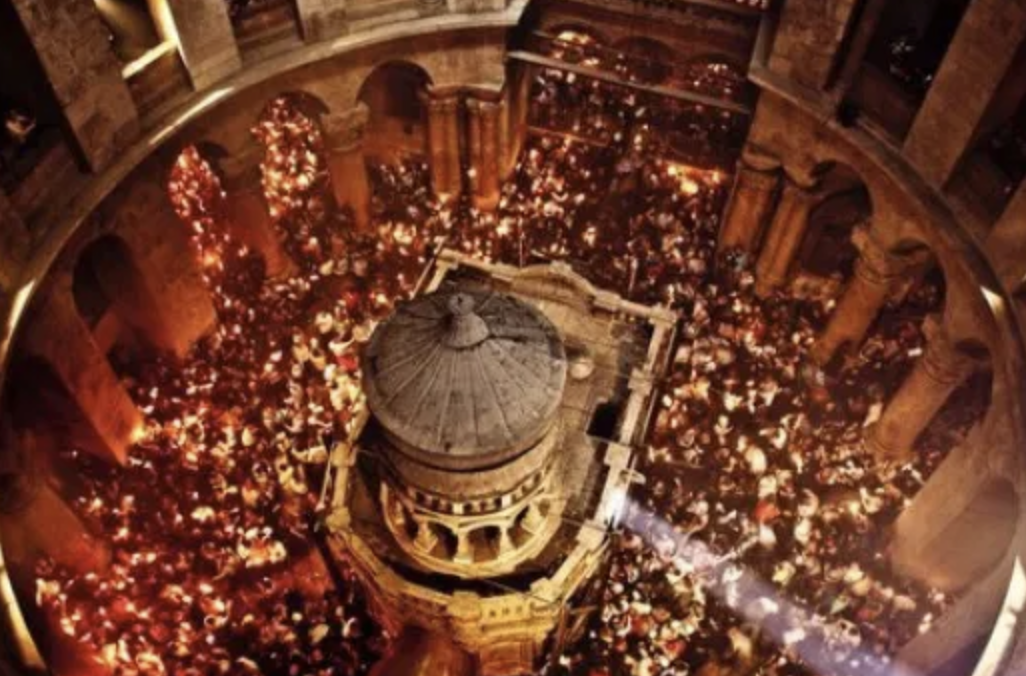
This brings us to one of the most interesting, inspiring (for millions) and controversial moments linked to the holiest day on the liturgical calendar of Eastern Orthodox Christianity — Pascha.

In most churches of the West, Pascha is known by another name — Easter. To further complicate things, Christians in the East and West use different calendars that, on most years, put Easter and Pascha on different dates. Click here for more on that old story.

With all that in mind, consider this paragraph in this year’s AP and Religion News Service story about a key Pascha rite in Jerusalem.

Many countries will be restricting normal Orthodox Easter celebrations. Neighboring Lebanon for example went into a round-the-clock curfew to curb the spread of coronavirus, from Saturday until Tuesday morning. Churches will be allowed to hold Easter mass and prayers only at 30% capacity, and require special permits.

What is “Orthodox Easter”? That is Pascha, of course. It would only take a few words to say that.

Then look at this reference — “Easter mass.” Actually, the Orthodox do not have “Mass.” Our ancient Eucharistic rite is called the Divine Liturgy. Also, the “M” in “Mass” is upper case. Thus, an AP copyeditor managed to allow three mistakes in a mere TWO WORDS. That’s a hard trick hard to pull off!


Please respect our Commenting Policy