Worship

Biden's 'devout' faith is a news-media talking point, but a survey about it somehow isn't

Biden's 'devout' faith is a news-media talking point, but a survey about it somehow isn't

The culture wars have been on full display during the first two months of the Biden presidency.

It isn’t so much that Joe Biden is fueling the wars — he’s actually steered clear of many of these recent battles that brew on Twitter and cable TV news. Nevertheless, his actions over the arc of a career that spans almost five decades, as senator — vice-president and now commander-in-chief — certainly provides fodder for many Christians who differ with his policies and politics.

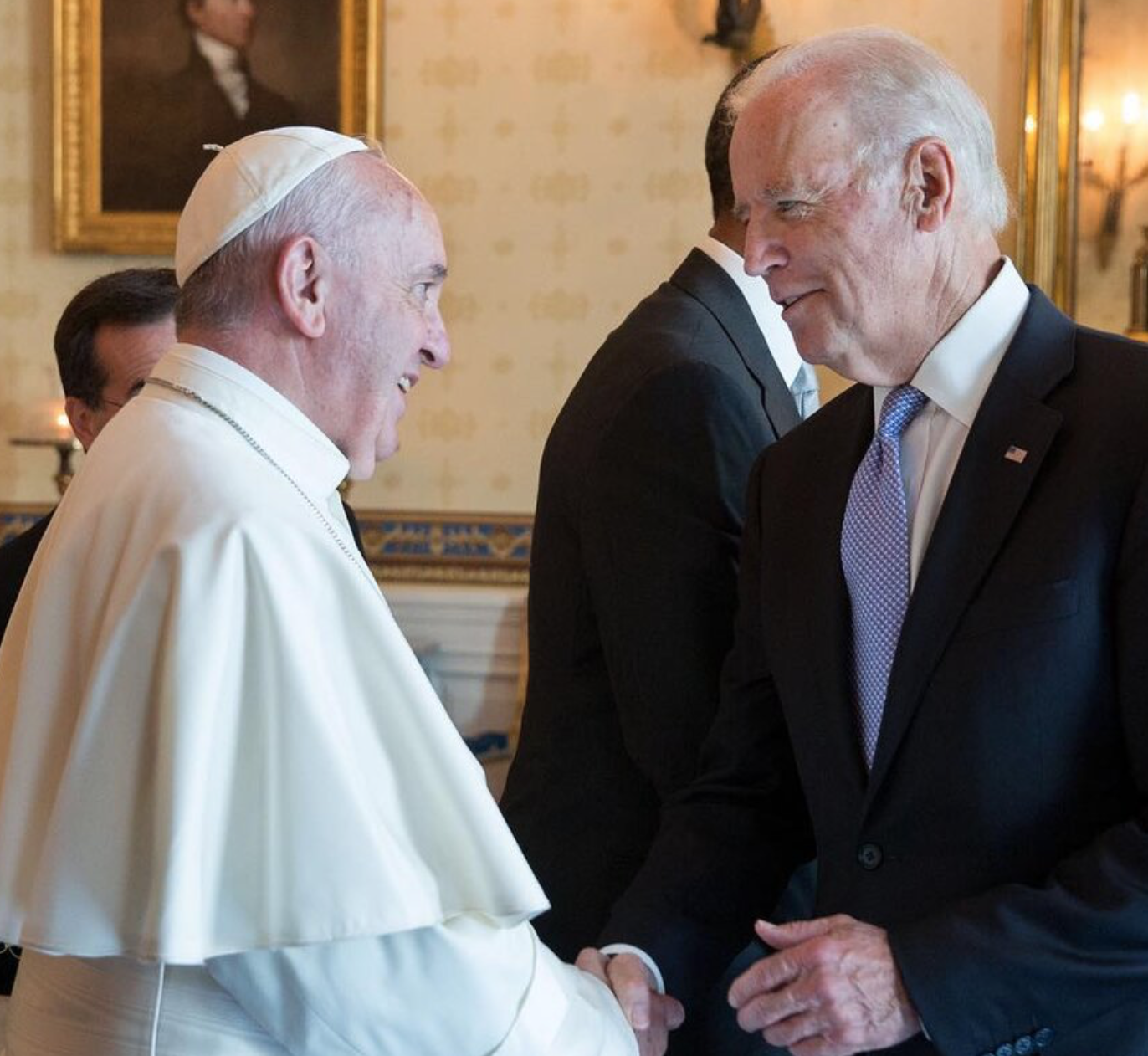
The president’s frequent references to his Catholic faith, mixed with affirmations of policies that clash with Catholic teachings, are at the heart of this discussion in public life and, every now and then, in the mainstream press.

USA Today, in a news feature from earlier this week, made the following observation:

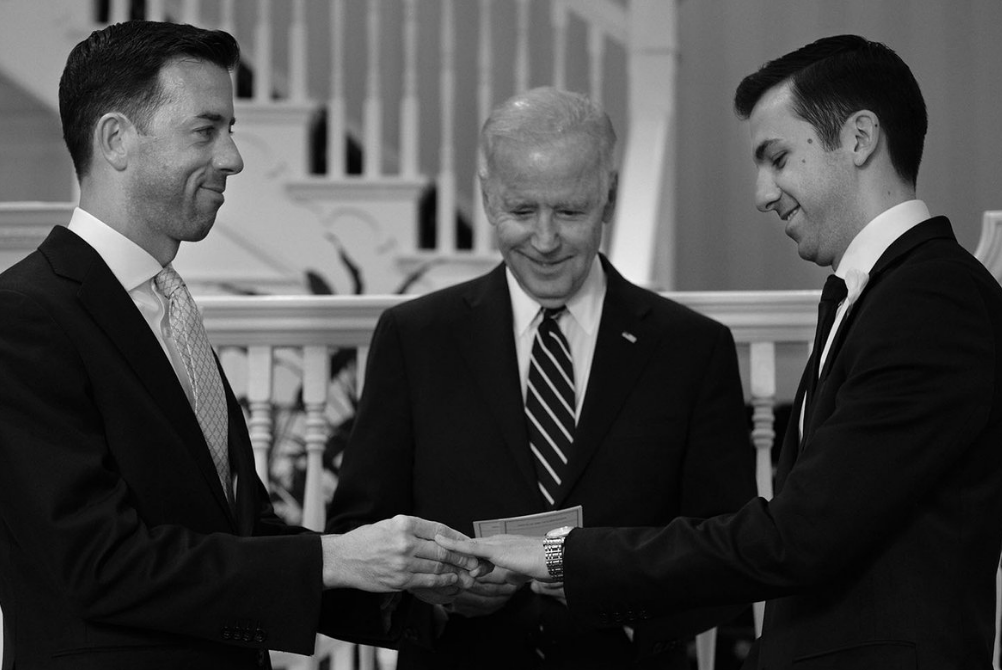
When the Vatican announced last month the Catholic Church wouldn’t bless same-sex unions, the White House dodged when asked for a response from Biden, the nation’s second Catholic president and a gay rights supporter who officiated at a wedding of two men five years ago.

“I don’t think he has a personal response to the Vatican,” White House press secretary Jen Psaki said during a briefing that day. Psaki reaffirmed the president’s support of same-sex unions: “He’s long had that position.”

A couple of weeks earlier, Psaki punted when asked why Biden made no mention of Dr. Seuss in his proclamation declaring March 2 – the children’s book author’s birthday – as the annual “Read Across America Day.” Psaki suggested a reporter reach out to the Department of Education, which she said drafted the proclamation.

Psaki’s nuanced response to both questions underscores the delicate balance the White House is taking as Biden navigates a minefield of hot-button social issues ranging from the gender of children’s toys (see Mr. Potato Head) to transgender athletes in school sports to GOP complaints about “cancel culture.”

It was on March 30, a few days before Easter Sunday, that Pew Research Center released a study on how American Catholics view the president and how they view his approach to the Catholic faith. Here is a sample of that study’s results:
Please respect our Commenting Policy

Obvious question: Maybe Christian faith played a role in the Scott Drew and Baylor hoops story?

Obvious question: Maybe Christian faith played a role in the Scott Drew and Baylor hoops story?

Frankly, I am not the most enthusiastic of Baylor University alums (I once passed up a request to apply for a faculty slot by telling the president that I had already died once in Waco wasn’t anxious for a reprise).

Still, you didn’t think that the Baylor basketball team was going to win the national championship (after being a favorite in the COVID-canceled 2020 dance) without a word of comment here? I mean, I have heard from other Baylor grads who worked their way through lots of the mainstream news coverage of the March Madness finale while thinking “ghost,” “ghost,” “another religion ghost.”

Yes, this was the Texas Baptists vs. Jesuits matchup that hoops fans wanted. And then you had the simple reality that Baylor (for better and for worse) is the world’s most prominent Baptist academic institution.

But how could the press ignore or short-change the fact that the story of coach Scott Drew and his underdog Bears was packed with valid religion facts and themes? Would all fans care that Final Four MVP Jared Butler teaches a Sunday School class for little kids? Probably not. But millions of people would.

But they key to everything was this big question: Why was Drew at Baylor in the first place? Why did he pack up and head to Waco 18 years ago, when the program was dead, dead, dead or worse. Here’s the top of a long CBS Sports feature: “Scott Drew never let others change his story, path or program, and that's how he led Baylor to its first title.”

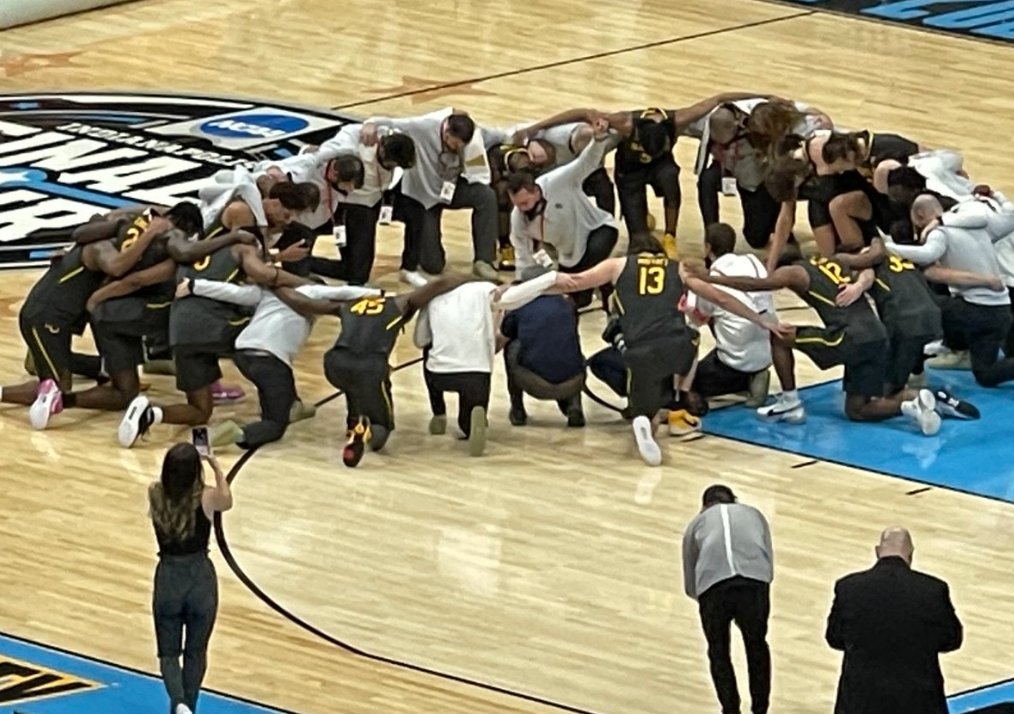
Leaping into the arms of his staff. College basketball's happiest coach on his happiest night. When it was over, Drew brought everyone into a huge circle on the court. They kneeled and said a prayer.

The greatest program reinvention in men's college basketball history was complete.

Drew took the Baylor job in 2003 when the program was near disintegration. The job Drew's done at Baylor in the 18 years since -- impressive is an understatement. There was no set of instructions when he got there, because there wasn't even a drawer to put them in. This was not a rebuild; what Baylor could be, in 2003, was a figment of Drew's imagination.

Drew is described in all kinds of upbeat, but strange, ways. This is one happy, upbeat, positive-thinking weirdo. Does it matter that, when he describes his bond with Baylor, he talks in terms of Christian faith, family and a sense that God called him to this job? Is that part of this national news story, just because Drew says so and there is tons of evidence that he means it?


Please respect our Commenting Policy

This just in! Millions of folks are sort of religious, a key to church membership decline

This just in! Millions of folks are sort of religious, a key to church membership decline

When it came to poll numbers about religion and American life, the late George Gallup, Jr., wasn’t all that interested in many of the most obvious questions.

As he told me in several telephone interviews, starting in the 1980s: The religion numbers just don’t add up. You could see the same sentiments in some of his public addresses.

Gallup — who died in 2011 — wasn’t impressed by the high numbers of Americans who told pollsters that they believe in God, attend worship services on a regular basis and say that faith is “very important” in their lives. That didn’t seem to fit with national patterns of divorce and family breakdown. He kept trying to find ways to ask questions that focused on the role of religious faith in daily life.

When push came to shove, Gallup was convinced that about 20% of Americans were seriously practicing some form of religious faith. The number might be lower than that.

Thus, that recent blitz of news about church membership trends. As the Washington Post headline stated: “Church membership in the U.S. has fallen below the majority for the first time in nearly a century.” Here’s some of the overture:

The proportion of Americans who consider themselves members of a church, synagogue or mosque has dropped below 50 percent, according to a poll from Gallup. … It is the first time that has happened since Gallup first asked the question in 1937, when church membership was 73 percent. …

In 2020, 47 percent of Americans said they belonged to a church, synagogue or mosque. The polling firm also found that the number of people who said religion was very important to them has fallen to 48 percent, a new low point in the polling since 2000.

Click here for the Gallup report on these findings, old and new. Here is another summary from 2019. And here is some additional background from the new Gallup release:

Gallup asks Americans a battery of questions on their religious attitudes and practices twice each year. The following analysis of declines in church membership relies on three-year aggregates from 1998-2000 (when church membership averaged 69%), 2008-2010 (62%), and 2018-2020 (49%). …

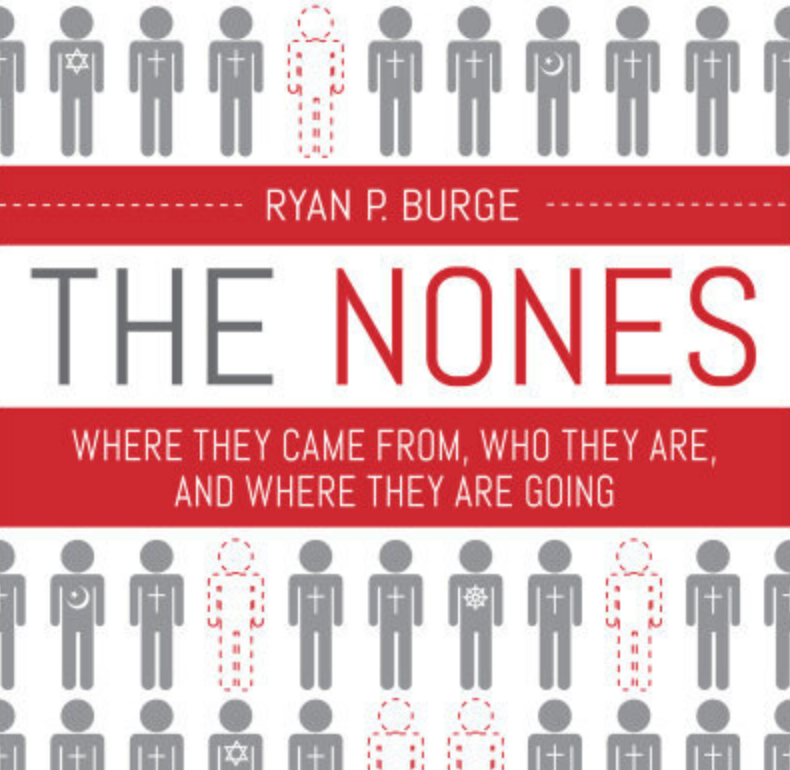
The decline in church membership is primarily a function of the increasing number of Americans who express no religious preference.


Please respect our Commenting Policy

Big question linked to Easter: Does Christianity believe in 'the immortality of the soul'?

Big question linked to Easter: Does Christianity believe in 'the immortality of the soul'?

THE QUESTION:

Does Christianity believe in the “immortality of the soul”?

THE RELIGION GUY’S ANSWER:

No.

Not exactly. And before anyone has a heart attack reading that, The Guy hastens to explain that Christianity has always vigorously affirmed the Easter message that earthly death is followed by everlasting life. But the oft-used phrase about a mere “immortality of the soul,” which stems from ancient Greek philosophy, could suggest bodily life is problematic and mistakenly suppose that our soul exists through all eternity as only a disembodied spirit.

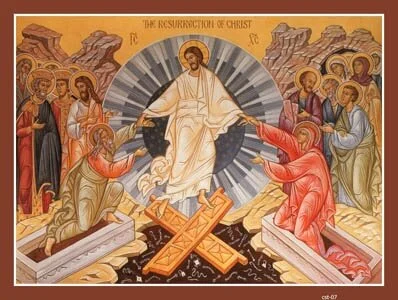
Instead, Christianity teaches that just as Jesus arose bodily from the grave, so the promise of everlasting life involves a person’s eventual resurrection that unites the soul with the body in a newly glorified state. As with the central belief that Jesus was God incarnate in full human and bodily reality, this Christian affirmation about the afterlife proclaims that, as in Judaism, our bodies are God’s good creation and fundamental to each person’s human identity.

This understanding of New Testament teaching was defined orthodoxy as early as A.D. 180 in Against Heresies by Bishop Irenaeus of Lyons, an authority and saint for Catholic and Orthodox Christians:

“… It is manifest that the souls of his disciples also, upon whose account the Lord underwent these things, shall go away into the invisible place allotted to them by God, and there remain until the resurrection, awaiting that event; then receiving their bodies, and rising in their entirety, that is bodily, just as the Lord arose” (from book 5, chapter 31).

A precise Protestant formulation appears in the Westminster Confession of Faith, the Presbyterian credo from 1647 (here “men” refers to both genders):


Please respect our Commenting Policy

A police officer's calling and sacrifice: What about that sanctuary across from King Soopers?

A police officer's calling and sacrifice: What about that sanctuary across from King Soopers?

If you have lived in the Denver area, you know that King Soopers grocery stores are a familiar part of the urban and suburban landscape.

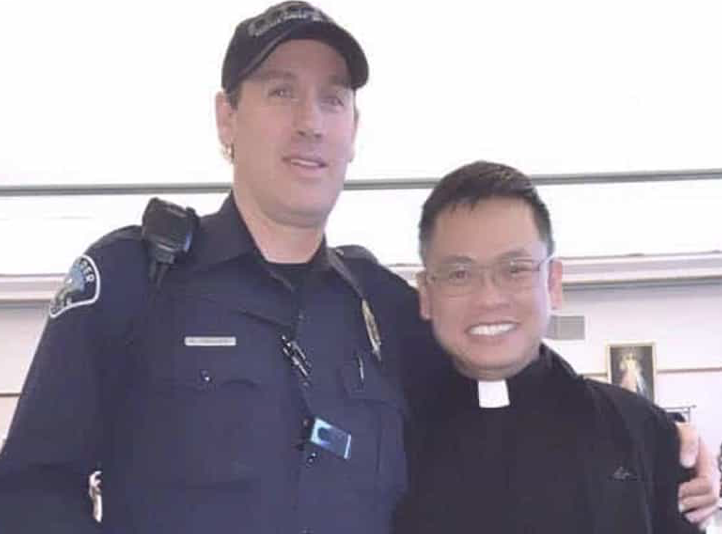
As the details emerged from the hellish shootings in Boulder that claimed 10 lives, it was clear that the fallen first responder — 51-year-old Officer Eric Talley — was an unusual man whose career in law enforcement had unusual roots. He came to the job, people said over and over, with a sense of “calling.” That is, of course, a word with strong faith overtones.

There were many pieces of information to assemble, in portraits of Talley. He was the father of seven children — ages 7 to 20 — who were being homeschooled by his wife. He bought a 15-passenger van to make family travel easier. Another officer told the Denver Post that Talley was a “devout Catholic.” This is a case where that all-too-common adjective fits the evidence.

Some news-media reports mentioned Talley’s faith, others did not. It was hard to miss this quotation, picked up by Washington Post:

His father, Homer Talley, told Denver TV station KMGH in a statement that his son was working to become a drone operator, a job he thought would be safer.

“He loved his kids and his family more than anything,” his father wrote. “ …He didn’t want to put his family through something like this and he believed in Jesus Christ.”

However, I was struck by another detail in a statement from Archbishop Samuel J. Aquila of the Archdiocese of Denver. As it turns out, there was a reason that Talley was familiar with this particular King Soopers location.

We do know that Officer Eric Talley was Catholic, and has been described as a man of character and strong faith, a loving father to seven children, a husband who cared deeply for his family, and a soldier for Christ. …

We also know that Officer Talley regularly stopped by St. Martin de Porres in Boulder and participated in its events, even though he wasn’t a parishioner there. For those unfamiliar with the area where the shooting occurred, St. Martin de Porres is just across the street from King Soopers.


Please respect our Commenting Policy

Thinking about J.S. Bach: As it turns out, it's hard to ignore the composer's views on doctrine

Thinking about J.S. Bach: As it turns out, it's hard to ignore the composer's views on doctrine

Sometimes we forget how strange the Internet is, in terms of providing an environment for reading and sharing news stories and other features.

Readers used to be able to flip through their daily newspaper and know that they had a chance, in an orderly manner, to look at “everything” that was in those pages. Today, there is no way to know — for a variety of technical reasons — if you’ve looked at everything in the “daily” New York Times or any other news product . It all exists in a vast digital cloud of material that is always evolving and being updated. There is no logical sequence or form.

People find “news stories” with a search engine, they run into them on Facebook or people end them URLs in emails or texts. Often these articles are stripped of context — news or editorial, for example — and often the publication dates vanish, as well.

Thus, every now and then, GetReligion readers ship us a story that they think deserves praise or criticism. Sure enough, I’ll find that it’s amazing and start work on a post and then notice — oh no — that it’s actually several years old.

This happened to me the other day with a “feature” story from the Times with this headline: “Johann Sebastian Bach Was More Religious Than You Might Think.” Well, I love Bach. As far as I am concerned, the stunningly productive and brilliant Bach is either (a) evidence of intelligent life elsewhere in the universe, (b) the most important artist in the history of Western civilization or (c) both.

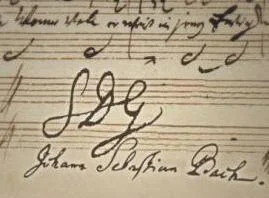
I dug into the piece and quickly realized that this essay by Michael Marissen, author of “Bach & God,” wasn’t a news feature and, on top of that, it ran in 2018. I’m sharing it as a weekend “think piece” because it is fascinating stuff and contains an interesting example of modern thinkers reaching conclusions about a historical figure — even though there is hard evidence that directly contradicts their views. This feature focuses on a piece of Bach material (not a piece of music) that I didn’t know about — with incredible implications for discussions of this cultural giant’s faith. Here is the overture:

Bach biographers don’t have it easy. Has there ever been a composer who wrote so much extraordinary music and left so little documentation of his personal life?


Please respect our Commenting Policy

Local news? Tricycle's Western Buddhism essay shows how religions adapt to new environs

Local news? Tricycle's Western Buddhism essay shows how religions adapt to new environs

Religions evolve and accommodate as they migrate around the globe. What works in one time and place may not in another for a host of cultural and political reasons, forcing adjustments that facilitate their establishment or survival.

Historical examples abound. Not the least of which are the monumental transformations that occurred within early Christianity as it migrated across the Roman world from the Levant, and within early Islam as it spread from the Arabian Peninsula west to the Atlantic coast and east across Asia.

Here are two more recent examples of religious accommodation.

The first occurred in the late 19th Century when the Church of Jesus Christ of Latter-day Saints made a corporate decision to jettison its public practice of polygamous marriage to smooth the way for Utah’s full acceptance into the expanding United States. This despite plural marriage remaining part of the church’s scriptural doctrine to this day. The practice, though illegal under secular law, is still followed by some breakaway Mormon sects.

The second example was the melding of Roman Catholicism and West African tribal beliefs in the Caribbean and South America by Black slaves and their descendants. This gave rise to syncretic faiths such as Santeria and Voodoo. They persist today side by side with the church in ways that would scandalize the hierarchy, were it happening on a similar scale in the United States.

It’s not unusual for Mass-going Cuban, Haitian and Brazilian Catholics to also draw meaning from West African-derived rituals that to outsiders might appear hard to reconcile with core church beliefs.

A contemporary religious travel story is the Westernization of Asian Buddhism. Tricycle, a leading American Buddhist publication, deconstructed the phenomenon in its Spring 2021 issue.

The piece is well worth the time of journalists interested in moving beyond today’s often superficial religion headlines. To understand a group’s sociology is to better understand why members act as they do in the public square, journalism’s primary purview.

I suggest you view the Tricycle essay — which weighs in at more than 3,600 words — as a sort of crash course in the adaptation of religions to new circumstances. This will help reporters spot stories in the communities served by their newsrooms.


Please respect our Commenting Policy

3D chess in Rome? Pope Francis approves Vatican decree affirming doctrines on marriage

3D chess in Rome? Pope Francis approves Vatican decree affirming doctrines on marriage

All together now: Is the pope Catholic?

Actually, in this age of conspiracy theories — on right and left — the question of the day appears to be: Is THIS pope Catholic? I am referring, of course, to the Vatican’s decision to affirm centuries of Christian doctrine stating that sex outside of marriage is (trigger warning) “sin” and that the sacrament of marriage is limited to the union of a man and a woman.

But, but, but, clearly Pope Francis must be playing some kind of three-dimensional chess with this action, moving the doctrinal pieces in some subtle way that will become clear in “reforms” at a later date? This was a case in which one could catch whiffs of disappointment and even conspiracy thinking on both the Catholic left and right (and in the press).

To see this in print, check out the overture in this Washington Post report: “Pope Francis says priests cannot bless same-sex unions, dashing hopes of gay Catholics.” The headline assumes, of course, that all gay Catholics oppose the church’s teachings on this matter but, well, nevermind.

ROME — Pope Francis has invited LGBT advocates to the Vatican. He has spoken warmly about the place of gay people in the church. He has called for national laws for same-sex civil unions.

But Monday, Francis definitively signaled the limits to his reformist intentions, signing off on a Vatican decree that reaffirms old church teaching and bars priests from blessing same-sex unions.

The pronouncement, issued at a time when some clerics were interested in performing such blessings, leans on the kind of language that LGBT Catholics have long found alienating — and that they had hoped Francis might change. It says that same-sex unions are “not ordered to the Creator’s plan.” It says acknowledging those unions is “illicit.” It says that God “cannot bless sin.”

The decree shows how Francis, rather than revolutionizing the church’s stance toward gays, has taken a far more complicated approach, speaking in welcoming terms while maintaining the official teaching. That leaves gay Catholics wondering about their place within the faith, when the catechism calls homosexual acts “disordered” but the pontiff says, “Who am I to judge?”

Let’s see. We have the standard use of the word “reform” to prejudge this matter. We have a sense of yearning that Pope Francis is taking a “more complicated approach” to this doctrinal issue.


Please respect our Commenting Policy

Spot the theology issue: Top hymns of a year in which COVID-19 touched everything

Spot the theology issue: Top hymns of a year in which COVID-19 touched everything

It's a hymn that the faithful start singing whenever a Baptist church organist plays the opening chords -- because everyone knows it by heart.

All together now: "When peace like a river attendeth my way. When sorrows like sea billows roll. Whatever my lot, Thou hast taught me to say. … It is well, it is well, with my soul."

Chicago attorney Horatio Spafford wrote those words after losing his son to scarlet fever and then, a few years later, all four of his daughters in an 1873 shipwreck. His wife, Anna, survived and her telegram home from England began: "Saved alone. What shall I do?"

No one should be surprised that worship leaders frequently turned to "It Is Well With My Soul" as their people wrestled with the coronavirus pandemic, said the Rev. Roger O'Neel, who teaches in the worship and music program at Cedarville University in Ohio.

"People were feeling their way in 2020," he said. "It wasn't just the pandemic and people being locked down worshipping in (online) streamed services. We were also facing all the bitter political conflicts in our nation and the racial divisions that we were experiencing. …

"People were trying to find hymns that would speak to all of that, to the pain that everyone felt last year."

Faithlife, a Bellingham, Wash., company that publishes online worship and Bible study tools, recently released a report covering 2020 trends spotted in its Proclaim software. "It Is Well With My Soul" topped the hymns list, with usage increasing 68% after the pandemic hit.

The classic hymn "Great Is They Faithfulness" came next, with a 64% increase. It begins: "Great is Thy faithfulness, O God my Father, there is no shadow of turning with Thee; Thou changest not, Thy compassions, they fail not. As Thou hast been, Thou forever wilt be. Great is Thy faithfulness! … Morning by morning new mercies I see; All I have needed Thy hand hath provided -- great is Thy faithfulness, Lord, unto me."


Please respect our Commenting Policy