Worship

Attention news editors: Are German Catholic bishops poised to become liberal Luthers?

Attention news editors: Are German Catholic bishops poised to become liberal Luthers?

Germany’s Catholic bishops embarked on a series of conversations in 2018 aimed at reforming church teachings. It was an ambitious, if not audacious, effort addressing everything from homosexuality, priestly celibacy and the ordination of women.

As always, the word “reform” — in this context — means modernizing ancient church doctrines.

Conservative Catholics across the world decried the prospect. The tensions that arose at that time — and still simmering today — even caused some to warn that a permanent split could occur.

Indeed, the dreaded “s-word” — schism — can be used to describe the current moment. It was just last year that a high-ranking prelate argued that pushing such changes could lead to a “German national church.”

That’s a big news story — period. Over the past three years, the bishops in Germany haven’t been shy about making headlines — in Catholic-market publications. The question is when their proposals will draw major coverage by professionals in major newsrooms, including television networks.

Meanwhile, Pope Francis has elevated women at the Vatican, but he hasn’t endorsed such progressive doctrinal proposals — although his papacy has emboldened the Germans to push for such changes.

The church across the West has suffered tremendously due to secularism and the clergy sex scandal, especially in Germany. None of these German innovations, along with the alleged cover-ups, has helped matters. Still, the German bishops have continued to propose “reforms” in the past few weeks — with a series of moves that could forever change Roman Catholicism.

These latest pronouncements have received attention in the U.S. press, primarily in conservative religious publications. There are exceptions, but overall these fast-moving developments have gone unnoticed as of late.

These moves come as the church in Germany continues to lose members. In 2019, for example, over 272,000 Catholics quit the church.

Please respect our Commenting Policy

Polls apart: Pew Research switching methodologies with its much-used U.S. religious surveys

Polls apart: Pew Research switching methodologies with its much-used U.S. religious surveys

Political journalists give lavish attention to polls and often slide past those footnotes about a "95 percent level of confidence" and "margin of error plus or minus 4 percentage points."

Thus, numbers are never exact and a three-point edge could actually be seven points ahead or one point behind. Not to mention that even the best poll is merely a time-bound snapshot of reality (and it always pays to check how questions are worded).

After Election Day 2020, complaints about misleading political polls were as loud as usual, perhaps even louder. Take the bizarre Maine Senate race data. Polls consistently showed incumbent Susan Collins would lose, and she was behind 6% in the one closest to Election Day. She won easily by an 8.6% margin.

Or consider recent surveys about whether Americans plan to get COVID-19 shots. The Wall Street Journal notes that "yes" answers have ranged from 20% to 63% depending on the methodology, the wording and, especially, whether respondents were offered more than two options.

These days the "response rates" among those in randomly selected samples are so low it's tough to tell how representative the people are.

That's among the major problems raised by eminent Princeton sociologist Robert Wuthnow in his 2015 book "Inventing American Religion: Polls, Surveys, and the Tenuous Quest for a Nation's Faith.”

Gallup data about U.S. religion are important because the firm has asked consistent questions across so many decades. But 21st Century religion writers rely heavily upon the Pew Research Center (where Alan Cooperman, a former Washington Post colleague, is director of religion research). Pew's expertise often provides all-important distinctions between white "mainline" and white "evangelical" Protestants, and between white and Hispanic Catholics.

Pew is changing the way it surveys religious behavior and attitudes, so the media will want to be aware of why and how.

Of major importance is how this affects writing about trend lines over time that uses past surveys.


Please respect our Commenting Policy

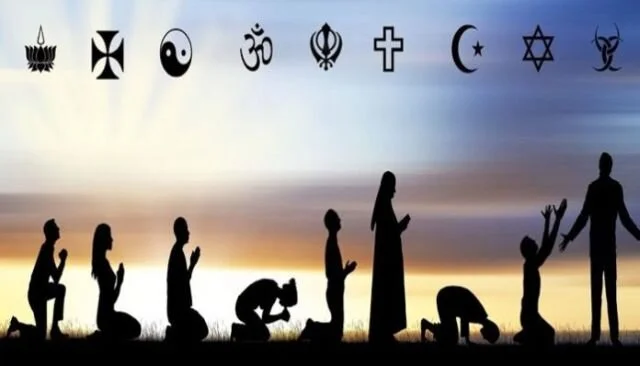
Ask any church-state lawyer and you'll hear that this is a hard question: What is religion?

Ask any church-state lawyer and you'll hear that this is a hard question: What is religion?

THE QUESTION:

What is religion?

THE RELIGION GUY’S ANSWER:

Oddly, “Religion Q&A” entered its ninth year online before getting around to this question.

It’s not an easy one.

During the tax season, we may not feel particularly fond toward the IRS but can pity the staffers who spent years on a long-running dispute that ended in 1993 when the godless Scientology system was finally defined as a “religion” and thus eligible for the tax exemption benefit.

Then there are the federal and state disputes — beloved of journalists and too numerous to summarize here — over tax exemption for the “Universal Life Church,” and whether marriages performed by its clergy are legit. The ULC provides instant internet ordinations, sometimes for the likes of comedian Conan O’Brien, with no questions asked and no requirements of training, creed, or church. The ordination itself is free but the group sells such paraphernalia as a “Doctor of Divinity” certificate, a bargain at $20, and a $59.99 kit for performing weddings.

Let’s back up for the basics. Whatever the IRS might think, here are definitions of “religion” from the authoritative Merriam-Webster folks :

* “The service and worship of God or the supernatural.”

* “Commitment or devotion to religious faith or observance” (which is certainly a circular definition. Religion is religious.).

* “A personal set or institutionalized system of religious attitudes, beliefs, and practices.” (Again, religion is religious.)

* “A cause, principle, or system of beliefs held to with ardor and faith.” (This means devoutly embraced atheism or Communism can be deemed a de facto religion although, as “Religion Q & A” has learned over the years, this terminology can provoke atheists’ fury.)

Another definition, labeled “archaic,” is “scrupulous conformity” to something.


Please respect our Commenting Policy

Which issue drew more ink? SBC on Trump-era rifts, race, #ChurchToo abuse, gay marriage

Which issue drew more ink? SBC on Trump-era rifts, race, #ChurchToo abuse, gay marriage

Here’s a question for GetReligion readers, including journalists: Are you surprised that the Southern Baptist Convention still believes sex outside of marriage is sin and, yes, that marriage is defined — by two millennia of Christian teaching — as the union of man and woman?

All of you who are surprised, please raise your hands.

There shouldn’t be many hands in the air on that one.

Now, would you say that SBC action on that question is, well, sexier than the decision by the national convention’s executive committee to oust two congregations for violating guidelines on sexual abuse, following in the wake of many #ChurchTwo revelations (especially in major Texas newspapers)?

Meanwhile, SBC President J.D. Greear offered up a blistering speech to the executive committee in which he addressed what he called demonic attacks on SBC unity, attacks centering on two hot-button topics — racism and (to be blunt) Donald Trump-era politics.

Of these four issues, want to guess which drew mainstream-press headlines? That’s the question that host Todd Wilken and I discussed during this week’s “Crossroads” podcast. Click here to tune that in or head over to iTunes to subscribe.

According to the Associated Press, the biggest news was that totally predictable decision linked to marriage and sex. Meanwhile, I am happy to report that The New York Times produced a story that, while the headline was predictable (“Southern Baptists Expel 2 Churches Over Sex Abuse and 2 for L.G.B.T.Q. Inclusion”), was updated to become a solid look at the tensions surrounding Greear and some of these issues. We will come back to both of those stories.

But first, I think GetReligion readers need to read a large chunk of the (edited) text from the Greear broadside. (Click here for Baptist Press coverage and, most of all, here for a file that includes the full video.)

The key: Greear sets out to affirm the 1980s SBC move to the right on issues of biblical authority, while repudiating what he calls the “leaven of the Pharisees” emerging on the SBC’s right flank. The following is long, I know, but essential to understanding what is happening right now in America’s largest Protestant flock:


Please respect our Commenting Policy

Reader asks: How can news consumers decide if Ethiopian massacre reports are true?

Reader asks: How can news consumers decide if Ethiopian massacre reports are true?

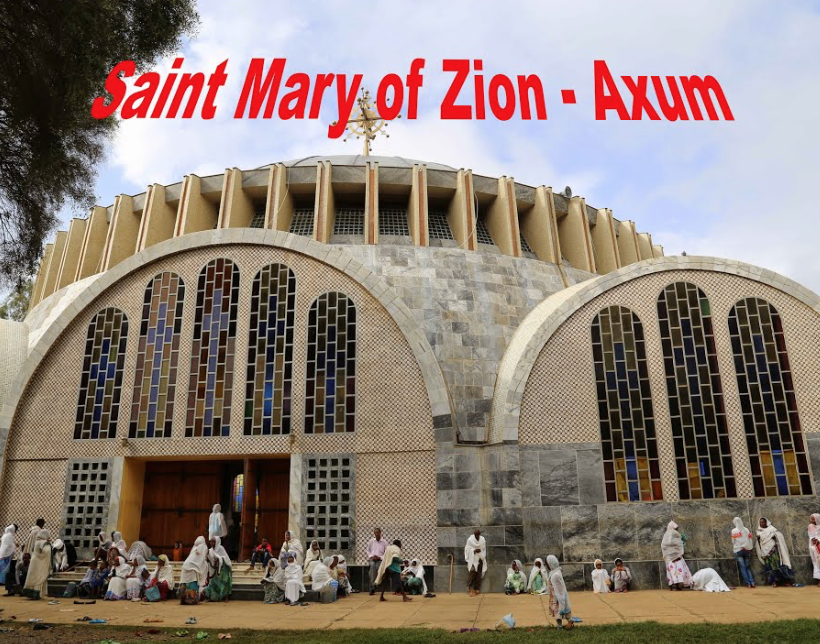
While Americans focused on the dramatic conclusion of 2020 White House race, reports began circulating in the overseas press claiming that a sickening massacre had taken place in a famous church — a pilgrimage site for the Ethiopian Orthodox.

How famous? For centuries, church officials have claimed that the Church of St. Mary of Zion in Axum contains the Ark of the Covenant.

This was, from the start, a journalism horror story — since Ethiopian officials were preventing foreign journalists from reaching the site of the alleged massacre. At the same time, activists on both sides of the stunningly complex conflict appeared to be working hard to shape the coverage that was taking place.

The other day, a frustrated reader sent me this note, after seeing materials posted online attempting to undercut claims that this massacre of 700-plus believers took place. “I’ve trusted you and your sources for about five years now so I’m hoping you can help get to the bottom of this,” the reader said.

I told the reader that, to me, it appeared that this was a case in which — at this point — certainty was impossible. A careful reader would note that some journalists were saying that claims about the massacre could not be verified — either way. “Human rights activists on left and right are concerned about the report and believe the attack COULD have taken place. But there has been no verification that has been locked down certain,” I said.

If you want to see what we’re talking about, check out these early reports from Catholic News Agency (“Hundreds reportedly dead after massacre at Oriental Orthodox church in Ethiopia”) and The Church Times (“Massacre ‘of 750’ reported in Aksum church complex, Tigray, Ethiopia”).

This is, of course, an argument about the attribution of truth claims. When journalists cannot (for a variety of reasons) do on-site reporting to seek evidence, they frequently are forced to seek the best sources that are available to them (often via telephone or other forms of technology) and report what they can. Here is the crucial point: Journalists have to clearly identify the identity of the sources and let readers know what kind of access they would or would not have to the information.

This leads us to a recent Associated Press story with a headline stating, “ ‘Horrible’: Witnesses recall massacre in Ethiopian holy city.

The key word is, of course, “witnesses.”


Please respect our Commenting Policy

Want to trigger Episcopalians? Ask an evangelical superstar to preach at National Cathedral

Want to trigger Episcopalians? Ask an evangelical superstar to preach at National Cathedral

Halfway between Norway and the North Pole, scientists have buried a million seeds and crop samples under a mountain in the Svalbard archipelago -- in case an environmental doomsday comes to pass.

That strategy rings true during "this crazy, chaotic season" when so many are anxious about the coronavirus pandemic, global warming, lost jobs, surging debts and the bitter state of public life, said evangelical megachurch leader Max Lucado, in a recent sermon streamed online by the National Cathedral in Washington, D.C.

“Most of us can't hide out in a bunker, yet threats of calamity may make us try to do so," he said. "If the wrong person pushes the wrong red button -- it's enough to make a person purchase a plane ticket to Svalbard."

But there was a problem. While pre-service publicity stressed that Lucado's books have sold more than 120 million copies and Christianity Today has called him "America's pastor," this invitation alarmed legions of Episcopalians opposed to his history of orthodoxy on sex and marriage. His sermon about God offering comfort in the midst of chaos avoided hot-button topics, but his cathedral appearance triggered an online storm.

Before the event, the Very Rev. Randolph Marshall Hollerith linked the Lucado invitation to the cathedral's history of hosting a variety of religious leaders. This has included evangelicals such the late Billy Graham, Archbishop of Canterbury Justin Welby and megachurch leader Rick Warren of Saddleback Church in Southern California.

"When we only engage with those with whom we agree on every issue, we find ourselves in a dangerous (and lonely) place," wrote the cathedral's dean. "That means this cathedral, and this pulpit, are big enough and strong enough to welcome pastors, rabbis, imams, clergy of every faith. … It does not mean we agree with everything they might believe, but it does mean that we exhibit and inhabit a sense of open handed welcome."

However, Hollerith issued a formal apology in response to the online backlash, noting: "In my straight privilege I failed to see and fully understand the pain he has caused. I failed to appreciate the depth of injury his words have had on many in the LGBTQ community. I failed to see the pain I was continuing. I was wrong."

While Lucado is known as an evangelical moderate, Episcopalians were outraged by a 2004 sermon, and online commentary, stating that he "categorically opposes" gay marriage, as well as his conviction that "homosexual activity" is sin.


Please respect our Commenting Policy

New podcast: There's more to Lent 2021 than virtual-ash selfies and giving up (fill in the blank)

New podcast: There's more to Lent 2021 than virtual-ash selfies and giving up (fill in the blank)

It happened every year that I worked in a mainstream newsroom. Apparently, there was a law somewhere that official newsroom “advance calendars” should include a note about the beginning of Lent.

Thus, an editor would ask me a question that sounded something like this: “So where are we sending a photographer this year on Ash Wednesday?”

This was, you see, the official way to handle Lent and it would be followed, of course, by some kind of sunrise-and-lilies photo when Easter rolled around. There might be an Easter story of some kind, but that was always a problem since the goal was to have the story in print on that Sunday, which meant the story and photograph needed to be done early. It’s so hard to cover a holy day that hasn’t happened yet.

But Ash Wednesday photographs, backed with a sentence of two about Lent, seem to be a news-culture tradition. That reality was the hook — sort of — for this week’s “Crossroads” podcast (click here to tune that in).

Thus, it was easy to anticipate this COVID-19 era variation on a familiar theme, care of Religion News Service: “Celebrating Ash Wednesday in a pandemic? There’s an app for that.

There are filters that blur “imperfections” in photos and filters that turn lawyers into cats on Zoom.

Now there are filters to help Christians safely display the very visible Ash Wednesday mark on social media.

Many Catholic and other liturgical churches observe Ash Wednesday by smudging ashes on congregants’ foreheads as a sign of repentance and a reminder of one’s mortality. That practice presents a problem during a season when health experts fighting COVID-19 have advised people to avoid touching their faces or coming in close proximity to others. …

In a year when so much of life has been lived virtually, Catholic prayer and meditation app Hallow has also taken the tradition online with an “AshTag” photo filter on both Facebook and Instagram.

That’s a valid story, even if it does fit a now familiar pandemic pattern — lots of coverage of virtual faith in these troubled times, as opposed to a few stories about the creative efforts of analog people to observe their traditions within the parameters of social-distancing guidelines.


Please respect our Commenting Policy

Ryan Burge day: Political tensions rise as secularism grows (yet faith numbers stay strong)

Ryan Burge day: Political tensions rise as secularism grows (yet faith numbers stay strong)

Anyone who has followed GetReligion for nearly two decades knows that we have — over, and over, and over — stressed that the safe middle ground in American life seems to be vanishing.

This is true in religion and it is certainly true in politics.

Now, journalists and news consumers can prepare to dig into two books related to these trends — both linked to the work of names that will be familiar to GetReligion readers.

The first, by GetReligion contributor Ryan Burge, is entitled, “The Nones: Where They Came From, Who They Are, and Where They Are Going.” It will hit the market March 9th. We will come back to Burge in a moment, with links to some of his omnipresent charts and commentary.

The second book is entitled, “Secular Surge: A New Fault Line in American Politics,” and it was written by David Campbell, Geoffrey C. Layman and (here’s the familiar name to most GetReligion readers) John C. Green.

Yes, that John C. Green, the man from the 2007 seminar at the Washington Journalism Center who told a circle of journalists from around the world about emerging research about “religiously unaffiliated” Americans and how this would impact politics and, in particular, the shape of the Democratic Party. The line-graph he sketched on our write-on-wall that day was a foretaste of the stunning 2012 Pew study on the rapid rise of the “nones.”

The key was that the “nones” were the natural political partners of secular voters and believers in the shrinking world of the Religious Left. At some point, however, he said there would be tensions with moderate and even conservative Democrats in the Black church and in Hispanic pews, both Catholic, evangelical and Pentecostal. As I wrote in an On Religion column:

The unaffiliated overwhelmingly reject ancient doctrines on sexuality with 73 percent backing same-sex marriage and 72 percent saying abortion should be legal in all, or most, cases. Thus, the “Nones” skew heavily Democratic as voters — with 75 percent supporting Barack Obama in 2008. The unaffiliated are now a stronger presence in the Democratic Party than African-American Protestants, white mainline Protestants or white Catholics.

“It may very well be that in the future the unaffiliated vote will be as important to the Democrats as the traditionally religious are to the Republican Party,” said Green, addressing the religion reporters. “If these trends continue, we are likely to see even sharper divisions between the political parties.”


Please respect our Commenting Policy

Ryan Burge day: Black church believers and Black ‘nones’ show little Ideological divide

Ryan Burge day: Black church believers and Black ‘nones’ show little Ideological divide

There are a number of narratives that have emerged from the 2020 election season, many of which will take years to fully unpack.

One of the most important actually began to take root in December 2017 when Alabama held a special election to fill the Senate seat vacated by Jeff Sessions who became Attorney General in the Donald Trump administration. Alabama, one of the most conservative states in the nation, elected a Democrat — Doug Jones — to a statewide office for the first time in 25 years.

The reason for the victory was quickly attributed to the African-American community who turned out in large numbers for the Democrats. This same thread has run through coverage of the 2020 presidential election, when Joe Biden bested Trump in Georgia. Observers noted that the deep history of civil rights activism in the state energized the African-American base to repudiate the Trump presidency.

That bore out again on Jan. 5, 2021 when the Democrats won both Senate run-off elections in the state, defeating two Republican incumbents.

The Rev. Raphael Warnock’s win has garnered the most headlines. The pastor of one of America’s most historic churchesEbeneezer Baptist — Warnock’s sermons featured prominently in the campaign. One of the results of this coverage is that it pulled back the curtain a bit on the Black church experience for many White Americans who have never had a lot of exposure to other religious traditions.

Yet, despite the fact that a lot of the chatter about the Black vote has centered on people of faith — it’s important to recognize that the Black community is not a religious monolith. While the largest share of African-Americans identify as Christian (63.5%), nearly a quarter indicate that they have no religious affiliation (22.1%) and another 15% identify as part of another faith group (Muslims, Buddhists, Hindus, etc.)

While these religious differences generate huge political divides among the White community, is the same true for Black Americans? The data indicates that race generates a unifying identity for Black Americans much more so than it does for White America, and religious differences at the ballot box are often small or non-existent when comparing Black Americans of different faith traditions.

In terms of political partisan and ideology — the differences between Black Christians, Black Nones and those of other faith traditions is relatively small. However, it’s worth pointing out that Black Christians are clearly the most likely to identify with the Democratic Party.


Please respect our Commenting Policy