Worship

Supreme Court justices are not singing the same religious liberty tune during pandemic

Supreme Court justices are not singing the same religious liberty tune during pandemic

Legal battles over pandemic-era worship gatherings rage on.

Last October’s confirmation of Justice Amy Coney Barrett flipped the U.S. Supreme Court’s script on such questions.

The latest ruling came last Friday night: A 6-3 order stopped California’s ban on indoor worship in most of the nation’s most populous state. But the justices allowed a 25 percent capacity limit to remain.

Perhaps most interestingly, the majority said California can keep prohibiting singing and chanting. For now.

On the singing issue, the justices sang several different tunes:

Chief Justice John Roberts: “The State has concluded … that singing indoors poses a heightened risk of transmitting COVID–19. I see no basis in this record for overriding that aspect of the state public health framework.”

Barrett, joined by Justice Brett Kavanaugh: “Of course, if a chorister can sing in a Hollywood studio but not in her church, California’s regulations cannot be viewed as neutral. But the record is uncertain. … (H)owever, the applicants remain free to show that the singing ban is not generally applicable and to advance their claim accordingly.”

Justice Neil Gorsuch, joined by Justices Clarence Thomas and Samuel Alito: “California has sensibly expressed concern that singing may be a particularly potent way to transmit the disease. … But, on further inspection, the singing ban may not be what it first appears. It seems California’s powerful entertainment industry has won an exemption. So, once more, we appear to have a State playing favorites … expending considerable effort to protect lucrative industries (casinos in Nevada; movie studios in California) while denying similar largesse to its faithful.”

Please respect our Commenting Policy

In the age of COVID-19, it's impossible for clergy to avoid wrestling with the internet

In the age of COVID-19, it's impossible for clergy to avoid wrestling with the internet

Even before the coronavirus crisis, this question haunted pastors: What in God's name are we supposed to do with the internet?

American clergy aren't the only ones wrestling with this puzzle. Consider this advice -- from Moscow -- about online personality cults.

"A priest, sometimes very young, begins to think that he is an experienced pastor -- so many subscribers! -- able to answer the many questions that come to him in virtual reality," noted Patriarch Kirill, leader of the Russian Orthodox Church, at a recent diocesan conference. "Such clerics often lose the ability to accept any criticism, and not only on the internet, or respond to objections with endless arguments."

Pastors eventually have to ask, he added, if their online work is leading people through parish doors and into face-to-face faith communities.

"That is the question of the hour, for sure," said Savannah Kimberlin, director of published research for the Barna Group. Recent surveys have convinced Barna researchers that "the future church will be a blend of digital and in-person work. But it's up to us to decide what that will look like. …

"But isn't that true of our society as a whole? There are digital solutions for so many issues in our lives, right now. … But we can also see people yearning for more than that -- for experiences of contact with others in a community."

In a recent survey, 81% of churchgoing adults affirmed that "experiencing God alongside others" was very important to them, she said. At the same time, a majority of those surveyed said they hoped their congregations would continue some forms of online ministry in the future.

Similar paradoxes emerge when researchers studied evangelistic efforts to reach people who are "unchurched" or completely disconnected from religious institutions.

Half of all unchurched adults (52%), along with 73% of non-Christians, said they are not interested in invitations to church activities. However, a new Barna survey -- cooperating with Alpha USA, a nondenominational outreach group -- found that 41% of non-Christians said they were open to "spiritual conversations about Christianity" if the setting felt friendly.

Online forums and streamed events -- experienced at home, with viewers in control -- may offer some newcomers the flexibility and "safety" that they want.


Please respect our Commenting Policy

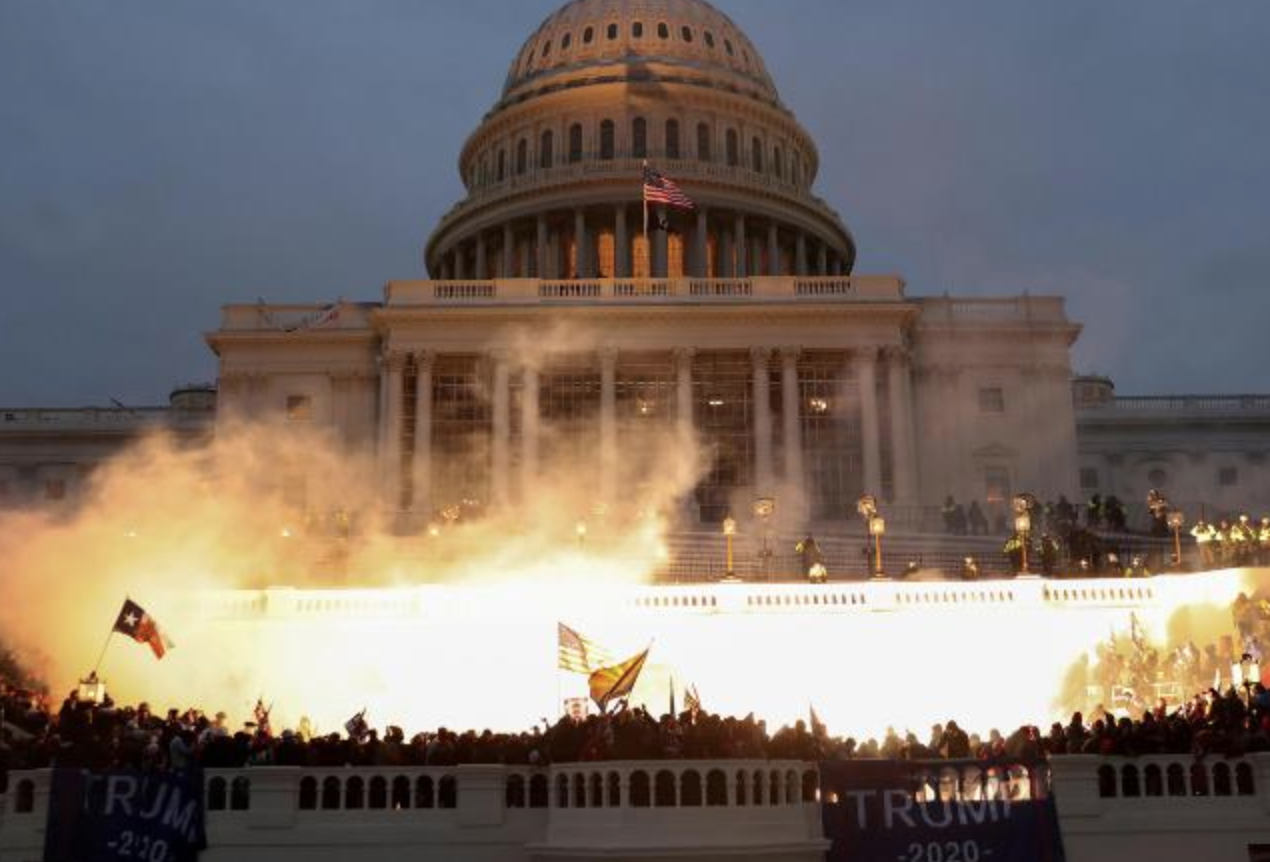
Did the January 6th riot at the U.S. Capitol involve Christian 'heresy' or was it 'apostasy'?

Did the January 6th riot at the U.S. Capitol involve Christian 'heresy' or was it 'apostasy'?

THE QUESTION:

Did the January 6th Capitol riot involve Christian “heresy” or “apostasy”?

THE RELIGION GUY’S ANSWER:

The U.S. Senate may have debated whether ex-President Donald Trump bears responsibility for the Jan. 6 riot at U.S. Capitol, but certain conservative Christians focused instead on his followers. They propose that the final day of Trump’s campaign to overturn President Biden’s December 14 Electoral College victory involved religious “heresy” or “apostasy.”

Those leveling this charge are not #NeverTrump politicians or pundits but devout and conservative Christians. That may seem surprising because in the media and the public mind the “religious right” fuses with devotion to Trump. But such thinkers take doctrine and biblical teaching seriously (unlike religious liberals who define political sins while ignoring theological errors).

A survey by the conservative American Enterprise Institute shows 63% of white evangelicals think Biden’s win was illegitimate, despite the numerous federal and state court rulings that found no evidence for Trump’s claim of a “sacred landslide.” But to what extent were Christians implicated in the Capitol mayhem?

As weeks roll on, we’re learning how a radical fringe planned the Capitol attack in advance and energized the crowd that Trump assembled and addressed.

Terry Mattingly of GetReligion.org distinguishes among four groups: The horde that Trump assembled to hear his demand that Congress and Vice President Mike Pence somehow overthrow Biden’s election; those who obeyed Trump’s plea to march on the Capitol; the militant marchers who broke into the security zone, but only protested outside the Capitol; and the smaller, violent, and foul-mouthed mob that desecrated this potent symbol of democracy across the globe.

Regarding that fourth group, Tony Carnes, editor of the A Journey Through NYC Religions website observed that, “no pastors, priests, or other organized religious leaders have been identified so far as part of the riot.” Mattingly wondered where’s the evidence that links a legal protest that evolved into insurrection with “evangelical networks and institutions.” And yet, videos do capture some incongruous Christian symbols and prayers that mingled with the homicide, threats to kill national leaders, injuries to 138 police, vandalism and theft.


Please respect our Commenting Policy

New podcast: 'Screen' culture tied to loneliness; can clergy build bridges with same tech?

New podcast: 'Screen' culture tied to loneliness; can clergy build bridges with same tech?

The coronavirus pandemic has created a wide variety of religion-beat stories — from empty local pews to the U.S. Supreme Court debating how many people can occupy local pews. And sometimes it feels like all roads during this crisis, for better or worse, lead to the internet.

Yes, we had lots of ground to cover in this week’s “Crossroads” podcast (click here to tune that in).

Empty local pews have, in some cases, led to near-empty offering plates. Leaders in religious groups that were struggling before COVID-19 — look for closing congregations, seminaries, colleges and even cathedrals — are now hearing the demographics clock tick, tick, tick even louder.

We’re talking about huge stories, but they are also stories that are hard for journalists to cover, simply because they require information at the local, regional and national levels.

It was easy to cover local clergypersons as they learned to mount smartphones atop camera tripods and stream worship services to their locked-down flocks (as opposed to megachurches that already had cameras and massive websites). It was also easier to cover black-sheep clergy that rebelled against social-distancing guidelines than it was to report on the remarkable efforts of leaders in entire denominations and religious traditions seek ways for their people to worship as best they could within constantly evolving (and often hostile) government guidelines.

Journalists, of course, were also being affected by lockdowns and, in some cases, budget cuts. This was an equal-opportunity crisis.

Let me give you an example of an important story that everyone knows is unfolding right now. Consider this Baptist Press headline: “Pandemic division causing pastors to leave ministry, pastoral mentor says.” Here is the overture:

Brian Croft jokes that masks are the new “color of the carpet argument” in churches, with similarly poor outcomes. Pastors are resigning from the stress “kind of in a way I’ve never really seen.”

The founder of Practical Shepherding transitioned from fulltime pastoring to lead the shepherding outreach fulltime in January, pulled by a need for coaching and counseling that has steadily increased among pastors over the past decade.

Then came COVID-19.


Please respect our Commenting Policy

Once again, AP accuses big Catholic bosses of abusing government coronavirus relief efforts

Once again, AP accuses big Catholic bosses of abusing government coronavirus relief efforts

There they go again.

In this case, “they” refers to whoever is in charge of religion-news coverage these days at the Associated Press. Someone there needs to take a remedial course in (a) church history, (b) church-state law in the United States or (c) both.

Let’s start by flashing back about six months, when the AP rolled out an investigation of what its editors clearly thought was a scandal of epic proportions. Does anyone remember this lede, and this GetReligion dissection (“AP explains why it was wrong for local-level Catholic employees to get coronavirus relief money“), of the expose)?

NEW YORK (AP) — The U.S. Roman Catholic Church used a special and unprecedented exemption from federal rules to amass at least $1.4 billion in taxpayer-backed coronavirus aid, with many millions going to dioceses that have paid huge settlements or sought bankruptcy protection because of clergy sexual abuse cover-ups.

That was a bizarre, but honest, opener. The entire story was built on the assumption that there is such a thing — corporately and legally speaking — as a “U.S. Roman Catholic Church.”

As I said at the time, this is “like saying that there is an ‘American Public School System,’ as opposed to complex networks of schools at the local, regional and state levels.” One could also note that there is a Planned Parenthood of America. However, government coronavirus aid in the paycheck-support program went to 37 regional and local Planned Parenthood groups.

The Associated Press has now produced a sequel, with this headline: “Sitting on billions, Catholic dioceses amassed taxpayer aid.” While the editors avoided the “U.S. Roman Catholic Church” label this time around, this lengthy story is built on a similar misunderstanding of what happened when Catholic parishes, schools, nonprofits and other ministries applied for coronavirus aid.

As readers can see in the headline, in the sequel AP leaders focused on finances at the diocesan level, as opposed to a mythical national Catholic structure. This is closer to the truth, but it still misses the mark. While many issues of church authority are linked to local bishops, in local dioceses, the crucial issue here was paycheck-relief money reaching staff members in individual parishes, schools and ministries that had been rocked by falling donations during the COVID-19 crisis. Let’s start with the overture:


Please respect our Commenting Policy

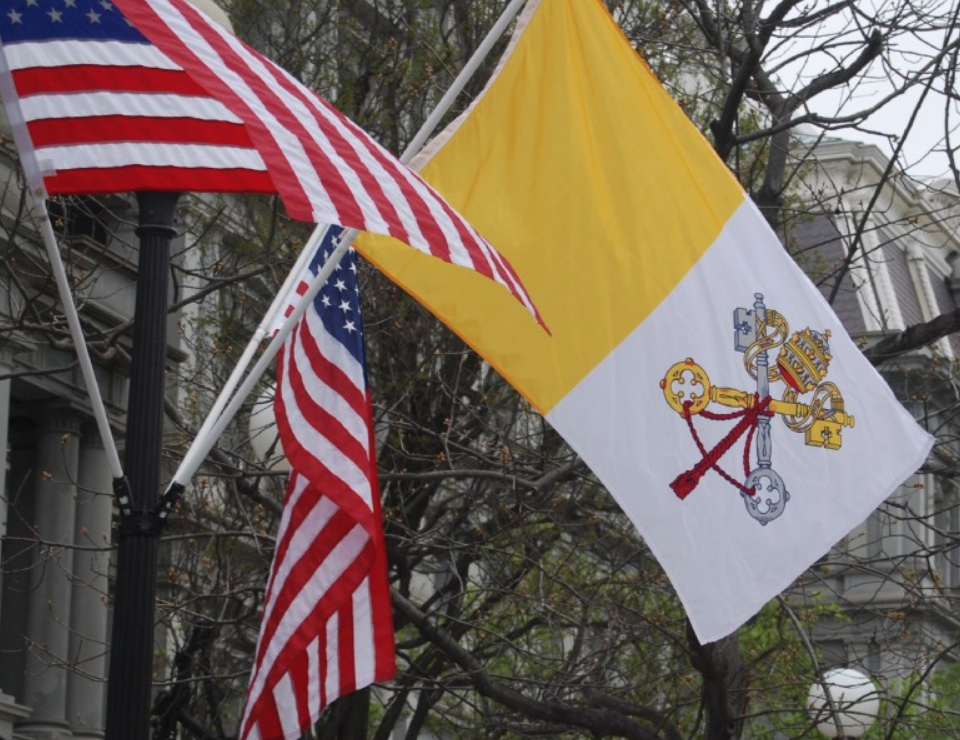
President Joe Biden's a Pope Francis fan, but does that mean the pope's a fan of Biden?

President Joe Biden's a Pope Francis fan, but does that mean the pope's a fan of Biden?

Pope Francis appears to be a big supporter of President Joe Biden.

A majority of the U.S. Catholic bishops are not.

At least that’s a prominent narrative concerning America’s second Catholic president (after John F. Kennedy).

To wit: The headline on a Los Angeles Times news story this week declared: “Pope Francis is a Biden fan, but some U.S. Catholic leaders give president a frosty reception.”

My sincere question: Is it accurate to characterize Francis as a Biden fan?

“While Pope Francis has enjoyed a warm relationship with Biden from time spent together in both the U.S. and at the Vatican, it would be wrong to classify him as a partisan player in U.S. politics,” Christopher White, national correspondent for the National Catholic Reporter, told me. “His approach to any world leader is to try to find common ground and see where there’s work to be done together.”

Clemente Lisi analyzes Catholic news for Religion Unplugged.

“I’d say the pope seems cordial to Biden, and the two have met a few times,” Lisi said in response to my question. “There seems to be a fascination in the media to lump these two men together.”

The Los Angeles Times is, of course, just the latest major news outlet to contrast the difference in tone between how the Vatican and top U.S. bishops — notably Los Angeles Archbishop José H. Gomez — have greeted Biden’s inauguration.

The prominent West Coast paper suggests:

The rift stems from opposition by many in the church to abortion and same-sex marriage, while others see a broader interpretation of the sanctity of life, promoted by Francis, to include climate change, immigration and fighting poverty.

Biden “keeps a picture in the Oval Office of himself with Pope Francis,” the story notes. But does that picture mean as much to Francis? The paper doesn’t say.


Please respect our Commenting Policy

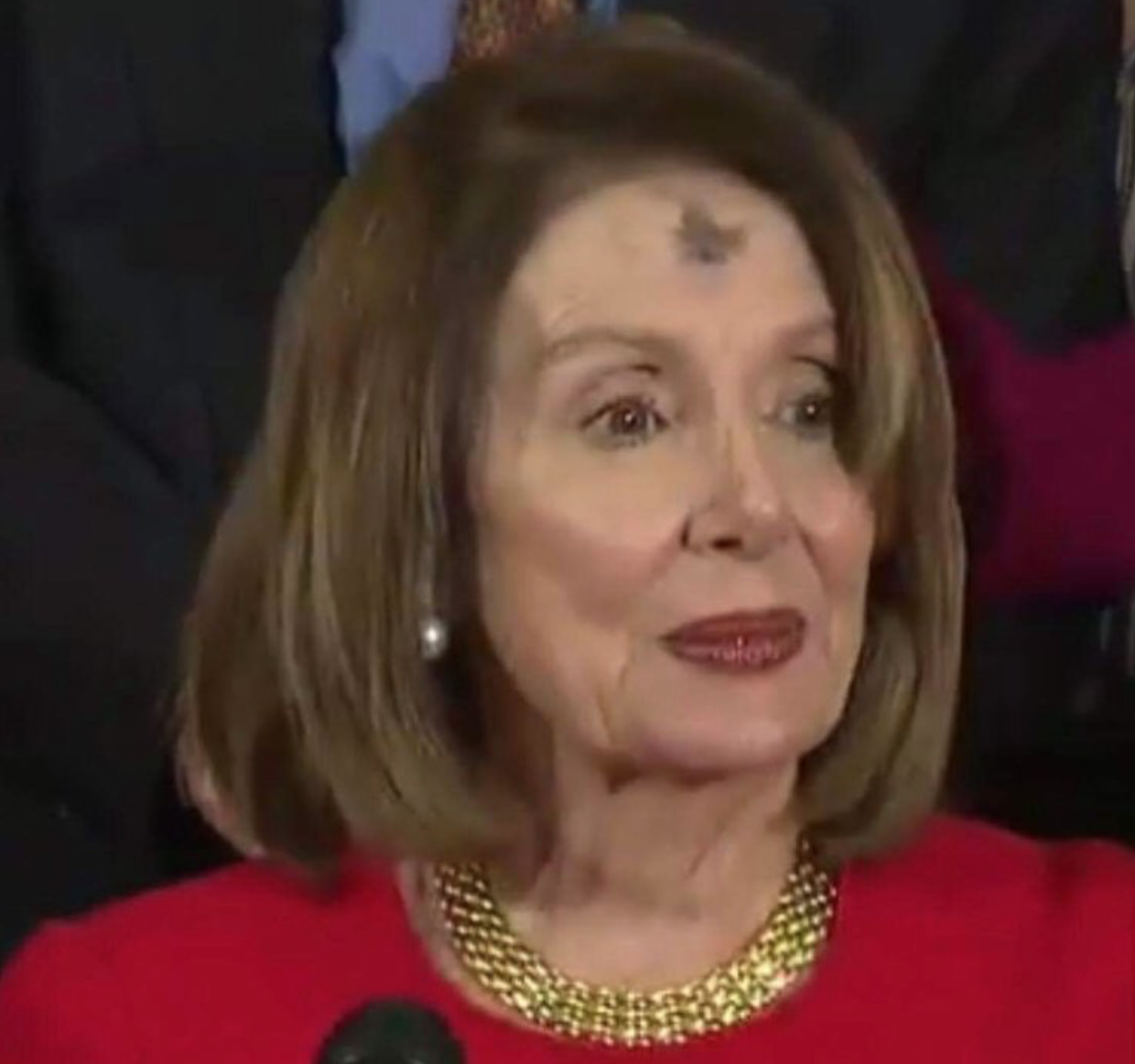
New podcast: Are tensions between Speaker Pelosi and her archbishop a valid news story?

New podcast: Are tensions between Speaker Pelosi and her archbishop a valid news story?

The following is not a hypothetical case or a parable. This is the heart of the news story that was the hook for this week’s “Crossroads” podcast (click here to tune that in).

Step one: Speaker Nancy Pelosi was a guest on Hillary Clinton’s “You and Me Both” podcast. As you would expect, since this was recorded a week after the stunning January 6th attack on the U.S. Capitol, they spent some time discussing their views on the Donald Trump years.

This led to a discussion about the choices made by pro-life voters in the 2016 election. Here is some crucial material from a Catholic News Agency story about the exchange.

… House Speaker Nancy Pelosi (D-Calif.) said that support of pro-life voters for former President Donald Trump was an issue that “gives me great grief as a Catholic.”

“I think that Donald Trump is president because of the issue of a woman’s right to choose,” she said of abortion, implying that pro-life voters boosted Trump to victory in 2016. She added that these voters “were willing to sell the whole democracy down the river for that one issue.”

Other than the “sellout” implication, the key phrase there is “as a Catholic.”

Step two: The archbishop who — canonically speaking — is charged with overseeing Pelosi’s life as a Catholic believer was not amused by this assertion. Here is another chunk of that CNA report.

“No Catholic in good conscience can favor abortion,” said Archbishop Salvatore Cordileone of San Francisco, Pelosi’s home diocese. … “Our land is soaked with the blood of the innocent, and it must stop.”

Pelosi has long supported abortion despite her Catholic faith. In 2008, she said on NBC’s “Meet the Press” regarding when life begins, “over the centuries, the doctors of the church have not been able to make that definition.” She said that her Catholic faith “shouldn’t have an impact on a woman’s right to choose.” …

Archbishop Cordileone clarified that "Nancy Pelosi does not speak for the Catholic Church. … And on the question of the equal dignity of human life in the womb, she [Pelosi] also speaks in direct contradiction to a fundamental human right that Catholic teaching has consistently championed for 2,000 years.” …

Step three: Write a mainstream news story?


Please respect our Commenting Policy

Happy birthday (I guess): GetReligion will keep highlighting 'religion ghosts' in the news

Happy birthday (I guess): GetReligion will keep highlighting 'religion ghosts' in the news

Growing old is complicated.

This is especially true during these bizarre COVID-19 days in which one day runs into another and sometimes it’s hard to remember what is what and when is when.

Oh well, whatever, nevermind. I being this up because GetReligion.org launched on Feb. 2, 2004 (even though the first post was written a day earlier). I think that means we just turned 17 and are headed into year No. 18, but my aging mind goes rather numb just thinking about it.

This blog has always had two essential goals.

The first is to highlight what we call “ghosts” in mainstream news coverage, as in essential facts and themes about religion that journalists — on lots of beats — frequently miss when covering news stories, big and small. A side effect of that task has been urging newsroom managers to hire experienced religion-beat reporters to strengthen their newsrooms.

Goal No. 2 is related to that. We have tried, year after year, to defend what is frequently called the American Model of the Press (see this .pdf) — with its emphasis on accurate, fair-minded, even balanced coverage of stories in which there are competing, or even clashing, viewpoints. For a taste of what that sounds like, check out this famous 2003 memo by the late, great, Los Angeles Times editor John Carroll. Here’s a crucial chunk of that, after his critique of a one-sided story:

The reason I'm sending this note to all section editors is that I want everyone to understand how serious I am about purging all political bias from our coverage. We may happen to live in a political atmosphere that is suffused with liberal values (and is unreflective of the nation as a whole), but we are not going to push a liberal agenda in the news pages of the Times.

I'm no expert on abortion, but I know enough to believe that it presents a profound philosophical, religious and scientific question, and I respect people on both sides of the debate. A newspaper that is intelligent and fair-minded will do the same.

In recent years, economic, cultural and political forces have greatly weakened the American Model of the Press (see this recent Celemente Lisi post on that topic). Some people say this model is outdated, in a digital age in which opinion is cheap and information is expensive and the safest business model — producing mouse-clicks and loyal subscribers — is to tell your niche audience what it wants to hear.


Please respect our Commenting Policy

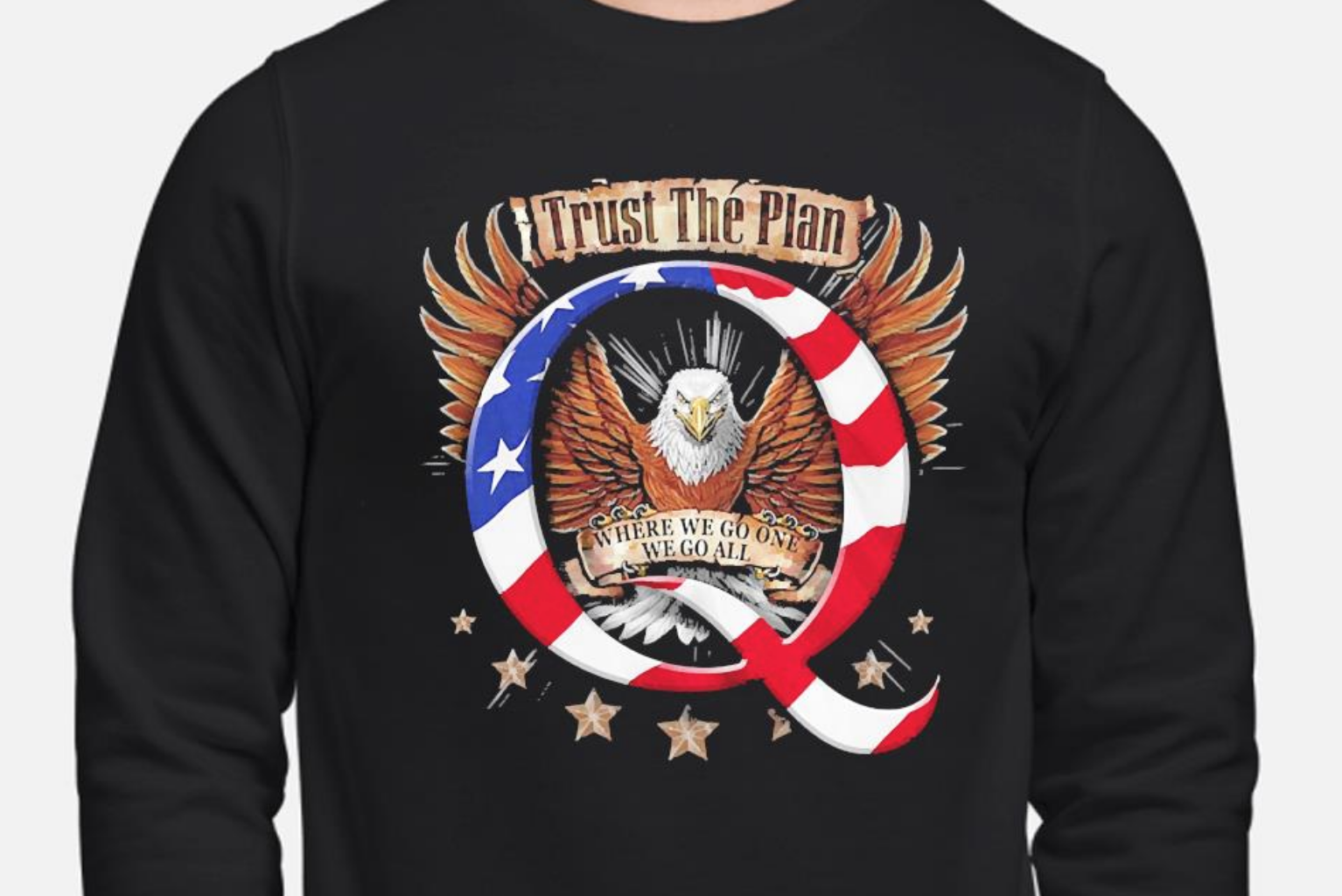
The New York Times looks at QAnon leader who is, wait, a Manhattan mystic from Harvard?

The New York Times looks at QAnon leader who is, wait, a Manhattan mystic from Harvard?

It would have been hard to have consumed mainstream press coverage during the 2020 race for the White House without hearing quite a bit about the impact of QAnon and other conspiracy theories on the most dedicated followers of Donald Trump. Conspiracy theories on the other side of American life? Not so much.

At the same time, for totally valid reasons, it was impossible to read about QAnon and other conspiracy theories without hearing about their impact in church pews, as well as blue-collar bars. In some media reports, QAnon was presented as an “evangelical” Christian movement, pure and simple.

Here at GetReligion, we have argued that the impact of QAnon in grassroots evangelical culture has been obvious and that this is an important story. (See this post, in particular: “Thinking about QAnon — Joe Carter sends strong warning to evangelicals about new heresy.”)

At the same time, it has been hard — so far — to argue that there is evidence that major institutions, denominations and leaders at the heart of evangelical culture have been sucked into this tragedy. (See this podcast and post, in particular: “New York Times says 'Christian nationalism' tied to white 'evangelical power'.”)

At this point, I am convinced that QAnon is, to use Joe Carter’s term, a “political cult” led by social-media activists who clearly know how to rattle the chains of evangelicals who are obsessed with speculating about the End Of All Things.

With all of that in mind, I was interested to dig into the recent New York Times multi-media feature that ran with this dramatic double-decker headline:

A QAnon ‘Digital Soldier’ Marches On, Undeterred by Theory’s Unraveling

Valerie Gilbert posts dozens of times a day in support of an unhinged conspiracy theory. The story of this “meme queen” hints at how hard it will be to bring people like her back to reality.

I assumed that this story would contain some religious content, if not clouds of speculation about evangelical involvement in QAnon.

So who is Gilbert?


Please respect our Commenting Policy