Women

St. Anne plays a major role in papal visit to Canada: Is she important to Catholics, alone?

St. Anne plays a major role in papal visit to Canada: Is she important to Catholics, alone?

Long ago, I had a strategic and symbolic on-deadline argument with Rocky Mountain News (#RIP) editor.

Holy Week loomed on the horizon, on the Western calendar, and I was asked to fill out a form requesting quick Ash Wednesday feature art. I suggested — thinking beauty and diversity — a visit to an Episcopal parish in the heart of Denver’s most prominent Black neighborhood, a congregation known for the beauty of its high-church, Anglo-Catholic rites.

The editor said the photo needed to be in a Catholic church, since Holy Week is a Catholic story. I said that was a logical way to think about it, since the Catholic church is so prominent. However, I noted that Holy Week is an ancient Christian tradition observed in many Christian churches and denominations. It would be good to remind readers of that fact. I won that debate and the result was a stunning photograph.

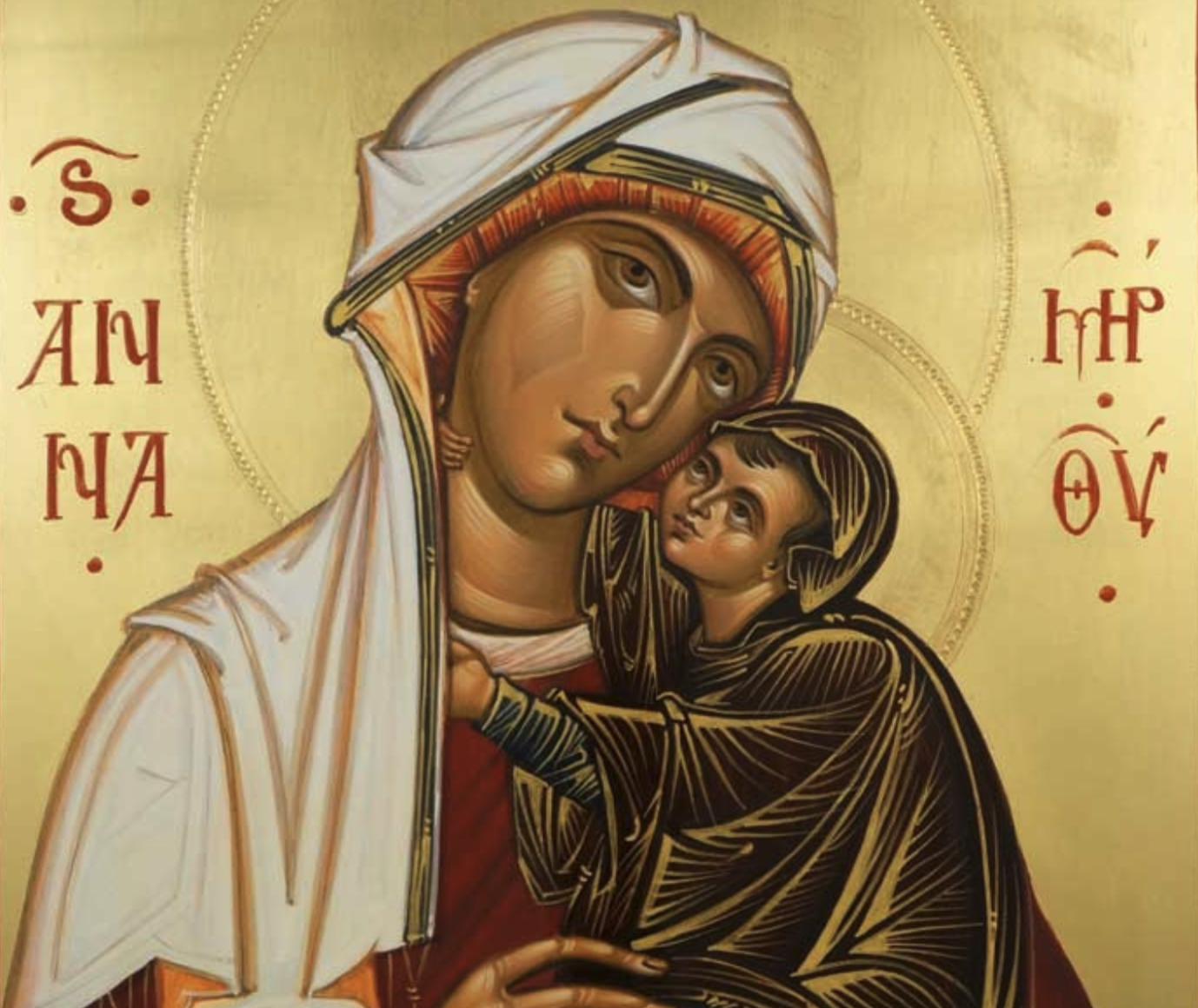
I thought of that debate when reading a timely Religion News Service piece that ran with this headline: “Who is St. Anne and why is she so important to Indigenous peoples?” Let me stress that this is a good story and a valid angle during the Pope Francis pilgrimage to Canada. I urge readers to check it out. Here is the top of that report:

When Pope Francis met with a delegation of First Nations, Métis and Inuit people in April at the Vatican, he told them he wanted to visit them in Canada this year. And not just at any time of the year, but during the Feast of St. Anne (July 26).

“I think with joy, for example, of the great veneration that many of you have for Saint Anne, the grandmother of Jesus,” Pope Francis told the Indigenous delegation to the Vatican. “This year I would like to be with you on those days.”

As the pope visits Canada through Friday (July 29), he will indeed celebrate the Feast of St. Anne in the country. He also will visit several sites dedicated to the saint, whom Catholics believe to be the mother of Mary and the grandmother of Jesus.

That last sentence includes a classic example of a statement — “whom Catholics believe to be the mother of Mary and the grandmother of Jesus” — that is certainly accurate, but it would still cause some readers to think, “Wait a minute. Aren’t there millions of other Christians who honor St. Anne for the same reasons?”


Please respect our Commenting Policy

AP visits a small circle of Dominicans in Greece -- a lovely story with some missing details

AP visits a small circle of Dominicans in Greece -- a lovely story with some missing details

Contrary to popular belief, there are more than a few GetReligion readers who haven’t given up on the mainstream press.

I know this because, every now and then, I will get emails that praise the same news story or feature. Often these missives come from readers who have been known to send me the URLs of news reports that contain errors or are radically unbalanced in how they approach covering complex issues.

In other words, these readers are reading the news and looking for “good” journalism — defined as work built on an old-liberal American Model of the Press approach seeking accuracy and some sense of balance (maybe even respect for diverse voice) when covering complex debates.

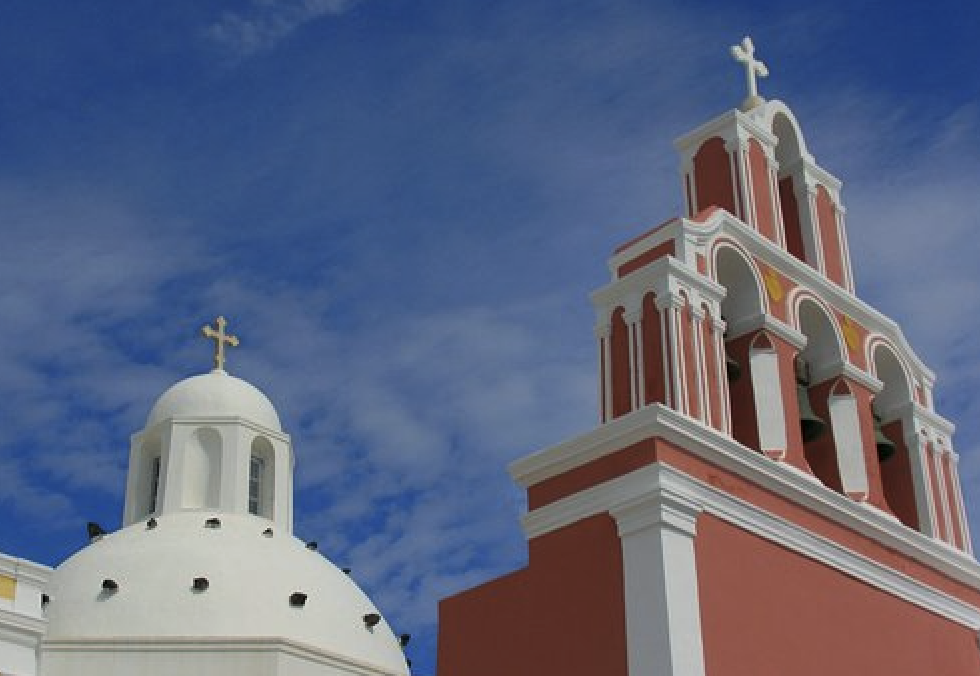
With all of this in mind, let’s look at a recent Associated Press report that several readers have written me to praise: “On Greece’s Santorini, 13 cloistered nuns pray for the world.” This is an unusually beautiful feature — the photography is stunning (please check that out) — written by Giovanna Dell'Orto, a journalism professor at the University of Minnesota who does freelance work for AP.

How did this piece come about, since it clearly involved a travel budget for in-depth religion work (rare in this thin-budget age), research time and a commitment to a detailed feature with strong photography? The credit line offers this: “Associated Press religion coverage receives support through the AP’s collaboration with The Conversation US, with funding from Lilly Endowment Inc.”

What is right with this piece? A regular reader noted, via email:

… I guess I submit this because a story that focuses so much on the joy of cloistered contemplatives is not what you expect to see in most newsfeeds. By letting the community speak for itself and by bringing nothing but honest curiosity to the story, look how even this short article opens a door on a whole other world. I'm reading "Desert Fathers: Sayings of the Early Christian Monks" at the moment, and this news story brought an ancient practice to vivid life.

I agree with all of that and, in this post, I will stress the positive — because it’s there.

At the same time, let me note that it was rather strange that this story focuses exclusively on “God” language and doesn’t contain a single reference to, well, Jesus (other than the name of one of the sisters). This is strange when writing about women religious whose Dominican vows joyfully declare them to be the Brides of Christ.


Please respect our Commenting Policy

Here's a soundbite for you: In the Bible, does St. Peter call women the 'weaker sex'?

Here's a soundbite for you: In the Bible, does St. Peter call women the 'weaker sex'?

THE QUESTION:

In the Bible, does St. Peter call women the “weaker sex”?

THE RELIGION GUY’S ANSWER:

Yes.

But why? What did that mean? What was he saying about women’s status in a culture far different from that of the 21st Century?

A preliminary point. Word limits do not allow adequate examination here of liberal scholars’ contention that St. Peter did not really write the two New Testament letters the texts attribute to him, or of the reasons conservatives are convinced that these are authentic words from the figure Catholicism uplifts as the first pope and all Christians revere as an apostle, founder and martyr. The following discussion will assume Peter was the author.

Jackson Wu, an evangelical theologian with the Global Training Network, raised the question about I Peter 3:7 in this June 29 blog item. The verse at issue reads “likewise you husbands, live considerately with your wives, bestowing honor on the woman as the weaker sex, since you are joint heirs of the grace of life. …”

That’s the Revised Standard Version translation. Using the ever-handy www.BibleGateway.com, you can quickly compare 60 other English renditions.

Others that say “weaker sex” are the Living Bible, a modern U.S. paraphrase; Expanded Bible, which includes alternate translations; and the original New Revised Standard Version, but not last year’s updated edition. Others say weaker “partner” and many have weaker “vessel,” which is the more exact translation of the original Greek. That’s important.

Peter’s letter is abundantly clear that women are not inferior spiritually, or morally, or of any lesser status than men in the eyes of God.


Please respect our Commenting Policy

Abstinence may be 'in' again, but don't expect big-time media to give it a fair hearing

Abstinence may be 'in' again, but don't expect big-time media to give it a fair hearing

Some three weeks have passed since the Supreme Court dumped Roe v. Wade and the torrent of angry pro-abortion-rights pieces fills the pages of nearly every news publication out there.

Outlets like the New Yorker, for instance, just keep pumping them out at a rate that you have to wonder when they turned into the public voice of Planned Parenthood. The editors are, of course, preaching to their choir of faithful readers.

I’ll also say that the anti-abortion folks have been totally unprepared for the never-ending waves of attacks and, yes, some of the lies that have followed the ruling. I’m seeing precious few of their opinions out there in the secular media. Maybe they’re being blocked; hard to tell.

The underlying assumption of the argument is the gospel of the Sexual Revolution — people have a right to sex whenever, however, wherever and with whomever. This right is a modern invention. Most societies attempted to chaperone their teens and encouraged their offspring married young. They also punished adultery quite severely. One’s ‘right’ to sex was hedged in enormously.

Today, the thought of limiting one’s desires is equal to an obscenity in our culture, which is why the antidote to abortion –- abstinence -– draws such howls of protest. How dare anyone tell us no? And so an Religion News Service led a story on abstinence with these paragraphs:

(RNS) — In front of a room of middle schoolers, a youth minister in rural North Carolina scribbles “hand-holding” and “kissing” on the bottom of a whiteboard. He then writes “intercourse” on the top of the board. Between the gap, he draws a thick line, indicating that sex before marriage — anything more than kissing, actually — crosses a literal line of purity.

It’s a scene the Rev. Amelia Fulbright, now the transitional pastor of the Congregational Church of Austin, recalls from her childhood, when she attended a ministry-led sex-ed course.

The reporter chose someone from a liberal denomination, or responded to a a PR message from that church, to arrive at this inevitable conclusion.


Please respect our Commenting Policy

Americans who oppose abortion: Who are they in terms of demographics, faith and ideology?

Americans who oppose abortion: Who are they in terms of demographics, faith and ideology?

It’s more than likely the most important Supreme Court case in my lifetime: the overturning of Roe v. Wade means that each individual state gets to decide if and how it will regulate abortion inside its boundaries. According to NPR, that means that at least 20 states will effectively ban abortion in the coming weeks.

When the draft of the Dobbs opinion was leaked back in early May, I put together a thread of graphs about abortion opinion from a variety of angles and came to a clear conclusion: an outright ban is not where most American are when it comes to the issue of abortion.

But, now that Dobbs has been decided and many abortion clinics have been forced to shut their doors across the United States, who are the ones cheering this decision the most? Put simply: who favors an all-out ban on abortion and how does this subset of Americans compare to the general public? That’s the aim of this post — a deep dive into a descriptive analysis of those who favor a total ban on abortion.

The data comes from the 2020 Cooperative Election Study. The statement is simple enough: “Do you favor or oppose making abortions illegal in all circumstances.”

When I post this question on Twitter, there is always someone in the replies who tries to parse this statement. They don’t know how to deal with the phrase “all circumstances.” [Editor’s note: See recent Pew Research Center poll for more information.]

After conducting surveys for more than a decade, I can say that the average survey taker spends about two seconds reading each question and just responds with their gut. In this case, they more than likely interpreting the question to mean, “I’m completely opposed to abortion.”

In the 2020 CES that equals out to just under 20% of the American population. In a sample of 61,000 folks, that equals out to 12,093 individuals (weighted). So, my N size is just fine to proceed with this analysis.


Please respect our Commenting Policy

Podcast: New York Times probes abortion 'abolitionist' movement, but buries the big story

Podcast: New York Times probes abortion 'abolitionist' movement, but buries the big story

Where is the whole “life after Roe v. Wade” story headed? And while we are asking questions, shouldn’t we be saying “life after Dobbs v. Jackson Women’s Health Organization,” since that is now the defining U.S. Supreme Court decision?

Anyway, during last week’s “Crossroads” podcast (“America is splitting, says trending Atlantic essay. This is news? Actually, it's old news”), I predicted that we would be seeing more mainstream press coverage of crisis pregnancy centers — an old story hook that is, sure enough, getting lots of ink all of a sudden (see this Julia Duin post and also this one by yours truly).

I also predicted that major newsrooms would discover the abortion “abolitionists,” a small but loud flock of activists who reject all compromises in laws to restrict abortion, including exceptions for victims of rape and incest. The key: They want laws that prosecute women who have abortions, not just the people who perform abortions.

I made that prediction for two reasons, a good reason and a bad reason. First, this is a valid story, because these activists are making noise in some crucial settings (hold that thought). However, this story also allows blue-zone newsrooms to focus lots of attention on these specific anti-abortion activists (NPR reports here and then here) whose views are outrageous to most Americans, while downplaying efforts by moderate and even centrist pro-life groups seeking more nuanced legislation, mostly in “purple” states.

This brings us to this week’s “Crossroads” episode (CLICK HERE to tune that in), which focuses on a New York Times story that ran with this headline: “Abortion Abolitionists Want to Punish Women for Abortion.” This story continues some important information. Please read it. However, it also downplays (this is strange) its most important information about the abolitionists, while dedicating lots of ink to yet another independent social-media preacher who provides lots of scary quotes. Let’s start with the overture:

Hours after the Supreme Court overturned Roe v. Wade last week, a man with a wiry, squared-off beard and a metal cross around his neck celebrated with his team at a Brazilian steakhouse. He pulled out his phone to livestream to his followers.

“We have delivered a huge blow to the enemy and to this industry,” the man, Jeff Durbin, said. But, he explained, “our work has just really begun.”

A brief pause: Why isn’t it “the Rev. Jeff Durbin”? This raises big questions: What evangelical body or denomination ordained this man? Where did he go to seminary? Does he have ties to institutions in mainstream evangelicalism?

OK, continuing.


Please respect our Commenting Policy

Angry about Roe, many journalists focus on crisis pregnancy centers as villains behind it all

Angry about Roe, many journalists focus on crisis pregnancy centers as villains behind it all

Before the overturning of Roe v. Wade a little more than a week ago, crisis pregnancy centers (CPCs) were considered by mainstream media to be the dregs of the pro-life movement, one of the last stories that anyone wanted to cover.

Now that abortion access is heading toward the deep-blue coastal regions with a few blue islands in the middle, a villain must be found. And voilà; the once despised CPCs are to blame for it all. Now, CPCs are worse than a non-story.

Apparently these places are pretty effective, judging from the editorial hate being poured down on them. They’re the bricks and mortar of the pro-life movement. Instead of reporting about how these CPCs — and the churches that tend to support them — have been defaced, set on fire or otherwise attacked, we have hit pieces like this Associated Press article about a “so-called” crisis pregnancy center in Charleston, WV.

The piece is so front-loaded with trash quotes from its opponents — with no rejoinder allowed from leaders or volunteers at the CPC itself — that you almost miss the story about the woman who visited the center back in 2014 planning to abort her child. She was (very reluctantly) dissuaded from doing so and now is “very happily” raising her 7-year-old son.

So, what’s the moral of this story? That this particular mother should have decided that this kid should be dead? The two reporters who did this disaster of a story don't want to go there.

Considering the invective tossed at these CPCs by places like Planned Parenthood, why aren’t reporters treating this more like a business story?

Like, the CPCs have outwitted the abortion clinics when it comes to figuring out what many pregnant women really want and it’s clear the abortion facilities have suffered financial losses as a result. How about asking people at the latter hard questions about the clients they’ve lost to the CPCs and whose bad marketing decision that was?

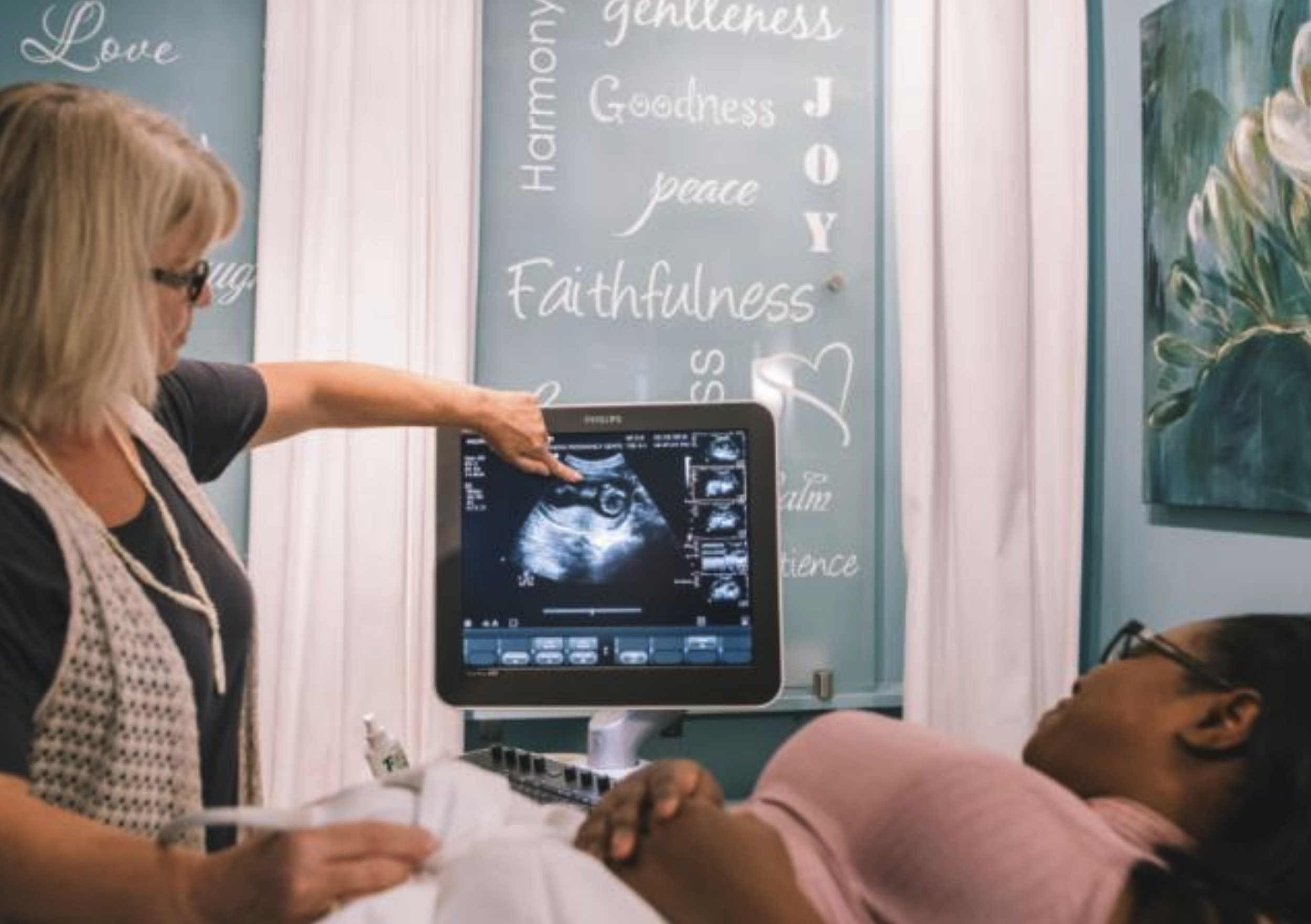
Hint: It might have to do with the free ultrasounds offered by the CPCs. Offering this service was a trend that began a decade or more ago and it really cried out for coverage.


Please respect our Commenting Policy

Life after Roe: What role will churches and faith play in work of pro-life Democrats?

Life after Roe: What role will churches and faith play in work of pro-life Democrats?

As outraged Democrats jumped on social media after the fall of Roe v. Wade, some symbolic voices in the party offered careful words of celebration.

"Let's Stand Together and Support Women and Children!!!", tweeted state Sen. Katrina Jackson, the African-American Democrat who sponsored Louisiana's trigger bill that includes potential 10-year prison sentences for those who perform abortions.

Jackson's added calls for "womb to tomb" legislation raising wages for childcare workers, funds to fight human-trafficking and new state programs helping families.

Louisiana Gov. John Bel Edwards, also a Democrat, posted several Twitter messages, including: "My position on abortion has been unwavering. I am pro-life and have never hidden from that fact." He stressed that this Louisiana bill included clauses protecting procedures in cases of "medical futility" and ectopic pregnancies and added that he believes it needed "an exception to the prohibition on abortion for victims of rape and incest."

The Democratic Party, in its 2020 platform, remained committed to "protecting and advancing reproductive health, rights and justice," while promising to "fight and overturn federal and state laws" limiting or opposing abortion rights.

But in the wake of the Supreme Court's recent Dobbs vs. Jackson Women's Health Organization decision, crucial debates about abortion laws will move to state governments. Some have already passed bills protecting unborn children and others have taken equally strong stands defending abortion rights.

Many states are located somewhere in between, noted Kristen Day, leader of Democrats for Life of America. In these states there will be tense negotiations over legislation -- such as "heartbeat bills," usually defined as abortion bans after six weeks of gestation -- that were impossible under court actions linked to Roe v. Wade.

While "pro-life" Democrats are an endangered species inside the D.C. Beltway, there are "hundreds of us active in state governments," said Day, reached by telephone. Many of these Democrats are linked to Black and Latino churches -- grassroots workers that national party leaders may not want to attack or alienate.


Please respect our Commenting Policy