Women

Did the Washington Post profile of Karen Swallow Prior help critics understand her or not?

Did the Washington Post profile of Karen Swallow Prior help critics understand her or not?

It’s hard to do a critique of an elite-media feature about someone who is a real online friend.

But, in this case, there’s an issue that — at least to me — cannot be avoided in the glowing Washington Post religion-desk feature that ran the other day with this headline: “Karen Prior has worked for Roe's overturn for decades. This isn't what she'd hoped to feel.

Most fans of the “Notorious KSP,” I would imagine, loved this piece.

At the same time, I’m sure her worst critics loved it as well — for reasons linked to the journalism issue that I would like to spotlight in this post. It helps to understand that Prior has critics (and friends) who disagree with some things that she says and does and then she has critics that basically don’t want her to exist.

Meanwhile, anyone — worthy critics and supporters — who has followed KSP’s work through the years with any kind of an open mind knows the strength of her logic and (dare I say it) art when defending centuries of Christian doctrines about life issues, as well as marriage and sexuality. But to grasp that side of her life, and how it fits into the total package of her apologetics, people need to actually read or hear her address those topics.

This Post piece focuses, for the most part, on her actions and beliefs that have fueled controversy about her among some evangelicals (like me, she was #NeverTrump #Never Hillary in 2016). A more balanced profile of her would have included quoted material that would have — with good cause — offended, well, most Post readers and editors. Hold that thought, because I will come back to it.

The piece starts with Prior’s feelings of elation at the news that the U.S. Supreme Court appears to be poised to overturn Roe v. Wade.

Prior was shocked and thrilled. But within minutes the deep divisions and differences in priorities among antiabortion advocates came into view. After being put aside for decades as they worked together to overturn Roe, they had become impossible to ignore. While Chief Justice John G. Roberts Jr. took pains to say the leaked opinion may not be the final one, experts on abortion in America say even the potential of Roe’s demise is a turning point for the movement. If Roe falls, what does it mean to be for life now?

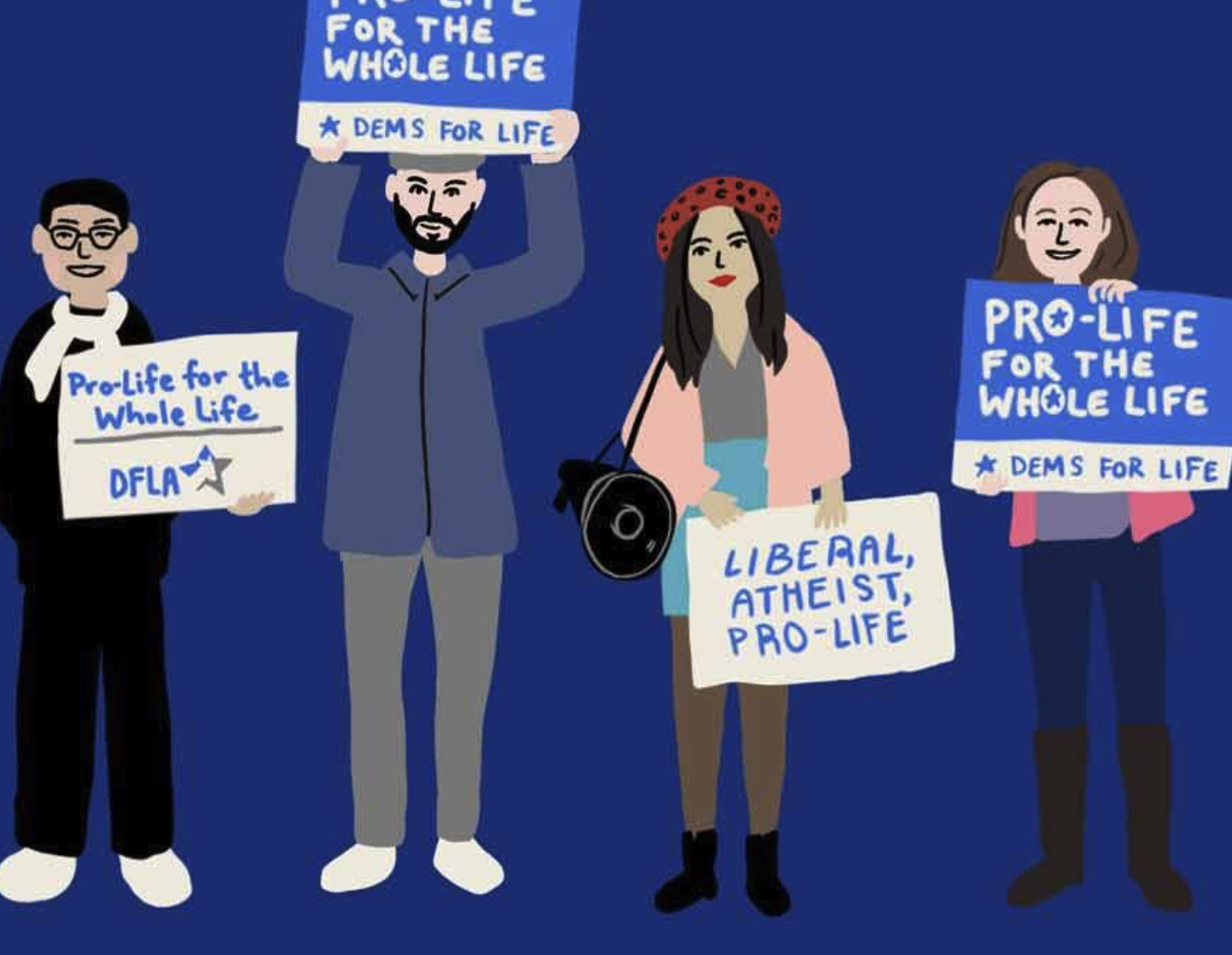
For Prior, it means much more than overturning Roe. It means more support for child care and pregnant women as well as supporting sex abuse victims, vaccinating as many people as possible against the coronavirus, and helping start and run an inner-city high school in Buffalo. But not all antiabortion activists agree and lately have begun splintering over next steps, such as whether to classify abortion as homicide and restrict contraception, as well as whether issues outside of reproduction even qualify as part of the “pro-life” cause.

Once again, this is an old, old story that is presented as something essentially new and, thus, linked to COVID-19, the Trump era and all kinds of “now” things. In reality, debates among evangelicals, and especially Catholics, about what it means to be “consistently pro-life” go back to the 1980s or earlier.

Please respect our Commenting Policy

Naomi Judd: 'It's scary to show that part of you that is the not so smart, not so together side'

Naomi Judd: 'It's scary to show that part of you that is the not so smart, not so together side'

Naomi Judd thought she understood the ties that bind country-music stars and their audience -- then one aggressive fan went and joined the Pentecostal church the Judd family called home.

"It really burdened me," said Judd, after signing hundreds of her "Love Can Build a Bridge" memoir back in 1993. "I just don't sign autographs at church. The best way I can explain it to children … is to say, 'Honey, Jesus is the star.' "

After a year of this tense standoff, Judd became concerned and wrote the fan. "I said, 'I want you to really get away by yourself and read this letter and answer this question honestly: Do you come to church to see The Judds or do you come to church to see God?' She never came back to church. But she was in the autograph line today."

Through it all, Judd and her brash daughter Wynonna have talked openly about their triumphs and their struggles. Many fans identified with their failures just as much as the messages about faith and family.

At the time of that 1993 interview, Naomi Judd had battled through waves of anxiety attacks to address some dark realities -- such as rape, crisis pregnancy and her deadly battle with hepatitis C that retired the The Judds.

What she hadn't discussed at that time was the sexual abuse in her childhood that led to treatment-resistant depression. Judd's April 30th death, at age 76, focused new attention on blunt passages in her 2016 book "River of Time," in which she said had been tempted by suicide. "I wanted to be completely honest that if someone took out a gun and killed me on stage, they would be doing me a favor," she wrote.

The Judds were inducted into the Country Music Hall of Fame the day after Naomi's death and her shaken daughter Ashley Judd told the crowd, "I'm sorry that she couldn't hang on until today." Writing in USA Today, the actress expressed gratitude for her mother's legacy, but added: "Perhaps it's indecorous to say, but my heart is filled with something else, too. Incandescent rage. Because my mother was stolen from me by the disease of mental illness, by the wounds she carried from a lifetime of injustices that started when she was a girl."


Please respect our Commenting Policy

Catholic doctrine has always rejected abortion: But what about Catholics in pews today?

Catholic doctrine has always rejected abortion: But what about Catholics in pews today?

It may be the most important U.S. Supreme Court decision of the last fifty years.

A leaked draft of a majority opinion, written by Justice Samuel Alito, would effectively dismantle the legal framework around abortion that was established in the 1973 decision Roe v. Wade. In its wake, states would have almost complete freedom to regulate abortion however they saw fit, including enacting a total prohibition.

Among those who study American religion and politics, it’s long been established that the earliest political voices seeking to restrict access to an abortion were members of the Catholic Church. For centuries, the catechism has taught that life should be protected at all stages — from conception to natural death. Thus, the tens of millions of American Catholics should be the standard bearers for the pro-life movement in the United States.

But here is an important question for journalists: Will most Catholics applaud the end of Roe? The data tells a nuanced story about how the average Catholic thinks about the issue of abortion access. As always, it’s important to note if polls pay any attention to how often Catholics attend Mass.

Looking back to the time period immediately after the Roe v Wade decision in 1973, it’s clear that the vast majority of Catholics were not comfortable with the concept of a woman obtaining an abortion for any reason, which not was out of step with how the average American felt.

For instance, in 1985 about 35% of Catholics were in favor of abortion demand. It was 39% of the general public. In the 1990s and 2000s, abortion opinion was relatively stable, but then things began to shift in 2010. From that point forward, the share of Catholics who supported abortion began to rise, which paralleled a shift in the overall opinion of the American public.

By 2021, fifty-three percent of Americans supported abortion on demand along with forty-five percent of Catholics. But, it’s worth noting that the contours of the two lines run in almost perfect unison. As the country moved left on abortion, so did the average Catholic.


Please respect our Commenting Policy

No way around it: Bombshell Roe v. Wade leak was the religion story of the week

No way around it: Bombshell Roe v. Wade leak was the religion story of the week

News that the U.S. Supreme Court’s conservative majority might overturn Roe v. Wade is not overly shocking. We’ve known that for months.

But the timing — and manner — of this week’s leak of Justice Samuel Alito’s draft majority opinion that would strike down the landmark 1973 decision, which legalized abortion nationwide? That counts as a bombshell.

To discuss the big scoop by Politico’s Josh Gerstein and Alexander Ward, ReligionUnplugged.com convened a panel of top religion journalists who have written extensively about the abortion debate. Click here to watch the discussion.

Clemente Lisi and I moderated the panel. Lisi, who teaches journalism at The King’s College in New York, is a ReligionUnplugged.com senior editor and a veteran GetReligion writer who focuses on Catholic news for both websites. The panelists were:

Adelle Banks, Religion News Service production editor and national reporter (see “If Roe goes, Black church leaders expect renewed energy for elections”).

Kelsey Dallas, Deseret News religion reporter and associate national editor (see “As some rallied over Roe v. Wade, these Christians prayed”).

BeLynn Hollers, Dallas Morning News reporter who covers women’s health, politics and religion (see her coverage of Texas’ restrictive abortion law).

• And Kate Shellnutt, Christianity Today senior news editor (see “This is and isn’t the moment pro-life evangelicals have waited for”).

Among the tantalizing questions the panel explored: Is the abortion debate a religion story?

Yes and no, Hollers said.

Yes, Dallas said. “But maybe not for the reasons people might assume,” she quickly added.


Please respect our Commenting Policy

Podcast: About post-Roe politics and Biden's evolving doctrines on choosing to 'abort a child'

Podcast: About post-Roe politics and Biden's evolving doctrines on choosing to 'abort a child'

Once upon a time, Sen. Joe Biden was almost a pro-life Catholic Democrat.

This may be the reason — as journalists frequently note — that he seems uncomfortable saying “abortion” in public remarks. Then again, he may also have private polling numbers on the muddled state of public opinion in which millions of Americans, including lots of Democrats, (a) oppose the U.S. Supreme Court overturning Roe vs. Wade, yet (b) are also in favor of European-style restrictions on abortion that have been blocked by U.S. courts because of legal logic built on Roe.

As is so often the case, Americans want it both ways and it’s rare for the mainstream press to note the tensions in that stance, since that would require balanced coverage of debates about Roe.

Back to Biden and a must-read Washington Post political feature that served as the hook for this week’s “Crossroads” podcast (CLICK HERE to tune that in). After spending much of his career somewhere in the middle on abortion, Biden now leads a Democratic Party that has veered so far to the cultural left that it champions third-trimester abortion (and even efforts to save the life of a baby born during a botched abortion).

That stance is hard to square with the Catechism of the Catholic Church, as well as lots of opinion polls, especially in states that will — if what appears to be a 5-3-1 SCOTUS verdict against Roe survives a blitz of elite media scorn — face debates about centrist laws to restrict, but not ban, abortion on demand.

Here is the top of the Post report, and readers are urged to spot a major abortion-talk stumble from Biden:

Joe Biden became a senator in 1973, just 17 days before the Supreme Court decided the landmark abortion rights case Roe v. Wade. Soon after, the young senator, a practicing Catholic, told an interviewer that he disagreed with the decision and that he had views on such matters that made him “about as liberal as your grandmother.”

“I don’t like the Supreme Court decision on abortion. I think it went too far,” he concluded in 1974. “I don’t think that a woman has the sole right to say what should happen to her body.”

Nearly a half-century later, with Biden evolving along with his party on the issue of abortion rights, he again declared the court was moving too far — this time, he argued, in the opposite direction.

“The idea that we’re going to make a judgment that is going to say that no one can make the judgment to choose to abort a child, based on a decision by the Supreme Court, I think, goes way overboard,” Biden said on Tuesday in reaction to a leaked Supreme Court draft opinion proposing to overturn Roe v. Wade.

Note that the Post editors, as opposed to some other elite media sources, used that quote in which Biden spoke words — “abort a child,” as opposed to a “fetus” — long banned in public-relations efforts for a pro-abortion-rights stance. I took that as a sign to keep reading.


Please respect our Commenting Policy

Naomi Judd: Press reports covered the dark nights of her life, but not the Sunday mornings

Naomi Judd: Press reports covered the dark nights of her life, but not the Sunday mornings

Journalists tend to remember symbolic details from many of interesting interviews — whether they are with superstars of various kinds or ordinary people who have seen remarkable things.

Exhausted after signing hundreds of copies of her “Love Can Build a Bridge” memoir back in 1993, Naomi Judd retreated to her tour bus parked behind the bookstore. She apologized for heading to the back room to get out of one of her famous stage dresses and into something from her farm outside of Nashville. The ground rules: no photos, but all questions were fair game.

At point in her life, she had already talked about some dark days and nights — from rape to a crisis pregnancy and beyond. But she hadn’t dug deeper into her childhood and the abuse that created the deep pools of depression that would eventually take her life.

But this was a woman who was driven to talk about her angels, as well as her demons. My favorite quote from that interview didn’t make it into the “On Religion” column that I wrote pre-Internet, but stashed deep in my file cabinets with pages of notes and transcripts.

Naomi Judd stressed that if people — journalists included — want to understand country music, and the relationship between the musicians and their fans, they need to remember that it’s normal, in a country music show, “to sing about Sunday morning, as well as Friday and Saturday nights.”

That’s what I went looking for in the coverage of her death and then the ceremony in which The Judds — Wynonna and Naomi — entered the Country Music Hall of Fame. Here’s the top of the Nashville Tennessean report on that event, as it ran in USA Today:

As Grammy-winning duo The Judds were inducted into the Country Music Hall of Fame Sunday evening, Wynonna Judd addressed the passing of her mother Naomi just one day earlier.

Following brief remarks from her younger sister Ashley, Wynonna spoke for roughly four minutes.

"It's a strange dynamic to be this broken and this blessed. … But though my heart is broken, I will continue to sing," she said.

Wynonna said Naomi Judd, 76, passed away at 2:20 PM, and that she kissed her mother "on the forehead and walked away." She also stated that the last act she, Ashley and unnamed other family members did together was praying the Bible's 23rd Psalm. The crowd in attendance all recited the Psalm in unison with Judd to complete her speech.

That’s solid and hints at the atmosphere during the ceremony.

Truth is, Hall of Fame member Ricky Skaggs — who knew the Judds from the days before their rise to fame — took the audience to church, as he struggled to control his emotions through the entire speech-sermon.


Please respect our Commenting Policy

Is evangelical Protestantism breaking into five factions in the United States of America?

Is evangelical Protestantism breaking into five factions in the United States of America?

Let’s start with two quotes.

A weary grievance from the Bible: "Of making many books there is no end" (Ecclesiastes 12:12). The same can be said about endless journalistic articles trying to figure out what's with U.S. evangelical Protestantism in the age of Donald Trump -- saith The Religion Guy himself.

"A successful political movement must incorporate both elites and the people. Only intermittently, however, has the American right been able to achieve such a synthesis. That is why its victories have been so tenuous." So writes Matthew Continetti in "The Right," his new opus about U.S. political conservatism.

The Guy has taken Continetti's view regarding U.S. conservative Protestantism and is far more interested in the gap between its intellectual elite and the grassroots than e.g. the current hullabaloo over The New York Times describing worship mingling with Trumpified politicking by a segment of evangelicals (see tmatt post here).

Which brings us to a must-read article entitled "The Five Emerging Factions in Evangelical Higher Education" by Daniel K. Williams (contact: 678-839-6034 and dkwillia@westga.edu). He's a history professor at the University of West Georgia and author of "God's Own Party" (2010), and "The Politics of the Cross" 2021).

Williams reflects on the recent convention of the Conference on Faith and History, an association of Christians who teach this subject at both secular and religious colleges. Crucial: He writes only about diverse camps among evangelical scholars and schools. But does this breakdown characterize U.S evangelicalism as a whole? He depicts five factions.

Culture warriors -- These political conservatives actively oppose socialism, critical race theory, feminism, the new sexuality and "cultural liberalism in all its forms," while embracing "Trumpist conservative partisanship." Such teachers at e.g. Bob Jones, Liberty and Regent Universities; Patrick Henry and Saint Andrews Colleges; and elsewhere rarely interact with "the rest of Christian academia."

Anti-nationalists -- These evangelicals mostly agree with the culture warriors on the issues but don't want to be "adjuncts of the Republican Party" and are anti-Trump.


Please respect our Commenting Policy

Five faith facts about the life of Ketanji Brown Jackson, the first Black woman at SCOTUS

Five faith facts about the life of Ketanji Brown Jackson, the first Black woman at SCOTUS

Faith. It’s an important part of Ketanji Brown Jackson’s story.

Here are five religion facts about the 51-year-old judge who on Thursday became the first Black woman confirmed to the U.S. Supreme Court:

1. Jackson will be “the first-ever nondenominational Supreme Court justice,” as Christianity Today’s Kate Shellnutt points out.

2. She’ll become the second current Protestant on the court (along with Neil Gorsuch), joining six Catholics (Samuel Alito, Amy Coney Barrett, Brett Kavanaugh, John Roberts, Sonia Sotomayor and Clarence Thomas) and one Jewish justice (Elena Kagan), according to Christianity Today’s Megan Fowler.

But Religion News Service’s Jack Jenkins tweets that Jackson will be “the only current Supreme Court justice who publicly IDsas Protestant.” “Gorsuch attended an Episcopal church before joining SCOTUS,” Jenkins explains, “but grew up Catholic and how he personally IDs is unclear.”

3. Jackson “has put her religious faith front, center — and vague,” notes The Associated Press’ Peter Smith. “She’s spoken strongly of the role of her faith in her life and career but hasn’t gotten into the specifics of that commitment.”

RNS’ Adelle Banks offers more details on Jackson’s past statements about her faith in God.

4. At a hearing last month, Jackson was pressed on her faith by Sen. Lindsey Graham, a Republican from South Carolina, ReligionUnplugged.com’s Hamil R. Harris reports.

The Deseret News’ Kelsey Dallas recounts this exchange between Graham and Jackson:

“On a scale of 1 to 10, how faithful would you say you are in terms of religion? I go to church probably three times a year so that speaks poorly of me. Do you attend church regularly?,” Graham said.

Jackson declined to give a rating, noting that she worried about the message doing so would send to Americans watching at home.


Please respect our Commenting Policy

Plug-In: Nation's religion-beat pros gather -- in person this time -- for annual conference

Plug-In: Nation's religion-beat pros gather -- in person this time -- for annual conference

BETHESDA, Md. — Let’s make this quick. I need sleep.

Seriously, I wrote this week’s post after an exhilarating — but exhausting — first day of the Religion News Association’s annual meeting.

Journalists who cover religion news — including ReligionUnplugged.com’s own Meagan Clark and Hamil Harris — convened Thursday at a hotel northwest of Washington, D.C.

It’s RNA’s first in-person conference in 2½ years.

Session topics range from expanding global religion coverage to when to label a religious group a cult. Follow the Twitter hashtag #RNA2022 to keep up with all the Godbeat discussions.

But be warned: The news doesn’t stop for any conference.

As attendees picked up their name tags Thursday morning, the U.S. Supreme Court “ruled 8-1 in favor of a death row inmate seeking to hear vocal prayers and feel his pastor’s touch as he dies,” as the Deseret News’ Kelsey Dallas reports.

“OF COURSE the Supreme Court is making me handle breaking news during my conference trip,” Dallas tweeted.

For more background on the case, see past coverage here and here.

Power Up: The Week’s Best Reads

1. Jackson invokes her Christian faith, stays mum on specifics: “Judge Ketanji Brown Jackson has put her religious faith front, center — and vague.” I love that lede by The Associated Press’ Peter Smith.


Please respect our Commenting Policy