Women

Return of Latter-day Saint underwear: The New York Times scratches a familiar itch

Return of Latter-day Saint underwear: The New York Times scratches a familiar itch

I’m not really sure if I am the right person to offer a critique of news coverage of the mysterious undergarments worn by the faithful in the Church of Jesus Christ of Latter-day Saints.

After all, I’m an Eastern Orthodox Christian, which is about as ancient and Trinitarian as you can get.

However, a recent New York Times piece linked to this topic does offer two perfect examples problems that your GetReligionistas see all the time when reading elite mainstream press coverage of topics that some people consider controversial and that religious leaders in a specific tradition really wish they didn’t have to keep discussing (ask Mitt Romney). Let’s start with the eyebrow-raising double-decker headline:

Among Mormon Women, Frank Talk About Sacred Underclothes

Frustrated by itchy, constrictive church-designed garments, they are asking for better fit, more options and “buttery soft fabric.”

Right, the world’s most influential newsroom went there. Of course, experienced religion-news readers can predict, with about 99% odds of being correct, what this story will have to say — without reading a single sentence. It has to be a story about modern women struggling in a male-dominated religious tradition that is struggling with modernity. What else could it be about?

That’s a given. In this case, the opening anecdote comes from Sasha Piton of Idaho Falls, Idaho, who is known online as @themormonhippie. Here is a crucial block of background material (cue the music):

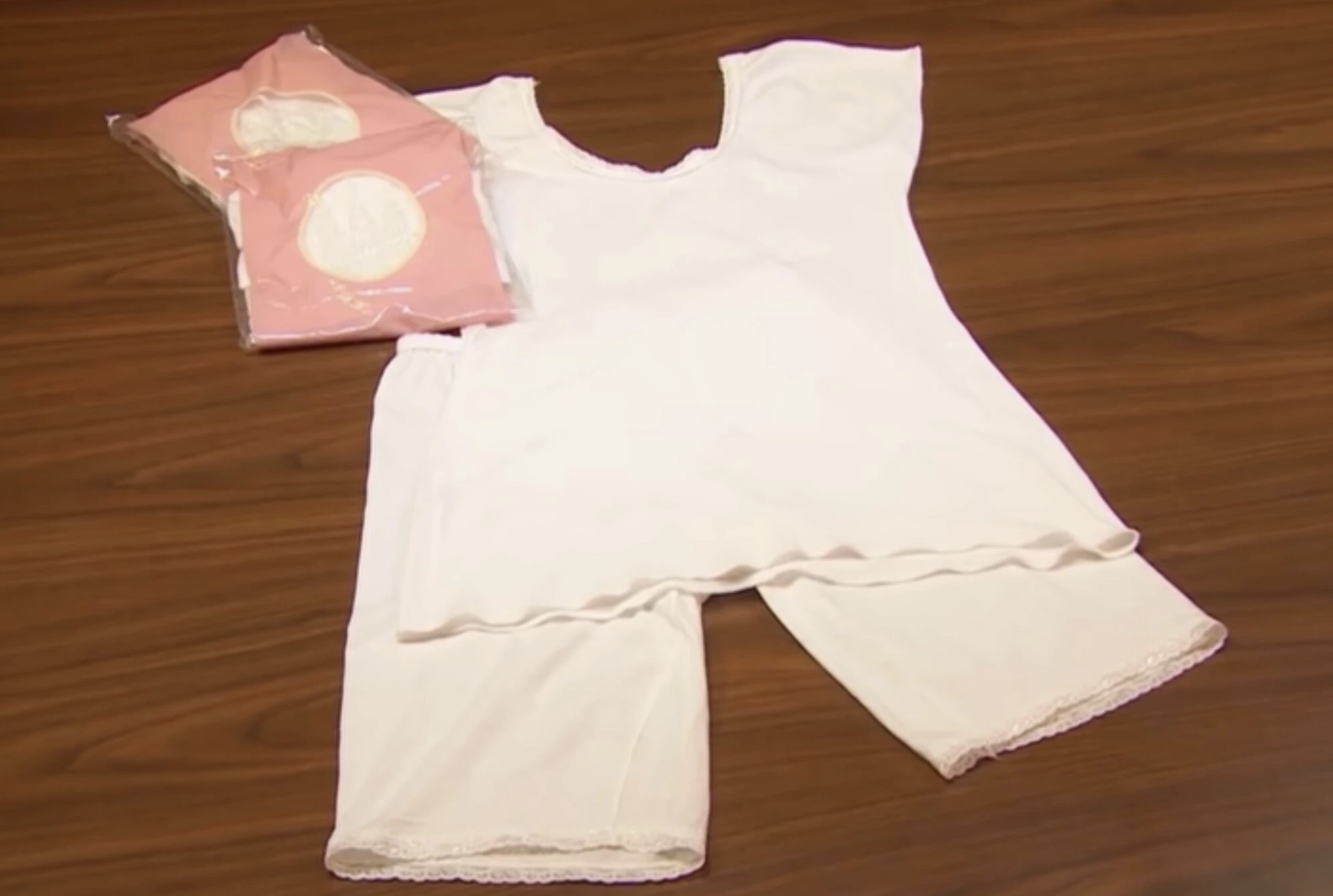
Ms. Piton, 33, had tapped into a familiar problem that few women in the church felt bold enough to discuss publicly. Her posts drew thousands of comments and private messages, in which women vented their frustrations with the holy apparel: itchy hems, bunchy seams, pinching waistbands and even chronic yeast infections caused by fabric that does not breathe.

“It’s sacred,” one commenter wrote. “But it’s still actual underwear.”

Temple garments date back to the church’s origins in the 19th century and symbolize the wearer’s commitment to the faith, akin to the religious garments of many other faith traditions. Adult Latter-day Saints wear them after their “temple endowment,” a private membership ritual that typically takes place before missionary service or marriage. The church controls the design and manufacturing process of the garments, and sells them globally at low prices.

In my opinion, there’s quite a bit to praise in this report. However, it’s easy to two familiar problems seen in many religion-beat stories about somewhat hot-button topics. We can see No. 1 right here:



Please respect our Commenting Policy

Plug-In: Who is the alleged Baptist minister accused in Haiti's presidential assassination?

Plug-In: Who is the alleged Baptist minister accused in Haiti's presidential assassination?

In 2018, I was blessed to visit Haiti with an American mission team and write about a Christian humanitarian aid organization that drills water wells around the world.

I keep thinking about that trip — and the amazing people I met — as I read about the latest turmoil facing that Caribbean island nation.

This week, I hand off the top part of my column to ReligionUnplugged’s managing editor, Meagan Clark. She found an interesting detail about the self-described pastor accused in the Haitian president’s assassination:

By Meagan Clark

An American suspect in Haiti’s presidential assassination, Christian Emmanuel Sanon, 63, was arrested at his gated home in Port-au-Prince by Haitian police last week.

Sanon identifies himself on social media as a “Medical Doctor and Christian Minister.” The Sun Sentinel of Fort Lauderdale, Florida, may have been the first to unearth that Sanon did not have a license to practice medicine in Florida. At ReligionUnplugged, we wondered about his faith background, credentials and motivations.

The New York Times, TIME and others reported that Sanon attended Midwestern Baptist Theological Seminary, citing the Florida Baptist Historical Society. But when I called Midwestern, the registrar’s office said the school has no records of Sanon ever attending, online or in-person.

A Florida Baptist Society representative told ReligionUnplugged that Sanon wrote in a biographical profile of himself that he attended Midwestern, and the society relies on honesty to compile its biographies. The representative said that in fact, the society has since learned that Sanon attended a training course that Midwestern sponsored, not the seminary itself. The Florida Baptist Society has updated its website.


Please respect our Commenting Policy

New podcast: Spot any 'ghosts' in New York Times story about aid for (large) U.S. families?

New podcast: Spot any 'ghosts' in New York Times story about aid for (large) U.S. families?

At first glance, it looks like another New York Times story about all those public policy debates between the entrenched Republicans and White House, along with the narrow Democratic majorities on Capitol Hill.

But if you look carefully, there is a reason that this Gray Lady update about the arrival of the expanded Child Tax Credit was, to use a turn of phrase from “Crossroads” host Todd Wilken, a “haunted house” of religion-news ghosts. He was riffing on a term your GetReligionistas have used since Day 1 at this blog. (Click here to tune in this week’s GetReligion podcast.)

OK, let’s play “spot the religion ghost.” First, here is the double-decker headline on this report:

Monthly Payments to Families With Children to Begin

The Biden administration will send up to $300 per child a month to most American families thanks to a temporary increase in the child tax credit that advocates hope to extend.

Nine out of 10 children in the United States will be eligible for these payments, which are linked to the COVID-19 crisis, but call back memories of policies from the old War on Poverty. The program will expire in a year, at which point the debates over its effectiveness will crank into a higher gear. Here’s the Times overture:

WASHINGTON — If all goes as planned, the Treasury Department will begin making a series of monthly payments in coming days to families with children, setting a milestone in social policy and intensifying a debate over whether to make the subsidies a permanent part of the American safety net.

With all but the most affluent families eligible to receive up to $300 a month per child, the United States will join many other rich countries that provide a guaranteed income for children, a goal that has long animated progressives. Experts estimate the payments will cut child poverty by nearly half, an achievement with no precedent. …

While the government has increased many aid programs during the coronavirus pandemic, supporters say the payments from an expanded Child Tax Credit, at a one-year cost of about $105 billion, are unique in their potential to stabilize both poor and middle-class families.

As you would expect, many Republicans oppose what they consider a return to old-style “welfare” payments of this kind.

That’s many Republicans, but not all.


Please respect our Commenting Policy

Jimmy and Rosalynn Carter: Why did some journalists bury the faith tie that binds them?

Jimmy and Rosalynn Carter: Why did some journalists bury the faith tie that binds them?

If it’s been said once it’s been said a thousand times: Jimmy Carter may have been a very unsuccessful U.S. president, but his life after the White House has been top-notch.

In fact, according to a 2015 poll, the American public thinks he’s No. 1 among the nation’s post-presidents.

Obviously, there was that Nobel Peace Prize in 2002, which was awarded for “his decades of untiring effort to find peaceful solutions to international conflicts, to advance democracy and human rights, and to promote economic and social development." But if you ask average Americans what they admire about Carter’s life post-White House, I think most of them would mention two, or maybe three, parts of his life.

First, there is his record in volunteer work and public service, symbolized by decades of work with Habitat For Humanity building homes for the working poor. If you have followed that story at all, you know that Carter doesn’t just show up with a hammer for the photo-ops. Second, there is the remarkable marriage-partnership between Jimmy and Rosalynn Carter. I have heard Southerners refer to them as the “anti-Clintons,” as in Bill and Hillary Rodham.

Finally, there is — as Jerry Falwell, Jr., of all people, once put it — Carter’s many decades of work as the “world’s most famous Sunday school teacher.” Ths smiling Baptist did that work week after week whether there were TV cameras present or not.

That faith element was the subject of this week’s “Crossroads” podcast (click here to tune that in) in which host Todd Wilken and I looked at three mainstream-press features about Jimmy and Rosalynn Carter celebrating their 75th wedding anniversary. If readers are interested in the faith tie that binds in this marriage, they should start with this fine Washington Post feature, with it’s one-word headline: “Inseparable.” Here’s the overture:

PLAINS, Ga. — When they arrived, they strolled hand-in-hand toward their pond with a graceful willow at its edge.

“We’re going to be buried right there, on that little hill,” Jimmy Carter said, motioning toward the lawn sloping up from the pond.


Please respect our Commenting Policy

That New Yorker #FreeBritany feature: It's all about a Baptist daddy and his wild daughter?

That New Yorker #FreeBritany feature: It's all about a Baptist daddy and his wild daughter?

One thing is clear, when you read the long, sad (but buzz-worthy) feature in The New Yorker entitled “Britney Spears’s Conservatorship Nightmare.”

Britney is a celebrity.

When she goes to court, she is a celebrity. When she escapes to a pub, she is a celebrity. When she fights to see her children, she is a celebrity. When she has a nervous breakdown (especially in public), she is a celebrity.

If and when she ever returns to church (there are rumors), she will do so as a celebrity. Ditto for any return to celebrity friendly Kabbalah classes.

But you get what you expect in this feature, written by Ronan Farrow and Jia Tolentino. There’s a huge cast of characters, some who speak on the record and some who do not. There are waves of details from court documents and testimony. There’s an endless survey of public scenes and paparazzi chases.

But the second line of the double-decker headline points to the heart of the story: “How the pop star’s father and a team of lawyers seized control of her life — and have held on to it for thirteen years.”

This is a story about a fight between a Baptist father (simply “Jamie” in most of the story) and his wild daughter — who has lived her entire teen and adult life in the glare of a media spotlight that burned her, even as it poured wealth on everyone around her, including members of her immediate family.

What about faith issues? There are fleeting glimpses of religion “ghosts” throughout this story. However, there is evidence that The New Yorker team realizes that, behind all of the talk about Britney’s mental health, the father and daughter are fighting about the moral choices she has made in her private life. Meanwhile, the daughter keeps trying to break free from this noose, in part through sex, love, marriage and children.

Consider the implications of this passage, referring to the legal drama that pulled the #FreeBritney social-media world back into the headlines:


Please respect our Commenting Policy

U.S. Catholic bishops OK drafting Communion guidelines: Press asks about politics -- period

U.S. Catholic bishops OK drafting Communion guidelines: Press asks about politics -- period

Any short list of classic Pope Francis remarks about abortion would have to include the 2018 speech in which he asked, using a Mafia image: “Is it just to resort to a contract killer to solve a problem?”

There was more: “Interrupting a pregnancy is like eliminating someone. Getting rid of a human being is like resorting to a contract killer to solve a problem.” While some people support abortion rights, Francis added: “How can an act that suppresses innocent and defenseless life as it blossoms be therapeutic, civil or simply human?”

Or how about this quote, drawn from a 2020 address to the United Nations?

“Unfortunately, some countries and international institutions are also promoting abortion as one of the so-called ‘essential services’ provided in the humanitarian response to the pandemic. … It is troubling to see how simple and convenient it has become for some to deny the existence of a human life as a solution to problems that can and must be solved for both the mother and her unborn child.”

While there is no question that Pope Francis is a progressive on many issues linked to economics, immigration and other political topics, he has continued — sometimes in blunt language involving evil and the demonic — to defend the basics of Catholic moral theology.

So what are readers supposed to make of the Sunday New York Times story that opens with this summary statement:

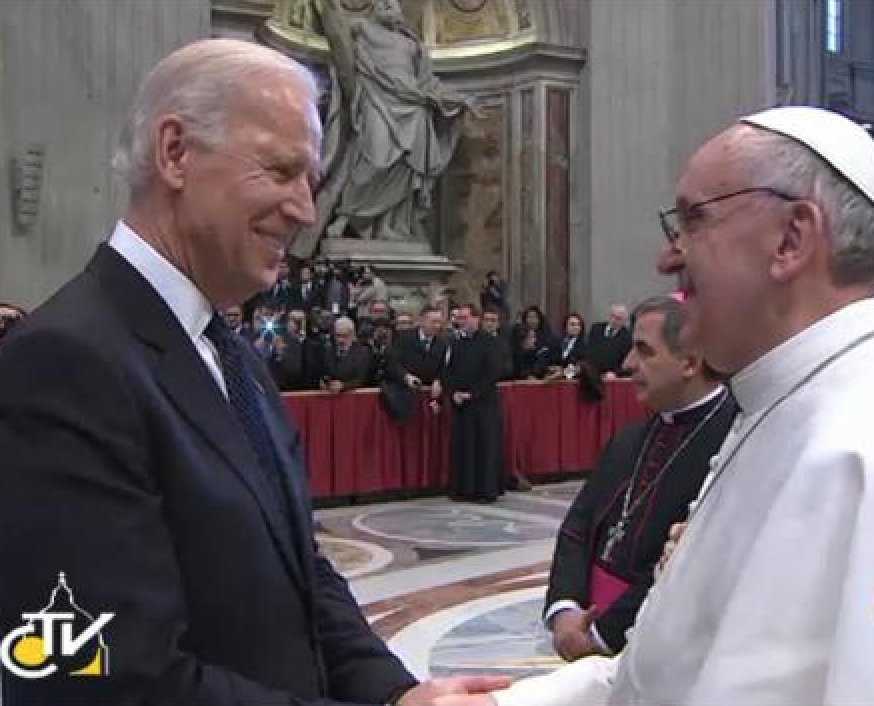
WASHINGTON — Pope Francis and President Biden, both liberals, are the two most high-profile Roman Catholics in the world.

But in the United States, neither of these men is determining the direction of the Catholic Church. It is now a conservative movement that decides how the Catholic Church asserts its power in America.

Perhaps that is a bit simplistic?

The context, of course, was the decision by U.S. Catholic bishops — after three days of contentious debate — to approve a measure on to draft a statement that could deny Holy Communion to pro-abortion-rights politicians like President Joe Biden.


Please respect our Commenting Policy

Plug-In: Lots of news about Southern Baptists, U.S. Catholic bishops and even a modern Jonah

Plug-In: Lots of news about Southern Baptists, U.S. Catholic bishops and even a modern Jonah

One.

Two.

This makes three straight weeks that the Southern Baptist Convention’s big meeting in Nashville, Tennessee, has topped Plug-in.

Want an impossible challenge? Try highlighting the best coverage out of the plethora of headlines produced in Music City this week.

Some of the big news:

• The surprise election of “moderate” (if you’re OK with that term from the SBC past) pastor Ed Litton from Alabama as the SBC’s president.

Religion News Service’s Bob Smietana, the Washington Post’s Sarah Pulliam Bailey, Christianity Today’s Kate Shellnutt, the New York Times’ Ruth Graham, The Associated Press’ Travis Loller and Peter Smith and ReligionUnplugged’s own Hamil R. Harris all offer insightful coverage on that. (Even the Los Angeles Times weighs in, via Atlanta bureau chief Jenny Jarvie.)

The skirmish over critical race theory, which Chris Moody describes in an in-depth narrative piece for New York Magazine.

Also, don’t miss The Tennessean’s Wednesday front-page report by Katherine Burgess, Duane W. Gang and Holly Meyer.

For more on the CRT angle, see Adelle M. Banks’ RNS story and Greg Garrison’s Birmingham News coverage.

The major action to confront sexual abuse in the denomination, as the Houston Chronicle’s Robert Downen, CT’s Shellnutt, the Memphis Commercial Appeal’s Burgess and RNS’ Smietana detail.


Please respect our Commenting Policy

New podcast: Is SBC President Ed Litton 'woke'? What is a 'conservative' stance on CRT?

New podcast: Is SBC President Ed Litton 'woke'? What is a 'conservative' stance on CRT?

It certainly was an interesting way to start a podcast (click here to tune that in) about press coverage of the 2021 national meeting of the Southern Baptist Convention.

Here’s the gist of what “Crossroads” host Todd Wilken wanted to know: If journalists were going to write that the Rev. Mike Stone — who lost his bid to become SBC president — was “right-wing” and “ultraconservative,” then why didn’t they pin “left-wing” and “ultraliberal” labels on Bishop-elect Megan Rohrer, the first trans/queer/gender fluid bishop in the Evangelical Lutheran Church of America?

Think about it this way: Stone and the new Conservative Baptist Network — many flew pirate flags — set out to attack the already conservative (theologically speaking) leadership of the Southern Baptist Convention, saying that it was not conservative ENOUGH on several issues. In other words, the goal was to move the SBC further right and away from recent pronouncements by the convention.

Meanwhile, Bishop-elect Rohrer is an open advocate of the CURRENT teachings of the ELCA. In the context of this denomination and its doctrines, Rohrer is part of the ruling class.

Now, is Rohrer “ultraliberal” in the context of American culture? How about liberal mainline Protestantism? How about other Lutheran bodies? Was Stone “ultraconservative” in the context of today’s SBC?

You can see the struggle here. Are journalists supposed to label religious leaders in the context of the wider culture or of their own flocks? I have argued that this depends: I go with the “flock” framing when discussing news events that are taking place inside a given “flock.”

As I argued the other day (#SBC21: Press wrestles with Twitter-niche labels as Southern Baptists choose a new leader), most of the religion-beat pros who gathered in Nashville tried to be very cautious when describing the various groups under the conservative SBC umbrella. The exception was the New York Times, which offered a kind of acid-flashback return to the SBC civil wars of the early 1980s.

The key was the labeling in this early headline — “Southern Baptists Narrowly Head Off Conservative Takeover” — and then this overture:


Please respect our Commenting Policy

Plug-In: How hot will SBC meetings get in Nashville? Sexual-abuse fights are Round 1

Plug-In: How hot will SBC meetings get in Nashville? Sexual-abuse fights are Round 1

Look for a little thunder today, but I don’t see any rain in the Nashville, Tennessee, forecast for next week.

That’s probably a good thing because I’m not sure how many more leaks the Southern Baptist Convention can take.

The heat will be turned up, though, as 16,000 Baptist messengers converge on Music City for the denomination’s (yes, I’m going to use that word) biggest annual meeting in a quarter-century.

Last week’s Plug-in set the scene, but the headlines just keep coming.

The new developments start with Washington Post religion writer Sarah Pulliam Bailey’s scoop last Saturday on a leaked letter detailing allegations that Southern Baptist leaders mishandled sex abuse claims.

Next up: That would be the leaked audio Thursday of SBC officials showing reluctance to take action against churches accused of mishandling abuse, as The Associated Press’ Peter Smith and Travis Loller, Religion News Service’s Bob Smietana and Adelle M. Banks and The Tennessean’s Holly Meyer report.

More to read:

Pressure mounts for an independent investigation of SBC Executive Committee handling of abuse (by Bob Smietana, RNS)

Tensions erupt among Southern Baptists ahead of their big meeting in Nashville. Here's why (by Holly Meyer, The Tennessean)

Sexual abuse pushed to top of agenda for Southern Baptist Convention (by Terry Mattingly, Universal syndicate columnist)

Southern Baptist pastors demand inquiry into handling of sex abuse cases (by Yonat Shimron, RNS)


Please respect our Commenting Policy