Women

Beyond Potiphar's wife: Leaked letters yank SBC debates about sexual abuse into the open

Beyond Potiphar's wife: Leaked letters yank SBC debates about sexual abuse into the open

It's hard to follow warfare inside the Southern Baptist Convention without a working knowledge of biblical symbolism.

Consider this passage in a May 31 letter (.pdf here) from the Rev. Russell Moore to SBC President J.D. Greear, which described key events leading to his recent resignation as head of the denomination's Ethics and Religious Liberty Commission.

"You and I both heard, in closed door meetings, sexual abuse survivors spoken of in terms of 'Potiphar's wife' and other spurious biblical analogies," wrote Moore, in a letter posted at the Baptist Blogger website. "The conversations in these closed door meetings were far worse than anything Southern Baptists knew. … And as you know, this comes on the heels of a track-record of the Executive Committee staff and others referring to victims as 'crazy' and, at least in one case, as worse than the sexual predators themselves."

Who was "Potiphar's wife"? She was known for her efforts to manipulate Joseph during his enslavement in Egypt. The Genesis narrative notes: "Now Joseph was handsome and good-looking. And after a time, his master's wife cast her eyes upon Joseph, and said, 'Lie with me.' " When Joseph refused, the seductress accused him of assault and had him jailed.

It's easy to see how "Potiphar's wife" insults would fit into attempts to discredit Moore and activists who want America's largest Protestant flock to change how its agencies, seminaries and nearly 48,000 autonomous congregations deal with sexual abuse.

Moore's resignation, after years of attacks by critics, has pushed sexual abuse to the top of the agenda at the SBC's June 15-16 national meetings in Nashville -- along with the election of a new president.



Please respect our Commenting Policy

New podcast: Will SBC politicos answer questions about doctrinal clashes in this new war?

New podcast: Will SBC politicos answer questions about doctrinal clashes in this new war?

Whether they’ll admit it or not, when covering conflicts and controversies many (not all) journalists seem to think that one of their main duties is to help (wink, wink) readers separate the people in white hats from those in black hats, smart people from the not-so-smart people and kind people from mad people.

There are several ways to do this. Reporters can quote calm, articulate people on one side, will seeking the most radical, scary voices on the other. I have, when covering events linked to abortion, seen TV crews rush past women who oppose abortion (including women who have experienced abortions) in order to interview screaming male protesters who are waving (literally) bloody signs.

Journalists can do long, personal interviews with people on one side, while pulling dry, boring quotes from press releases on the other. They can allow one set of activists to define all the crucial terms and questions, while ignoring or distorting the beliefs of activists on the other side.

Journalists also get to choose the labels they pin on the competing armies. That was the subject that loomed over this week’s “Crossroads” podcast (CLICK HERE to tune that in), which focused on the bitter debates surrounding the resignation of Russell Moore as leader of the Southern Baptist Convention’s Ethics and Religious Liberty Commission.

The obvious other news hook: The nation’s largest non-Catholic flock will hold its 2021 national meeting next week (June 15-16) in Nashville. For more background, see this earlier post: “That SBC powderkeg: Clearly, executive committee is bitterly divided on sexual-abuse issues.”

As the old saying goes, “You can’t tell the players without a program.” Well, it’s going to be crucial how journalists label the “players” in this conflict.

For example, here is a crucial section of a new Peter Wehner essay at The Atlantic, which ran under this headline: “The Scandal Rocking the Evangelical World — The sudden departure of Russell Moore is forcing an overdue conversation about the crises of American Christendom.”


Please respect our Commenting Policy

That SBC powderkeg: Clearly, executive committee is bitterly divided on sexual-abuse issues

That SBC powderkeg: Clearly, executive committee is bitterly divided on sexual-abuse issues

Several decades ago, early in the media coverage of the Catholic clergy sexual abuse scandals, a veteran Catholic educator gave me some sobering advice.

When dealing with stories about sexual abuse, he stressed, the usual doctrinal and cultural labels do not apply. There wasn’t a “left” or a “right” side of the story because there were people hiding their sins on both sides. When dealing with sexual abuse, most conflicts centered on issues of honesty and integrity and, most of all, a willingness to repent and admit that these sins and crimes were real.

I thought of that the other day when reading the Religion News Service story that started dominos falling in America’s largest non-Catholic flock: “Leaked Russell Moore letter blasts SBC conservatives, sheds light on his resignation.” (I apologize for getting to this story late, due to a week of travels with family, followed by a painful health crisis that has me rather drugged and could return me to an emergency room at any moment.)

Journalists and SBC insiders were not surprised that RNS scribe Bob Smietana was involved in breaking that story, in part because of his years of experience in the Nashville market at The Tennessean, as well as five years with Lifeway Research, an organization linked to Southern Baptist life. This is one of those cases in which a reporter can build on years of experience and contacts in a complex, massive organization and, thus, Smietana has been landing one SBC scoop after another in recent years. It’s crucial that this RNS story was supported by a post featuring the full text of the 4,000-word Moore letter.

The next key story, by Sarah Pulliam Bailey, ran in The Washington Post: “Newly leaked letter claims Southern Baptist leaders 'covered up' sex abuse allegations.” Click here (.pdf file) for a full text of this second Moore letter. It’s packed with material from crucial voices on both sides of this conflict, with most of them speaking on the record. This is another MUST read report.

The ink will be flying fast and furious, I imagine, as combatants prepare for the 2021 national Southern Baptist Convention, which will be held June 15-16 in Nashville, with preliminary gatherings two days earlier.

As Moore stated in the letter posted by RNS, many people will assume that this conflict centers on his highly public opposition to the presidential candidacy of Donald Trump. However, he stressed that he is convinced the main lightning rod was his efforts to fight sexual abuse inside the SBC, along with his bridge-building efforts to Black congregations, a growing and strategic network in the convention.


Please respect our Commenting Policy

Thinking about forced marriages (with the Forward), but also happy Catholic moms with lots of kids

Thinking about forced marriages (with the Forward), but also happy Catholic moms with lots of kids

At first glance, this weekend’s two “think pieces” appear to clash.

But readers (and viewers) who dig deeper will find two radically different looks at important and valid stories linked to marriage and family life in very different traditional religious communities — Jewish, fundamentalist Protestant and Islamic.

There is much here for religion-news professionals, and news consumers, to ponder.

One story is dark and hellish, looking at the reality of forced marriages in a few religious groups. The other glows with positive images and voices, as mothers in the United Kingdom share stories from their lives in large, traditional, Catholic families.

First, let’s look at this piece from Simi Horwitz at the Forward: “In 21st century America, where arranged child marriages remain a scourge.” The overture:

Kate Ryan Brewer’s “Knots: A Forced Marriage Story” is one disturbing, though important, documentary, one that grows increasingly unsettling as three articulate and intelligent young women matter-of-factly recount their belittling, exploitive, and ultimately dehumanizing experiences in forced marriages. Mercifully each has escaped and forged successful, independent lives; one has become a recognized outspoken activist on behalf of victims.

The filmmakers assert that the practice of arranged marriages, often involving brides who are 15 or younger, continues almost unchecked and unchallenged. In fact, the only states that require the marrying parties to be at least 18 are Delaware, New Jersey, Minnesota and Pennsylvania. Between 2000 and 2010, nearly 250,000 children in the U.S. were married, and 77 per cent were young girls wedded off to much older men. In some cases they were forced to marry their rapists in order to salvage their reputations and the family’s honor.


Please respect our Commenting Policy

Demographics make news: How will religion shape the oncoming Birth Dearth and vice versa?

Demographics make news: How will religion shape the oncoming Birth Dearth and vice versa?

A Newsweek magazine feature back in 1975 was headlined "The Cooling World." (Journalists beware: The supposed 1977 Time magazine cover story "How to Survive the Coming Ice Age" is among the countless frauds that infest the Internet.)

Eventually, cultural concern shifted instead to "global warming" (which was then rebranded as "climate change").

Seven years before Newsweek's freeze alarm, Stanford University biologist Paul Ehrlich published his apocalyptic "The Population Bomb," which sold in the millions and updated Thomas Malthus's dire demographic predictions from 1798. Ehrlich warned, for example, that due to global overpopulation, in the 1970s "hundreds of millions of people are going to starve to death." He then helped found the Zero Population Growth organization (since rechristened Population Connection).

Now comes The New York Times with a major page-one May 23 feature headlined "Long Slide Looms for World Population, With Sweeping Ramifications." We're told fertility rates are falling most everywhere except Africa south of the Sahara Desert, and that experts project the first population decline in world history will take hold by the end of this century. Click here for tmatt’s podcast and first take on some of the religion hooks in that story.

Stagnant and shrinking populations will thrill a segment of environmentalists, but these trends also destabilize society — which creates news. Whether with the shared responsibilities families have always assumed, or modern-day governments' social security systems, humanity must have enough younger workers carrying older people to sustain itself.

To keep the population stable, a society needs 2.1 children in the average nuclear family. A survey in The Lancet last year predicted that 183 of the world's 195 nations and territories are on a path to fall below that mark.

The particulars are staggering. The United States is well below that replacement number, and India and Mexico are nearly there, but South Korea has plummeted to a remarkable 0.92.


Please respect our Commenting Policy

Thinking with Ryan Burge: Concerning young Latter-day Saints, third parties and life post-Trump

Thinking with Ryan Burge: Concerning young Latter-day Saints, third parties and  life post-Trump

There are times, when you are reading Ryan Burge on Twitter (which journalists should, of course, be doing) and you see signs that he has read some religion-news related item somewhere that has caused him to do that thing that he does — sift through lots of poll numbers looking for a new angle.

What we have here is a pair of tweets linked to a Christian Sagers think piece at The Deseret News that I had missed. The headline: “Are Latter-day Saint voters turning blue?”

That’s blue as in learning toward the Democratic Party, not feeling sad or depressed. That would be a huge news story hinting at other possible changes among centrists on moral and cultural issues.

Burge send me this comment containing what he thinks is the key question about this possible news twist.

The big question is: have younger LDS really abandoned the Republican Party? I don't think that we will ever know for sure until Trump is off the ballot completely.

So where to begin? Here is the overture in Sager’s piece, noting that a recent:

Cook Political Report concludes that all four of Utah’s congressional districts are among the most Democratic-trending in the country. Latter-day Saint voters in Arizona doubled their Democratic turnout from 2016.

Meanwhile, a Democratic activist group with whom I spoke recently is optimistic about converting Latter-day Saint women, traditionally Republican, who it believes to be rejecting the GOP in greater percentages than other religious demographics.

That candidate Donald Trump fared so poorly among members of The Church of Jesus Christ of Latter-day Saints in 2016 was met with astonishment in national media coverage and a flurry of conjectures that Latter-day Saints were up for grabs.

And yet, the political status of the Latter-day Saint voting bloc doesn’t fit into a tidy narrative. Yes, there are signs that some Latter-day Saints are reconsidering the modern GOP, but at the same time there are suggestions that Latter-day Saints remain reliably Republican.

Sure enough, there are other complications that need to be considered when looking at conservatives in this Donald Trump-warped political age.


Please respect our Commenting Policy

New podcast: New York Times still ignoring religion ghosts in 'demographic winter' trends

New podcast: New York Times still ignoring religion ghosts in 'demographic winter' trends

I could, without breaking a sweat, create a list of important religion-beat news stories that are, to some degree or another, connected to the sinking birth rates in the Unites States and around the world.

Clashes between Chinese leaders and Muslims inside their borders? Decades of declining numbers of men seeking Catholic priesthood? The sharp decline in the power of “mainline” Protestant churches? American political clashes between red-zip code and blue-zip code regions, usually seen as tensions between rural and urban life. Tensions between Orthodox and progressive Jews. Soaring numbers linked to anxiety and loneliness. And so forth and so on.

So when I saw this headline in The New York Times — “Long Slide Looms for World Population, With Sweeping Ramifications“ — I immediately thought to myself, “Here we go again.” I also figured that this would be the topic for this week’s “Crossroads” podcast (click here to tune that in).

Sure enough, this new feature was the global version of a Times story several years ago that led to a GetReligion post with this headline: “New York Times asks this faith-free question: Why are young Americans having fewer babies?” As I wrote at that time:

In a graphic that ran with the piece, here are the most common answers cited, listed from the highest percentages to lowest. That would be, "Want leisure time," "Haven't found partner," "Can't afford child care," "No desire for children," "Can't afford a house," "Not sure I'd be a good parent," “Worried about the economy," "Worried about global instability," "Career is a greater priority," "Work too much," "Worried about population growth," "Too much student debt," etc., etc. Climate change is near the bottom.

The economic and cultural trends are all valid, of course. But they also point toward changes in how modern people in modern economies define and look for “meaning in life” and the beliefs that define those choices.

Think birth, marriage, vocation, death. We are talking about topics that, for several billion people on this planet, are linked to religious faith.

So what did the Times have to say?


Please respect our Commenting Policy

Where will American religious groups fit into the newly electrified abortion debate?

Where will American religious groups fit into the newly electrified abortion debate?

The U.S. Supreme Court's agreement to review Mississippi's strict abortion law means that the public argument on this unending dispute will be the most intense in many years -- with a ruling due right in the midst of the 2022 election campaign.

Despite the Court's increased conservative majority, there's no certainty it will clamp new restrictions on abortion. Yet it's also possible that the Court might overthrow its own 1973 Roe v. Wade decision, which legalized most abortions nationwide in 1973.

If so, the impact will be momentous but not quite as apocalyptic as "pro-choice" advocates suggest. Abortion would remain widely available because decision-making would simply be returned to democratically elected state legislatures and many would maintain liberal policies. Charities might aid women in the "pro-life" states needing travel for out-of-state abortions.

For those covering the religion beat, the coming year is a major defining moment as America's variegated denominations state what they now believe about the morality of abortion and why.

After the Roe ruling, the 1976 conventions of the two major political parties began setting opposite stances. The Democrats' platform acknowledged that many Americans had "religious and ethical" concerns but opposed a Constitutional amendment to bar abortions. Similarly, the Republicans' platform stated that some in the party favored the Supreme Court's edict, but advocated such an amendment "to restore protection of the right to life for unborn children."

Religion writers well know how that basic split hardened and reshaped religious voters' political alignments. There's been less attention to the way the advent of open abortion turned around the Social Gospel thinking of Protestant liberals.


Please respect our Commenting Policy

Another trial by media: In defense of Mother Teresa and why she is a saint, not a 'cult leader'

Another trial by media: In defense of Mother Teresa and why she is a saint, not a 'cult leader'

Historical figures are going through another mass-media reckoning. They have been for some time. Some with good reason.

Christopher Columbus? Understandable given what was unleashed by his arrival from Europe.

Thomas Jefferson? A paradox that’s worth examining given his ability to pen the Declaration of Independence and also own slaves. In some cases, there is evidence that he fathered children with them.

Other figures haven’t been so obvious. Following the tragic murder of George Floyd last May, many statues were toppled or removed across the United States, including those of 18th century Spanish priest Junipero Serra, Abraham Lincoln and Mahatma Gandhi. These weren’t so obvious to explain. I’m not sure those who damaged them knew either.

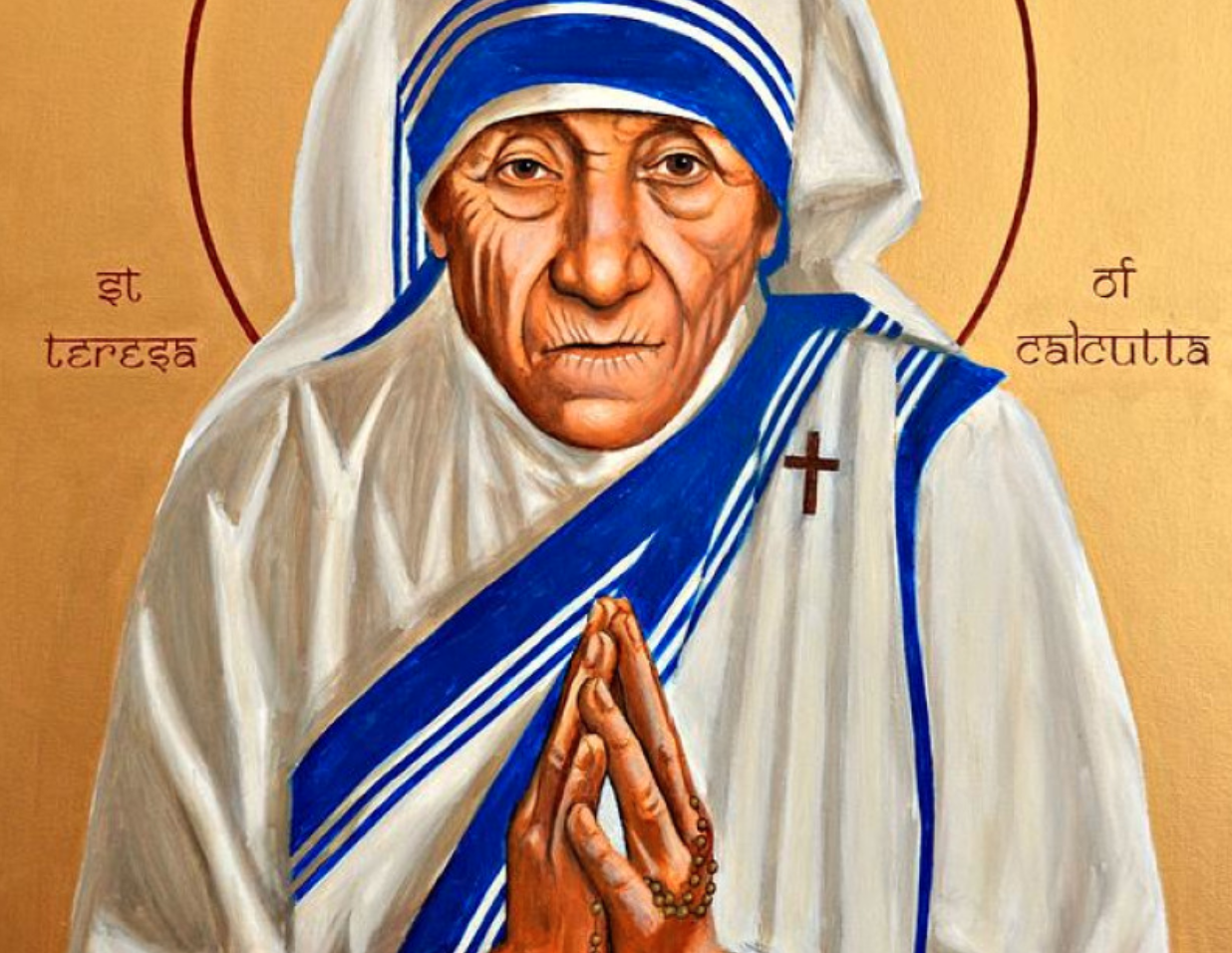
This takes me to the latest reckoning: Mother Teresa, now known as Saint Teresa of Calcutta.

Yes, that Mother Teresa. The diminutive woman who dedicated her life to helping “the poorest of the poor” in India. And the same one who was awarded the Nobel Peace Prize in 1979 and Pope Francis canonized a saint in 2016. Turns out she was a cult leader.

Michelle Goldberg penned an opinion piece in The New York Times, which ran Saturday on its website, under the headline: “Was Mother Teresa a cult leader?”

With a headline like that, is it possible the thesis will be that she wasn’t?


Please respect our Commenting Policy