Terry Mattingly

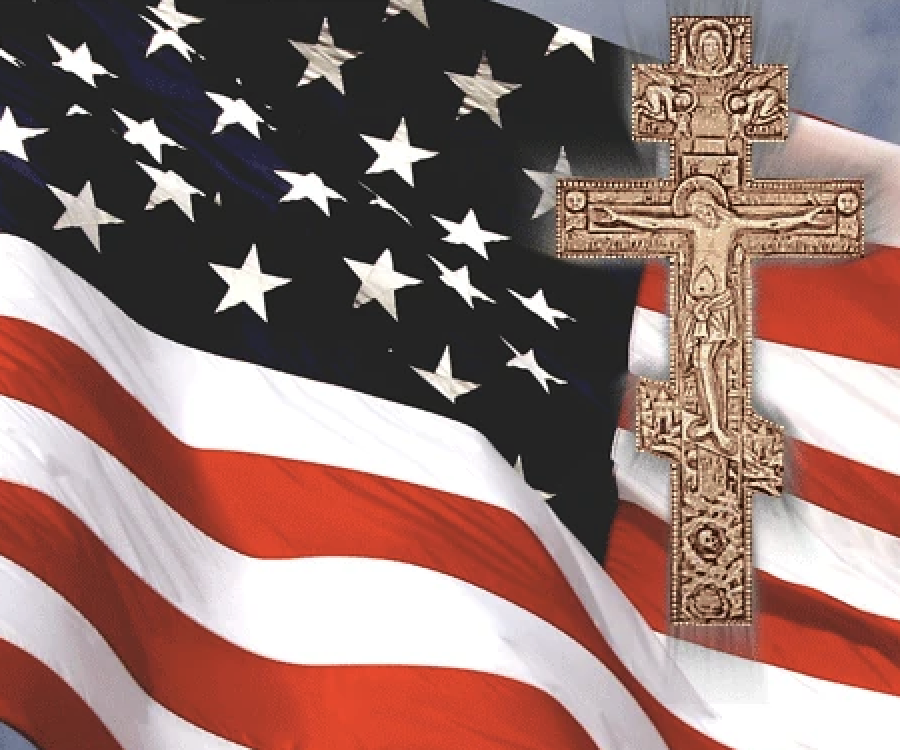
Thinking about the complicated puzzle that is Orthodox Christianity these days

Thinking about the complicated puzzle that is Orthodox Christianity these days

If you look up the word “Byzantine” in an online dictionary you will find two definitions — one quite literal and the second rather abstract.

The first definition isn’t all that hard to grasp: “relating to Byzantium (now Istanbul), the Byzantine Empire, or the Eastern Orthodox Church.”

The second definition is the one that best applies to this week’s “Crossroads” podcast and post, the one with this headline: “Eastern Orthodox converts, Russian spies, the FBI and the Bible Belt (#horrors).” Here’s that second meaning for Byzantine, as an adjective: “(of a system or situation) excessively complicated, and typically involving a great deal of administrative detail.”

That is certainly true and, to be blunt, there are journalists covering the painfully divided world of Eastern Orthodoxy — think Ukraine, of course — who should read that second definition several times and then meditate on it.

This is a classic case of journalists, as my journalism mentor used to say, needing to learn to “know what they don’t know.” There are subjects so complicated that, even if you think of yourself as an insider (I am a convert to Orthodox Christianity and have studied church history at the undergraduate and graduate levels), you need to approach them with great care.

This brings me to this weekend’s “think piece” from the must-bookmark website called Orthodox History: “How Did Orthodoxy Get Into This Mess?” It was written by the website’s editor, Matthew Namee, who a lawyer who serves as General Counsel and Chief Operating Officer for Orthodox Ministry Services. He is also a friend of mine and a colleague and in work linked to the Saint Constantine College in Houston.

What does “this mess” mean, in the headline? Basically, the “mess” is the early 21st century. To dig into this puzzle requires (#DUH) understanding the tragedies of the 20th century: This essay is very complex — “Byzantine,” even — but I will note a few (rather long) passages.

Please respect our Commenting Policy

Podcast: Eastern Orthodox converts, Russian spies, the FBI and the Bible Belt (#horrors)

Podcast: Eastern Orthodox converts, Russian spies, the FBI and the Bible Belt (#horrors)

Yes, yes. I will confess my (possible) sin.

Several years ago some friends of mine in Bible Belt Orthodox churches said that there were times when they wished America could be ruled by the late Queen Elizabeth II, as opposed to the last couple of guys who have occupied the White House. We were discussing our frustration with America’s two-party binary political system.

I laughed and agreed.

Does this mean that I am a potential Russian spy and enemy of the state? That was one of the topics discussed during this week’s “Crossroads” podcast (CLICK HERE to tune that in). We were discussing two mainstream news stories that seem to be connected in the minds of some mainstream journalists.

First, consider this Religion News Service feature: “Riding a wave of converts, one group aims to fuse Orthodoxy with Southern values.” Then read this Newsweek story: “Russia's Trying to Recruit Spies From U.S.” It may also help to check out this earlier GetReligion post: “Concerning the new converts to Eastern Orthodoxy — Are they MAGA clones or worse?

But back to Queen Elizabeth II. We will get to the FBI in a moment or two.

The RNS feature focuses on a meeting of the small group of Orthodox converts — the Philip Ludwell III Orthodox Fellowship — down in the countercultural Bible Belt. I confess that I have never heard of this group, primarily since my East Tennessee parish is part of the Orthodox Church in America (which does have historic missionary ties to Russia), as opposed to the smaller Russian Orthodox Church Outside of Russia (which formed in response to the birth of the Soviet Union).

The RNS feature notes: “Orthodox Christianity in the United States is a kaleidoscope of languages and cultures as diverse as Russia, Greece, Ethiopia, Syria, Bulgaria and, increasingly, the American South.”

That’s accurate. It’s hard to describe how complex Eastern Orthodoxy is in this country and that includes the growing number of Americans (like me) who have converted to the faith during the past four decades (a trend that began long before Orange Man Bad).

Now, concerning the inspiration for this small Orthodox network:

Philip Ludwell III, the fellowship’s namesake, became one of America’s earliest converts to Orthodoxy in 1738 and then translated Russian Orthodox texts into English. His family held government positions in the Carolinas and Virginia and shared ancestry with Confederate Gen. Robert E. Lee, born nearly a century later.

Obviously, we are talking about folks who are fundamentalist Confederate clones or worse:


Please respect our Commenting Policy

Synod on Synodality secrets: Are elite journalists concerned about zipped lips?

Synod on Synodality secrets: Are elite journalists concerned about zipped lips?

As a rule, journalists are not fond of secrecy and powerful leaders telling their followers to avoid the press.

This is especially true during high-profile meetings that could end up affecting the lives of a billion or so believers and institutions — parishes, schools, hospitals, you name it — affecting millions more.

Thus, I have been waiting to see what the mainstream press, especially in its most elite forms, would do with the decision by Pope Francis to ask participants in the global Synod on Synodality to, well, zip their lips when it comes to talking to the press. At the very least, I expected in-depth coverage of this angle and a hint of muted outrage.

Nope. Once again, we seem to have an interesting and highly symbolic Catholic story that is, apparently, only “news” to religion-market publications and the “conservative” press. Perhaps it is crucial whether journalists identify more with the views of the leader calling for secrecy than they do with the newsmakers who are anxious see an event proceed “on the record”?

Just asking. I, for one, remember how reporters (including me) pushed hard to open (or even invade) closed-door Catholic proceedings when they focused on clergy sexual abuse and earlier Vatican efforts to discipline adventurous (shall we say) American theologians and even bishops. Journalists were certainly convinced that “Reform Dies in Darkness,” or words to that effect.

Anyway, the Associated Press did include the following way down in a “news you can use” round-up at the start of the synod: “Things to know about the Vatican’s big meeting on the future of the Catholic Church.

The two-year preparatory phase of the synod was marked by a radical transparency in keeping with the goals of the process for participants to listen to each other and learn from one another. So it has come as something of a surprise that Francis has essentially imposed a media blackout on the synod itself.

While originally livestreams were planned, and several extra communications officers were hired, organizers have made clear this is a closed-door meeting and participants have been told to not speak to journalists. 

Paolo Ruffini, in charge of communications for the meeting, denied the debate had been put under the pontifical secret, one of the highest forms of confidentiality in the church.


Please respect our Commenting Policy

Five cardinals ask hard questions about doctrine and get a stunning Pope Francis response

Five cardinals ask hard questions about doctrine and get a stunning Pope Francis response

The same-sex blessings near Cologne Cathedral were a public salute to scores of private ceremonies among European Catholics in recent years.

The crowd waved rainbow flags and, according to media reports, sang "All You Need Is Love" by the Beatles. The mid-September rites included Catholic priests reciting blessings for same-sex and heterosexual couples and, though held outside of Cardinal Rainer Maria Woelki's cathedral, represented a bold ecclesiastical affront to the city's conservative archbishop.

Are these rites "weddings"? That was a crucial issue raised by five cardinals in "dubia" (Latin for "doubts") questions sent to Pope Francis weeks before the Vatican's global "Synod on Synodality," which opened this week. The five cardinals requested "yes" or "no" answers.

Instead, the pope offered a detailed analysis in which he restated established Catholic doctrines, noting that "the reality that we call marriage has a unique essential constitution that demands an exclusive name." Thus, the church should avoid rites giving the "impression that something that is not marriage is recognized as marriage."

Nevertheless, Pope Francis -- writing in July -- urged "pastoral charity" in this issue. Thus, the "defense of objective truth is not the only expression of this charity, which is also made up of kindness, patience, understanding, tenderness, and encouragement. Therefore, we cannot become judges who only deny, reject, exclude.

"For this reason, pastoral prudence must adequately discern whether there are forms of blessing … that do not transmit a mistaken conception of marriage. For when a blessing is requested, one is expressing a request for help from God, a plea for a better life, a trust in a Father who can help us to live better."

This drew praise from Francis DeBernardo, leader of the New Ways Ministry for Catholics seeking changes in centuries of Christian doctrine on sexuality.

"The allowance for pastoral ministers to bless same-gender couples implies that the church does indeed recognize that holy love can exist between same-gender couples, and the love of these couples mirrors the love of God," he wrote.


Please respect our Commenting Policy

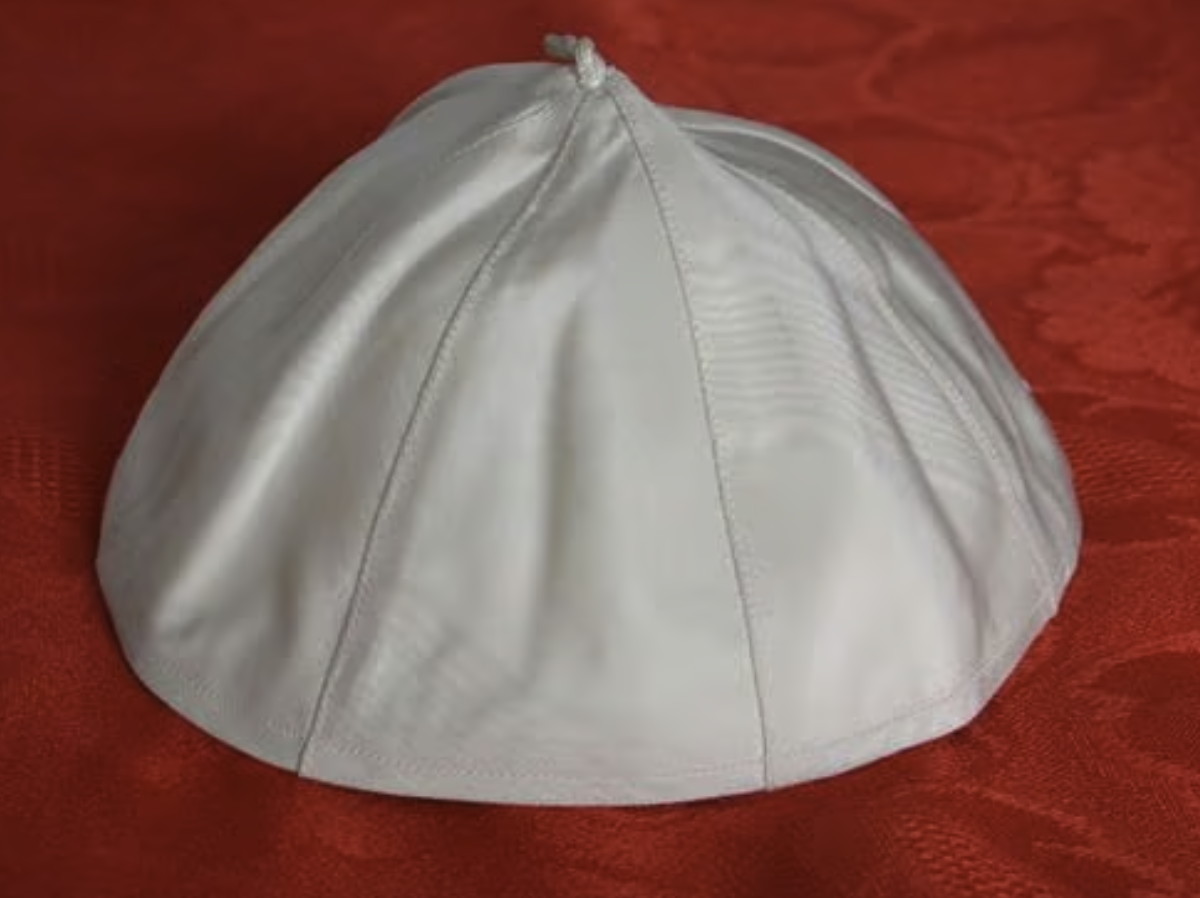
Podcast: Pope Francis tips his white hat on (location, location, location) same-sex blessing rites

Podcast: Pope Francis tips his white hat on (location, location, location) same-sex blessing rites

If you have ever bought a home, or looked for property for a business (or a church), you may have heard a realtor say this: “Location, location, location.” The Urban Dictionary defines this term as follows: “Phrase to remind people that the most determining factor in the price of a house is the location.”

Money isn’t the only thing that matters, of course.

Back in the 1980s, I began to realize that this location-times-three mantra was affecting many major religion-beat stories that I was covering, especially in Christian flocks that include folks called “bishops.” In so many cases, what happened in churches — even what was taught from pulpits — was shaped by what that congregation’s bishop encouraged, discouraged or even punished.

This basic equation loomed in the background during this week’s “Crossroads” podcast (CLICK HERE to tune that in), which focused on the stunning responses that Pope Francis offered to “dubia” (Latin for “doubts”) documents from five doctrinally conservative cardinals.

Did he or did he not signal his support for same-sex blessing rites (or sort-of rites) in Catholic parishes around the world? Well, this pope is a Jesuit, which means that he declined to give a “yes” or “no” answer. But what he seemed to say was this: There are Catholic clergy who can find ways to show “pastoral charity” to LGBTQ+ Catholics and, if this is OK with their local bishops, they can proceed with blessing gay couples (since that is what many of them are already doing).

Now, this is long and quite Jesuit (the adjective form of the word). But readers need to see all of this to understand what may or may not be showing up in the news that they read. Francis proclaimed:

a) The Church has a very clear conception of marriage: an exclusive, stable, and indissoluble union between a man and a woman, naturally open to the begetting of children. It calls this union “marriage.” Other forms of union only realize it “in a partial and analogous way” (Amoris Laetitia, 292), and so they cannot be strictly called “marriage.”

b) It is not a mere question of names, but the reality that we call marriage has a unique essential constitution that demands an exclusive name, not applicable to other realities. It is undoubtedly much more than a mere “ideal.“

c) For this reason the Church avoids any kind of rite or sacramental that could contradict this conviction and give the impression that something that is not marriage is recognized as marriage.

d) In dealing with people, however, we must not lose the pastoral charity that must permeate all our decisions and attitudes. The defense of objective truth is not the only expression of this charity, which is also made up of kindness, patience, understanding, tenderness, and encouragement.


Please respect our Commenting Policy

Journalists need to ask: Are emerging Catholic synod fights about 'ideology' or 'doctrine'?

Journalists need to ask: Are emerging Catholic synod fights about 'ideology' or 'doctrine'?

The Synod on Synodality is here and there are many, many angles for journalists to pursue.

Let’s put it this way (with much, much more to come), I don’t think Clemente Lisi will have lots of time for soccer (he is an internationally known reporter on all things futbol) in the days ahead. For starters, readers can dig into these Lisi features at Religion Unplugged, where he is editor: “Everything You Need To Know About The Synod On Synodality” and “Pope Francis Open To Church Blessing Of Same-Sex Unions.”

The same-sex blessing story is huge and, frankly, leaders in some mainstream newsrooms (scan this Google News search file) seem to be waiting for a clear signal from their usual Catholic sources on the degree to which it is appropriate to celebrate.

I would like to back off and examine an important word in recent statements by Pope Francis and, thus, the elite press. That word is “ideology.” You can see what is going on in the Associated Press report with this headline: “Ideological rifts among U.S. bishops are in the spotlight ahead of momentous Vatican meeting.”

The subject, of course, is the Synod on Synodality. Read this carefully:

The synod is intended to be a collegial, collaborative event, though the agenda includes divisive issues such as the role of women in the church and the inclusion of LGBTQ Catholics.

If there’s Exhibit A for how elusive consensus might be, it’s the United States’ participation. In effect, there are two high-level U.S. delegations widely viewed as ideological rivals — six clerics appointed by Pope Francis who support his aspirations for a more inclusive, welcoming church; five clerics chosen by the U.S. Conference of Catholic Bishops who reflect a more conservative outlook and more skepticism of Francis’ priorities.

The assumption, of course, is that the divisions among U.S. representatives and, one can assume others around the world, are essentially political.

As always: Politics is real. Religion? Not so much.

Let’s keep reading, before we return to that loaded word — “ideological.”


Please respect our Commenting Policy

Trouble in nondenominational land: ‘Supply chain crisis' is creating empty pulpits

Trouble in nondenominational land: ‘Supply chain crisis' is creating empty pulpits

Long ago, the Rt. Rev. C. FitzSimons Allison was a bishop in good standing in the Episcopal Church.

A year ago, however, he resigned — at the age of 95 — to serve in the Anglican Church in North America, which is an ecclesiastical body that is recognized as valid by many Anglican bishops in Africa, Asia and the Global South, but not by the Archbishop of Canterbury.

Needless to say, he has witnessed more than his share of Anglican debates about the future of the Anglican Communion, a communion in which national churches are in rapid decline in rich, powerful lands like the United States, Canada and England, but exploding with growth in the Global South.

During one global meeting, Allison watched a symbolic collision between these two worlds. Bishops from North America and their allies were talking about moving forward, making doctrinal changes in order to embrace the cultural revolutions in their lands. They were sure that Anglicans needed to evolve, or die.

Finally, a frustrated African bishop asked three questions: “Where are your children? Where are your converts? Where are your priests?” These questions are highly relevant, amid stark demographic changes in First World churches.

I thought of this Anglican parable when reading a Frank Lockwood feature in the Arkansas Democrat Gazette that ran with this double-decker headline: “Churches of Christ grappling with preacher shortage.” I don’t want to critique this story for two obvious reasons: (1) Lockwood has been a friend of mine for several decades and (2) one of the major voices in the story is veteran GetReligionista Bobby Ross, Jr.

But the trends noted in this report are serious and proof that it’s simplistic to say that these kinds of problems exist in doctrinally “progressive” denominations, and that’s that. Thus, I think this is a story that many journalists and religion-beat readers need to see. Here’s the overture:

Churches of Christ have a supply and demand problem — thousands of houses of worship and not enough preachers to fill the pulpits.

During Harding University's 100th annual Lectureship in Searcy …, roughly 100 people gathered for a session titled "Minister Shortages in Today's Church."


Please respect our Commenting Policy

Boring sermons happen and savvy preachers need to spot what is going wrong

Boring sermons happen and savvy preachers need to spot what is going wrong

Kids do say the darndest things, and with decades of pulpit experience, the Rev. Joe McKeever has learned that these revelatory remarks often happen just after church.

In one case, a parent shared a question from a perplexed child who struggled with a complex McKeever sermon. Thus, the 7-year-old asked: "Why does Pastor Joe think we need this information?"

That's blunt. But not as blunt as what happened to a friend, as McKeever recounted in a recent essay: "Boring sermons: We all have them from time to time."

This pastor said a family from his church attended a Friday football game, and during halftime, their preschooler asked why students chanted "BORING!" at the visiting marching band. "Her mother explained that sometimes students will do that when they feel the other band is doing poor work," wrote McKeever. The mother added: "It tells them they stink."

The child remembered this and shouted "BORING!" during the next Sunday sermon.

Pastors need honest feedback from time to time, stressed the 83-year-old McKeever, who -- in addition to decades in various kinds of Southern Baptist ministry -- was for 20 years an active member of the National Cartoonists Society.

"One of the problems with being a pastor is that we rarely hear anyone else preach," he said, reached by telephone. "We do what we do in the pulpit, over and over, and it's easy to lose any sense of standards.

"Many preachers lose the ability to listen to themselves. … They end up telling people things that they don't need, things that they didn't want, that they don't understand and, worst of all, that they don't find inspiring."


Please respect our Commenting Policy

Thinking about the legacy of 'Team Ted,' as Vatican insiders talk about the next pope

Thinking about the legacy of 'Team Ted,' as Vatican insiders talk about the next pope

If I have learned anything about mainstream journalism it is this: Editors love partisan political horse races.

This framework is, alas, also used when journalists ponder vacancy signs on the Throne of St. Peter in Rome.

In this kind of contest, scribes almost always (they don’t have to do this, of course) decide that there is a good horse and a bad horse. Most of the time, the “good” candidate is defined as the one who is in favor of “reform.”

What does “reform” mean, for most mainstream journalists? As I noted long ago in this post — “Who gets to ‘reform’ what?” — it helps to look up that loaded word in an online dictionary or two:

REFORM …

* make changes for improvement in order to remove abuse and injustices; "reform a political system"

* bring, lead, or force to abandon a wrong or evil course of life, conduct, and adopt a right one; "The Church reformed me"; "reform your conduct" ...

* a change for the better as a result of correcting abuses; "justice was for sale before the reform of the law courts" ...

* improve by alteration or correction of errors or defects and put into a better condition; "reform the health system in this country"

* a campaign aimed to correct abuses or malpractices.

Now, who gets to define what is and what is not an “abuse,” an “evil course of life,” an “injustice” or a “malpractice”?

That would be the players behind the horse race who are trusted by newsroom leaders and owners.

Thus, before we get to this weekend’s “think piece,” let’s pause and look back to a 2013 speech at Villanova University (YouTube at the top of this post) by the former, now disgraced, cardinal Theodore McCarrick. At the 18-minute mark or so, this media-maven Vatican player discusses his behind-the-scenes networking activity ahead of the conclave that gave the world Pope Francis.

So often the kingmaker in American Catholic life, McCarrick describes a meeting with an “influential Italian gentleman” at the North American College in Rome.


Please respect our Commenting Policy