Terry Mattingly

Mainline Protestant evolution rolls on: The Sparkle Creed creates some online heat

Mainline Protestant evolution rolls on: The Sparkle Creed creates some online heat

While wrestling with heresies in the Roman world, 2nd-century Christians began combining crucial doctrines into creeds to help converts prepare for baptism.

Soon, the Apostles' Creed emerged as a cornerstone of Western Christianity, with short, ringing phrases that millions recite to this day.

This is not the stuff of viral videos: "I believe in God, the Father almighty, Creator of heaven and earth, and in Jesus Christ, his only Son, our Lord, who was conceived by the Holy Spirit, born of the Virgin Mary, suffered under Pontius Pilate, was crucified, died and was buried; he descended into hell; on the third day he rose again from the dead; he ascended into heaven, and is seated at the right hand of God the Father almighty; from there he will come to judge the living and the dead. I believe in the Holy Spirit, the holy catholic Church, the communion of saints, the forgiveness of sins, the resurrection of the body, and life everlasting."

However, the Edina Community Lutheran Church in Minneapolis created a stir recently by posting part of a Pride Month service that featured a radically modernized take on the faith passed down through the ages — the Sparkle Creed.

"I believe in the non-binary God whose pronouns are plural. I believe in Jesus Christ, their child, who wore a fabulous tunic and had two dads and saw everyone as a sibling-child of God. I believe in the rainbow Spirit, who shatters our image of one white light and refracts it into a rainbow of gorgeous diversity," affirmed the congregation, which -- in the video -- appears to consist primarily of aging Baby Boomers.

"I believe in the church of everyday saints as numerous, creative and resilient as patches on the AIDS quilt, whose feet are grounded in mud and whose eyes gaze at the stars in wonder. I believe in the call to each of us that love is love is love, so beloved, let us love. I believe, glorious God. Help my unbelief."

Online commentary noted that this text was not created by the Evangelical Lutheran Church in America, a mainline Protestant flock that now ordains LGBTQ pastors living in committed relationships.

The Sparkle Creed was circulated in 2021 by the Rev. Rachel Small-Stokes of Immanuel United Church of Christ in Louisville, Kentucky. A "Shower of Stoles" website biography notes that she was raised United Methodist, served as a missionary in that denomination and trained for the ministry. However, she switched to the United Church of Christ -- which began ordaining gay ministers in 1972 -- before being ordained in 2009 and marrying her lesbian partner in 2012.

On Facebook, she explained that this creed began with a computer glitch.

Please respect our Commenting Policy

Bonus thinking about a trend reporters need to 'get' -- that nondenominational boom

Bonus thinking about a trend reporters need to 'get' -- that nondenominational boom

What about that elephant in the religion-beat living room?

I’m talking about nondenominational evangelical and charismatic Protestantism. It’s everywhere. It shows up in story after story, from the January 6th riots at the U.S. Capitol to discussions of the future of the Southern Baptist Convention and other big religion name brands.

In the past week or two, here at GetReligion, we had: “NPR discovers megachurches! But, wait, there is one new wrinkle in this old story.” Or how about: “Many churches are vanishing, while others are growing. Trends worth covering?” Then again: “How many believers exit their childhood faith? And where are they headed these days?

I could go on. But nondenominational churches play a major role in lots of stories and trends worthy of coverage.

So, as a weekend “think piece,” let me point readers to a must-read Christianity Today piece that Bobby Ross, Jr., plugged in last week’s Plug-In feature. Here’s the headline on that Daniel Silliman feature: “Nondenominational Churches Are Growing and Multiplying in DC.

Now, this is a story about religion inside and close to that Beltway thing. But it’s also relevant to people trying to understand that nondenominational elephant (sorry for the political animal image). Thus, the overture:

The District Church could be a Baptist church. The lead pastor, after all, grew up as a Southern Baptist missionary kid and still has a lot of ties to that denomination.

It could also be Anglican, with the way it leans into liturgy and the church calendar. Or a social justice church, with its focus on the inequality so visible in Washington, DC, or charismatic, with its emphasis on prayer and sensitivity to the Spirit.

Instead, the church is a little bit of all these things. It is nondenominational, pulling together different Christian streams to minister effectively to the young white professionals who have moved to work in the capital, as well as the upwardly mobile Nigerians and South Koreans who’ve emigrated to the seat of the United States government.


Please respect our Commenting Policy

Podcast: WPost finds a 'good' religion vs. 'bad' religion sermon in small-town Georgia

Podcast: WPost finds a 'good' religion vs. 'bad' religion sermon in small-town Georgia

If you grew up in the Bible Belt or in the heavily churched Midwest, you know that a good sermon is supposed to contain (all together now) “three points and a poem.”

This week’s “Crossroads” podcast (click here to tune that in) focused on a Washington Post sermon that ran with this headline: “A small-town Georgia preacher fills pews by leaving no one out.

It’s possible that the author of this highly doctrinal news story understood the basics of Southern preaching. Hold that thought, because we will return to it. But first: The Big Idea of this sermon is stated in absolute terms — there is “good” religion and there is “bad” religion. Let they who have ears, let them hear (or whatever the new language is in this case).

I. It is always appropriate to open a sermon with a conversion story that illustrates the preacher’s Big Idea. This grab-a-tissue Washington Post feature could not be more explicit about that:

HARTWELL, Ga. — At night, the worn sign looks like a beacon in the darkness out front of the modest, red-brick Mt. Hebron Baptist Church.

The tired, it reads. The poor. And huddled masses. Welcome home.

In this small town in the rural northeast corner of Georgia, it’s the kind of message that assures Teri Massey she is loved for being who she is — a message 180 degrees from the one she heard in the Baptist church where she spent her teens into her 40s, where her grandfather, father and brother all held leadership positions.

When Massey came out in 2004, shortly after meeting the woman she later would marry, the congregation in that other small Georgia town responded by campaigning to send her to conversion therapy and holding prayer vigils outside her home.

She found Mt. Hebron a few years ago through a friend. Pastor Grant Myerholtz, whose usual preaching attire is T-shirt and jeans, met her and her wife at the door. They listened carefully as he stood in the pulpit and proclaimed: All are welcome.

“It was like this load was off of me,” Massey, 63, recalled last week.

There are good churches and there are bad churches. Got that.

II. This is an age in which churches need to change their doctrines if they want to, well, grow (or at the very least get good coverage from blue-zip-code elite newsrooms).

Thus, this Post story offers a very clear thesis statement as Point II.


Please respect our Commenting Policy

NPR discovers megachurches! But, wait, there is one new wrinkle in this old story

NPR discovers megachurches! But, wait, there is one new wrinkle in this old story

Not that long ago, National Public Radio came to my backyard. The headline on the resulting GetReligion post summed up what happened: “NPR comes to hills of Tennessee and sees exactly the religion trends that you would expect.”

This was another one of those post-coronavirus pieces that talked about the challenges to the mainline churches that are dear to the heart of spiritual seekers in prestigious newsrooms. The NPR team headed straight to progressive East Tennessee churches — many already in decline — in which the pews are full of people who have NPR as the main pre-set on their car radios.

The result was valid, but so, so, so incomplete. As I wrote at the time:

It’s absolutely true that there are declining churches here in the mountains of East Tennessee, especially during COVID-tide. That’s an important story. The problem is that there are also growing churches in the region (yes, including my own Orthodox parish, which has grown at least 25% in the past three years) and that’s a detail that makes this story more complex.

Well, I am happy (sort of) to note that NPR journalists have now discovered (or rediscovered) two major trends that began back in the 1970s and, maybe, they see some new connections. The headline on this feature: “Megachurches are getting even bigger as churches close across the country.”

The two old trends: (1) Megachurches are real and growing and (2) much of this is linked to the stunning growth of nondenominational evangelical and charismatic Protestantism in American life (and around the world).

I will stress, once again, that this is a valid story. I am less convinced that this is somehow linked to life after the COVID-wave, although it is certainly important that entrepreneurial megachurches were already wired for online worship, while most denominational churches were not.

Anyway, here is the long overture, which includes several themes:

Something clicked for Marlena Bhame when she first stepped into Liquid Church about four years ago. She'd been searching for something more spiritually dynamic and meaningful than the faith tradition she'd grown up in, or the various others she had tried out over the years.


Please respect our Commenting Policy

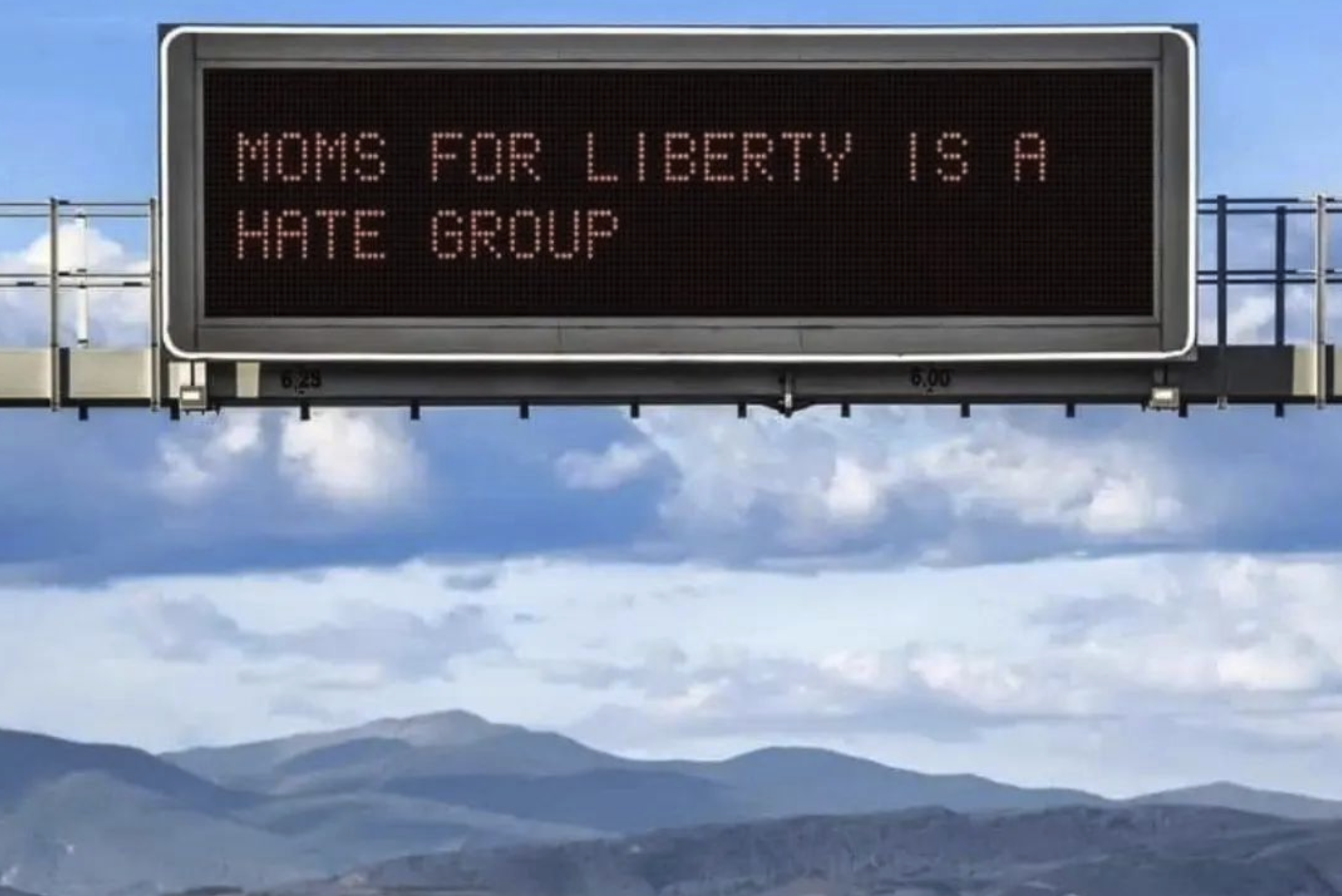
A journalism question that suggests an answer: 'Who's Afraid of Moms for Liberty?'

A journalism question that suggests an answer: 'Who's Afraid of Moms for Liberty?'

For nearly 20 years now, GetReligion has focused on discussions of religion content in what used to be called “hard news,” as in old-school journalism that attempted to do accurate, fair-minded coverage of public events, debates, trends, etc.

Long ago, I was taught that the more controversial and disputed the topic, the harder journalists should strive for “balance” in terms of content about participants on both sides, or all sides, of the debate.

Honest. People used to believe things like that.

Thus, your GetReligionistas have always tried to separate “hard news” from analysis, commentary and even outright public relations.

This brings me to a fascinating news feature in The Free Press, an important online news source that — from my point of view — grew out of the digital, social-media wars inside The New York Times. Founded by Bari Weiss, an old-school liberal, this new publication covers many controversial topics that have been overlooked, ignored or even cancelled in elite newsrooms.

Is The Free Press a “hard news” publication? It certainly publishes lots of new information, using sources that it quotes on the record. Much of the content is analysis, in the style of The Atlantic and similar publications.

In this case, we are talking about a Robert Pondiscio article with this double-decker headline:

Who’s Afraid of Moms for Liberty?

A growing cadre of angry mothers is taking over school boards and winning influence as GOP kingmakers. Why are they being called a ‘hate group’?

The overture makes it clear that, in this case, The Free Press team is interested in the lives and beliefs of the actual members (think “stakeholders”) of this organization, as opposed to the Republican candidates that court them. Ah, but do these groups overlap?

In a breakout session in a windowless conference room at last weekend’s Moms for Liberty “Joyful Warrior Summit” in Philadelphia, Christian Ziegler, the chairman of the Florida Republican Party and father of three school-aged daughters, is stiffening spines. Dozens of attendees, mostly women, are nodding and taking notes as Ziegler explains how to work with local news media. 

“Your product is parental rights. Your product is protecting children and eliminating indoctrination and the sexualization of children. You’re the grassroots. You’re on the ground. You’re the moms, the grandparents, the families that are impacted. The stories you tell help set a narrative,” Ziegler coaches them.


Please respect our Commenting Policy

After all of the miracles he has seen in his life, why doesn't Indiana Jones truly believe?

After all of the miracles he has seen in his life, why doesn't Indiana Jones truly believe?

By the end of "Raiders of the Lost Ark," archaeologist Indiana Jones had learned enough to know that he should close his eyes when facing the wrath of God.

Apparently, that kind of power can melt Nazis -- without changing the hero's soul.

"Why won't Indiana Jones convert? We aren't insisting that he convert to our faith or to his father's faith or really to any faith in particular," noted Jack Bennett, in a Popcorn Cathedral video marking the "Indiana Jones and the Dial of Destiny" release.

"What we want to know is why he is always back to square one at the start of every adventure -- a skeptic, or even a scoffer. I mean, think about it: He has seen the Ark of the Covenant opened and the destroying angels pour out God's vengeance on his enemies. He has seen the sacred Hindu stones come to life. …He has seen the true cup of Christ heal his own father from a fatal gunshot wound -- on screen, with no ambiguity."

In what the 80-year-old Harrison Ford has promised is the finale, Indiana Jones remains the archaeologist who risks everything to keep supernatural, even holy, artifacts out of the bad guys' clutches.

This is a war between archetypes of Good and Evil -- with capital letters. The Nazis are on one side, fighting with a brave skeptic who careens through scenes based on Saturday-matinee classics. Miraculous stories from the past are mere fairy tales, until he learns that Higher Powers are at work. Then again, maybe it's just aliens or generic supernatural forces.

In the new film, Jones confesses: "I don't believe in magic, but a few times in my life I've seen things, things I can't explain." But after a life wrestling with sacred mysteries, he concludes: "It's not so much what you believe. It's about how hard you believe it."


Please respect our Commenting Policy

Podcast: Culture Wars 2023 -- As it turns out, traditional Muslims have children too

Podcast: Culture Wars 2023 -- As it turns out, traditional Muslims have children too

Gentle readers, please allow me to start with a short anecdote from about 15 years ago, during the years when I was teaching journalism a few blocks from the U.S. Capitol.

I attended a typical off-the-record think tank forum in which lawyers from church-state groups were talking about rising tensions in public, taxpayer funded, institutions. At one point, someone asked a question that sounded something like this: What should public-schools leaders do when approached by parents who want opt-out choices for their children when faced with class activities that clash with the teachings of their faith?

The question, of course, was linked to tensions between public-school leaders and evangelicals, and maybe traditional Catholics (“traditional” in the FBI meaning of the word).

One lawyer gave an answer that was way ahead of its time: School administrators should look at these people and do everything they can to pretend that these parents are Muslims. In other words, pretend these parents are part of a minority faith that public officials respect (Muslims), as opposed to part of a larger faith group that administrators distrust, fear and possibly even loathe (evangelicals).

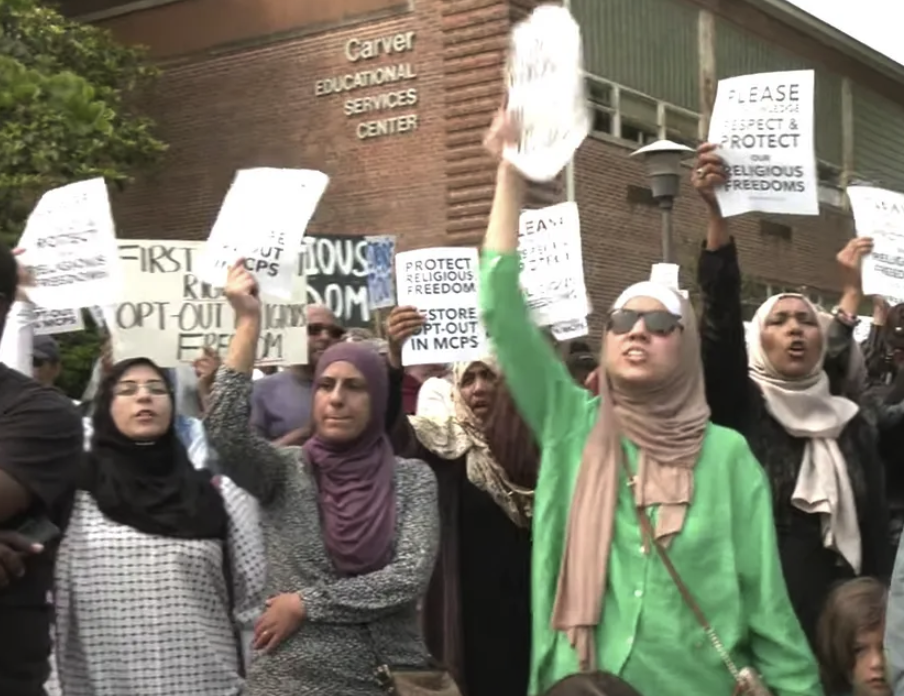
This was one of two Beltway anecdotes I shared during this week’s “Crossroads” podcast (click here to tune that in), which focused on a Washington Post story that I have been thinking about during the past week or two. That headline: “Hundreds of Md. parents protest lessons they say offend their faiths.” The Post team appears to have worked hard to keep the main news hook out of that headline and even the lede.

Hundreds of parents demonstrated outside the Montgomery County Board of Education’s meeting … demanding that Maryland’s largest school district allow them to shield their children from books and lessons that contain LGBTQ+ characters.

Still in the dark, right? Keep reading:

The crowd was filled largely with Muslim and Ethiopian Orthodox parents, who say the school system is violating their religious rights protected under the First Amendment by not providing an opt-out. Three families have filed a lawsuit against the school system.


Please respect our Commenting Policy

Americans need moving vans? AP says it's politics, politics, politics, politics, politics, politics, etc.

Americans need moving vans? AP says it's politics, politics, politics, politics, politics, politics, etc.

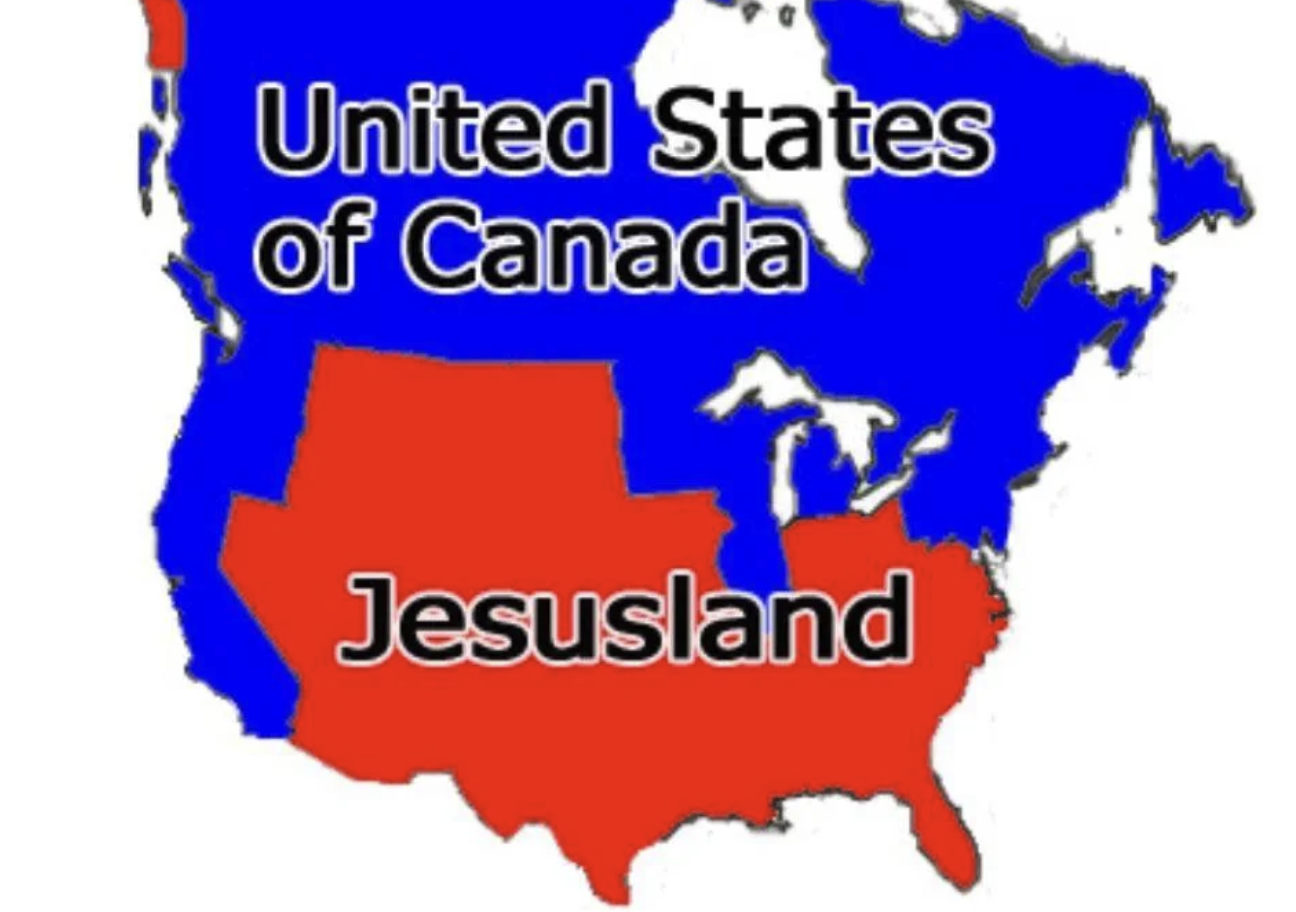
No doubt about it: The rise of the divided states of America is one of the most important news stories of our time, and that has been obvious for several decades now (think red-blue JesusLand cartoons starting in 2000, or thereabouts).

The bottom line: If you don’t own a copy of David French’s 2020 book, “Divided We Fall: America's Secession Threat and How to Restore Our Nation,” then order one right now.

How many times have I quoted that volume’s tense, scary opening sentences? Here’s that passage, again, from my recent red journalism vs. blue journalism piece for the journal Religion & Liberty:

The bottom line: Americans are divided by their choices in news and popular culture, choosing to live in protective silos of digital content. America remains the developing world’s most religious nation, yet its secularized elites occupy one set of zip codes, while most religious believers live in another. These armies share no common standards about “facts,” “accuracy,” or “fairness.”

“It’s time for Americans to wake up to a fundamental reality: the continued unity of the United States cannot be guaranteed,” wrote French. At this moment, “there is not a single important cultural, religious, political, or social force that is pulling Americans together more than it is pulling us apart.”           

The Los Angeles Times published the definitive “This is all about economics, stupid!” piece about this trend, which I discussed in this recent GetReligion post: “Yo, LA Times — Maybe, must maybe, issues of faith, family and culture matter in California?”

The Big Idea in that piece was the truth that, when striving to avoid covering issues of religion and culture, journalists have the option of stressing economic issues, as well as politics, politics, politics. Now, the Associated Press had produced a news feature with a variation on that theme. Headline: “Conservatives go to red states and liberals go to blue as the country grows more polarized.”

This time around, the story does include lots of commentary about “cultural” issues, but culture is defined — quite literally — as politics, politics, politics, politics, politics, politics, politics, politics, politics, politics, politics, politics, politics, politics, politics, politics, politics, politics, politics, politics, politics, politics, politics, politics, politics, politics, politics, politics, politics, politics. Actually, I may have missed one or two variations on the word “politics” in this AP report.

References to “religion”? Zero. “Faith”? Zip. “Morality?” Nada.


Please respect our Commenting Policy

After 10 years of mystery, the Orthodox shepherds of Aleppo remain missing

After 10 years of mystery, the Orthodox shepherds of Aleppo remain missing

Metropolitan Paul Yazigi had no way to know that he was about to vanish into the chaos of the Turkish-Syrian border during the violent rise of the Islamic State.

"If we want to be good children to God, then we don't thank Him only when He gives us [blessings]," he said, in one of his final sermons (translated from Arabic) before he was kidnapped on April 22, 2013.

"Also, when we are hurting, we say to Him: 'Your hand must be taking care of us, and we thank You.' …A Christian is a creature that gives thanks to God for all things one knows and doesn't know, for both the good and the hardships one faces in his life."

Sermons about faith and suffering are always timely in ancient churches.

The bishops of Aleppo, Syria -- Metropolitan Yazigi and Metropolitan Yohanna Ibrahim of the Syriac Orthodox Church -- disappeared 10 years ago while seeking the release of two kidnapped priests. Their car was surrounded by a pack of armed men, as they maneuvered through risky checkpoints near west of Aleppo. Their driver died in the gunfire, but a survivor later testified that the kidnappers were not speaking Arabic and appeared to be from Chechnya.

There were no ransom demands from the terrorists. The shepherds of Aleppo simply vanished, inspiring few headlines outside the Middle East.

The 10-year anniversary passed quietly this spring, after years of special prayers during Orthodox worship services around the world.

"I don't think anyone can assume, at this point, that they are still living. But there is a sense that we don't know enough about what happened to have a sense of closure," said Father Thomas Zain, dean of St. Nicholas Antiochian Orthodox Cathedral in Brooklyn, New York.

"It's likely that they were kidnapped in Turkish territory, which added another level of complexity to the political situation."


Please respect our Commenting Policy