Terry Mattingly

Gallup team think piece: Concerning the 'Thorny Challenge of Defining Evangelicals'

Gallup team think piece: Concerning the 'Thorny Challenge of Defining Evangelicals'

Your GetReligionistas have, over the past two decades, dedicated oceans of digital ink to mainstream press struggles (especially political reporters) to grasp the meaning of this church-history term — “evangelical.”

You ask: Oceans?

Here is a small sample of those headlines:

* Define ‘evangelical’

* Please define 'evangelical' (yet again)

* Define 'evangelical,' please. Alas, many Americans don't think that this is a religious term

* Define 'evangelical,' 2023: What is a 'reconstructionist,' low-church Protestant?

This is a complex topic. The Rev. Billy Graham told me, back in the late 1980s, that he had no idea what “evangelical” meant. Honest.

Now, the professionals at the Gallup organization have offered a Frank Newport “think piece” on this topic that journalists and news consumers need to read. The headline: “The Thorny Challenge of Defining Evangelicals.” Here’s the overture:

The practical challenge arising from any analysis of evangelical Protestants in the U.S. is finding a reliable and valid way to measure the group. Much of the data about evangelicals comes from surveys, creating the need for a lucid and straightforward measure that can be easily incorporated into questionnaires.

In recent decades, this challenge has more often than not been met by using the question, “Would you describe yourself as ‘born-again’ or evangelical?”

Gallup began incorporating this question into its surveys in the summer of 1986, primarily as a way of understanding political issues.
Please respect our Commenting Policy

Podcast: Did the Southern Baptist Convention just become a different kind of 'Baptist' body?

Podcast: Did the Southern Baptist Convention just become a different kind of 'Baptist' body?

Bill Clinton and Al Gore? They were once Southern Baptists and I imagine that they remain generic Baptists.

The Rev. Jerry Falwell? An independent Baptist who led a church that became Southern Baptist. How about the Rev. Pat Robertson? He was Southern Baptist, but his second ordination was totally post-denominational (with one Episcopal bishop taking part, for what it’s worth).

President Jimmy Carter was a Southern Baptist, but dropped his ties to the Southern Baptist Convention. I think journalist Bill Moyers fits that mold, too. Come to think of it, so does political science professor and pastor Ryan Burge.

So what does “Baptist” mean, with or without that whole “Southern” thing? Is it up to the individual believer, the local congregation or some kind of affirmation at the regional, state or national level? After all, there are hundreds of different “Baptist” brands and thousands of totally independent “Baptist” congregations.

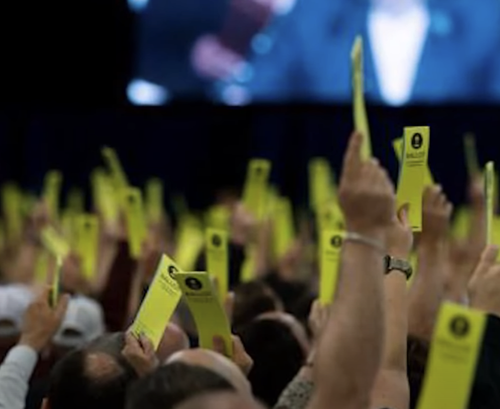
These questions loomed in the background during this week’s “Crossroads” podcast (click here to tune that in). The topic was press coverage of the national meeting of the Southern Baptist Convention, which was held in New Orleans this year.

As usual, the big SBC show drew lots of coverage — especially with the dramatic appeal by the Rev. Rick Warren, perhaps America’s best-known evangelical, for his Saddleback Church to be readmitted to the national convention, even after it plunged ahead and ordained women to various ministries.

Supporters of the ordination of women lost that move — by a wide margin. Also, the Rev. Bart Barber, the establishment candidate, was easily elected to a second term as SBC president.

That being said, what was the big news here? The best way to follow the crucial decisions in New Orleans is to dig into two Religion News Service pieces. Here is a key passage from the first, by religion-beat veterans Adelle Banks and Bob Smietana:

Warren and the Rev. Linda Barnes Popham, who leads the Louisville church, each argued that Baptists don’t agree on a range of matters — from Calvinism to COVID-19 — but that hadn’t halted their ability to have a shared commitment to spreading the gospel.

R. Albert Mohler Jr., president of Southern Baptist Theological Seminary, argued against keeping either Saddleback or Fern Creek within the Southern Baptist fold. He said the idea of women pastors “is an issue of fundamental biblical authority that does violate both the doctrine and the order of the Southern Baptist Convention.”


Please respect our Commenting Policy

Pat Robertson: Was he an influential religious broadcaster or some kind of 'evangelicalist'?

Pat Robertson: Was he an influential religious broadcaster or some kind of 'evangelicalist'?

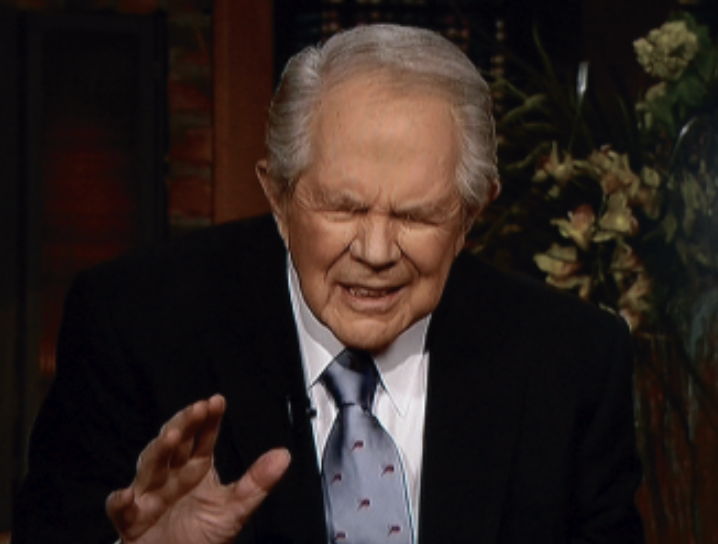
I must admit that I have not had the time to dig into the 666 million words or so (that’s an estimate) of news and commentary dedicated to the death of the Rev. Pat Robertson. It’s hard to do much reading when at the wheel of a car for about 1,400 miles (and that was the return trip).

But I do have some thoughts on the passing of the charismatic quote machine that journalists loved, loved, loved to hate (see my 2005 commentary for the Poynter Institute). If Robertson didn’t exist, blue-zip-code pundits would have created him ex nihilo.

Truth be told, I never met the man — even though, technically speaking, I briefly worked for him during a failed 2000 attempt to build a D.C. beltway-based master’s degree journalism program for Regent University.

How to describe Pat Robertson?

First and foremost, he was a media maven and entrepreneur, creating the Christian Broadcasting Network in 1960. Years later, he sold the Family Channel for something like $2 billion. Love it or hate it, the niche-news and commentary DNA of The 700 Club can be found all over the place on cable television.

For journalists, he was mainly a political activist — playing a major role in the creation of the Christian Coalition. In 1988 he made a surprisingly relevant attempt to win the White House, seeking the Republican nomination. He was the son of a U.S. senator and, before jumping into media work, graduated from Yale Law School and New York Theological Seminary.

The media entrepreneur poured millions of dollars into academica, with the creation of Regent University — which only offered graduate-school degrees in subjects that Robertson considered culturally significant (such as law and mass communications).

Robertson was a bestselling author, with the help of numerous ghost writers (including a major gay-rights pioneer).

I would argue that his most significant achievement was helping merge the charismatic movement into mainstream evangelical Protestantism, adding doctrinal elements of Pentecostalism into the rapidly growing world of post-denominational Christianity in America and around the world.

But here is the big journalism question: Why do so many mainstream journalists call Robertson an “evangelist,” even though crusades and public preaching of that style were never part of his life and work?


Please respect our Commenting Policy

Flashback: That popular question, 'Who was the most remarkable person you've covered?'

Flashback: That popular question, 'Who was the most remarkable person you've covered?'

Mother Teresa was having a bad press conference.

Journalists gathered for her 1989 Denver visit seemed determined to ask a litany of questions about her views on every imaginable issue in world affairs and American politics. The soft-spoken, yet often stern, nun seemed confused and kept stressing that her Missionary Sisters of Charity would always focus on the needs of the needy and the sick, including those suffering from AIDS.

One television reporter even asked if the day's main ecumenical event — a "Celebrate Life with Mother Teresa" prayer rally — would include a Mass. Once again, the tiny sister from Calcutta was confused. How could there be a Catholic Mass if the rally included Lutherans, Baptists, Episcopalians, Pentecostal believers and clergy from other churches?

"We will pray together," she said. "That is what we can do."

I raised my hand and asked another question that I knew she might not want to answer. I had heard that she had privately toured Northeast Denver, an impoverished area hit hard by gangs. Might she open a mission there?

Mother Teresa smiled, but gently deflected the question, noting that Denver had recently been added at the end of a long list of dioceses worldwide making just such a request.

What happened next was a singular moment in my journalism career, one that awkwardly blurred the lines between the personal and the professional.

Why bring this up right now?


Please respect our Commenting Policy

Thinking about C.S. Lewis and today's emerging prophets of transhumanism

Thinking about C.S. Lewis and today's emerging prophets of transhumanism

Are there any C.S. Lewis enthusiasts in the house?

How about people who, well, detest the famous Oxford don and Christian apologist?

It is my hope that this think piece (pounded out during a two-week road trip) will appeal to both.

Right now, I am about to finish reading — for the 10th time, or something like that — the Lewis “Science fiction trilogy.” It ends with “That Hideous Strength,” a head-spinning mix of science fiction, Arthurian legend and a blistering satire of stuffy, insular, corrupt, boring elites in British higher education (in other words, the world in which Lewis lived until his death in 1963). It’s the narrative fiction take on his prophetic “The Abolition of Man.

I do not want to give away the plot, of course. But the big idea is that elite there’s that word again) scientific materialists, in a quest for their own brand of immortality and desire to modify the human person, turn to the occult and, well, the Powers of Darkness. You may never hear the term “head,” when used to describe the leader of a school or movement, again without thinking of this book.

So what would Lewis think of this haunting feature from Suzy Weiss at The Free Press? Here’s the double-decker headline:

The Tech Messiahs Who Want to Deliver Us from Death

They see death as a software error — and they have a plan for fixing it. But should they?

The overture:

Kai Micah Mills is going to freeze his parents. 

“They’re both going to be cryopreserved, regardless of their wishes,” Mills told me. 


Please respect our Commenting Policy

Podcast: Who gets to pin labels on the armies fighting in those good 'ole SBC wars?

Podcast: Who gets to pin labels on the armies fighting in those good 'ole SBC wars?

Once upon a time, starting in the late 1970a, the Southern Baptists Convention had a big civil war — fighting about the authority of the Bible and “biblical inerrancy,” a rather inside-baseball term that was little known by pew-folks at that time.

There were two big armies, with the gray three-piece-suit players of the Southern Baptist establishment and on the other the rebels who, if my memory is correct, sometimes wore plaid. Cut me some slack, because it’s been a long time. But this background was crucial in this week’s “Crossroads” podcast (click here to tune that in), focusing on early coverage of strife leading up to the 2023 SBC meetings next week in New Orleans.

The good guys back then called themselves “moderates” because they tended to seek compromise stances on hot-button issues — such as abortion and the ordination of women. Thus, journalists called them “moderates.”

The bad guys called themselves “conservatives” and took strong stands on the big Bible issues (with the exception, let’s say, of economic justice). Thus, many journalists called them “fundamentalists” — including some rather ordinary evangelicals who didn’t fit that f-word term.

The right said there were “liberals” all over the place and the SBC left said “liberals” didn’t exist. Truth is, there were very few doctrinal liberals around (in a seminary chair or two) who were weak in defending ancient beliefs — think the Resurrection and the Virgin Birth of Jesus. Journalists were not interested in investigating facts related to these debates, since the “moderates” said that was all, well, disinformation.

Flash forward to the present. The few remaining “moderates” have mainline Protestant demographics and often have quiet disputes about mainline Protestant-style issues (think LGBTQ+ matters).

The hot-button SBC 2023 issues are (1) how tough to be on fighting sexual abuse and (2) the ordination of women (and old issue is back).

Everyone defends biblical inerrancy (while maybe offering slightly different definitions). Everyone stands together on the big doctrinal issues. In the background, however, is an important issue — when it comes to an issue like ordaining women, does the SBC have “doctrines” or “opinions”?


Please respect our Commenting Policy

United Methodist news in the Kansas high plains raises, again, some old questions

United Methodist news in the Kansas high plains raises, again, some old questions

You know the old saying that “diamonds are forever”? In my personal experience, western Kansas is forever.

That isn’t a complaint. I’ve been driving across the Kansas high plains since the early 1980s — with more cause now that I have family in Kansas — and I have grown to love the wide open horizons. This long drive also leads to our family’s old stomping grounds in Colorado, where I’m on vacation this week.

Kansas is a real place. There’s a there, there. I have lots of friends with ties to Kansas and they love its combination of Midwestern values and access to the Wild West.

I bring this up because of a story I read last week in the Topeka Capital-Journal, with this headline: “96 United Methodist churches in Kansas, including one in Topeka, are leaving denomination.” This is another example of newspapers at the local and regional level having to handle developments in a complex, global conflict that has been raging since the early 1980s. That’s when I started covering this story in Colorado — a flashpoint from the start. Here’s the Topeka lede:

The United Methodist Church is seeing the exodus of 96 conservative Kansas congregations over theological matters, including same-sex marriages and ordaining openly LGBTQ clergy.

The words “theological matters” are, of course, disputes about 2,000 years of Christian doctrines on a host of important, even creedal, subjects. But, as always, the only specific given is LGBTQ+ matters.

Later on, the story notes that a key vote in Kansas:


Please respect our Commenting Policy

World watches as Sufi singer awaits death in Nigeria -- for lyrics said to be 'blasphemy'

World watches as Sufi singer awaits death in Nigeria -- for lyrics said to be 'blasphemy'

This much is clear: Kano State authorities in northern Nigeria accused the Sufi Muslim singer Yahaya Sharif-Aminu of circulating social-media messages containing lyrics they said attacked the Prophet Muhammad.

 What did the song say? It's impossible to find direct quotations, although his accusers say he sang praises for his Sufi faith and, thus, spread false teachings about Islam.

 Did Sharif-Aminu actually send those WhatsApp messages? Again, it's hard to separate facts from rumors backed by mob attacks.

But this much is clear: Sharif-Aminu was found guilty of blasphemy in 2020 by a regional sharia court and sentenced to death by hanging. He remains imprisoned, while human-rights activists around the world -- including the European Union parliament -- keep urging his release and the end of blasphemy laws.

"You're not sure, in many of these cases, what the person is actually accused of doing or saying because key people are afraid to discuss the details," said scholar Paul Marshall, who teaches at Baylor University in Waco, Texas, and lectures around the world. He is the coauthor of "Silenced: How Apostasy and Blasphemy Codes Are Choking Freedom Worldwide," with Nina Shea of the Center for Religious Freedom at the Hudson Institute in Washington, D.C.

The result is a deadly puzzle. Anyone who shares facts about blasphemy accusations may then be accused of spreading blasphemy. Depending on the time and location, any public opposition to blasphemy laws may be considered an act of blasphemy.

Meanwhile, the definitions of "apostasy" and "blasphemy" keep evolving when used in cultures as different as Pakistan, Iran, Iraq, Syria, Egypt, India and parts of Africa controlled by Islamic State leaders and its sympathizers, Marshall explained.


Please respect our Commenting Policy

Bonus podcast: Jimmy Carter plays a big role in 'evangelical' history in America (updated)

Bonus podcast: Jimmy Carter plays a big role in 'evangelical' history in America (updated)

Apparently, it’s time for people to start taking vacations.

The Lutheran Public Radio team that produces the “Crossroads” podcast week after week is taking some time off. Thus, there is no GetReligion podcast in this slot today.

At the same time, I am headed due west with my family for a week or more. However, several weeks ago I was a guest on the Engage 360 podcast created by Denver Seminary, the campus where I taught media studies classes in the early 1990s. The topic — the legacy of former President Jimmy Carter — was directly linked to many discussions on this weblog about evangelicals, journalism and American politics IApple podcast link here).

The question, of course, is this: WHICH legacy of Jimmy Carter?

In this podcast, we really didn’t spend much time on Carter the politician — even though his arrival as a centrist Southern Democrat was important. He has continued to evolve toward more progressive positions on moral and social issues (like his party), but not to the same degree. Hold that thought.

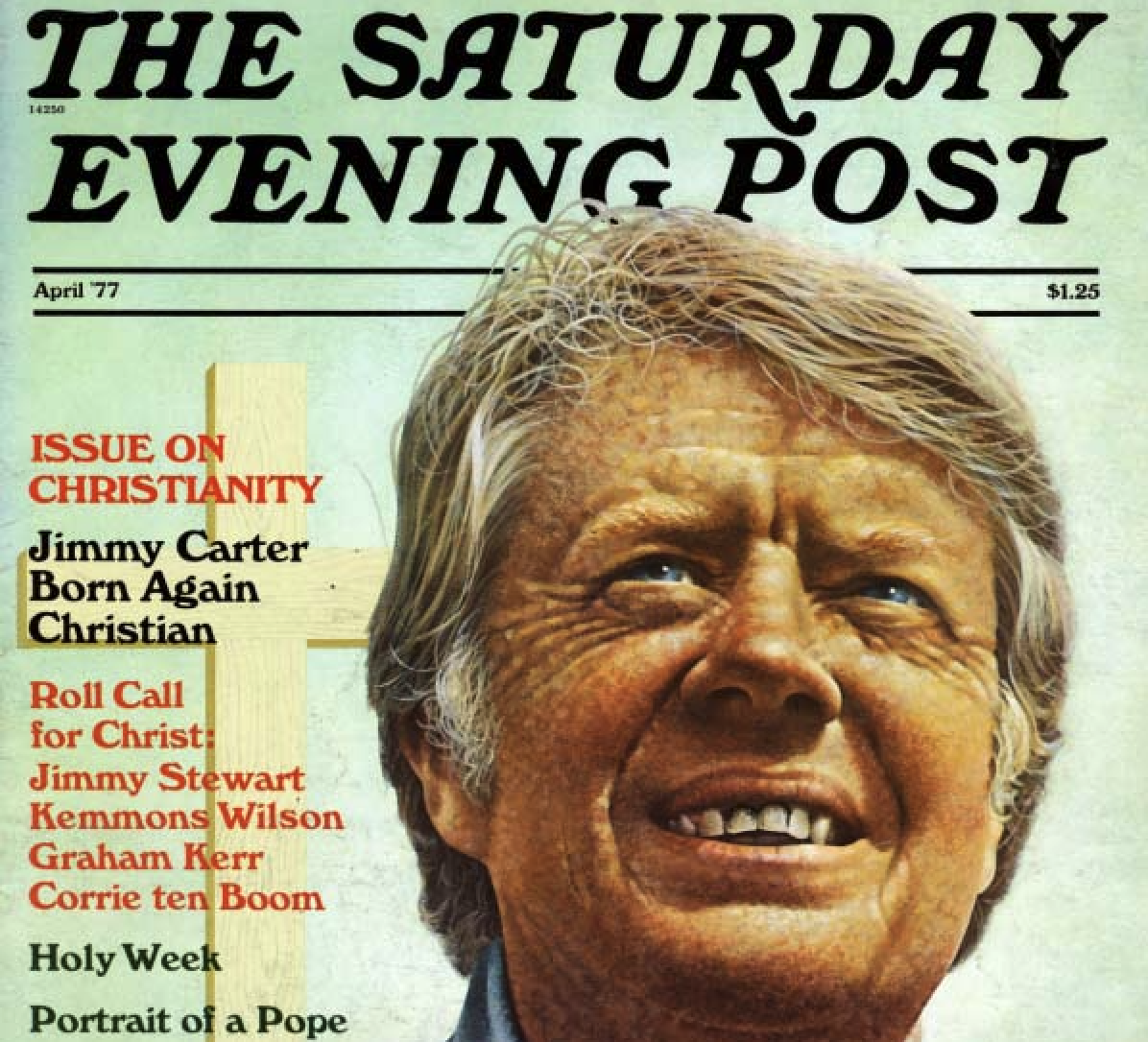
We talked quite a bit about Carter’s impact on American evangelicalism and, in particular, the role he played in forcing American journalists to wrestle with the complex world of evangelicalism. When many evangelicals rejected the reality of Jimmy Carter the president, as opposed to the candidate, he also helped fuel the creation of the Religious Right.

Let’s start with journalism. As I have written before:

I'll never forget the night when an anchor at ABC News – faced with Democrat Jimmy Carter talking about his born-again Christian faith – solemnly looked into the camera and told viewers that ABC News was investigating this phenomenon (born-again Christians) and would have a report in a future newscast.

What percentage of the American population uses the term "born again" to describe their faith? … I mean, Carter wasn't telling America that he was part of an obscure sect, even though many journalists were freaked out by this words — due to simple ignorance (or perhaps bias).

I was a student at Baylor University at that time and, yes I was active as a volunteer in the Carter campaign.


Please respect our Commenting Policy