Terry Mattingly

Once more into the breach: Kind-of-PBS website offers PR for 'independent' Catholic flock

Once more into the breach: Kind-of-PBS website offers PR for 'independent' Catholic flock

Let’s do something quick this morning, since it is Memorial Day (some readers might be online, pre- or post-cookouts) and I am also getting ready for two weeks of travel.

So let’s do something simple on one of the most complex, controversial and bizarre topics I have ever handled as a journalist. I am referring to the global web of “Old Catholic” churches — which can be everything from conservative Latin rite flocks to far-left modernist movements that really should just join the Episcopal Church and that would be that.

Decades ago, in Denver, I tried to follow the ordination clains of a controversial — but well known — priest and hospital chaplain and, before I knew it, I had about three folders full of conflicting info about sacraments and orders and my head was spinning. The highlight was a chat with a local mailman who had a detailed flow-chart proving that he was an archbishop with orders as valid as those of Pope John Paul II.

This brings me (Once more, into the breach!) to a news report from Flatland, a non-profit news website in Kansas City. The “about” page states: “We’re Kansas City PBS’ nonprofit journalism source, a destination for local and regional storytelling.” The headline proclaims: “Gay Priest Shepherds Nontraditional ‘Catholic’ Church.” Here’s the overture:

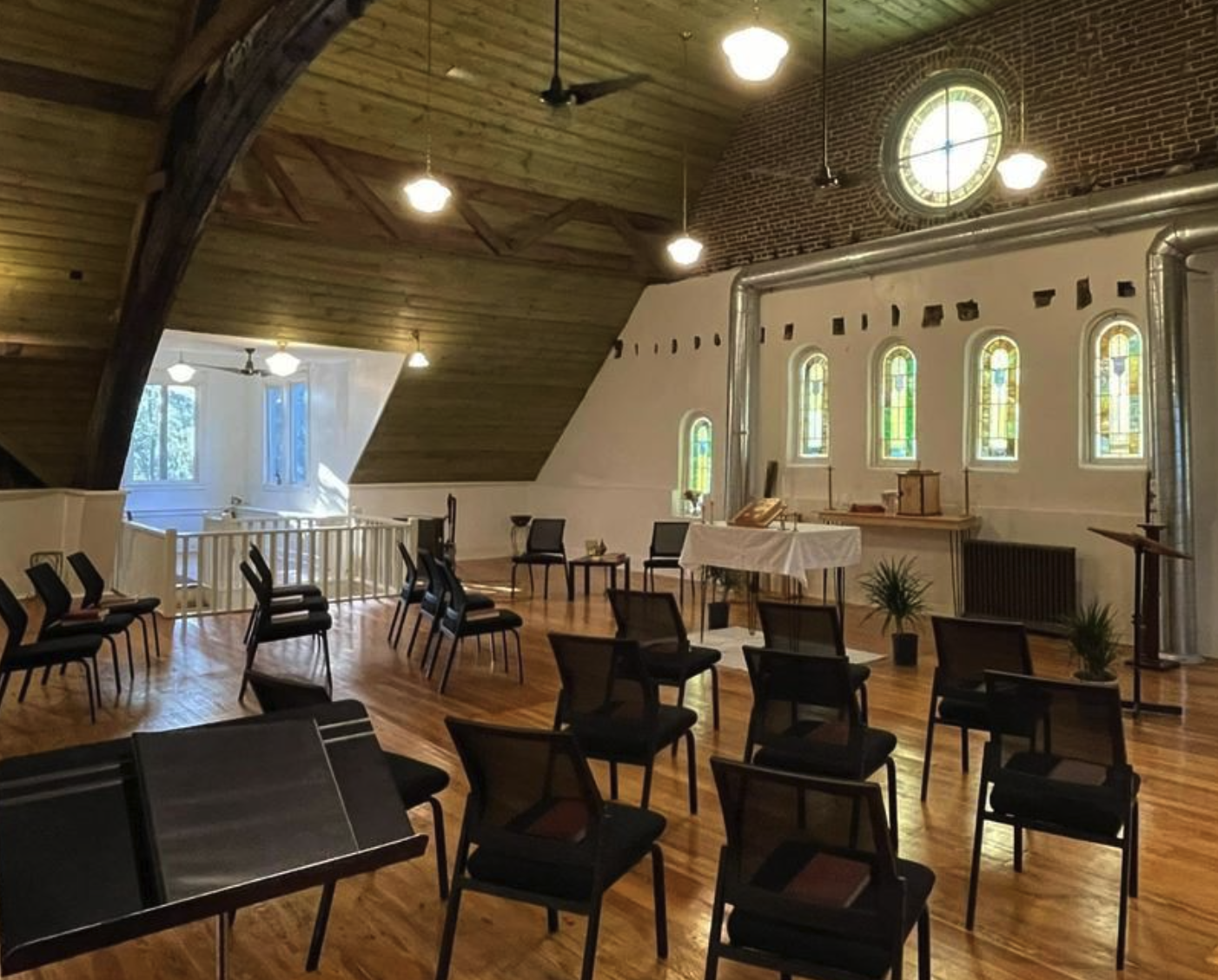
The red brick church at 700 West Pennway on Kansas City’s West Side has undergone several religious conversions in its long history. 

This late 19th-century building was home to West Side Christian Church from 1893 until 1986, when property managers Jeff Krum and Adam Jones bought it. 

Then, until 2000, it became secular as the home for the City in Motion dance company. Next, the Buddhist Rime Center made its home there from 2001 until 2020. 

And now, for almost two years, it’s housed the relatively new Christ the King Independent Catholic Church

The “Catholic” part of the name takes a bit of explaining. 

At this point, readers really need to know something — at least a few paragraphs — about the world of “independent” and “Old Catholic” rites. After all, the term “independent Catholic” makes about as much sense as “jumbo shrimp,” “military intelligence” and “genuine laminated rosewood.”

Please respect our Commenting Policy

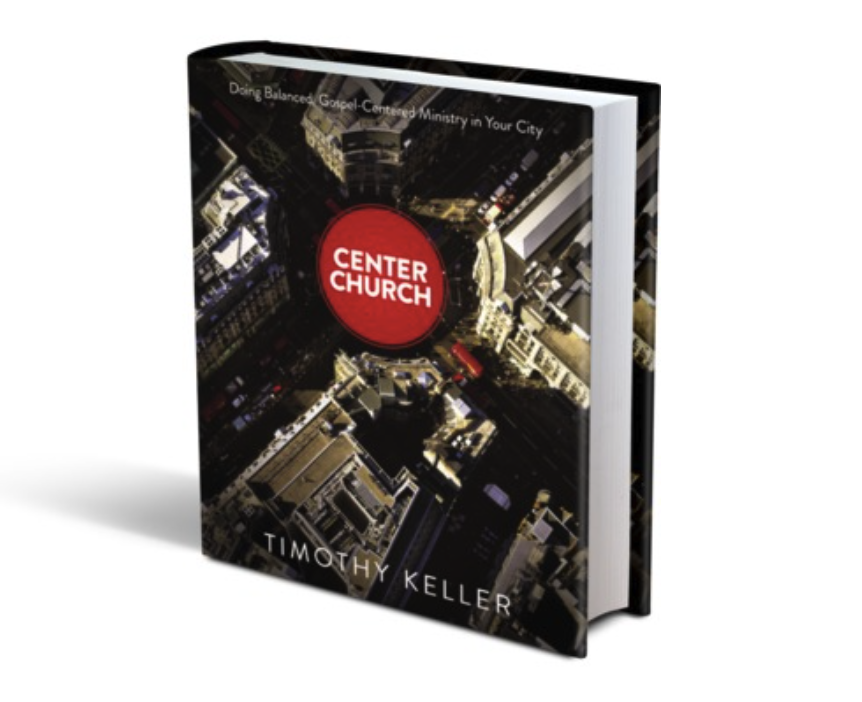
Redeemer Presbyterian's Tim Keller: An outsider who came to New York City -- to stay

Redeemer Presbyterian's Tim Keller: An outsider who came to New York City -- to stay

On the Sunday after 9/11, thousands of New Yorkers went to church, with many joining a line stretching outside the Redeemer Presbyterian services in a Hunter College auditorium.

The Rev. Tim Keller asked his staff if they could manage a second service -- doubling the day's attendance to 5,300. Keller's sermon, "Truth, Tears, Anger and Grace," began with Jesus weeping before raising Lazarus from the dead.

Many Americans were "coming to New York to fix things," he noted. "We are glad for them. They will try to fix the buildings. We need that. And eventually they will leave. But when Jesus weeps, we see that he doesn't believe that the ministry of truth -- telling people how they should believe and turn to God -- or the ministry of fixing things is enough, does he? He also is a proponent of the ministry of tears. The ministry of truth and power without tears isn't Jesus."

This sermon contained major themes from the life and work of Keller, who died on May 19 death at age 72, after a three-year battle with Pancreatic cancer. Instead of seeking quick fixes, especially through politics, he kept urging conservative Protestants to stress compassion and face-to-face ministry, while continuing to defend centuries of Christian doctrine.

In Keller's case, that meant building a church for New Yorkers that addressed their blunt, exhausting, even cynical, concerns about life.

In that first sermon after 9/11, Keller noted that everyone had an opinion about New York City and America as a whole. Some were claiming that "God is punishing us" because of rampant immorality. Others said America had been judged because of social injustice and greed. Instead of blaming the victims, Keller said it was time to ask who would stand their ground and love their neighbors.


Please respect our Commenting Policy

WSJ reporter dares to interview ordinary Eastern Orthodox converts in the Bible Belt

WSJ reporter dares to interview ordinary Eastern Orthodox converts in the Bible Belt

As you would expect, the recent Wall Street Journal feature on the rising number of converts to Eastern Orthodox Christianity was a big deal here in Orthodox circles in East Tennessee.

Why? The WSJ piece was built, in large part, on contacts with sources here in the Appalachian mountains and nearby. The headline: “Eastern Orthodoxy Gains New Followers in America Ancient faith is drawing converts with no ties to its historic lands.”

This is not a new story, of course, since the “convert-friendly era” of Orthodoxy began in the 1980s and ‘90s. But, for reasons explained in the WSJ piece, there is enough novelty linked to this trend — especially when contrasted with stark mainline Protestant decline — that the topic has made a few headlines every five years or so.

What this new piece does better than others, I think, is note the paradox found in American Orthodoxy — that some churches are growing rapidly, while others are plateaued or in decline. Consider this statement of the “trend,” which is described as a “small but fast-growing group of Americans from diverse backgrounds who have embraced Orthodoxy in the past few years.” Here is an important background passage:

Eastern Orthodoxy is one of the two parts of the Christian world that emerged from the Great Schism of the 11th century, a split with the Roman Catholic Church caused principally by disagreement over the authority of the pope. Its members belong to a family of churches with historic roots in Eastern Europe, Russia and the region of the eastern Mediterranean. … 

The Eastern Orthodox population of the U.S. is dominated by immigrants from the church’s historic lands and by their descendants. But in recent years, aided by more widely available information on the internet, the church has been attracting more attention from people with no ancestral ties to Orthodoxy, a trend that appears to have accelerated following the outbreak of the Covid-19 pandemic

Some pastors across the country report growth of their flocks by 15% or more in a single year owing to conversions, defying an overall trend of decline similar to that in other denominations.

I must be candid and note that here was another reason that this WSJ article created quite a buzz — it contrasted sharply with last year’s NPR piece: “Orthodox Christian churches are drawing in far-right American converts.”


Please respect our Commenting Policy

Tim Keller sought 'winsome' Manhattan apologetics, a goal that became more difficult

Tim Keller sought 'winsome' Manhattan apologetics, a goal that became more difficult

If one looks up the word “winsome” in a dictionary, here is a typical example of what shows up, via Merriam-Webster: “generally pleasing and engaging often because of a childlike charm and innocence.”

However, a Google search for the term “winsome,” when combined with “Tim Keller,” opens up a window into a completely different world — one closely linked to debates about the meaning of the word “evangelical” in a Donald Trump-era culture.

Frankly, I am not going to go there. What I will do is urge GetReligion readers who visit Twitter to follow the #TimKeller hashtag and check out the waves of tributes in the wake of the passing of one of the most important American evangelicals — defined in terms of doctrine — in recent decades.

Instead of looking at the tsunami of news coverage, I will simply note the obvious — Keller is receiving much, or even most, of this attention because he lived, worked, preached and wrote in New York City. If his career had unfolded in the Bible Belt, mainstream journalists would never have heard of him. Thus, here is the New York Times double-decker headline on its obituary (which ran quickly, but inside the print edition):

The Rev. Timothy Keller, Pioneering Manhattan Evangelist, Dies at 72

Shunning fire and brimstone, he became a best-selling author and founded Redeemer Presbyterian Church, which drew young New Yorkers.

The Gray Lady’s lede offered this:

The Rev. Timothy J. Keller, a best-selling author and theorist of Christianity who performed a modern miracle of his own — establishing a theologically orthodox church in Manhattan that attracted thousands of young professional followers — died on Friday at his home in Manhattan. He was 72.

Yes, we can talk about the accuracy of the word “evangelist” in the headline. Once again, there are mainstream journalists who believe that is simply another way to say “evangelical.” Unless I missed something, Keller was not active in holding the kinds of public events — think Billy Graham “crusades” — normally associated with public evangelism. Were there some Central Park rallies with Keller sermons and altar calls that I missed? Please let me know.

What he was, of course, was a church builder and an “apologist” for small-o orthodox Christianity, of the Reformed form,” both in preaching and in writing — in books and a host of other forms.


Please respect our Commenting Policy

LGBTQ Catholics dream of a changed church, while seeing reasons to hope

LGBTQ Catholics dream of a changed church, while seeing reasons to hope

As a child in inner-city Milwaukee, Father Bryan Massingale's grandmother gave him a leather-bound copy of The New Webster Encyclopedic Dictionary of the English Language, along with a dream that he might need it someday.

"My grandmother was not delusional. She did not live in denial of reality," said Massingale, a Jesuit priest who holds an endowed chair in ethics at Fordham University, in New York City. "Her gift was a vision, an act of hope. It was a dream, a hope, a reminder that the neighborhood, with its drugs, violence and rodent-infested corner store with overpriced goods, did not define or limit who I could be."

That's important to know, he declared, since he was speaking as "a Black, gay priest and theologian" at Fordham's recent Ignatian Q Conference for LGBTQ students from Jesuit campuses. This event was a "space for our dreaming, for queer dreams" of hope for "despised and disdained and stigmatized peoples," he added.

"I dream of a church where gay priests and lesbian sisters are acknowledged as the holy and faithful leaders they already are," he said, in a published version of his address. "I dream of a church where LGBTQ employees and schoolteachers can teach our children, serve God's people and have their vocations, sexuality and committed loves affirmed. …

"I dream of a church that enthusiastically celebrates same-sex loves as incarnations of God's love among us."

Theological visions of this kind inspire hope for some Catholics and concern for others.

Thus, the North American phase of the Vatican's global Synod on Synodality found "strong tensions within the Church," while participants in the virtual assemblies also "felt hope and encouragement and a desire for the synodal process to continue," according to the 36-page report (.pdf here) released on April 12 by U.S. and Canadian Catholic leaders.


Please respect our Commenting Policy

Podcast: A growing army of Americans (#surprise) no longer trusts the news media

Podcast: A growing army of Americans (#surprise) no longer trusts the news media

Were there tears in Anderson Cooper’s eyes? Did you hear a tremor in his voice?

A clip featuring the CNN superstar (that’s a relative term, these days) went viral after he wore his elite heart on his finely tailored sleeve when responding to woke social-media meltdowns after The. Most. Trusted. Name. In. News. dared to air a ratings-chasing “town hall” with former President Donald Trump.

By all means, watch the YouTube video featured at the top of this post, because it was featured in this week’s “Crossroads” podcast (click here to tune that in), which focused on another set of bleak, hellish poll numbers about Americans doubting the mainstream-news industrial complex. I argued — no surprise if you read my recent Religion & Liberty essay (“The Evolving Religion of Journalism”) — that niche-press coverage of moral, cultural and religious issues has played a big role in this disaster.

Cooper’s dramatic soliloquy included some strong language aimed directly at CNN’s shrinking choir of loyal viewers on what used to be called the “left.” In a way, it’s a kind of niche-news Rorschach test. What do you see and hear?

Meanwhile, here are some of the key quotes, drawn from a rather snarky piece at The Hollywood Reporter (I have added bold text for emphasis):

Echoing some of the points that network CEO Chris Licht had made to CNN staff … (Cooper) attempted to pivot and spin why CNN felt it was important to cover Trump. “The man you were so disturbed to see and hear from last night, that man … may be president of the United States in less than two years. And that audience that upset you, that’s a sampling of about half the country.”

He added, “If last night showed anything, it showed [Trump winning] can happen again. It is happening again. He hasn’t changed and he is running hard. You have every right to be outraged today and angry, and never watch this network again.

Cooper then rather bizarrely put the onus back on the audience to not remain ignorant of people on the other side of the political divide and incredibly implied that some people were ignorant of Trump. “Do you think staying in your silo and only listening to people you agree with is going to make that person go away? If we all only listen to those we agree with, it may actually do the opposite.”

Yes, the crucial word “silo” was used, in an emotional dermon aimed directly at CNN viewers. At some point, we can expect someone on Fox News to offer some variation of this litany when talking to its post-Tucker Carlson audience.

This is the media dynamic at the heart of trends in the Divided States of America.


Please respect our Commenting Policy

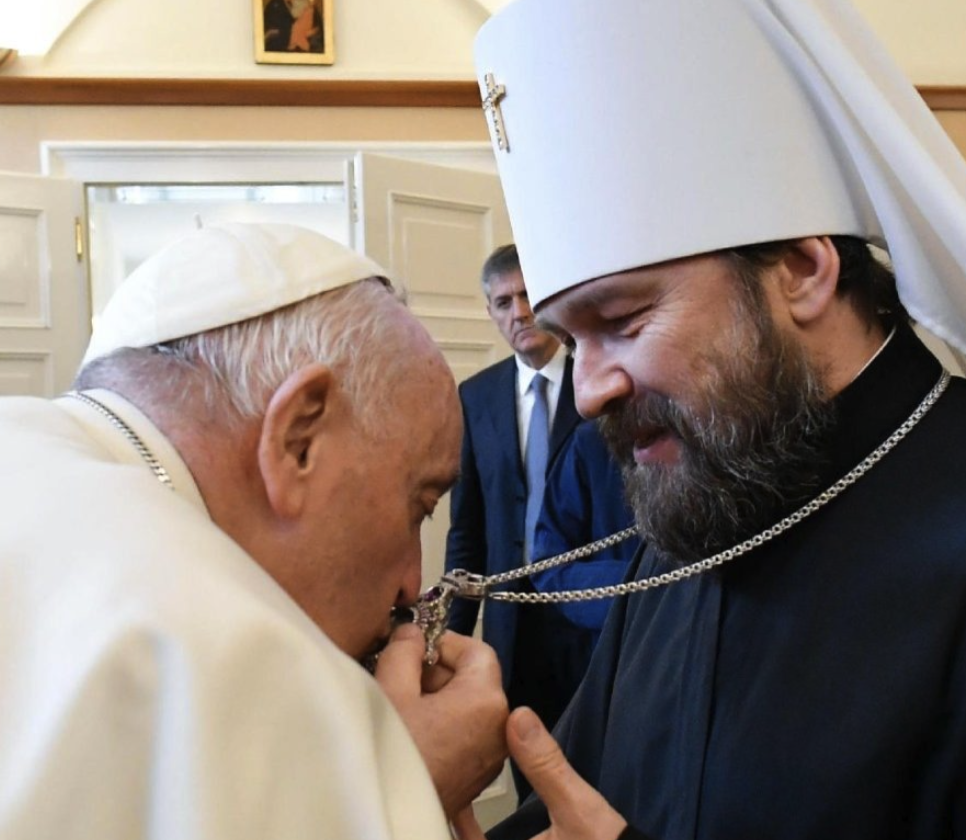
Yes, what about that meeting between Pope Francis and an exiled Russian Orthodox leader?

Yes, what about that meeting between Pope Francis and an exiled Russian Orthodox leader?

So, my gentle readers, please allow me to flash back to a recent news story that I intended to discuss, but travel got in the way. This was a story that may or may not have been important, but we really don’t know because it centered on a private meeting between Pope Francis and a very symbolic Russian Orthodox leader.

Why to I say that Metropolitan Hilarion of Budapest is a highly”symbolic” Orthodox leader, especially at this point in the hellish conflict between Russia and Ukraine?

To explain my use of “symbolic,” we need to look at the Associated Press story that ran with this headline: “Pope in Hungary meets with Ukrainian refugees, Russian envoy.”

Ah, but was Metropolitan Hilarion a “Russian envoy,” in this case? Hold that thought, because things get more complex in the AP lede:

BUDAPEST, Hungary (AP) — Pope Francis plunged into both sides of Russia’s war with Ukraine on Saturday, greeting some of the 2.5 million Ukrainian refugees who have fled across the border to Hungary during a public prayer service and then meeting privately with an envoy of the Russian Orthodox Church that has strongly supported the war.

First, an important point of grammar in the final clause of that sentence, as in “meeting privately with an envoy of the Russian Orthodox Church that has strongly supported the war.” I added the bold italics, stressing that this is “that,” rather than “who.”

As we will see, it appears that the AP team covering this event knew little or nothing about the recent personal history of Hilarion. Then again, AP may have — for for some reason — chosen to omit interesting and potentially important information.

Hold that thought (again), as we read some material that appears later in this story:

Immediately after greeting and encouraging the refugees, Francis … met with the Russian Orthodox Church’s representative in Hungary, Metropolitan Hilarion, who developed close relations with the Vatican during his years as the Russian church’s foreign minister. The Vatican said the 20-minute meeting at the Holy See’s embassy in Budapest was “cordial.”

The Russian church’s strong support for the Kremlin’s war has rankled the Vatican and prevented a second papal meeting with Patriarch Kirill, the head of the Russian Orthodox Church and an ally of Russian President Vladimir Putin.


Please respect our Commenting Policy

Another Catholic order fades away: AP offers a familiar story, from only one point of view

Another Catholic order fades away: AP offers a familiar story, from only one point of view

The sad Catholic story format has become rather standardized by now.

First, you need a declining college, seminary, parish, local school or a religious order. Then (2) you add the details of the crisis and some brave quotes from the people who have decided to make hard decisions about the future — including their beliefs about the reasons for the decline.

Here’s the optional part: There may be (3) quotes from critics of the fading institution, as well as it’s supporters. This implies that there are Catholic issues being debated that are connected to this case study.

Now, I will argue that there needs to be (4) an additional factor, one other question, added to this increasingly familiar equation: Are there a few Catholic institutions of this kind that are surviving or even growing? The answer may be relevant to the big picture.

The Associated Press recently published a better-than-average story of this type, with this headline: “The end of an era for the Sisters of Charity of New York.” It offers the first two factors and at least admits that the third exists, with supporters mentioning the views of critics (perhaps even some in the order) — with AP declining to actually interview any of them. Here is the familiar overture:

NEW YORK (AP) — Through more than 200 years, the Sisters of Charity of New York nursed Civil War casualties, joined civil rights and anti-war demonstrations, cared for orphans, and taught countless children.

They’re proud of their history of selfless service. But they can’t ignore their current reality: The congregation continues to shrink and age — and not a single new sister has joined their U.S. group in more than 20 years.

After much prayer and contemplation, they made a tough decision that marked the beginning of the Catholic congregation’s end. They will no longer accept new members, and announced in an April 27 statement that they are now on a “path to completion.”

This leads to the required background material, with a Big Idea statement (which I have placed in bold type):


Please respect our Commenting Policy

Global South Anglicans are convinced that it's time to look forward (Part II)

Global South Anglicans are convinced that it's time to look forward (Part II)

Want to know how to cause a church split?

The deepest fault lines -- sex, money and pride -- have been obvious for centuries, said Archbishop Kanishka Raffel of the Anglican Diocese of Sydney, Australia.

"We use nationality or age or gender or wealth or clothing or accent or profession or politics -- to show off and communicate who we are and what sort of person we will or will not engage with," said Raffel, who was born in London, of Sri Lankan descent, and raised Buddhist.

"God's people are frail and very human. We bear the marks of weakness and humiliation. We can be loveless, faithless, tolerant of the intolerable and wretchedly self-satisfied. … God is angry about the abuse of people that comes through sexual immorality, greed and hateful, deceitful and cruel speech. We are not surprised."

For decades, he acknowledged, the 42 churches in the Anglican Communion have been rocked by divisions over biblical authority and colonial-era ecclesiastical structures -- with LGBTQ disputes grabbing headlines.

During the recent Global Anglican Future Conference, held in Kigali, Rwanda, Raffel was one of several bishops -- 315 attended, from 52 nations -- who stressed that traditionalists now need to look forward. It's time to focus on life in their rapidly growing churches, while dedicating less time and energy to clashes with declining churches in England, America, Canada and elsewhere.

This will, Raffel stressed, require looking in the mirror.

"We have been engaged in decades long conversation about sexual immorality. But we have often focused on one form of sexual sin, to the neglect of sexual sins which perhaps are more common among us and just as displeasing to God," he said. "How many women ... have shed rivers of tears over the way their sexuality has been misused by others? I suppose it would be millions. There is a self-serving blind spot of which we must repent, a log in our own eyes with which we are yet to deal. Lord, have mercy."


Please respect our Commenting Policy