Terry Mattingly

Global South Anglicans cut their ties to Canterbury? Maybe that's a news story worth ink

Global South Anglicans cut their ties to Canterbury? Maybe that's a news story worth ink

One of the most depressing things about being a reporter these days is trying to accept the fact that we live in a split, divided, warped news marketplace in which stories that, in the past, would have been Big News for everyone are now “niche” news items that half of our journalism culture feels totally comfortable ignoring.

This happens on the journalist “right” as well as the journalism “left,” or whatever word people are using instead of “left” these days.

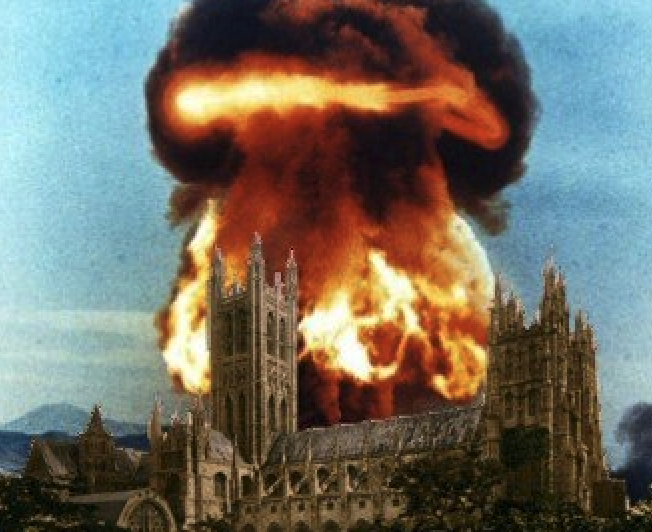
This just in: One of the world’s great Christian traditions — the global Anglican Communion — ran into a wall late last week. The big idea: Anglican leaders from nations that represent about 80% of all Anglicans regularly IN PEWS — as opposed to being names on membership lists that may or may not be relevant — voted to cut the ties between Canterbury and the most of the Anglican Communion.

I’ve been watching for elite media coverage all weekend. Here is a Google News file with logical search terms. Please click that search, which was made Sunday night. What do you see? Obviously, at that moment, this was a “conservative” and/or “religious” media story.

You see, the Anglicans in the Global Anglican Future Conference (GAFCON) represent the growing (in some cases booming) churches of Africa, Asia and the Third World. They do not, however, represent the zip codes in which the major newsrooms of the Western world are located. They also do not represent the world’s richest Anglicans. Thus, to be blunt, what these “lesser” Anglicans say is NEWS is not news until the New York Times says that it’s news. Right?

With that in mind read the top of this report — long, but essential — from the venerable Anglican publication called The Living Church: “GAFCON Rejects Archbishop Justin Welby’s Leadership.”

On April 21, primates representing a large majority of the Anglican Communion formally repudiated the historic leadership of the See of Canterbury.



Please respect our Commenting Policy

'On Religion' column enters year 35: Demons, martyrs, violence and miracles in Colombia

'On Religion' column enters year 35: Demons, martyrs, violence and miracles in Colombia

In one of her first encounters with violence linked to the Revolutionary Armed Forces of Colombia (FARC), Deann Alford heard, or felt, a bullet pass and slam into a door frame, with shrapnel striking a nearby woman and child.

The future journalist was both shocked and inspired by her contacts with Christians caught in that land's toxic climate of paramilitary warfare, narcotrafficking and kidnappings. She struggled to grasp how someone like pilot Russell Martin Stendal, after years held for ransom, could forgive his kidnappers and then start a missionary effort to convert them.

"Without his months as their hostage, I'm convinced he never could have reached the FARC," wrote Alford, in "Victorious: The Impossible Path to Peace," her blunt memoir about religious freedom in Colombia.

Stendal, she added, "has forgiven all. But I have not. ... In my quarter-century as a journalist, I've written dozens of articles about Colombian guerrilla groups' crimes against Christians, ranging from extortion to murder. Many of these stories regard crimes of the FARC, typically threatening and abducting church workers, missionaries and pastors, extorting them with offers they could not refuse."

Eventually, Alford realized that it wasn't enough to cover Colombia with telephone calls, faxes and Internet connections. She would have to put "boots on the ground" and return. "But I didn't. I was afraid. No, that word is too mild. I was terrified. I let the risk of being killed and kidnapped keep me away."

Alford's bottom line: "I told the Lord I would go anywhere for him but Colombia."

But she returned and, over years of contacts, her fears mixed with frustration. After working in secular newsrooms, as well as Christian publications and wire services, she couldn't understand why more people -- journalists and religious leaders -- could not see the importance of the faith stories unfolding, decade after decade, in Colombia.

This is another example of an important theme woven into my work with this "On Religion" column, with this week marking the start of my 35th year. Simply stated, many journalists do not "get" religion, in terms of grasping the role faith plays in many important events and trends stories.

But Alford was dealing with an even more complex equation. Yes, many editors fail to value religion-news coverage. But it's also true that many Americans -- including people in pews -- do not value coverage of international news. Thus, it's hard to imagine a tougher sell in today's media marketplace than coverage of religion news on the other side of the world.


Please respect our Commenting Policy

Podcast: Can journalists and religious leaders learn how to talk about what 'news' is?

Podcast: Can journalists and religious leaders learn how to talk about what 'news' is?

Day after day, year after year (this week opened year 35 for my national “On Religion” column) I receive all kinds of “press releases” from people who want me to write columns about this, that or the other.

Some folks still send these printed on dead-tree pulp, if you can imagine that. The vast majority arrive via email or in press kits (mainly for books) via UPS, Fedex or the U.S. Postal Service.

I am happy to check out most of this material. However, about 90% or more of these offerings are sent by PR professionals who appear to have zero idea what I write about or the audience for my columns. They are simply throwing cheerful digital spaghetti at the wall and hoping something sticks.

In short, they do not understand “news” — what it is and what it is not.

What can religious leaders and/or organizations do to improve their success rates with reporters like me? That was half the equation that we discussed during this week’s “Crossroads” podcast (click here for temporary link to tune that in).

The other half? Just flip that reporter’s notebook around. How can reporters do a better job finding the right voices to include in their coverage of events and trends linked to religion? How can journalists convince clergy and other religious folks to cooperate with press coverage — especially when dealing with controversial topics and scandals?

The podcast was recorded while I was in Los Angeles for two forums hosted by the Poynter Institute under this title: “Telling the Stories of Faith and the Faithful.” The first forum was for reporters and editors, including quite a few who are not religion-beat specialists. The second day, yes, focused on talks with a small circle of religious leaders about understanding how journalists think and work.

We were talking about many of the same questions and issues on both days — only viewed from different sides of a reporter’s notebook (or smartphone, in this age). Here is a bite of the Poynter summary of the session with reporters:


Please respect our Commenting Policy

RIP Charles Stanley, a Southern Baptist media pro (and a megachurch preacher, too)

RIP Charles Stanley, a Southern Baptist media pro (and a megachurch preacher, too)

There’s an old saying in the Sunbelt that goes like this: When Jesus makes his glorious return on the last day, He will still have to fly through Atlanta.

I will visit that giant airport myself, today, on my way home from speaking at a Poynter Institute conference — “Telling the Stories of Faith and the Faithful” here in Los Angeles. One day featured meetings with West Coast reporters, including many that don’t work the religion beat, and the second day focused on talks with a circle of faith-group leaders. There were great questions and lots of dialogue.

Thinking about the Atlanta airport reminded me of what I think was as highly symbolic encounter with the Rev. Charles Stanley, a pivotal Southern Baptist leader and preacher who died this week. See this Associated Press report: “Charles Stanley, influential Baptist preacher, dies at 90.

The leader of First Baptist Church of Atlanta was elected SBC president in 1985 during what was, in my experience, one of the most intense, even angry, national conventions ever (and that’s saying something) during the near life-and-death Southern Baptist civil war of that era.

To get to that meeting in Kansas City, working for The Charlotte Observer, I had to (#DUH) change planes in Atlanta. I ended up on the same plane with Stanley, who was rumored to be a candidate for SBC president. He was in First Class, obviously, and I was not, obviously. After we had been airborne for an hour or so, I walked up front to give Stanley my card and to request an interview before the election.

Seeing that he was reading a document, I confess that I looked it over before I alerted him to my presence at his right shoulder.

Trust me — I wish I had a photographic memory. Why? Because he was reading a professional set of public-relations guidelines describing (#WaitForIt) how to deal with journalists after his election as SBC president.


Please respect our Commenting Policy

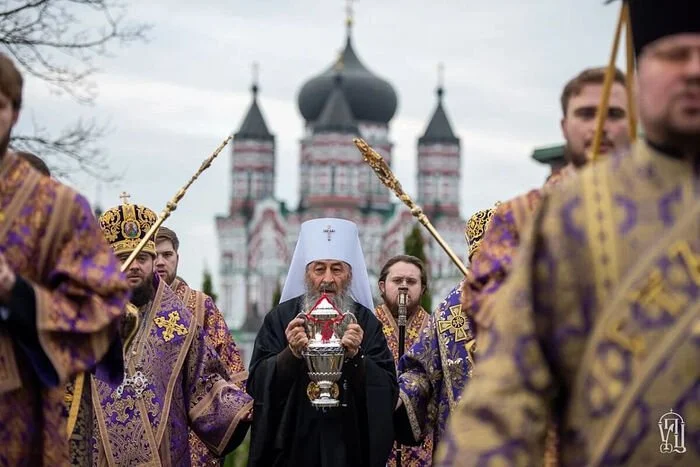
Pascha in Ukraine, 2023: That's a subject journalists view through a totally Western lens

Pascha in Ukraine, 2023: That's a subject journalists view through a totally Western lens

Ask faithful members of Eastern Orthodox churches to name the most important day of the Christian year and about 99.9% of them will say this — “Pascha.”

This is the ancient Orthodox term for the feast of the Resurrection of Jesus. As the OrthodoxWiki.org website notes, “Pascha” is “a transliteration of the Greek word, which is itself a transliteration of the Aramaic pascha, from the Hebrew pesach meaning Passover.”

Pascha rites around the world began just before midnight on Saturday and proceeded into the early hours of Sunday, followed by festivities to break the long, intense fast of Great Lent. Folks get home about 4 a.m.

Needless to say, this was not a normal Pascha in Ukraine. I was curious to see how mainstream newsrooms would cover the rites in the Ukraine, where two competing Orthodox bodies are united in their opposition to the Russian invasion of their land, but separated by decades of competing claims of which church represents the future of the faith in Ukraine (see this earlier post-podcast on that topic).

I was curious, as an Orthodox layman (this Pascha marked the 25th anniversary of my family’s conversion), how mainstream news organizations would cover Pascha 2023 in Ukraine — so I ran an online search for the terms Ukraine and “Pascha.” The result — zero 2023 news reports containing “Pascha.”

Ah, but what if journalists ignored Orthodox history, tradition and theology and only referred to this feast day as “Easter,” the Western Christian term?

What if your stories contained zero references to “Pascha” and only said “Easter”? That online search yielded some mainstream reports, which often mentioned “Orthodox Easter,” thus viewing the most important day in Eastern Orthodoxy through a totally Western lens. Try to imagine doing this with any other global faith group of 260 million members, Christianity’s second largest Communion. Imagine changing the name of “Passover,” “Ramadan” or even “Easter” (when covering Rome and Protestantism).

Of course, readers need to be told that “Pascha” is the ancient Christian term for the season that, in the dominant West, is known by the somewhat controversial (for some outsiders) term “Easter.” But shouldn’t coverage of Pascha at least include, you know, the word “Pascha”?

It’s hard to imagine a more fitting metaphor to describe most, if not all, of the warped mainstream press coverage of the role that Orthodox history and faith is playing in Ukraine. I have already written about this several times and I’m about to board an airplane to head to Los Angeles. So let me be as quick as possible.

If reporters had the slightest interest in the historic Ukrainian Orthodox Church — with 1,000 years of shared history with Slavic cultures — they would be paying attention to this church’s (a) ongoing attempts to sever, within the limits of Orthodox canon law, it’s remaining ties to the Russian Orthodox Church, (b) its leaders’ opposition, since Day 1, to the Russian invasion and (c) the criticisms of this church by leaders of the new, competing Orthodox Church of Ukraine, which is supported by the United States, the European Union, the current Ukrainian government and the tiny, but symbolic, Ecumenical Orthodox Patriarchate in Turkey. These criticisms have escalated into a full-tilt government attempt to crush the older Orthodox body.


Please respect our Commenting Policy

Post-COVID realities have sped up some sobering trends in congregational life

Post-COVID realities have sped up some sobering trends in congregational life

For the experts who examine trends in pews, the post-pandemic tea leaves have been hard to read -- with a few people going to church more often, others staying away and some still watching services online.

But it's important for pastors to note another sobering fact, according to one of America's most experienced observers of Protestant life. Here it is: The typical church has to keep adding members simply to keep membership steady. And it's becoming increasingly important to maintain a growing core of believers who are truly committed to faith and ministry.

"We used to have people we called 'social' Christians, even though that's an oxymoron," said Thom Rainer, founder of the Church Answers website and former dean of the Billy Graham School of Missions and Evangelism at Southern Baptist Seminary in Louisville, Kentucky.

"Today, these people feel that they no longer need that 'Christian' label to be accepted in business and community life," he said, reached by telephone. "COVID sped things up -- made trends more obvious. But the pandemic was the accelerator, not the cause of what's happening."

Surveys since 2020 show that a "steady share of Americans -- about 40% -- say they have participated in religious services in the prior month one way or the other," according to a Pew Research Center report. But other details are blurry, since the "share of U.S. adults who … attend religious services once a month or more has dropped slightly, from 33% in 2019 to 30% in 2022."

Meanwhile, Pew reported that 7% claim they are attending services in person more often, post-COVID, while "15% say they are participating in services VIRTUALLY more often."

It's important to factor new realities into patterns seen for decades, noted Rainer. For example, in a recent online essay he argued that, if a typical Protestant church has an average worship attendance of 100, it needs to add about 32 attendees a year just to stay even.

Here's the math.


Please respect our Commenting Policy

Podcast: That Baltimore Catholic clergy sexual-abuse report is a big, but complex, story

Podcast: That Baltimore Catholic clergy sexual-abuse report is a big, but complex, story

The inevitable clergy sexual-abuse report from the Archdiocese of Baltimore is a major news story, for legions of valid reasons.

Baltimore is this nation’s “premier see,” the oldest diocese in the United States. This city at the heart of a once-thriving Catholic region that now in a demographic death-dive that is extreme, even by the standards of 21st century America.

To move closer to issues discussed in this week’s “Crossroads” podcast (click here to tune that in), we are also talking about the city and Catholic culture in which the Sister Catherine Cesnik vanished in November of 1969. This is the murdered nun who left behind friends, colleagues and former female students who were convinced that she was about to blow the whistle on serial abuser Father Joseph Maskell, one of the villains at the heart of the famous Netflix who-done-it “The Keepers.”

Yes, the former chaplain at the famous (now closed) Keough High School was mentioned 200 times in the 450-page Maryland Attorney General report on child sexual abuse by clergy (and others) in the Archdiocese of Baltimore.

But here is the key point that I want to make — as part of a broader discussion of the hellish, I would argue demonic, sexual-abuse sins and crimes being committed against children, teens and adults in many different secular and religious institutions. Most journalists see this abuse crisis through a specific lens, and it’s a narrow Catholic lens with events beginning with the The Boston Globe and it’s pivotal Spotlight investigations that went public in 2002.

But, as “The Keepers” series on Netflix makes clear, Father Maskell had already abused children in Baltimore, abuse that was reported to superiors, before he was transferred over to Keough.

Note that this was long before Father Gilbert Gauthe was assigned to St. John the Evangelist Catholic Church in Henry, La., where he began abusing young boys — creating a landmark 1984 case that opened the modern era of media coverage of clergy sexual abuse in America. That media coverage took place early in my own journalism career and I’ve been covering this story ever since.

The whole point of this week’s podcast is that journalists need to think all this over. Do we want to keep painting the sexual abuse of children, teens and adults as a “Catholic” story that began a decade or two ago, or do we want to broaden the lens and look at the bigger picture — which would be an even bigger, more important and, yes, more difficult story?


Please respect our Commenting Policy

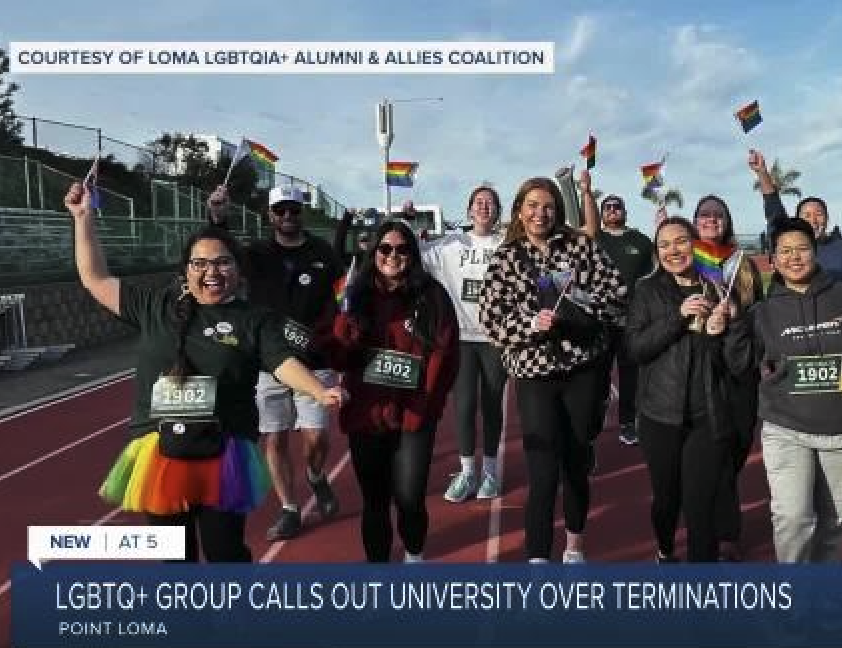
Amazing! Brief mention of doctrine in LGBTQIA+ war at Point Loma Nazarene University

Amazing! Brief mention of doctrine in LGBTQIA+ war at Point Loma Nazarene University

Oh my! It appears that we have an actual reference to a doctrinal “covenant” in a Religion News Service report about a First Amendment battle between the leaders of a private Christian university and the pro-LGBTQ members of their faculty, student body and alumni.

Journalists almost always ignore the role of "lifestyle” or “doctrinal” covenants in defining the boundaries of the life and work of private schools, which are voluntary associations. It’s always important to ask if faculty, staff and students are asked to sign these covenants, in which they (the details vary) agree to support the doctrinal foundations of the school or, at the very least, not to attack them.

This is an issue your GetReligionistas have written about 100+ times or more during the past 20 years.

The fact that this latest fight is happening at Point Loma Nazarene University in San Diego will not surprise anyone familiar with the recent history of denominational life in the Church of the Nazarene. But that’s another story for another day. The reality is that there are hidden schisms in the faculties of many Christian colleges and universities, when it comes to issues of centuries of Christian moral theology.

Thus, back to the RNS report: “LGBTQ group condemns Point Loma Nazarene University for theology dean’s dismissal.” The subhead is also important: “The university denies charges by Lauren Cazares, founder of Loma LGBTQIA+ Alumni & Allies Coalition, that the dean of the school of theology was terminated for 'anything related to the LGBTQIA+ community.' “

There is next to nothing surprising in this report. RNS editors included zero comments from insiders or experts who disagree with the viewpoints voiced over and over by the LGBTQIA+ activists who provided material for this “news” report. There is one quote from a university spokesperson who notes that the administration, due to privacy laws, cannot discuss the dismissal of a faculty member.

But, hey, there is one reference to “doctrine” in this story! Let’s start with the overture:

A coalition of LGBTQ alumni of Point Loma Nazarene University — a private Christian liberal arts college in San Diego — is protesting the firing of the dean of the university’s school of theology, who they say was dismissed for siding with an adjunct professor who was let go due to her own public support for the LGBTQ community.

Mark Maddix, the dean for the school of theology and Christian ministry, was fired on March 15 by the university’s chief academic officer, Kerry Fulcher, according to an April 5 statement released by alumna Lauren Cazares, who founded Loma LGBTQIA+ Alumni & Allies Coalition earlier this year.


Please respect our Commenting Policy

Welcome to $$$$$$$ Easter: Lots of candy, booze and Jesus-free fun for half of America

Welcome to $$$$$$$ Easter: Lots of candy, booze and Jesus-free fun for half of America

Easter is, without a doubt, the most important holy day in Christianity.

Christianity remains the largest faith group in the world.

There’s no way around the fact that Easter is the celebration of the doctrinal conviction that unites traditional Christians around the world: “Christ is risen!”

What a downer. This is a problem for people who decorate shopping malls and make the obligatory A1 holiday photo assignments for newspapers. There is more to this dilemma (ask Google) than struggling to photograph religious rites that take place at midnight or sunrise.

But people love fun, food, candy, parties, greeting cards, etc. Businesses love selling lots of stuff. And, in case you have not heard, a growing number of people in the mushy, old-mainstream middle of religious life — in America and elsewhere in the Western World — are cutting their ties to organized faith (“Nones” and others) and moving into a business, political and cultural coalition with atheists and agnostics.

This is a big $$$$$$$ deal.

This leads to this totally valid — even if rather depressing, for believers — headline at Religion New Service: “Adult egg hunts and kiddie pools full of gifts: Is Easter the new Christmas?

So I want to ask a journalism question on this Easter Monday morning (for Western Christians, since this Holy Week for Orthodox Christians and other Eastern rites): What was the Easter art featured in your local media this year? Here in East Tennessee, the major daily featured GOP racism and Earth Day.

But back to that RNS story. Why call it “totally valid”?

For a simple reason: It’s describing Easter in a growing segment of the American cultural marketplace. The question is how journalists can feature this reality — while also noting the rites and traditions of, well, the largest faith group in the world.


Please respect our Commenting Policy