Terry Mattingly

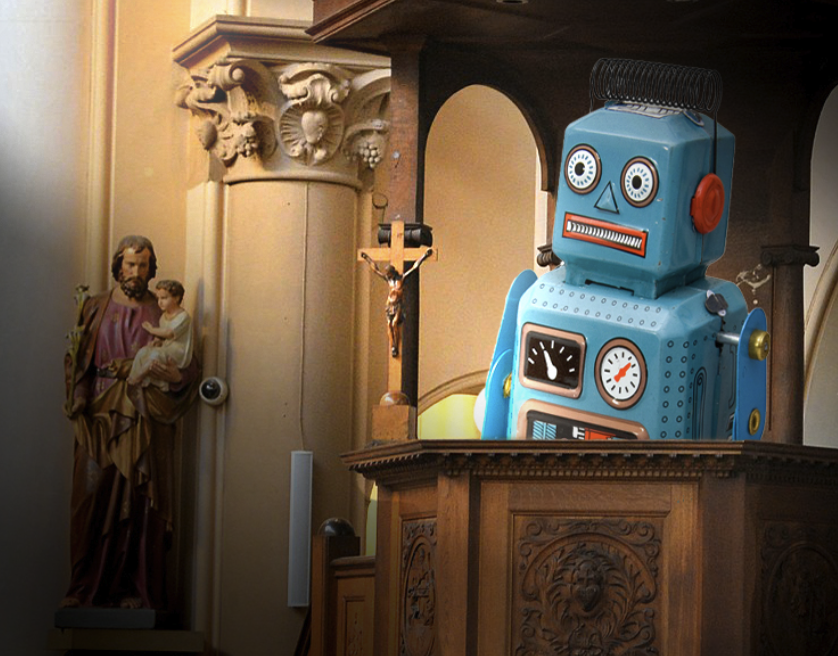
Podcast: When is preaching a 'news' story? Ah, the temptation of ChatGPT sermons

Podcast: When is preaching a 'news' story? Ah, the temptation of ChatGPT sermons

When is preaching newsworthy?

News consumers of a certain age may remember this famous Associated Press headline: “Priest Told Children That Santa Claus Is Dead.

More recently, a Catholic priest in County Kerry made headlines around the world when he dared to preach a sermon defending centuries of Catholic teachings on abortion, marriage and sex — while reminding the faithful that the concept of “mortal sin” is serious business. His bishop was not amused.

Thus, controversial sermons are news, in part because editors don’t expects sermons to be controversial?

The act of preaching can also become “newsy” when it is linked to a trendy subject in modern life. That’s the equation: Old thing (preaching) gets hitched to hip new thing.

Right now, one of the hot topics in the public square is the rise of artificial intelligence and, to be specific, the ChatGPT website. Thus, this week’s “Crossroads” podcast (click here to tune that in) focused on several “newsy” angles of the recent Associated Press story that ran with the headline, “Pastors’ view: Sermons written by ChatGPT will have no soul.”

In a way, this whole AI preaching topic is linked to another “preaching that is news” trend that shows up every now and then — plagiarism in the pulpit. Overworked, stressed-out pastors have been known to cut a few corners and use material from other preachers, without letting the faithful know what they were doing. But that’s actually a very old story. See this On Religion column that starts with a case study from 1876.

During the podcast, I riffed on the whole issue that different kinds of technology can shape the content of communications in different ways. If ChatGPT sermons have a sense of “soul,” it would be a “soul” that is defined by the creator of the software and the tech platform.

This made me think back the early 1990s, when I was teaching at Denver Seminary and asking future pastors to think about the many ways that mass-media messages shape the lives of their flocks and, of course, the unchurched people around them (here is an essay on that seminary work).

During that time, I read an article — on paper, alas — about how the creation of studio microphones changed the content of American popular music, even at the level of lyrics in love songs.

Think about Frank Sinatra. As a young big-band singer, he belted out bold, strong, LOUD songs about commitment and romantic love that would never die. He had to be heard over that big band. But give Sinatra a microphone and, well, these songs turned into smooth, soft, seductive messages — urgent whispers of desire.

I wondered: How did microphones affect the style and theological content of preaching?


Please respect our Commenting Policy

Got news? Concerning a boring AP story that ignored info about controversial cardinal

Got news? Concerning a boring AP story that ignored info about controversial cardinal

Want to read a really boring Associated Press news story?

You know, the kind of short hard-news, nothing-but-facts AP report in which an important person — Pope Francis, in this case — releases a list of appointees to some inside-baseball this or that, people who are either unknown or vaguely familiar to a dozen or so readers who are into that kind of thing?

In this case, one ends up with a boring headline — sure to appear in a few newspapers — that reads like this: “Pope renews cabinet of cardinal advisers, adds new members.” Here’s the riveting overture:

ROME (AP) — Pope Francis has renewed his cabinet of cardinal advisers from around the world, naming a handful of new members Tuesday and reconfirming others to help him run the Catholic Church.

Francis instituted the Council of Cardinals one month into his papacy, on April 13, 2013, with a primary goal of advising him on the reform of the Vatican bureaucracy. After nearly a decade of consultation, Francis issued a new blueprint for the Vatican bureaucracy last year.

Nevertheless, the Jesuit pope clearly appreciated the regular opportunities to consult with a small number of hand-picked cardinals representing the church on nearly every continent, and decided to keep the cabinet alive, albeit with some new members.

Now, would that story be a bit more interesting — “newsy” even — if it noted that one of the new members of this papal “inner ring” was a cardinal who, at this moment in time, may be the world’s most controversial prince of the church?

I mean, in this case we are talking about a cardinal who said the following, in an interview with KDA, a German news agency:

"The Church's positions on homosexual relationships as sinful are wrong. … I believe that the sociological and scientific foundation of this doctrine is no longer correct. It is time for a fundamental revision of Church teaching, and the way in which Pope Francis has spoken of homosexuality could lead to a change in doctrine. …


Please respect our Commenting Policy

EV charging sites at churches: Which denominational brands will get government $$$?

EV charging sites at churches: Which denominational brands will get government $$$?

Let me open this post with a confession: I am part of a growing flock of folks (some say “cult”) that attracts lots of nasty social-media commentary from a fascinating coalition of left-wingers and right-wingers.

In other words, I drive an electric car.

Wait. Anger from left-wingers? Remember these four words: Elon. Musk. Bought. Twitter.

Anyway, I have spent quite a bit of time reading about efforts to build EV-charging networks. Things were totally bonkers during the year or two that the Joe Biden White House was refusing to utter the word “Tesla” and seemed poised to pour billions of tax dollars exclusively into networks that are infamous for the stunningly high percentage of time their chargers are broken.

Now, what does this inside-baseball discussion have to do with religion-beat news?

Maybe you saw this Religion News Service headline that ran the other day: “Could churches be prime locations for EV charging stations? One company thinks so.

You see, EV charging stations require (#DUH) empty parking spaces, and it helps if these slots are in convenient urban and suburban locations — frequently near a highway exit or two. This leads to the totally logical overture for this timely RNS piece:

As more drivers make the decision to switch from gas-powered cars to electric vehicles, places to power them remain few and far between in large parts of the country. And with the Inflation Reduction Act of 2022 incentivizing clean energy and electric cars, as well as providing investments for green technology, the demand will only increase.

Churches, with their large parking lots that often sit empty during the week, could help provide a solution.

Now, imagine yourself driving through a typical American city. In your mind’s eye, where do you see empty church parking lots?

Basically, you will find two different kinds of lots and they tend to be located in rather different kinds of places. This is where I see a potential news hook or two.


Please respect our Commenting Policy

Archbishop of Canterbury offers to stand down, as England OKs gay-union blessings

Archbishop of Canterbury offers to stand down, as England OKs gay-union blessings

In England, proclaiming God's blessing on same-sex relationships has become the new orthodoxy for clergy with established ties to the powers that be.

But not in Nigeria and the Global South, where Anglican leaders have urged the Church of England to consider the impact of its actions on believers facing conflict with Jihadi terrorists.

"I am genuinely torn by this," said Archbishop of Canterbury Justin Welby, about an appeal for General Synod leaders to consult with Anglican primates around the world before proceeding. "It isn't just about listening to the rest of the world -- it's caring. Let's just be clear on that. It's about people who will die, women who will be raped, children who will be tortured.

"So, when we vote, we need to think of that. It's not just about what people will say -- it is about what they will suffer."

But after years of tense dialogues and visiting war zones, Welby told the synod to proceed. Thus, the General Synod bishops, clergy and laity voted 250-181 to offer blessing rites for same-sex couples married by the state -- while retaining church doctrine that marriage is between a man and a woman.

"For the first time, the Church of England will publicly, unreservedly and joyfully welcome same-sex couples in church," said Welby and Archbishop of York Stephen Cottrell, in their Feb. 9 statement. Anglicans have "deep differences on these questions which go to the heart of our human identity."

This move angered LGBTQ activists who said mere "blessings" were not enough, while leaders of giant Anglican churches in Africa and Asia also rejected the compromise.

Welby said he had little or no choice, when addressing a Feb. 12 meeting of the Anglican Consultative Council in Accra, Ghana.

After the synod vote, he said, "I was summoned twice to Parliament and threatened with parliamentary action to force same-sex marriage on us, called in England 'equal marriage.'"


Please respect our Commenting Policy

Thinking about God and Hollywood: Raquel Welch became a faithful Presbyterian?

Thinking about God and Hollywood: Raquel Welch became a faithful Presbyterian?

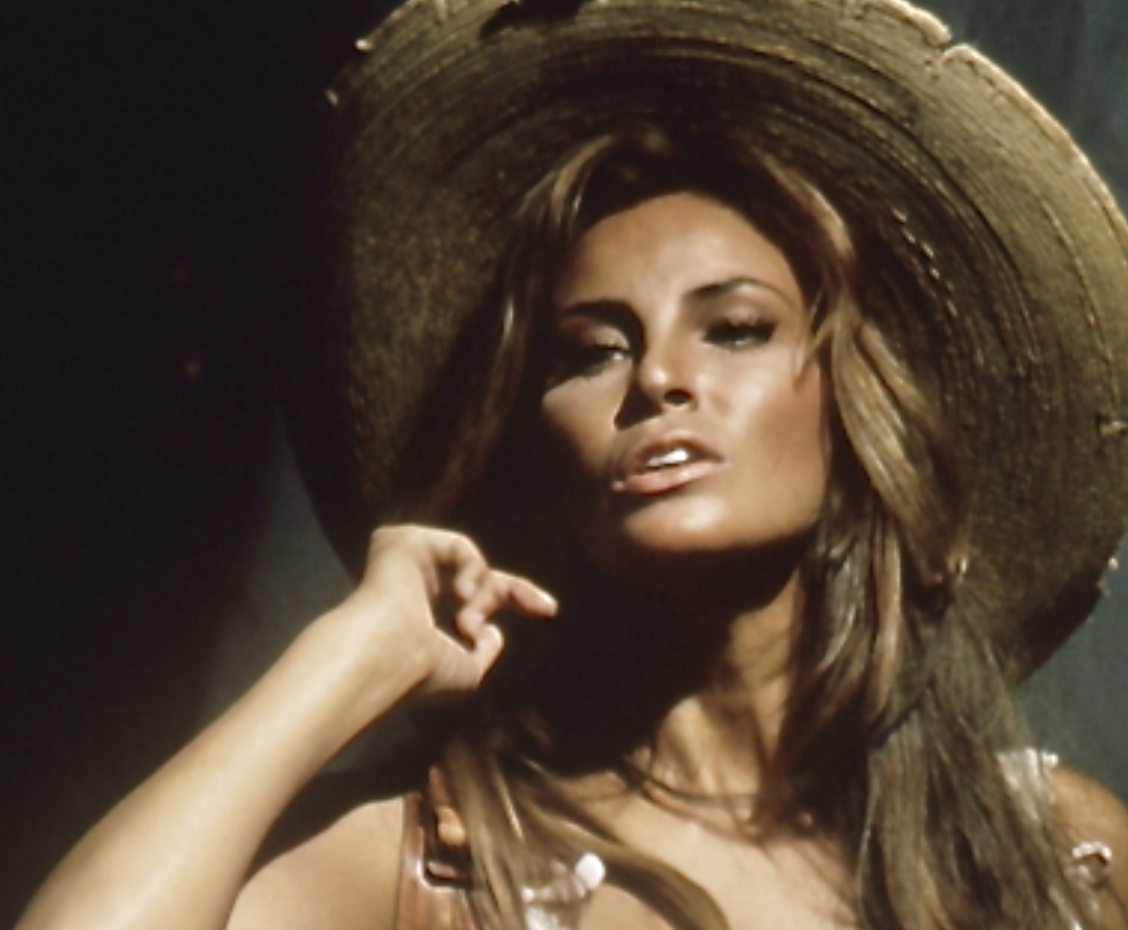
I have to admit that it never would have entered my mind to think there were religion “ghosts” in the life, career and death of Raquel Welch, who would have to be on anyone’s list of the iconic bombshell beauties in Hollywood history.

Then I started getting some emails.

Who knew that Welch evolved into a churchgoing and, by all reports, quite modest and mature Presbyterian church lady. In particular, people pointed me toward The Aquila Report, a blog for “conservative, orthodox evangelicals in the Reformed and Presbyterian family of churches.” The headline: “A Tribute to Raquel Welch’s Life and Testimony — She was a wonderful lady and a fine Christian.” Here is a sample of that feature:

As with many, her faith grew more serious and practical with age. It’s often true that the most important things become the most important to us as we’ve matured personally. That’s just to say that spiritual and personal maturity are often coincident age and life experience.

Second, she fully embraced the Reformed and Presbyterian faith as described in the Westminster standards. She would never burden others that they must because she did — but that she did isn’t really a question. She was of the old, rugged faith. She never felt the need to pressure anyone in regard to matters of faith but she also didn’t have a great deal of patience for cute or pop cultural theological moods. This was part of her strength.

Third, she was just another lady of the church. She didn’t put on airs or expect special attention (although she could hardly avoid even with the best of intentions being the most glamorous person in the room). And she often advised churches and ministries on practical and business matters because she was brilliant in those things. You didn’t think she survived and thrived 60+ years in the public eye by just being a pretty face?

There was one more point that I found interesting, because it linked to material I had encountered through the years about some “conservative” superstars.

It helps to know that my favorite actor of all time is the late Jimmy Stewart and I’ve read quite a bit about his life. I was set up to interview him, years ago, at the Presbyterian church he attended, but he came down with the flu and had to cancel.

Anyway, the Aquila Report piece noted that Welch’s faith journey was linked to her friendships with “other conservative Presbyterians Jimmy Stewart, Ron Reagan and Chuck Heston.” Interesting.


Please respect our Commenting Policy

Podcast: Zero elite press coverage of 'heresy' accusations against an American cardinal?

Podcast: Zero elite press coverage of 'heresy' accusations against an American cardinal?

The question at the heart of this week’s “Crossroads” podcast (click here to tune that in) was not whether Springfield (Ill.) Bishop Thomas Paprocki was on target with his First Things essay that all but accused San Diego Cardinal Robert McElroy of heresy.

The question was not whether Cardinal Jean-Claude Hollerich of Luxembourg — a strategic leader in the Vatican’s Synod on Synodality — was right when he said the church's teaching on homosexuality are “no longer correct,” and added, “I think it is time for a fundamental revision of the doctrine."

The question was not whether Chicago Cardinal Blase Cupich was correct when he suggested, in print, that priests should absolve Catholics who come to Confession, allowing them to receive Holy Communion, even if these individuals refuse to repent of behaviors that Catholic doctrine insists are sin.

The question was not what Pope Francis meant when he told bishops in the Congo, “Always. Always forgive in the Sacrament of Reconciliation” — even if there is confusion about whether penitents are repenting of their sins or not.

No, the journalism question discussed during this podcast was this: Why are these developments — especially that stunning “Imagining a Heretical Cardinal” essay by Paprocki — receiving (as of this morning) zero coverage in the mainstream press?

By the way, it’s important that Bishop Paprocki is the chairman-elect of the Canonical Affairs and Church Governance Committee of the United States Conference of Catholic Bishops.

It may also be relevant that, in 2017, Paprocki and McElroy clashed — in print — over the Springfield bishop’s decision not to allow Catholics to receive Holy Communion if they are openly living in same-sex marriages and, thus, rejecting centuries of Catholic doctrines on marriage and sex.

Why the lack of coverage? I have several theories.


Please respect our Commenting Policy

Hurrah! Associated Press report mentions Clinton-era religious liberty principles (updated)

Hurrah! Associated Press report mentions Clinton-era religious liberty principles (updated)

Back in my Baylor University days, my favorite European history professor had a symbolic gesture he would use when discussing absurd, paradoxical moments in events such as the French Revolution.

“What a world!” he would exclaim, with a cynical laugh, while striking his forehead with the heel of his palm — his own variation on the classic “face palm” gesture.

This is the gesture I would like readers to imagine as I congratulate the Associated Press for a few important examples of basic journalism in a story with this headline: “West Virginia GOP majority House OKs religious freedom bill.”

For starters, the term “religious liberty” wasn’t framed with “scare quotes” in the headline. What a world! Might this have something to do with the First Amendment?

Let’s walk through this AP story and look for what appear to me to be ordinary examples of news coverage. However, in this day and age, basic acts of journalism should be celebrated. Here is the AP overture:

CHARLESTON, W.Va. (AP) — West Virginia’s GOP supermajority House of Delegates passed a bill Monday that would create a test for courts to apply when people challenge government regulations they believe interfere with their constitutional right to religious freedom.

The bill passed after several Democrats expressed concern that the proposal could be used as a tool to discriminate against LGBTQ people and other marginalized groups. Democratic Del. Joey Garcia also asked whether the proposed law could be used to overturn West Virginia’s vaccine requirements, which are some of the strictest in the nation.

A sign of progress? Note that the lede states that the bill created a “test for courts to apply” — not a mandate of some kind. This is a sign of things to come.

Let’s read on.

One of the legislation’s co-sponsors, Republican Del. Todd Kirby, said those questions would be up to the courts to decide — the bill only provides a judicial test for interpreting the law.


Please respect our Commenting Policy

Wait! Did this New Jersey news team mean to hint that Catholics are not 'Christians'?

Wait! Did this New Jersey news team mean to hint that Catholics are not 'Christians'?

Long ago, there was this radio and television superstar named Art Linkletter.

How long ago? Well, I thought of him as an old guy when I was a kid. In particular, I remember chatter about his bestseller — 50-plus years ago — with this title: “Kids Say the Darndest Things.” The idea was to collect things that children say that sound cute or even silly but, the more you think about them, these statements turn out to offer insights into life as we know it.

Why bring this up? Every now and then — once a month, maybe — I get an email from a reader offering a link to something strange that ran somewhere in a mainstream news or commentary publication (readers struggle to discern the difference, these days).

Often, the reader shares the material and then asks something like: “Are journalists really this stupid?” or “Do journalists really hate ________ this much?” The blank space in that equation will be filled with one of several different terms, such as “religious people,” “conservative Christians,” “traditional Catholics” or something else.

The link to Art Linkletter is that, from time to time, a reader — either wise, patient or cynical — will suggest that a specific example of journalists failing to “get religion” could simply be worth a chuckle, kind of a “Journalists Say the Darndest Things” take. But some readers will then pause and wonder if there is something else going on.

This brings us a recent feature at NJ.com that ran with the headline, “Ash Wednesday 2023: Can you eat eggs or meat? Can you drink coffee? A guide to fasting.” This website connects the work of several news organizations, such as The (Newark) Star-Ledger, The Times of Trenton, The South Jersey Times, etc. Here is the overture for this “news you can use” story:

On Ash Wednesday, you might see a Christian or a Catholic wearing smudged ashes on their forehead.

Maybe you are a practicing Christian and are fasting this Ash Wednesday, and you are wondering what you can and cannot eat on the first day of Lent. Here is what you need to know about this first day of Lent in most Christian denominations and the rules of fasting.

Read that first sentence again.


Please respect our Commenting Policy

What is happening with the 'revival' at Asbury University? Only time will tell

What is happening with the 'revival' at Asbury University? Only time will tell

The atmosphere in Hughes auditorium was electric as Asbury students -- many in tears -- streamed to the altar to pray, while worshippers sang hymns, mixed with Bible readings, testimonies and public prayers of repentance.

Administrators cancelled classes, grasping that this ordinary chapel service was the start of something bigger -- a 144-hour wave of worship that drew thousands to Wilmore, Kentucky, while similar revivals began on other Christian and secular campuses across the nation.

The year was 1970.

Then again, revivals rocked Asbury College -- now a liberal-arts university -- in 1908, 1921, 1950, 1958 and on other occasions. Historians will now add 2023.

The revival that began on February 8 is "like deja vu all over again," said Stephen A. Seamands, who was a senior in 1970 and returned to teach for nearly 40 years at Asbury Theological Seminary.

"The wildness of these events is that they're actually un-wild. The atmosphere is serene, deep and at times rather quiet," he said. "It's like a veil is pulled back and students see Jesus for the first time -- Jesus manifested in a new and powerful way."

Outsiders may assume that this two-week revival "is over," after Asbury leaders announced that services would be moved off campus, with students moving toward a regular academic and chapel schedule. At one point, as many as 20,000 people had flocked to central Kentucky.

"Never in my life will I forget this," said Asbury University President Kevin J. Brown, in a public statement. "Never in my life have I been so proud to say that I am a part of Asbury University. I write this with tears. The people here are so special."

Seamands said it "will take 30 years or so" to discern what happened. Revivals, he explained, begin with an awakening inside a Christian community -- that's stage one. True revivals, throughout history, have led to evangelism, missions and "efforts for social justice" at the national and global levels.

"It's also clear that this Asbury revival is about Gen Z and its hunger for genuine worship," said Seamands, referring to Americans born in the Internet age.


Please respect our Commenting Policy