Terry Mattingly

Columns from 1991 & 2022: Mysteries surrounding the mind and soul of Mikhail Gorbachev

Columns from 1991 & 2022: Mysteries surrounding the mind and soul of Mikhail Gorbachev

It isn't every day that one of the creators of a political thriller gets to ask its real-life protagonist to evaluate the novel's plot.

But that happened when the late Billy Wireman, president of Queens University in Charlotte, N.C., handed the last Soviet Union leader a copy of "The Secret Diary of Mikhail Gorbachev." The 1990 novel was written by journalist Frye Gaillard, based on a Wireman idea.

The plot: There were spiritual motivations behind "glasnost" and "perestroika," Gorbachev's risky ideas to restructure Soviet life. But furious KGB insiders -- including a would-be assassin -- managed to steal Gorbachev's diary, in which he confessed his Christian faith.

Wireman wrote down Gorbachev's response after hearing the book's premise: "You must have been reading my real diary."

This faith question never vanished, no matter how often Gorbachev reaffirmed his atheism, while also stressing his respect for the beliefs of his Communist father and devout Russian Orthodox mother. His maternal grandparents hid holy icons behind their home's token Vladimir Lenin portraits.

Gorbachev died on August 30 at age 91 and his funeral was held in the Pillar Hall of Russia's House of the Unions, after President Vladimir Putin denied him a state funeral. He was buried next to his wife Raisa, who died in 1999 of cancer, in the cemetery of Moscow's Novodevichy Convent.

"Regardless of the geo-political realities of that era, there was something going on inside Gorbachev," said Gaillard, writer in residence at the University of South Alabama in Mobile and former Southern editor of The Charlotte Observer. He is the author of 30-plus books, including "A Hard Rain: America in the 1960s," which won the 2019 F. Scott Fitzgerald Literary Prize.

"Why did he do it? That's the question that won't go away," Gaillard added. "That's what has fascinated people for decades and it still does. We may never know now that he's gone. … But all that speculation about his beliefs is at the heart of the book."
Please respect our Commenting Policy

Podcast: New York Times talks to a Catholic 'star' and (#triggerwarning) things went OK

Podcast: New York Times talks to a Catholic 'star' and (#triggerwarning) things went OK

It isn’t everyday that I get emails from Catholic readers, of one tribe or another, praising a New York Times article, especially one in which a Catholic leader is asked tough questions about some controversial points of doctrine.

That’s strange, in a sad kind of way. This phenomena was almost worth a “Crossroads” podcast in and of itself (CLICK HERE to tune that in).

But there are other worthwhile reasons to discuss the New York Times Magazine feature that ran with what was clearly meant to be a grabber headline: “A Catholic Podcasting Star Says Theocracy Is Not the Way.”

Yes, yes, we all know that there are armies of Catholics out there who believe that this diverse and rapidly secularizing nation can be turned into some kind of Catholic or ecumenical Christian theocracy. Try to imagine either of those political options in a culture dominated by Big Tech, Big Academia and Hollywood.

Before we get to the “theocracy” discussion, let’s note the identity and the credentials of the priest featured in this interview. In the end, we want to know: Why was this priest able to emerge relatively unscathed by this dance with the Gray Lady, to the degree that many Catholics were pleased with this encounter? Here is some of the introduction:

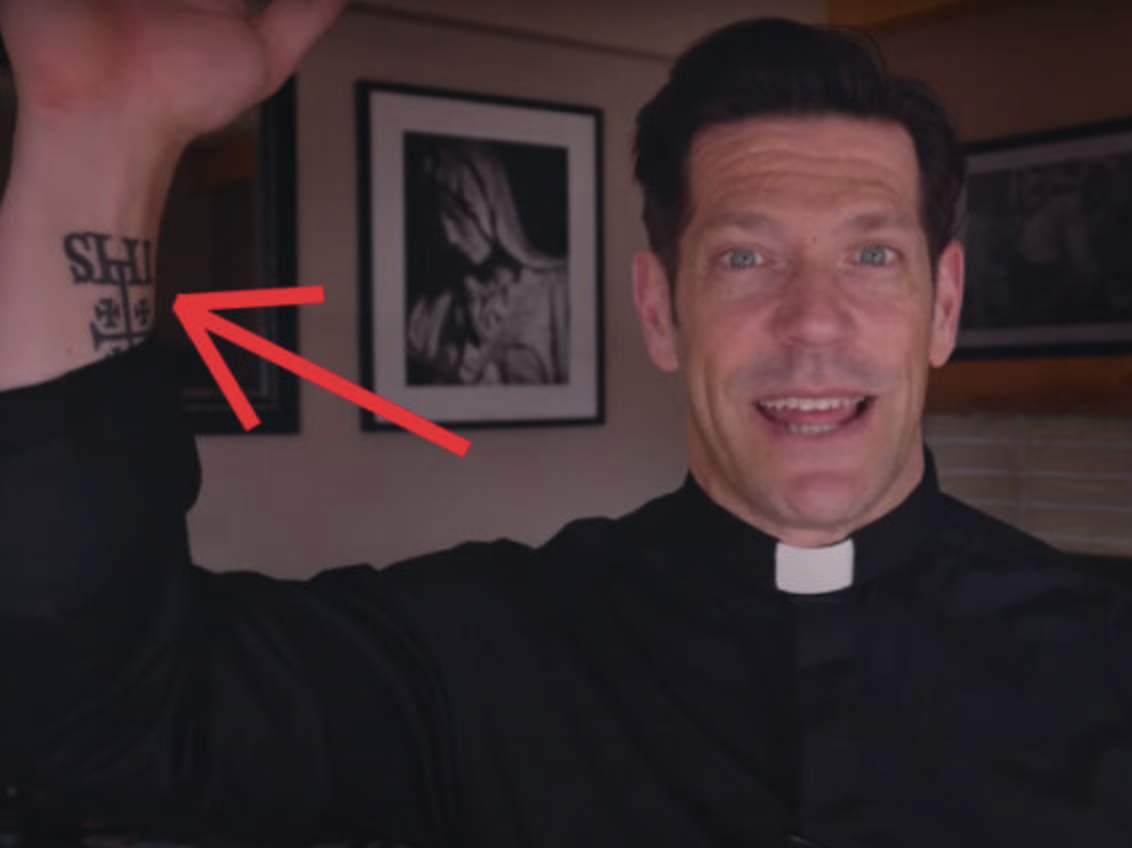
Since it was introduced by the Catholic priest Mike Schmitz, who goes by Father Mike, in January 2021, the little-heralded “The Bible in a Year (With Fr. Mike Schmitz)” has been the most popular Apple religion podcast for a majority of 2021 and 2022 and has even, on two occasions, reached the No. 1 spot among all podcasts on Apple’s platform. The show has been downloaded 350 million times and an average of 750,000 times a day.

That’s credibility, in our tech-defined world — even to Times-people. Let’s continue:

Each 20-to-25-minute installment … features two or three short scriptural readings and a pithy reflection by Father Mike, an affable 47-year-old Midwesterner whose upbeat and self-deprecating manner — not to mention regular-guy good looks — exude strong Ted Lasso vibes. The staggering success of the podcast has helped turn its host, whose day job is as a chaplain at the University of Minnesota Duluth and the director of the youth ministry for the Duluth diocese, into a kind of celebrity. He travels the country giving speeches, and some of his YouTube videos have racked up millions of views.

Now, on to the content that provided that click-bait headline for faithful New York Times readers.


Please respect our Commenting Policy

Elizabeth the Great: Why do many journalists choose to edit faith out of her Christmas talks?

Elizabeth the Great: Why do many journalists choose to edit faith out of her Christmas talks?

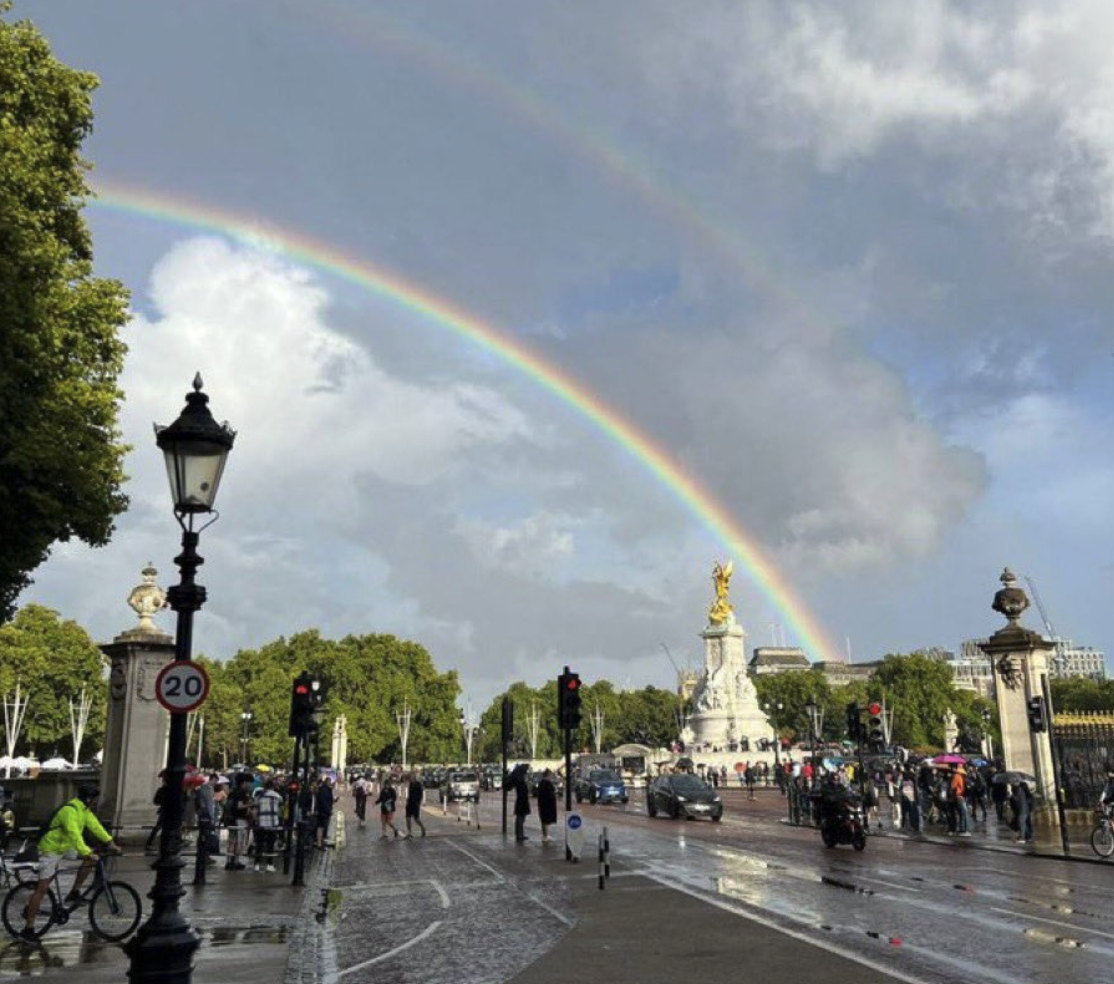
The Queen is dead. God save the King.

It’s hard to edit the religion content out of that equation. However, when journalists are asked to deal with the death of the queen who was, it can be argued, the most famous woman of the past 100 years, there are plenty of important, “real,” issues to deal with other than the state of her soul and her Christian faith.

I spent most of yesterday afternoon and evening watching the BBC Global coverage of the death of Queen Elizabeth II, as opposed to, shall we say, American “telly.” The BBC focused on the death of one of the greatest, if not “the” greatest, monarchs in Great Britain’s history. There were many references to her Christian faith. American television, for the most part, offered discussions of the death of a great celebrity. If I have been too harsh with that judgment, please send me some quality URLs.

How to approach this totally justified tidal wave of coverage? I think the easiest way to search out the religion-beat content is with two specific online searches.

First, search Google News for “Queen Elizabeth” and “Christmas.” Elizabeth the Great was known, of course, for her dignified and timely Christmas addresses — an essential part of the season for Brits and those who love all things British. The vast majority of the mainstream-media obits for the queen contain references to her Christmas talks — sort of.

What did she say in these very personal messages? That’s the key.

This leads to my second Google News search, for “Queen Elizabeth” and “Christian.” This is where the mainstream press — unless I have missed something, somewhere — offer, well, something like this. In the religious press, readers will find many, many pages of content, such as this feature from Premier Christianity, a niche UK religion website: “Queen Elizabeth II served Christ.”

There was, however, this Washington Post feature with a hopeful title: “Queen Elizabeth II, in her own words: Her most memorable remarks.” After all, it did include a section with this title: “Annual Christmas speeches.” These talks were, readers are told, “peppered with words of wisdom, faith and occasionally personal reflections from the nonagenarian.” However, this is what the Post offered:

“In the old days the monarch led his soldiers on the battlefield and his leadership at all times was close and personal. Today things are very different,” she said in her first televised Christmas broadcast in 1957. “I cannot lead you into battle, I do not give you laws or administer justice but I can do something else, I can give you my heart and my devotion to these old islands and to all the peoples of our brotherhood of nations.”


Please respect our Commenting Policy

In praise of the humble news Q&A: God, Lt. Dan and spiritual motivations for public service

In praise of the humble news Q&A: God, Lt. Dan and spiritual motivations for public service

It would be hard to name a form of journalism more “humble” than a simple Q&A piece about a celebrity or someone else who has found his or her way into the news.

The journalist produces a short introduction and then, theoretically, gets out of the way.

Yes, the news organization still controls the narrative — as in asking the questions and then publishing edited versions of the questions and the answers. In practice, readers encounter this bit of journalism-speak: “This conversation has been edited for length and clarity.” (I often advise newsmakers to record these interviews for themselves, allowing them — if necessary — to post transcripts of what went down.)

This brings me to a recent Knoxville News Sentinel feature about actor Gary Sinise, whose work with injured veterans and first responders was bringing him back to Knoxville for the 2022 Medal of Honor Celebration. His public-service work on these issues is rather logical because of his famous role as Lieutenant Dan Taylor, an angry wounded warrior who finds his way back to wholeness in the movie “Forest Gump.”

Here at GetReligion, we often ask why so many journalists, when writing about public figures of this kind, tend to leave facts about religion out of the mix. This is especially problematic when the person being profiled has, on numerous occasions, made it clear that faith is one of the defining elements of his or her life. To cut to the chase: It’s harder to do that kind of crude editing when offering what is supposed to be a verbatim transcript of an interview.

There were zero “religious” questions about in this interview, even though Sinise has for years talked openly about his faith. But the humble Q&A format allowed the actor to talk about his life on his own terms. Here is an example of that in a discussion that is at the heart of the feature:

Knox News: You've played Lt. Dan, but also directed a production of "Tracers," a story about wounded Vietnam vets, in the '80s. You've been very involved with veterans in your show career, how has that influenced your work as a philanthropist?


Please respect our Commenting Policy

Bonus podcast: Return of hot debates about ancient Psalms vs. contemporary praise hits

Bonus podcast: Return of hot debates about ancient Psalms vs. contemporary praise hits

Here is a truth that many religion-beat professionals (a) haven’t really thought through or (b) they totally get it, but their editors do not.

Obviously, churches from coast to coast and around the world are engaged in heated debates, if not outright financial wars, about centuries of church teachings about marriage and sexuality. This makes headlines. These battles often reach the local level (ask United Methodists and, previously, Episcopalians).

Editors like that, since these battles can be framed as “politics.”

But there is another subject that frequently causes divisions in the pews (or megachurch folding chairs) — music. These battles rarely make headlines, even though they stir deep emotions between various generations of believers. In recent decades, this has led to discussions of “worship wars.”

I recently wrote a column — “Open Bible to Psalms: What messages are seen there, but not in modern praise music?” — that was, shall we say, “worship wars” adjacent. This led to me being invited as a guest on the national “Connections” podcast, with hosts Mike Thom and Colleen Houde. If you want to listen to that, CLICK HERE.

During that discussion I mentioned that I had another column coming up that was related to this subject. It later appeared with this headline: “Hillbilly Thomists — Dominicans tracing their roots into Appalachian music and faith.”

But the Psalms column was the hook for the podcast and it didn’t take long to veer into “worship wars” territory and the subject of commercialized music in the modern church. That made me flash back a decade-plus to a column with this headline: “FM radio reality in church.”

Maybe the best way to intro this bonus podcast is simply to reprint that column. So here goes.

The clock is ticking and soon Jeff Crandall while face the challenge of selecting the right music for the Christmas services at High Desert Church.

This will be tricky, because Christmas is what the 70-member staff at this megachurch calls a "federal" event.


Please respect our Commenting Policy

Sam Harris take jab at those who believe in heaven: Maybe listen to some ancient voices?

Sam Harris take jab at those who believe in heaven: Maybe listen to some ancient voices?

When cosmonaut Yuri Gagarin returned to earth in 1961, after the first manned spaceflight, Soviet leaders claimed he said: "I went up to space, but I didn't encounter God."

Venturing into similar territory, superstar atheist Sam Harris rocked cyberspace during a recent Triggernometry YouTube appearance in which he discussed Donald Trump, faith elements in "wokeness" and the flocks of Americans who insist on believing in heaven.

Political Twitter screamed when he said there was "a left-wing conspiracy to deny the presidency to Donald Trump. … Absolutely, but I think it was warranted."

But comedians Konstantin Kisin and Francis Foster pushed back, asking if Harris was justifying moral relativism. Perhaps today's truth wars, the Triggernometry team suggested, were linked to a famous G.K. Chesterton quip: "When men choose not to believe in God, they do not thereafter believe in nothing, they then become capable of believing in anything."

During the ensuing discussion, Harris offered another viral soundbite: "Where is heaven, exactly, given that we have multiple telescopes up there beaming back tens of billions of years' worth of information?" Yet millions of Americans still embrace the supernatural claims of an ancient faith, including that Jesus will return to "raise the living and the dead."

"You'd be surprised by the number of percent of sober, non-Bible-thumping people who would say 'yes' to that question," he said. "They might be Christian, they might be, listen, 'I love the Bible. It gives me a great moral framework. It gives my kids a great moral framework. This is the tradition I'm identified with. This is all super important to me' -- but that's kind of as far as it goes. Right? Like, I'm not going to make magical claims about flying saviors who are literally going to come down from … heaven."

While the Twitter masses raged, the French-Canadian iconographer and writer Jonathan Pageau recorded a video essay on his "The Symbolic World" channel about why materialists and religious believers keep debating the meaning of terms such as "heaven" and "earth."


Please respect our Commenting Policy

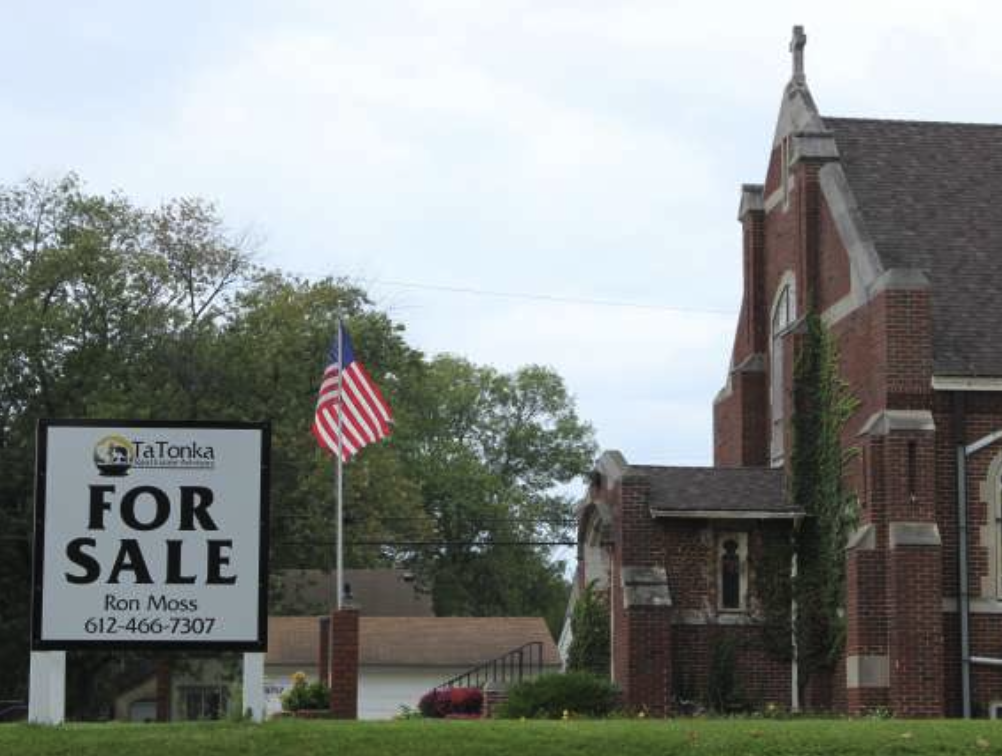
Podcast: Why are churches closing? There are many forces at work, but doctrine still matters

Podcast: Why are churches closing? There are many forces at work, but doctrine still matters

For years, there was a simple answer to the old question: Why do some churches grow, while others shrink?

You simply bought a copy of the 1972 book “Why Conservative Churches Are Growing: A Study in Sociology of Religion” by the late National Council of Churches leader Dean M. Kelley and that provided information answering lots (but not all) of the big questions. It was crucial that this groundbreaking book was written by a mainline Protestant insider, as opposed to a Southern Baptist or Assemblies of God leader.

Of course, everyone knew that some churches grew because of location, location, location. Also, there were always a few liberal churches that grew because of talented preachers or other strengths. Like I said: Kelley answered lots of church-decline questions, but not all of them.

What about 2022 in post-pandemic church life? For starters, many churches will never be post-pandemic — because many congregations (and maybe denominations or communions) were changed forever and we will see more evidence of that in the next few years.

All of this is an overture to this week’s “Crossroads” podcast (CLICK HERE to tune that in) which focuses on a must-read feature story by Godbeat veteran Bob Smietana. The headline at Religion News Service: “For a small Chicago church, closing down was an act of faith.” This was a personal, heartfelt story for Smietana, since this was a congregation that he once called home.

Like so many pastors around the United States, the Rev. Amanda Olson has kept one eye on the Bible and another on the evolving religious landscape.

She knew change was coming to the church in America.

Yet she hoped her congregation might be spared the worst of it.

“Everyone thinks that churches are going to close,” said Olson, the longtime pastor of Grace Evangelical Covenant Church on Chicago’s North Side. “But nobody thinks it is going to be their church.”


Please respect our Commenting Policy

Fellowship of Christian Athletes wins an 'equal access' case, even if LATimes missed that

Fellowship of Christian Athletes wins an 'equal access' case, even if LATimes missed that

Once upon a time, back in the days of the Bill Clinton White House, there was a strong church-state coalition that stretched, basically, from the Assemblies of God to the Unitarians. The legal activists in this coalition didn’t agree on everything, but they did agree on some basic First Amendment principles that helped defend believers in a wide variety of religious minorities.

If you know the history of that era, you can sense that a few important words are missing from the recent Los Angeles Times report (behind a paywall) that ran at Yahoo!News with this aggressive headline: “Court says San Jose school district must recognize Christian club that excludes LGBTQ kids.”

That headline, of course, could have noted — somehow — that the this victory for the Fellowship of Christian Athletes was based on the same legal principles that defend the First Amendment rights of LGBTQ support groups at the same school.

The key is that there are two crucial words — “equal access” — that are missing from this rather solid story, which includes enough quoted material from voices on both sides for readers to figure out what is going on (if they have a background in church-state studies). Hold that thought.

First, here is the Times overture:

In spring 2019, a teacher at Pioneer High School in San Jose posted a message on his classroom whiteboard questioning a "Sexual Purity" statement that a club for Christian student athletes was requiring its leaders to sign.

The club's statement said sexual relationships should exist only between married, heterosexual couples. The teacher wrote that he was "deeply saddened" that a club on the public school campus made its leaders "affirm" those ideas, and he asked students what they thought.

The resulting firestorm led to the San Jose Unified School District rescinding recognition of the Fellowship of Christian Athletes for excluding LGBTQ students in violation of the district's nondiscrimination policy. In response, the club and its international parent organization sued in federal court, alleging religious discrimination.

On Monday, the Fellowship of Christian Athletes won a major victory when a three-judge panel of the U.S. 9th Circuit Court of Appeals ordered the club be reinstated as an official student group for the current school year while litigation between the parties continues in the lower district court.

Shutting down the FCA violated the “nondiscrimination policy”?


Please respect our Commenting Policy

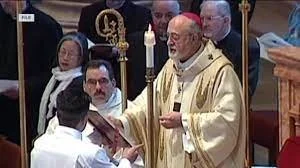
Do the math: Was Archbishop Rembert Weakland a flawed hero or an erudite heretic?

Do the math: Was Archbishop Rembert Weakland a flawed hero or an erudite heretic?

Writing obituaries about controversial — but to many people beloved — public figures is a difficult task that involves some complicated mathematics.

The death of former Catholic Archbishop Rembert Weakland of Milwaukee is a classic example and, here is the crucial point in this post, this was not a simple matter of “left” vs. “right.”

That said, there is no question that for decades — during the papacies of St. Pope John Paul II and Pope Benedict XVI — Weakland was a liberal Catholic superstar, with the word “liberal” in this case defined in political, cultural and doctrinal terms. But then there were revelations about his ethics and private life.

Thus, it was not surprising to see a double-decker New York Times headline with this kind of content:

Archbishop Rembert Weakland, Critic of Vatican Orthodoxy, Dies at 95

In his long career, he was an intellectual touchstone for progressive Catholic reformers. But he resigned after the disclosure of a long-ago love affair.

The Gray Lady’s obit also included this block of background material:

In the 1980s and ’90s, Archbishop Weakland had been a thorny problem for the Vatican. Addressing issues that troubled many of America’s more than 60 million Catholics, he championed new roles for women; questioned church bans on abortion, birth control and divorce; and challenged the Vatican’s insistence on celibacy for an all-male priesthood.

He also became a leading critic of America’s economic and social policies during the administration of President Ronald Reagan, drafting a landmark 120-page pastoral letter on the economy that called for reordering the nation’s priorities to cut military spending and attack poverty and inequality.

However, let me stress that the Times placed that salute to Weakland AFTER a pretty solid, accurate look at his scandalous fall and other revelations that emerged about his behavior and decisions, for decades, during the Church of Rome’s hellish clergy sexual abuse crisis.

If you want to dig into the hard facts about Weakland’s role in that crisis, click here for crucial material — “Deposition of Archbishop Emeritus Rembert G. Weakland, O.S.B.” — by the independent Bishop Accountability organization. That is an organization that defied a simple “left” or “right” tag.


Please respect our Commenting Policy