Terry Mattingly

Hillbilly Thomists: Dominican brothers singing about the Americana ties that bind

Hillbilly Thomists: Dominican brothers singing about the Americana ties that bind

With its sobering lyrics and a droning country-blues riff, "Holy Ghost Power" by the Hillbilly Thomists is a song with zero chance for Christian radio success.

The jilted protagonist has been "living off of grits, whiskey and Moon Pies." His man cave offers no refuge: "A hundred channels of nothing on the TV at 10. It's like Diet Coke and original sin. … Now it's a zombie town, there's a lot of undead. They wander around looking underfed."

But the chorus offers hope: "He makes a rich man poor; He makes a weak man strong. No more going wrong just to get along. I felt the force of the truth when they pierced His side. I saw the war eagle dive and I could not hide."

It wouldn't shock old-school country fans if this was a Johnny Cash song. But it was written by a banjo-playing Dominican from Georgia who has an Oxford theology doctorate and now leads the Pontifical University of Saint Thomas Aquinas. Writing to the National Reso-Phonic Company, Father Thomas Joseph White said he likes to play this classic blues guitar "in my office looking out at the Roman Forum that's 2,700 years-old."

That makes sense in the Hillbilly Thomists, a "musical collective" of Dominicans, most of whom have Bible-belt roots. The band recently staged a concert in the Grand Ole Opry and, over the past decade, has recorded three albums of music that would sound at home at Appalachian fairs, but not in most church halls.

There's a vital tie linking these songs to the life and work of this band of priests and brothers, said Father Simon Teller (who plays fiddle). Whether singing Appalachian hymns or their own original songs, the Hillbilly Thomists -- dressed in the white habits of their order -- keep returning to images of suffering, sorrow, eternity, hope, grace and redemption.

"We're priests in the Dominican order and that kind of states our vision of the world and the faith and everything we do," he said. "In our day job, we're working a lot with people who are dealing with very concrete situations and have a lot of very concrete questions."

"Holy Ghost Power," for example, is "not sung from the voice of a clergyman. It's sung with the voice of a man who's living a very ordinary life that is going off the rails in a very ordinary way," said Teller. "There's a malaise there and he's unsatisfied by the things of this world."


Please respect our Commenting Policy

Podcast: Journalists should ask if faith-based schools clearly state their doctrines on sexuality

Podcast: Journalists should ask if faith-based schools clearly state their doctrines on sexuality

I forget who originally came up with the term “Romeaphobia.”

This can be defined as the hatred or fear of all things that can be viewed as links to Roman Catholicism or the early church in general. Obviously, this affects issues linked to worship and church governance. However, in my experience (I grew up in Texas), many evangelicals (especially Baptists) have a fear of clear, authoritative doctrinal statements that, you know, might be interpreted as “Roman” creeds. All together now: We are “Bible Christians” and that’s that.

I am not saying this to take a shot at my heritage (I am very thankful for the deep faith and examples of my family and my father was a Southern Baptist pastor). The reason I mention this up is because, in my opinion, this anti-creedal Romeaphobia is playing a major role in an important news story all over America. This was the hook for this week’s “Crossroads” podcast (CLICK HERE to tune that in).

Does this USA Today headline sound familiar? It should, for readers from sea to shining sea: “Christian Florida school tells parents gay and transgender students must 'leave immediately'.”

My goal here is to offer advice to reporters who want to do accurate, fair-minded coverage of these church-state skirmishes (let’s hope there are some out there). I’m also offering press-relations advice to terrified leaders of Christian schools at all levels, from kindergartens to colleges. The Romeaphobia angle? That takes us into legal nuts-and-bolts questions about these conflicts.

Let’s start with the rather familiar USA Today overture:

A Florida-based Christian school sent out an email informing parents that LGBTQ-identifying students "will be asked to leave the school immediately."

According to the email obtained by NBC News, the top administrator of Grace Christian School in Valrico, Florida, Barry McKeen, sent the email to the families for the kindergarten-grade 12 school on June 6. He later confirmed and doubled down on the policy in an Aug. 18 video on the school's official Facebook page.

The June email read: "We believe that any form of homosexuality, lesbianism, bisexuality, transgender identity/lifestyle, self-identification, bestiality, incest, fornication, adultery and pornography are sinful in the sight of God and the church. Students who are found participating in these lifestyles will be asked to leave the school immediately."

For starters, private schools — liberal and conservative — have First Amendment rights, including the right to clearly state their foundational doctrines and, thus, disciplines that apply to staff, faculty and students. Tip No. 1 for reporters and church leaders: Get to know the details of the UNANIMOUS 2011 U.S. Supreme Court decision commonly referred to as the Hosanna Tabor case.

But we need to figure out what actually happened in this Florida case.


Please respect our Commenting Policy

Relevant fact? The great broadcaster Vince Scully had a rosary and he knew how to use it

Relevant fact? The great broadcaster Vince Scully had a rosary and he knew how to use it

OK, here we go again. Sports and God. God and sports, and that old question: Why do many journalists ignore the faith component in the lives of some sports heroes and celebrities?

If you read GetReligion, you know that Vin Scully — the greatest sports broadcaster ever (click here for a collection of his greatest hits) — was a faithful Catholic and that this was a big part of his life, that is if you paid attention to the actions of the man himself. Bobby Ross, Jr. — one of several baseball fanatics who have written for GetReligion — has written about Scully’s faith several times (click here and then here).

It also helps to click on this YouTube link and then close your eyes as you listen to that famous Scully voice speak these words, probably from memory:

Hail, Mary, full of grace, the Lord is with thee.
Blessed art thou amongst women and blessed is the fruit of thy womb, Jesus.
Holy Mary, Mother of God, pray for us sinners, now and at the hour of our death. Amen.

I don’t know about you, but I think that the whole “pray for us sinners, now and at the hour of our death” thing might have been relevant when writing a mainstream media obituary for Scully.

Sure enough, readers who dig into the lengthy New York Times obit for the legendary Dodgers broadcaster — Brooklyn before Los Angeles, of course — will learn that Scully went to a Catholic prep school, played for a Catholic baseball team and graduated from a Catholic University. All of that, without a single mention of the word “Catholic.” How did the Gray Lady pull that off? Here’s a hint:

For all the Dodgers’ marquee players since World War II, Mr. Scully was the enduring face of the franchise. He was a national sports treasure as well, broadcasting for CBS and NBC. He called baseball’s Game of the Week, All-Star Games, the playoffs and more than two dozen World Series. In 2009, the American Sportscasters Association voted him No. 1 on its list of the “Top 50 Sportscasters of All Time.”

Mr. Scully began broadcasting at Ebbets Field in 1950, when he was a slender, red-haired 22-year-old graduate of Fordham University and a protégé of Red Barber.

Ah, the word “Fordham” stands in for “Catholic,” in several crucial references. That’s the ticket.


Please respect our Commenting Policy

Look at a United Methodist timeline: Why are conservatives going nuclear with lawsuits?

Look at a United Methodist timeline: Why are conservatives going nuclear with lawsuits?

The slowly evolving trainwreck that is the disunited United Methodist Church is an unbelievably complicated story and I have lots of sympathy for journalists who are being asked to cover it — week after week — in normal-length news reports.

I have some right to say this, since I have been covering this story since 1984 or earlier.

For starters, there is no one United Methodist Church and there hasn’t been one for decades. See this flashback column that I wrote a few years ago: “Old fault lines can be seen in the ‘seven churches’ of divided Methodism,” which was followed by “Doctrinal debates that define the divided United Methodists.

The bottom line, once again: This war has always been about biblical authority and a host of other doctrinal clashes, with battles about homosexuality grabbing the headlines.

Anyway, I was reading another update from The Nashville Tennessean the other day — “United Methodists grapple with schism as 300-plus churches leave across U.S.” (high paywall) — and something hit me (other than the fact that “schism” still isn’t an accurate word for what is happening here). The key was looking at several key events on a timeline.

First, let’s plug in a key fact from a recent Religion News Service report about the doctrinally conservative UMC congregations who are trying to hit the denominational exit doors in Western North Carolina and Florida. The lawyers trying to sue the UMC establishment are, you see, are working on a deadline

A lawyer for the Western North Carolina Annual Conference, which has more than 1,000 congregations, responded … saying it would not comply since the request does not follow the disaffiliation plan approved by a special session of the United Methodist Church’s General Conference in 2019.

That plan allows churches to leave the denomination through the end of 2023. They can take their properties with them after paying two years of apportionments and pension liabilities.

Tick, tick, tick.

That 2019 General Conference was, of course, the watershed event in which a coalition of growing Global South churches and some conservative Americans infuriated the shrinking UMC establishment by passing the “Traditional Plan,” while also (#TriggerWarning) urging enforcement of “Book of Discipline” doctrinal stands on marriage and sexuality.


Please respect our Commenting Policy

Some trends in global Anglican Communion are starting to look rather Black and White

Some trends in global Anglican Communion are starting to look rather Black and White

There was nothing unusual about Nigerian Archbishop Henry Ndukuba leading the 2021 dedication rites for Holy Trinity Cathedral Church, which was packed with Nigerian Anglicans and a dozen or so bishops.

But this historic service was held in Houston and the cathedral is not part of the Diocese of Texas or the U.S. Episcopal Church. Some clergy at this Church of Nigeria North American Mission event were recognized as Anglicans by the Archbishop of Canterbury. Some were not.

This puzzle became more complicated recently during Lambeth 2022, which Nigeria boycotted, along with the churches of Uganda and Rwanda. Other Global South bishops, during Lambeth standoffs with Archbishop of Canterbury Justin Welby over the status of doctrines on marriage and sex, declined to receive Holy Communion with openly gay and lesbian bishops.

"There is a profound asymmetric quality to the Anglican Communion, where the voice of the bulk of its membership is either absent or muted," said the Rev. David Goodhew of St. Barnabas Church in Middlesborough, England. He is the author of a series of articles about African Anglicanism for Covenant, the weblog of The Living Church, an independent Anglican publication founded in 1878.

"If one adds up the number of bishops who didn't share Holy Communion at Lambeth … that is a very large number," he said. "I have been startled by the number of descriptions that said this Lambeth was a success. I don't know how one makes that claim when it would appear the bulk of the Anglican Communion's bishops couldn't come together to receive Communion. That looks like a disaster."

Bottom line: Global South Anglicans are experiencing a "volcano of growth" and remain "at loggerheads" with the shrinking churches of the United Kingdom, North America and other western nations. While most Global South bishops serve growing flocks -- roughly 75% of active worshipers in the 77-million-member Anglican Communion -- many western bishops lead what Goodhew called "micro-dioceses" with under 1,000 active members or "mini-dioceses" with fewer than 5,000.

The Church of Nigeria, meanwhile, claims 17 million members and the Center for Global Christianity at Gordon-Conwell Seminary, near Boston, estimates active participants at 22 million. The other churches skipping Lambeth 2022 were Uganda, with 10 million members, and Rwanda, with 1 million members.

The Church of England remains Anglicanism's power hub. It has 26 million members, but 2019 weekly attendance was about 679,000 -- before the COVID-19 crisis.


Please respect our Commenting Policy

Podcast: Concerning the right-wing rosary attack -- was that Atlantic feature really 'news'?

Podcast: Concerning the right-wing rosary attack -- was that Atlantic feature really 'news'?

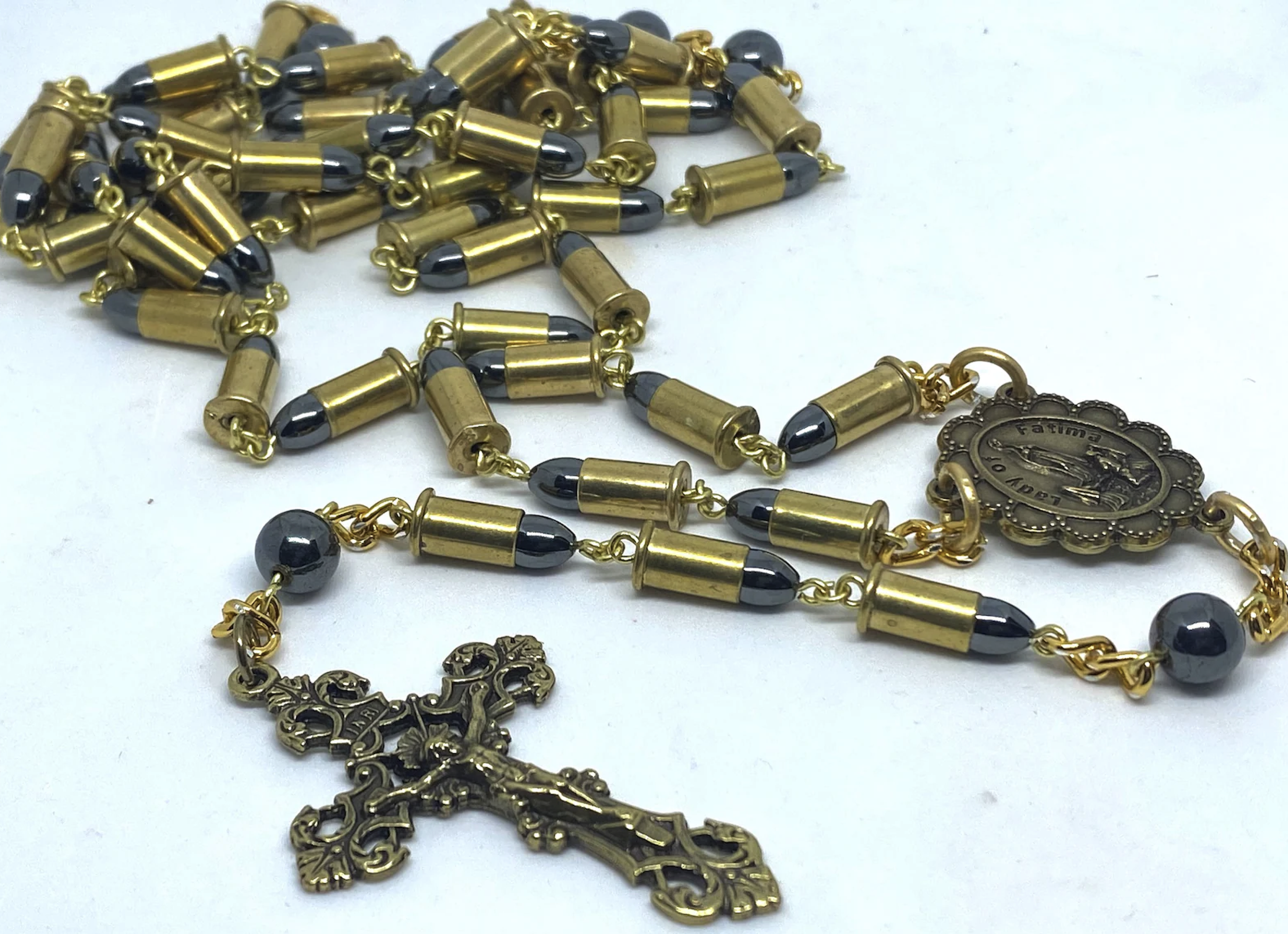
No doubt about it. The early favorite for the wild headline of 2022 has to be “How the Rosary Became an Extremist Symbol” atop that viral feature from The Atlantic. And that now-deleted graphic with the rosary made of bullet holes? That will show up in media-bias features for years (maybe decades) to come.

Yes, I know that the editors tried to tone that down with a replacement headline — but it’s the original screamer that perfectly captured the article’s thesis. Oh, and the editors updated a mistake in the second line of the original headline with that new sub-headline: “Why are sacramental beads suddenly showing up next to AR-15s online?”

Attention Atlantic editors: Here is a quick guide to the seven Roman Catholic sacraments. Correction, please.

So here was the first question in this week’s “Crossroads” podcast (CLICK HERE to tune that in). It’s a question your GetReligionistas have been asking more often in the past decade (even before Orange Man Bad): What WAS this thing? A news feature? A piece of blunt analysis? An opinion screed? And here’s the question I saw several people ask: Did the Atlantic editors set out to publish an anti-Catholic classic?

Here’s my hot take: I think the Atlantic editors thought they were publishing a PRO-Catholic piece that set out to defend GOOD Catholics who want to change centuries of church teachings from the BAD Catholics who want to defend those teachings, especially orthodox doctrines on marriage, sexuality, abortion, etc.

Why do I think that? Here is the crucial part of the article, from my point of view, starting with the overture:

Just as the AR-15 rifle has become a sacred object for Christian nationalists in general, the rosary has acquired a militaristic meaning for radical-traditional (or “rad trad”) Catholics. On this extremist fringe, rosary beads have been woven into a conspiratorial politics and absolutist gun culture. These armed radical traditionalists have taken up a spiritual notion that the rosary can be a weapon in the fight against evil and turned it into something dangerously literal.

Their social-media pages are saturated with images of rosaries draped over firearms, warriors in prayer, Deus Vult (“God wills it”) crusader memes, and exhortations for men to rise up and become Church Militants.


Please respect our Commenting Policy

Another tragedy for Coptic Christians: Did the New York Times get the bigger picture?

Another tragedy for Coptic Christians: Did the New York Times get the bigger picture?

Every now and then, your GetReligionistas receive emails from readers who are infuriated by the headline on a story, as opposed to the contents of the actual story. Why, they ask, do reporters write terrible headlines like that?

This provides another chance to let readers know a basic newsroom fact: Reporters rarely, if ever, write the headlines that go over their stories. They are written by copy editors.

(It’s possible that this fact has changed in the digital age. Maybe, as economic woes shrink news teams, reporters are asked to submit headlines. Young journalists can drop me notes telling me to get a clue.)

All of this is a set-up to discuss a double-decker New York Times headline that recently caused me to do a near spit take while drinking my morning cold-caffeine beverage. See if you can spot the offending phrase:

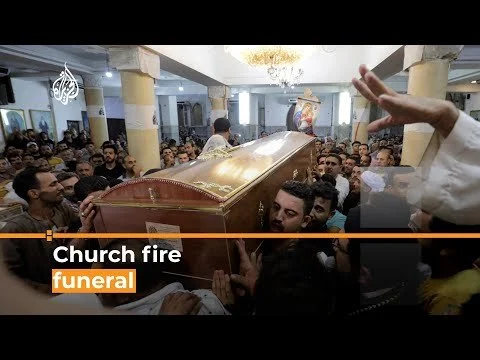
A Boom, a Fire and a Stampede: Dozens Die at a Coptic Church in Egypt

A blaze that killed at least 41 at a church in greater Cairo caused anguish among a religious minority that has long felt itself oppressed in Egypt

The key words, for this Orthodox believer, were these (with an added dose of italics — “a religious minority that has long felt itself oppressed.”

Whoa. The Copts feel that they are oppressed? This is a matter of emotions or their own opinions of what is happening to them?

In short, are there any experts who study global religious-freedom issues who do not accept, as a reality — demonstrated for centuries — that Coptic believers are persecuted or at least “oppressed” in Egypt? If readers question that statement, I would suggest a quick scan through this U.S. State Department report — “2021 Report on International Religious Freedom: Egypt.

Now, the good news is that the actual Times report eventually offers quite a bit of information about the plight of Coptic believers. But first, here is the overture that helps set up the implied question in this tragedy: When is a church fire more than a simple church fire?


Please respect our Commenting Policy

Religion-beat crash: RNS wades into intersectional fight between LGBTQ clout and race

Religion-beat crash: RNS wades into intersectional fight between LGBTQ clout and race

The journalism nightmare begins with an email, a text or, in the old days, a telephone call or a photocopy of a document in the mail.

Sources may or may not demand to remain anonymous. They want your newsroom to dive into a controversy that — in most cases — involves money, sex, power and what violations of religious law, criminal laws or both.

The source has tons of information on one side of a conflict that has two sides, or more. There is no way to write the story without multiple voices speaking — but only one side will talk. Nine times out of 10, there are legitimate issues of confidentiality, often legalities linked to counseling or medical care.

The reporter describes all of this to an editor. It’s clear this story will require untold hours of research (money, in newsroom terms) and, if the story ever pans out, the result will be long and complicated. The editor’s eyes glaze over. The question: Why is this story worth the time, money and effort?

I got one of those calls, long ago, about the sex life and financial times of PTL’s Jim Bakker. Eventually Charlotte Observer editors passed, pulling me off that lead. I left and, years later, a great reporter (see the essential Charles E. Shepard book) pulled the evolving threads together for a Pulitzer.

I cannot imagine how many emails and calls Robert Downen and Houston Chronicle reporters fielded before being allowed to dig into years of sexual abuse in the Southern Baptist Convention. I’m waiting for the book.

All of this is a long introduction to the challenges that, I suspect, loom over this double-decker Religion News Service headline:

Why the largest US Lutheran denomination apologized to a Latino congregation

It’s been a ‘perfect storm’ of charismatic personalities and a heightened awareness of racism, all brewing in one of the country’s whitest denominations

But the story doesn’t open with issues linked to race.

What we see in this unbelievably complicated story is a head-on collision between key elements of postmodern theories about “intersectionality.” Think race, sex, gender, economics and the demographic realities facing the declining world of oldline liberal Protestantism.


Please respect our Commenting Policy

At Lambeth 2022, many Anglican bishops could not 'walk together' to the altar

At Lambeth 2022, many Anglican bishops could not 'walk together' to the altar

While Canterbury is urging Anglicans to keep "walking together," the 2022 Lambeth Conference demonstrated that many of the Anglican Communion's bishops can no longer even receive the Eucharist together.

Doctrinal conflicts over biblical authority and sexuality have raged for decades, with growing churches in the Global South clashing with the shrinking, but wealthy, churches in England, America and other Western regions. During this 12-day conference, which ended Sunday (August 8), conservatives from Africa, Asia and elsewhere declined to receive Holy Communion with openly gay and lesbian bishops. Several provinces -- including the massive Church of Nigeria -- boycotted Lambeth 2022 altogether.

"For the large majority of the Anglican Communion the traditional understanding of marriage is something that is understood, accepted, and without question, not only by bishops but their entire church," said Archbishop of Canterbury Justin Welby, in a mid-conference address. "To question this teaching is unthinkable, and in many countries would make the church a victim of derision, contempt and even attack."

Bishops in the Anglican minority, he added, "have not arrived lightly at their ideas. … They are not careless about Scripture. They do not reject Christ. But they have come to a different view on sexuality after long prayer, deep study and reflection on understandings of human nature. For them, to question this different teaching is unthinkable."

Throughout Lambeth 2022, the Global South Fellowship of Anglican Churches -- representing about 75% of Anglican church attendance -- pushed to reaffirm a 1998 Lambeth resolution that "homosexual practice" is "incompatible with Scripture," while also urging Anglicans to "oppose homophobia." It stressed centuries of doctrine that "sexuality is intended by God to find its rightful and full expression between a man and a woman in the covenant of marriage, established by God in creation, and affirmed by our Lord Jesus Christ." That earlier resolution passed with 526 votes in favor, 70 opposed and 45 abstentions.

Writing to Lambeth participants, Welby said the "validity" of that resolution "is not in doubt" and that the "whole resolution is still in existence."

However, the archbishop did not allow a vote on the issue and he said he would not, as requested by Anglican primates in the past, discipline the unorthodox.


Please respect our Commenting Policy