Terry Mattingly

Thinking about Internet-age ethics with J.D. Flynn, especially rumors about dead popes

Thinking about Internet-age ethics with J.D. Flynn, especially rumors about dead popes

Everyone was talking about this story last week: Pope Benedict XVI is (a) dead, (b) not dead or (c) come on, what’s up with this tired Internet game again?

In that final category, I offer you the following mini-think piece from J.D. Flynn of The Pillar, that must-bookmark source of Catholic news, commentary and Canon law-specifics.

This whole circus was a classic example of people being tempted to report, as semi-news, the fact that online people were TALKING ABOUT something that was being reported with zero creditable attribution. Thus, Flynn starts with this basic equation:

… Pope emeritus Benedict XVI is still not dead. …

Why is that news?

Because last night an Italian schoolteacher named Tommaso De Benedetti created a moral panic online, with a hoax that seems to have been in the works for nearly a year.

“Moral” panic?

That’s an interesting choice of words. The key is that journalists had to stop and ponder whether they had the fortitude to not push the “RETWEET” button on a story that was essentially about Internet chatter.

Let’s keep walking through Flynn’s piece as he works his way through this:

Back in August 2021, the guy created a Twitter account for Bishop Georg Bätzing, who is president of the German bishops’ conference. The account managed to amass thousands of followers. He didn’t use the account, but he built that following by strategically following the right people, and allowing the Twitter algorithms to do the rest.

Then yesterday evening, he tweeted in German, English, and Spanish that Pope emeritus Benedict XVI had died.

The tweets took off like wildfire. Several media outlets picked them up, and a lot of producers and journalists retweeted them. My phone started blowing up — priests, bishops, and other journalists were all asking me if it was true.

What to do?


Please respect our Commenting Policy

Podcast: Experts call the Unification Church a 'cult,' and that word requires explanation

Podcast: Experts call the Unification Church a 'cult,' and that word requires explanation

It has been a long time since I have done a podcast post about a developing news story only one day after I wrote the original post on that topic.

However, yesterday’s post — “New York Times report says the Unification Church is a 'church' and it's as simple as that” — turned out to have some old issues connected to it that, when discussed in this week’s “Crossroads” episode, took us back into a familiar journalism minefield. (To get to the actual podcast, JUST CLICK HERE.) Can you say “cult”?

Before we get to the old issue of journalists (and academics) struggling to define “cult,” let’s look at some of the ways and religious and political language are woven into the story of the assassination of former Prime Minister Shinzo Abe of Japan — primarily through the family history of Tetsuya Yamagami, who was arrested after the shooting. This is from The Guardian:

Tetsuya Yamagami has confessed to killing the former Japanese prime minister during a campaign speech on Friday. He blamed the global religious movement — whose members are often referred to as Moonies — for bankrupting his family, and believed that Abe had championed its activities in Japan.

The Japan branch of the church has confirmed that Yamagami’s mother is a member, but declined to comment on the suspect’s claims that she had made a “huge donation” more than 20 years ago that left the family struggling financially.

The branch’s president, Tomihiro Tanaka, told a press conference that Yamagami’s mother became a follower in the late 1990s, adding that the family had suffered financial ruin around 2002.

As I mentioned in the first post, it’s normal to call the Unification Church a “church” on first reference, since that is it’s primary name — as opposed to the Holy Spirit Association for the Unification of World Christianity or the Family Federation for World Peace and Unification.

The journalism issue here is how reporters describe this religious movement in follow-up references and how much material news reports include about the messianic claims of its founder, the Rev. Sun Myung Moon. Let’s return to the Guardian report:

Moon, who died in 2012, said he had had a vision aged 15 in which he was told by Jesus to complete his unfulfilled mission to restore humanity to a state of “sinless” purity.


Please respect our Commenting Policy

New York Times report says the Unification Church is a 'church' and it's as simple as that

New York Times report says the Unification Church is a 'church' and it's as simple as that

I have received several texts and emails about a recent New York Times story that ran with this headline: “Suspect in Abe Shooting Held a ‘Grudge.’ Scrutiny Falls on a Church.”

If you run a quick search for “church” in this report, you will find the term used 25 times. That’s quite a few uses of what appears to be, for the Times team, a word with no specific meaning.

Thus, we need to do that GetReligion thing that we do. Let’s look at some online dictionaries and see what the word “church” means. This Dictionary.com reference is typical and we need to see several of its secondary definitions:

church:

* a building for public Christian worship.

* public worship of God or a religious service in such a building: to attend church regularly.

* (sometimes initial capital letter) the whole body of Christian believers; Christendom.

* (sometimes initial capital letter) any division of this body professing the same creed and acknowledging the same ecclesiastical authority; a Christian denomination: the Methodist Church.

What’s the basic issue here? As one veteran journalist put it, in a text about this Times report: “I didn’t know the Unification Church was a Christian church.”

Once again we need to talk about how journalists use, or don’t use, tricky words such as “sect” or even “cult” — which may affect how news publications use a word like “church.” When dealing with the Holy Spirit Association for the Unification of World Christianity and the work of the late Rev. Sun Myung Moon, we also need to pay attention to the word “messiah.”

The bottom line: Moon’s movement called itself a “church” and identified it’s leader as either (lines tend to blur) a messiah or “the” new messiah. The problem with the Times report is that readers are told that this is a “church” and that is that — no additional information is needed.


Please respect our Commenting Policy

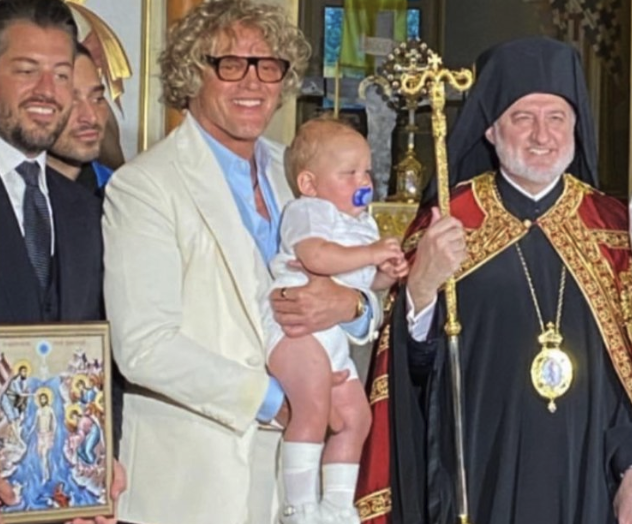
Big story? American (at this point) archbishop baptises famous gay couple's children in Greece

Big story? American (at this point) archbishop baptises famous gay couple's children in Greece

I think that I will write this post before I start getting emails (one or two from inside the wider circle of current and former GetReligionistas) asking whether or not I will write this post.

But first, before I get to the journalism question for this post, allow me to pause and discuss the meaning of a key term — “Byzantine.” Here is the word in context: To understand the following news story, journalists will need to enter the Byzantine world of Eastern Orthodox polity in North America.

The word “Byzantine,” when used as an adjective, has two definitions. First there is this:

… relating to Byzantium (now Istanbul), the Byzantine Empire, or the Eastern Orthodox Church

Now, that meaning is — sort of — relevant in this case. But this second definition is the one that we need:

… (of a system or situation) excessively complicated, and typically involving a great deal of administrative detail.

When people ask questions about Eastern Orthodox “news,” I frequently have to remind them that Eastern Orthodoxy is not the Church of Rome. We do not have a pope, even if, from time to time, the ecumenical patriarch in Istanbul has tried to promote (with the help of many elite newsrooms) a papal vision of his “first among equals” role among Orthodox patriarchs, stressing “first” instead of “equals.” See: Ukraine.

With that in mind, let’s look at the GreekReporter.com story that ran with this headline: “First Greek Orthodox Baptism for Child of Gay Couple in Greece.” The question: Is this an important “news” story worthy of complex, balanced, accurate coverage in, let’s say, a mainstream publication such as The New York Times? Jumping ahead, my answer is “yes,” but with a heavy emphasis on “complex, balanced, accurate coverage.” Here is the whole story from Greece:

Evanggelos Bousis and Peter Dundas, both of Greek descent, became the first gay couple to hold a Greek Orthodox Baptism for their children in Greece. …

The couple’s children, Alexios and Eleni, were baptized by his Eminence Archbishop Elpidophoros of America at the Panagia Faneromeni Church in the southern Athenian suburb of Vouliagmeni.


Please respect our Commenting Policy

Norm Macdonald's 'Nothing Special' -- final thoughts on mortality while the clock was ticking

Norm Macdonald's 'Nothing Special' -- final thoughts on mortality while the clock was ticking

Comedians frequently take shots at taboo targets, but that wasn't what Norm Macdonald was doing when he addressed Down's Syndrome while solo recording what became the new "Nothing Special" on Netflix.

"I love people with Down Syndrome," said Macdonald, in a no-audience performance packed with his familiar pauses and bemused expressions. "I wish I had Down Syndrome, and I'll tell you why. They're happy. You know what I mean? …

"What's wrong with that? … People get mad at them … and they pity them. Now, who's the bad person in that scenario?"

The former Saturday Night Life star -- who died September 14 after a secret nine-year fight with cancer -- recorded nearly an hour of material during the coronavirus pandemic, before yet another operation in the summer of 2020. He said he "didn't want to leave anything on the table in case things went south."

This Netflix finale offers fresh musings on mortality and morality that, with Macdonald's blunt language and haunting images, evolve into meditations on how modern people deceive themselves. The X-factors in his art were religious faith and his love of literature ranging from Mark Twain to Fyodor Dostoyevsky.

"Macdonald showed respect for basically everyone, with the exception of himself and people like O.J. Simpson and Bill Clinton," said Rich Cromwell, a television professional and essayist for The Federalist. "He was not a Christian comedian -- that's clear. But that was part of who he was, and he treated faith with respect. …

"This Down's Syndrome material is a perfect example. He didn't turn that into an overt argument about abortion, but it's clear that he is saying all life is worthy of respect, even if some people don't judge that life to be worthy. He's saying people with Down's Syndrome are God's children, no matter what."

"Nothing Special" ends with an A-list reaction panel -- David Letterman, Adam Sandler, Conan O'Brien, Dave Chappelle, David Spade and Molly Shannon -- who knew Macdonald as a friend and colleague. This special was full of "third-rail stuff," noted O'Brien.

Macdonald riffed on his own "degenerate" gambling sins, his fear of airplane crashes ("Ashes to ashes, stuff to stuff, as the scriptures say"), cannibalism, slut-shaming, racism, transgenderism and his fear of dying and discovering that he picked the wrong religion. He also discusses living wills and giving doctors explicit instructions not to yank "that plug in the wall" in the event of a coma.


Please respect our Commenting Policy

Podcast: New York Times probes abortion 'abolitionist' movement, but buries the big story

Podcast: New York Times probes abortion 'abolitionist' movement, but buries the big story

Where is the whole “life after Roe v. Wade” story headed? And while we are asking questions, shouldn’t we be saying “life after Dobbs v. Jackson Women’s Health Organization,” since that is now the defining U.S. Supreme Court decision?

Anyway, during last week’s “Crossroads” podcast (“America is splitting, says trending Atlantic essay. This is news? Actually, it's old news”), I predicted that we would be seeing more mainstream press coverage of crisis pregnancy centers — an old story hook that is, sure enough, getting lots of ink all of a sudden (see this Julia Duin post and also this one by yours truly).

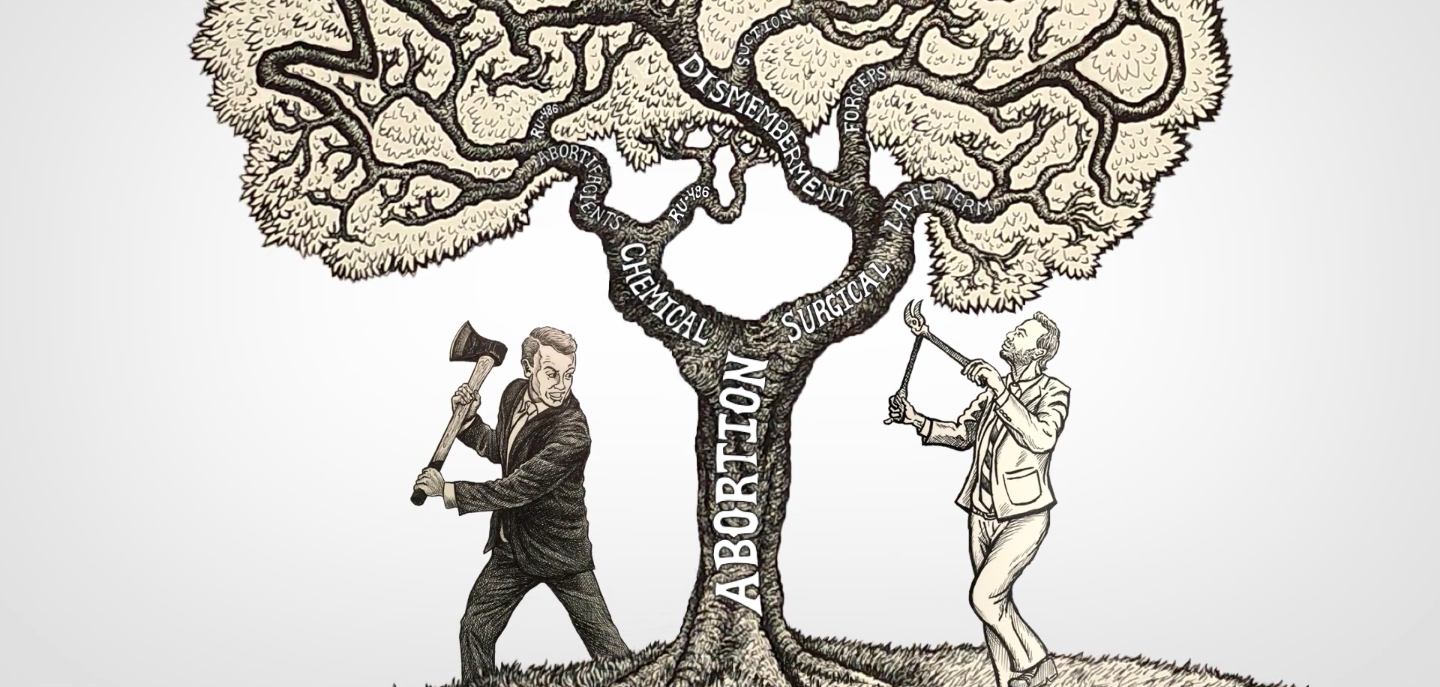
I also predicted that major newsrooms would discover the abortion “abolitionists,” a small but loud flock of activists who reject all compromises in laws to restrict abortion, including exceptions for victims of rape and incest. The key: They want laws that prosecute women who have abortions, not just the people who perform abortions.

I made that prediction for two reasons, a good reason and a bad reason. First, this is a valid story, because these activists are making noise in some crucial settings (hold that thought). However, this story also allows blue-zone newsrooms to focus lots of attention on these specific anti-abortion activists (NPR reports here and then here) whose views are outrageous to most Americans, while downplaying efforts by moderate and even centrist pro-life groups seeking more nuanced legislation, mostly in “purple” states.

This brings us to this week’s “Crossroads” episode (CLICK HERE to tune that in), which focuses on a New York Times story that ran with this headline: “Abortion Abolitionists Want to Punish Women for Abortion.” This story continues some important information. Please read it. However, it also downplays (this is strange) its most important information about the abolitionists, while dedicating lots of ink to yet another independent social-media preacher who provides lots of scary quotes. Let’s start with the overture:

Hours after the Supreme Court overturned Roe v. Wade last week, a man with a wiry, squared-off beard and a metal cross around his neck celebrated with his team at a Brazilian steakhouse. He pulled out his phone to livestream to his followers.

“We have delivered a huge blow to the enemy and to this industry,” the man, Jeff Durbin, said. But, he explained, “our work has just really begun.”

A brief pause: Why isn’t it “the Rev. Jeff Durbin”? This raises big questions: What evangelical body or denomination ordained this man? Where did he go to seminary? Does he have ties to institutions in mainstream evangelicalism?

OK, continuing.


Please respect our Commenting Policy

Associated Press: Today's Supreme Court contains too many pro-Catechism Catholics

Associated Press: Today's Supreme Court contains too many pro-Catechism Catholics

A long time ago, in Internet years, I got tired of trying to define “liberal” and “conservative” during discussions of Catholic life.

Truth is, the teachings of ancient Christianity (I am Eastern Orthodox) don’t fit neatly into the templates of American politics. If you believe, for example, that human life begins at conception and continues through natural death the you are going to be frustrated reading the Republican and Democratic party platforms.

At one point, I started using this term — pro-Catechism Catholics. I soon heard from readers who were upset that I was linking Catholic identity with the idea that Catholics were supposed to believe and even attempt to practice the teachings of the Roman Catholic Church.

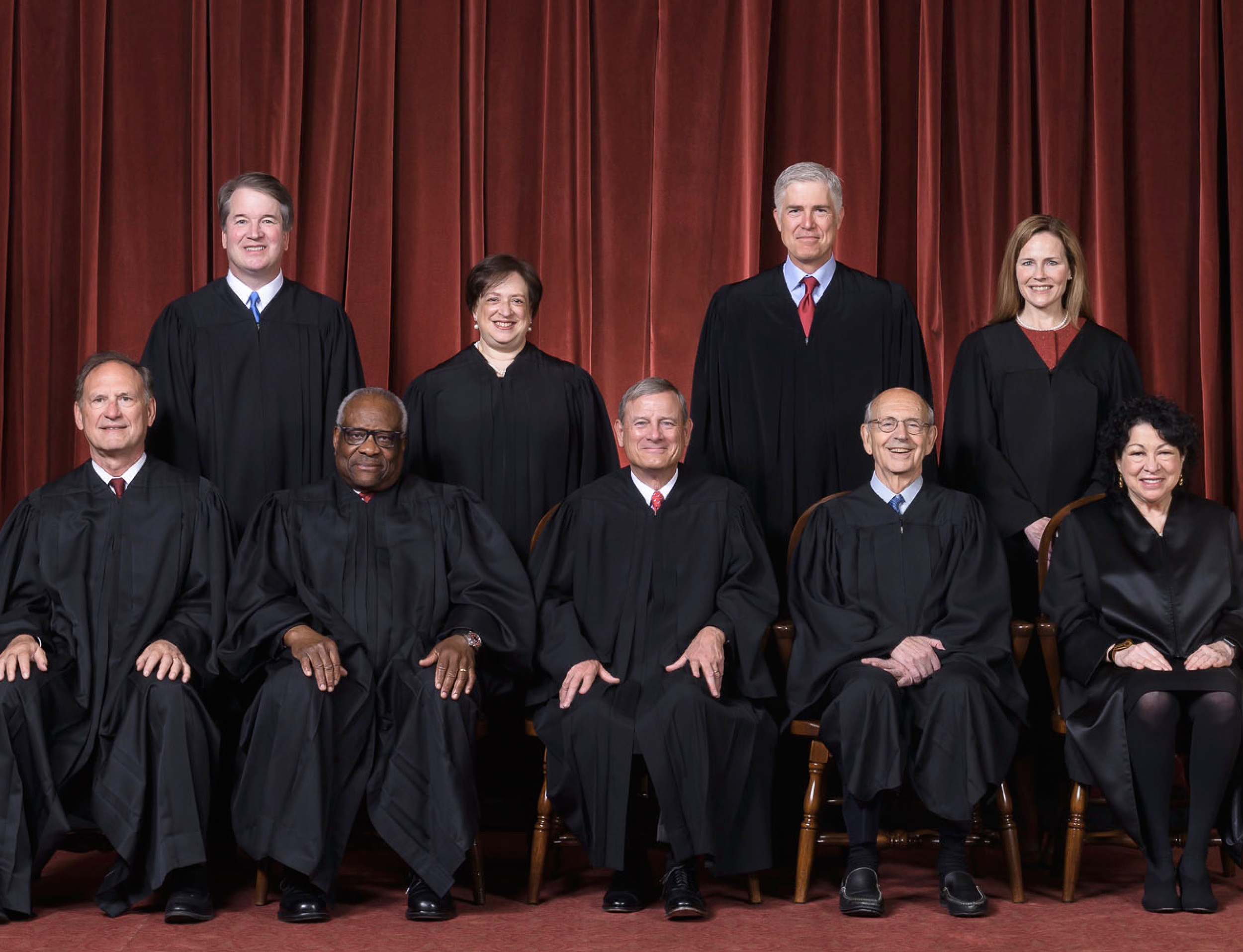
This brings me to a new Associated Press story with a very familiar, in recent years, theme. The headline: “Anti-Roe justices a part of Catholicism’s conservative wing.” Here is the overture, which includes — #SHOCKING — a reference to the Catechism of the Catholic Church.

The Supreme Court overturned Roe v. Wade at a time when it has an unprecedented Catholic supermajority.

That’s not a coincidence. Nor is it the whole story.

The justices who voted to overturn Roe have been shaped by a church whose catechism affirms “the moral evil of every procured abortion” and whose U.S. bishops have declared opposition to abortion their “preeminent priority” in public policy.

But that alone doesn’t explain the justices’ votes.

U.S. Catholics as a whole are far more ambivalent on abortion than their church leaders, with more than half believing it should be legal in all or most circumstances, according to the Pew Research Center.

The problem, you see, is that there are justices who appear to embrace the Catechism, on issues linked to the Sexual Revolution, of course. They are clashing with generic “U.S. Catholics,” who are not defined, as usual, in terms of Mass attendance or other references to belief and practice (such as choosing to go to Confession).

What we have here is yet another clash between American Catholics and dangerous Catholics.


Please respect our Commenting Policy

Life after Roe: What role will churches and faith play in work of pro-life Democrats?

Life after Roe: What role will churches and faith play in work of pro-life Democrats?

As outraged Democrats jumped on social media after the fall of Roe v. Wade, some symbolic voices in the party offered careful words of celebration.

"Let's Stand Together and Support Women and Children!!!", tweeted state Sen. Katrina Jackson, the African-American Democrat who sponsored Louisiana's trigger bill that includes potential 10-year prison sentences for those who perform abortions.

Jackson's added calls for "womb to tomb" legislation raising wages for childcare workers, funds to fight human-trafficking and new state programs helping families.

Louisiana Gov. John Bel Edwards, also a Democrat, posted several Twitter messages, including: "My position on abortion has been unwavering. I am pro-life and have never hidden from that fact." He stressed that this Louisiana bill included clauses protecting procedures in cases of "medical futility" and ectopic pregnancies and added that he believes it needed "an exception to the prohibition on abortion for victims of rape and incest."

The Democratic Party, in its 2020 platform, remained committed to "protecting and advancing reproductive health, rights and justice," while promising to "fight and overturn federal and state laws" limiting or opposing abortion rights.

But in the wake of the Supreme Court's recent Dobbs vs. Jackson Women's Health Organization decision, crucial debates about abortion laws will move to state governments. Some have already passed bills protecting unborn children and others have taken equally strong stands defending abortion rights.

Many states are located somewhere in between, noted Kristen Day, leader of Democrats for Life of America. In these states there will be tense negotiations over legislation -- such as "heartbeat bills," usually defined as abortion bans after six weeks of gestation -- that were impossible under court actions linked to Roe v. Wade.

While "pro-life" Democrats are an endangered species inside the D.C. Beltway, there are "hundreds of us active in state governments," said Day, reached by telephone. Many of these Democrats are linked to Black and Latino churches -- grassroots workers that national party leaders may not want to attack or alienate.


Please respect our Commenting Policy