Terry Mattingly

Ukraine's oldest Orthodox Church seeks independence, while the Lavra monastery is at risk

Ukraine's oldest Orthodox Church seeks independence, while the Lavra monastery is at risk

This was a very important weekend in the history of Eastern Orthodox Christianity in Ukraine and Russia — for those (including journalists) who believe that religious traditions and symbols matter as much as statements by government officials and headlines in Western media.

At the center of the drama, of course, was the city of Kiev, as it is known in to Russians and many Ukrainians, and Kyiv, as it is known to many Ukrainians, as well as officials in the United States and the European Union.

Here’s the quotation I keep thinking about, drawn from a historian (and Orthodox priest) I interviewed for a 2018 column that ran with this headline: “A thousand years of Orthodox history loom over today’s Moscow-Istanbul clash.” That quote: "Kiev is the Russian Orthodox Church, and the Russian Orthodox Church is Kiev." From this point of view, the churches of Ukraine and Russia are brothers, connected by centuries of shared history — good and bad — and Orthodox tradition.

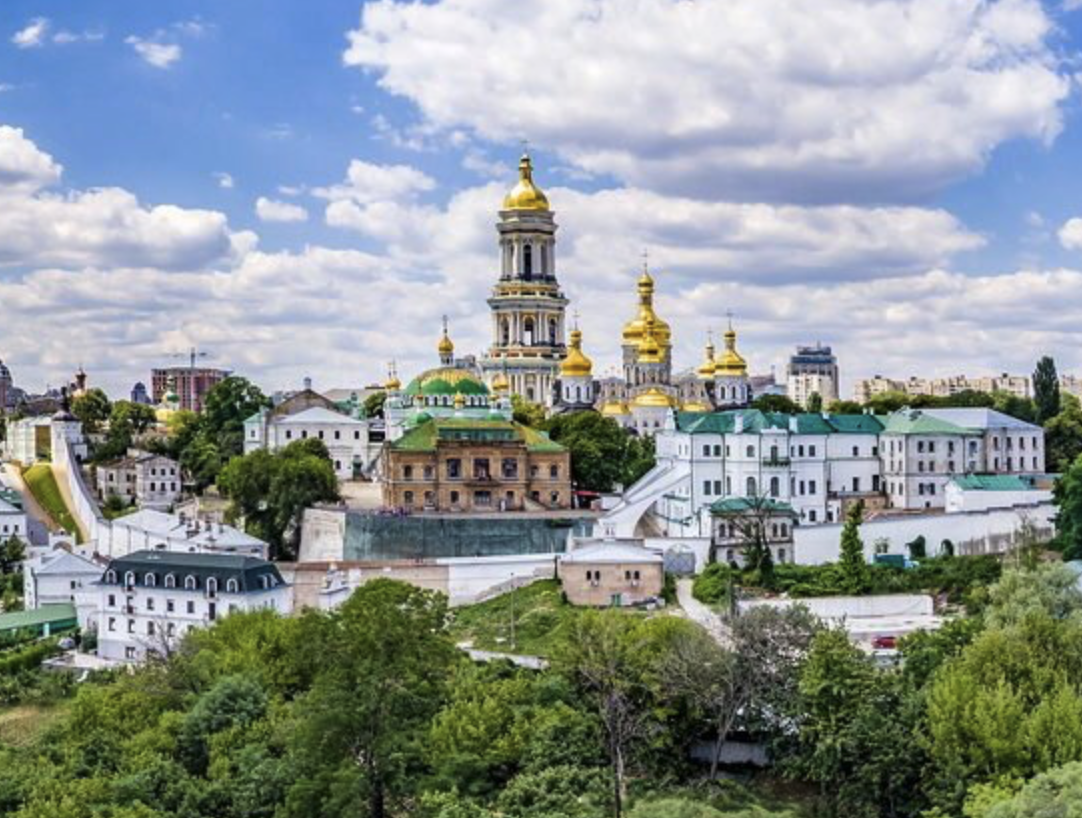
The crucial issue, in many ways, is one the press seems to think is secondary — the future of the Kiev Pechersk Lavra, the font of Orthodox spirituality in the Slavic world.

Let’s start with two short wire-service reports and, along the way, I will point readers to some crucial documents that add more depth and clues as to what is happening. First, from the Associated Press:

KYIV, Ukraine — The leaders of the Orthodox churches in Ukraine that were affiliated with the Russian Orthodox Church have adopted measures declaring the church’s full independence and criticizing the Russian church’s leader for his support of Russia’s invasion of Ukraine.

Orthodoxy, the largest religious denomination in Ukraine, is divided between churches that had been loyal to the Moscow Patriarchate and those under a separate ecclesiastical body.

The council of the Moscow-connected body, the Ukrainian Orthodox Church, on Friday said it “condemns the war as a violation of God’s commandment ‘Thou shalt not kill!’ ... and expresses disagreement with the position of Patriarch Kirill of Moscow and All Russia regarding the war in Ukraine.”

It also adopted charter changes “indicating the full self-sufficiency and independence of the Ukrainian Orthodox Church.”

Note, in the lede, the assumption that simply saying that this has happened means that it has happened, as in the “leaders of the Orthodox churches in Ukraine that were affiliated with the Russian Orthodox Church.”

Now, the official declarations (click here for details) made by the leaders of the oldest Orthodox body in Ukraine — usually called the Ukrainian Orthodox Church (Moscow Patriarchate) — are very serious and they were accompanied by changes in WORSHIP that, for the Orthodox, are even more important than words on paper.

Please respect our Commenting Policy

U.S. bishops, recent popes, Ted McCarrick and the soul of House Speaker Nancy Pelosi

U.S. bishops, recent popes, Ted McCarrick and the soul of House Speaker Nancy Pelosi

After fierce closed-door debates about President Joe Biden and Holy Communion, the U.S. Conference of Catholic Bishops managed to release a muted document last fall that did little to please activists on either side of the church's wars about abortion and politicians in pews.

But one passage in "The Mystery of the Eucharist in the Life of the Church" turned into a ticking clock in the Archdiocese of San Francisco, setting the stage for the current clash between Archbishop Salvatore J. Cordileone and a member of his flock -- House Speaker Nancy Pelosi.

"It is the special responsibility of the diocesan bishop to work to remedy situations that involve public actions at variance with the visible communion of the Church and the moral law," noted the bishops. "Indeed, he must guard the integrity of the sacrament, the visible communion of the Church, and the salvation of souls."

Cordileone's diocese includes the 12th Congressional District of California. After six private attempts to reach Pelosi, he released a May 20 statement telling her that "you are not to present yourself for Holy Communion and, should you do so, you are not to be admitted to Holy Communion, until such time as you publicly repudiate your advocacy for the legitimacy of abortion and confess and receive absolution of this grave sin in the sacrament of Penance."

The archbishop built his case with quotes from Pope Francis, Pope St. John Paul II and the now-retired Pope Benedict XVI, as well as Canon law stating that Catholics who "obstinately persist in manifest grave sin" are "not to be admitted to Holy Communion."

The speaker's words and actions, he added, suggest she isn't worrying about papal authority. Pelosi, the mother of five children, recently told the Seattle Times that the "personal nature of this is so appalling, and I say that as a devout Catholic. They say to me, 'Nancy Pelosi thinks she knows more about having babies than the pope.' Yes, I do. Are you stupid?"


Please respect our Commenting Policy

Podcast: Those hellish SBC sexual-abuse stories? They may be coming to a zip code near you

Podcast: Those hellish SBC sexual-abuse stories? They may be coming to a zip code near you

There’s an old saying in the real estate business about properties that get hot and then sell quickly: “Location, location, location.”

That’s precisely where we are right now with the sexual-abuse scandal that looms over the core institutions of the giant, complex, sprawling Southern Baptist Convention.

Where is the story heating up right now? Where is the story going in the future? The answer to both of those questions is: “Location, location, location.” This is true with current events (and events yet to come) and it’s also true with the must-read coverage of this big story. We focused on both sides of that equation during this week’s GetReligion podcast (CLICK HERE to tune that in).

First, let’s talk about the journalism behind this story, which has been building for several years now (see this Bobby Ross, Jr., “Plug-In” update for a starter). Everything begins in Texas and Tennessee and reporters there who are doing the heavy lifting — in Nashville and Houston, to be specific. You can see this, ironically, in this Washington Post story: “How two Texas newspapers broke open the Southern Baptist sex scandal.” Here is the overture:

Houston Chronicle city hall reporter Robert Downen was on the night shift one evening in 2018, just a few months into the job, when something caught his attention.

Scrolling through an online federal court docket, he spotted a lawsuit that accused Paul Pressler, a prominent former judge and leader of the Southern Baptist Convention, of sexual assault. While the case had been previously reported, newly filed documents painted an even more damning picture, including the revelation that Pressler had previously agreed to pay his accuser $450,000. Downen, then 25, probed more deeply and discovered other survivors of church abuse, who made it clear to him, he recalled, that “if you think this problem is confined to one leader, we have quite a bit to show you.”

Downen’s ever-growing spreadsheet of cases soon inspired a larger reporting effort to quantify the scope of sex abuse within the massive Protestant denomination. Journalists at the Chronicle and the San Antonio Express-News teamed up to create a database of cases involving nearly 300 church leaders and more than 700 victims for their landmark 2019 “Abuse of Faith” series.

A wave of outrage in response to the series rocked the Southern Baptist Convention, prompting its Executive Committee to hire an outside firm to investigate.

Sexual-abuse accusations against Pressler had been rumbling for decades behind closed doors and in locked-tight legal proceedings. I first heard about them in the early 1980s, through a well-placed contact at CBS News, when I first hit the religion beat at The Charlotte News. There was smoke, but no one could get to the fire. The fact that this SBC giant’s accusers were young males only added to the tension.

If you know SBC life — I grew up as a Texas Baptist preacher’s kid and my whole family has Baylor University ties — then you may know this old saying: Texas is the wallet on which the SBC sits.


Please respect our Commenting Policy

Yes, NPR editors, Holy Communion isn't a semi-Baptist 'symbolic' rite for Catholic believers

Yes, NPR editors, Holy Communion isn't a semi-Baptist 'symbolic' rite for Catholic believers

If you read an early version of the National Public Radio story with this headline — “An archbishop bars Pelosi from Communion over her support for abortion rights” — you may have done a spit take of whatever beverage you were drinking and, thus, damaged your computer keyboard. How much damage does this do to smartphones and iPads? Beats me.

Clearly, some personnel in the NPR newsroom — perhaps pros at the politics desk — need refresher courses on church-history basics. It appears that someone at NPR thinks that Catholic doctrines about the mysteries of Holy Communion are very similar to Baptist beliefs about the ordinance that is usually called the Lord’s Supper.

Let’s start at the beginning.

The Catholic archbishop of San Francisco says that U.S. House Speaker Nancy Pelosi is no longer allowed to receive Communion because of her vocal support for abortion rights.

Salvatore Cordileone, the conservative archbishop, said he'd previously made his concerns known to Pelosi, D-Calif., in an April 7 letter after she promised to codify into federal law the right to abortion established by the Supreme Court in Roe v. Wade. Cordileone said he never received a response from Pelosi.

Here comes the crucial language that launched quite a few tweets, along with several heated emails to GetReligion:

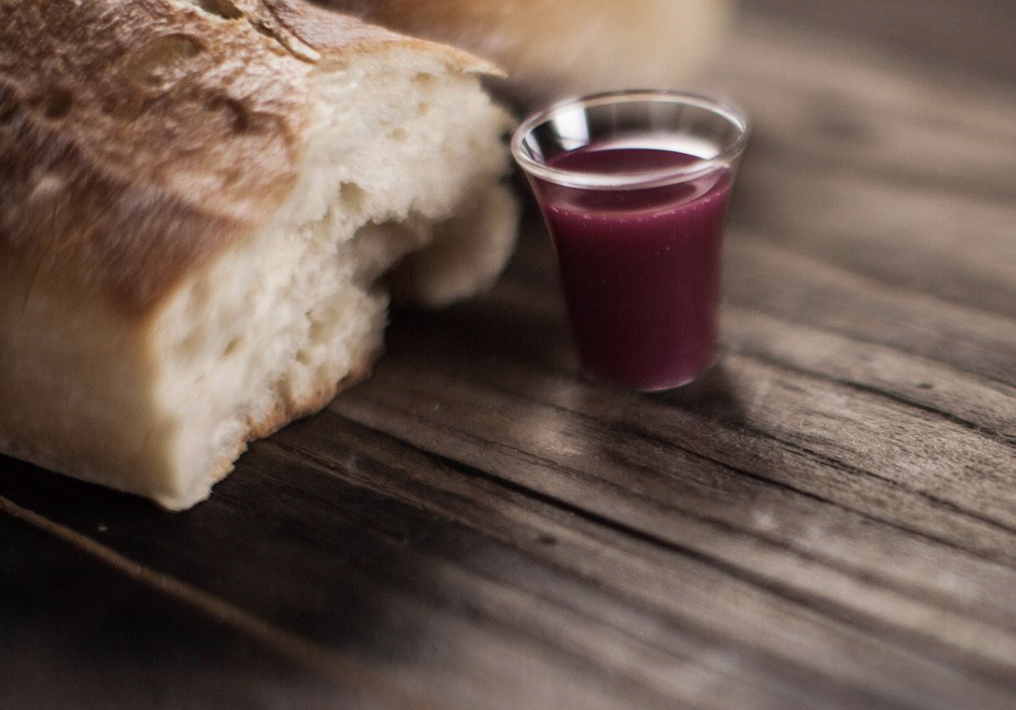
Cordileone notified members of the archdiocese in a letter on Friday that Pelosi must publicly repudiate her support for abortion rights in order to take Holy Communion — a ritual practiced in Catholic churches to memorialize the death of Christ, in part by consuming a symbolic meal of bread and wine.

The key word there is “symbolic.”

That’s a very low-church Protestant word in this context. Ditto for the word “memorialize.”


Please respect our Commenting Policy

Pizza, beer and guys talking books: Lessons from the Hall of Men on the Kansas plains

Pizza, beer and guys talking books: Lessons from the Hall of Men on the Kansas plains

WICHITA, Kan. — The Hall of Men fits the name, with meetings offering beer, cigars, an open bar, some kind of guy food (think pizza) and lots of chatter around a giant wooden table.

But then there are the evening prayers, icons, Bible readings and lectures about authors whose portraits hang in this “Christian speakeasy.” The names include C.S. Lewis, Flannery O’Connor, W.H. Auden, Dorothy Sayers, Fyodor Dostoevsky, J.R.R. Tolkien and many others. Johnny Cash and Bob Dylan are there, as well.

This group has met twice a month for a dozen years and most of the faithful are Orthodox, Catholic and Lutheran, with plenty of evangelicals at special events. The authors honored are selected after an informal process that usually starts during fellowship before and after lectures, with men talking about books that have touched their lives.”

The whole thing is affected by having that bookstore right next door,” said Pastor Geoff Boyle, a Missouri-Synod Lutheran long active in the project. “The man behind the front counter is used to having these conversations and obviously knows all about the books the guys are talking about. The books are right there and, if they’re not, they will be soon.”

“That bookstore” is Eighth Day Books, which draws customers from across the nation to an old three-story house with 46,000 new and used books — 27,000 titles — shelved and stacked anywhere that will hold them, including the basement “Hobbit Hole” packed with children’s literature. The white-haired man behind the counter is owner Warren Farha, an Orthodox believer with family ties to Lebanon.

This isn’t a “Christian bookstore” complete with knick-knacks, inspirational posters and religious self-help books — but “Eighth Day” is a reference to the Resurrection of Jesus.

Farha created the store in 1988 and selects all the books, with the help of an ecumenical network woven into the Eighth Day Institute and its conferences, newsletters, podcasts and groups such as the Hall of Men and the Sisters of Sophia.

“My goal has always been to be fair to the great traditions,” said Farha, in his office in the bookstore’s attic. “We have classics in history, literature, poetry, church history, theology and philosophy – Christian writings through the ages. … I’m always listening to people who GET the template for what we’re doing here.

“Great books from different traditions are on the shelves right next to each other, even if they clash in ways that we need to discuss.”


Please respect our Commenting Policy

Naomi Judd: 'It's scary to show that part of you that is the not so smart, not so together side'

Naomi Judd: 'It's scary to show that part of you that is the not so smart, not so together side'

Naomi Judd thought she understood the ties that bind country-music stars and their audience -- then one aggressive fan went and joined the Pentecostal church the Judd family called home.

"It really burdened me," said Judd, after signing hundreds of her "Love Can Build a Bridge" memoir back in 1993. "I just don't sign autographs at church. The best way I can explain it to children … is to say, 'Honey, Jesus is the star.' "

After a year of this tense standoff, Judd became concerned and wrote the fan. "I said, 'I want you to really get away by yourself and read this letter and answer this question honestly: Do you come to church to see The Judds or do you come to church to see God?' She never came back to church. But she was in the autograph line today."

Through it all, Judd and her brash daughter Wynonna have talked openly about their triumphs and their struggles. Many fans identified with their failures just as much as the messages about faith and family.

At the time of that 1993 interview, Naomi Judd had battled through waves of anxiety attacks to address some dark realities -- such as rape, crisis pregnancy and her deadly battle with hepatitis C that retired the The Judds.

What she hadn't discussed at that time was the sexual abuse in her childhood that led to treatment-resistant depression. Judd's April 30th death, at age 76, focused new attention on blunt passages in her 2016 book "River of Time," in which she said had been tempted by suicide. "I wanted to be completely honest that if someone took out a gun and killed me on stage, they would be doing me a favor," she wrote.

The Judds were inducted into the Country Music Hall of Fame the day after Naomi's death and her shaken daughter Ashley Judd told the crowd, "I'm sorry that she couldn't hang on until today." Writing in USA Today, the actress expressed gratitude for her mother's legacy, but added: "Perhaps it's indecorous to say, but my heart is filled with something else, too. Incandescent rage. Because my mother was stolen from me by the disease of mental illness, by the wounds she carried from a lifetime of injustices that started when she was a girl."


Please respect our Commenting Policy

Podcast: A growing post-Roe divide between 'Jesusland' and the 'United States of Canada'?

Podcast: A growing post-Roe divide between 'Jesusland' and the 'United States of Canada'?

Over the past week or so, I have received several emails — while noticing similar messages on Twitter — from people asking: “Why is The Atlantic publishing the same story over and over?” Some people ask the same question about The New York Times.

It’s not the same SPECIFIC story over and over, of course. But we are talking about stories with the same basic Big Idea, usually framed in the same way. In other words, it’s kind of a cookie-cutter approach.

The key word is “division,” as in America is getting more and more divided or American evangelicalism is getting more and more divided. A new Ronald Brownstein essay of this kind at The Atlantic — “America’s Blue-Red Divide Is About to Get Starker” — provided the hook for this week’s “Crossroads” podcast (CLICK HERE to tune that in).

The villains in these dramas are, of course, White evangelicals or, in more nuanced reporting, a radical wing of the White evangelicals. Just this week, I praised the New York Times for running a feature that offered a variation on one of these templates: “Bravo! The New York Times reports that evangelicals are divided, not united on politics.” That piece showed progress, in part, because it undercut the myth of the evangelical political monolith on issues such as Donald Trump, COVID vaccines, QAnon, etc.

Let me make this personal. There is a reason that all of these stories written by journalists and blue-checkmark Twitter stars sound a big familiar to me. You see, people who have been paying attention know that the great “Jesusland” v. the “United States of Canada” divide is actually at least three decades old. It’s getting more obvious, methinks, because of the flamethrower social-media culture that shapes everything,

So let’s take a journey and connect a few themes in this drama, including summary statements by some important scribes. The goal is to collect the dots and the, at the end, we’ll look at how some of these ideas show up in that new leaning-left analysis at The Atlantic.

First, there is the column I wrote in 1998, when marking the 10th anniversary of “On Religion” being syndicated (as opposed to the 33rd anniversary the other day). Here’s the key chunk of that:

… In 1986, a sociologist of religion had an epiphany while serving as a witness in a church-state case in Mobile, Ala.


Please respect our Commenting Policy

Bravo! The New York Times reports that evangelicals are divided, not united on politics

Bravo! The New York Times reports that evangelicals are divided, not united on politics

If you stop and think about it, the latest New York Times feature about those dreaded White evangelicals includes a few signs of progress.

The good news is that the story focuses on the many ways White American evangelicals are divided, these days. That’s progress, since it undercuts the dominant news narrative of the years since 2016. You know the one: That White evangelicals from sea to shining sea just love Donald Trump and that’s that.

The truth was always more complex than that, but many blue-checkmark experts on Twitter really needed someone to blame for Trump. White evangelicals were the answer, of course, since it would have required a great deal of introspection to blame the Democratic Party for nominating Hillary Clinton — perhaps the only opponent that scared millions of depressed Americans more than Trump.

But back to the key truth in this Times report — which is that White evangelicals are divided, which is true, and that is certainly not the same thing as the myth of monolithic unity. For background, see this 2018 post: “Complex realities hidden in '81 percent of evangelicals' love Trump myth.”

At the heart of this story is a character that will be familiar to some news consumers — a conservative religious leader whose beliefs would normally cause heart attacks in blue-zip-code newsrooms, but this leader is shown to deserve sympathy because believers who are much worse are attacking him/her. (The irony in this case is that this particular pastor seems very familiar to me since he appears to represent the evangelicalism in which I was raised and that I greatly respect.)

The headline: “As a ‘Seismic Shift’ Fractures Evangelicals, an Arkansas Pastor Leaves Home.” Here’s the overture:

FORT SMITH, Ark. — In the fall of 2020, Kevin Thompson delivered a sermon about the gentleness of God. At one point, he drew a quick contrast between a loving, accessible God and remote, inaccessible celebrities. Speaking without notes, his Bible in his hand, he reached for a few easy examples: Oprah, Jay-Z, Tom Hanks.

Mr. Thompson could not tell how his sermon was received. The church he led had only recently returned to meeting in person. Attendance was sparse, and it was hard to appreciate if his jokes were landing, or if his congregation — with family groups spaced three seats apart, and others watching online — remained engaged.

So he was caught off guard when two church members expressed alarm about the passing reference to Mr. Hanks.


Please respect our Commenting Policy

Ordinary protests at doxxed SCOTUS homes, Masses and a generic firebomb, as well

Ordinary protests at doxxed SCOTUS homes, Masses and a generic firebomb, as well

The Roe v. Wade related events of the past three or four days have created a very obvious case study that can be stashed into that ongoing “mirror image” case file here at GetReligion.

Start here. Let’s say that, during the days of the Donald Trump White House, something important happened related to LGBTQ rights — something like a U.S. Supreme Court decision that delivered a major victory to the trans community. At that point, some wild people on the far cultural right published the home addresses of the justices that backed the decision and, maybe, even any hospital that Justice Ruth Bader Ginsburg might be visiting for cancer treatments.

Another group, let’s call it “Bork Sent Us,” announces plans for protests at Episcopal Church parishes because of that denomination’s outspoken support for LGBTQ causes. Some protestors promise to invade sanctuaries and violate the bread and wine used in the Holy Eucharist. Along the way, what if someone firebombed a Planned Parenthood facility?

Obviously, Trump’s press secretary would be asked to condemn this madness, including violations of a federal law against intimidating protests at the homes of judges.

Let’s set that aside for a moment. I want to ask a “mirror image” journalism question: Would this be treated as a major news story in elite media on both sides of our divided nation and, thus, divided media? Would this, at the very least, deserve a story or two that made it into the basic Associated Press summary of the major news stories of the weekend?

Let me say that these events would have deserved waves of digital ink, with good cause.

This brings us, of course, to the leaked copy of a draft of a majority opinion by Justice Samuel Alito that points to a potential 5-3-1 decision to overturn Roe v. Wade. Twitter users may know many of the details of the anger this has unleashed in mass media and among Sexual Revolution clergy, both secular and sacred. There has been some coverage, including (#DUH) at Fox News. A sample on the church angle:

The White House on Sunday defended people's "fundamental right to protest" but warned against efforts to "intimidate" others during pro-abortion protests planned at Catholic churches across the country.

Multiple activist groups are planning protests defending abortion rights outside Catholic churches on Mother's Day and the following Sunday after a draft opinion from the Supreme Court threatened to overturn Roe v. Wade.


Please respect our Commenting Policy