Terry Mattingly

Will Smith's Oscars slap turned heads; Denzel Washington quietly warned about temptation

Will Smith's Oscars slap turned heads; Denzel Washington quietly warned about temptation

Moments after the Academy Awards slap heard 'round the world, Will Smith huddled during a commercial break with Denzel Washington, another of the Best Actor nominees.

No one could hear what Smith discussed with the man who is both an A-list player and the rare Hollywood superstar who has – after years in hot press spotlights – emerged as a mentor on issues of faith and family.

But Smith appeared to have Washington on his mind during his emotional remarks after winning the Oscar for his work in "King Richard." Smith apologized to his peers for slap-punching Chris Rock after his jest about his wife Jada Pinkett-Smith's shaved head. The comic apparently didn't know she was suffering hair loss with Alopecia.

“In this moment, I am overwhelmed by what God is calling on me to do and be in this world. … I'm being called on in my life to love people and to protect people," said Smith, tears on his face. "I know that to do what we do, you gotta be able to take abuse, you gotta be able to have people talk crazy about you. In this business, you gotta be able to have people disrespecting you. And you gotta smile and pretend that that's OK."

When Washington offered quiet words of encouragement from offstage, Smith thanked him and added: "Denzel said a few minutes ago: At your highest moment, be careful – that's when the devil comes for you."

This was not ordinary Oscars God-talk.

This drama triggered waves of social-media angst, with critics and millions of viewers debating who to blame for this crisis during an otherwise meandering Academy Awards show shaped by politics, pandemics, gender, race and low ratings.


Please respect our Commenting Policy

Thinking about the Catholic vocations 'crisis': The Pillar asks if this is truly a global problem

Thinking about the Catholic vocations 'crisis': The Pillar asks if this is truly a global problem

When journalists are covering a truly global religion — take the Catholic Church, for example — it really helps to pay attention to the fine details in statistics.

What is true in America may not be true in Africa. What’s true in the shrinking churches of Western Europe may not be true, literally, anywhere else.

I brought this up in a recent think piece — “Thinking about world Christianity, as Crux digs deep into many overlooked Catholic details” — pointing readers to an interesting Crux essay by John L. Allen, Jr. (of course). Here’s a key bite of commentary from Allen:

… Catholicism added 16 million new members in 2020, the latest year for which statistics are available. Granted, that meant the church did no more than keep pace with overall global population growth, but it’s still significant at a time when most western perceptions are that the church is shrinking due to the fallout from the sexual abuse crisis, various scandals at senior levels, bitter political infighting, increasing irrelevance to younger generations, and any number of other alleged failures.

For sure, if you live in western Europe or in some parts of the United States, where parishes are closing or consolidating and Mass attendance seems in free fall, those perceptions are understandable. Yet the reality is that on a global level, Catholicism enjoyed the greatest expansion in its history over the past century, more than tripling from 267 million in 1900 to 1.045 billion in 2000 and 1.36 billion today.

Basically, Catholicism is growing wherever it’s churches, to be blunt, have plenty of children, converts and clergy.


Please respect our Commenting Policy

Podcast: Concerning the many religion-beat stories linked to that 'Don't Say Gay' bill

Podcast: Concerning the many religion-beat stories linked to that 'Don't Say Gay' bill

Let’s talk news-business realities for a moment.

If you do an online search for the following terms — “Parental Rights in Education,” Florida — you will get about 43,000 hits on Google News (as of Thursday afternoon).

Then again, if you run a search for these terms — “Don’t Say Gay,” Florida — you will get 6,820,000 hits on Google News and 24,100,000 hits on Google (period).

That’s a pretty big difference. What’s going on?

On this week’s “Crossroads” podcast (CLICK HERE to tune that in) I argued that the real name of this bill sounded way, way too much like a whatever it was that parents in Virginia wanted during that recent election that left the Democratic Party establishment in shock.

As it turns out, a new Public Opinion Strategies poll (.pdf here) found that registered voters — a majority of Democrats, even — liked the contents of this controversial Florida bill when shown its key, defining language:

“Classroom instruction by school personnel or third parties on sexual orientation or gender identity may not occur in Kindergarten through third grade or in a manner that is not age appropriate or developmentally appropriate for students in accordance with state standards.”

Clearly, “Don’t Say Gay” worked much better for political activists who wanted to keep the focus on LGBTQ-era sexual education for prepubescent children. The whole idea was that way too many parents are burdened with religious, moral and cultural beliefs that were on the wrong side of history. Thus, “parental rights” and classroom transparency are not helpful concepts.

What does this have to do with the many religion-angle stories that journalists could be chasing linked to this legislation and variations on this bill that are sure to show up in other states?


Please respect our Commenting Policy

Elite American super-cities are bleeding people: Any religion ghosts in this big story?

Elite American super-cities are bleeding people: Any religion ghosts in this big story?

It’s hard to imagine any corner of American life that has not been touched by the coronavirus pandemic.

Obviously, there have been plenty of religion stories — along with the obvious angles linked to politics, business and technology.

Then you have stories that combine all of these elements. That is, they combine all of these themes if reporters are willing to look at the numbers and trends through multiple lens. However, as any GetReligion reader knows, not all lens are created equal.

One of the most important stories has been the impact of COVID-19 realities on some of the most important zip codes — “important” from an elite-news perspective — on the blue coasts. That brings us to that massive headline the other day in The New York Times, a paper that has, for the most part, treated evidence of New York City woes as part of a vast a right-wing conspiracy theory. Here’s that double-decker headline:

Cities Lost Population in 2021, Leading to the Slowest Year of Growth in U.S. History

Although some of the fastest growing regions in the country continued to grow, the gains were nearly erased by stark losses in New York, Los Angeles and San Francisco.

This is, of course, an almost totally religion-free story. I was pleased to notice that the Times team took demographic issues — including birth-rate slumps — rather seriously, even if the editors didn’t (as usual) connect the dots and see the religious, cultural and moral elements of that important angle (please see this earlier GetReligion piece — “New York Times asks this faith-free question: Why are young Americans having fewer babies?” — for background).

Am I arguing that the flight from several important American super-cities is essentially a religion story? Of course not. Am I saying that issues linked to faith, family and culture are playing a role in this very, very important story? Yes, I am.


Please respect our Commenting Policy

Updates in the journalism style bible: Appropriate 'cult' advice and other tweaks

Updates in the journalism style bible: Appropriate 'cult' advice and other tweaks

If you know anything about the nuts and bolts of reporting and editing, then you know that the Associated Press Stylebook is the bible — that’s with a lower-case “b” — of journalism.

It’s also a great place to chart tensions inside the news business. Consider, for example, the decades of debate about “pro-life” and “pro-choice,” as opposed to “anti-abortion” and “pro-abortion rights.” Will the next major revision of the AP manual need to include an updated definition for the suddenly controversial word “woman”?

Our GetReligion patriarch, Richard Ostling, recently sent me an interestingly list of some of the religion-beat terms in the latest revisions to this AP bible. He served as a consultant on that revision project and, thus, doesn’t want to make any comments about the results. Here is one of the updates that is sure to lead to newsroom discussions:

cult (new)

A loaded term to be used with caution.

Yes, indeed — proceed with caution. I totally agree that this is a “loaded term” that journalists should avoid whenever possible.

The problem, however, is that this is a term that religious leaders, activists and even scholars are going to use every now and then and it will be hard to avoid the term when it is used in important direct quotations. Thus, editors need to know the various ways that informed people use the word — the key is sociology vs. theology — so that these loaded quotes can be placed in context for readers. Then there are activists of various kinds who throw this term around like a verbal hand grenade.

Readers can tell, with a quick glance at the venerable Merriam-Webster dictionary, that this is a complicated subject. Here are several of the definitions:

cult

noun, often attributive …

Definition of cult

1: a religion regarded as unorthodox or spurious (see SPURIOUS sense 2) also : its body of adherents


Please respect our Commenting Policy

If the big goal is racial reconciliation, pastors may want to start by breaking bread

If the big goal is racial reconciliation, pastors may want to start by breaking bread

The Rev. Martin Luther King, Jr., faced a barrage of questions about race and politics during his landmark 1960 appearance on NBC News' "Meet the Press," but one of the most memorable exchanges concerned a blunt question about church life.

"How many white people are members of your church in Atlanta?", asked a reporter from Nashville.

"I think it is one of the tragedies of our nation, one of the shameful tragedies, that 11 o'clock on Sunday morning is one of the most segregated hours, if not the most segregated hour, in Christian America," King replied. Any church that has "a segregated body is standing against the spirit and the teachings of Jesus Christ, and it fails to be a true witness," he added.

Millions of Americans are still wrestling with this Sunday morning divide.

But another practical question emerged during a recent Southern Baptist Convention program entitled "Pursuing Unity: A Discussion of Racial Reconciliation Efforts and the SBC." Can Black and White church folks find gaps in their jammed schedules and start breaking bread together?

"It doesn't matter how many panel discussions you watch. It doesn't matter how many books you read, how many conferences you go to. None of that will do better than dinner table ministry," said the Rev. Jon Kelly of Chicago West Bible Church.

If people want progress, he said, they need to consider their circle of friends and ask "why everyone looks like me, votes like me, thinks like me. … When we talk about racial reconciliation, we want the fruit of reconciliation without the relationships. Until our dinner tables become diversified, … until we eat bread together and fellowship together, we won't make any progress."

Fellowship meals will not make headlines or ignite rhetorical fireworks in social media, and that's a good thing, said the Rev. Ed Litton, who recently said he wouldn't seek a second term as SBC president. He plans to focus on racial-reconciliation projects linked to his own church near Mobile, Ala.

Years ago, he said, Black and White pastors began sharing meals while discussing the "deep wounds" in that racially divided community. The key was focusing on faith and the ties that bind, until basic bonds of trust were in place.

"We hashed out why we were there," said Litton. "We weren't there to bring about some kind of social change.


Please respect our Commenting Policy

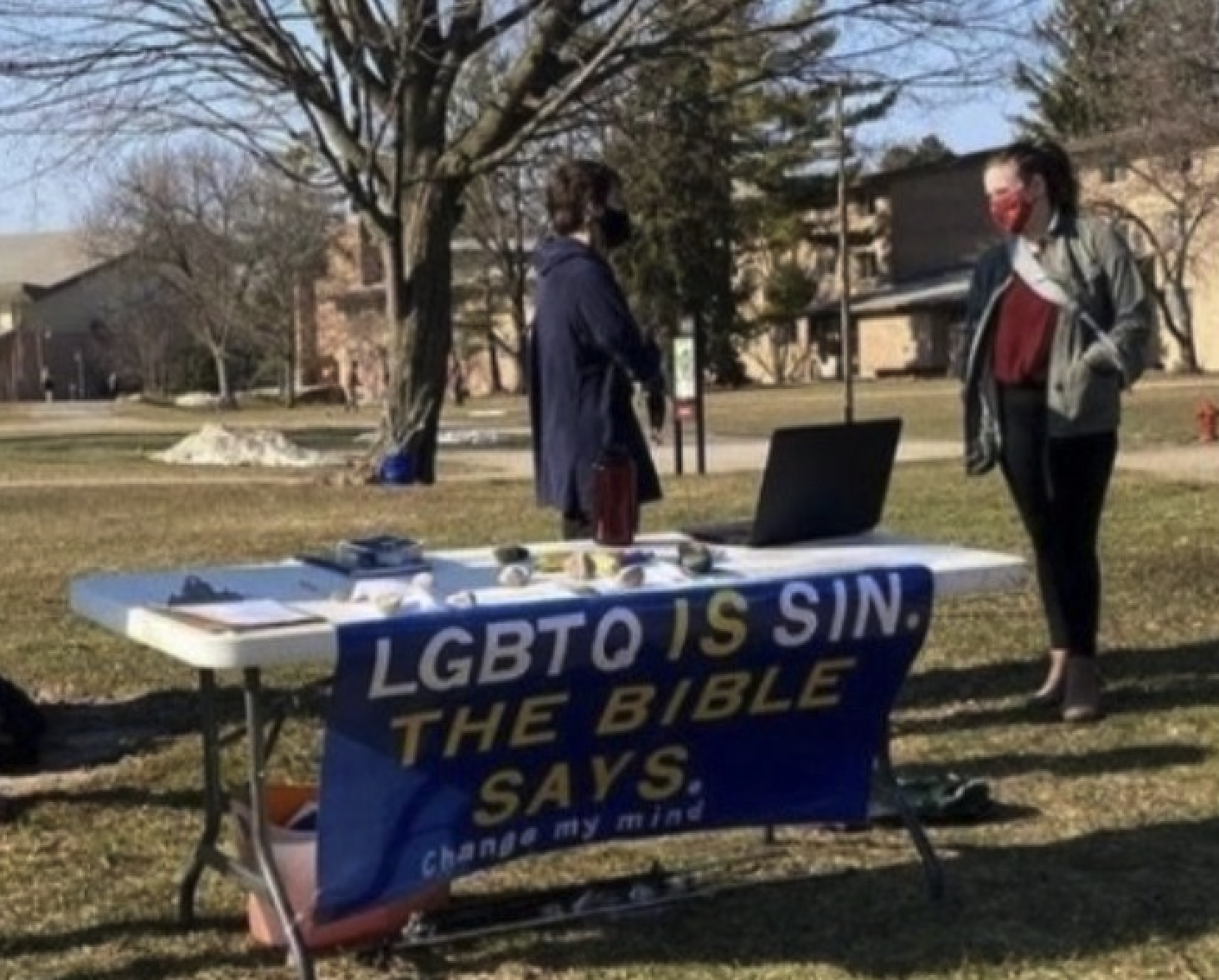
Podcast: What parents (and journalists) can learn from LGBTQ debates at Calvin

Podcast: What parents (and journalists) can learn from LGBTQ debates at Calvin

Any list of the two or three most influential evangelical Protestant colleges and universities in America has to include Calvin University in Grand Rapids, Mich.

Hang around at Council of Christian Colleges and Universities gatherings (I was a senior fellow and journalism professor for 20 years) and you’ll hear chatter about the “Calvin mafia” that has long provided intellectual clout shaping trends and programs nationwide. In other words, what happens at Calvin doesn’t stay at Calvin.

You could say that was the Big Idea in this week’s “Crossroads” podcast (CLICK HERE to tune that in), which focused on a Religion News Service story with this headline: “Fallout over LGBTQ spouses at Calvin University captures broader evangelical divide.” The second line: “A same-sex wedding led the university to split with its longtime research center over Christian teaching on sexuality.” Before we look at the overture, let’s jump down to a crucial passage in this story:

Provost Noah Toly did confirm that all faculty and staff, including those at the center, are required to follow the school’s employment policies, which bar sex outside of a marriage between a man and a woman. He also said that hiring managers and supervisors are required to enforce the policy.

“Employment policies” is a rather secular way of stating that Calvin has a doctrinal statement linked to its ties to the Christian Reformed Church. It’s safe to assume that, at some point, faculty and staff sign a copy of that statement or a “lifestyle covenant” that states the doctrines in practical terms. At some schools, faculty and staff reaffirm that doctrinal statement/covenant every year.

When we are talking about defining the boundaries of a voluntary association of this kind — an explicitly Christian liberal-arts university — “doctrines” are more important than “policies.” Keep that quote from the provost in mind as you read the top of this RNS story. This is long, but crucial:

For years, Calvin University, a leading evangelical school in Grand Rapids, Michigan, has tried to walk a fine line of being welcoming to LGBTQ students while still enforcing traditional Christian Reformed Church views on sexuality.


Please respect our Commenting Policy

No need for balance? Washington Post offers sermon on behalf of Alabama trans activists

No need for balance? Washington Post offers sermon on behalf of Alabama trans activists

Before we get to the Washington Post story at the heart of this post, please allow me to share a journalism parable from my years at the Rocky Mountain News (RIP), back in the 1980s.

It was obvious that, sooner or later, Operation Rescue protesters would come to the Boulder Abortion Clinic, which was nationally known for its work in third-trimester abortions and other controversial procedures. I urged my editors to commit time and resources to a pair of profiles of important activists on both sides. One was a former abortionist who had joined the pro-life cause. The other was a liberal Christian who was pouring her life into the defense of abortion rights.

These profiles would be the same length and would run side-by-side, with similar art and headlines. There would be no need to include balance and dissent in each of the profiles since they represented competing voices on both sides of an important debate in public life. In the end, we heard praise and criticism from readers on both sides of this event.

Now, let’s look at the Post story that ran under this double-decker headline:

Activists face an avalanche of anti-transgender bills

‘If this bill don’t pass, it’s coming back next year,’ says an ardent advocate in Alabama

That sub-headline is, for all practical purposes, the only time that “conservative” cultural voices are heard in this long, long feature story. Every single sentence in this story is written using the precise terms, images and themes of the activists opposed to these “anti-transgender” bills in Alabama and across America.

In effect, this story — a totally valid profile of an important activist — is one half of a package covering these debates deep in the Bible Belt.

The problem is that there is no second profile. There is no feature of equal length addressing, let’s say, the views of a Black church leader who works with young people who are making efforts to “detransition” after declaring themselves trans.


Please respect our Commenting Policy

'God bless those who weep': Brilliant OSU lineman leaves football, after fighting suicidal thoughts

'God bless those who weep': Brilliant OSU lineman leaves football, after fighting suicidal thoughts

Athletes of all ages say all kinds of wild things on Twitter that make headlines.

It’s the digital age in which we live. Every now and then, these snarky quips and social-media pronouncements are actually newsworthy.

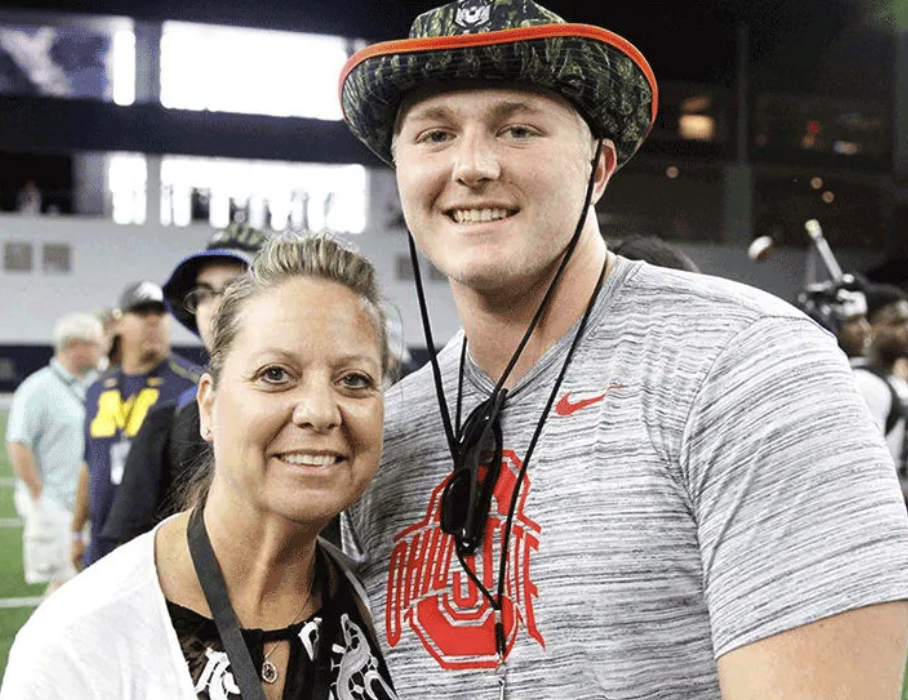
But that painful and haunting letter that Ohio State offensive lineman Harry Miller posted on Twitter was something else altogether. It was an appeal for public awareness of box-cutter scars and mental health issues that, far too often, can be hidden with muscles, bandages and layers of athletic gear. Here is the top of a Bleacher Report story — “Ohio State OL Harry Miller Retires From Football; Details Mental Health Struggles” — about this 5-star level football prospect:

Ohio State offensive lineman Harry Miller announced his medical retirement from football. … In a message posted to Twitter, Miller said that he had suicidal thoughts and went to Ohio State head coach Ryan Day to seek help.

"Prior to the season last year, I told Coach Day of my intention to kill myself," Miller wrote. "He immediately had me in touch with Dr. Candice [Williams] and Dr. [Joshua] Norman, and I received the support I needed."

Miller played for Ohio State from 2019-21. He was named an OSU Scholar-Athlete in 2019 and 2020. Miller also started seven games at left guard for the 2020 team, which won the Big Ten and the Sugar Bowl. He played two games in 2021. OSU recruited Miller, a 5-star recruit, out of Buford High School in Georgia.

"A person like me, who supposedly has the entire world in front of them, can be fully prepared to give up the world entire," Miller wrote. "This is not an issue reserved for the far and away. It is in our homes. It is in our conversations. It is in the people we love."

Miller is an unusual young man for several reasons. A long-time GetReligion reader (a professional writer with decades of experience) put it this way in an email to me this weekend:

He is straight A student in engineering and got a 1600 on the SAT. His mom was physically abused by her first husband and abandoned by Miller's father.

Yet, he has lived for others while becoming a five-star recruit. Now, the guts to do this.

So many religion ghosts, so little time.


Please respect our Commenting Policy