Terry Mattingly

Thinking about Orthodox history and the complex West vs. East divisions in Ukraine

Thinking about Orthodox history and the complex West vs. East divisions in Ukraine

First things first, as I wade into “think piece” territory once again. I am, of course, a convert to Eastern Orthodox Christianity. I converted into parishes linked to the ancient church of Antioch (currently based in Damascus) and now attend a growing parish in the Orthodox Church in America, which grew out of the work of Russian Orthodox missionaries long ago.

Why clear that up? It’s important, in light of some of the complex issues linked to the threat of war in Ukraine. I have been to Kiev twice and was blessed to worship with monks in the Kiev Pechersk Lavra. I know more than a few Russian and Eastern European Orthodox believers and I don’t think I’ve met anyone who is overly fond of Vladimir Putin (to say the least). Attempting to understand what many Russians think and believe about Ukraine has nothing to do with approving of Putin or wanting to see an invasion by Russian troops.

Moving on. The other day I spent an hour or so on the telephone with GetReligion patriarch Richard Ostling, working through some of the unbelievably complex and explosive issues surrounding Ukraine and the churches therein. The results are in an Ostling “Memo” with this headline: “In reportage on Russia and Ukraine, don't neglect the importance of two rival churches.

May I encourage GetReligion readers to check that out or even, if you read this piece before, glance through the two sections of it, in light of ongoing events?

Ukraine's ecclesiastical history, like its political history, is highly complex. The saga began with the A.D. 988 "baptism of Rus" in Kyiv (Russians prefer "Kiev") when Prince Vladimir proclaimed Orthodoxy the religion of his realm and urged the masses to join him in conversion and baptism.

Russians see Christendom's entry into Eastern Europe as the origin of their homeland and the Russian Orthodox Church. Russian President Vladimir Putin cites this history to support his claim for Ukraine as a client area within greater Russia instead of a validly independent nation. His post-Soviet Kremlin maintains close bonds with the Russian Church's Moscow Patriarchate, which in turn has centuries of ecclesiastical authority within Ukraine.

The key to all of this is understanding that highly European (with Catholic roots) Western Ukraine is a radically different place — in terms of language and faith — than Eastern Ukraine, with strong ties to Russian history and culture.

Is there one Ukraine?


Please respect our Commenting Policy

Podcast: Religion News Service offers new story about an old trend called 'Sheilaism'

Podcast: Religion News Service offers new story about an old trend called 'Sheilaism'

One of the problems with covering the same religion-beat topics for multiple decades (in other words, I am old) is that you tend to see many “new” news stories as pieces of puzzles that are actually quite old.

Consider, for example, the Religion News Service feature that was the hook for this week’s “Crossroads” podcast (CLICK HERE to tune that in).

The headline on that RNS piece stated: “A 300-year-old church hopes to connect with spiritual but not religious neighbors.” Here is the overture from this story by religion-beat veteran Bob Smietana:

For three centuries, Trinity Episcopal Church has tried to meet the spiritual needs of the small community of Southport, Connecticut, about an hour and a half outside of New York.

As more and more of the church’s neighbors ditch organized religion but not faith, leaders at Trinity hope a new initiative will help them find meaning and purpose in life even if they never attend a Sunday service.

The church recently launched the Trinity Spiritual Center, which offers lectures, classes on meditation and contemplation, and a sense of community during a trying time, said the Rev. Margaret Hodgkins, the rector of Trinity Church.

We will come back to some of the specifics of this piece — details that link it to several trends that are (#SIGH) decades old in the aging, shrinking world of mainline Protestantism and, to a lesser extent, parts of Roman Catholicism, Eastern Orthodoxy, liberal Judaism and other established religious “brands.”

The Big Idea in this RNS piece is that an Episcopal parish that has some resources to spend has decided to help spiritual seekers find their own paths to the top of Mt. Eternity without proclaiming any of those narrow, tacky doctrines linked to 2,000 years of Christian faith and practice. You know, all that stuff about the Resurrection of Jesus, eternal salvation or moral theology (warning: veiled reference to the “tmatt trio”).

In other words, the goal appears to be a sort-of parish in honor of St. Sheila, the patron saint of “Sheilaism.”


Please respect our Commenting Policy

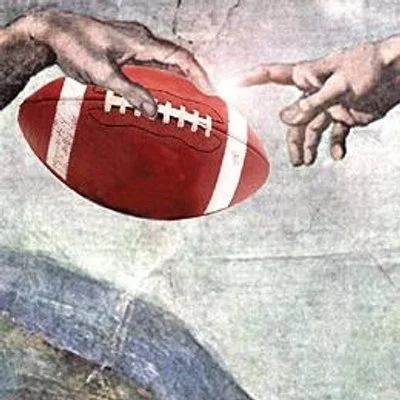
Cooper Kupp's spiritual vision: Well, it's hard not to pay attention to the Super Bowl MVP

Cooper Kupp's spiritual vision: Well, it's hard not to pay attention to the Super Bowl MVP

It’s hard not to pay attention to what the winner of the Most Valuable Player award has to say after the Super Bowl.

Thus, a few mainstream media features after the Los Angeles Rams’ victory focused on a bit of very personal testimony by superstar wide receiver Cooper Kupp. In a way, what he said resembled the kind of stereotypical Godtalk that filters into the news when believers are asked to express their first reactions after a major event — glorious or tragic — in their lives.

Long ago (pre-Internet), I interviewed the late, great Dallas Cowboys coach Tom Landry about all of this. People tend to think that believers pray to win football Games and either God hears them or not, he said. The reality is more complex than that and, most of the time, players and coaches are trying to make sense of these events — wins and loses — in the context of how God is working in their lives.

In the case of Kupp, this win in The Big Game linked into what he claimed was a vision after a Super Bowl loss. Here is the top of a story from The Athletic: “How the Rams’ Cooper Kupp’s quiet vision became reality in front of the whole world.” This is long, but essential:

INGLEWOOD, Calif. — The vision arrived with unbelievable clarity. Cooper Kupp long ago saw an unmistakable image of himself not only playing in and winning a Super Bowl but also earning the Most Valuable Player award.

But what was notable about this visualization was its peculiar timing. It came as Kupp was walking off the field at Mercedes-Benz Stadium in Atlanta after watching — not playing in — the Rams’ Super Bowl LIII loss to the Patriots. Kupp missed that game with a knee injury, but he says he received confirmation that night that he’d be back.

“What it was is just this vision that God revealed to me that we were going to come back and we were going to win it and somehow I was going to be the MVP of the game,” Kupp said. “I shared that with my wife because I couldn’t tell anyone else, obviously. But from the moment that this postseason started, there was such a belief in every game. It was written already, and I just had to play free knowing that I got to play from victory, not for victory.”

Kupp finally shared his vision with the world Sunday night. By then, the world had already seen the manifestation of it all. It was no longer was a vision. It was Kupp’s incredible reality.

Note this phrase: “I couldn’t tell anyone else, obviously.”


Please respect our Commenting Policy

Maybe angry Christians should try chanting 'Pray for Biden' instead of 'Let's go Brandon'?

Maybe angry Christians should try chanting 'Pray for Biden' instead of 'Let's go Brandon'?

In the beginning, there was an obscene chant at the Talladega Superspeedway that NBC producers urgently needed to ignore during a live broadcast.

Interviewing winner Brandon Brown, reporter Kelli Stavast pretended the NASCAR crowd was chanting, "Let's go Brandon!" -- not cursing President Joe Biden.

The rest is history, as the wink-wink slogan soaked into political jargon and mass media. What shocked the Rev. Seth Carter -- a young Southern Baptist pastor in Kentucky -- was when church people began baptizing "Let's go Brandon!" into common speech.

"To be clear, I am no supporter of our president's actions or policies. In no way do I feel support for him welling up inside of me," he wrote, in a Baptist Press commentary.

"However, I recognize that my feelings can never be the proper guide of the attitude I am to have toward him. As a Christian and a believer in the inspired, inerrant and infallible Word of God contained in the Bible, the truth of God's Word is what ought to guide my attitude toward President Biden (or any other leader for that matter)."

Christians could try chanting, "Pray for Biden," he said. They need to see Biden the way the apostles Peter and Paul viewed "the evil emperor of their day, Nero."

Carter noted this First Peter passage: "Submit yourselves for the Lord's sake to every human institution, whether to a king as the one in authority, or to governors as sent by him for the punishment of evildoers and the praise of those who do right." Writing to the Colossians, Paul said: "Walk in wisdom toward outsiders, making the best use of the time. Let your speech always be gracious, seasoned with salt."

In response, the conservative Capstone Report website published an editorial claiming that "Baptist Pravda, err, Press" had demanded "submission to regime's lies."


Please respect our Commenting Policy

Podcast: Strategic cardinal floats trial balloon, saying Catholic LGBTQ doctrines are wrong

Podcast: Strategic cardinal floats trial balloon, saying Catholic LGBTQ doctrines are wrong

If you follow political news, you’re probably familiar with the concept of a “trial balloon.”

One online dictionary definition states: “A trial balloon is a proposal that you mention or an action that you try in order to find out other people's reactions to it, especially if you think they are likely to oppose it.”

Here’s a famous example. Let’s say that the Obama White House wants to shift its stance on gay marriage, once the president has reached a point — in 2012 — where he may or may not need strong support from social-conservative Black church leaders. Thus, it was a surprise, kind of, when Vice President Joe Biden, went on “Meet the Press” and said that he was “absolutely comfortable” with same-sex marriages.

The White House needed to know (1) how other Democrats would respond, (2) how Black-church leaders would respond and (3) how potential conservative critics would respond, including Catholic leaders in America. Central to all of this, of course, is how this “trial balloon” is framed in the coverage by elite media. It took very little time for Barack Obama to get on board.

During this week’s “Crossroads” podcast (CLICK HERE to tune that in), we looked at a complex drama unfolding in the European leadership of the Catholic church. The key player is Cardinal Jean-Claude Hollerich, archbishop of Luxembourg, and a leader — the term is “relator general” — in the Pope Francis team leading the Synod on Synodality on the future of the Catholic faith. Depending on who one talks to, this synod is either a chance to listen to Catholics around the world or the front door to Vatican III.

But here is the key quote from Hollerich, drawn from an interview with the German Catholic news agency KNA.) This is part of a collection of blunt, verbatim statements from Hollerich collected at L’Espresso:

“The Church’s positions on homosexual relationships as sinful are wrong. I believe that the sociological and scientific foundation of this doctrine is no longer correct. It is time for a fundamental revision of Church teaching, and the way in which Pope Francis has spoken of homosexuality could lead to a change in doctrine.


Please respect our Commenting Policy

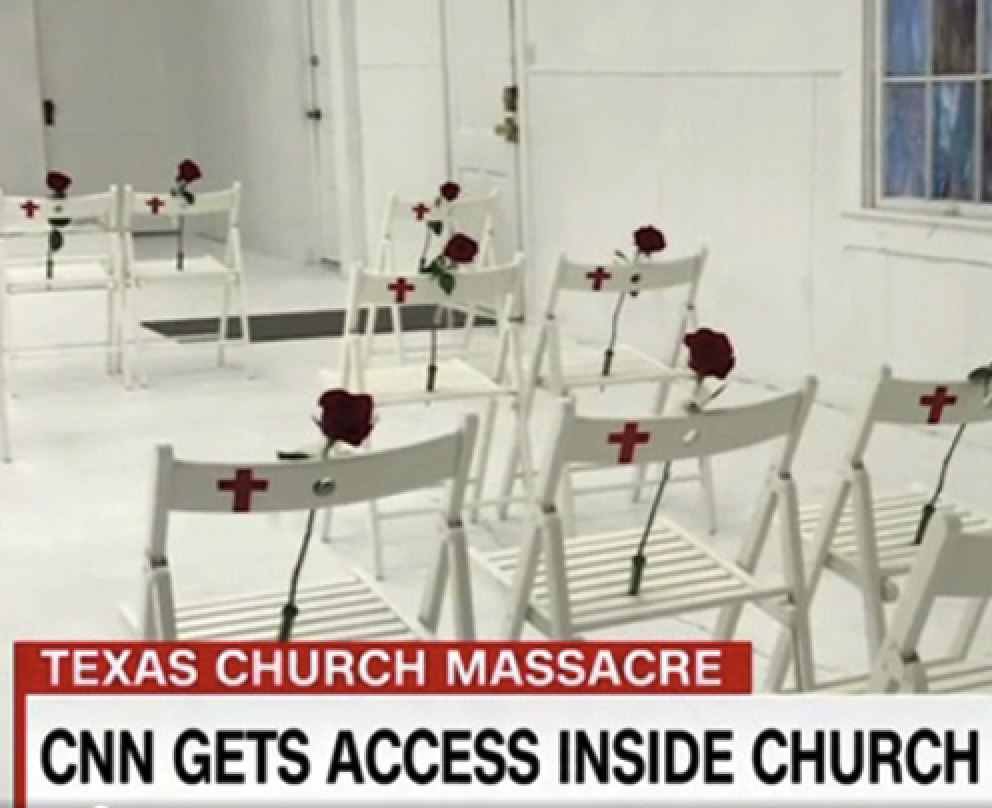
Once again, why avoid religious questions in the 2017 Sutherland Springs church massacre?

Once again, why avoid religious questions in the 2017 Sutherland Springs church massacre?

Consider, for a moment, a hypothetical case in which an angry anti-abortion activist massacres worshippers gathered at a liberal church known for its advocacy of abortion rights.

What about a radicalized Muslim attacking a synagogue? A gunman decked out in Make America Great Again clothing attacking a mosque?

Would facts about the identities of these shooters, as well as their previous statements and actions, be considered relevant in follow-up stories? We are, of course, wrestling — again — with the “Why?” component in the journalism mantra, "Who," "What," "When," "Where," "Why" and "How."

In this case, we are dealing with background materials in media coverage of a development in the 2017 massacre at the First Baptist Church in Sutherland Springs, Texas. Here’s the New York Times headline: “Air Force Ordered to Pay $230 Million to Victims of 2017 Church Shooting.” The overture states:

A federal judge ordered the U.S. Air Force … to pay more than $230 million to the survivors and the families of the victims of a 2017 shooting at a Texas church because the Air Force had failed to report the gunman’s criminal history.

In his ruling, Judge Xavier Rodriguez of the U.S. District Court for the Western District of Texas wrote that the Air Force could have blocked the gunman, Devin P. Kelley, who had served on an Air Force base in New Mexico, from buying the rifle he used to kill 26 people on Nov. 5, 2017, at the First Baptist Church in Sutherland Springs, Texas.

For its failure to report Mr. Kelley’s 2012 conviction for domestic assault, the Air Force must pay damages to the victims for their “pain and suffering, mental anguish, disfigurement, impairment and loss of companionship,” the judge wrote. He added that the case was “unprecedented in kind and scope.”

After previous commentary on this massacre, some readers noted that — reacting to detailed coverage in European newspapers — it wasn’t automatically relevant that Kelley was an outspoken atheist.

That is a valid point. However, my question is whether it is worthy of discussion (perhaps one or two sentences in news reports) that he had, in arguments on social media, expressed virulently anti-Christian beliefs and made remarks that suggested he was unstable.


Please respect our Commenting Policy

That murdered 'priest' and accusations of abuse: But this wasn't another Catholic case

That murdered 'priest' and accusations of abuse: But this wasn't another Catholic case

I have, since the 1980s, heard my share of complaints from Catholic readers about news coverage of sexual abuse by clergy.

There are readers who get angry about this coverage, period. They want the topic to go away and see anti-Catholic bias in any coverage of the subject, even when the coverage is accurate and fair-minded.

However, other Catholic readers get mad when they see valid coverage that leaves the impression that sexual abuse is only an issue in the Church of Rome. Many of these readers (on the Catholic left or right) want to see accurate, informed coverage on this hellish topic, which would include some mention of the many, many cases that take place in secular settings (think public schools) and in other religious groups.

That’s the broader context for complaints that I heard about a recent New York Times story that ran with this dramatic double-decker headline:

Scandal on a Wealthy Island: A Priest, a Murder and a Mystery

The Rev. Canon Paul Wancura led a quiet, privileged life. But after his shocking death, a sexual abuse allegation followed.

There were two problems with this tragic story — one obvious and one not so obvious.

The first problem was that readers didn’t find out, until quite a ways into this piece, that this was a story about an alleged abuser in the Episcopal Church. The word “priest” stood alone in the headline and in 300-plus words of text. It helps to read the lengthy overture:

Not much happens of note on Shelter Island, all 8,000 bucolic acres of it. Sandwiched between Long Island’s North and South Forks, it’s the kind of place where people seem to know one another, where car doors are often left unlocked and where, for some 20 years, the most bothersome problem has been Lyme disease-carrying blacklegged ticks.

But much of that changed in March 2018, when the Rev. Charles McCarron was asked to check in on another clergyman who had recently been commuting to a town on Long Island as a fill-in priest. He had failed to show up at church that day.


Please respect our Commenting Policy

In Afghanistan, believers in religious minorities have every reason to go underground

In Afghanistan, believers in religious minorities have every reason to go underground

There's a logical reason that Taliban forces have not been accused of destroying any churches in Afghanistan.

"That's the dirty little secret. There were no churches before the Taliban returned to power," said Nina Shea, director of the Hudson Institute's Center for Religious Freedom and a human-rights activist for 30 years. "Christians were already underground because of the constant threats to their lives, so they didn't have any church buildings to blow up."

Everyone remembers the shocking videos when desperate Afghans chased a U.S. military plane on a Kabul runway, pleading to be among those evacuated. At least two people fell to their deaths after clinging to a plane during takeoff.

Ever since, there have been reports about the dangers faced by those left behind, especially Afghans with ties to the U.S. military, the fallen government or workers in secular or religious non-profit groups that remained behind to continue humanitarian work.

Christians, Hindus, Sikhs, Ahmadis, Shia Muslims and members of other religious minorities are also living in fear.

"They are all on the run. They are all in hiding," said Shea, reached by telephone. "People are being hunted down and beaten and are threatened with death if they don't betray members of their families who are considered apostates" by the Taliban.

It's impossible not to discuss religious freedom during this crisis, she added. "Everything the Taliban does is about religion. Religion is involved when they hang people for violating their approach to Islamic law or when they attack women and girls who want to go to school. For the Taliban, this is all connected."

The problem is that religious freedom concerns are often drowned out during debates about politics, economics, climate change and other issues in violent flashpoints around the world.


Please respect our Commenting Policy

Podcast: Reporters who ask the right questions will find lots of NFL religion stories

Podcast: Reporters who ask the right questions will find lots of NFL religion stories

Several days before former Miami Dolphin head coach stunned the National Football League with his class-action lawsuit alleging racial discrimination and other sins, I read a very interesting profile at The Athletic about one of my sports heroes.

The headline summed things up: “Bears Hall of Famer Mike Singletary is hungry for a second chance to be an NFL head coach, but will it ever come?”

Singletary was a legend in Chicago and, before that, at Baylor University — where I met him because of a mutual friend. Singletary was a highly articulate preacher’s kid from Houston with a voice that sounded like he was auditioning to be the next James Earl Jones. He was a leader from Day 1 at Baylor and demonstrated all the characteristics that made him the face, brain and soul of the greatest defensive unit in NFL history.

This is where the Singletary feature became relevant during this week’s “Crossroads” podcast (CLICK HERE to tune that in), which focused on why journalists struggle to spot “religion ghosts” in so many sports stories, such as the life of Los Angeles Rams superstar Cooper Kupp (“Emerging NFL superstar — Cooper Kupp — puts his faith on his hat, not that reporters notice”) and the beliefs that appear to be putting the steel in the spine of Flores.

Why hasn’t Singletary had a second shot at being an NFL head coach, after his tumultuous tenure in San Francisco (not the best city for his views on faith and culture)? It may have something to do with Singletary trying to “stand for what he had been preaching” with the 49ers. Read this long passage carefully:

… 49ers owner John York, CEO Jed York, director of player personnel Trent Baalke and other executives called Singletary to a meeting. They had a trade in place with the Steelers for Ben Roethlisberger, who had recently been accused of sexual assault. Singletary vetoed the deal. …

“I had been telling the team I wanted a team of character,” he says.


Please respect our Commenting Policy