Terry Mattingly

New podcast: Baptisms are in the headlines, at the moment, for better and for worse

New podcast: Baptisms are in the headlines, at the moment, for better and for worse

Believe it or not, baptism is in the news.

In this case, we have some good news and some bad news.

What do you want to hear first, the good news or the bad news? In this week’s “Crossroads” podcast (click here to tune that in) we went with the good news first.

When I say “good news,” I am referring to a New York Times story that is kind of fun and contains tons of good information. However, this is a story that takes a trend in some of those giant, modernized evangelical megachurches and tries to turn it into a Big Idea piece. Hold that thought.

The headline: “Horse Troughs, Hot Tubs and Hashtags: Baptism Is Getting Wild.” Here is a big block of the thesis material:

Performing the age-old Christian ritual in a more informal style “conveys this isn’t your grandmother’s church,” said Drake Osborn, pastor of teaching and liturgy at Grace Church in Waco, Texas. His congregation moved into a former bowling alley in 2016 but never considered installing a built-in baptistery. Instead, Grace Church uses a foam model bought online for about $2,500.

The shift has taken place as many pre-21st-century symbols of church life have fallen out of fashion in evangelical culture, especially among churches that are expanding or building new facilities. Sanctuaries are now “worship centers,” and steeples and stained glass are out. Natural light is often eschewed in favor of a black-box theater aesthetic optimized for flashy audiovisual experiences and online streaming.

It is not just the architecture that is changing. Contemporary evangelical baptisms are often raucous affairs. Instead of subdued hymns and murmurs, think roaring modern worship music, fist pumps, tears and boisterous cheering. There are photographers, selfie stations and hashtags for social media. One church in Texas calls its regular mass baptism event a “plunge party.”

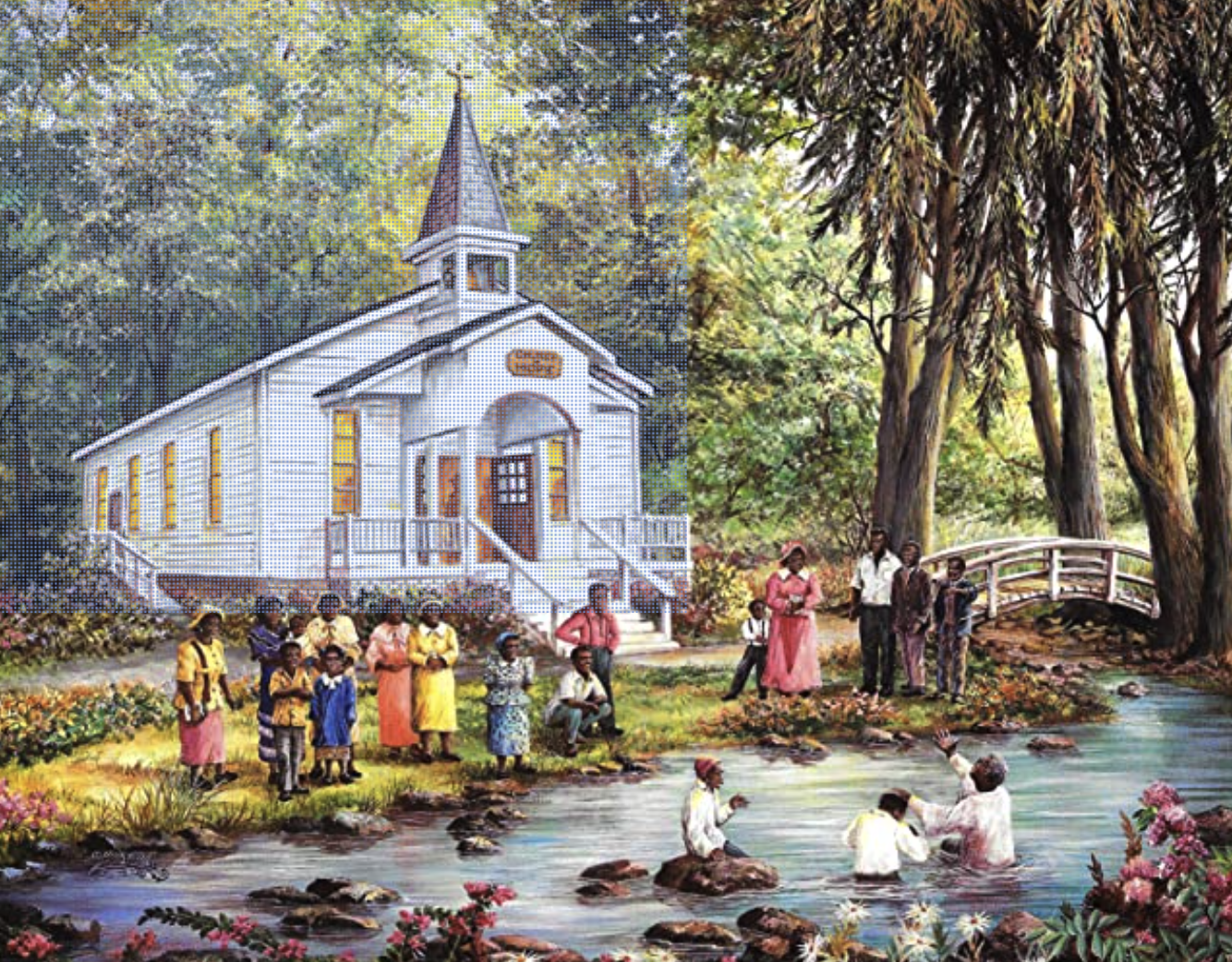
Well now. It may be true that “evangelical baptisms” are getting a little bit “raucous,” but that’s a rather strange statement to make in light of baptism traditions down the years in Black evangelical and Pentecostal churches.


Please respect our Commenting Policy

United Methodist pastor who joined drag queen show? Now it's more than an RNS story

United Methodist pastor who joined drag queen show? Now it's more than an RNS story

Remember the United Methodist pastor who decided to strut his stuff as a drag queen on HBO?

Well, that story is now bigger than the original Religion News Service coverage, which I discussed in this GetReligion post: “United Methodist pastor dives into HBO drag-queen culture, drawing joyful RNS applause.

That pastor is out of a job, a plot twist that drew coverage from both the Associated Press and USA Today. We will come back to those stories later in this post — especially a jaw-dropping display of slanted language in the AP report, of all places.

But this has been an archetypal RNS mainline Protestant story from the get-go and the wire service’s update contains, well, about half of the essential information that readers needed to know.

What’s missing? The same thing as the first time around — any attempt to accurately reflect the views of conservative United Methodists in the pews of this pastor’s church. It was crucial, of course, to interview United Methodists and LGBTQ activists who backed this progressive pastor. At the same time, it would have helped to interview people on the other side of the debate. Maybe?

Here is the overture of the new RNS report: “Pastor who appeared in drag on HBO’s ‘We’re Here’ forced to leave his church.

When Pastor Craig Duke appeared in drag on the HBO reality show “We’re Here,” he knew that some members of his United Methodist congregation would appreciate the episode and that others wouldn’t even watch it.

He also knew some members of his congregation support the full inclusion of LGBTQ Christians in the church and others don’t, and that would make his performance on the show a “challenging experience.”

But he didn’t think it would cost him his job.


Please respect our Commenting Policy

About that Southern Baptist 'binder' story: What do Black biblical 'inerrantists' say about CRT?

About that Southern Baptist 'binder' story: What do Black biblical 'inerrantists' say about CRT?

Reporters receive all kinds of bizarre things in the mail (analog or digital). Religion-beat reporters have been known to have some really, really bizarre items come out of nowhere.

My all-time “favorite” (I am using that term loosely) was a 35-page, handwritten manifesto detailing why — using lots of biblical references — Barbra Streisand was the Antichrist. I filed that one away. That wasn’t the case, however, with the typed, unsigned note in a plain white envelope that pointed to public documents detailing the arrest of a prominent clergyman for a sex crime committed in a public bathroom.

Journalists offered hot documents have to ask two questions:

(1) Can this information be verified as accurate?

(2) What are the motives of the person sharing the information? That question leads to another: How can those motives be explained to readers without identifying the person who provided the documents?

It goes without saying that documents from an on-the-record source will be trusted — by informed readers and “stockholders” in the story — more than those from a source demanding anonymity. The key is to give as much information as possible about the source of the information as possible, including why anonymity was acceptable in this case.

This leads us to the Nashville Tennessean story that rocked the world of Southern Baptist Convention social media, the one with this headline: “Inside the Southern Baptist Convention's battle over race and what it says about the denomination.

The entire story pivots on documents linked to a former SBC president, the Rev. James Merritt, and the Rev. J.D. Greear, the convention’s leader at the time of the events described in the story. It also helps to know that Merritt was the chair of the national convention resolutions committee in 2021.

All of this focuses on efforts to pass a 2021 SBC resolution that condemned “critical race theory” outright — by name and with no qualifications, as desired by leaders of the SBC’s most conservative churches. Here is a key passage:


Please respect our Commenting Policy

Lessons learned from black-and-white visions of Christmas past -- movies from 1940s

Lessons learned from black-and-white visions of Christmas past -- movies from 1940s

It's a black-and-white movie Christmas, with snow falling as joyful families mingle on city sidewalks while window-shopping -- buying food, presents, decorations and fresh-cut trees for festivities that are only two days away.

For Americans, this scene represents the ghost of Christmas past, long before suburban malls, big-box scrums and Amazon.com. And as "The Bishop's Wife" opens, an angel -- a graceful Cary Grant -- enters this 1947 tableau, smiling at carolers and children and helping the needy and lost.

"Christmas is always in danger in Christmas movies -- we'd have no reason to make such movies otherwise," wrote critic Titus Techera, executive director of the American Cinema Foundation. In this classic movie, "we have a remarkable concentration of problems in one household: A man's faith, his family, community and church … are all tied together."

It isn't unusual to find miracles, tight-knit communities, glowing churches and parables about human choices, temptation, sin and redemption in old Christmas films, said Techera, contacted by Zoom while visiting Bucharest.

That's why Techera -- a native of Romania, before his work brought him to America -- has written four online essays about the lessons learned from watching '40s movies that were remade in the '90s. The other films in this Acton Institute series are "The Shop Around the Corner," "Miracle on 34th Street" and "Christmas in Connecticut."

There's a reason many modern Americans keep watching these movies, he said. Some yearn for a time before most Americans became so isolated, separated by jobs far from extended families, sprawling suburban neighborhoods and all the paradoxes built into digital networks that were supposed to keep people connected.

"What we see in these movies is a time when Christmas was a far less commercial celebration and there was quite a bit of continuity with traditions from the past. … For many, the church was part of that," he said. "Christmas was a family thing. It was a community thing. … Commerce was more subservient to ordinary life. Commerce had not taken over all of life, including Christmas."


Please respect our Commenting Policy

New podcast: Are some SCOTUS justices asking, 'Are all religious schools equal in Maine?'

New podcast: Are some SCOTUS justices asking, 'Are all religious schools equal in Maine?'

Let’s say that, in the state of Maine, there are two very different “Lutheran” schools. You could, in this hypothetical case, also say “Episcopal,” or “Presbyterian” or “Congregational.”

Leaders at one of these schools insist that their school is in “the Lutheran tradition,” and it may retain ties to a doctrinally liberal flock. The school has a chapel, but attendance is optional since its students (it may be an elite boarding school) come from all kinds of religious faiths or have no stated faith at all. Classes on hot-button moral issues — sexuality, for example — stress this church’s progressive doctrines.

Academic life is very different at the other Lutheran school, which draws most of its students and financial support from a conservative Lutheran body. Chapel attendance is required and classes linked to moral theology are quite countercultural — defending 2,000 years of Christian tradition.

The question, in the latest church-state case at the U.S. Supreme Court, is whether the state of Maine has the power to say that the first school is eligible for tuition support — using tax dollars — because it’s policies do not clash with those in public schools. Students at the conservative school are not eligible, because its beliefs are “sectarian.”

This is tricky territory and church-state experts on the Religious Right would certainly disagree with experts from the Religious Left and secular think tanks. The question discussed in this week’s “Crossroads” podcast (click here to tune that in) is whether journalists covering this case allowed readers a chance to understand the views of activists on both sides.

Let me state, right up front, that my dueling Lutherans illustration is based on “equal access” church-state principles that emerged from a left-right coalition during the Bill Clinton administration. The big idea: If state officials create policies that affect nonprofits, they cannot back secular groups while discriminating against religious organizations. States could, however, deny aid to both. In other words, religious faith is not a uniquely dangerous form of speech or activity.

Let me state this another way. Under the separation of church and state, officials are not supposed to use tax dollars to back state-approved forms of religion. Ah! But what if some religious groups have doctrines that are consistent with state policies, while others clash with the doctrines of the state?


Please respect our Commenting Policy

Behold! The New York Times dared to explore the spiritual 'fire' inside Denzel Washington

Behold! The New York Times dared to explore the spiritual 'fire' inside Denzel Washington

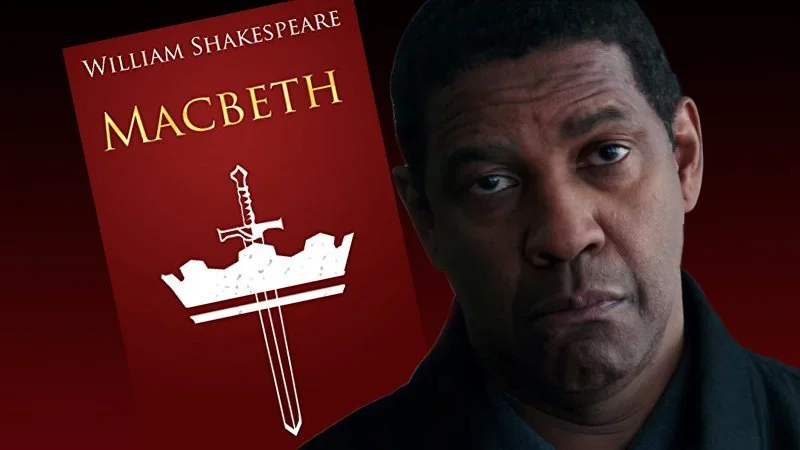
Behold. It is time for me to praise — at great length — something published in The New York Times. It was even written by Maureen Dowd, of all people.

The headline on this length first-person feature: “Denzel Washington, Man on Fire.” No, this story isn’t about the stunningly violent, but at times quite biblical, 2004 movie entitled “Man on Fire.” It’s about the new film — “The Tragedy of Macbeth” — that combines the Oscar-level talents of Washington, director Joel Coen and producer-actress Frances McDormand, who is married to Coen. For Washington, playing the lead role represented a return to his theater roots with Shakespeare.

As you would expect, a Times piece by Dowd is going to include quotes from Hollywood A-listers such as Ethan Hawke, Liev Schreiber, Melissa Leo and Meryl Streep. Tom Hanks has this to say about Washington: ““He is our Brando. Nicholson. Olivier.”

However, the key to this feature is that the “fire” in the headline is both artistic and spiritual. It is, literally, a reference to Washington’s Pentecostal Christian upbringing and the Christian faith that he is not afraid to discuss in the context of his talent and his vocation.

It’s hard to know what to quote from this piece — since it covers so many bases. If you want insights into filmmaking and the complex minds of Coen and McDormand, you will find it. This isn’t a religion story. However, it’s a story that is willing to let Washington speak his mind.

The faith element enters with one of those “here I am talking to Denzel Washington” scenes that are far too common in arts and entertainment journalism. But, in this case, this tired device works. This passage is long, long, long, but essential. I will break it up, just a bit:

[Washington] said he had gotten very little sleep. He had just put the final touches on a film he directed, “A Journal for Jordan,” the true story of the romance between Dana Canedy, a former New York Times reporter and editor, and Sgt. Charles Monroe King, a soldier who was killed by a roadside bomb in Iraq, after meeting their infant son only once. It stars Michael B. Jordan and Chanté Adams and also opens widely on Christmas Day.

“It’s just a beautiful story of loss and love,” Mr. Washington said, “a story about real heroes and sacrificing, men and women who have given their lives so that we have the freedom to complain.”


Please respect our Commenting Policy

Attention please: Two housekeeping items (both important) as GetReligion enters 2022

Attention please: Two housekeeping items (both important) as GetReligion enters 2022

Believe it or not, GetReligion has been around since 2004.

Doug LeBlanc clicked a mouse and launched the earliest version of this weblog on February 1, to be precise. When you’ve been working that long in the craziness that is the World Wide Web, you end up with some inevitable housekeeping issues.

Please hang in there with me for a minute or two for updates on two pieces of in-house business.

First, we have had to change — once again — the format of our daily mini-newsletter for those who would rather read GetReligion via email. The current list will vanish in a day or so.

A bit of history: Long, long ago, we had more than 600 people signed up for this kind of service. Then we switched platforms (it’s a long story) and lots of email readers got lost in the process. It’s always a hassle when something changes what does, and what doesn’t, show up in your daily wave of emails.

Now, we are having to relaunch our Mailchimp list. This is yet another side effect of the 2014 death of our co-worker Arne Fjeldstad of the Media Project, who launched the current version and, thus, was the “owner” of that list. Yes, many people (around the world) still miss Arne.

Now this feature needs to be updated. However, signing up for this updated Mailchimp list isn’t rocket science. Just click here and fill in the blanks. That’s all there is to it.

Item No. 2 is linked to the end of 2021 — think taxes and end-of-the-year donations to nonprofit groups.

For many of you, GetReligion is in that list. To cut to the chase, we still need your help.


Please respect our Commenting Policy

Progress for American Jews? Tis the season for lots and lots of Hanukkah junk

Progress for American Jews? Tis the season for lots and lots of Hanukkah junk

It's hard to do justice to ancient holy days in throw-pillow slogans.

Consider the Zazzle item offering a menorah with an un-orthodox number of candles, along with: "Imagine if your cellphone was at 10% but lasted 8 days. Now you understand Hanukkah."

Maybe not. Or how about the Bed, Bath & Beyond pillow stating: "Why is this night different from all other nights? Happy Hanukkah."

Actually, that's the most famous question from rites during a Passover Seder dinner.

"There's no quality control with any of this stuff. No one's being careful with decisions about what's good and what's bad," said journalist Mira Fox of the Forward, a progressive Jewish website. "The point is to sell stuff. It doesn't need to be good stuff. It's just stuff.

"Basically, it's a lot of people saying, 'We can find a way to sell stuff to Jews during the holidays, along with selling lots of stuff to everybody else.' "

Hanukkah began rather early this year, starting at sundown this past Sunday (November 28) and extending for eight days. This placed the "Festival of Lights" closer to Thanksgiving -- near the start of the merchandizing frenzy known as The Holidays.

The story at the heart of this home-centered season dates to 165 B.C., when Jews, led by the Maccabee family, defeated Greek and Syrian oppressors. When the victors reentered their temple, only one container of ritually pure oil could be found for its eternal flame. Tradition says this one-day supply burned for eight days. Thus, Jews light menorah candles during Hanukkah, one on the first night, increasing to eight.

"It's not a biblical holiday. Hanukkah is not in the Hebrew Bible. … God is not a huge part of this story," said Fox. "Honestly, I don't think a lot of people understand what this holiday is about."

That's certainly true in the American marketplace.


Please respect our Commenting Policy

New podcast: Are news reports 'dunking' on the late religious broadcaster Marcus Lamb?

New podcast: Are news reports 'dunking' on the late religious broadcaster Marcus Lamb?

If you search for the word “posterized” in up-to-date online dictionaries, this is what you find: “A slang term depicting a play in basketball. In said play, a player dunks the ball over top or in front of another player, making a play so picturesque that it may appear on a poster, hence the term, posterized.”

Clearly, this is linked to another term frequently used in the nasty verbal wars that are common on social-media sites, with Twitter — dominated by liberal and conservative voices in elite zip codes — being the best example.

That term is “dunking.”

“Dunking” is relevant to the main topic discussed in this week’s “Crossroads” podcast (click here to tune that in) about media coverage of the death of religious broadcaster Marcus Lamb, who died of COVID-19 after using his Daystar Television Network to criticize vaccine mandates and other anti-pandemic rules and guidelines, while advocating alternative treatments.

“Dunking” is defined, sort of, in this Slate article: “ ‘Dunking’ Is Delicious Sport — But it might be making Twitter even more terrible.” Here is a relevant passage:

Since Twitter rolled out the feature a couple of years ago, the quote-tweet has evolved into something like a pair of magic high-tops dispensed to every user on the service: Anyone can botch a tweet, and anyone can leap over him or her to score a couple of points—or a couple thousand likes and retweets.

The basketball term is apt: In a Twitter dunking, someone has made his point or said her piece, and instead of responding to it with a direct reply, perhaps in the spirit of equal-footed debate, the dunker seizes it like an alley-oop on his or her way to the basket. Maybe another player gets the unwitting assist, but the point is yours to be liked and retweeted not just as a reply but as a worthier tweet in its own right.

What does this look like in practice? Consider this example from the blitz of tweets about Lamb’s death. This dunk comes from the creator of the “America’s Best Christian” brand:


Please respect our Commenting Policy