Terry Mattingly

New podcast: Where is the elite news coverage of tensions between Pelosi and her bishop?

New podcast: Where is the elite news coverage of tensions between Pelosi and her bishop?

Here is a political science question for you, but it’s relevant to an important religion-beat story.

The vice president of the United States is No. 2, in terms of the presidential line of succession, just ahead of the Speaker of the House of Representatives. But in terms of real, day-by-day power, who has more clout in America’s system of government, the vice president or the speaker?

If you have lived and worked on Capitol Hill (as I did for a decade or more), I think you would agree the speaker has more dollars-and-cents clout, as opposed to the largely symbolic “one heartbeat away” status given to the vice president.

With that in mind, let’s turn to an important news story that ran in July at Crux, under this headline: “SF Archbishop says Pelosi can’t call herself a ‘devout Catholic’.” This story was at the heart of the discussion during this week’s “Crossroads” podcast (click here to tune that in). Here is the overture of that piece:

NEW YORK – Archbishop Salvatore Cordileone of San Francisco, the home archdiocese of House Speaker Nancy Pelosi, has insisted that “devout Catholics” can’t support abortion, just after Pelosi had described herself in precisely those terms.

“Let me repeat: No one can claim to be a devout Catholic and condone the killing of innocent human life, let alone have the government pay for it,” Cordileone said in a statement. “The right to life is a fundamental — the most fundamental ­— human right, and Catholics do not oppose fundamental human rights.”

Hours earlier, at her weekly press conference, Pelosi stated her support for repealing the Hyde Amendment, which prohibits federal funding of abortion, “because it’s an issue of health for many women in America,” and she also emphasized her Catholic faith.

“As a devout Catholic and mother of five in six years, I feel that God has blessed my husband and me with our beautiful family,” Pelosi said. “But it’s not up to me to dictate that’s what other people should do, and it’s an issue of fairness and justice for poor women in our country.”

This leads us to that op-ed by Cordileone that ran the other day at The Washington Post, with this headline: “Our duty to challenge Catholic politicians who support abortion rights.

Here is the top of that piece. Read carefully and look for an important term that is showing up in more and more statements by some, repeat “some,” U.S. Catholic bishops:


Please respect our Commenting Policy

Mexico's high court backs abortion rights: Who did the Washington Post choose to interview?

Mexico's high court backs abortion rights: Who did the Washington Post choose to interview?

The trend started a decade ago, or even earlier, about the time when social media took over and many elite newsrooms began caring less about seeking out qualified, informed voices on both sides of hot stories.

The result was a kind of fail-safe method for spotting media bias, especially with stories located at the intersection of politics, religion and the cultural changes, especially those linked to the Sexual Revolution.

First, readers can print a copy of the story in question and then, with a highlighter pen, mark quotes from people who appear to have been interviewed by the reporters — the sources whose voices provide the framing anecdotes and quotations that provide crucial facts and material that interpret the facts.

Then, with a second highlighter, mark the quotes from experts, activists and citizens on the other side of the issue. The key question: How many of these quotes came from actual interviews and how many were taken from online press releases and statements?

Compare and contrast. The big question: What sources were shown respect — with personal interviews — and which sources were demoted to PR release status? (Personal comment: As a columnist, I have found that quoting personal weblogs — Twitter as well — can offer a kind of neutral ground, with more information and authentic “voices” than mere press releases.)

In my experience, 99% of the time the people who are quoted from interviews represent the viewpoints that are favored and respected by the journalists who produced the story. With that in mind, let’s look at the sourcing in an international-desk story that ran in The Washington Post with this headline: “Mexico decriminalizes abortion, a dramatic step in world’s second-biggest Catholic country.

The Catholic angle is crucial, of course. Who would be interviewed? Activists in ministries to pregnant women? Canon lawyers? Perhaps a Catholic priest or historian who knows why “life” issues are so crucial in the church’s theology? I will also ask: Was anyone from the religion-desk allowed input into the sourcing?

Let’s start with the overture:

MEXICO CITY — Mexico’s supreme court voted Tuesday to decriminalize abortion, a striking step in a country with one of the world’s largest Catholic populations and a decision that contrasts with tighter restrictions introduced across the border in Texas.


Please respect our Commenting Policy

After Hurricane Ida: Prayers, tears, light, miracles and donations from somewhere ...

After Hurricane Ida: Prayers, tears, light, miracles and donations from somewhere ...

If you have ever lived in a major hurricane zone — Port Arthur, Texas, and West Palm Beach, Fla., for me — then you know that after the winds die down, the electric trucks (from all over) roll into town, from all over. The same thing is true with relief efforts from major religious groups. We’re talking Southern Baptists, Church of Jesus Christ of Latter-day Saints, World Vision, Churches of Christ and more.

The second half of that equation usually gets lots of ink the the religious press.

The elite newsrooms? Sometimes, yes. Lots of times, no.

So let’s look at a very interesting Hurricane Ida story from the Associated Press that provided all kinds of religion details about the locals and the people striving to help them: “Louisiana residents thankful for small miracles after Ida.” As a longtime GetReligion reader said, in an email:

This isn't profound, I guess it's just an example of "there, was that so hard?" . ... to report intimately about believers and clergy worshipping after a catastrophe. Frankly I've been kind of overwhelmed by the enormity of the loss in Louisiana — I joined a church relief team to help in Slidell and New Orleans a month after Katrina — and this story brought tears.

But note: This story focuses — with good cause — on the locals and government efforts post-hurricane. That’s a great story. But maybe this needed a word about the other big religion hook in post-storm news?

Meanwhile, here’s the overture:

MARRERO, La. (AP) — Amid the devastation caused by Hurricane Ida, there was at least one bright light Sunday: Parishioners found that electricity had been restored to their church outside of New Orleans, a small improvement as residents of Louisiana struggle to regain some aspects of normal life.

In Jefferson Parish, the Rev. G. Amaldoss expected to celebrate Mass at St. Joachim Catholic Church in the parking lot, which was dotted with downed limbs. But when he swung open the doors of the church early Sunday, the sanctuary was bathed in light.


Please respect our Commenting Policy

Here's a flashback into religion-beat history, with the help of the legendary Lou Grant

Here's a flashback into religion-beat history, with the help of the legendary Lou Grant

If anyone ever writes a book about the history of religion news in the mainstream press it will need to include a photo of the glowering, and often smirking, mug of Lou Grant.

Lou Grant was a TV character, of course, played by the Emmy-winning actor Ed Asner, who died on Sunday (August 29) at age 91. But for millions of Americans, he provided -- in "The Mary Tyler Moore Show" and the sequel "Lou Grant" -- an archetypal image of what old-school journalism was all about.

One 1977 "Lou Grant" episode certainly captured some of the attitudes I encountered while interviewing journalists for my 1982 graduate project at the University of Illinois in Urbana-Champaign, which focused on why few newsrooms made serious attempts to cover religion events and trends -- unless they were linked to politics.

Quite a few editors sounded like Lou Grant.

In this episode, entitled "Sect," the city editor of the mythical Los Angeles Tribune was wrestling with two problems at the same time. The problems seemed to be unrelated.

First, the Trib had lost its veteran religion editor. Grant searched and searched, but no one was interested in filling that empty desk. After all, what self-respecting journalist wanted to be stuck with the religion beat?

Problem number two was how to get rid of lazy, often-drunk, no-good reporter Mal Cavanaugh. All through this episode the newsroom's leaders had been searching for a way to get Cavanaugh to resign. Then came a spark of inspiration. The printed script is simple:

LOU: Well, Mal, you've been with this paper a mighty long time. As you say, this is your family.

CAVANAUGH: (All that humility) Aw, well, it's nice to be appreciated.

LOU: And I think I've found a place where we'll be able to use that special, sweet style that is Mal Cavanaugh.

CAVANAUGH: (Those eyes are getting moist; he sees himself getting a column) What's that, Lou?

LOU: Congratulations, Mal. You're the Trib's new religion editor.


Please respect our Commenting Policy

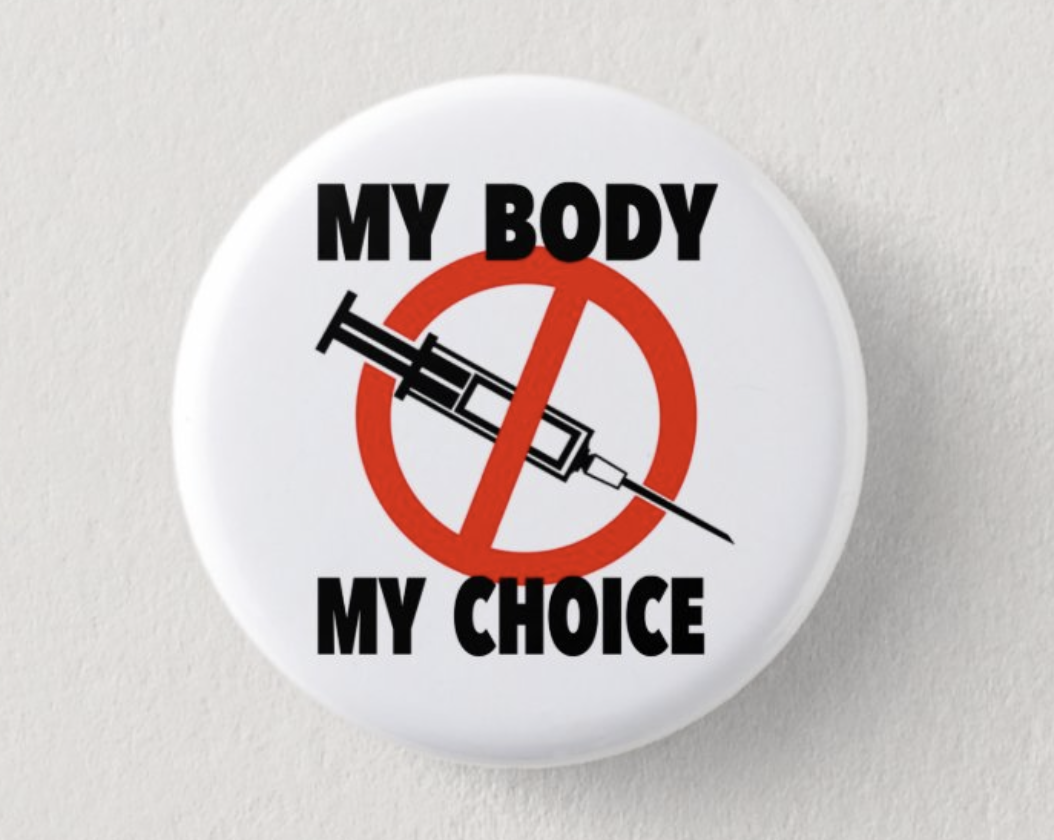
Thinking about fights over religious liberty and 'religious exemptions' from COVID vaccines

Thinking about fights over religious liberty and 'religious exemptions' from COVID vaccines

The Delta variant story keeps getting bigger and bigger, which means that debates between anti-vaccine activists and mainstream science and government leaders are getting hotter and hotter.

There are plenty of religion-news angles there, of course. There are plenty of articles to read about COVID-19, vaccines and fights in pews.

With that in mind, let’s connect several dots while on our way to this weekend’s “think piece” — which is a David French essay with this double-decker headline:

It’s Time to Stop Rationalizing and Enabling Evangelical Vaccine Rejection

There is no religious liberty interest in refusing the COVID vaccine.

Start here, with this passage near the end of my GetReligion post earlier this week that ran with this headline: “Was this a story? Why? Mississippi governor talks about heaven and Southern anti-vax trends.”

When thinking about religious liberty and those seeking exemptions from vaccine mandates, remember that — for decades — the U.S. Supreme Court has said that government can ask tough questions about religious beliefs and actions when they involve fraud, profit and clear threats to life and health. Watch for discussions of that third factor in these public-policy debates. …

The fact that there are bitter debates on this topic in conservative pews is a sign of DIVISION on the topic, not that Black and White believers are UNITED against vaccines and masks. The press coverage keeps implying unity here and that is the opposite of what the facts show.

Now, it is becoming clear that some religious leaders are going to test these religious-liberty arguments with employers and then in courts.


Please respect our Commenting Policy

New podcast: Harvard head chaplain is an atheist and Gray Lady covers half of that story

New podcast: Harvard head chaplain is an atheist and Gray Lady covers half of that story

Perhaps you saw that New York Times headline the other day that proclaimed: “The New Chief Chaplain at Harvard? An Atheist.”

That led, during this week’s “Crossroads” podcast (click here to tune that in) to a logical question: Is it really surprising, and newsworthy, that the office for chaplains at today’s Harvard is led by an atheist/humanist rabbi?

For me, this was a totally valid story. However, I do wish that the Times had followed through and fleshed out the two big themes mentioned in this feature.

You can see one of those themes in the sub-headline: “The elevation of Greg Epstein, author of ‘Good Without God,’ reflects a broader trend of young people who increasingly identify as spiritual but religiously nonaffiliated.”

Ah, another story about the young “religiously unaffiliated” folks who have received so much ink in recent years, following in the footsteps of the “spiritual, but not religious” and “Sheilaism” trendsetters of previous decades. But how many of the “nones” are actually atheists or agnostics? Hold that thought.

The other big idea here is that Epstein was a popular choice among the Harvard chaplains, in part because of his abilities to build bridges between a wide variety of religious brands — including evangelical Protestants and Christian liberals. Hold that thought, as well.

I found myself, while reading the Times piece, wondering: What is the dominant religious worldview at postmodern Harvard? I am sure that there are more than a few atheists and agnostics there. But people I know with ties to the campus tell me that a kind of “woke” liberal faith is the norm, which actually fits with the school’s roots in mainline Protestant New England. Also, there are more than a few evangelicals in the mix (look up “The Veritas Forum”).

I was reminded of the debates almost a decade ago at Vanderbilt University, as campus leaders tried to push evangelical Protestant student ministries off campus because of tensions over You Know What.


Please respect our Commenting Policy

Was this a story? Why? Mississippi governor talks about heaven and Southern anti-vax trends

Was this a story? Why? Mississippi governor talks about heaven and Southern anti-vax trends

Here’s a complex question that is worthy of serious research by journalists: Are people who believe in heaven less likely to feel the need to get vaccinated against COVID-19?

Now, lots of people believe in eternal life and the vast majority of them believe — no matter what their level of faith or practice — that they are headed straight to heaven when they die. Belief in hell? That’s another matter.

Ah. But who, according to most media stereotypes, are the folks who REALLY believe in heaven? In particular, what kind of person would let that belief affect their actions in the real world (which means issues of political policy and public health)?

Obviously, we’re talking about those dang White evangelical Protestants. Right?

That brings us to a recent headline at The Daily Memphian (“the primary daily online publication for intelligent, in-depth journalism in the Memphis community”) that caught the eye of some GetReligion readers. The emails I received made it clear that some people were mad about this story for different reasons. Hold that thought.

First, the headline: “Miss. Gov.: South’s response to COVID impacted by belief in ‘eternal life’.” Then, here is the overture:

Mississippi Gov. Tate Reeves believes religion has a lot to do with the region’s response to the COVID-19 pandemic.

During a … fundraiser at the Eads home of Shelby County Election Commission Chairman Brent Taylor, Reeves spoke to several dozen Republicans.

“I’m often asked by some of my friends on the other side of the aisle about COVID … and why does it seem like folks in Mississippi and maybe in the Mid-South are a little less scared, shall we say,” Reeves said.

“When you believe in eternal life — when you believe that living on this earth is but a blip on the screen, then you don’t have to be so scared of things,” he said, but added: “Now, God also tells us to take necessary precautions. And we all have opportunities and abilities to do that and we should all do that.


Please respect our Commenting Policy

Rabbit hole warning for journalists: When is a 'Catholic priest' not a 'Catholic priest'?

Rabbit hole warning for journalists: When is a 'Catholic priest' not a 'Catholic priest'?

There are few religion-beat rabbit holes deeper and more twisted than the world of alternative and splinter Catholic churches and the bishops and priests who lead them.

Be careful out there, folks. Long ago, I spent days chasing the “apostolic succession” claims of a U.S. Postal Service carrier in a Denver suburb who was a mail-order archbishop in one of the hundreds of “Old Catholic” flocks linked to various schisms after Vatican I or II. Some alternative Catholic of these flocks are conservative and some are liberal. Some have actual parishes. To tip your toe into these troubled waters, click here.

Religion-beat professionals are aware that not all people — men and women — who say they are Catholic priests are actually Roman Catholic priests. As Mollie “GetReligionista emerita” Hemingway said more than a decade ago, just because someone says that he or she plays shortstop for the New York Yankees doesn’t mean that this claim is true. Someone in the House of Steinbrenner gets to make that call.

I say this because of the small, but educational, waves of social-media chatter the other day about the testimony of Father Gabriel Lavery at an Ohio legislature hearing linked to a bill that would prohibit vaccine mandates.

Eyebrows were raised when Lavery, during a discussion of the current pope’s support for COVID-19 vaccines, said that he doesn’t recognize Pope Francis as pope because “you have to be a Catholic to be the pope.”

There’s a sound bite for you. As scribes at The Pillar noted:

In another clip, the priest said of Francis that “there are many clergy, bishops around the world who have simply have looked at the obvious, that his teachings on many things contradict Catholic teaching, and it’s a simple basic principle of Catholic theology — you can’t be the head of the Church if you don’t profess the Catholic faith.”

The priest’s remarks have attracted attention, and have been covered in some press reports with little mention of his ecclesiastical status. In some accounts, he has been identified as a parish pastor.

As I noted earlier, religion-beat professionals know to ask questions about clergy folks of this kind — who play essential roles, for example, in the history of ordination claims in the the Womenpriests, WomenPriests or Women Priests movement. General-assignment reporters covering these events often quote what the activists are saying about their credentials and that is that.


Please respect our Commenting Policy

When talking about vaccines, shame isn't going to change minds in many pews

When talking about vaccines, shame isn't going to change minds in many pews

Donald Trump had to know it was coming, even if -- to use a Bible Belt expression -- he was preaching to his choir.

"You know what? I believe totally in your freedoms," he said, at a rally in Cullman, Ala. "You got to do what you have to do, but I recommend: Take the vaccines. I did it -- it's good."

Videos of this August 21 event make it clear that quite a few people booed this request by the former president.

Truth is, the longer a health crisis lasts, the more pollsters will find that anti-vaccine citizens have "turned into true believers" who are rock-solid in their convictions, said political scientist Ryan Burge of Eastern Illinois University. He is co-founder of the Religion in Public website and a contributor to the GetReligion.org weblog I have led since 2004.

"At this point, the holdouts are the only people that (pollsters) have to talk to. … They've heard everything, and nothing is moving the needle for them," he said. "In fact, it seems like whatever you say to try to change their minds only makes it worse. These hardcore folks are digging in their heels all the more."

When exploring the most recent Data for Progress poll numbers, it's hard to nail down a religion factor in this drama. As summer began, 70% of non-evangelical Protestants had received at least one shot of COVID-19 vaccine -- but so had 62% of both evangelical Protestants and Catholics. As the author of a book entitled "The Nones: Where They Came From, Who They Are, and Where They Are Going," Burge found it significant that only 47% of the religiously unaffiliated reported receiving at least one shot.

"Religion may be a factor, for some people, but it's not the main thing" causing Americans to be reluctant, he said. "Age is clearly the No. 1 factor, even when you factor in politics. Young Republicans and independents are the same. …


Please respect our Commenting Policy